Film Review: Gia (dir by Michael Cristofer)


Today is Angelina Jolie’s 50th birthday.

As I sit here writing this, Jolie is very much a respectable figure, one who doesn’t appear in as many movies she once did.  When she does act, it’s almost always in the type of big and rather glossy films that inevitably seem to be destined to be described as potential Oscar contenders.  She’s so identified with the work that she does for UNHCR that it can be argued that she’s even better known now as a human rights activist than as an actor.  (On Wikipedia, her career is listed as being “actress, director, humanitarian.”)  Angelina Jolie has made the move from acting to directing and even though none of her directorial efforts have been especially memorable, they still tend to get a lot of attention because she’s Angelina Jolie.  Angelina Jolie is definitely a part of the establishment and, let me make this very clear, there’s nothing wrong with that!  She’s still a good actress.  She seems to be far more sincere about her activism than many of her fellow Hollywood performers.  Personally, I think the efforts to get her to run for political office have been a little over-the-top (and they seem to have died down after an attempted presidential draft in 2016) but again, she’s earned her success and she deserves it.

That said, it can sometimes be surprising to remember that, before she became so acceptable, Angelina Jolie was Hollywood’s wild child, the estranged daughter of Jon Voight who talked openly about being bisexual, using drugs, struggling with her mental health, and playing with knives in bed.  This was the Jolie who, long before she married Brad Pitt, was married to Billy Bob Thornton and used to carry around a vial of his blood.  This was the Angelia Jolie who had tattoos at a time when that actually meant something and who went out of her way to let everyone know that she was a badass who wasn’t going to let anyone push her around.  This was the Angelina Jolie who was dangerous and unpredictable and who wore her wild reputation like an empowering badge of honor.

That’s the Angelina Jolie who starred in Gia.

Made for HBO in 1998, Gia was a biopic in which Jolie played Gia Carangi, one of the first supermodels.  The film followed Gia, from her unhappy childhood (represented by Mercedes Ruehl as Gia’s mother) to her early modeling days when she was represented by the famous Wilhelmina Cooper (Faye Dunaway) to her struggles with heroin and cocaine to her eventual AIDS-related death.  During the course of her short life, Gia falls in love with a photographer’s assistant named Linda (Elizabeth Mitchell) but, as much as Linda tries to help her, Gia simply cannot escape her demons.

That Gia is a fairly conventional biopic is not a shock, considering that it was directed by the reliably banal Michael Cristofer.  He starts the film with people talking about their memories of Gia and he doesn’t get anymore imaginative from there.  That the film works and is memorable is almost totally due to performances of Elizabeth Mitchell and Angelina Jolie, both of whom give such sincere and honest performances that they make you truly care about Gia and Linda.  Jolie, in particular, portrays Gia as being an uninhibited and impulsive agent of chaos, one who follows her immediate desires and who makes no apology for who she is and what she does.  There’s a lot of physical nudity in this film but the important thing is that Jolie allows Gia’s soul to be naked as well.  There’s nothing hidden when it comes either the character or Jolie’s empathetic and passionate performance.

Jolie won an Emmy for her performance in Gia and her work in this film led to her being cast in 2000’s Girl, Interrupted, the film for which she would win the Oscar for Best Supporting Actress.  Since then, Jolie’s become, as I said at the start of this review, very much a member of America’s cultural establishment.  My hope, though, is that someday, someone will give Jolie a role that will remind viewers of who she was before she became respectable.  I think she still has the talent to take audiences by surprise.
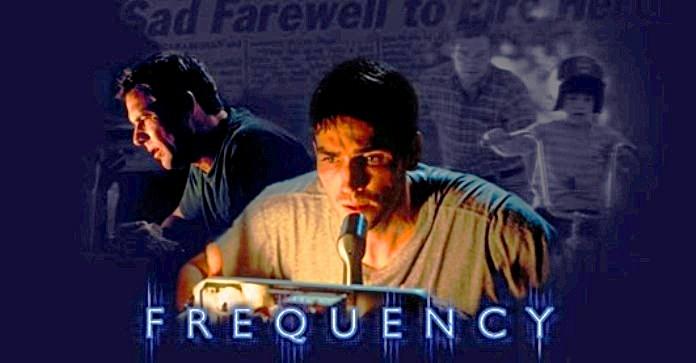
FREQUENCY (2000) – What would you give to talk to your dad or mom one more time?


I find it difficult to write about my favorite movies, because it can be hard to put into words why I love them so much. It seems that nothing I can say will do the movie justice. FREQUENCY is one of those movies that I abolutely love, and I’ll tell any person who will listen that it’s one of my all-time favorites. Sadly, I run into quite a few people who aren’t even aware of the almost 25 year old film at this point. That just doesn’t set right with me, so I’m here today to sing the praises of FREQUENCY!

FREQUENCY stars Jim Caviezel as homicide detective John Sullivan, a guy who lives in the same house he’s lived in his entire life. John is still dealing with emotional scars related to the death of his firefighter father Frank (Dennis Quaid), who died fighting a fire 30 years earlier. One night John’s hanging out with his buddy Gordo (Noah Emmerich), when they come across his dad’s old Ham radio. Some of John’s fondest memories of his dad include him speaking with people around the world on that old radio. They hook it up not even sure if it even works anymore. Sometime later that night when he’s there alone, a man’s voice comes across the airwaves. John starts talking back, and that’s when the greatness of this movie starts for me. The two guys start talking about baseball, and the voice on the other end of the line wants to know what John thinks about New York’s Amazin’ Mets chances to win the 1969 World Series. It seems that somehow through movie magic and the “mother sunspot of all time,” John is talking to his own father at the same location, separated by 30 years of space and time. John tells his dad about the specific fire that he dies in on that fateful day 30 years earlier. With John’s warning, Frank is able to survive the fire, and John gets a bunch of new memories that show him growing up with his dad in his life. Unfortunately, the changing of the past has real world consequences in the present. Now, John’s mom Julia (Elizabeth Mitchell) is gone, killed by a serial killer whose “Nightingale murders” had ended with 3 nurses in 1969, but has now ballooned to 10 in 1999. Separated by those 30 years, and not knowing when their connection on the radio might end, John and Frank work together to try to stop the Nightingale killer and save Julia, not knowing what other things they might change in the process.

FREQUENCY is a cross-genre concoction. It’s a fantasy film in the way that it brings people together from two different timeframes. The exact way this is done is never spelled out and shouldn’t be thought about too much. We just know that the phenomenon known as the aurora borealis, which is a natural light show that occurs when charged particles from the sun interact with Earth’s magnetic field, is going on in both 1969 and 1999. This natural phenomenon is somehow allowing John and Frank to talk to each other. It’s also a solid dramatic thriller as John is able to first save Frank’s life from the fire, and then as the two work together to catch a serial killer (Shawn Doyle) before he takes out Julia. This is put together extremely well by director Gregory Hoblit, who gets solid performances from Jim Caviezel, Dennis Quaid, and Elizabeth Mitchell as the Sullivan family. I also want to shout out Andre Braugher, who plays Frank’s best friend Satch in the 1969 timeframe, and who’s John’s cop partner in 1999. He’s so good in FREQUENCY. Despite winning two primetime Emmy awards, I still believe that Andre Braugher was an amazing actor who was underused during his lifetime. Sadly, he passed away in 2023 at just 61 years of age.

But the reason that I love FREQUENCY is the fantastic notion that a son who’s lost his father would somehow have the chance to talk to him again. Father-son relationships in movies affect me more than anything else, and I’m all in for the way it is addressed here. I cry like a baby every time I watch FIELD OF DREAMS with Kevin Costner, and I also cry like a baby every time I watch FREQUENCY. I mentioned earlier that John is dealing with emotional scars from not having his dad growing up. In this film, we get to hear their conversations and put ourselves in that same position. The film really leans into the joy of this unique opportunity to change the past and erase much of the pain that came with such deep emotional wounds. This shared desire to right past wrongs and erase past pain elevates the film even when logic fails. FREQUENCY got on my radar back at the turn of the century when I read articles about grown men crying in theaters as they watched. I remember telling a friend of mine, a friend whose father had died when he was young, about this film. He told me later of his own emotional experience watching it. There really is something universal about wanting to connect with our parents once they are no longer with us. As of this writing, my own father is still here, yet I am still emotionally overwhelmed every time I watch FREQUENCY. I can’t even begin to imagine what it will feel like if there’s a time that I’m still here, and he’s gone.     

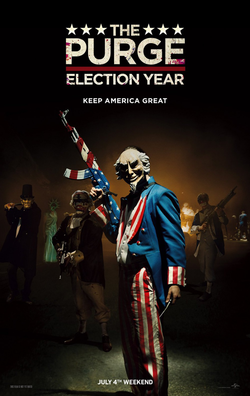
Film Review: The Purge: Election Year (dir by James DeMonaco)


The_Purge_Election_Year

I had really high hopes for The Purge: Election Year.

While the first Purge film was definitely flawed, it still had an interesting and thought-provoking premise behind it.  What would we do, the film forced us to ask, if we could do anything we wanted to for one night out of the year?  Would you hide in your house or would you go out and randomly kill people?  Yes, The Purge had its flaws but it was an interesting film.

And then, in 2014, The Purge: Anarchy was released.  Anarchy was one of the best films of 2014 (a film that saw no shortage of great films).  It was a big, loud, and over-the-top masterpiece of the pulp imagination, one that managed to be as thought-provoking as the first film while also keeping audiences entertained.  It was a political movie, perhaps one of the most overtly political to be released over the past ten years.  And yet, it was also amazingly entertaining.  By further exploring the type of society that would come up with something like an annual Purge, Anarchy forced audiences to think even as it gave them reasons to cheer and hiss.  For many viewers, it also served as an introduction to a tough and grizzled actor named Frank Grillo.  In the role of the enigmatic but ultimately good-hearted Leo Barnes, Frank Grillo gave an outstanding performance.

Well, The Purge: Election Year continues its exploration of the culture behind the Purge.  And Frank Grillo is back as Leo.  It should be said that, just as he did in Anarchy, Grillo supplies Election Year with some of its best moments.  Much like Clint Eastwood, Grillo can communicate an entire backstory just be squinting his eyes.

But overall, Election Year is a disappointment.  As I watched it, I found myself wondering if maybe director James DeMonaco should have quit when he was ahead and ended the series with Anarchy.  Anarchy pushed the idea behind The Purge about as far as it could go and it is perhaps not surprising that Election Year often feels like a rehash that was constructed out of leftovers.

Election Year finds Leo working as head of security for U.S. Sen. Charlie Roan (Elizabeth Mitchell).  Charlie, who saw her family massacred during an earlier purge, is running for President on an anti-Purge platform and it appears that she’s about to overtake the candidate of the New Founding Fathers, the Rev. Edwidge Owens (Kyle Secor).  The New Founding Fathers decide that the best way to take care of Charlie would be to assassinate her on Purge Night.  They announce that, for the first time since the Purge began, government leaders will no longer be granted immunity.

In short, anyone can be killed!

Leo’s idea is for Charlie to stay inside during Purge Night but, if that happened, there wouldn’t be a movie.  Naturally, Leo and Charlie eventually end up on the streets and they get to witness a few surreal and violent moments, none of which have quite the impact of anything we previously saw in Anarchy.  They are given some assistance by a deli owner (Mykleti Williamson) and, naturally, they meet up with rebel leader Dante Bishop (Edwin Hodge).  Just like in the previous film, Leo is eventually forced to decide between purging and showing mercy.

And it’s really never that interesting.  The whole film just falls flat.  The first two Purge film worked because they convinced you that something like The Purge could actually happen.  When, at the end of Anarchy, Leo chose not to murder someone, it felt like a great moment because you truly believed that Leo could have gotten away with murder if he wanted to.  But Election Day is never convinces you that you’re watching anything more than a standard issue sequel.  With the exception of Frank Grillo and Kyle Secor (more about him in a moment), none of the actors are particularly memorable or believable.  In fact, Mykelti Williamson gives a performance that is almost amazingly bad.

I think a huge part of the problem is that the character of Charlie is never credible.  Elizabeth Mitchell is a good actress and has appeared in some of my favorite TV shows (she was Juliet on Lost, for instance) but you never believe that she’s a dynamic senator who is destined to save America from itself.  Every character in the film has at least one moment in which he or she is required to talk about how much they love Charlie.  The film spends so much time worshipping her that it apparently forgot to make her believable.

(It’s hard not to compare Election Year to Anarchy.  Anarchy advocated revolution.  Election Year argues that the system will eventually correct itself, going so far as to present the revolutionaries as almost being villains because they’re not properly deferential to a wealthy white liberal.)

However, I do have to say that Election Year is occasionally elevated by the thoroughly over-the-top performance of an actor named Kyle Secor.  It’s almost as if Secor alone understood that Election Year needed a jolt of pure adrenaline and, at the end of the film, he goes out of his way to provide it.  He bulges his eyes.  He shrieks out his lines.  His entire body shakes and it’s damn near brilliant.  He’s a lot of fun and his performance is probably the most entertaining thing about Election Year.

Undoubtedly, there will eventually be a sequel to Election Year.  Hopefully, it’ll be an improvement.

the-purge-ey-pstr01

Quickie Review: Running Scared (dir. by Wayne Kramer)


Director Wayne Kramer’s follow-up to his directorial debut (The Cooler) shows that he has a flair for drama and suspense that borders the line between reality and surrealism. Running Scared has such a gritty, washed out look right from the get-go that one starts to think it’s a film lifted right out of the 70’s. But that is only part of what Kramer does in creating a look and feel for Running Scared. Kramer actually uses every kind of trick in a director’s book to give his film such an over-the-top sense that the audience really doesn’t know what to expect just around the next dark corner.

Running Scared‘s first ten minutes sets up what the rest of the next two hours are going to be like. Kramer direct’s this ten minutes like a man possessed. The direction and editing is frantic and frenetic. Some have said that it’s all been done before by Tarantino, Woo and a dozen other action-stylists out of Hong Kong, but I disagree. Kramer’s style owes alot more to the grandfather of excessive film violence and that’s Sam Peckinpah. I’m not comparing Running Scared to Peckinpah’s seminal classic The Wild Bunch, but the pace and look of the chaotic shoot-out in the tiny apartment to start the film brings to mind the opening and closing shoot-outs of Peckinpah’s film.

Kramer knows he’s not making a social statement or even an intellectually relevant film. What he does know is that he wants to tell a fairy tale of one man’s hectic day and all the craziness he has to go through during that day. And this is what Running Scared really has turned out to be. A fairy tale set in an modern, dank, urban landscape where our hero (though anti-hero is more like it) and the two kids in his life must travel a surreal place filled with mack-daddy pimps, hooker with a heart of gold, corrupt cops and even a pair of child pedophiles who also turn out to be husband and wife. Running Scared is a like Grimms fairy tale as seen and told in a modern setting.

The cast of actors Kramer has assembled all do a good job in populating this violent, profane modern fairy tale. I’d be the last to think that Paul Walker was an actor who had any talent, but his performance in this film has given me pause to think that maybe its not him, but the projects he’s been doing that’s given him a bad reputation as an actor (which continues to this day as he continues to put himself in bad projects). Gone is the California surfer dude persona he seems to saddle himself with in most of his roles. He actually inhabits the low-level mobster soldier he plays as Joey Gazelle. This film may not be his breakout performance but it will open up some eyes. The boy’s got some skill he’s never been able to show before. The other actor who makes a standout performance is one Cameron Bright who plays Oleg. The neighbor kid whose theft of a mob gun Joey is suppose to make disappear turns Joey’s life upside down. Cameron’s almost like Pinocchio in that its through him that we see all the crazy characters he runs across. It’s a testament to Kramer’s direction that he’s able to get such good performances from Walker, Bright and the rest of the cast in a film that’s as confusing, complicated and surreal as this film turned out to be.

Running Scared was a wonderful surprise of a film for 2006. It’s an unabashed fun, thrilling urban fairy tale that goes for broke in everything it does. Wayne Kramer’s direction shows that his very good work in filming The Cooler wasn’t a fluke and one-time deal. He’s no Tarantino and surely not in the same league as Sam Peckinpah whose films this one owes alot to in style and feel, but he’s slowly making a name for himself as one who can do good work. Oh, Paul Walker does a good job in it as well.