Horror Movie Review: The Fall of the House of Usher (dir by Roger Corman)


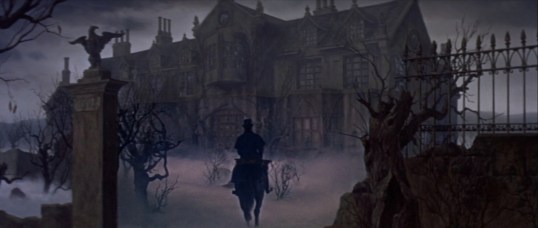
The 1960 film, The Fall Of The House of Usher, opens with Phillip Winthrop (Mark Damon) riding his horse across a desolate landscape.

There’s a foreboding mansion in the distance but what the viewer immediately notices is that the land around the mansion looks almost post-apocalyptic.  Even though the film is set in the 1800s, the misshapen trees and the high winds all bring to mind a film set in a nuclear-scarred world, the type where you expect to find radioactive mutants hiding behind every tree and rock.

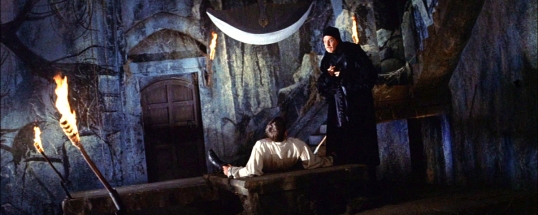
Phillip is a young aristocrat who is traveling to the home of the Usher family.  He is engaged to marry Madeleine Usher (Myrna Fahey) but, as soon as he arrives at the mansion, her older brother, Roderick (Vincent Price, with no mustache and blonde hair), informs Phillip that he will never be allowed to marry Madeleine.  Roderick explains that the Usher family is cursed and he even takes Phillip on a tour of Usher family history, showing him a series of truly hideous paintings of past Ushers.  One Usher was a murderer.  Another Usher was blackmailer.  An Usher wearing a pirate’s cap is identified as being a slave trader.  The Ushers are cursed, with each family member destined to become insane.  Roderick’s mission is to bring the Usher bloodline to a close and that means that Madeleine cannot marry.

Phillip disagrees, especially when the sickly Madeleine herself says that she wants to escape from her seemingly mad brother.  With the house itself continually shaking as if it’s on the verge of collapsing, Phillip becomes determined to take Madeleine away.  Roderick tries to warn him not to.  Even the friendly butler, Bristol (Harry Ellerbe), encourages Phillip to give up.  But Phillip remains stubborn and determined.  However, when Madeleine suddenly collapses and dies, it appears that Phillip’s plans to marry her are at an end.  But is Madeleine truly dead?

Based on a short story by Edgar Allan Poe, this was, at the time, the most expensive film that Roger Corman and American International Pictures had ever made.  (It was also their first color film.)  Of course, the budget was still just $300,000 and the Usher mansion was largely constructed out of props that were borrowed from other films.  That said, the film had a name star and, with its vivid colors and its fiery finale, it certainly looked like a big-budget film.  This film marked the first collaboration between Vincent Price and Roger Corman and it was a box office success, making  a million dollars at a time when a million dollars really meant something..  Corman and Price would go on to do several other Poe adaptations together, all of which were distinguished by Price’s villainous performances and Corman’s pop art visuals.

Seen today, The Fall of the House of Usher can seem to be a bit slow.  With only one location and a cast of only four actors, it often feels a bit stagey.  Mark Damon is rather stiff as Phillip.  (One can see why he abandoned acting to become a producer.)  But Vincent Price’s performance as Roderick Usher continue to entertain, with Price delivering every line of dialogue with his trademark aristocratic archness.  There’s nothing subtle about Price’s performance but Price’s tendency to overact perfectly matched Corman’s vivid visuals and it’s interesting to watch a hyperactive Price performance paired with the type of dull performance that Mark Damon offers up.

The fiery finale still packs a certain punch and, watching it, one can see why Corman and Price said, “Let’s do this again!”  The Fall of the House of Usher (which is also available on some streaming sites as simply House of Usher) remains an enjoyable macabre Halloween treat.

House of Usher (1960, dir by Roger Corman, DP: Floyd Crosby)


Vincent Price Recites The Tell-Tale Heart!


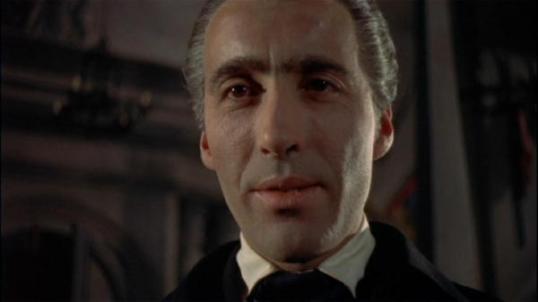
Earlier today, I featured Christopher Lee reading The Fall of the House of Usher.

Here to continue to spread the Halloween spirit is Vincent Price, performing The Tell-Tale Heart.  This is from 1970 and was a part of a PBS special called An Evening With Edgar Allan Poe.

Get In The Mood For Halloween With Christopher Lee And The Fall Of The House of Usher


Happy Halloween everyone!

Here to help you get in the mood for the best day of the year is Christopher Lee reading Edgar Allan Poe’s The Fall Of The House Of Usher.  Listening to this will require 40 minutes of your time but it’s totally worth it.  Christopher Lee had an amazing voice and was a wonderful reader and one imagines that it was his voice that Poe heard in his head as he first wrote this short story.

Here is the wonderful voice of Christopher Lee….

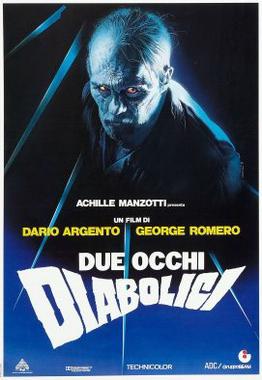
The Film of Dario Argento: Two Evil Eyes


In 1990, long-time friends George Romero and Dario Argento collaborated on Two Evil Eyes, anthology film that was based on the writings of Edgar Allan Poe.  An Italian-American co-production, Two Evil Eyes featured two stories.  The first was directed by George Romero, while the second was directed by Argento.

The Facts In The Case of Mr. Valdemar

(Dir by George Romero)

The first story is Romero’s, a modernized version of The Facts In The Case of M. Valdemar.

Jessica Valdemar (Adrienne Barbeau) is the 40 year-old wife of 65 year-old, Ernest Valdemar (Bingo O’Malley).  Jessica only married Ernest for her money and, now that he’s on his death bed, she and her lover, Dr. Robert Hoffman (Ramy Zada), have hypnotized to him to do and say whatever they tell him to say and do.  Even though Ernest is essentially comatose, the hypnosis allows them to force Ernest to sign his name to legal documents and to tell his suspicious attorney (E.G. Marshall) that he indeed wants to leave all of his money to Jessica.

When Ernest dies while under the influence of hypnosis, Jessica and Robert attempt hide his body in the basement.  But is Ernest really dead?  Jessica is convinced that she hears groaning from the basement and she wonders if the hypnosis has somehow left Ernest in limbo, between life and death.  Robert thinks that Jessica is being foolish but it turns out that she’s not.  After much paranoia and betrayal, one conspirator is dead and the other is a part of the living dead.

Usually, I like Romero’s work but this one didn’t work for me.  From the flat cinematography to the shallow performances, this film felt more like an episode of a television show than anything else.  Perhaps if it had been a stand-alone film, Romero could have found a way to make the material a bit more cinematic.  (The story’s final shot, of blood dripping on a hundred dollar bill, is the film’s strongest moment and the part that feels the most Romeroesque.)  But as a shortened chapter of an anthology film, it fell flat.

The Black Cat

(Dir by Dario Argento)

The Dario Argento segment is based on several different Poe stories.  While the majority of the story is taken from The Black Cat, it also contains elements of Annabel Lee, Telltale Heat, The Pit and the Pendulum, and Buried Alive.  Though this segment doesn’t really work, it’s obvious that Argento is a fan of Poe’s work and, for other Poe fans, there’s a lot of fun to be found in all of the Poe references that Argento sneaks into his story.

Harvey Keitel stars as Rod Usher, a crime scene photographer who loves his work a bit too much.  He’s excited about the fact that his book of photography is about to be published.  He’s less happy about the fact that his girlfriend, Annabel (Madeleine Potter), has adopted a black cat that is constantly glaring at Rod.  Rod is eventually driven mad by both the cat’s apparent hatred of him and the fact that the cat itself keeps showing up no matter how far he goes to get rid of it.  (This film features violence against a cat, which I hated.  But it also featured a cat getting revenge and I appreciated that.)  Eventually, Rod’s paranoia leads to violence and murder.

Look, this is a film about a guy who has an obsessive hatred of a cat.  Obviously, this is not a film that I’m going to enjoy because I love cats.  That said, I can still judge the film on its merits, even if it’s not for me on a personal level.  While Argento is able to build up a good deal of tension and suspense in this film, the overall film doesn’t work because Harvey Keitel, supremely talented actor that he is, was totally the wrong choice for Rod Usher.  Keitel, who reportedly did not get along with Argento during filming, gave a self-indulgent performance that featured a lot of bellowing.  It’s as if Keitel is trying to compete with the constantly moving camera.  The problem is that a star of a film like this has to be the director and Keitel’s histrionics take the viewer right out of the story.

Considering all of the talent involved, Two Evil Eyes is a disappointment.

The (Reviewed) Films of Dario Argento:

  1. The Bird With The Crystal Plumage
  2. Cat O’Nine Tales
  3. Four Flies on Grey Velvet
  4. Deep Red
  5. Suspiria
  6. Inferno
  7. Tenebrae
  8. Phenomena
  9. Opera

Get In The Mood for Halloween with James Mason Reading The Tell-Tale Heart


I just came across this earlier this morning.  This short, animated film is from 1953 and it features James Mason reading a story from America’s first master of suspense, Edgar Allan Poe!

Here, for your listening and visual enjoyment, is The Tell Tale Heart!  Along with featuring the voice of James Mason, the film was directed by Ted Parmlee.  It was the first animated film to ever be given an X rating by the British Film Board of Censors.

https://www.youtube.com/watch?v=B-So0VCW3uA

4 Shots From 4 Films: Special Edgar Allan Poe Edition


4 (or more) Shots From 4 (or more) Films is just what it says it is, 4 (or more) shots from 4 (or more) of our favorite films. As opposed to the reviews and recaps that we usually post, 4 (or more) Shots From 4 (or more) Films lets the visuals do the talking.

212 years ago today, Edgar Allan Poe was born in Boston, Massachusetts.  From his humble beginnings as the son of two struggling actors, Poe would go on to become one of the first great American writers.  (It’s been said that, when Charles Dickens first traveled to the United States in 1842, he specifically wanted to meet Edgar Allan Poe.  Unfortunately, it appears that popular story my not be true but it’s still a good story.)  Poe was controversial in life and even his death generated more questions than answers but no one can deny his strength as a poet and as a prose writer.  Both the detective and the horror genres owe a huge debt to Edgar Allan Poe.

Today, in honor of Edgar Allan Poe’s legacy, TSL presents 4 shots from 4 films that were inspired by the work of Edgar Allan Poe!

4 Shots From 4 Films

House of Usher (1960, dir by Roger Corman, DP: Floyd Crosby)

The Pit and the Pendulum (1961, dir by Roger Corman, DP: Floyd Crosby)

The Raven (1963, dir by Roger Corman, DP: Floyd Crosby)

The Masque of the Red Death (1964, dir by Roger Corman, DP: Nicolas Roeg)