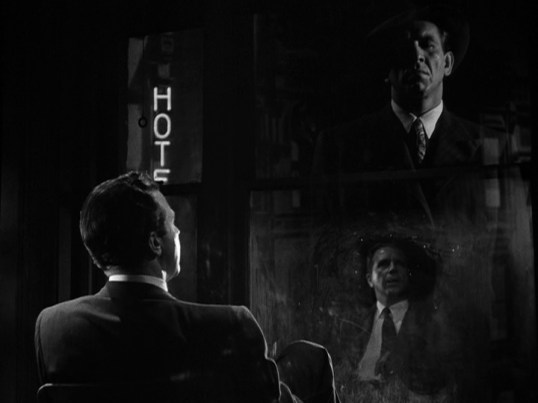
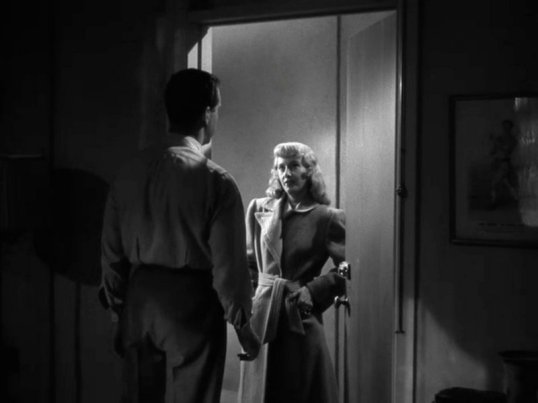
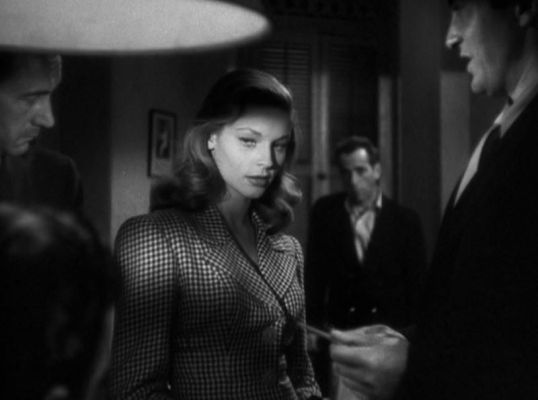
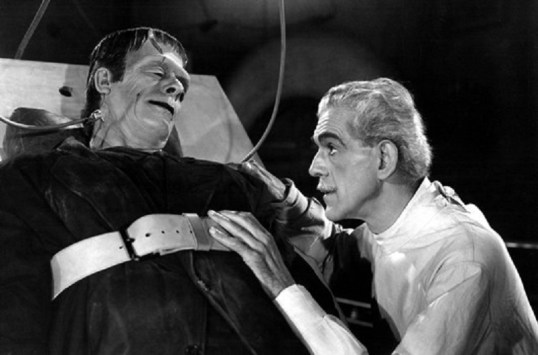
4 Shots From 4 Films: Special 1944 Edition


4 Or More Shots From 4 Or More Films is just what it says it is, 4 shots from 4 of our favorite films. As opposed to the reviews and recaps that we usually post, 4 Shots From 4 Films lets the visuals do the talking!

Today, we pay tribute to the year 1944 with….

4 Shots From 4 1944 Films

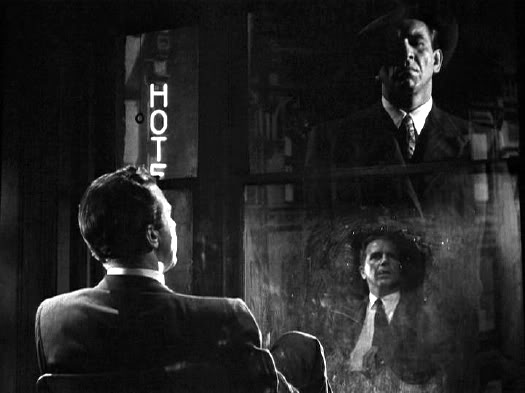
Murder, My Sweet (1944, dir by Edward Dmytryk, DP: Harry J. Wild)

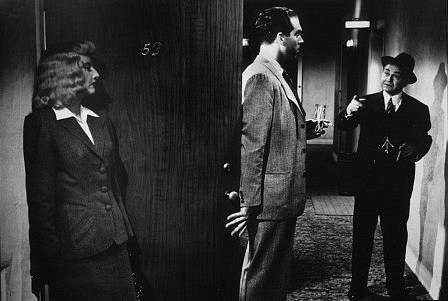
Double Indemnity (1944, dir by Billy Wilder, DP: John Seitz)

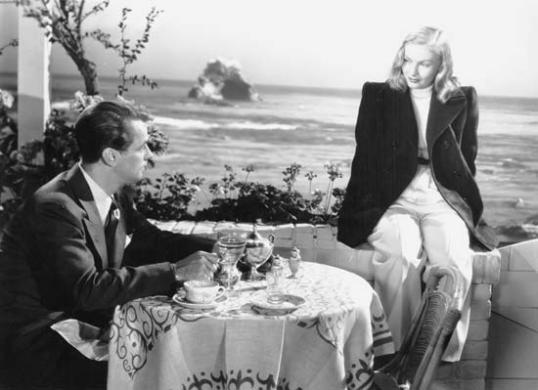
To Have and Have Not (1944, dir by Howard Hawks, DP: Sidney Hickox)

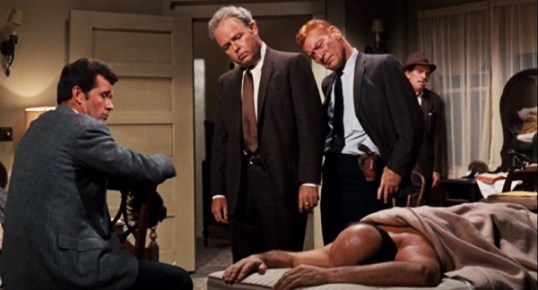
House of Frankenstein (1944, dir by Erle C. Kenton, DP: George Robinson)


4 Shots From 4 Films: Special Billy Wilder Edition


4 (or more) Shots From 4 (or more) Films is just what it says it is, 4 (or more) shots from 4 (or more) of our favorite films. As opposed to the reviews and recaps that we usually post, 4 (or more) Shots From 4 (or more) Films lets the visuals do the talking.

117 years ago today, Billy Wilder was born in what was-then Austria-Hungary and what is today Poland.  Having started his film career as a screenwriter in Germany, Wilder fled to the United States after the rise of Hitler.  (Many members of Wilder’s family would subsequently die in the Holocaust.)  He went on to establish himself as one of the great studio directors, a filmmaker who could seemingly master any genre and whose films were often distinguished by an irreverent wit and a welcome skepticism when it came to accepting any sort of conventional wisdom.  He made the type of films that could only be made by someone who had seen humanity at its worst but who also understood what people were capable of at their best.  Wilder made dramas that could make you laugh and comedies that could make you cry.  He was a master filmmaker, one whose work continues to influence directors to this day.

Today, in honor of Billy Wilder’s legacy, the Shattered Lens presents….

4 Shots From 4 Billy Wilder Films

Double Indemnity (1944, dir by Billy Wilder, DP: John Seitz)

Sunset Boulevard (1950, dir by Billy Wilder, DP: John F. Seitz)

The Apartment (1960, dir by Billy Wilder, DP: Ernest Laszlo)

The Private Life of Sherlock Holmes (1970, dir by Billy Wilder, DP: Christopher Challis)

10 Oscar Snubs From the 1940s


Ah, the 40s! For most of the decade, the world was at war and the Academy’s nominations reflected that fact. The best picture lineups alternated between patriotic films that encouraged the battle against evil and darker films that contemplated both the mistakes of the past and what threats might be waiting in the future.  With the Academy being even more aware than usual that films and awards could be used to send a message, the snubs continued.

1940: John Carradine Is Not Nominated For The Grapes of Wrath

John Carradine’s first credited film appearance was in 1930 but Carradine himself claimed that he had appeared as an uncredited extra in over 70 films before getting that first credit.  Carradine would continue to work until his death 58 years later.  John Carradine did so many films that he was still appearing in new releases in the 90s, years after his death.  He appeared in over 234 films and in countless television shows.  He was a favorite of not only Fred Olen Ray’s but also John Ford’s.

Unfortunately, Carradine was never nominated for an Oscar, despite the fact that he did appear in some classic films.  (He also appeared in a lot of B-movies, which is perhaps one reason why the Academy was hesitant to honor him.)  Personally, I think Carradine most deserved a nomination for playing “Pastor” Jim Casy in John Ford’s The Grapes of Wrath.  Carradine is ideally cast as the former preacher turned labor activist.  When he’s alive, he gives the Joads hope.  When he dies, both the Joads and the audience start to realize how difficult things are truly going to be.

1942: Ronald Reagan Is Not Nominated For Best Supporting Actor For Kings Row

Kings Row is an enjoyably over-the-top small town melodrama and future President Ronald Reagan is fantastic in the film, with his natural optimism providing a nice contrast to the truly terrible things that happen to him and his loved ones over the course of the film.  Reagan was not nominated for this performance, the one that both he and the most of the critics agreed was his best, but he should have been.

1943: Hangmen Also Die Is Not Nominated For Best Picture

Fritz Lang’s anti-Nazi classic was not nominated for Best Picture and only received two nominations (for Sound and Score).  That year, the Best Picture winner was another anti-Nazi classic, Casablanca.

1943: Shadow Of A Doubt Is Ignored

Today, it is recognized as one of Hitchcock’s best but, in 1943, Shadow of a Doubt couldn’t even score a nomination for Joseph Cotten’s wonderfully diabolical turn as Uncle Charlie.  One gets the feeling that the film’s satirical jibes at small town America and its theme of evil hiding behind a normal façade were not what the Academy was looking for at the height of World War II.  It’s a shame because, in many ways, Cotten’s Uncle Charlie was the perfect symbol of the enemy that the Allies were fighting.

1944: Tallulah Bankhead In Not Nominated For Best Actress For Lifeboat

Unlike Shadow of a Doubt, Hitchcock’s Lifeboat received several Oscar nominations.  However, Tallulah Bankhead was not nominated for Best Actress.  Perhaps the Academy was scared of what she might say if she won.

1944: Fred MacMurray and Edward G. Robinson Are Not Nominated For Double Indemnity

For all the nominations that this classic noir received, somehow neither Fred MacMurray nor Edward G. Robinson were nominated for their roles.  Both actors are brilliantly cast against type in this film.  MacMurray uses his trademark casual glibness to portray Walter Neff as being an arrogant man who is hardly as clever as he thinks that he is.  Meanwhile, Robinson’s more introspective performance leaves you with little doubt that, if anyone can solve this case, it’s him.  While Barbara Stanwyck was (rightfully) nominated, it’s had to believe that both MacMurray and Robinson were snubbed.

1946: Thomas Mitchell and Lionel Barrymore Are Not Nominated For Best Supporting Actor For It’s A Wonderful Life

As wonderful as James Stewart and Donna Reed are, it just wouldn’t be Bedford Falls without Uncle Billy and Mr. Potter!  Thomas Mitchell breaks your heart in the scene where he tries to remember what he did with the lost money.  And, for audiences who had just lived through the Great Depression, Lionel Barrymore represented every businessman who cared more about money than people.  It’s impossible to imagine the film without them …. or without Henry Travers, for that matter!  Seriously, very few films have received three best supporting actor nominations but It’s A Wonderful Life deserved to be one of them.

1948: Humphrey Bogart Is Not Nominated For Best Actor For The Treasure of the Sierra Madre

The Treasure of the Sierra Madre received four Oscar nominations.  Somehow, not one of those nominations was not for Humphrey Bogart.

1948 and 1949: Red River, Fort Apache, and She Wore A Yellow Ribbon Are Not Nominated For Best Picture

The public may have loved Westerns but the Academy largely shied away from them, with a few notable exceptions.  Howard Hawks’s Red River and John Ford’s Fort Apache and She Wore A Yellow Ribbon are today all recognized as being classic Hollywood films.  However, the Academy, then at the height of its bias towards “genre” films, didn’t honor any of them.

1949: James Cagney Is Not Nominated For Best Actor For White Heat

“Top of the world, ma!”  Maybe so, but not top of the Oscars.  The Academy was always more interested in honoring Cagney for being a song-and-dance man than for honoring him for his iconic gangster roles.

Agree?  Disagree?  Do you have an Oscar snub that you think is even worse than the 10 listed here?  Let us know in the comments!

Up next: Get ready to hate the commies and to love Ike because the 50s are coming!

4 Shots From 4 Films: Special Billy Wilder Edition


4 (or more) Shots From 4 (or more) Films is just what it says it is, 4 (or more) shots from 4 (or more) of our favorite films. As opposed to the reviews and recaps that we usually post, 4 (or more) Shots From 4 (or more) Films lets the visuals do the talking.

115 years ago today, Billy Wilder was born in what was-then Austria-Hungary and what is today Poland.  Having started his film career as a screenwriter in Germany, Wilder fled to the United States after the rise of Hitler.  (Many members of Wilder’s family would subsequently die in the Holocaust.)  He went on to establish himself as one of the great studio directors, a filmmaker who could seemingly master any genre and whose films were often distinguished by an irreverent wit and a welcome skepticism when it came to accepting any sort of conventional wisdom.  He made the type of films that could only be made by someone who had seen humanity at its worst but who also understood what people were capable of at their best.  Wilder made dramas that could make you laugh and comedies that could make you cry.  He was a master filmmaker, one whose work continues to influence directors to this day.

Today, in honor of Billy Wilder’s legacy, the Shattered Lens presents….

4 Shots From 4 Billy Wilder Films

Double Indemnity (1944, dir by Billy Wilder, DP: John Seitz)

Sunset Boulevard (1950, dir by Billy Wilder, DP; John F. Seitz)

The Apartment (1960, dir by Billy Wilder, DP: Ernest Laszlo)

The Private Life of Sherlock Holmes (1970, dir by Billy Wilder, DP: Christopher Challis)


4 Shots From 4 Films: Happy Birthday Raymond Chandler


4 Shots From 4 Films is just what it says it is, 4 shots from 4 of our favorite films. As opposed to the reviews and recaps that we usually post, 4 Shots From 4 Films is all about letting the visuals do the talking.

Raymond Chandler was born on this date in 1888. He began publishing his short crime fiction in the pages of the pulp magazine Black Mask, and soon became one of the greatest “Hard-Boiled” writers of the 20th Century. Chandler’s detective Philip Marlowe is the most iconic PI in fiction, and his novels and stories have been adapted to the screen numerous times. Here are 4 Shots from the movie works of Raymond Chandler:

rc1

Murder, My Sweet (1944, D: Edward Dmytryk)

rc2

Double Indemnity (1944, D: Billy Wilder)

rc3

The Blue Dahlia (1946, D: George Marshall)

rc4

Marlowe (1969, D: Paul Bogart)

Embracing the Melodrama Part II #45: Double Indemnity (dir by Jack Smight)


di3vh6

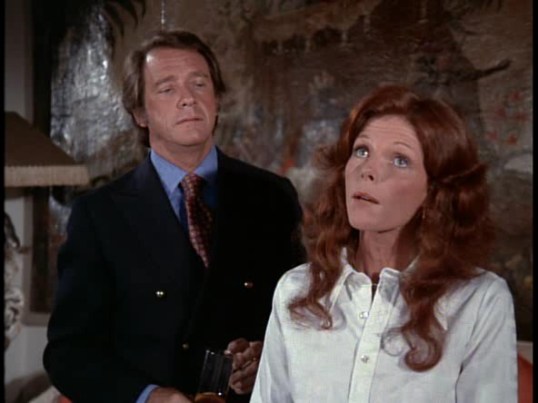
Nothing can make you appreciate a classic film more than by watching a really bad remake.  As proof, I would offer up the 1973 made-for-television version of the classic 1944 film Double Indemnity.  The original Double Indemnity is a classic example of film noir, one that remains intriguing and powerful over 70 years since it was first released.  The remake features the exact same plot as Double Indemnity and a few of the original’s scenes are recreated shot-by-shot but it just does not work.

Part of the problem is that the remake is in color.  In fact, since it was made in 1973 and for television, it’s in very bright and somewhat tacky color.  Bright and vibrant doesn’t work for film noir.  You need the shadows and the visual ambiguities that are unique to black-and-white.  If the original Double Indemnity was full of secrets and mysteries, the remake is all on the surface.  There are no secrets to be found in this remake.

That goes for the cast as well.  In the original, Fred MacMurray made Walter Neff into the epitome of the bored, post-war American male.  You watched him with a certain sick fascination, trying to figure out what was going on behind the blandly friendly facade.  In the remake, you know that Richard Crenna is a serpent from the minute he first appears.  If MacMurray’s Walter was motivated by ennui, Crenna’s Walter is just bad and therefore, far less interesting.  Meanwhile, in the role of Phyllis, Samantha Eggar has none of Barbara Stanwyck’s ferocious determination.  Instead, Eggar’s performance is curiously refined (which is another way to say boring).

Probably the most interesting thing about the remake of Double Indemnity is that the role of Keyes is played by Lee J. Cobb.  Cobb actually gives a pretty good performance and, unlike Crenna and Eggar, he’s actually entertaining to watch.  In the original film, Keyes was played by Edward G. Robinson and was roughly around the same age as Walter.  They were contemporaries and friends and that made the original’s ending all the more poignant.  In the remake, Cobb is quite a bit older than Crenna and, as a result, their relationship feels more paternalistic.  It’s almost as if Crenna is the prodigal son who has betrayed his father and who tells his story as a way of begging for forgiveness.

But that’s probably reading too much into the remake!  For the most part, the remake of Double Indemnity is bland and boring.  The best thing about it is that it’ll make you love the original even more.

As for how I ended up watching the remake of Double Indemnity, it was included as an extra on my DVD of the original.  Watching them back-to-back, as I did, really serves to make you appreciate Billy Wilder as a filmmaker.

Embracing the Melodrama Part II #16: Double Indemnity (dir by Billy Wilder)


Double_indemnity

The 1944 best picture nominee Double Indemnity is probably one of the most imitated films ever made.  While it may not be the first film noir, it is one of the most influential and its plot has been duplicated in countless films.  In fact, it’s such an influential film that all one has to do is say, “Indemnity” and you automatically know that they’re talking about murder.

Most people assume that the film is the story of Walter Neff (Fred MacMurray), an insurance agent who thinks that he’s smarter and smoother than he actually is.  When Phyllis Deitrich (Barbara Stanwyck) approaches him with questions about how much her husband’s life insurance would pay off if his death was accidental, Walter immediately figures out that she’s talking about murder.  At first, Walter tells her that he’s not interested but actually he’s very interested.  Soon, he and Phyllis are lovers (though Walter, from the start, seems to know that Phyllis is just using him) and he’s plotting out her husband’s murder.  After he does kill Phyllis’s husband, Walter makes it look as if he fell from a train.  At first, the death is ruled a suicide but, just as Walter hoped, his best friend and fellow insurance agent, Barton Keyes (Edward G. Robinson), announces that it wouldn’t make any sense for a suicidal man to jump from a slow-moving train.  Instead, Keyes successfully argues that the death should be ruled an accident and, as a result, the life insurance pays out for double of its value.

However, the money makes Walter paranoid.  He starts to worry that Phyllis will betray him.  Even worse, he’s approached by the dead man’s daughter, Lola (Jean Heather).  Lola tells Walter that she believes that Phyllis not only killed her father but her mother as well.  Soon, Walter is involved with both Lola and Phyllis.  Walter claims that he feels guilty and protective of Lola but MacMurray’s wonderfully ambiguous performance leaves us wondering just how much we should trust anything that he has to say.

Now, as I said before, the film may be narrated by Walter Neff and it may be set into motion by his affair with Phyllis but ultimately, the film is not about his relationship with Phyllis.  Instead, it’s about Walter’s friendship with Barton Keyes.  When we first see Walter, he’s recording a confession specifically for Keyes to hear and the film ends not with Walter and Phyllis but instead with Walter and Keyes.

In many ways, Keyes is the opposite of Walter.  Whereas Walter is slick and amoral, Keyes is rather nerdy and ethical to a fault.  Walter respects Keyes for his brilliant mind and, to a large extent, he does what he does because he wants to prove that he’s just as smart as Keyes.  Keyes is the type of man that Walter aspires to be while Walter is the dark side of Keyes’s own obsession with mystery.  It’s only appropriate that the film ends with Walter and Keyes because, ultimately, their friendship is the heart of the film.

Double Indemnity is a classic.  Barbara Stanwyck and Fred MacMurray set the standard by which all future illicit couples would be judged.  But really, the film is stolen by Edward G. Robinson.  Over the course of his long and remarkable career, Robinson was never once nominated for an Oscar.  Watching Double Indemnity, you can’t help but wonder how such an injustice could have happened.