Retro Television Review: CHiPs 3.11 “The Watch Commander”


Welcome to Late Night Retro Television Reviews, a feature where we review some of our favorite and least favorite shows of the past!  On Mondays, I will be reviewing CHiPs, which ran on NBC from 1977 to 1983.  The entire show is currently streaming on Prime!
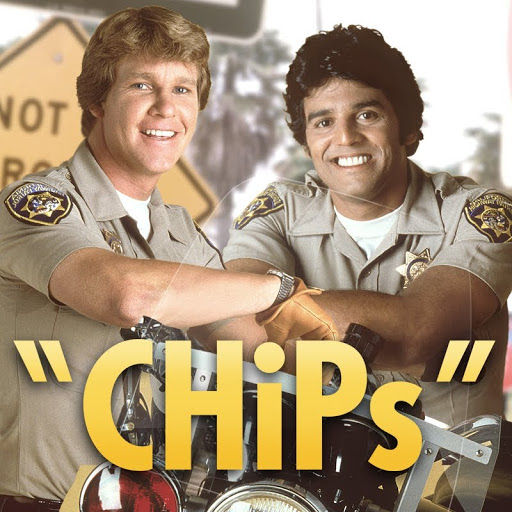
This week, a new boss gets on everyone’s nerves!

Episode 3.11 “The Watch Commander”

(Dir by Don Weis, originally aired on November 17th, 1979)

There’s a new watch commander and he’s not making any friends.  Lt. Harold Bates (Granville Van Dusen) previously worked in the PR Department at Sacramento and he sets out to make a bad impression from the minute that Sgt. Getraer first introduces him to the cops working out of the Los Angeles precinct.  Lt. Bates is all about following the book.  He notes every flaw, from a missed button to poor gas mileage.  Getraer tries to get him to understand that there’s more to being a cop than just following regulations and that being a member of the Highway Patrol means having to make split-second decisions.  Bates wants to know why Ponch isn’t wearing a regulation shirt.

In some ways, this is as close as CHiPs will ever get to The Caine Mutiny.  Nobody removes Bates from command but Bates still struggles to recover from making a terrible first impression and his own Queeg-like personality doesn’t help things.  His attempts to call out the members of the Highway Patrol who get the worst gas mileage backfires when Officer Grossman siphons gas out of Bates’s car, leading to Bates appearing at the bottom of the list.  Bates has no idea how to talk to or trust people.  Jon Baker tries to offer a helping hand, especially since both he and Bates served in Vietnam.  He invites Bates to go skydiving with him over the weekend.  Bates assumes it’s a set-up and turns him down.

We do get the usual car crashes and a subplot about a bunch of thieves who are stealing trucks from loading docks but the majority of this episode takes place at headquarters.  Ponch, who is said to still be on limited duty, is recovering from his accident and one gets the feeling that this episode was developed so Erik Estrada could be a part of the story without actually having to spend too much time on his bike.  (Estrada actually did injure himself during filming and those injuries were written into the show.)  In some ways, this is CHiPs at its most realistic because everyone always hates the new boss, especially one who thinks that he knows everything.

Going back to The Caine Mutiny, it was impossible not to feel sorry for Queeg, who was not a bad guy but instead just someone who wasn’t good at talking to people and who ultimately was let down by the people who should have been supporting him.  I never felt that type of sympathy for Bates, who really did just come across as being a jerk.  Thank goodness for Robert Pine, whose steadiness as Sgt. Getraer is well-used by this episode.  Pine is there to support Bates but he also protects his men.  This episode features Getraer at his most likable.  Everyone should be so lucky as to have a Getraer in their life.

The TSL’s Horror Grindhouse: Scream Blacula Scream (dir by Bob Kelljan)


Am I correct in assuming that everyone knows who Blacula was?

Blacula is often described as being the black Dracula but actually, it’s a little bit more complicated than that.  In life, he was an African prince named Mamuwalde who, in 1780, went to Dracula’s castle and asked for the count’s help in suppressing the slave trade.  Dracula turned him into a vampire instead and, after declaring that Mamuwalde would forever be known as Blacula, he proceeded to lock Mamuwalde in a coffin.  That’s where Mamuwalde remained for 290 years, until he managed to escape.  By that point, his coffin had been relocated from Transylvania to Los Angeles.

All of that was revealed in the 1972 film, BlaculaBlacula, which starred a distinguished Shakespearean actor named William Marshall in the lead role, was a surprise hit so, of course, Mamuwalde (played again by Marshall) returned the following year in a sequel.  It didn’t matter that the first Blacula ended with Mamuwalde deliberately ending his existence by walking out into the sunlight.  Blacula would return!

It also didn’t matter if anyone in the audience for Scream, Blacula, Scream had somehow missed seeing the first movie.  Scream, Blacula, Scream features lengthy flashbacks to the first film.  It makes sense, really.  Why waste money on all new footage when you can just pad the sequel with scenes from its predecessor?

I’m disappointed to say that Scream, Blacula, Scream did not feature any disco action.  When I saw that this movie would be airing on TCM Underground, I decided to watch it specifically because I figured there would be at least one scene of Blacula dancing underneath a spinning disco ball.  I mean, it was a movie from the 70s, right?  Honestly, I think that if Scream, Blacula, Scream had been made later in the decade, it would have featured at least one disco dance scene.

What the film did have was a lot of voodoo.  Judging from this movie, Live and Let Die, and the House on Skull Mountain, it would appear that people in the early 70s were really obsessed with voodoo.  When the movie opens, a voodoo priestess named Mama Loa is dying and she’s just named her apprentice, Lisa (Pam Grier), as the new head of the cult.  Mama Loa’s son, Willis (Richard Lawson), isn’t happy about this decision so, for some reason, he decides that it would be a good idea to bring Blacula back to life.

Willis apparently thought that the revived Blacula would be his servant but it doesn’t work out like that.  First off, Blacula was perfectly happy being dead.  Secondly, he is no one’s servant.  Blacula promptly bites Willis on the neck and then proceeds to vampirize nearly everyone that he comes across.  Soon, Blacula has an army of vampires but all he wants is to be human again.

And who can help him reach that goal?

How about the city’s newest voodoo priestess, Lisa?

Now, I will say this about Scream, Blacula, Blacula.  The main character is named Lisa and that automatically makes it an above average movie.  The entire movie features people saying, “Lisa” over and over again and you know I loved listening to that.

Other than that, though, the movie was kind of a mess.  It was obviously written and filmed in a hurry and, as a result, a lot of the action felt like padding.  For a subplot that wasn’t that interesting to begin with, the voodoo cult power struggle got way too much screen time.  On the plus side, William Marshall and Pam Grier were both a hundred times better than the material that they had to work with.  Regardless of how ludicrous the dialogue was, Marshall delivered it with dignity and just the right hint of ennui.

Scream, Blacula, Scream is not a particularly good film but it’s worth seeing for Marshall and Grier.


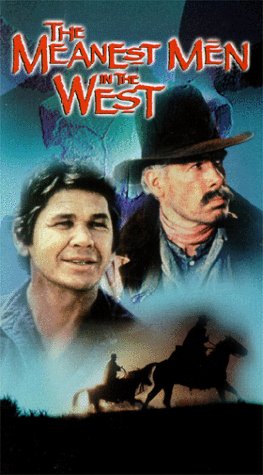
A Movie A Day #142: The Meanest Men In The West (1978, directed by Sam Fuller and Charles S. Dubin)


The Meanest Men In The West may “star” Charles Bronson and Lee Marvin and Sam Fuller may be credited as being one of the film’s two directors but don’t make the same mistake that I made.  Don’t get too excited.

There was once a TV western called The Virginian.  Starring James Drury as a ranch foreman, The Virginian ran for nine seasons on NBC.  A 1962 episode, which was written and directed by Sam Fuller, featured Lee Marvin as a sadistic outlaw who kidnapped The Virginian’s employer, a judge played by Lee J. Cobb.  Five years later, another episode features Charles Bronson as a less sadistic outlaw who kidnapped the Judge’s daughter.

The Meanest Men In The West mixes scenes from those two episode with western stock footage, a bank robbery that originally appeared in The Return of Frank James, an intrusive voice-over, and an almost incoherent prologue, all in order to tell an entirely new story.  Now, Charles Bronson and Lee Marvin are brothers and rivals.  After Marvin snitches on Bronson’s plan to rob a bank, Bronson blames his former friend, The Virginian.  In order to get the Virginian to come to his hideout, Bronson kidnaps Cobb’s daughter.  The Virginian manages to convince Bronson that he didn’t betray him, just to arrive back at the ranch and discover that Cobb has been kidnapped.  Meanwhile, Bronson and his gang set off after Marvin and his gang.  It ends with Charles Bronson, in 1967, shooting at Lee Marvin, who is still in 1962.

The Meanest Men In The West is so clumsily edited that the same shot of Charles Bronson holding a gun is spliced into a dozen different scenes.  Filmed on different film stocks, the Bronson scenes and the Marvin scenes look nothing alike and, since the two episodes were filmed five years apart, James Drury literally ages backwards over the course of the film.

The Meanest Men In The West is for Charles Bronson and Lee Marvin completists only.  I think Bronson and Marvin are two of the coolest individuals who ever existed and even I had a hard time making it through this one.  If you do watch it, keep an eye out for a young Charles Grodin, thoroughly miscast as a tough outlaw.