Horror Novel Review: Dead End by R.L. Stine


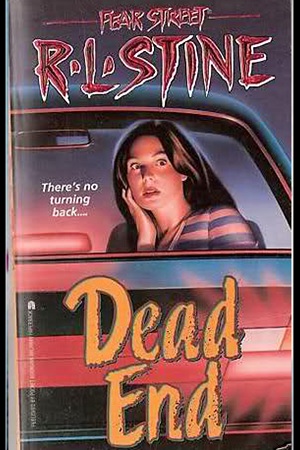
First published in 1995, Dead End begins with Natalie making what seems like the right decision.

Realizing that her boyfriend, Keith, has had way too much to drink at a party, Natalie refuses to ride home with him.  Instead, she joins her friends Carlo, Gillian, and Todd in getting a ride from their sweet and responsible friend, Randee.  Seriously, Keith has already fallen down a flight of stairs and made the party awkward by throwing up all over the place.  Drunks are so annoying!

Anyway, Randee is driving everyone home when a sudden fogs rolls in and makes it difficult to see the road ahead of her.  Uh-oh!  Better pull over until that fog clears up or your might — AGCK!  Randee smashes into a car!  And then she drives off, without even bothering to get out of the car and make sure that the other driver is okay!  Natalie freaks out but all of her friends explain to her why they can’t run the risk of going to the police.  I mean, Randee wasn’t even supposed to be driving the car!  Someone else has a relative in the hospital!  Todd’s father has just started a new job and it would be really awkward if his son got arrested for being a passenger in a car!  Natalie eventually agrees to keep quiet about the accident.

But then, the next day, she discovers that the car they hit belonged to the mayor’s sister.  And now the mayor’s sister is dead!  Can Natalie and her friends keep the secret, even though there now appears to be someone stalking them and doing stuff like leaving spoiled meat around as a warning that they’re dead meat as well?  Can Natalie figure out who the mysterious stalker is before all of her friends are killed?  And will she be able to work out her relationship issues with Keith?  Seriously, priorities!

If this sounds familiar, it’s because R.L. Stine pretty much just transported the plot of I Know What You Did Last Summer to Shadyside and he really didn’t bother to add any surprising twists or turns.  The end result is one of the more forgettable entries in the Fear Street series.  There is one nicely macabre death scene in which someone basically loses their face but otherwise, this is Stine on autopilot.

In the end, I guess the important thing is that the book reminds its readers not to drink and drive and that’s a good thing.  As well, if a sudden fog rolls in, pull over.  It’s just not worth the risk!

10 Oscar Snubs From The 1930s


Ah, the 1930s. America was mired in the Great Depression. FDR was plotting to pack the courts.  The American public, sick of playing by the rules and getting little in return, began to admire gangsters and outlaws.  The horror genre became the new way to vent about societal insecurity. In Europe, leaders were trying to ignore what was happening in Italy, Spain, and Germany. As for the Academy, it was still growing and developing and finding itself. With people flocking to the movies and the promise of an escape from reality, the Academy Awards went from being an afterthought to a major cultural event.

And, of course, the snubs continued.

1930 — 1931: Crime Doesn’t Pay For Little Caesar and The Public Enemy 

When people think about the 1930s, gangsters are probably one of the first things that come to mind.  In the 30s, audiences flocked to movies about tough and streetwise criminals who did what they had to do in order to survive during the Depression.  Unfortunately, the Academy was not always as quick to embrace the gangster genre.  Though The Public Enemy did pick up a nomination for its screenplay, both it and Little Caesar were largely ignored by the Academy.  Not only did the films fail to score nominations for Best Picture but neither James Cagney nor Edward G. Robinson would be nominated for bringing their title characters to life.  It’s a crime, I tells ya.
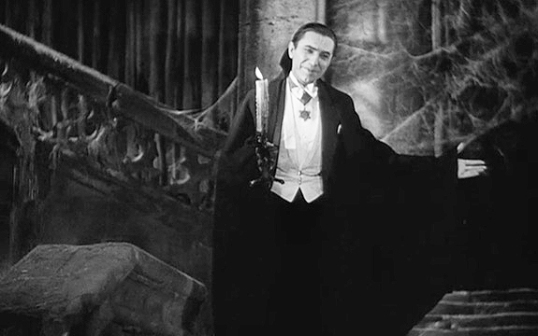
1930 — 1931: Bela Lugosi Is Not Nominated For Best Actor For Dracula

Admittedly, the 1931 version of Dracula is a bit of a creaky affair, one that feels quite stagey to modern audiences.  But Bela Lugosi’s performance in the title role holds up well, despite the number of times that it has been parodied.  Unfortunately, from the start, the Academy was hesitant about honoring the horror genre.

Frankenstein (1931, dir by James Whale)

1931 — 1932: Boris Karloff Is Not Nominated For Best Actor For Frankenstein

Again, the Academy snubbed an iconic horror star.  Not only was Boris Karloff not nominated for Frankenstein but the film itself was not nominated for Best Picture, despite being infinitely better than at least one of the 8 films that were nominated.  (That film, by the way, was Bad Girl.  When is the last time that anyone watched that one?)  In fairness to the Academy, they did honor one horror film at that year’s awards.  Fredric March won Best Actor for Dr. Jekyll and Mr. Hyde.  Of course, he also tied with Wallace Beery, who was nominated for The Champ.  Obviously, the Academy still had to work out its feelings towards the horror genre, a process that continues to this very day.

1932 — 1933: King Kong Is Not Nominated For Best Picture

Oh, poor King Kong.  Film audiences loved him but the Academy totally ignored both him and his film.  Unfortunately, back in 1933, the Academy had yet to introduce a category for special effects.

1932 — 1933: Duck Soup Is Ignored By The Academy

King Kong was not the only worthy film to be ignored at the 1932-1933 Oscars.  The Marx Brothers’s greatest film also went unnominated.

1934: The Scarlet Empress Is Not Nominated For Best Picture

Josef von Sternberg’s surreal historical epic was totally ignored by the Academy.  Not only did it miss out on being nominated for Best Picture but the sterling work of Marlene Dietrich and Sam Jaffe was ignored as well.  How was the opulent set design ignored?  How did it not even pick up a nomination for costume design?  My guess is that Paramount chose to promote Cleopatra at expense of The Scarlet Empress.  Either the way, the Best Picture Oscar was won by one of my favorite films, It Happened One Night.

1935: Fred Astaire and Ginger Rogers Are Not Nominated For Top Hat

Top Hat scored a best picture nomination but the film’s two stars went unnominated.

1936: My Man Godfrey Is Nominated For Everything But Best Picture

My Man Godfrey, a classic screwball comedy, was nominated for Best Actor, Best Actress, Best Supporting Actor, Best Supporting Actress, Best Director, and Best Screenplay but somehow, it was not nominated for Best Picture.  It’s a shame because My Man Godfrey, along being a very funny movie, is also a film that epitomizes an era.  Certainly, it’s far more entertaining today than the film that won Best Picture that year, The Great Ziegfeld.  (Interestingly enough, William Powell played the title role in both Godfrey and Ziegfeld.)

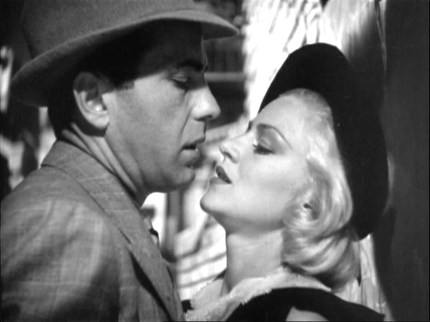
1937: Humphrey Bogart Is Not Nominated For Best Supporting Actor in Dead End

Dead End featured one of Bogart’s best gangster roles.  As a gangster who returns to his old neighborhood and is rejected by his own mother, Bogart was both menacing and, at times, sympathetic.  Like Cagney and Robinson, Bogart definitely deserved a nomination for his portrayal of what it was like to live a life of crime.  Unfortunately, Bogart was an actor who was taken for granted for much of his career.  It wasn’t until he played Rick Blaine in Casablanca that the Academy would finally nominate him.

The Adventures of Robin Hood (1938, dir by Michael Curtiz)

1938: Errol Flynn Is Not Nominated For Best Actor In The Adventures of Robin Hood

This is truly one of the more shocking snubs in Academy history.  Errol Flynn’s performance as Robin Hood pretty much set the standard for every actor who followed him.  Russell Crowe is undoubtedly a better actor than Flynn was but Crowe’s dour interpretation of Robin could in no way compete with the joie de vivre that Flynn brought to the role.

Agree?  Disagree?  Do you have an Oscar snub that you think is even worse than the 10 listed here?  Let us know in the comments!

Up next: 1940s, in which Hollywood joins the war effort and the snubs continue!

Dead End (1937, dir by William Wyler)

4 Shots From 4 Films: Special Humphrey Bogart Edition


4 Shots From 4 Films is just what it says it is, 4 shots from 4 of our favorite films. As opposed to the reviews and recaps that we usually post, 4 Shots From 4 Films lets the visuals do the talking.

Today is not just Christmas!  It is also Humphrey Bogart’s birthday!  Bogart was born 121 years ago, today!  And that means that it’s time for….

4 Shots From 4 Films

Dead End (1937, dir by William Wyler)
Casablanca (1943, dir by Michael Curtiz)

The Big Sleep (1946, dir by Howard Hawks)

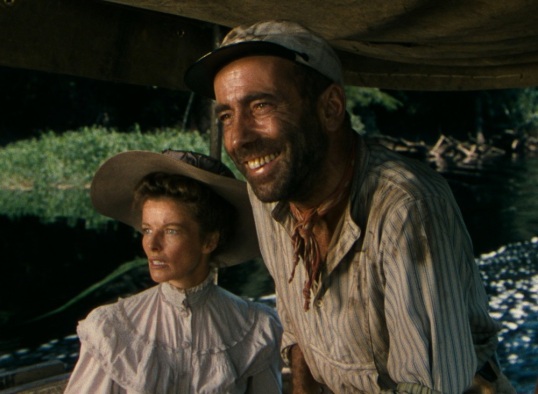
The African Queen (1951, dir by John Huston)

Film Review: Dead End (dir. by William Wyler)


Originally released in 1937, Dead End is a gangster film with social conscience.  Based on a Broadway play and featuring a screenplay by the iconic progressive writer Lillian Hellman, Dead End is a crime film that’s more interested in the root causes of crime than in crime itself.

Dead End takes place over the course of one day in the slums of New York City.  While tenement children spend their time swimming in the East River and idealizing gangsters, wealthy people live in high-rise apartments and depend on the police and their doorman (played, naturally enough, by Ward Bond) to keep them protected from the poor people living next door.

Among the poor is Drina (Sylvia Sidney), who divides her time between marching on a picket line and trying to keep her younger brother Tommy (Billy Halop) from hanging out with the local street gang, the Dead End Kids (Huntz Hall, Bernard Punsly, Leo Gorcey, and Gabriel Dell).  Drina’s childhood friend is Dave (Joel McCrea), an idealistic architect who is having an affair with a rich man’s mistress (Wendy Barrie).

Complicating things is the arrival of Baby Face Martin (Humphrey Bogart).  Like Dave, Martin grew up in the slums.  However, while Dave is trying to escape by making an honest living, Martin has already escaped by choosing a life of crime.  Now, he’s viewed as a hero by Tommy and his friends and with wariness by Dave and Drina who know that Martin’s presence will eventually lead to the police invading their home.  Martin, however, is more concerned with seeing his mother (Marjorie Main) and his ex-girlfriend (Clare Trevor), who has become a prostitute and is suffering from syphilis.

For a film that was made close to 80 years ago, Dead End holds up pretty well.  Is this because it’s a brilliant film or just because the connection between poverty and crime has remained one of the constants of human history?  It’s probably a combination of both.  Considering that Dead End was filmed on a Hollywood backlot, it’s a surprisingly gritty and realistic film that only occasionally feels a bit stagey.  The film’s entire cast does a good job of bringing this particular dead end to life, though the obvious star of the film is Humphrey Bogart.  As played by Bogart, Baby Face Martin is both sympathetic and despicable, the epitome of the potential that can be found and wasted in any American city.

Dead End was nominated for best picture but lost to The Life of Emile Zola.  The film also received a much deserved nomination for best art design but lost to Lost Horizon while Clare Trevor lost the race for best supporting actress to Alice Brady, who won for In Old Chicago.  Perhaps most surprisingly of all, Humphrey Bogart did not even receive a nomination for his excellent work in Dead End.  Meanwhile, the film’s tough gang of street kids proved to be so popular that they, as a group, were cast in several other films.  Originally credited as the Dead End Kids (and later known as the Bowery Boys), they ended up making a total of 89 films together.  With the possible exception of Angels With Dirty Faces, none of those films are as highly regarded as Dead End.

AMV of the Day: Dead End (Mirai Nikki)


Time for a new “AMV of the Day” and the first one that features the recently licensed supernatural horror (w/ some romance) anime series Mirai Nikki aka Future Diary.

“Dead End” is the title of the AMV and it features the two leads of the series. There’s the loner Yuki Amano and Yuno Gasai. The latter being the pink-haired girl who seems to be quite smitten with the quieter Yuki. The video itself doesn’t spoil much about the main story in the series, but it does give a hint as to the peculiar relationship between these two people. The loner (not hikikomori-level but getting there) and the slightly unhinged yandere.

This video would’ve been perfect for the horror-themed October, but alas I had just recently found this little gem which uses the song “You Make Me Feel” by trip hop group Archive. The song itself fits in well with the scenes chosen and edited together for the video. It really highlights the soft and extreme nature of Yuki and Yuno’s relationship as the song goes from hard trip hop bass line beats to the band’s frontwoman’s ethereal-sounding vocals.

So, much props to the video’s creator, Himura Kenshin, for this well-made AMV and for creating a video that could easily act like a trailer for the series.

Anime: Mirai Nikki

Song: “You Make Me Feel” by Archive

Creator: Himura Kenshin

Past AMVs of the Day