The Unnominated #10: The Long Goodbye (dir by Robert Altman)


Though the Academy of Motion Picture Arts and Sciences claim that the Oscars honor the best of the year, we all know that there are always worthy films and performances that end up getting overlooked.  Sometimes, it’s because the competition too fierce.  Sometimes, it’s because the film itself was too controversial.  Often, it’s just a case of a film’s quality not being fully recognized until years after its initial released.  This series of reviews takes a look at the films and performances that should have been nominated but were, for whatever reason, overlooked.  These are the Unnominated.

Elliott Gould is Phillip Marlowe!

If I had to pick one sentence to describe the plot of 1973’s The Long Goodbye, that would be it.  Robert Altman’s adaptation of the Raymond Chandler detective novel loosely follows Chandler’s original plot, though Altman did definitely make a few important changes.  Altman moved the story from the 50s to the then-modern 70s, replacing Chandler’s hard-boiled Los Angeles with a satirical portrait of a self-obsessed California, populated by gurus and hippies.  And Altman did change the ending of the book, taking what one could argue is a firmer stand than Chandler did in the novel.  In the end, though, the film really is about the idea of Chandler’s tough detective being reimagined as Elliott Gould.

Rumpled, mumbling, and with a permanent five o’clock shadow, Gould plays Marlowe as being an outsider.  He lives in a shabby apartment.  His only companion is a cat who randomly abandons him (as cats tend to do).  With his wardrobe that seems to consist of only one dark suit, Marlowe seems out-of-place in the California of the 70s.  When Marlowe’s friend, Terry Lennox (Jim Bouton), asks Marlowe to drive him to Mexico, one gets the feeling that Lennox isn’t just asking because Marlowe’s a friend.  He’s asking because he suspects Marlowe would never be a good enough detective to figure out what he’s actually doing.

After Terry’s wife is murdered, Marlowe is informed that 1) Terry has committed suicide and 2) Marlowe is now a suspect.  Convinced that Terry would have never killed himself, Marlowe investigates on his own.  He meets Marty Augustine (Mark Rydell), a gangster who demands that Marlowe recover some money that he claims Terry stole.  Marty seems like an almost reasonable criminal until he smashes a coke bottle across his girlfriend’s face.  (One of Marty’s bodyguards is played by a silent Arnold Schwarzenegger.)  Meanwhile, Terry’s neighbors include an alcoholic writer named Roger Wade (Sterling Hayden) and his wife, Eileen (Nina van Pallandt).  Like Marlowe, Roger is a man out-of-time, a Hemingwayesque writer who has found himself in a world that he is not capable of understanding.  Henry Gibson, who would later memorably play Haven Hamilton in Altman’s Nashville, appears as Wade’s “doctor.”

Marlowe, with his shabby suits and a cigarette perpetually dangling from his mouth, gets next to no respect throughout the film.  No one takes him seriously but Marlowe proves himself to be far more clever than anyone realizes.  Elliott Gould gives one of his best performances as Marlowe, playing him as a man whose befuddled exterior hides a clear sense of right and wrong.  Gould convinces us that Marlowe is a man who can solve the most complex of mysteries, even if he can’t figure out where his cat goes to in the middle of the night.  His code makes him a hero but it also makes him an outsider in what was then the modern world.  The film asks if there’s still a place for a man like Phillip Marlowe in a changing world and it leaves it to us to determine the answer.

Frequently funny but ultimately very serious, The Long Goodbye is one of the best detective films ever made.  Just as Altman did with McCabe & Mrs. Miller, he uses the past to comment on what was then the present.  And, just as with McCabe & Mrs. Miller, The Long Goodbye is a film that was initially released to mixed reviews, though it would later be acclaimed by future viewers and critics.  Whereas McCabe & Mrs. Miller received an Oscar nomination for Julie Christie’s performance as Mrs. Miller, The Long Goodbye was thoroughly snubbed by the Academy.  Altman, Gould, Hayden, and the film itself were all worthy of consideration but none received a nomination.  Instead, that year, the Oscar for Best Picture went to The Sting, a far less cynical homage to the crime films of the past.
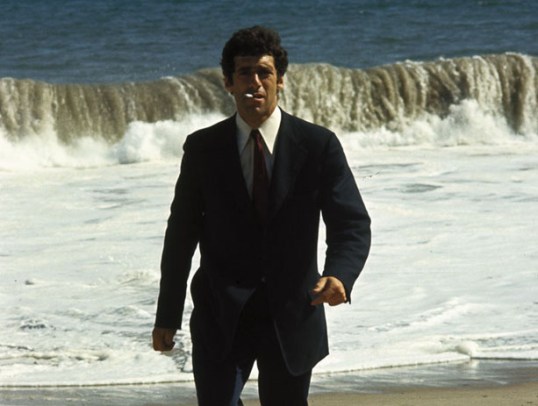
The Long Goodbye (1973, directed by Robert Altman)

Previous entries in The Unnominated:
  1. Auto Focus 
  2. Star 80
  3. Monty Python and The Holy Grail
  4. Johnny Got His Gun
  5. Saint Jack
  6. Office Space
  7. Play Misty For Me
  8. The Long Riders
  9. Mean Streets

Lisa Reviews A Palme d’Or Winner: M*A*S*H (dir by Robert Altman)


With the Cannes Film Festival underway, I have been watching some of the past winners of the prestigious Palme d’Or.  On Thursday night, Jeff and I watched the winner of the 1970 winner of the Grand Prix (as the Palme was known at the time), Robert Altman’s M*A*S*H.

There are, of course, three versions of M*A*S*H.  All three of them deal with the same basic story of Dr. Hawkeye Pierce and his attempts to maintain his sanity while serving as a combat surgeon at the 4077th Mobile Army Surgical Hospital during the Korean war.  All three of them mix comedy with the tragedy of war.  However, each one of them takes their own unique approach to the material.

The one that everyone immediately thinks of is the old television series, which ran for 11 seasons and which can be found on Hulu and on several of the retro stations.  The television series starred Alan Alda as Hawkeye.  I’ve watched a handful of episodes and, while the episodes that I’ve seen were undeniably well-acted and well-written and they all had their heart in the right place, the show’s deification of Hawkeye can get to be a bit much.  Not only is Hawkeye the best surgeon at the 4077th, he’s apparently the best surgeon in all of Korea.  In fact, he may be the best surgeon on the entire planet.  Not a single thing happens in the camp unless Hawkeye is somehow involved.  When a nurse is killed by a landmine in one episode, the focus is not on the other nurses but instead on how Hawkeye feels about it.  When bombs are falling too close to the camp, the focus is again only on Hawkeye and how much he hates the war.  If you didn’t already know that he hated the war, Hawkeye will let you know.  Wish Hawkeye a good morning and he’ll yell at you about how many people are going to be wounder by the end of the day.  Even when one agrees with Hawkeye, the character’s self-righteousness can be a bit much.

Less well-known is the first version of M*A*S*H, a short and episodic novel that was published in 1968.  The novel was written by Dr. Richard Hornberger, who actually had served in Korea at a M*A*S*H unit and who reportedly based Hawkeye on himself.  The book is a rather breezy affair.  Reading it, one can definitely tell that it was inspired by someone telling Hornberger, “Your stories about Korea are so funny and interesting, you should write them down!”  The book avoids politics, reserving most of its ire for military red tape.  Hornberger was a Republican who so disliked Alan Alda’s interpretation of Hawkeye that, when he wrote a sequel to M*A*S*H, he included a scene in which Hawkeye talked about how much he enjoyed beating up hippies.

And then there’s the version that came in between the book and the television series, the 1970 film from Robert Altman.  The film retains the book’s episodic structure while also throwing in the anti-war politics that would define the television series.  (Though the film was set in the 50s, Altman purposefully made no attempt to be historically accurate because he wanted it to be clear that this film was more about Vietnam than Korea.)  From its opening, the film announces its outlook, with shots of helicopters carrying severely wounded (possibly dead) soldiers to the camp while a song called Suicide is Painless plays on the soundtrack.  The song was written by director Robert Altman’s fourteen year-old son, Mike.  Reportedly, it took Mike five minutes to come up with the lyrics.  When the instrumental version of the song was later used as the theme song for the television series, Mike Altman made over a million dollars in royalties.

The film opens with Hawkeye Pierce (Donald Sutherland) and Duke Forrest (Tom Skerritt) arriving at the 4077th MASH in a stolen jeep and it ends with them getting sent home in the same jeep.  Though Duke is set up to be a major character, he soon takes a backseat to another surgeon, the unfortunately nicknamed Trapper John (Elliott Gould).  Much as with the television series, the movie centers around Hawkeye and Trapper John’s antics.  When they’re not in the operating room, they’re drinking, carousing, and playing pranks that are far more mean-spirited than anything the television versions of the characters would have ever done.  (Indeed, the book and movie versions of Hawkeye probably would have hated Alan Alda’s Hawkeye.)  Unlike the television version of Hawkeye, the film’s Hawkeye is not the best surgeon in Korea.  In fact, he’s not even the best surgeon at the 4077th.  (That honor goes to Trapper.)  Instead, he’s just one of many doctors on staff.  They’re rotated in and then, at the end of their tour, they’re rotated out.  Hawkeye loses as many patients as he saves.  The film’s doctors are not miracle workers, nor are they crusaders.  Instead, they are overworked, neurotic, often exhausted, and frequently bored whenever there aren’t any wounded to deal with.  The film emphasizes that the doctors are as professional inside the Operating Room as they’re rambunctious outside of it.  Unlike the television series, Hawkeye doesn’t joke while working.  He’s usually too busy trying to stop his patients from bleeding to death to tell jokes or to complain about the war that brought them to the OR.

Indeed, the film version of M*A*S*H communicates its anti-war message not through indignant speeches but instead through bloody imagery.  The operating room scenes don’t shy away from showing the ugliness of war and they are occasionally so visceral that they almost seem to shame the audience for have laughed just a few minutes earlier.  One of the film’s more famous (and controversial) sequences features Hawkeye driving Frank Burns (Robert Duvall) to insanity by crudely taunting him about his affair with head nurse Margaret Houlihan (Sally Kellerman).  Burns attacks Hawkeye, a response that actually seems rather justified even if it is played for laughs.  A scene of Burns being driven out of the camp in straitjacket is followed by a close-up of a geyser of blood erupting from a wounded soldier’s throat.  It’s a jarring transition but one that makes a stronger anti-war statement than any self-righteous monologue would have.  While Hawkeye and Trapper are taunting Burns and Margaret, soldiers are still being sent off to die.

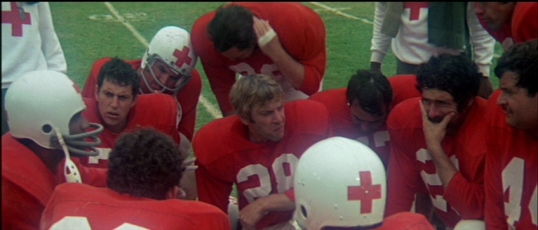
The humor in M*A*S*H is often brutally misogynistic.  Margaret is described as being “a damn good nurse” but is continually humiliated because she believes in maintaining military discipline.  One can disagree with her emphasis on following all of the proper regulations while also realizing the Hawkeye and Trapper’s treatment of her is unreasonably cruel.  The scene where Trapper and Hawkeye expose her while she’s taking a shower is especially difficult to watch and there’s no way to justify their actions.  It’s frat boy humor, the type of stuff that you would expect from a bunch of former college football players, which is what we’re told Hawkeye and Trapper are.  (That, of course, is another huge difference between the film and television versions of the characters.)  That said, it’s debatable whether or not were supposed to find either Hawkeye or Trapper to be heroic or even likable.  As a director, Robert Altman shied away from making films with unambiguous heroes or villains.  Just as Margaret could be a “damn good nurse” and a “regular army clown” at the same time, Hawkeye can be both a dedicated doctor and a bit of a jerk.

After 90 minutes of bloody operating room scenes and Trapper and Hawkeye making crude jokes, M*A*S*H suddenly becomes a sports film as the the 4077th plays a football game against their rivals, the 325th Evac Hospital.  The change of tone can be a bit jarring but it’s perhaps the most important sequence in the film.  For a few hours, the doctors bring “the American way of life” to Korea and the end result is a game that’s played for money and which is only won through cheating and deception.  (Future blaxploitation star Fred Williamson made his film debut as the ringer who the 4077th recruits for the game.)  For all of the broad comedy of the game, it’s followed by a shot of the doctors playing poker while a dead soldier is transported out of the camp, wrapped in a white sheet.  Football may provided a distraction.  The money may have provided an incentive.  But the war continued and people still died.

Much of M*A*S*H‘s humor has aged terribly but the performances still hold up and the anti-war message is potent today.  Though Sutherland and Gould are undeniably the stars of the film, M*A*S*H is a true ensemble film, full of the overlapping dialogue and the small character performances that Robert Altman’s films were known for.  One reason why the film works is because it is an immersive experience, the viewer truly does feel as if they’ve been dropped in the middle of an operating field hospital.  Though Hawkeye and Trapper may be at the center of the action, every character, from the camp’s colonel to the lowliest private, seems to have their own story playing out.  This a film where paying attention to the little things happening in the background is often more rewarding than paying attention to the main action.  I particularly liked the performances of David Arkin as the obsequies Staff Sergeant Vollmer and Bud Cort as Pvt. Warren Boone.  Boone, especially, seems to have an interesting story going on in the background.  The viewer just has to keep an eye out for him.  Also be sure to keep an eye out for Rene Auberjonois, who reportedly improvised one of the film’s best-known lines when, after Margaret demands to know how Hawkeye reached a position of authority in the army medical corps, he deadpanned, “He was drafted.”

One of the first major studio films to be openly critical of the military and the war in Vietnam, M*A*S*H won the Palme d’Or, defeating films like Investigation of a Citizen Above Suspicion and The Strawberry Statement.  Unlike many Palme winners, it was also a box office success in the United States.  Though controversial, it received an Oscar nomination for Best Picture.  However, unlike the Cannes jury, the Academy decided to honor a different film about war, Patton.

Shattered Politics #38: Nashville (dir by Robert Altman)


Nashville-Cover

“Oh we must be doin’ somethin right to last 200 years…”

— Haven Hamilton (Henry Gibson) in Nashville (1975)

The 1975 Best Picture nominee Nashville is the epitome of an ensemble film.  It follows 24 characters as they spend five days wandering around Nashville, Tennessee.  Some of them are country music superstars, some of them are groupies, some of them are singers looking for a first break, and at least one of them is an assassin.  The one thing that they all have in common is that they’re lost in America.  Released barely a year after the resignation of Richard Nixon and at a time when Americans were still struggling to come to terms with the turmoil of the 60s, Nashville is a film that asks whether or not America’s best days are behind it and seems to be saying that they may very well be.  (That’s a question that’s still being asked today in 2015.)  It’s appropriate, therefore, that Nashville both takes place in and is named after a city that everyone associates with perhaps the most stereotypically American genre of music that there is.

Nashville follows 24 characters, some of whom are more interesting than others.  For five days, these characters wander around town, occasionally noticing each other but far more often failing to make any sort of connection.

Haven Hamilton (Henry Gibson) is a veteran star, a somewhat comical character who sings vapid songs about home and family and who smiles for the public while privately revealing himself to be petty and vain.  His son, Bud (Dave Peel), is a Harvard graduate who acts as his father’s business manager.  Oddly enough, Haven is an unlikable character until the end of the film when he suddenly reveals himself to be one of the few characters strong enough to keep Nashville for descending into chaos.  Meanwhile, Bud seems to be a nice and modest guy until he takes part in humiliating another character.

Haven’s lover is Lady Pearl (Barbara Baxley), who owns a nightclub and spends most of the film drinking.  Much like Haven, she starts out as a vaguely comical character until she finally gets a chance to reveal her true self.  In Pearl’s case, it comes when she delivers a bitter monologue about volunteering for Bobby Kennedy’s presidential campaign.

Haven’s lawyer is Delbert Reece (Ned Beatty), an obsequies good old boy who is married to gospel singer Linnea (Lily Tomlin).  They have two deaf children.  Linnea has learned sign language.  Delbert has not.  Over the course of the film, both Delbert and Linnea will be tempted to cheat.  Only one of them actually will.

And then there’s Barbara Jean (Ronee Blakley), a mentally unstable singer who has come to Nashville with her manipulative husband/manager, Barnett (Allen Garfield).  Almost every character in the film wants something from Barbara Jean.  A mostly silent Vietnam veteran named Kelly (Scott Glenn) claims that his mother knows Barbara Jean.  A nerdy guy named Kenny (David Hayward) comes to Nashville just to see her perform.

Both Kelly and Kenny end up getting to know Mr. Green (Keenan Wynn), a rare Nashville resident who doesn’t seem to care about music.  However, Mr. Green’s spacey niece, L.A. Joan (Shelly Duvall), is obsessed with having sex with as many musicians as possible.

Among those being targeted by L.A. Joan is Tom Frank (Keith Carradine), one-third of the folk trio Bill, Mary, and Tom.  Unknown to Bill (Allan F. Nicholls), Tom is sleeping with Bill’s wife, Mary (Cristina Raines).  Unknown to Mary, Tom is sleeping with almost every other woman in Nashville as well.  When Tom takes to the stage at Pearl’s nightclub and sings a song called I’m Easy, the audience is full of women who think that he’s specifically singing to them.

http://www.youtube.com/watch?v=Fj6bvtylW9I

Another one of Tom’s songs, the appropriately titled “It Don’t Worry Me,” is frequently sung by Albuquerque (Barbara Harris), who spend the entire film trying to get discovered while hiding out from her much older husband, Star (Bert Remsen).

Another aspiring star is Sulleen Grey (Gwen Welles), who is a tone deaf waitress who suffers the film’s greatest humiliation when she agrees to perform at a political fund raiser without understanding that she’s expected to strip while singing.  Trying to look after Sulleen is Wade (Robert DoQui), who has just been released from prison.

And then there’s the loners, the characters who tend to pop up almost randomly.  Norman (David Arkin) is a limo driver who, like everyone else in Nashville, wants to be a star.  The hilariously bitchy Connie White (Karen Black) and the bland Tommy Brown (Timothy Brown) already are stars.  (The character of Tommy Brown is one of Nashville’s oddities.  He’s listed, in the credits, as being a major character but he only appears in a few scenes and never really gets a storyline of his own.)  There’s the Tricycle Man (Jeff Goldblum), a silent magician who mysteriously appears and disappears throughout the film.

And, finally, there’s Opal (Geraldine Chaplin), an apparently crazed woman who is wandering around Nashville and pretending to be a reporter for the BBC.  (It’s never specifically stated that Opal is a fake but it’s fairly obvious that she is.)  How you feel about the character of Opal will probably determine how you feel about Nashville as a whole.  If you find Opal to be a heavy-handed caricature, you’ll probably feel the same way about the rest of the film.  If you find the character of Opal to be genuinely amusing with her increasingly pretentious musings, you’ll probably enjoy Nashville.

There is one more very important character in Nashville.  He’s the character who literally holds the film together.  He’s also the reason why I’m including Nashville in this series of reviews about political films.  That character is named Hal Phillip Walker and, though he’s never actually seen in the film, he’s still the driving force behind most of what happens.  Walker is a third-party presidential candidate, a man who seems to be universally admired despite the fact that his campaign appears to just be a collection of vapid platitudes.  Walker’s campaign manager, John Triplette (Michael Murphy), comes to Nashville and sets up the Walker For President rally.  That’s where Nashville reaches its violent and not-all-together optimistic climax.

Reportedly, Nashville is a favorite film of Paul Thomas Anderson’s and you can see the influence of Nashville in many of Anderson’s films, from the large ensemble to the moments of bizarre humor to the refusal to pass judgement on any of the characters to the inevitable violence that ends the film.  Also, much like Anderson’s films, Nashville seems to be a film that was specifically made to divide audiences.  You’re either going to think that Nashville is a brilliantly satirical piece of Americana or you’re going to think it’s a self-indulgent and self-important mess.

As for me, I think it’s great and I think that, after you watch it, you should track down and read Jan Stuart’s The Nashville Chronicles: The Making of Robert Altman’s Masterpiece.  It’s the perfect companion for a great film.