4 Shots From 4 Films is just what it says it is, 4 shots from 4 of our favorite films. As opposed to the reviews and recaps that we usually post, 4 Shots From 4 Films is all about letting the visuals do the talking.
4 Shots From 4 Holiday Films
4 Shots From 4 Films is just what it says it is, 4 shots from 4 of our favorite films. As opposed to the reviews and recaps that we usually post, 4 Shots From 4 Films is all about letting the visuals do the talking.
4 Shots From 4 Holiday Films
Tonight, on Circle of Fear, bratty Robert (played by Leif Garrett) discovers that an upstairs door in his family’s new apartment building leads to someplace very unexpected. His older sister, Peggy (Susan Dey), doesn’t believe him but she soon learns the error of her ways.
This episode is really creepy and atmospheric and I don’t want to spoil too much of it. It was written by Jimmy Sangster, who also did several Hammer films, and it was directed by Daryl Duke. To be honest, this episode reminds me of the episode of Lost where Jack stumbles across the ghosts of Ben’s parents outside of the cabin. It has a similar, dream-like feel to it.
The episode originally aired on January 26th, 1973.
Tonight’s episode of Ghost Story is full of stars!
Evil grandpa comes to visit his family and, with the help of voodoo cookies (you read that right), he tries to manipulate his deaf and mute granddaughter into helping him kill everyone! Grandpa is played by Melvyn Douglas. His granddaughter is played by Jodie Foster! And the script was written by none other than Robert Bloch and Richard Matheson!
This episode originally aired on November 10th, 1972.
Harry Freeman (Robert Culp) is a radio talk show host in California who specializes in abusing his listeners. They call in and they tell Harry their problems and their opinions and then Harry tells them that they’re stupid and whiny. Despite (or maybe because of) his abrasive style, Harry is very popular. Everyone on the California coast listens to him in the morning.
When a depressed teenage girl named Ingrid (Elayne Heilveil) calls his show and says that she’s going to kill herself, Harry doesn’t taker her seriously and tells her to go ahead and do it. It’s only after he hangs up on her that he realizes that she might have actually been telling the truth. When Harry calls the cops to tell them about the call, they treat him in much the same way that he treated Ingrid. They refuse to take him or Ingrid seriously.
Not getting any help from the police, Harry turns to his listeners. He asks them to help him track down Ingrid and to keep her from harming herself. The film alternates between scenes of Ingrid meeting people throughout the day and then Harry in his studio, taking calls from those people. Since Ingrid is no longer listening to Harry’s show, she has no idea that people are looking for her and it becomes a race against time to find her before she carries out her plans.
A Cry For Help is largely a showcase for Robert Culp, a talented actor whose career was often harmed by his own independence and reputation for being abrasive. That reputation made him the perfect choice to play Harry and Culp gives a terrific performance as a not particularly nice man trying to do the right thing for once. Interestingly, the film keeps it ambiguous as to whether Harry has really had an attack of conscience or if he’s just trying to save Ingrid for the publicity and the ratings. Even at the end of the film, it’s hard to know if Harry was really worried about Ingrid ending her life or if he was just looking to promote himself.
Along with Culp, the film’s cast is a who’s who of 70s television actors. Among those who Ingrid and Harry deal with during the day: Michael Lerner, Bruce Boxlietner, Ken Swofford, Chuck McCann, Julius Harris, and Gordon Jump. Seeing Jump in the film was especially interesting since he would later star in another production about the potential power of radio, WKRP In Cincinnati.
A Cry For Help is a suspenseful made-for-TV movie from 1975. It’s never been released on DVD but it is on YouTube.
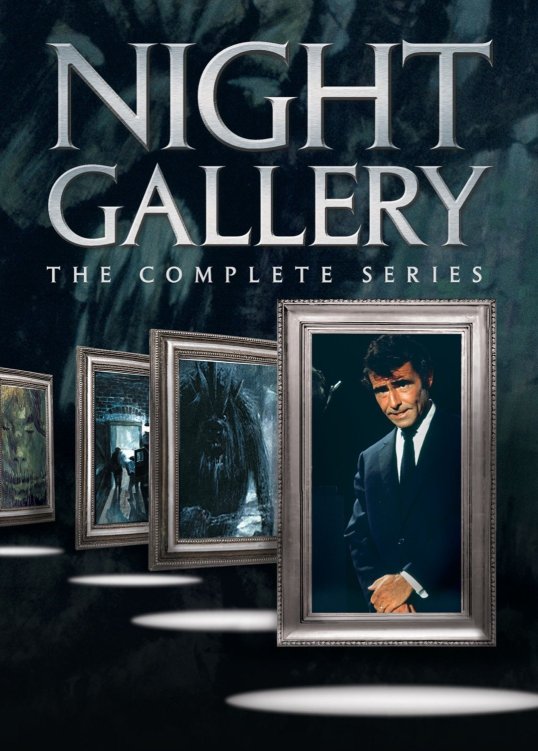
The first season of Night Gallery came to a conclusion on January 20th, 1971. Though the first season was undoubtedly uneven, it did end on a high point. The first segment in the 6th episode, They’re Tearing Down Tim Riley’s Bar, is widely considered to be the best episode of Night Gallery and one of Rod Serling’s best teleplays. It also brought Night Gallery one of it’s few Emmy nominations when it was nominated for Outstanding Single Program of the year. (It lost to The Andersonville Trial, a theatrical adaptation that was produced for PBS.)
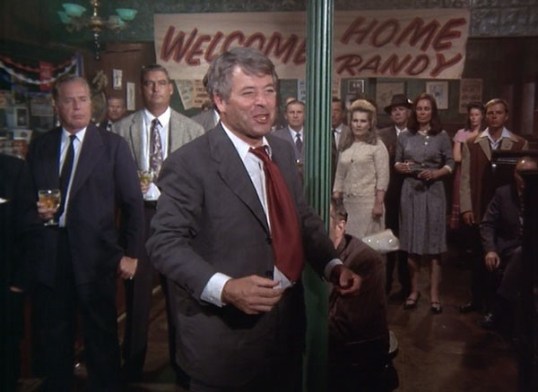
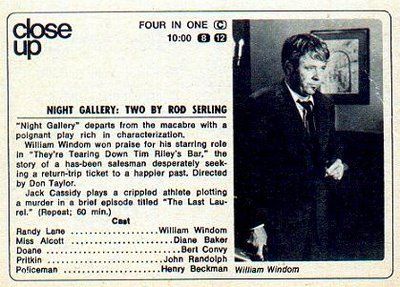
They’re Tearing Down Tim Riley’s Bar (dir by Don Taylor, written by Rod Serling)
They’re Tearing Down Tim Riley’s Bar tells the story of Randy Lane (William Windom). In 1945, Sgt. Randy Lane returned home from serving in World War II, a war hero who had a wonderful future ahead of him. He had just gotten married. He had just gotten a good job at an up-and-coming company called Pritzker Plastics. When he came home, the first place he went was Tim Riley’s Bar, where his father and the other bar patrons toasted him and told him to look forward to the future.
Twenty-five years later, the middle-aged Randy Lane is looking at his life and asking, “Is this as good as it gets?” He’s now a sales director at Pritzker Plastics but his boss (John Randolph) doesn’t appreciate him, his assistant (Bert Convy) is plotting to steal his job, and the only person who seems to care about him is his sympathetic secretary (Diane Baker). Randy’s wife died in 1952, while Randy was out of a sales call. Randy now lives alone. Even his neighborhood bar — Tim Riley’s Bar — has closed and been abandoned. With the bar schedule to be torn down, Randy wonder what happened to all of the promise and happiness of the past.
When Randy goes by the deserted bar and looks through the front window, he’s shocked to see all of his old friends and his father waving at him. But when Randy rushes into the bar to join them, he discovers the bar is deserted. Later, Randy is at work when suddenly, he sees Pritzker Plastics the way it was back in 1948. Even later, when he enters his house, he finds himself standing in a hospital hallway in 1952, once again getting the news that his wife has died.
In many ways, They’re Tearing Down Tim Riley’s Bar is an atypical Night Gallery segment. Though there are hints of the supernatural throughout the story, it’s hardly a work of horror. Instead, it’s a rather melancholy meditation on aging, disappointment, and regret. Is the past forever lost? Can things ever be as good as they once were? These are the questions that are raised in this well-directed and well-acted segment.
The Last Laurel (dir by Daryl Duke, written by Rod Serling)
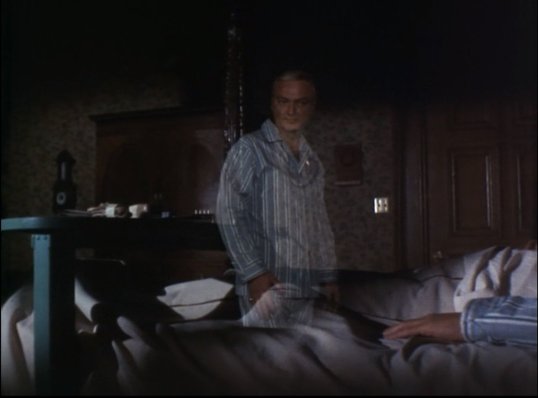
Clocking in at 8 minutes, The Last Laurel is yet another segment about a bitter man (in this case, Jack Cassidy) who suspects that his wife (in the case, Martine Beswick) is cheating on him with his doctor (in this case, Martin E. Brooks) so he teaches himself a supernatural skill in order to get revenge. In this case, it involves astral projection. Not surprisingly, it ends with a twist that’s pretty much dependent on one of the characters doing something extremely stupid.
The Last Laurel is well-acted but predictable. It’s not bad but, especially when compared to something like They’re Tearing Down Tim Riley’s Bar, it feels rather insubstantial. It feels like filler.
The first season of Night Gallery came to an end with an excellent episode. Starting tomorrow — season 2!
Previous Night Gallery Reviews:
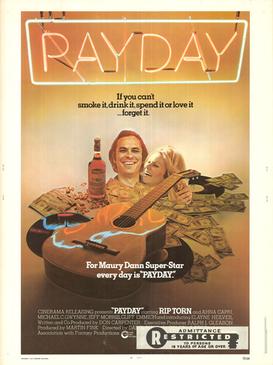
First released way back in 1972, Payday tells the story of Maury Dann (played by the late, great Texas actor, Rip Torn).
Maury is a country singer. He sings songs about wholesome values and good country girls. His music isn’t exactly ground-breaking but his fans still love him and it’s easy to see why. The movie opens with Maury performing in a small, country club and his charisma is undeniable. He has a good singing voice and he easily dominates the stage. Between songs, he flashes a friendly but slightly mischievous smile. After his performance, he is perfectly charming when he meets his older fans. And, when he meets a younger fan, he takes her outside and has sex with her in the backseat of his Cadillac. He does this while her boyfriend is wandering around the parking lot looking for her.
Maury is a man who is in control when he’s on stage. However, when he’s off-stage, the real Muary comes out. When he’s not singing and basking in the applause of his fans, Maury is …. well, he’s a total mess. Actually, mess doesn’t quite do justice to just how screwed up Maury Dann is. He cheats on his girlfriend. He pops pills constantly. He treats the members of his band with a casual cruelty. When Maury’s off-stage, that charming smile changes into a rather demented smirk. Just when you think Maury’s done the worst possible thing that he could do, he does something even worse.
Payday follows Maury as he is driven through the South, singing songs and ruining lives. Along the way, he gets into a fight with his mother and then a fight with his ex-wife and eventually, a fight with the boyfriend of that younger fan from the start of the movie. We watch as Maury drinks, bribes DJs, and frames his employees for all sorts of crimes. It’s an episodic film about a man who seems to understand that he’s destined to self-destruct no matter what he does.
Payday is very much a film of the early 70s. Though the film may be about a self-destructive country star, it’s hard not to suspect that — as with most of the films from that era — Maury and his adventures were meant to be a metaphor for America itself. Country Western is a uniquely American genre and by showcasing the damage that Maury does to everyone around him, the film seems to be suggesting that Maury’s sins are also America’s sins. The people who idolize Maury and make him a star despite all of his flaws are the same people who reelected Richard Nixon and supported sending young men to die in Vietnam.
It’s all a bit much for one film to carry on its shoulders and spending two hours with Maury Dann is not exactly a pleasant experience but the film works because of the performance of Rip Torn. When Torn died earlier this week, there was a lot of discussion about which performance was his best. Quite a few people on twitter cited his roles in Defending Your Life and The Larry Sanders Show. I personally mentioned The Man Who Fell To Earth and Maidstone. But if you really want to see what made Rip Torn such a great actor, you simply must watch Payday. Maury is a jerk with little in the way of redeeming qualities but Torn gives such a fearless and cheerfully demented performance that it’s impossible not to get caught up in his story. As much as you want to look away, you can’t because Rip Torn keeps you so off-balance that you cannot stop watching. Torn is smart enough to play Maury with just enough self-awareness that the character becomes fascinatingly corrupt as opposed to just being a self-centered jerk.
Finally, Payday simply feels authentic. The film was made way before my time but I’m a Southern girl who has spent enough time in the country to know that the backroads of rural America haven’t changed that much over the past few decades. At times, while watching Payday, I felt like I was back on my granduncle’s farm in Arkansas, walking through high grass and listening to the cicadas while watching the sun go down.
Payday is definitely a film that’s worth the trouble to track down. Watch it and appreciate the fearless genius of the great Rip Torn.
4 Shots From 4 Films is just what it says it is, 4 shots from 4 of our favorite films. As opposed to the reviews and recaps that we usually post, 4 Shots From 4 Films is all about letting the visuals do the talking.
4 Shots From 4 Holiday Films