October True Crime: Murder So Sweet (dir by Larry Peerce)


1993’s Murder So Sweet, also known a Poisoned By The Love: The Kern County Murders (seriously, try to say that ten times fast), tells the story of Steven David Catlin.

Steven David Catlin lived in Bakersfield, California.  Catlin was a career criminal who was married six times and who found some personal redemption for himself as a member of the pit crew for a professional race car driver in Fresno.  Trust me, I’ve lived in enough small, country towns to know that people will overlook a lot as long as someone knows how to work on a car.

One thing that people noticed about Catlin is that the people around him had a habit of dying of mysterious illnesses.  Multiple wives, his adoptive parents, they all died with fluid in their lungs and they left behind not only a medical mystery but also quite a bit of money for Steven David Catlin.  Catlin would always insist on holding a cremation just days after his loved ones passed away.  Not only did that allow Catlin to move on but also kept anyone from being able to do a thorough autopsy.

Eventually, the police figured out that Catlin was just poisoning anyone who got on his nerves or threatened to divorce him.  He wasn’t even a particularly clever poisoner.  He used paraquet, a highly toxic herbicide and he kept the bottle sitting in plain view in his garage.  He might as well have just labeled it his “Poisoning Thermos.”  Catlin was convicted of multiple murders and he was sentenced to die in 1990.  Of course, this being California, Catlin is sill alive and sitting in San Quentin.  This really is a case of “If you lived in Texas, you’d be dead by now.”

In Murder My Sweet, Catlin is played Harry Hamlin, who steals the film as a dumb but charming redneck who walks with a confident swagger and has no fear of hitting on his ex-wife, even after he realizes that she’s trying to convince the police that he’s a murderer.  Helen Shaver played Edie Bellew, the ex who knows better than to trust Catlin.  Her current husband is played by Terence Knox and there’s plenty of scenes of him telling Edie that she needs to back off and that everyone knows that Steve Catlin isn’t a murderer.  In many ways, this is the ultimate Lifetime film in that Edie Bellew not only gets to put her ex-husband in prison but she also proves that her current husband doesn’t know what he’s talking about.

Murder My Sweet takes place in rural California and, as a result, everyone in the film speaks with a shrill country accent and we spend a lot of time in a really tacky beauty parlor.  Indeed, the film portrayal of country eccentricity is so over-the-top that I was tempted to say that it seemed as if the director was trying to rip-off David Lynch.  However, Lynch may have made films about eccentric characters but he never portrayed them as being caricatures.  Lynch loved his eccentrics while this film takes a bit of a condescending attitude towards them.  Still, it’s worth watching for Harry Hamlin’s sleazy turn as Steve Catlin, a guy who enjoys fast cars and making ice cream.

Just don’t eat that ice cream….

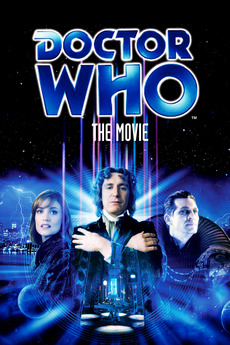
Doctor Who (1996, directed by Geoffrey Sax)


Paul McGann had the potential to be a great Doctor.

There’s a lot of negative things that can be said about the controversial 1996 attempt to reboot Doctor Who but I don’t think anyone can dispute that Paul McGann gave it his best.  Released during the period between the end of the original series and the 2005 revival, the 1996 version of Doctor Who features Sylvester McCoy’s Doctor getting gunned down by a San Francisco street gang and regenerating into Paul McGann.  McGann was a youthful Doctor, in the spirit of Peter Davison’s take on the character.  He played the role with a lot of enthusiasm and optimism.  If the 1996 film had led to the series getting revived, it’s easy to imagine Paul McGann making the role his own and becoming as identified with the Doctor as David Tennant and Matt Smith.

The presence of Sylvester McCoy was another praiseworthy aspect of the television film.  Though the TV movie is rightfully criticized for rewriting a good deal of the show’s continuity, it was still smart enough to bring back both McCoy and the TARDIS.  I wish McCoy had gotten a a more heroic death, though getting gunned down by a street gang is still more exciting than the bump on the head that led to Colin Baker turning into Sylvester McCoy in the first place.

The film features the newly regenerated Doctor trying to stop The Master (Eric Roberts) from using an artificial black hole known as the Eye of Harmony to destroy the Earth.  For some reason, the Eye of Harmony is located inside of the Doctor’s TARDIS and the Master needs to access the TARDIS so he can access the eye.  Meanwhile, the Doctor has just regenerated and doesn’t have all of his memories yet so he’s only fighting at half-strength.  Actually, the less said about the plot, the better.  The plot doesn’t make much sense.  Though Eric Roberts might seem like the perfect choice to play The Master, he doesn’t bring much to the role.  Roberts plays The Master as just being another generic villain, with none of the wit that Roger Delgado, Anthony Ainsley, or even Derek Jacobi brought to the role.

The most controversial part of the movie comes when the Master discovers that the Doctor is half-human, which is something that feels like it was forced on the production by an American television executive.  They probably thought that the audience wouldn’t be able to relate to the Doctor unless he has some human blood but it actually robs the character of the mystery that made him so popular.  Part of the Doctor’s appeal is that he’s an enigma but the television movie gives him an origin that seems like it was lifted from a comic book.  I guess we should just be happy that the people who made the film understood that Doctor Who wasn’t actually the character’s name.

Doctor Who was meant to be a pilot for a revival of the show, one that would have been an American/British co-production.  It didn’t lead to a reboot and I guess we should be happy about that because the weakest moments of the movie are the moments that were obviously designed to appeal to an American television audience, like the Doctor dealing with a very 90s street gang or sharing a kiss with an ER doctor.  It’s easy to imagine that the film would have led to a series that would have had more in common with The X-Files than the original Doctor Who.  With the film not leading to a series, Doctor Who would have to wait another 9 years before finally getting rebooted.

Still, it’s hard not to regret that Paul McGann didn’t get more opportunities to play the Doctor.  With a better script, he could have been one of the great ones.