Gangster William Kroner (Bernard Nedell) and his henchman Martino (Eduardo Ciannelli) frame teenager Gabe Ryan (Frankie Thomas) for setting several buildings on fire. Because Gabe has just gotten out of reform school and is a member of a local neighborhood gang, they know that no one will believe him or his sister, Joy (Ann Sheridan).
What Kroner and Martino did not count on were the Dead End Kids (Billy Halop, Bobby Jordan, Leo Gorcey, Gabriel Dell, Huntz Hall, and Benard Punsley). They’re not going to sit by while the adults send their friend to jail. Plus, one of their friends was killed in one of the fires. The kids are out for revenge and sympathetic district attorney Pat Remsen (Ronald Reagan) is on their side.
As a publicity stunt, the city is holding an election for “Kid Mayor.” The Kid Mayor gets to run the city for a week. What could go wrong? Billy Halop decides to run for Kid Mayor so that he can order the arrest of Kroner and then beat a confession out of him.
Angels Wash Their Faces was one of the last of the studio-made Dead End Kid films. After this one, they would be sent down to Poverty Row and their films would be more obviously comedic. Angels Wash Their Faces starts out as a juvenile delinquent drama, with Gabe struggling to rebuild his life and keep on the right track. Then it becomes a goofy comedy, with Billy Halop running for mayor and unleashing vigilante justice on the bad guys. I’m not sure that any city would actually give the “kid mayor” the power to lock people up. Whoever came up with the idea of a kid mayor should be run out of politics.
On the positive side, Ann Sheridan is beautiful. Future president Reagan is his usual friendly self. On the negative side, the movie, overall, lacks the edge that made the first few Dead End Kids films memorable and the Dead End Kids themselves seem to be pretty much interchangeable. Huntz Hall would have made a better mayor.
Bob Randall (John Wayne) is a coast guard boatswain, headquartered in Alaska where he and the members of his crew battle evil seal poachers like oily Phil Morgan (Russell Hicks). When Randall returns to port after his latest patrol, he has to deal with two disappointments. First off, he is passed over for a promotion to commanding officer, even though everyone knows that he deserves it. Instead, the promotion goes Lt. Commander Mays (William Blakewell), the son of a commander (George Irving). Mays doesn’t even want the job. He’s scared of the water and he’d rather fly airplane as a part of the Coast Guard’s aviation force. Bob is disappointed but he’s a professional and he’s going to support Mays. Secondly, Bob’s girlfriend (Nan Grey) witnesses a murder and is kidnapped by Phil Morgan. Bob and his sidekick (dependable western mainstay Fuzzy Knight) go undercover as fisherman to try to find her.
The Sea Spoilers was the first of six B-movies that John Wayne did for Universal. Wayne, who had been stuck in the B’s for a while, was trying to prove that he was more than just a singing cowboy so, in this one, he plays a tough and ready sailor. Wayne is convincing in the role, even if the movie is really just a western set in what was then modern day Alaska. Though only 30, Wayne shows the no-nonsense professionalism that would become his trademark once he became one of the world’s biggest movie stars. Unlike some of Wayne’s early films, it’s possible to see the icon that John Wayne would eventually become while watching him here. The Sea Spoilers is only 66 minutes long but fans of the Duke should enjoy it.
Finally, The Sea Spoilers was written by George Waggner. Waggner would later go on to direct the original Wolf Man.
The 1944 film, Lady in the Death House, tells the tragic and faintly ridiculous story of Mary Kirk Logan (Jean Parker).
The daughter of a small-time criminal, Mary has spent most of her life trying to escape from her family’s legacy of crime. She’s even got a job, working at the same bank that her father once tried to rip off. Of course, at work, everyone knows her as Mary Kirk and they have no idea that her father was the infamous Tom Logan. If that information got out, Mary would lose her job and no longer be able to take care of herself or her younger sister, Suzy (Marcia Mae Jones).
One night, Mary is out on a date with a clumsy man who takes her out to a nightclub and manages to accidentally set Mary’s dress on fire. Luckily, Dr. Brad Braford (Douglas Fowley) is there, having a drink with his friend, the famous criminologist, Charles Finch (Lionel Atwill). Brad jumps into action, extinguishing the fire and saving Mary’s dress. It’s love at first sight.
There’s just one problem. Dr. Bradford is studying ways to bring the dead back to life and, in order to raise money for his research, he’s been working as the state’s executioner. When someone goes to the electric chair, Brad is the one who pulls the lever. Mary says that she can only marry Brad if he gives up his electrifying night job.
However, before Brad can turn in his letter of resignation, Mary is arrested for the murder of Willis Millen (Dick Curtis), a crook who once knew her father. Mary swears that she’s innocent but there are two eye witnesses who testify that they not only heard Mary and Willis fighting but that they also saw the shadow of someone hitting Willis over the head with a lamp. It doesn’t take long for the jury to reach a verdict:
I have to admit that, when this newspaper appeared on-screen, I was actually more curious about the “youth” who was arrested for stealing glitter off of campaign signs. However, for whatever reason, the film declines to follow up on that story. Instead, we watch as Mary goes to death row, with the knowledge that she is to die “at the hand of the man I love.”
However, there may still be hope! Charles thinks that Mary is innocent. Though there’s only 24 hours left before Brad is scheduled to execute Mary, Charles launches an investigation of his own. But even if Charles is able to find the evidence that exonerates Mary, will he be able to contact the governor in time? Or will Mary go to the chair?
Well, regardless of what happens, rest assured that this World War II-era film will end with an appeal for all movie goers to do the right thing and buy war bonds.
Lady in the Death House is an entertaining but fairly ludicrous little movie. I mean, realistically, having the executioner execute his own fiancée is a huge conflict of interest. It seems like they could have gotten a substitute executioner, if just for one night. But, if they did that, we wouldn’t get the melodramatic highlight of Mary announcing that she’s scheduled to be killed “by the hand of the man I love.”
Lady in the Death House provides a rare chance to see Lionel Atwill in a heroic role. The British actor played a countless number of mad scientists, killers, and Nazis before his premature death in 1946. (Atwill’s promising career was derailed in 1943, when he accused of hosting orgies at home and was subsequently convicted of perjury. That’s one reason why Atwill turned up in a “poverty row” feature like this one.) Atwill is convincing as Charles Finch. The same superior attitude that made him a good villain also makes him believable as the only person capable of figuring out who murdered Willis Millen.
Taking on its own terms, Lady in the Death House is a fun movie. If nothing else, it provides a lesson on how to get a message to the governor, even if no one’s quite sure where he is for the evening. That’s an important lesson to learn!
The 1943 film Whispering Footsteps opens with Mark Borne (John Hubbard) getting ready for his day. In his bedroom, at the boarding house where he lives, Mark turns on his radio and hears a news report of a double murder in a nearby town. Two girls have been strangled.
As the news report says that the killer has brown hair, Mark brushes his brown hair.
As the news report says that the killer has brown eyes, Mark looks at his brown eyes in the mirror.
As the news report says that the killer has a “lean, intelligent” face, the camera focuses on Mark’s lean, intelligent face.
Finally, as the news report says that the killer was wearing a gray, double-breasted suit, Mark puts on gray, double-breasted suit.
Yes, Mark looks just like the murderer and that quickly becomes a problem for him as he attempts to go about his day. When he walks to his job at the local bank, he notices that he’s being followed by a detective (Cy Kendall). When Mark later tries to take his lunch break, he again finds himself being followed. Desperate to escape from the detective, Mark steps into a bookstore and buys a random book. It’s only once he steps outside that Mark discovers that the title of the book is Psychology of the Homicidal.
Mark is a respectable member of the community but, because he looks like a serial killer, everyone in town soon starts to gossip about him. Why does he go for so many walks? Why does he sometimes seem to be in a bad mood? Could he be a murderer? Even the other residents of the boarding house start to view him with suspicion. Every time that she sees him, Rose Murphy (Juanita Quigley) screams.
Of course, Rose screams whenever anything happens. For instance, when she is shown a newspaper story about a local murder, Rose screams. Whenever anyone walks up behind her, Rose screams. Whenever anyone says hi to her, Rose screams. When a woman is found strangled in the basement, Rose screams again. Admittedly, it’s easy to get annoyed with Rose’s constant screaming but, in that last case, she’s probably justified.
Anyway, Mark only has one person on his side and that’s Brook (Rita Quigley), the daughter of his boss. And yet, at one point, Brook finds herself being chased through the night by a man in a double-breasted suit. Is Mark guilty or does he just have the worst luck in the world?
If nothing else, Whispering Footsteps will keep you guessing. Up until the last minute of the film, you’re never sure whether Mark is innocent or guilty. Who is the monster, the film asks. Is it Mark or is it the gossips who have decided to judge him? As convincingly played by John Hubbard, Mark starts out as upbeat and just a little bit shallow but, by the end of the movie, he’s become a haunted and paranoid man, embittered by the town’s refusal to believe in him. Charles Halton, as Mark’s self-righteous boss, and Rita Quigley provide good support. Less successful are some awkward attempts at humor. It won’t take you long to get tired of Rose screaming.
Clocking in at 52 minutes, Whispering Footsteps was obviously meant to be the second part of a double feature. It’s a well-done examination of guilt, innocence, and gossip. See it on a double bill with In A Lonely Place.
The title of the 1937 film They Won’t Forget works on many levels.
It describes the reaction of a small Southern town, following the brutal murder of teenager Mary Clay (played, in her film debut, by Lana Turner). The town won’t forget Mary and they won’t forget the terror caused by her murder. They also won’t forget that local teacher Robert Hale (Edward Norris) was accused of the crime.
The district attorney, Andrew Griffin (Claude Rains), hopes that the people of his state won’t forget his efforts to see Griffin convicted of that crime. Griffin wants to be elected to the U.S. Senate and he knows that the high profile case could be just what his career needs.
The Governor (Paul Everton) knows that, if he steps into the case and acts on his suspicion that Hale is innocent, the voters of his state will never forget. And they certainly won’t be willing to forgive.
And, on a larger level, the title lets us know that the South and the North will never forget the Civil War and the conflict between the two regions. The film opens with three elderly veterans of the Confederate Army, preparing to march in the town’s annual Confederate Memorial Day parade and admitting to each other that, after all these years, it’s difficult to remember much about the war other than the fact that they’re proud that they fought in it.
It’s while the rest of the town is busy watching Griffin and the governor ride in the parade that Mary Clay is murdered. It’s easy to assume that Hale was the murderer because Hale was one of the few townspeople not to go to the parade. You see, Hale is originally from New York City. When he’s accused of murder, it’s equally easy for Griffin and tabloid reporter William A. Brock (Allyn Joslyn) to convince the town people to blame this Northern intruder for both the murder of Mary Clay and, symbolically, for all of the post-Civil War struggles of the South itself.
Meanwhile, up North, Hale is seen as a victim of the South’s intolerance. A high-profile lawyer (Otto Kruger) is sent down to defend Hale but, as quickly becomes clear, everyone involved in the case is more interested in refighting the Civil War than determining the guilt or innocence of Andrew Hale.
They Won’t Forget is a hard-hitting and fascinating look at politics, justice, and paranoia. It’s all the more interesting because it’s based on a true story. In 1913, a 13 year-old girl named Mary Phagan was murdered in Atlanta. Leo Frank was accused and convicted of the murder. (In Frank’s case, he was born in Texas but was also Jewish and had previously lived in New York before moving to Atlanta, all of which made him suspicious in the eyes of many.) On the word of a night watchmen, who many believe was the actual murderer of Mary Phagan, Leo Frank was convicted and sentence to death. After spending days reviewing all of the evidence and growing convinced that Frank had been wrongly convicted, Georgia’s governor committed an act of political suicide by commuting Frank’s sentence to life imprisonment. Leo Frank was subsequently lynched and the man who had prosecuted the case against him was subsequently elected governor.
Well-acted and intelligently directed, They Won’t Forget is probably one of the best films of which few people have heard. Fortunately, it shows up fairly regularly on TCM and, the next time that it does, be sure to watch. It’s a great film that you won’t easily forget.
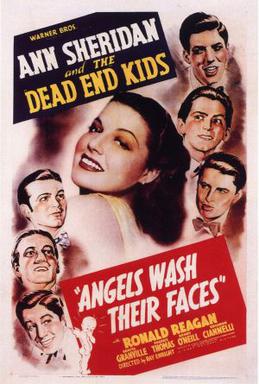 Gangster William Kroner (Bernard Nedell) and his henchman Martino (Eduardo Ciannelli) frame teenager Gabe Ryan (Frankie Thomas) for setting several buildings on fire. Because Gabe has just gotten out of reform school and is a member of a local neighborhood gang, they know that no one will believe him or his sister, Joy (Ann Sheridan).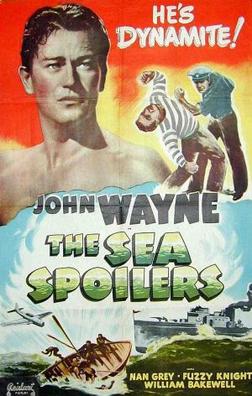


 Through the Shattered Lens