I review COOGAN’S BLUFF (1968) – starring Clint Eastwood!


Here at The Shattered Lens, we’re looking forward to celebrating the birthday of Clint Eastwood on May 31st. In anticipation, I decided to revisit COOGAN’S BLUFF (1968). 

Clint Eastwood is Coogan, a tough as nails deputy sheriff from Arizona, who’s ordered by his boss, Sheriff McCrea (Tom Tully) to go to New York City and bring back the escaped killer James Ringerman (Don Stroud). When he gets to New York, he’s informed by Lieutenant McElroy (Lee J. Cobb) that Ringerman has overdosed on LSD while in the state’s custody, he’s now in the Bellevue Hospital, and he will not be released to Coogan until the state Supreme Court says so. Stuck in the Big Apple with nothing to do but flirt with probation officer Julie Roth (Susan Clark), Coogan decides to take matters into his own hands and get Ringerman out of the hospital early. He bluffs the attendants at the hospital into turning Ringerman over to him so he can catch the first plane back to Arizona. It seems like a good plan until he’s ambushed by Ringerman’s girlfriend Linny (Tisha Sterling) and his friend Pushie (David Doyle), he gets conked on the head, and he loses both his gun and his prisoner. Now, in trouble with Lieutenant McElroy and Sheriff McCrea, Coogan is ordered back home to Arizona. Determined to get Ringerman at any cost, Coogan stays in the city and leaves a trail of broken hearts and bruised bodies on his way to capturing his man! 

Made in 1968 after Eastwood’s string of excellent spaghetti westerns with Sergio Leone, COOGAN’S BLUFF may be set in contemporary times, but Coogan still seems to be a product of the old west. A big part of the fun is watching him interact with the people of New York City, where everyone is trying to take advantage of him, whether it be the cab driver, the hotel clerk, or the hooker down the hall. When he finally gets to the police station, he sees a building that’s completely overrun with criminals and crazies. He soon finds that Lieutenant McElroy follows the law down to the letter, while he treats the law as more of a set of suggestions on his way to getting the bad guys. This leads to endless frustration and almost gets Coogan arrested multiple times throughout the film as he doesn’t want to deal with all the red tape. One thing that doesn’t change whether Coogan is in Arizona or New York is his success with the ladies. They all swoon and he more than willingly obliges. The only problem for his prospect of true love is the fact that getting his guy always comes first, and he’ll use that sex appeal to get whatever information he needs. One of the main action scenes in this film, the bar fight, is set up ironically when the woman he’s “using” turns the tables and instead sets him up to be pummeled. 

COOGAN’S BLUFF is Eastwood’s first film with director Don Siegel, with whom he’d make DIRTY HARRY a few years later. You can definitely see the genesis of Harry Callahan in Walt Coogan, a man who does whatever it takes to stop criminals, is quick with a whip, and usually pisses off his superiors along the way. In some ways, you could say that Walt Coogan set the mold for the hero of cop films for the next couple of decades! It also has that sense of humor that would be a mark of Eastwood’s cop films. This one includes a funny thread that runs throughout where every person he meets assumes he’s from Texas because he wears a cowboy hat, and he always corrects them that he’s from Arizona. I get this as I always make sure people know that I’m from Arkansas! 

Overall, I really enjoy COOGAN’S BLUFF due mainly to Clint Eastwood’s excellent performance in the lead role. It was a great start to his “post Leone” career and would influence action movie heroes from that point forward. 
Days of Paranoia: The Anderson Tapes (by Sidney Lumet)


In 1971’s The Anderson Tapes, Sean Connery stars as Duke Anderson.

Duke is a career criminal, a safecracker who has just spent ten years in prison.  He’s released, alongside Pops (Stan Gottlieb), who spent so much time behind bars that he missed two wars and the Great Depression, and the quirky Kid (Christopher Walken, making his film debut).  Duke immediately hooks up with his former girlfriend, Ingrid (Dyan Cannon), and decides to rob the luxury apartment building where Ingrid is now living.

Of course, Duke will have to put together a crew.  It’s not a heist film without a quirky crew, is it?  Duke recruits the Kid and Pops.  (The Kid is happy to be in the game but he’s not a fan of violence.  Pops, meanwhile, has none of the skills necessary for living in the “modern” world and would much rather return to prison.)  Duke also brings in the flamboyant Tommy Haskins (an overacting Martin Balsam) and driver Edward Spencer (Dick Anthony Williams).  Duke goes to the mob for backing and Pat Angelo (Alan King) gives it to him on the condition that he take along a sociopathic racist named Socks (Val Avery) and that Duke kills Socks at some point.  Duke reluctantly agrees.

So far, this probably sounds like a conventional heist film.  Director Sidney Lumet mixes comedy and drama with uneven results but, overall, he does a good job of ratcheting up the tension and The Anderson Tapes is a good example of one of my favorite mini-genres, the “New Yorkers will be rude to anyone” genre.  At first glance, Sean Connery seems to be playing yet another super smooth operator, a confident criminal with a plan that cannot fail.  Duke seems like a criminal version of James Bond,  However, as the film progresses, we start to suspect that things might be getting away from Duke.  When Duke has to go the Mafia for support and is told that killing Socks is now a part of the job, we see that Duke isn’t as in-control of the situation as we originally assumed.  This is the rare Sean Connery film where he has someone pushing him around.

(Apparently, Connery took this role as a part of his effort to escape being typecast as Bond.  Perhaps that explains why Duke seems like almost a deconstruction of the James Bond archetype.)

Of course, what really lets us know that Duke isn’t as in-charge as he assumes is the fact that four different law enforcement agencies are following his every move.  From the minute he gets out of prison, Duke is being watched.  The apartment is bugged.  Security cameras records his every move.  Once the heist begins, we’re treated to flash forwards of breathless news reports.  The Anderson Tapes is less a heist film and more a portrait of the early days of the modern Surveillance State.  Of course, none of the agencies make any moves to stop Duke because doing so would reveal their own existence.  The film really does become a portrait of a government that has gotten so big and intrusive that it’s also lost the ability to actually do anything.

The Anderson Tapes is entertaining, even if it’s not really one of Lumet’s best.  Connery is, as always, a fascinating screen presence and it’s always entertaining to see a young Christopher Walken, showing early sings of the quirkiness that would become his signature style.  The Anderson Tapes is a portrait of a world where you never know who might be listening.

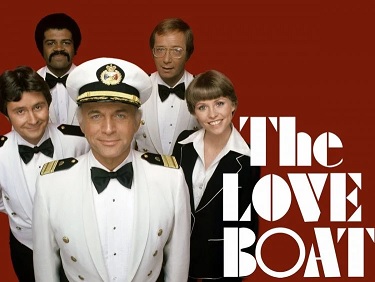
Retro Television Reviews: The Love Boat 2.9 “Till Death Do Us Part–Maybe / Locked Away / Chubs”


Welcome to Retro Television Reviews, a feature where we review some of our favorite and least favorite shows of the past!  On Wednesdays, I will be reviewing the original Love Boat, which aired on ABC from 1977 to 1986!  The series can be streamed on Paramount Plus!

It’s time for another cruise!

Episode 2.9 “Till Death Do Us Part–Maybe / Locked Away / Chubs”

(Dir by Allen Baron, originally aired on November 11th, 1978)

The Love Boat is haunted!

Well, no, not really.  Instead, one of the passengers is haunted.  Ellen Garner (Vernee Watson) is having a difficult time getting over the death of her husband, Mickey (Jimmie Walker, who also appeared on the very first episode of The Love Boat, though as a different character).  It’s been two years since Mickey died and Ellen still has not been able to move on.  Some of that might be because Mickey’s ghost is still following Ellen around.  Only Ellen can see and hear Mickey.  This leads to a lot of scenes of her arguing with Mickey while everyone standing around her assumes that she’s talking to herself.

(To be honest, I think most people would be made nervous by a woman who spent the entire cruise loudly arguing with herself but the passengers and the crew of The Love Boat are oddly unconcerned.  It was the 70s so I assume everyone just assumed it was due to the cocaine.)

Mickey wants Ellen to move on and he pressures her to find a new husband on the cruise.  In fact, Mickey thinks that Ellen should spend some time with Greg Elkins (Greg Morris), who is handsome, polite and wealthy.  At first, Ellen resists Mickey’s attempts to push them together but finally, she gives in.  Suddenly, Mickey starts to get jealous.  By the end of the cruise, though, Mickey is at peace with Ellen moving on and Ellen accepts Greg’s marriage proposal.  Mickey tries to congratulate Ellen, just to discover that she can no longer see or hear him.  Mickey vanishes into thin air, giving this otherwise frothy story a somewhat bittersweet aftertaste.

Whether you were being haunted or not, would you get married after only knowing someone for a week?  I know that there are reality shows built around this very idea but still, I have to wonder how many of these spontaneous Love Boat marriages ended in divorce.  Speaking of divorce….

Also on the cruise is a young married couple, Linda (a young Jamie Lee Curtis, looking relieved to not have to deal with Michael Myers or any other knife-wielding madmen) and Wayne (Peter Coffield).  Linda and Wayne are on the verge of divorce.  Ever since her parents, Les and Gail (Conrad Bain and Curtis’s real-life mother, Janet Leigh), acrimoniously split up, Linda hasn’t believed in love.  Linda and Wayne spend most of the cruise fighting, though it’s never quite clear what they’re fighting about.  What they don’t know is that Les and Gail are on the cruise as well.  Les and Gail came to the ship to see their daughter off and then, as they tried to exit, they accidentally got locked in an unused cabin.  Trapped together and subsisting only on peanuts, water, and stowaway sex, Les and Gail discover that they are still in love and they agree to get married for a second time.  At the end of the cruise, everyone is reunited and, seeing that her parents are going to give marriage another shot, Linda agrees to give Wayne another shot. Awwwww!

(Again, it should be kept in mind that Les and Gail fell back in love because they literally didn’t have anything else to do.  They were trapped in cabin for several days!  Will their rekindled love continue once they have to deal with each other in the real world?  Considering how much they hated each other before getting trapped, it’s easy to be pessimistic.  Can you imagine how Linda will feel if her parents get married a second time just to then get a second divorce?  Then again, this is The Love Boat.  Perhaps the whole point is not to give it too much thought….)

Finally, Gopher is super excited that his sister will be celebrating her 18th birthday on the cruise!  However, Gopher is shocked and horrified to discover that Jennifer (Melissa Sue Anderson) has grown up and now has every guy on the ship hitting on her.  Gopher asks Doc Bricker to look after her, which is an odd request given that Doc is a walking HR nightmare.  That said, for once, Doc tries to do the right thing.  However, Jennifer is eager to lose her virginity and she’s decided that Doc would be the perfect man to which to lose it….

Really?  Out of all the guys on that cruise, you’re going to pick Doc?

Stories in which Doc is portrayed as being a legendary lover are always a bit strange because Doc was played be Bernie Kopell, a likable actor who gave off suburban Dad vibes as opposed to international playboy vibes.  Kopell, Anderson, and the usually underused Fred Grandy all give likable performances in this storyline but it’s still just odd to think that Jennifer has apparently spent years dreaming about Doc Bricker.

It’s also strange that Captain Stubing mentions that it’s been years since he last saw Gopher’s sister.  The previous season established that Captain Stubing had just recently been assigned to the boat and that he was still getting to know the crew.  So, either several years passed between the first and the second season or someone in the writer’s room wasn’t paying attention to continuity.  Then again, I imagine that continuity wasn’t as big a concern in the days before the Internet.  Even if someone did notice the mistake, who would they tell?

This episode was a fairly entertaining one.  Janet Leigh and Conrad Bain were definitely the highlight of this episode and it was fun to watch Leigh and Curtis acting opposite of each other.  (That said, you just know the show’s producers probably tried to convince Tony Curtis to play Janet Leigh’s ex-husband before they asked Bain.)  The ghost subplot had a few funny moments and Gopher finally got to do something.  All in all, it was a pleasant cruise on the Love Boat.