Lisa Reviews An Oscar Nominee: Three Coins In The Fountain (dir by Jean Negulesco)


The 1954 Best Picture nominee, Three Coins In The Fountain, tells the story of three American women living in Rome. They’re all employed by the same secretarial agency. Maria Williams (Maggie McNamara) is young and hoping that she’ll stay in Rome for at least a year and that she’ll meet her future husband. Anita Hutchins (Jean Peters) is not-so-young and is planning on returning to America so that she can meet her own future husband. Miss Frances (Dorothy McGuire) is middle-aged and has spent the last 15 years working for the man that she wishes could be her future husband.

If you’re getting the feeling that there’s not much to our leads beyond a desire to get married, you’re not wrong. However, Anita swears that it’s impossible to find a husband in Rome because the only Italians who are interested in “secretaries” are too poor to be good husbands which …. well, like I mentioned before, this film is from 1954. Just the fact that the film featured three single women living together in a foreign country was probably considered to be daring back in 1954.

The three women eventually end up at the Trevi Fountain, where Maria and Frances throw in their coins and make their wishes. Anita, however, does not toss in a coin because apparently, she’s not scared of offending God. No sooner have the three women visited the fountain than things begin to happen. Soon, all three of them are in love but each has to deal with a compliction.

Miss Frances may have finally convinced her employer, writer John Frederick Shadwell (Clifton Webb), to marry her but when he discovers that he’s terminally ill, he tries to call off the engagment.

Maria meets Prince Dino di Cessi (Louis Jourdan) but will the Prince still want to be with her after he discovers that she’s been lying about being interested in the same things that he’s interested in?

Anita falls for Giorgio (Rossano Brazzi) but he’s poor! Plus, he also works for the agency and apparently, there’s some sort of weird 1954 rule that forbids the American employees from fraternizing with the Italian employees. Is Anita willing to lose her job just so she can marry someone who doesn’t have any money?

That’s pretty much it. Other than John Shadwell wrestling with his own mortality, there’s really not a whole lot of drama to be found in Three Coins In The Fountain. This is a film about pleasant people doing pleasant things and having pleasant conversations. It’s a rather chaste romance, one of those films where you have no doubt that everyone involved will wait until marriage and that all of the women will quit their jobs and settle down as soon as the right ring gets put on their finger. In other words, this is very much a film of its time and watching it today can be bit of an odd experience. This is ultimately the type of film that works best as a travelogue. Rome looks beautiful. There’s a striking shot of the sunset reflected in the canals of Venice. The Trevi Fountain truly does look like it can grant wishes. (It’s amusing to compare the reverence that the American-made Three Coins In The Fountain shows towards The Trevi Fountain to the way that Rome-native Federico Fellini used the fountain in La Dolce Vita.) One gets the feeling that, even in 1954, people flocked to this film more to see Rome than to really worry about whether or not the Prince would eventually propose.

In fact, one of the main reasons why I watched this film tonight is because I spent one of the greatest summers of my life in Italy. I’ve been to Rome. I’ve thrown coins into the Trevi Fountain and I’ve made wishes. I loved Rome. I loved the people. I loved the culture. I loved the buildings. I loved the feeling of walking through history. I loved looking out at the horizon and feeling as if I was somehow in a living painting. (I actually went into a bit of daze when I was in Florence. Stendhal Syndrome is for real.) If you can’t find romance in Rome then you’re obviously not looking. For me, the main appeal of Three Coins In The Fountain was being able to watch it and say, “I’ve been there!” I imagine for audiences in 1954, the appeal was probably to be able to watch it and say, “I’m going to go there!”

How did this perfectly pleasant but otherwise unmemorable film end up as a best picture nominee? I imagine a lot of it had to do with the fact that the film was a box office success. It’s certainly not because it was a better film than either Rear Window or Sabrina, both of which were not nominated for Best Picture despite being nominated for Best Director. In the end, the 1954 Best Picture Oscar was won by On The Waterfront, a film that appears to be taking place in an entirely different universe than Three Coins In A Fountain.

Lisa Reviews An Oscar Nominee: The Razor’s Edge (dir by Edmund Goulding)


Oh, 1919!  What a year.  The Great War had ended, leaving much of Europe devastated.  American soldiers were coming home and, scarred by the horrors they had experienced, becoming members of a lost generation.  The Spanish Flu was infecting millions, on the way to eventually wiping out 3% of the world’s population.  It was a grim time so it’s no surprise that many chose to close their eyes and pretend like everything was fine.  Only a few people were willing to look at the world and say, “There has to be something more.”

The 1946 film The Razor’s Edge tells the story of one such man.  Before the war, Larry Darrell (Tyrone Power, Jr.) was like most of his friends back in Chicago.  He was carefree.  He was wealthy.  He was engaged to marry the beautiful but self-centered Isabel (Gene Tierney).  But then he went off to fight in World War I and the experience changed him.  On the final day of the war, another soldier sacrificed his life to save Larry and Larry is now haunted by that man’s death.  No longer sure about his place in the world, Larry announces that he’s rejecting his former life.

Of course, that’s an easy thing to do when you’re rich.  Larry is lucky enough to have an inheritance that he can live off for a few years.  All of his former friends think that Larry’s just struggling to adjust to being back home and they expect that he’ll get over it soon enough.  Isabel’s uncle, Elliott (Clifton Webb), thinks that Larry’s acting like a total fool.  For Larry’s part, he no longer cares what any of them think.  He’s going to travel the world, seeking enlightenment.

While Larry’s searching, life goes on without him.  Isabel ends up marrying one of Larry’s friends, Gray Maturin (John Payne).  Larry’s best friend from childhood, Sophie (Anne Baxter), suffers a personal tragedy of her own and, when Larry next meets her, she’s living as a drunk on the streets of Paris.  Larry keeps searching for the meaning of it all.  He works in a coal mine.  He discusses philosophy with a defrocked priest.  Eventually, he ends up in the Himalayas, where he studies under a Holy Man (Cecil Humphreys).

It’s an intriguing idea and still a relevant one.  Unfortunately, the movie doesn’t really work because Larry tends to come across as being a little bit full of himself.  I could imagine someone like Henry Fonda working wonders with the role but Tyrone Power seems totally miscast as Larry.  When you look at Power, you find it hard to believe that he’s ever had a bad day, much less a need to spend months hiding in the Himalayas.  He comes across as the last person you would necessarily want to take spiritual advice from.  The fact that Webb, Tierney, Payne, and Baxter are all perfectly cast only serves to enforce just how miscast Power is.  It’s a well-intentioned film with nice production values but it’s never quite compelling.

The Razor’s Edge was based on a novel by W. Somerset Maugham.  Interestingly, the film features Maugham as a character, played by Herbert Marshall.  Even more interesting is the fact that the film was apparently remade in 1984, with Bill Murray cast as Larry Darrell.  I’ve never seen the remake so I have no idea if Murray is an improvement on Power.

(Also, since I’ve been pretty critical of Power in this review, let me recommend Witness For The Prosecution, in which Power is much better cast.)

The Razor’s Edge was nominated for Best Picture but lost to another film about returning vets, The Best Years of Our Lives.

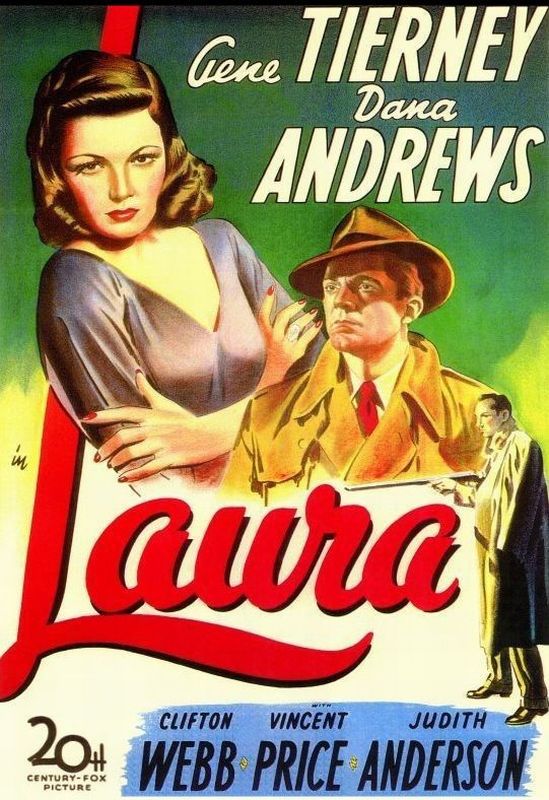
Fall in Love with LAURA (20th Century Fox 1944)


gary loggins's avatarcracked rear viewer

laura1

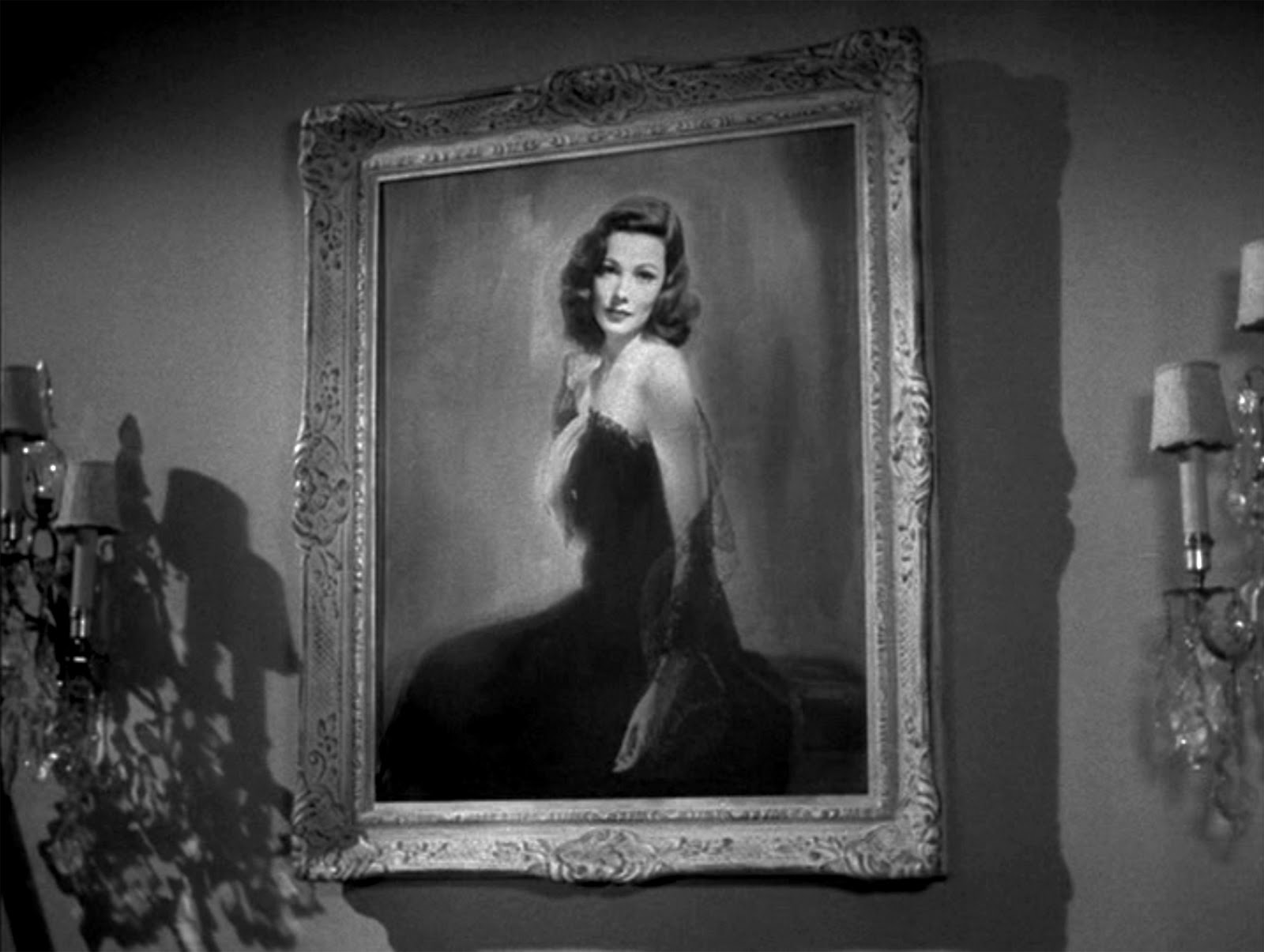
If you’re like me, you’ve probably watched LAURA more than once. It’s one of the top film noirs, indeed one of the top films period of the 1940’s. LAURA is unquestionably director Otto Preminger’s greatest achievement; some may argue for ANATOMY OF A MURDER or even ADVISE AND CONSENT, and they’re entitled to their opinions. But though both are great films, only LAURA continues to haunt the dreams of classic movie lovers, its main themes of love and obsession transferring to its fans even 73 years after its initial release.

laura2

Preminger, along with scenarists Jay Dratler, Samuel Hoffenstein, and Betty Reinhart, weave an intricate, sinister tapestry around the violent death of beautiful New York ad exec Laura Hunt. Cynical police detective Mark McPherson is determined to solve this particularly gruesome murder; Laura was killed at close range by a buckshot-loaded shotgun blast to the face. McPherson begins by questioning Waldo Lydecker, the acerbic newspaper columnist who relates…

View original post 527 more words

Happy Birthday Lucille Ball: THE DARK CORNER (20th Century Fox 1946)


gary loggins's avatarcracked rear viewer

corner1

Having grown up on endless reruns of I LOVE LUCY (and her subsequent variations on the Lucy Ricardo character), I’m not used to watching Lucille Ball in a dramatic role. In fact, I think the 1985 TV movie STONE PILLOW is the only time I’ve seen her play it straight until I recently watched THE DARK CORNER on TCM, a minor but enjoyable noir with Lucy headlining a good cast in a story about a private eye framed for murder. And since today marks the 105th anniversary of the redhead’s birth, now’s as good a time as any to look back on this unheralded hardboiled tale.

corner2

Lucy, looking mighty sexy at age 35, plays Kathleen Stewart, secretary to PI Bradford Galt, recently relocated to The Big Apple. He’s got a secret past that’s dogging him, and a shady man in a white suit following him. Galt confronts the tail, who claims to be…

View original post 588 more words