For you Halloween listening pleasure, here is Edgar Allan Poe’s The Raven, interpreted by the great Christopher Lee!
Enjoy!
For you Halloween listening pleasure, here is Edgar Allan Poe’s The Raven, interpreted by the great Christopher Lee!
Enjoy!
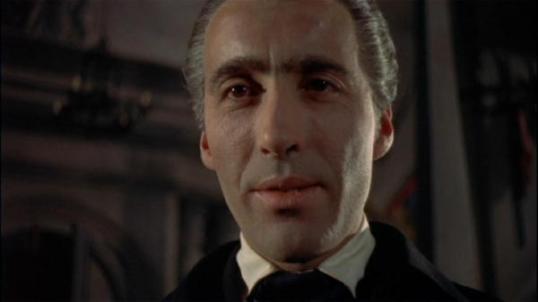
Here to help you get in the mood for the best day of the year is Christopher Lee reading Edgar Allan Poe’s The Fall Of The House Of Usher. Listening to this will require 40 minutes of your time but it’s totally worth it. Christopher Lee had an amazing voice and was a wonderful reader and one imagines that it was his voice that Poe heard in his head as he first wrote this short story.
Here is the wonderful voice of Christopher Lee….
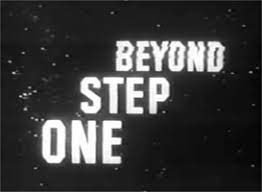
One tonight’s episode of One Step Beyond, the one and only Christopher Lee plays a German military officer who makes a fatal deal with a sorcerer.
This episode was Christopher Lee’s American television debut. It originally aired on May 23rd, 1961.
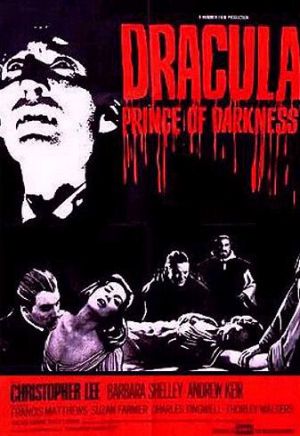
Christopher Lee often went on record about how much he disliked most of the Hammer films in which he played Dracula, feeling that Hammer didn’t really understand the character of Bram Stoker’s famous vampire. In fact, when Lee agreed to appear in 1966’s Dracula: Prince of Darkness, he did so with the requirement that he would not have any dialogue.
While it’s possible that Lee may have been hoping that his demand would force Hammer to release him from his contract, his requirement actually works to the film’s advantage. In the scene below, Lee shows that he didn’t need dialogue to make Dracula into a terrifying and malevolent force. Lee’s otherworldly and dangerous charisma and Dracula’s feral and vicious nature come through without him saying a word.

Can you imagine how things might have played out if Robert Englund had played Han Solo?
It’s not as far-fetched as it might sound. In his autobiography, Hollywood Monster: A Walk Down Elm Street with the Man of Your Dreams, Englund mentions that he was one of the many actor who, in 1975, auditioned for a role in the first Star Wars film. It’s often forgotten that, before he became famous as Freddy Krueger in A Nightmare In Elm Street, Englund was a busy character actor who had roles in several big studio productions in the 70s. He was definitely a part of the “new Hollywood” that included people like George Lucas, Steven Spielberg, and Jon Milius.
Though Englund doesn’t go into much detail, he does say that he read for the roles of both Han Solo and Luke Skywalker. At the time, Englund didn’t feel that he was right for either role and he went back to his apartment under the correct impression that he would not be cast. However, he did feel that his friend and then-roommate Mark Hamill would be a good pick for Luke Skywalker and Englund writes that he encouraged Hamill to try out for the role.
Would Mark Hamill have been cast if Robert Englund hadn’t told him about the audition? Probably. Given that Star Wars was Lucas’s follow-up to the very popular American Graffiti, it’s probable that every struggling young actor in Hollywood was hoping to audition. As well, Hamill was not totally unknown to George Lucas, having early read for a role in American Graffiti. Still, it’s nice to think that, long before he was cast as Freddy Krueger, Robert Englund may have played a role in casting one of the most successful films of all time.
What would Robert Englund have been like as Han Solo? He definitely would not have been as grouchy as Harrison Ford’s Han. Indeed, one of the striking things out about Englund’s pre-Nightmare career was how he was usually cast as friendly characters who were almost shy. Englund would have been friendlier and rather eccentric Han Solo but I think he would have been entertaining in his way.
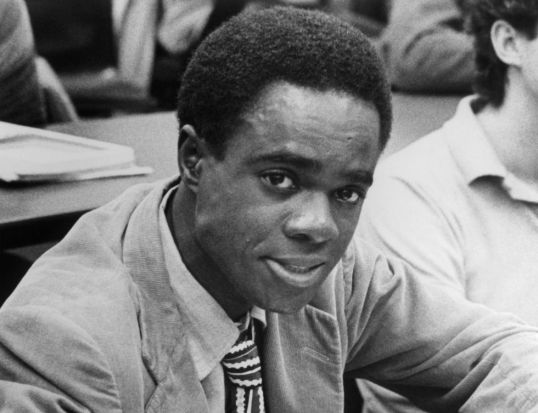
Because of the film’s success, it can be a bit difficult to know who was actually considered for a role in Star Wars. Lucas has said that he originally wanted to cast Black actor Glynn Turman as Han Solo but he feared audiences would not accept the possibility of an interracial romance between him and Leia, even in a galaxy far away. (Lucas’s regret over that decision is one of the things that led to the casting of Billy Dee Williams as Lando Calrissian.) The film’s IMDb trivia page insists that everyone from Al Pacino to Bill Murray to Marlon Brando to Chevy Chase was considered for the role of Han Solo and I have to say that this is a case where I doubt the accuracy of the IMDb. Harrison Ford, who had originally been hired only to read with people at the auditions, eventually got the role despite telling Lucas, about the script, “You can type this shit but you can’t say it.”
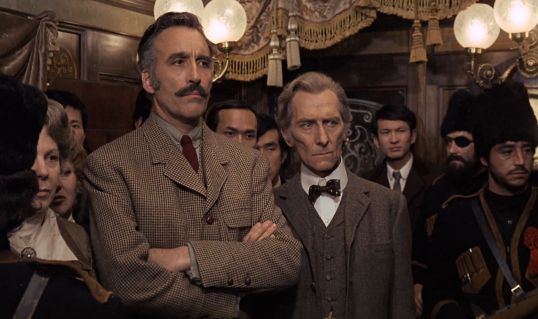
In several interviews, Christopher Lee expressed regret at having turned down the role of Grand Moff Tarkin, which was instead played by Lee’s best friend Peter Cushing. Interestingly enough, Cushing was also one of Lucas’s choices for Obi-Wan Kenobi so it’s easy to imagine a universe in which Star Wars reunited two Hammer films legends, along with setting box office records.
Famously, Lucas held joint-auditions with his friend Brian De Palma. De Palma was casting Carrie and just about everyone who read for one of the films also read for the other. Reportedly, William Katt came close to getting the role of Luke before instead being cast as Carrie’s doomed prom date. Amy Irving was also a strong contender for Leia, before instead ending up as Sue Snell in De Palma’s film. Some source that that Sissy Spacek also read for Leia, though I’ve also read that Spacek was not a part of the joint-auditions. That’s one thing about collecting trivia about classic films. It’s often hard to know what’s true and what’s just wishful thinking.
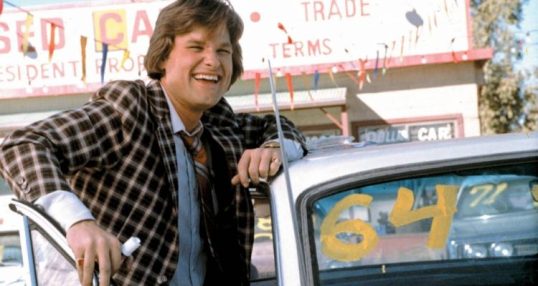
I should mention that another strong contender for Han Solo (and reportedly Luke as well) was Kurt Russell. It’s actually easy to imagine Kurt Russell as Han and, just as with Englund, it leads to an intriguing game of what if. Would Kurt Russell have gone on to have Harrison Ford’s career if he had been cast in Star Wars? Would Russell have gone to play Indiana Jones and Jack Ryan if he had been cast as Han Solo and would Harrison Ford have ended up helping the President to Escape from New York? Or is it just as possible that Star Wars have not worked without the chemistry of Harrison Ford, Carrie Fisher, and Mark Hamill? Would a Kurt Russell, Amy Irving, and William Katt version of Star Wars captured the imagination of audiences?
It’s a question to which there is no real answer, a bit like wondering if The Godfather would have been as big a hit if it had starred George C. Scott, Martin Sheen, and Burt Reynolds. Still, it’s interesting to consider.

Happy Halloween everyone!
Here to help you get in the mood for the best day of the year is Christopher Lee reading Edgar Allan Poe’s The Fall Of The House Of Usher. Listening to this will require 40 minutes of your time but it’s totally worth it. Christopher Lee had an amazing voice and was a wonderful reader and one imagines that it was his voice that Poe heard in his head as he first wrote this short story.
Here is the wonderful voice of Christopher Lee….
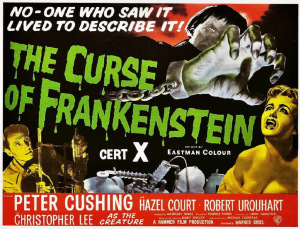
First released in 1957 and one of the films that put Britain’s Hammer Films on the map, The Curse of Frankenstein opens in Switzerland in the 19th century. It’s a time of superstitious villagers, judgmental priests, aristocrats who dabble in science, and lots of cleavage. It’s also a time when justice is harsh. That’s something that Baron Victor Frankenstein (Peter Cushing) has discovered as he sits in a cell in prison, awaiting his execution date.
Baron Frankenstein has been convicted of the murder of a maid named Justine and the public is eager to see this haughty and eccentric aristocrat put to death. Victor, however, claims that he is innocent of Justine’s murder. As Victor explains to a visiting priest (Alex Gallier), he is guilty of many things but he didn’t kill Justine.
The story that Frankenstein tells the priest is a familiar one. Victor inherited the Frankenstein estate when he was fifteen and, having always been interested in science, his hires a scientist named Paul Krempe (Robert Urquhart) to mentor him and ultimately collaborate with him on his experiments. Even as he falls in love with and become engaged to his cousin, Elizabeth (Hazel Court), Victor becomes obsessed with the idea of creating a human being from perfect parts collected from the dead.
Victor puts his creation together, piece by bloody piece. He has no trouble using a the body of a robber and the hands and eyes that purchases from the workers at the local morgue. But when it come time to pick a brain, he wants to use the mind of a distinguished scientist. Unfortunately, the scientist is still alive so Victor pushes him over a bannister. That kills the professor but the removal of the brain does not go quite as smoothly as Victor was hoping. The brain gets damaged when it’s removed. The Creature (an intimidating Christopher Lee) is eventually brought to life but, with that damaged brain, all it wants to do is destroy and kill. Victor isn’t happy about that but soon, he discovers that having a killer Creature has its uses.
As opposed to the well-meaning but obsessed version of the character that Colin Clive played in the original Frankenstein, The Curse of Frankenstein presents us with a Baron who is rather unstable from the start. It’s not just that the Baron is obsessed with bringing the dead back to life. It’s that he is fully willing to kill people for his experiment. Perhaps his only redeeming quality could have been his love for Elizabeth but he screws up even that by having an affair with the ill-fated Justine (Valerie Gaunt). From the start, the Baron’s main obsession is with his own power. Elizabeth is ultimately just another pawn for him to control.
Considering how evil this film’s version of Baron Frankenstein is, it’s a good thing that he’s played by Peter Cushing. Cushing gives an intense but charismatic performance as the Baron, capturing not only the character’s ruthlessness but also his fierce intelligence. The tragedy of the film’s version of the story is not that the Baron’s experiment goes wrong but that the Baron did actually have the potential to do a lot of good for the world. He’s smart and he’s determined but he’s lacking a conscience. If anything, the Creature he builds is a representation of his own dark thoughts and desires. The Baron is an aristocrat and the Creature is built out of common thieves and people who died in debt but they’re both different sides of the same coin.
Gory and fast-paced, The Curse of Frankenstein was a huge hit and it made stars out of both Cushing and Lee. I tend to prefer Hammer’s Dracula films to its Frankenstein film but The Curse of Frankenstein holds up well as a portrait of what happens when madness and science collide.
On Saturday night, I watched the 1967 German horror film, The Torture Chamber of Dr. Sadism.
I have to say that the film itself turned out to be quite a bit more entertaining than I was expecting it to be. It was an entertaining and atmospheric horror film, the type where travelers rode in stage coaches to gothic castles and Christopher Lee showed up as the villain. However, I was very disappointed to discover that, while the film did feature a torture chamber, there was not a character named Dr. Sadism anywhere to be found. In fact, I don’t think that the word “Sadism” was even mentioned in the film.
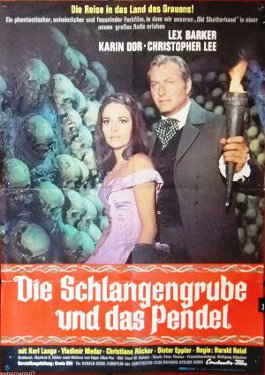
Of course, The Torture Chamber of Dr. Sadism was not the only title by which this film was released. As was typical of horror films in the 60s (especially international horror films), this film had many different titles. In Germany, it was known as Die Schlangengrube und das Pendel. It was also released under titles like The Blood Demon, The Crimson Demon, The Snake Pit and the Pendulum, and The Castle of the Walking Dead. That’s a collection of good names. It’s just too bad that they were all given to one film as opposed to being spread out amongst several films.
The Torture Chamber of Dr. Sadism (or whatever you want to call it) opens with a public execution. Count Regula (Christopher Lee) has been found guilty of the murder of 12 virgins. Regula is forced to wear a gold mask with a rather awkward smiley face on the front of it. He is then forced to lie down in the town square and his wrists and his ankles are tied to four horses. As the red-hooded executioner looks on, the horses run in four different directions and, though we don’t actually see it, Count Regular is ripped apart. Agck!
35 years later, Baroness Lilian von Brabent (Karin Dior, wearing a purple gown that is simply to die for) and her lawyer, Roger Mont Elise (Lex Barker) are invited to pick up an inheritance that is due to the Baroness. The only catch is that they’ll have to ride a stagecoach all the way to a forbidding castle that the locals refer to as being Blood Castle. On the way to the castle, they are joined by a highwayman who is pretending to be a priest (Vladimer Medar) and the Baroness’s maid (Christiane Rucker). They are ride through a forest where the trees are full of human limbs. They battle some mysterious robbers. They discover a burned out church and an apparent madman living inside the ruins. Eventually, they reach the castle where the resurrected Count Regula waits for them, along with his undead, green-blooded servant, Anatol (Carl Lange). Count Regula is eager to sacrifice a 13th virgin so that he can become immortal. Apparently, this will grant Regula immortality, which he does not yet have despite the fact that he’s somehow recovered nicely from being dismembered and beheaded. Regula announces that the Baroness will be his next virgin victim.
(See, there’s actually very real advantages to not waiting.)
The Torture Chamber of Dr. Sadism is one of those films that is described as being based on the writings of Edgar Allan Poe. In this case, that means that Roger ends up in a pit with a pendulum swinging over him. For a film with a title like The Torture Chamber of Dr. Sadism (or even The Blood Demon), there’s not really a lot of gore in this film. Instead, the film focuses more on creating and maintaining a properly gothic atmosphere. It’s surprisingly entertaining, largely due to the ominous design of the torture dungeon, Christopher Lee’s villainy, Vladimer Medar’s comedic relief, the beauty of Karin Dor, and the square-jawed heroism of Lex Barker. Lee, in particular, deserves some credit for embracing the melodrama in his role as Regula. Lee knows exactly the type of film in which he’s appearing and he appropriately modulates his performance.
Whatever title you see it under, The Torture Chamber of Dr. Sadism will keep you entertained.
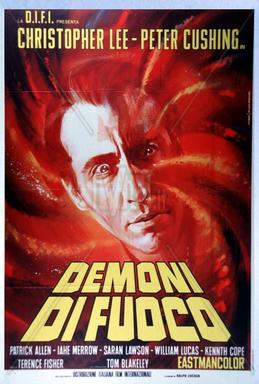
Today’s horror on the lens is a British 1967 science fiction film, featuring the team of Christopher Lee and Peter Cushing and directed by Terence Fisher!
This film is based on a novel that came out in 1959. It was originally meant to be a movie for British television but, after the script was written, it was decided to instead turn it into a theatrical film. The film was originally called Night of the Big Heat but, when it was subsequently released in the United States, the title was changed to Island of the Burning Damned.
It’s not October without Peter Cushing and Christopher Lee!
As some of our regular readers undoubtedly know, I am involved in a few weekly live tweets on twitter. I host #FridayNightFlix every Friday, I co-host #ScarySocial on Saturday, and I am one of the five hosts of #MondayActionMovie! Every week, we get together. We watch a movie. We tweet our way through it.
Tonight, for #ScarySocial, I will be hosting 1969’s The Torture Chamber of Dr. Sadism! I can’t wait to watch Christopher Lee in this film with everyone!
If you want to join us on Saturday night, just hop onto twitter, start the film at 9 pm et, and use the #ScarySocial hashtag! The film is available on Prime and Tubi. I’ll be there co-hosting and I imagine some other members of the TSL Crew will be there as well. It’s a friendly group and welcoming of newcomers so don’t be shy.
 Through the Shattered Lens