“Regardless of the outcome for the history of mankind, we have decided to choose hope!” — MOSS
When The Wandering Earth hit theaters in 2019, it wasn’t just another blockbuster; it was a massive cultural event that announced Chinese cinema had arrived on the global sci-fi stage. Directed by Frant Gwo and based on a novella by Cixin Liu, the film presents an apocalyptic scenario that makes most Western disaster movies look like minor neighborhood inconveniences. The sun is dying and rapidly expanding, threatening to swallow the Earth. Instead of building a fleet of spaceships to escape—an approach familiar to fans of Interstellar or WALL-E—humanity decides to strap ten thousand massive thrusters to the planet and physically fly the entire Earth to a new solar system. It is a wildly ambitious concept, and the film matches that ambition with a scale that is genuinely jaw-dropping, even if the execution sometimes stumbles under its own weight.
The core premise of The Wandering Earth is where the film’s most fascinating positives lie. In Western sci-fi, the go-to survival strategy usually involves a chosen few hopping onto a ship, leaving a doomed Earth behind. Gwo’s film flips that script entirely. Taking the whole planet with you is a deeply rooted cultural metaphor. It speaks to a connection to the land, an ancestral tie to home that cannot be easily severed. In layman’s terms, if your house is flooding, you don’t just grab a life raft and leave; you try to put the whole house on stilts and float away. This collectivist approach to survival sets the tone for the entire movie. The hero isn’t a single maverick saving the day through individual brilliance; it is a massive, coordinated effort of thousands of engineers, astronauts, and rescue workers. This thematic freshness is a massive point in the film’s favor.
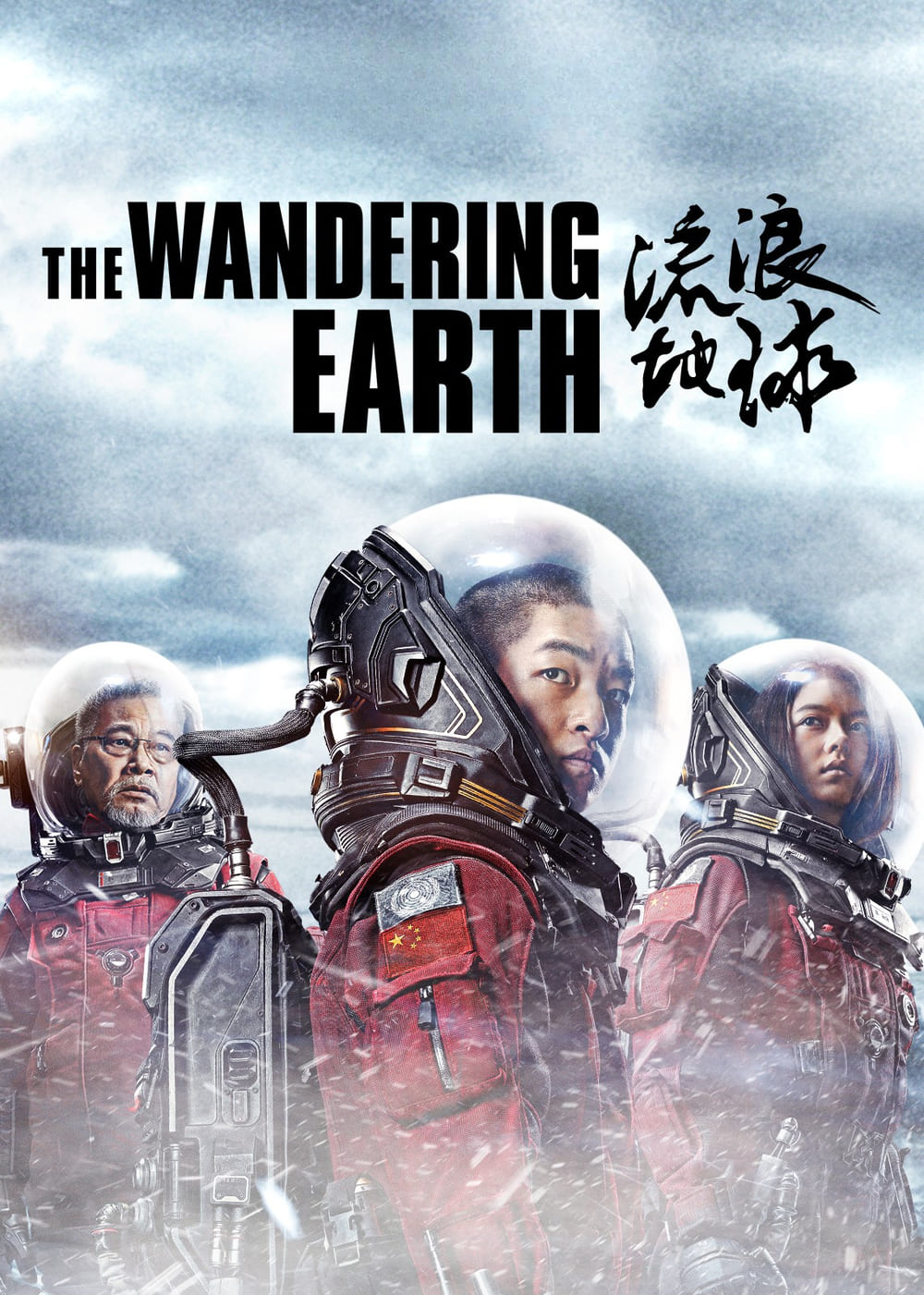
Visually, the movie is an absolute triumph, which is another major positive. The production design is stunning, especially considering it was a trailblazer for high-budget Chinese sci-fi. The planetary engines are these colossal, monolithic structures that make humans look like ants, perfectly capturing the sheer engineering scale required to move a planet. The surface of the Earth, frozen solid as the planet moves away from the sun, is rendered in bleak, atmospheric blues and whites. You really feel the bitter, unforgiving cold of a world that has been abandoned by its star. Sure, if you look closely, some of the CGI can look a little video-gamey, particularly in the faster action sequences. But the overall aesthetic is so dense and imaginative that it’s easy to forgive the moments where the digital effects stretch a bit thin. The design of the rugged transport vehicles, the claustrophobic underground cities, and the menacing, swirling red eye of Jupiter when the Earth gets caught in its gravity—all of it creates a visually cohesive and immersive world.
However, when we shift from the macro to the micro, the film’s flaws become glaringly apparent, starting with its pacing and narrative structure. The plot essentially operates as a relentless series of escalating, life-or-death obstacles. As soon as the characters solve one problem, another, bigger problem immediately pops up. It is an exhausting, breathless way to tell a story, which keeps the adrenaline high but leaves very little room to breathe. The Earth gets caught in Jupiter’s gravitational pull, the planetary thrusters fail, a rescue team has to transport a lighting device across a frozen wasteland, and so on. For a casual viewer, this makes for an exciting, edge-of-your-seat experience. Analytically, however, it exposes a script that relies heavily on convenience and last-minute problem-solving. The characters are constantly shouting scientific jargon to explain why the newest disaster is happening and how they can fix it, which sometimes feels less like organic storytelling and more like a frantic physics lecture you didn’t study for.
The human element is another area where the film struggles with significant flaws. The story centers on the fractured relationship between astronaut Liu Peiqiang, who is stationed on a navigating space station, and his rebellious teenage son Liu Qi, who sneaks out to the frozen surface with his adopted sister. The family dynamic is meant to be the emotional anchor of the film, and there are genuinely poignant moments regarding sacrifice and the lengths parents will go to protect their children. Unfortunately, these emotional beats are often delivered with a very heavy hand. The dialogue can be quite melodramatic, and the characters fall into recognizable archetypes—the angry young man, the stoic mentor, the plucky comic relief. The acting and line delivery can feel over-the-top and stilted. While Western audiences might find this jarring, it fits comfortably within the stylistic norms of Chinese dramatic cinema. Even so, broad emotional strokes and underdeveloped side characters hold the script back from achieving true narrative greatness.
Despite these narrative and emotional flaws, what redeems The Wandering Earth and makes it so compelling is how it leans into its thematic positives. In a standard Hollywood disaster film like Armageddon or 2012, you can bet that one charismatic hero will defy orders, punch a villain, and save the day in the final seconds. Here, the protagonists fail. A lot. Their plans don’t work, and it takes the combined, synchronized effort of rescue teams from all over the globe—including characters we never even meet—to push the story forward. There is a specific, powerful sequence where a group of international rescue workers are pushing a heavy vehicle up a slope, and one by one they fall from exhaustion, only to be immediately replaced by others stepping in to take their place. It is a brilliant, simple visual metaphor for collective endurance. The film argues that humanity survives not through individual heroism, but through shared suffering and mutual sacrifice, which ultimately elevates the flawed script.
Ultimately, The Wandering Earth is a milestone film that demands respect, warts and all. Frant Gwo managed to craft a spectacle that rivals anything coming out of Hollywood, while infusing it with a distinctly Chinese cultural identity. It is not a perfect movie. The pacing is exhausting, the exposition can be clunky, the science is often baffling, and the emotional resonance relies heavily on the audience’s willingness to accept melodramatic family tropes. Yet, the sheer audacity of the concept, the incredible world-building, and the thematic focus on communal survival make it a deeply rewarding watch. The positives of its visual ambition and unique cultural perspective heavily outweigh the flaws of its script and pacing. It is a film that asks what it means to save the world, and boldly answers that it takes the whole world to do it.

