Last night, as I usually do during the Easter/Passover season, I watched Cecil B. DeMille’s Biblical epic THE TEN COMMANDMENTS. It’s a movie buffs delight, an All-Star spectacle featuring three Oscar winners ( Charlton Heston ,Yul Brynner , Anne Baxter ), one who should’ve been (Edward G. Robinson ), and a literal cast of thousands! Something that’s always stood out to me is the number of horror movie stars that appear in various parts, a plethora of Hollywood practitioners from my favorite genre:
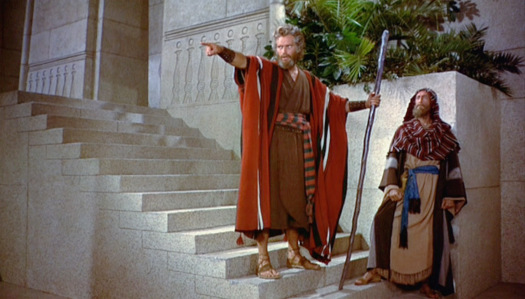
John Carradine as Aaron
Carradine’s credentials in horror films are well documented, and he deserves his spot in the pantheon of Monster Movie Greats. As Moses’s brother Aaron, Carradine has his best “straight” role since THE GRAPES OF WRATH.
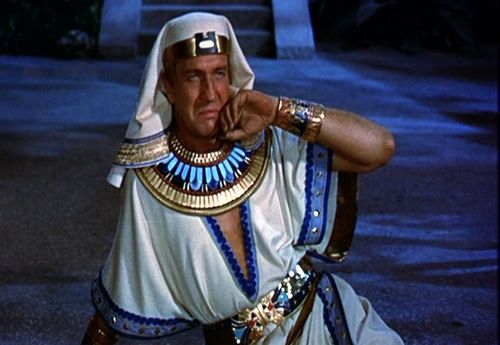
Vincent Price as Baka
Our Man Vinnie plays the evil slave master Baka, who gets his just rewards at the hands of John Derek’s Joshua. Price was…
4 Shots From 4 Films is just what it says it is, 4 shots from 4 of our favorite films. As opposed to the reviews and recaps that we usually post, 4 Shots From 4 Films is all about letting the visuals do the talking.
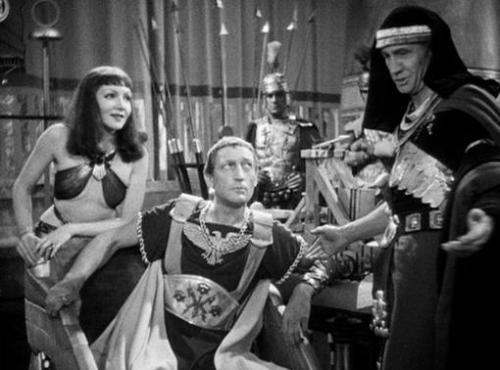
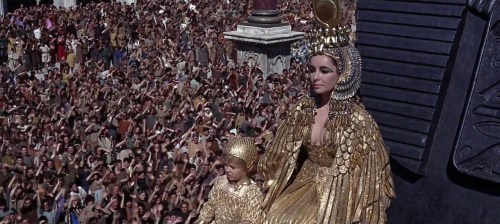
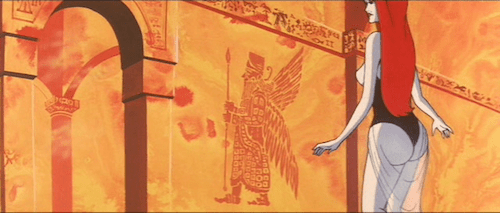
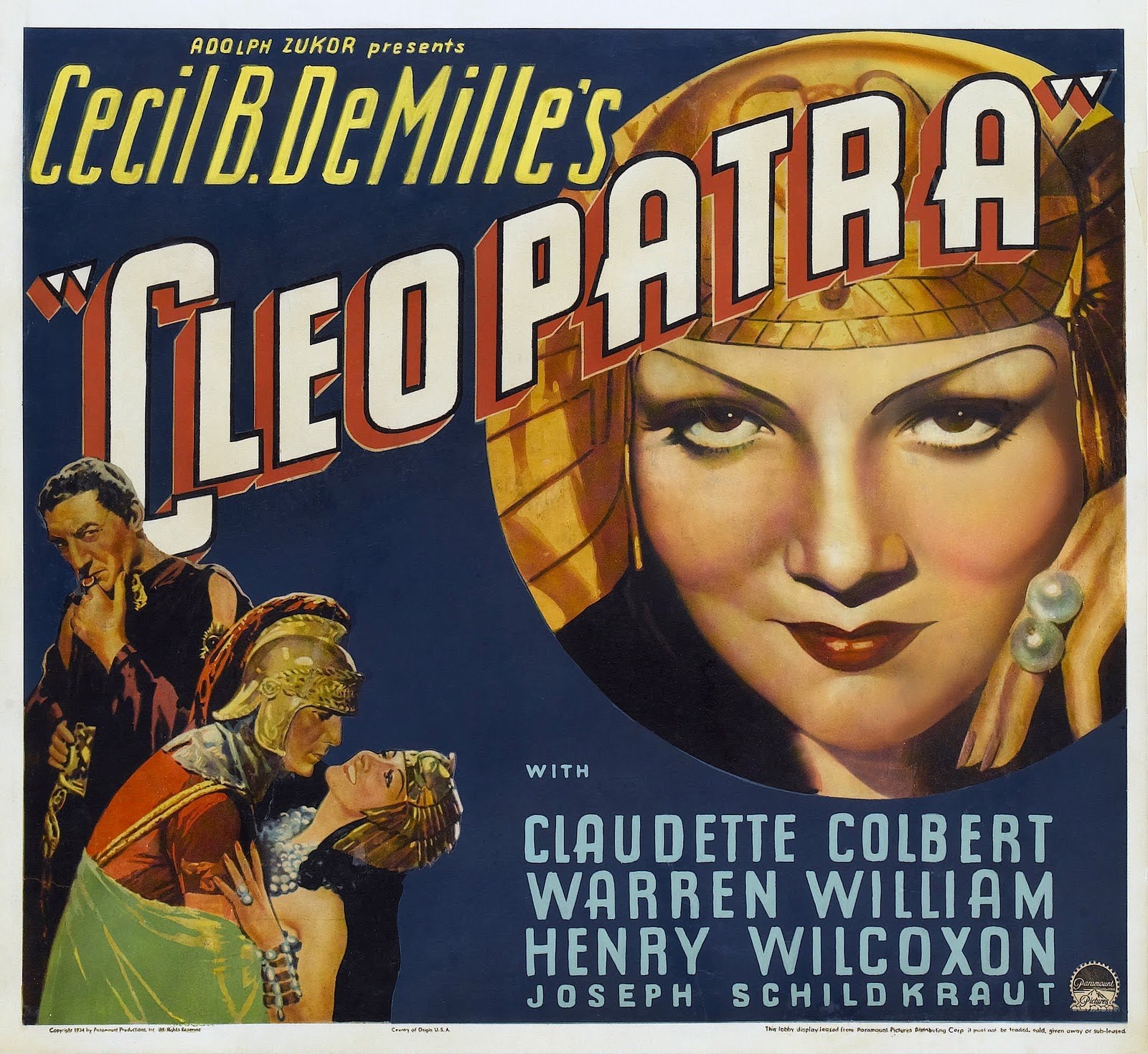
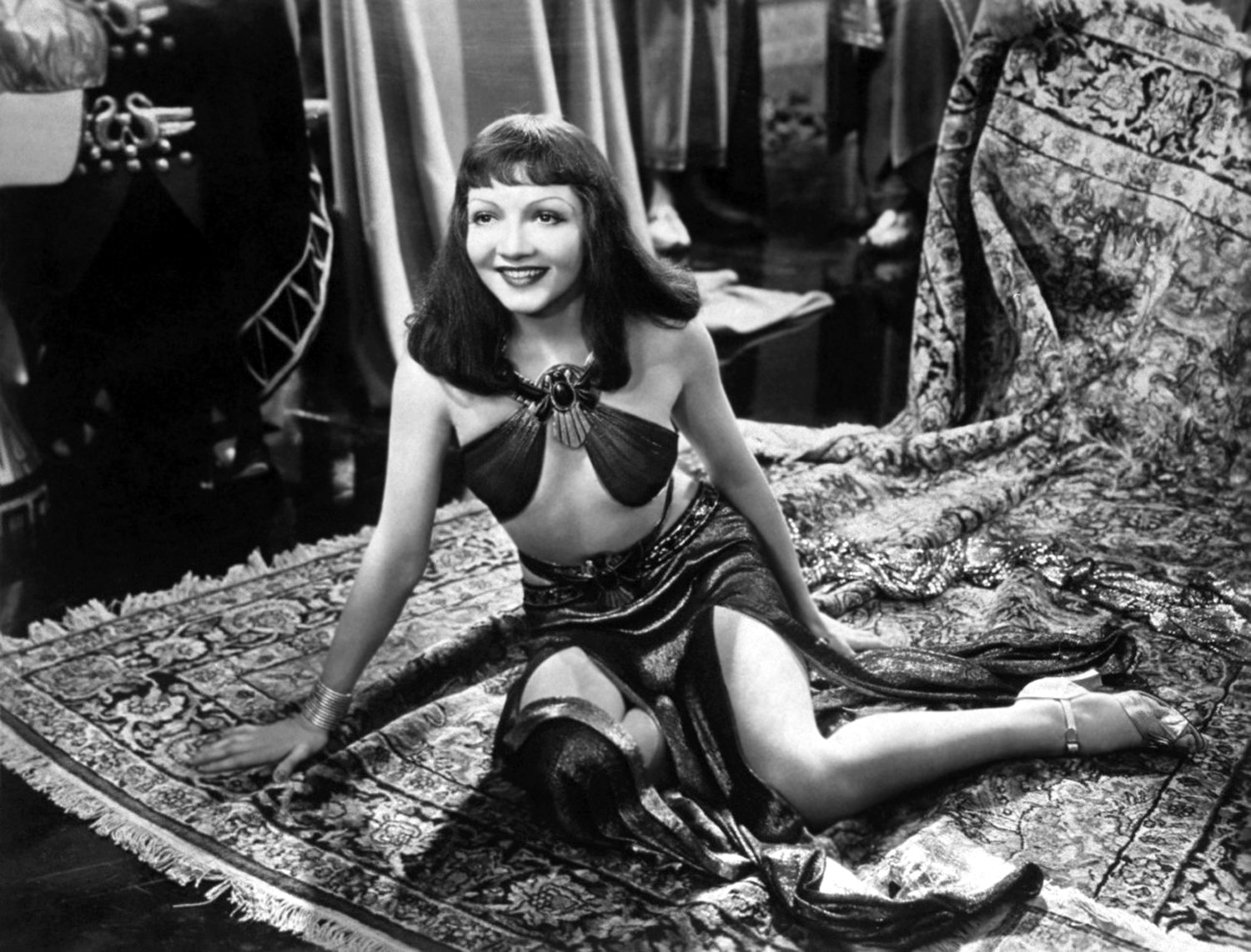
Let’s celebrate the Ides of March with four shots from four films about Caesar’s one true love, Cleopatra!
4 Shots From 4 Films
Cleopatra (1917, dir by J. Gordon Edwards)
Cleopatra (1934, dir by Cecil B. DeMille)
Cleopatra (1963, dir by Joseph L. Mankiewicz )
Cleopatra (1970, dir by Osamu Tezuka and Eiichi Yamamoto)
When I hear the words ‘Hollywood Epic’, the name Cecil B. DeMille immediately springs to mind. From his first film, 1914’s THE SQUAW MAN to his last, 1956’s THE TEN COMMANDMENTS, DeMille was synonymous with big, sprawling productions. The producer/director, who’s credited with almost singlehandedly inventing the language of film, made a smooth transition from silents to talkies, and his 1934 CLEOPATRA is a lavish Pre-Code spectacular featuring sex, violence, and a commanding performance by Claudette Colbert as the Queen of the Nile.
While the film’s opulent sets (by Roland Anderson and Hans Dreier) and gorgeous B&W cinematography (by Victor Milner) are stunning, all eyes will be on the beautiful, half-naked Colbert. She gives a bravura performance as Cleopatra, the ambitious, scheming Egyptian queen. She’s sensuous and seductive, wrapping both Caesar and Marc Antony around her little finger, and devious in her political machinations. If I were compare her to Elizabeth Taylor in the 1963 Joseph…
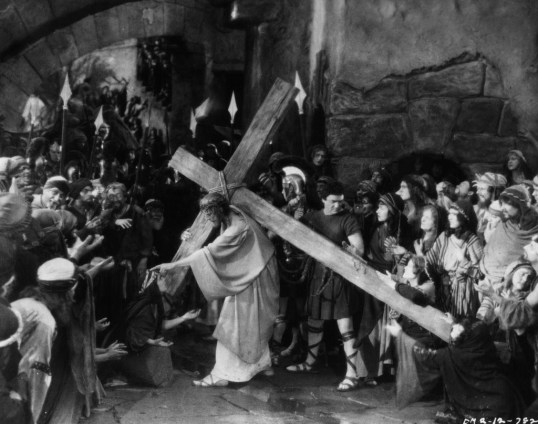
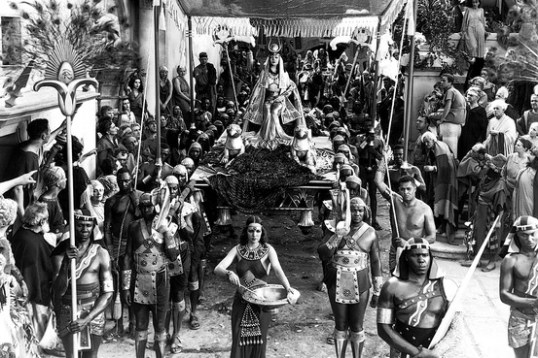
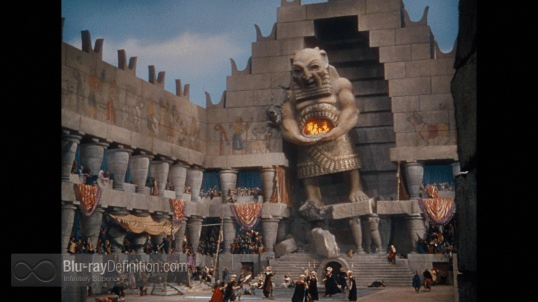
4 Shots From 4 Films is just what it says it is, 4 shots from 4 of our favorite films. As opposed to the reviews and recaps we usually post, 4 Shots From 4 Films is all about letting the visuals do the talking. When it came to directing epics movies, there was Cecil B. DeMille, and there was everyone else. The quintessential Hollywood director was born on this date in 1881. Here are four shots from some of DeMille’s greatest films:
Lisa and I continue to reimagine the Oscar history, one year at a time. Today, we look at 1917. The U.S. enters World War I, the Pickfords take over Hollywood, and, for the first time, the entire membership of the Academy gets to vote.
Whereas the previous year had been dominated by films, like the Award-winning Civilization, that promoted neutrality and world peace, 1917 saw the release of several films that were designed to support the American war effort. The pacifism of Civilization was forgotten as the box office embraced…
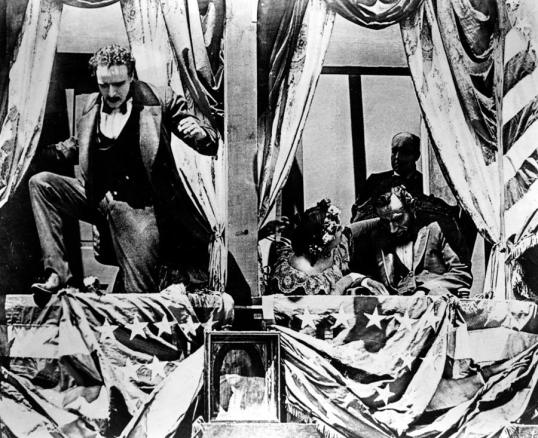
John Wilkes Booth (Raoul Walsh) flees after shooting Abraham Lincoln in D.W. Griffith’s Birth Of A Nation
The second annual Academy Awards were handed out on January 20th, 1916. For the second and final time, the ceremony took place in the Empire Room of the Waldorf Hotel in New York City. Just as in the previous year, the awards were handed out after dinner and a speech from Academy President Mack Sennett. Again, the winners were announced before the actual ceremony and were given certificates of achievement. According to contemporary reports, the winners who were present all gave brief acceptance speeches but nobody bothered to record what anyone said.
As in the previous year, winners were selected by a jury of distinguished citizens. The 1915 jury consisted of:
Hi there! The blogger known as Jedadiah Leland and I have launched a TSL side project. We are taking Oscar history, re-imagining it, and turning it into something much better, one year at a time! I, of course, will be handling the even years while he handles the odd years. (Why? Because Lisa doesn’t do odd numbers, that’s why!) Here’s our report on the First Annual Academy Awards, honoring the best of 1914.
Mack Sennett, the 1st President of the Academy Of Motion Picture Arts and Sciences
Ironically, considering its current prominence in American culture, the origins of the Academy of Motion Picture Arts and Sciences are shrouded in mystery.
4 Shots From 4 Films is just what it says it is, 4 shots from 4 of our favorite films. As opposed to the reviews and recaps that we usually post, 4 Shots From 4 Films is all about letting the visuals do the talking.
All of the scenes below come from films that were made and released between the introduction of sound in the late 1920s and the adoption of the infamous Hays Production Code in 1934. This was truly an exciting time for film as an art form. Not only were filmmakers intoxicated with discovering what they could accomplish through the medium but they were also unhindered by censorship or regulation. The end result was some of the most visually imaginative and narratively daring films to ever be released by the major American studios.
There’s a reason why film lovers continue to eagerly seek out pre-code films. And if you want to experience what made the pre-Code era so memorable, you could not do any worse than to start with the four films featured in this post.
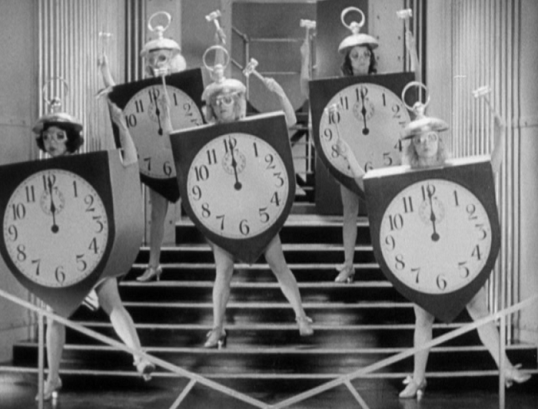
Madam Satan (1930, dir by Cecil B. DeMille)
Safe in Hell (1931, dir by William Wellman)
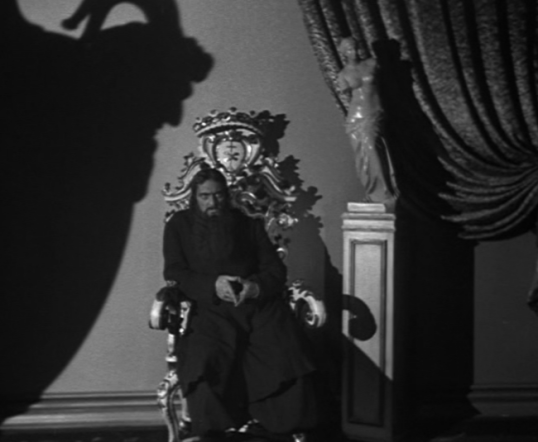
Rasputin and the Empress (1932, dir by Richard Boleslawski)
“All right, Mr. De Mille, I’m ready for my close-up!”
— Norma Desmond (Gloria Swanson) in Sunset Boulevard (1950)
First released in 1950 and nominated for Best Picture, Billy Wilder’s Sunset Boulevard is one of the greatest and most influential films of all time. It’s also something of a difficult film to review because, in order for one to truly understand its greatness, it needs to be seen. A description simply will not do. You have to experience, first hand, the performances of Gloria Swanson, William Holden, and Eric Von Stroheim. You have to see, with your own eyes, the way that Billy Wilder perfectly balances drama, satire, and horror. I can tell you about how cinematographer John F. Seitz perfectly contrasts the empty glossiness of Hollywood with the dark shadows that fill the ruined mansion of Norma Desmond but, again, it’s something that you owe it to yourself to see. You need to hear the perfectly quotable dialogue with your own ears. You need to experience Sunset Boulevard for yourself.
And, while you’re watching it, think about how easily one bad decision could have screwed up the entire film. Sunset Boulevard is famous for being narrated by a dead man, a screenwriter named Joe (William Holden). When we first see Joe, he’s floating in a pool. Originally, however, the film was to open with the dead Joe sitting up in the morgue and telling us his story. Reportedly, preview audiences laughed at the scene and it was cut out of the film. And Wilder made the right decision to remove that scene. Sunset Boulevard may be famous for being a strange film but, when you actually watch it, you realize just how controlled and disciplined Wilder’s direction actually is. Sunset Boulevard may be weird but it’s never less than plausible.
Joe Gillis is a former newspaper reporter-turned-screenwriter. He may have started out as an idealist but, as the film begins, he’s now just another Hollywood opportunist. While trying to hide from a man looking to repossess his car, Joe stumbles upon a dilapidated old mansion. The owner of the mansion is none other than Norma Desmond (Gloria Swanson), a silent film star who has sent been forgotten but who still dreams of making a comeback. (When Joe tells her that she used to be big, Norma famously responds that she’s still big and it’s the pictures that have gotten small.) Norma has written a script and the opportunistic Joe convinces her to hire him as a script doctor.
Joe moves into the mansion and discovers a world that has never moved past the 1920s. Norma’s butler and former director, Max (played by Gloria Swanson’s former director Erich Von Stroheim) writes letters that he claims were sent by Norma’s fans. Norma spends her time watching her old movies. Occasionally, other forgotten silent screen stars (including Buster Keaton) drop by to play cards.
Encouraged by Joe’s vapid flattery and a mysterious phone call from a Paramount exec, Norma has Max drive her down to the studio. Greeted by the older employees and ignored by the younger, Norma visits with director Cecil B. DeMille (who plays himself). In a rather sweet scene, she and DeMille remember their shared past. DeMille obviously understands that she’s unstable but he treats her with real respect, in contrast to the manipulative Joe.
As for Joe, he’s fallen for a script reader named Betty (Nancy Olson) and wants to escape from being dependent on Norma. However, Norma has invested too much in her “comeback” to just allow Joe to leave…
Sunset Boulevard is a wonderful mix of film noir and Hollywood satire. And, though the film may be narrated by Joe and told from his point of view, it’s firmly on Norma’s side. As easy as it is to be dismissive of Norma’s delusions, she’s right in the end. It is the pictures that have gotten small and, as she proves towards the end of the film, she is still as capable of making a grand entrance as she ever was.
Joe may have been too stupid to realize it but Norma Desmond never stopped being a star.
You really can’t talk about film melodrama without talking about Cecil B. DeMille.
From a modern perspective, we tend to dismiss DeMille as simply being the director of the fun but undeniably campy version of The Ten Commandments that pops up on TV every Easter. Those of us who know our Oscar history are usually quick to roll our eyes over the fact that DeMille’s film The Greatest Show On Earth won best picture over High Noon, The Quiet Man, Moulin Rogue, and such unnominated films as Singin’ In The Rain and The Bad and the Beautiful. For those who know the history of the blacklist, DeMille is a convenient villain — a director who supported the blacklist while other more critically admired directors like John Huston and John Ford spoke out against it. In fact, it sometimes seems that the only positive thing you hear about Cecil B. DeMille is that, when he showed up playing himself in Sunset Boulevard, he came across as being a nice man.
But, when you actually study the history of American film, it becomes obvious that — even if he’ll never be a critical favorite — Cecil B. DeMille is one of the most important figures in the history of American film. Starting in 1913, DeMille directed movies for over 43 years. In many ways, he was one of the first directors to truly understand how to best exploit the commercial possibilities of a good melodrama. DeMille understood that audiences enjoyed watching sin at the start and during the middle of a film as long as a healthy dose of salvation was present at the end. That salvation allowed audiences to embrace the sin without having to deal with guilt. With his early silent films, DeMille established the formula that is still used in cinematic melodrama to this day.
Consider, for example, DeMille’s 1922 film Manslaughter.
Manslaughter tells the story of Lydia (Leatrice Joy), a wealthy young woman who — much like me — likes to drive fast and dance. As we’re told in one of the opening title cards, “Her proud boast is that life has never stopped her!” When we first meet Lydia, she’s in her car and she’s racing alongside a train. When a cop pulls her over for speeding, Lydia nonchalantly bribes him with an expensive bracelet. (Myself, I always just cry whenever I get stopped for speeding. It’s just as effective and far less expensive.)
Lydia has a boyfriend, a rather self-righteous district attorney named Daniel O’Bannon (played by Thomas Meighan, a familiar face to those of us who enjoy silent melodrama). We are informed that Daniel loves Lydia for the “girl he thinks she could be, not for the girl she is.” Apparently, that’s meant to be romantic. I don’t know — if a guy ever said that to me, I’d probably slap him. And then I’d get my boyfriend to beat him up…
As Daniel watches Lydia drink and dance her way through a decadent Christmas celebration (which is captured, in loving and fascinating detail, by DeMille), he tells her, “Don’t you think you better put on the brakes before life does it for you?”
“Modern girls don’t sit home and knit!” Lydia replies. (You go, Lydia!)
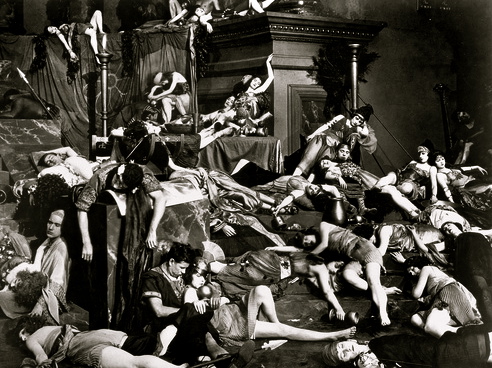
Eventually, Daniel finds himself musing that “we’re no different than Rome.” He then proceeds to visualize all of the party goers taking part in a massive Roman orgy… (Daniel also visualizes what is reportedly one of the first same sex kisses to ever appear in a mainstream American film.)
Anyway, as you might be able to guess from the title, Lydia eventually kills someone with her reckless driving and guess who ends up prosecuting her in court? None other than Daniel, who links Lydia’s irresponsible behavior to — you guessed it — the collapse of ancient Rome. While Lydia find salvation in prison, Daniel starts to embrace the very sin that he originally railed against…
Manslaughter has got a reputation for being one of DeMille’s weaker silent films. It’s definitely heavy-handed in its moralizing and Meighan, as good as he may have been in films like The Racket, is actually pretty boring here. However, I still enjoyed Manslaughter, or I should say that I enjoyed the scenes in Manslaughter that unapologetically celebrated the decadence of Lydia’s life. Leatrice Joy gives a fun and likable performance in those scenes and how can you not enjoy watching people get wild in the 1920s?

 John Carradine as Aaron
 Vincent Price as Baka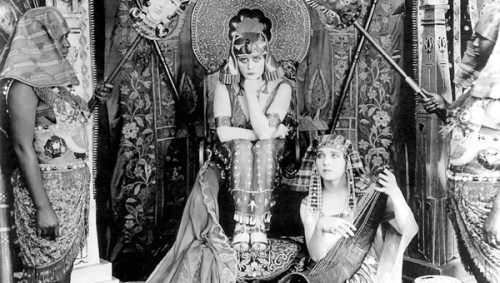







 Through the Shattered Lens