Today, we celebrate Don Coscarelli’s birthday with a scene from his 2002 film, Bubba Ho-Tep!
Bruce Campbell as Elvis? That’s a genius of Don Coscarelli.
Today, we celebrate Don Coscarelli’s birthday with a scene from his 2002 film, Bubba Ho-Tep!
Bruce Campbell as Elvis? That’s a genius of Don Coscarelli.
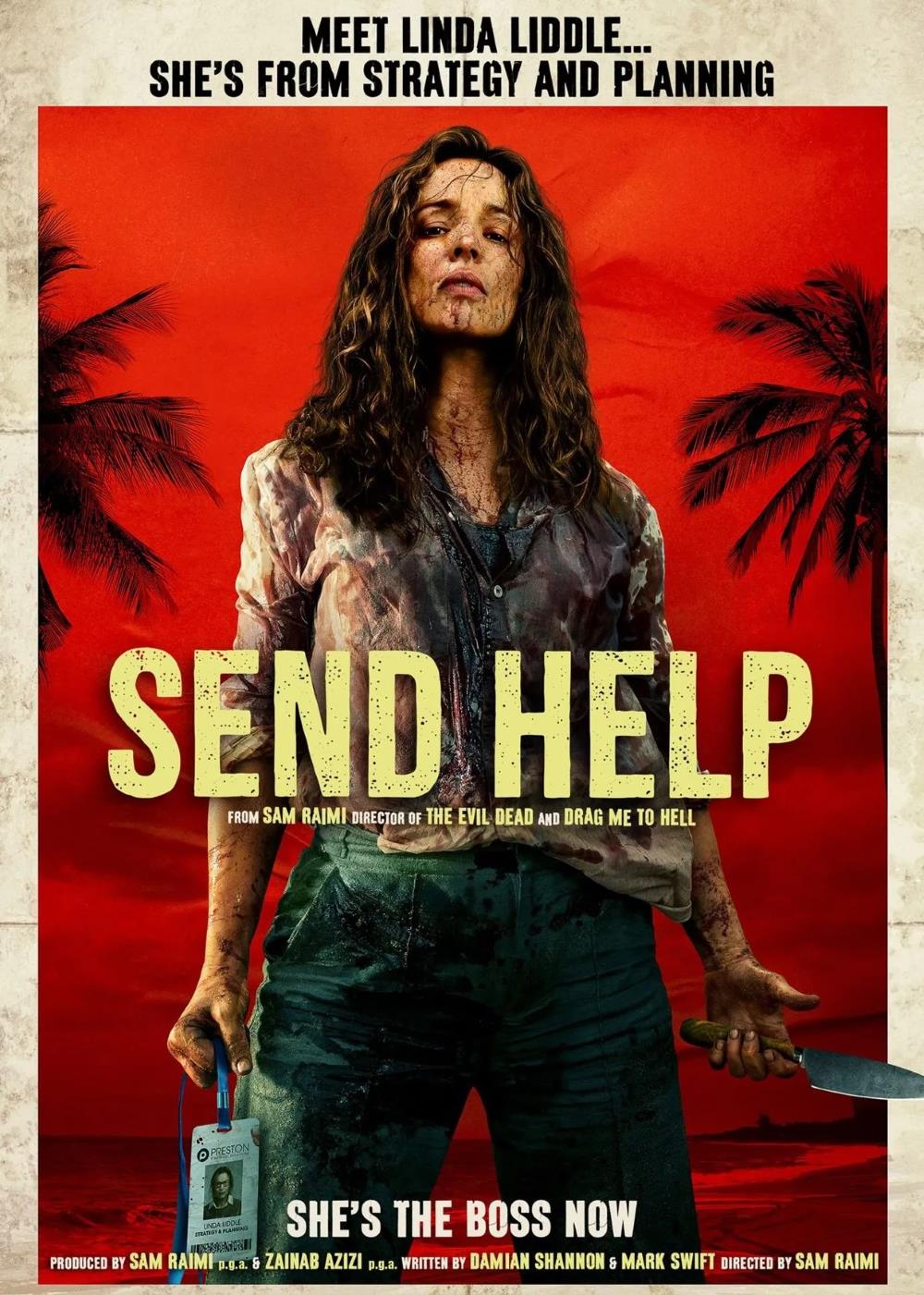
“We’re not in the office anymore, Bradley.” — Linda Liddle
Sam Raimi’s Send Help is a nasty, funny, and surprisingly romantic little pressure cooker that strands two archetypes—the mousy doormat and the smug rich kid—on a desert island and then slowly turns the screws until the film’s “eat the rich” satire curdles into genuine horror. It is neither the triumphant, all‑timer comeback some fans might crave nor a lazy retread, but a confident mid‑budget horror‑comedy from a director who still knows exactly how to make an audience wince and cackle in the same breath.
Raimi and writers Damian Shannon and Mark Swift build Send Help on a simple but potent premise: Linda Liddle (Rachel McAdams), a meek corporate strategist and survival‑show obsessive, has been promised a promotion by her former boss, only for the new CEO—his son Bradley Preston (Dylan O’Brien)—to hand the job to his frat‑bro buddy Donovan and try to shuffle Linda into a dead‑end role. He finds her embarrassing and even comments on her smell; she swallows the humiliation until a company plane trip to a business summit ends in a violent crash, leaving Linda and Bradley as the only known survivors on a remote island in the Gulf of Thailand. Out here, Linda’s years of reality‑TV survival fandom and wilderness prepper skills suddenly matter, while Bradley’s only proven talents—golf, networking, and cruelty—are exposed as useless.
The first act, set in the office and on the doomed flight, plays as Raimi’s version of workplace horror, pitched somewhere between Drag Me to Hell’s moral fable and a nastier episode of The Office. McAdams leans into Linda’s awkwardness without turning her into a caricature, sketching a woman who has internalized decades of minor humiliations and found solace in parasocial survival fantasies. O’Brien, meanwhile, riffs on the archetype of the tech‑adjacent finance bro, weaponizing charm into something brittle and mean so that every “joke” lands like a micro‑aggression. Raimi shoots these early scenes with brisk, unfussy energy, reserving his more flamboyant camera moves for moments when Linda’s resentment starts to spike; the tonal hint is clear that the island will be where his signature style truly erupts.
Once the plane goes down, Send Help shifts into a survival thriller that gradually becomes a duel, and this is where the film finds its most compelling rhythm. Linda wakes up, builds a shelter, secures water, and—crucially—chooses to help the injured Bradley despite every reason not to, only to be met with the same entitled barking as in the office. She abandons him for days to bake in the sun and dehydrate, only to return at the brink and ration out water on her terms, turning what could have been a straightforward revenge fantasy into a looping series of power reversals. Raimi milks the island setting for physical comedy—failed fire‑starting, slapstick injuries, disgusting food gags—before undercutting the laughs with sudden spikes of cruelty and violence that remind you someone could easily die out here.
Raimi’s direction is where Send Help most clearly announces itself as his homecoming to horror. Even without demons or supernatural curses, he brings back the aggressive visual language: lunging crash zooms, canted angles that seem to tilt with Linda’s shifting moral compass, and kinetic tracking shots that whip around the camp as arguments turn into physical scuffles. The gore is heightened but not constant—geysers of blood appear at key turning points, functioning as exclamation marks on the escalating class war rather than wall‑to‑wall splatter. You can still feel the Three Stooges in the staging; even the nastiest beats often end on a punchline built around bodily fluids, improvised weapons, or the absurd indignity of almost dying because you slipped on a fish.
Tonally, the film walks a provocative tightrope between screwball rom‑com and survival horror, and your mileage will depend on how much whiplash you are willing to embrace. There are scenes that play almost like a twisted date movie—Linda cooking up makeshift dinners, trying to build a semblance of “home,” Bradley begrudgingly softening—only for the dynamic to swerve back into emotional manipulation or outright brutality. The film clearly flirts with the tradition of 1930s battle‑of‑the‑sexes comedies, but here the gender and class politics are sharper, and the potential for lethal violence never disappears. For some viewers, this constant oscillation will feel thrillingly unstable; for others, it may make the film’s ultimate stance on these characters’ relationship and culpability feel muddier than intended.
Narratively, Send Help borrows its class‑flipped survival template from the kind of satirical, wealth‑skewering stories where workers suddenly control the only skills that matter. The formerly “lowly” employee—in this case Linda rather than a bathroom janitor or ship’s cleaner—suddenly dictates the terms of existence, upending the old hierarchy once the corporate infrastructure is gone. Where broader ensemble satires linger on systemic critique, Raimi narrows the focus to a two‑hander and uses genre excess to explore how vengeance, desire, and survival blur together when the rules are erased. This narrower scope sometimes makes the class commentary feel schematic—you can spot each new reversal coming like a story beat in a screenwriting manual—but it also gives McAdams and O’Brien ample room to shade their roles.
Performance‑wise, McAdams is the film’s anchor and secret weapon. She charts Linda’s evolution from shy, apologetic office drone to ruthless island operator without losing sight of the character’s essential decency, so that her darker choices land as both cathartic and unsettling. O’Brien has the flashier arc in some ways, modulating Bradley from cartoonish jerk to scared, dependent man‑child and, eventually, something more morally ambiguous as he learns how to play the island power game himself. Their chemistry thrives on friction; the film is at its best when it lets them volley insults, bargains, and threats in long, increasingly twisted negotiations over food, shelter, and the possibility of rescue.
Where Send Help falters is largely in its final stretch, where Raimi has to decide just how far he’s willing to push the “eat the rich” fantasy and what that means for Linda’s soul. Without spoiling specifics, the climax leans into brutal spectacle and a last‑minute moral turn that some may read as a cop‑out and others as a necessary corrective to pure revenge porn. The thematic through‑line—that capitalism warps everyone it touches and that power corrupts even the formerly powerless—is coherent enough, but a few late plot contrivances and cameo‑style appearances from supporting players feel more functional than organic.
Ultimately, Send Help plays like a spiritual cousin to Drag Me to Hell: a small, mean moral tale about how a single workplace injustice can metastasize into something monstrous once the trappings of civilization fall away. It may not reinvent survival horror or class satire, and viewers hoping for the wild supernatural invention of Evil Dead II or the operatic sweep of Spider‑Man 2 might find it comparatively contained. But as a brisk, roughly 100‑minute showcase for Raimi’s enduring flair, anchored by a terrific McAdams performance and a gleefully ugly sense of humor, it is a welcome return to the genre that made his name—and a reminder that sometimes the scariest demons are just your coworkers, stripped of HR and given a machete.

In honor of Bruce Campbell’s 67th birthday, I decided to watch a movie he’s featured in that I’ve never seen before. I thought the horror-comedy SUNDOWN: THE VAMPIRE IN RETREAT looked like it might be fun so I went for it!
In the desert town of Purgatory, a colony of vampires led by Count Mardulak (David Carradine) want to live in peace, abstaining from human blood, and instead, drinking a blood substitute called “Necktarine,” which is produced in a local factory. They also use high powered sunscreen that allows them to go out in the day time as long as they wear thick sunglasses, big hats or umbrellas, and gloves. Unfortunately, the blood factory begins experiencing production issues, so Mardulak asks David Harrison (Jim Metzler), the unsuspecting human who designed the production process, to come to town and fix their problems. Harrison brings his family with him, including his wife Sarah (Morgan Brittany), and their two daughters. The Harrison family soon find themselves in the middle of an other worldly war as Jefferson (John Ireland) and Shane (Maxwell Caulfied), rebellious local vampires, plot to overthrow Mardulak so they can return to their murderous ways. Meanwhile, Robert Van Helsing (Bruce Campbell), the great grandson of the famed vampire hunter, walks into town, ready to romance the local vampire beauty Sandy (Deborah Foreman) and drive stakes into the hearts of as many bloodsucking freaks as possible!
As far as I’m concerned, SUNDOWN is a blast as a completely absurd horror-comedy that puts an interesting spin on traditional vampire legend, with its endless sunscreen slathering and a growing local weariness over “Necktarine” adding to the good times. It’s campy and silly, with purposely terrible stop motion bat effects, over-the-top family drama, and lots of cheesy one-liners, but of course that’s all part of the charm.
The B-movie dream cast is what I enjoyed the most about SUNDOWN. David Carradine plays it pretty straight as the town leader Count Mardulak, which is effective when you consider all of the craziness going on around him. Bruce Campbell, and his mustache, steals all of his scenes with his goofy charm and misguided heroics. And, of course, the inimitable M. Emmet Walsh is perfect as old man Mort, a vampire who loses his temper and beheads a disrespectful city slicker. He just can’t help himself. Throw in other veteran character actors like Bert Remsen and John Ireland and it’s easy to enjoy the movie no matter how silly it all gets.
On a personal note, I did want to point out a couple of performances in SUNDOWN that have Arkansas connections. First, Jim Metzler had a solid part a couple of years after this movie in the crime thriller ONE FALSE MOVE (1991), which was co-written by Billy Bob Thornton and partially filmed in Eastern Arkansas. It’s a great movie and Metzler is good in it. Second, Elizabeth Gracen has a small part in the film. Gracen, whose actual name is Elizabeth Ward, won the title of Miss Arkansas in 1981 and then went on to win Miss America in 1982. My uncle Billy was her hair stylist as she made her run to beauty pageant immortality. Other notable Gracen life events include her affair with Arkansas Governor Bill Clinton in 1983, her appearance in Steven Seagal’s MARKED FOR DEATH in 1990, and her Playboy spread in 1992. Interestingly, 18 years old at the time, I saw the layout when my girlfriend’s mom bought the issue and let me look at it!
Overall, SUNDOWN lets us know right off the bat the kind of absurd movie we’re dealing with, so you’ll either be into it or want to just move on. I was into it, mainly due to its strong cast. It’s not perfect, and it overstays its welcome by a good 15 minutes, but SUNDOWN is a fun watch for fans of silly horror-comedies and the excellent cast. I had a great time with it!
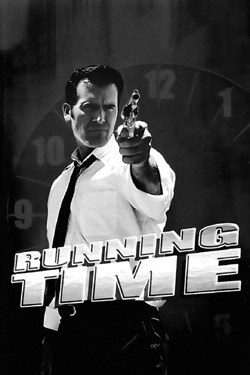 Carl (Bruce Campbell) is serving a ten-year prison sentence but he gets out in five. He’s met outside the prison by his old criminal partner. Patrick (Jeremy Roberts). After Carl makes up for lost time with a prostitute named Janie (Anita Barone), he and Patrick try to rob the prison’s laundry system. Carl’s spent most of his time in prison carefully plotting out the heist but he didn’t take into account that his old criminal crew is made up of incompetents.
Running Time is only 70 minutes long and the film’s story plays out in real-time. The movie itself is edited in such a way to create the impression that it was all shot in one continuous take. It’s gimmicky but, like the film’s noir-style black-and-white cinematography, it works, creating a narrative the feels relentless. It also makes it clear that Campbell’s Carl is a true career criminal. He’s not out of prison for more than a handful of minutes before he’s trying to pull his next heist. Crime is all that Carl really know, which makes his dilemma at the end of the movie (Janie or the money?) very effective.
Running Time is basically a showcase for Bruce Campbell. Director Josh Becker was a longtime friend and associate of Sam Raimi’s and started his feature career as a production assistant on The Evil Dead. Running Time feels like it was made with Campbell in mind and Carl is a character who plays to all of Campbell’s strengths. It’s the perfect film for Campbell’s style of acting and Campbell is just as good when he’s planning the heist as when he’s arguing with Janie about the way that he treated her when they were both in high school together. (His scenes with the excellent Anita Barone are some of the best in the movie.) Running Time features Bruce Campbell at his best.
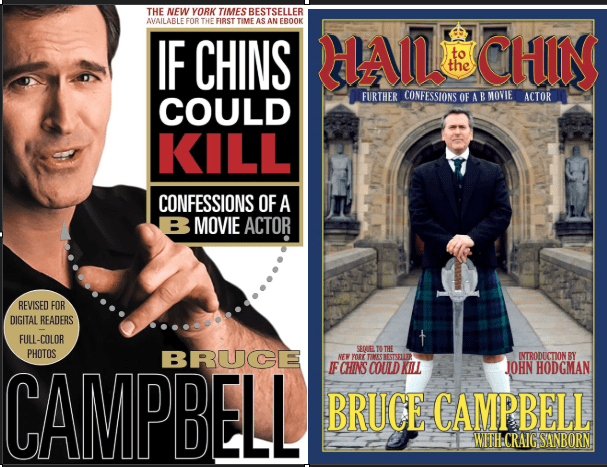
Bruce Campbell is the of Elvis of horror and independent film; in fact, he did play Elvis in “Bubba Ho-Tep”. If you’re into independent filmmaking, genre films, and artistic struggles both of these books “If chins could kill” and “Hail to the chin” are must reads and they are also fantastic audiobooks read by the man himself. Sidenote: I never thought his chin was weird- just manly. I enjoyed these books so much that I read them and then I listened to the audiobooks as well, which allowed me to re-experience the books like a favorite Uncle sharing his adventures with me. His entire life is laid bare in his own words: his successes, struggles, and failures. The second book picks up right after the end of the first one. NB: neither book is ghostwritten- a rarity. Sidenote 2: the audiobook really reveals Bruce’s skill at impersonations- he could do a career just doing that.
Bruce sat down and wrote both of these memoirs and if you’re an “Evil Dead” fan he discusses every single aspect of how the “Evil Dead” films were made. He goes into the same detail with every single show and film he has ever done. It’s not just how the sausage was made, it is the equivalent of discussing the history of the pig breed, how the pigs were raised, the tools they used for slaughtering, when they were made into sausage, the spices used, and the marketing to sell the sausage (Both books are available on Audible). The purpose of this article isn’t to grade these books because it’s just weird to grade a Man’s memories as long as the writing is half-way decent; instead of that very weird thing, I will discuss chronologically the moments that I’ve thought about for years in this uniquely American story.
His early years would be the central casting description of a midwestern “Theater Geek”. I never particularly liked that term, but it’s fairly apt because he lived for the dramatic arts, but NEVER complained or thought any job was beneath him- Refreshing. His entire focus in high school was theater and if he had graduated from college, he would’ve been a drama teacher. Luckily for us, Bruce became a college dropout after 6 months and began working on Evil Dead.
Evil Dead
Evil Dead was created by everyone that any connection to Bruce and his comrades, but there were also guilt feelings. Family members helped, parents helped, law firms helped, and probably even the Easter Bunny contributed to making “Evil Dead”. In the filming, everyone on the film was everywhere all the time and lived like they were quasi-homeless in the abandoned house that any horror fan would recognize. It was amazing to me how they had power to run their equipment. The way he describes it has all the intensity of a man remembering in perfect detail that he knew in his soul that this moment would be life-defining. He was right.
One thing that stood out to me was the guilt that Bruce had for asking his father, who was going through a divorce, for funds for the film. As a dad, I can tell that we want our children to be happy and that doesn’t end because you’re getting divorced, sickness, or even death- we always want our children to succeed. Can parental support get out of hand and make us annoyed? Yes, but this was well within the normal limits for a dad. If Bruce reads this article, I hope that he knows that his dad cherishes every dollar he contributed to his son’s dream. Unless of course, you had a dad like mine- in which case, how is it in the fire/police department, EMT, or Armed Forces these days?
Evil Dead 2 and 3
When he described Evil Dead 2 and 3, it was different because he had become a man. He was married and soon to be divorced. He described the work and the filmmaking the way a master carpenter describes his experience and steps making a $10,000 walnut table from a single piece of wood. Neither Bruce’s nor Sam Raimi’s careers had taken off yet and like many of us facing defeat – they went home. Home was of course with the old crew to make Evil Dead 2. Evil Dead over the years on a budget of $375,000 made $30 million….WHOA, but it was clear that Hollywood didn’t understand what they had- this was decades before Blair Witch and Paranormal Activity. It seems that Army of Darkness solidified Bruce as a name. One moment I remember about his memories of Army of Darkness was how he tried to mentor the extras about the importance of never complaining and hustling on the set. They didn’t listen. In fact, two of the extras defiled the set by having coitus in their costumes between takes…..ew. Maybe they were the first furries…. double ew. Or maybe the extras misunderstood the term “Hustling”?
The 90s
The 90s was Bruce Campbell’s decade. Hollywood finally realized with the success of the X-Files and Pulp Fiction that the audience for off kilter actors and stories was not just large- it had money to spend. Bruce found three things: steady work with Hercules and Xena, his soulmate- his second wife Ida Gearon, and his best friend – Lucy Lawless (Xena). He describes his friendship with Lucy like a brother describes the love and pride he has in a sister who made valedictorian. The Bruce/Lucy friendship spans decades and I hope they become neighbors one day. He describes it with such fondness and admiration; it proves that men and women can have platonic and beautiful friendships that last a lifetime. I’m not crying, you’re crying….leave me alone.
2000s through Burn Notice
Bruce had come into his own and was getting cast in A LOT of genre films. He had become a bona fide working actor. I will note that he gets into thorough detail about every single film that he made during this time period. However, I think that many Gen-Z and Millennials discovered him through Burn Notice and if you’re thinking he spills the tea about any on set drama- HE DOES NOT. He talks about how he enjoys dive bars and the different bartender pours. He describes in detail his experience with the show. I enjoyed the second book a lot, but it got personal for me because he convinced his Co-Star Jeffrey Donavan to visit the troops in Iraq. I give them both a lot of credit for that out of all of the great moments in the second book that’s what I think about the most often.
I am a fan of Bruce Campbell’s obviously, but what stood out to me in this uniquely American story is that you really can be anything here if you work at it.
Happy Birthday, Bruce!
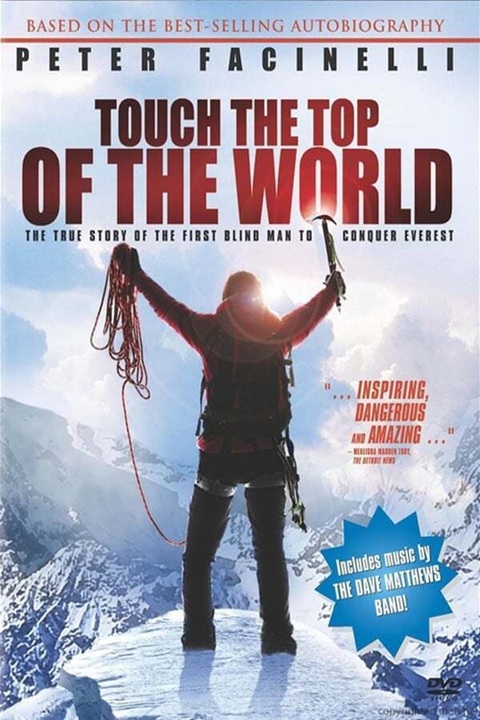
In 2001, Erik Weihenmayer became the first blind man to reach the summit of Mount Everest. Touch The Top Of The World is the story of how and why he did it.
Starting out with Erik (played by Peter Facinelli) and his friends already climbing Mount Everest, Touch The Top Of The World sets the stakes early with a scene of Erik trying to cross a rickety ladder that’s been laid across a mountain chasm. With every step, the ladder shakes and, of course, Erik can’t see where to place his feet. He’s having to do it on instinct and also by listening to the instructions shouted by his friends. Later, someone say that, of those who have tried to climb Mount Everest, one in six died in the attempt. Now imagine trying to do it without being able to see where you’re going. I wouldn’t have the courage but Erik is determined to show what can be accomplished through determination and teamwork. Erik isn’t just climbing for himself. He’s climbing for disabled people everywhere.
Flashbacks show how Erik was born with a degenerative eye disease that caused him to go blind when he was a child. His mother (Kate Greenhouse) and father (Bruce Campbell) never stop believing in him and, after his mother is killed in a car accident, Erik becomes determined to live up to her faith in him. He becomes a high school wrestler and then a teacher and eventually a climber.
Peter Facinelli gives a good performance as Erik but I know most people will probably be watching because Bruce Campbell plays his father. Bruce Campbell is great in the role, always supporting Erik and encouraging him to never give up. He’s the perfect father figure. He may not be able to climb Mt. Everest with his son but he’s still with Erik every step of the way.
Touch The Top Of The World was made for television and it has its moment when the sentiment is poured on pretty thick. I was worried when I saw that “Includes Music By The Dave Matthews Band!” on the cover of the DVD. Ultimately, it didn’t matter. It’s such a wholesome and heartfelt movie that it’s impossible not to get caught up in Erik’s mission to touch the top of the world.
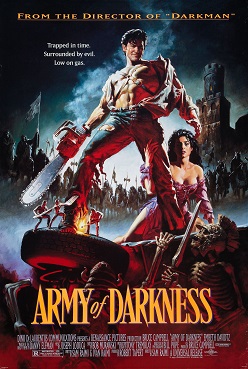
Continuing our celebration of Bruce Campbell’s birthday, today’s song of the day comes from 1992’s Army of Darkness. Here is Danny Elfman’s March of the Dead!
Way back in 1984, the Coen Brothers were trying to raise the $75,000 that they would need to produce and direct their first film, Blood Simple. Sam Raimi, with whom the Coen Brothers had worked on Evil Dead, suggested that they put together a fake trailer to draw the interest of investors.
The Coens and their cinematographer, Barry Sonnenfeld (who would later go on to have his own directorial career), took Raimi’s advice and put together a trailer that, to be honest, has more in common with Evil Dead than with Blood Simple. Then again, that was a smart move on their part. Evil Dead made a lot of money.
Bruce Campbell appears in the trailer, playing the role that was later played by Dan Hedaya in the actual film. (It’s hard to imagine Campbell playing that role, just because Hedaya gave such a perfect performance as Julian Marty. That said, I could very well see Campbell in the role played by John Getz.)
Here is the fake Blood Simple Trailer, featuring Bruce Campbell! (Admittedly, because of the way the trailer is shot, you don’t actually see Bruce’s face. But you’ll recognize the hair immediately.)
And, for the sake of comparison, here’s the trailer for the actual film:

4 Or More Shots From 4 Or More Films is just what it says it is, 4 shots from 4 of our favorite films. As opposed to the reviews and recaps that we usually post, 4 Shots From 4 Films lets the visuals do the talking!
Today, we celebrate Bruce Campbell’s birthday! It’s time for….
4 Shots From 4 Bruce Campbell Films
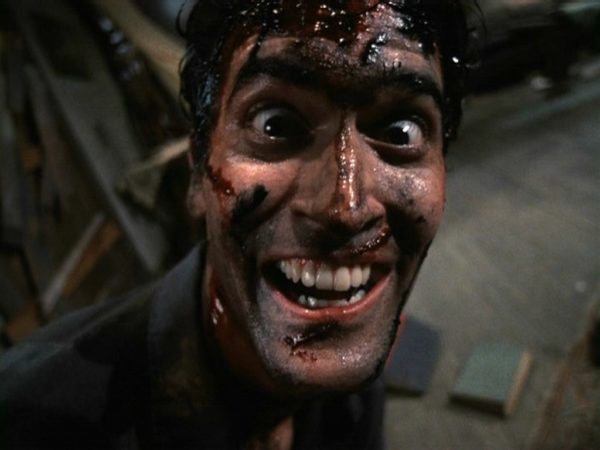
Evil Dead II (1987, dir by Sam Raimi, DP: Peter Deming)

Army of Darkness (1992, dir by Sam Raimi, DP: Bill Pope)
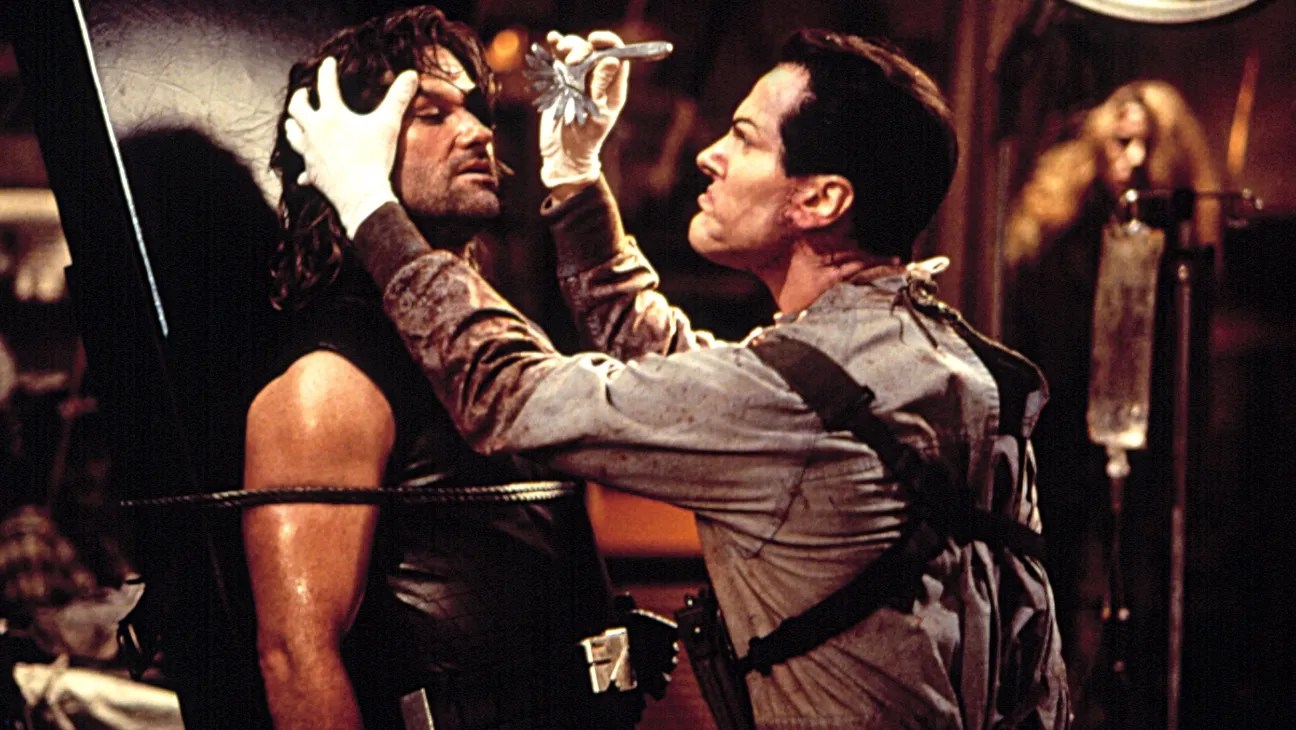
Escape From L.A. (1996, dir by John Carpenter, DP: Gary B. Kibbe)
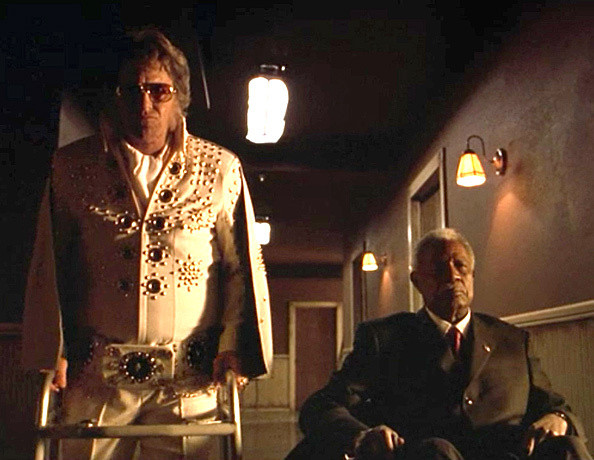
Bubba Ho-Tep (2002, dir by Don Coscarelli, DP: Adam Janiero)
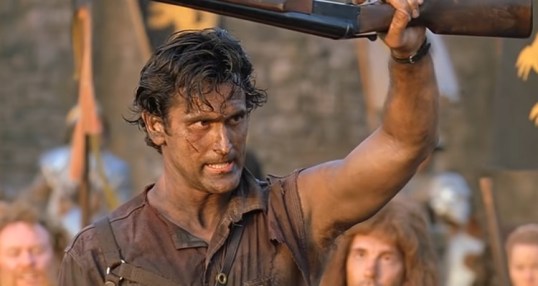
Today, the Shattered Lens wishes a happy birthday to the one and only Bruce Campbell!
A true American success story, Bruce Campbell first met and befriended Sam Raimi when the two of them were high school students in Michigan. Campbell first gained attention in Raimi’s Evil Dead films and he’s been a mainstay in Raimi’s films ever since. He’s also been a favorite of the Coen Brothers, Don Coscarelli, William Lustig, and scores of other director. Few actors can balance both drama and comedy with the adroitness of Bruce Campbell.
Campbell, of course, is best-known for his performance as Ash Williams, the S-Mart store clerk who lost his hand while spending the weekend at a cabin, spent some time in the past, and later earned the right to tell us all to say “hail to the king, baby.” Campbell’s ability to do often violent slapstick comedy, along with his ability to deliver the most absurd of dialogue with a straight face, came together to make him into a true pop cultural icon. Though Campbell has since announced his retirement from playing Ash (saying that, at his age, he can no longer physically spends hours a day getting beaten up), he remains a beloved actor to horror fans everywhere.
Today’s scene that I love comes from 1992’s Army of Darkness and it features Bruce Campbell at his best. All Ash has to do is remember three simple words and say them before taking the Necronomicon from its place. Of course, Ash being Ash, things don’t quite work out that simply….
 Through the Shattered Lens