
It’s time for another round of movie recommendations for the Halloween season!
Universal Horror On Prime
It’s the Halloween season and I am happy to say that Prime has a few classic, old school horror films. I know that they probably take some getting used to for modern audiences but I personally love the old horror movie.
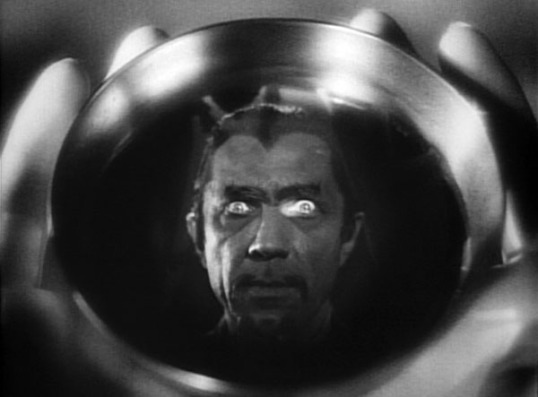
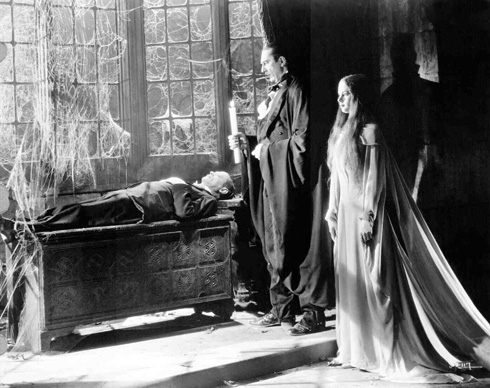
Dracula (1931), for instance, has a reputation for being rather stagey and that reputation is actually justified. It was based less on Bram Stoker’s classic novel and more on the subsequent stage play. That said, years of bad imitations have not diminished the strength of Bela Lugosi’s performance as Dracula. Though this film is, understandably, dominated by Lugosi, I’ve always appreciated the performances of Dwight Frye and Edward Van Sloan as well. Dracula is on Prime.
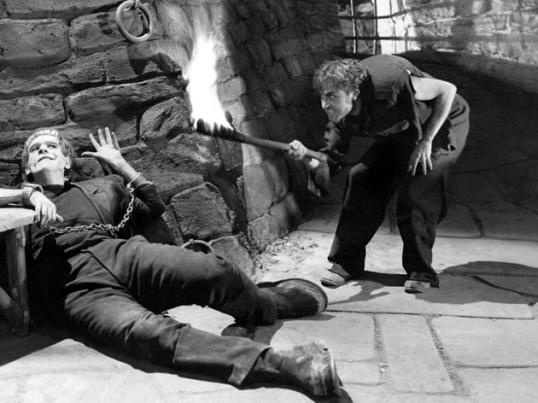
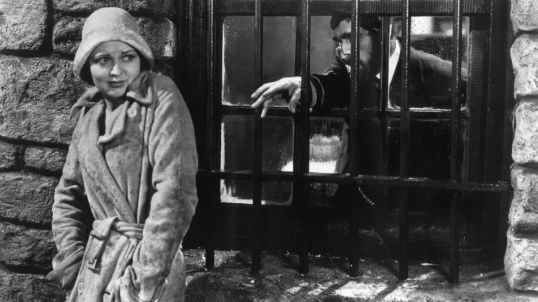
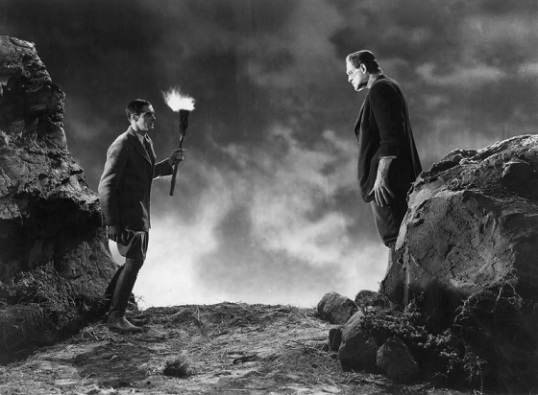
Frankenstein (1932) also features Edward Van Sloan and Dwight Frye, along with Mae Clarke as Elizabeth, Colin Clive as Henry Frankenstein, and Boris Karloff as the Monster. Nowhere near as campy as its reputation would seem to suggest, Frankenstein is actually a thoughtful and rather sad horror film. Karloff’s performance as the Monster has never been equaled and the scene where he unknowingly tosses the little girl in the lake to see if she will float is a classic moment of Universal horror. Frankenstein is on Prime.
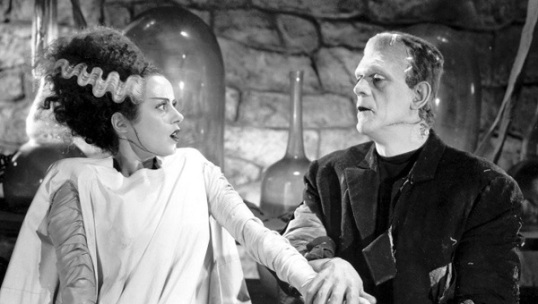
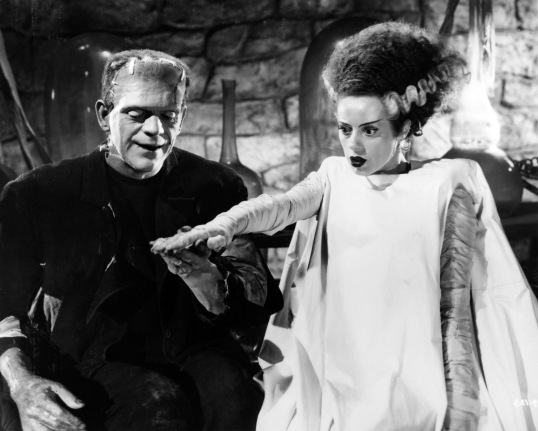
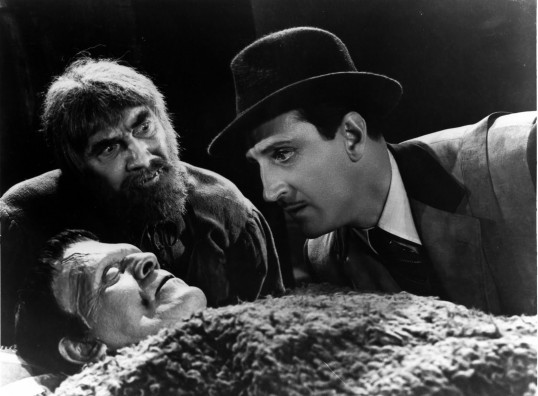
Needless to say, any viewing of Frankenstein should be immediately be followed by the second part of the story, Bride of Frankenstein (1935). Bride of Frankenstein opens with Elsa Lanchester (as Mary Shelley) revealing that there is more to her story than revealed in the first film. Lanchester returns towards the end of the film, playing the title character. Her reaction to being brought to life is heart-breaking. Boris Karloff is even better in this film than he was in the first one. Of the old Universal horror films, this is the best. It can be viewed on Prime.
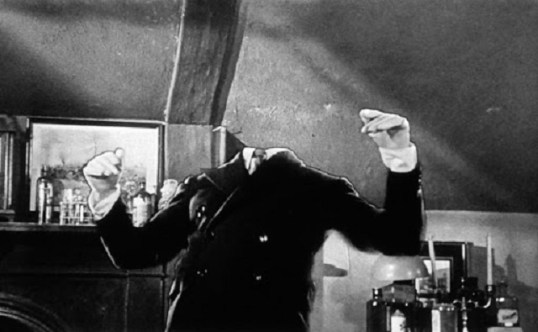
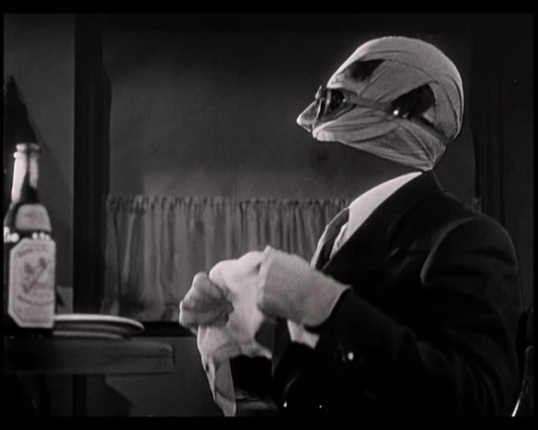
The Invisible Man (1933) is often overlooked when it comes to discussing the classic Universal horror films but I’ve always enjoyed. The special effects are effective to this day and Claude Rains gives an excellent performance as the title character. The Invisible Man can be viewed on Prime.
Finally, I have to mention one of my personal favorites. Creature From The Black Lagoon (1953) may have come out 20 years after the first wave of Universal horror films but it’s still an undeniable classic. The scenes of the Creature and Julia Adams swimming underwater are like a surreal and beautiful ballet. The Creature itself remains one of the best of Universal’s monsters. It can be viewed on Prime. (We’ll be watching it tomorrow for #ScarySocial!)
British Horror Online
In the 1950s, Britain’s Hammer Studios made their own version of the classic horror tales. Hammer’s films were in color and featured a combination of blood and cleavage that made them very popular with audiences in both the U.K. and the U.S. Even more importantly, they featured actors like Peter Cushing and Christopher Lee.
Curse of Frankenstein (1957) featured Peter Cushing as the Baron and Christopher Lee as the monster. If the first Frankenstein presented the scientist as being misguided but ultimately well-intentioned, the Hammer version presents Baron von Frankenstein as being a man who is all-too eager to play God, mostly for the sake of his own ego. Lee is an effective Monster but the true monster here is Cushing’s mad scientist. Curse of Frankenstein can be viewed on Tubi.
Horror of Dracula (1958) was the first of many Hammer films to feature Christopher Lee as Dracula and Peter Cushing as Van Helsing. (Somewhat sweetly, the two actors were best friends off-screen.) Lee eventually grew bored with the Hammer Dracula films but, in the first one, he gives an intense and almost feral performance as the blood-thirsty vampire. I’ve always preferred Cushing’s kindly Van Helsing to his cruel Frankenstein. Horror of Dracula can be viewed on Tubi.
Hammer was not the only British studio creating memorable horror films. Amicus Productions was responsible for some classic films of their own. One of my favorites is Scream and Scream Again (1970), which manages to be a horror film, a science fiction film, and a conspiracy thriller all in one. Christopher Lee and Peter Cushing appear in small roles while Vincent Price plays the scientist at the heart of the thriller. The late Michael Gothard plays a killer who, when handcuffed to a car, simply rips off his hand in order to make his escape. Scream and Scream Again can be viewed on Tubi.
In Death Line (1972), Donald Pleasence gives one of his best performances as an alcoholic cop who is investigating a series of disappearances in London’s underground. Hugh Armstrong plays the rather pathetic cannibal who is only capable of saying, “Mind the gap….” Christopher Lee has a cameo. Death Line can be viewed on Prime.
Finally, I have to recommend something from the underrated director Pete Walker. The Flesh and Blood Show (1972) is a fun and macabre little horror story about actors rehearsing a play in an isolated theater. Needless to say, they aren’t alone. It can be viewed on Tubi.
Italian Horror Online
With this upcoming Monday being Columbus Day, here are some Italian horror recommendations.
Of course, any discussion Italian horror has to start with Mario Bava. Black Sabbath (1963) is one of Bava’s best films, an anthology film that features three classic tales. Boris Karloff appears in the second story, playing a patriarch who has been transformed into a vampire. All three of the stories are wonderfully scary and entertaining and they all reveal Bava as a true master of horror. Black Sabbath can be viewed on Tubi.
Baron Blood (1972) deals with a mansion, a curse, and an ancient evil. The great Joseph Cotten stars. Remember that story about the hole in Russia from which you could supposedly hear the screams of the people in Hell? The “screams’ were even recorded. It was later determined that the screams in question had been lifted from this very film. Baron Blood can be viewed on Tubi.
Mario Bava’s Lisa and the Devil (1973) is a surreal mix of giallo mystery and demonic horror. Elke Sommer plays Lisa (hey!) who finds herself stranded in a mansion and experiencing what may or may not be a dream. Telly Savalas plays the mysterious Leandro, who may or may not be the other title character. The film can be viewed on Tubi.
Bava’s final film as a director was 1977’s Shock, a brilliant and frightening ghost story starring Daria Nicolodi and John Steiner. Nicolodi gives an intense and riveting performance as a mental fragile woman who may or may not be haunted by her ex-lover’s ghost. The hallway scene is horrifying. It can be viewed on Tubi.
Mario Bava’s son, Lamberto Bava, has gone on to have a directorial career of his own. He is perhaps best-known for directing the Dario Argento-produced Demons (1985), in which the audience of horror movie is transformed into a collection of blood-thirsty demons. It’s a wonderfully over-the-top horror film and it can be viewed on Tubi.
Lamberto Bava also directed A Blade In The Dark (1983), an excellent giallo about a film composer who is on a deadline but still finds time to get caught up in the brutal murders that all seem to be occurring around his duplex. This was one of the first giallo films that I ever saw and I was pretty much hooked from the beginning. The murder scene that takes place over the sink still freaks me out. It can be viewed on Tubi.
Finally, I have to recommend a few films from Lucio Fulci, the genius who was responsible for some of the most visually stunning (albeit narratively incoherent) Italian horror films of all time.
First off, any discussion of Fulci’s horror work has to start with Zombi 2 (1979). Though the film was sold as being a “sequel” to Dawn of the Dead, Zombi 2 is actually a separate story and a horror classic in its own right. As opposed to the gray-skinned members of the undead that populated Romero’s films, Fulci’s zombies truly do look as if they’ve spent the last decade buried underground and they attack with a disturbing relentlessness. One zombie battles a shark underwater. A conquistador zombie digs its way out of the ground, in a scene that is actually shown from the zombie’s point of view! The final scene is a classic and was apparently shot without bothering to get any permits ahead of time. Zombi 2 is on Tubi.
Finally, any discussion of Fulci has to include his masterwork, The Beyond trilogy. These three films, which are loosely-connected, are about as surreal and dream-like as they come, as narrative coherence is sacrificed for nightmarish visuals that truly do stick with the viewer.
In the first part of the trilogy, City of the Living Dead (1980), Christopher George and Catriona MacColl visit a small New England town where a priest’s suicide has opened a portal to Hell. The great Giovanni Lombardo Radice makes his film debut as Bob the Pervert, who has a bad experience with a drill to the head but who still returns to get a measure of revenge. City of the Living Dead can be viewed on Pluto TV.
The second part of the trilogy, The Beyond (1981), takes place in New Orleans. Catriona MacColl plays a different character here, a woman trying to reopen a hotel where, decades ago, a painter was lynched. The charming David Warbeck plays a doctor who has to deal with the dead coming back to life. Cinzia Monreale plays the beautiful, blind, and enigmatic Emily. The Beyond is about as close as the Italian horror industry ever got to capturing the feel of classic H.P. Lovecraft story. The ending will stick with you. It can be viewed on Tubi.
Finally, The House By The Cemetery (1981) features Catriona MacColl as yet another new character. This time, she and her husband and their son move into a house in New England, little realizing that the house’s previous inhabitant, Dr. Fruedstein, is still in the basement. This bloody film was apparently Fulci’s biggest hit in the States. Dr. Fruedstein is a terrifying creation and the film ends on a note of haunting ambiguity. This film can be viewed on Tubi.
That’s all I have room for in this entry but I imagine I’ll be writing about a lot more about Italian horror as the month progresses!
Click here for last week’s recommendations.








 Through the Shattered Lens