Review: Violent Night (dir. by Tommy Wirkola)


“Ho Ho holy shit.” — Santa Claus

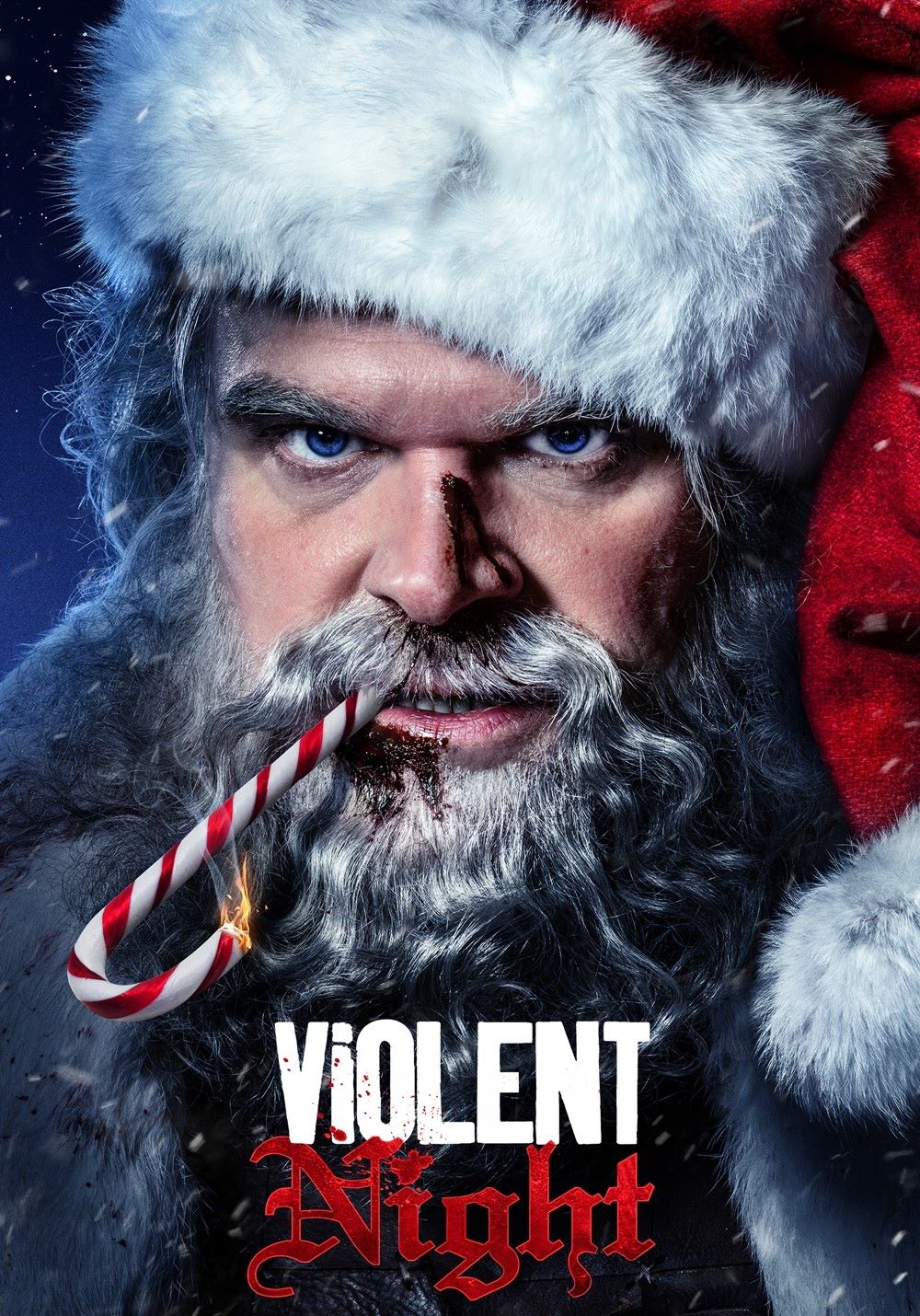
Violent Night (2022), directed by Tommy Wirkola, is a wild ride that shakes up the traditional Christmas movie formula by turning Santa Claus into a battle-hardened warrior. David Harbour stars as this unconventional Santa, who is far from jolly; he’s a grizzled, somewhat cranky, and disillusioned figure with a Viking warrior past. The movie sets itself apart with a premise that throws a group of ruthless mercenaries into a wealthy family’s Christmas Eve gathering, only to discover Santa isn’t the harmless old man they expected. Instead, he’s a fierce protector who fights back with brutal efficiency.

The story unfolds at the mansion of the affluent Lightstone family during their holiday reunion. The family is full of tension, with secrets and resentments bubbling just beneath the surface. When a gang of mercenaries led by the villainous Scrooge (John Leguizamo) invades the house to steal a fortune rumored to be stashed there, the family members become hostages. Among them is Trudy, a young girl who still believes in Santa and becomes an emotional anchor for the story. What follows is a chaotic clash as Santa unleashes his warrior skills in a bloody and often darkly humorous fight to protect Trudy and take down the intruders.

One of the strongest aspects of Violent Night is David Harbour’s performance. His Santa is not the usual cheerful holiday icon but a rough-around-the-edges hero with a quick wit and a fierce sense of duty. Harbour brings a compelling mix of grit and warmth, making Santa both intimidating and surprisingly endearing. His fight scenes are impressively choreographed, with inventive use of Christmas-themed props that add a unique flavor to the action. The humor, often delivered through clever one-liners and absurd situations, enhances the movie without overloading it, striking a balance between dark comedy and action thriller.

The action sequences are a highlight, filled with creative and over-the-top violence that turns traditional Christmas decorations into lethal weapons. From candy canes to Christmas lights, the film embraces its outrageous concept fully, often with a smirk and knowing wink to the audience. This approach to action and humor makes it feel like a holiday-themed grindhouse film, which will certainly appeal to viewers looking for something different from typical festive fare.

However, the film is not without flaws. The storyline sometimes leans too heavily on clichés and predictable twists, particularly around family drama and criminal motives. While the Lightstone family members are meant to add complexity to the narrative, many come across as caricatures, which lessens emotional impact. The pacing occasionally suffers as well, with some scenes dragging or feeling repetitive amid the barrage of action. Furthermore, the movie’s tone can be uneven—certain moments of humor or sentimentality clash with brutal violence, which might alienate viewers who prefer more consistent storytelling.

The supporting cast delivers performances that range from serviceable to over-the-top, fitting the film’s campy and exaggerated style. John Leguizamo’s Scrooge is a memorable villain with a sneer and attitude that fits the tone, while Beverly D’Angelo adds a touch of dark humor as the wealthy matriarch. The character of Trudy serves as the emotional heart of the film, grounding the chaos with a child’s innocent belief in magic and goodness. Yet, some secondary characters feel underdeveloped, existing mostly to provide fodder for the violence or comedic moments.

Visually, Violent Night embraces the glitz and cold grandeur of a wealthy family’s mansion, contrasted sharply by the gritty and bloody action that unfolds. The cinematography and production design showcase the holiday setting effectively, using wintery landscapes and elaborate Christmas decor as backdrops that add to both the festive and lethal atmosphere. The film keeps a brisk pace, aided by energetic direction, though it sometimes prioritizes style over substance.

In terms of themes, Violent Night plays with the clash between holiday cheer and harsh realities, exploring ideas about family, belief, and redemption through its unusual take on Santa Claus. It taps into a more cynical view of Christmas but ultimately doesn’t abandon the underlying message of hope and protection. This mixture, however, occasionally feels forced, as the violent antics often overshadow character development and emotional depth.

Overall, Violent Night is an entertaining and unconventional holiday film that is best enjoyed with an appetite for absurdity and dark humor. It stands out for pushing boundaries with its brutal action scenes and a refreshingly gruff Santa, offering a festive movie experience that fits more in the niche of chaotic fun rather than heartwarming tradition. While it may not win over purists looking for classic Christmas storytelling, it offers a distinctive alternative for those who want their holiday films with a hard edge and plenty of explosive moments. For viewers who can embrace its mix of camp, carnage, and seasonal spirit, Violent Night delivers a wild, memorable ride that defies expectations.

October True Crime: The Grim Sleeper (dir by Stanley M. Brooks)


It’s not known, for sure, how many people Lonnie David Franklin killed.

A residenct of Los Angeles and a former enlistee of the U.S. Army who was given a dishonorable discharge after doing time in prison for taking part in the gang-rape of a 17 year-old girl in Germany, Franklin was convicted of 10 murders but he was suspected of much more.  His earliest known murder was committed in 1984 and he was apparently very active up until 1988.  Then, much like the BTK Killer, Franklin appears to have taken a break for nearly two decades before returning to his murderous ways in 2002.  (It could be just as likely that Franklin was still killing but his victims were either not discovered or he was never linked to the crimes.)  Franklin’s murders didn’t get much attention, with the police not acknowledging that they were dealing with a serial killer until 2007.  Some of that can be blamed on the fact that many of Franklin’s murders were committed before DNA testing became a commonplace thing.  However, it has also been acknowledged that Franklin escaped detection because he targeted black women and tended to prey on sex workers, neither one of whom were a priority for the LAPD in the 80s.

2014’s The Grim Sleeper stars Dreama Walker as Christine Pelisek, the journalist who first reported on the existence of the Grim Sleeper and Ernie Hudson and Michael O’Neill as the detectives who investigated the murders and ultimately arrested Lonnie Franklin.  Franklin (played by James R. Baylis) only appears briefly in the film.  As The Grim Sleeper was made before Franklin had actually been convicted and sentenced to death for his crimes, the film does not actually state that the police arrested the right man.  Indeed, the film discusses very little about the man who was arrested for the crimes.

Instead, the film focuses on Pelisek and her attempts to get someone to take her seriously when she argues that there’s a serial killer on the loose and that the public has a right to know.  At first, everyone is skeptical of her claims.  Her editor tells her that she doesn’t have enough for a story.  The police tell her to mind her own business.  Her fellow reporters order her to get coffee.  The only people who really support Pelisek’s attempts to uncover the truth are the families of the victims, some of whom have spent over twenty years waiting for someone to tell them what happened to their loved ones.

The film is at its best when it focuses on the pain of the families, all of whom feel that they have been ignored and forgotten by the people who are supposed to be protecting them.  It’s at its least interesting when it focuses on Pelisek and her efforts to be taken seriously.  (Deama Walker has given good performances in films like Compliance and Once Upon A Time In Hollywood but she’s miscast here.)  Though flawed, the film honors the memories of those victimized by the Grim Sleeper and it reminds viewers that no one should be forgotten.

As for the real Grim Sleeper, he died suddenly while on Death Row.  The cause of death has never been released but he died in March of 2020, around the same time that COVID was spreading throughout the nation’s prisons and I’ve always assumed that he was an early fatality.  Regardless of the cause, the Sleeper met the Reaper and will never awaken again.


Horror Film Review: 13 Eerie (dir by Lowell Dean)


The 2013 film, 13 Eerie, takes place on an island that is not quite as deserted as our heroes originally assumed.

The island, known as the Eerie Strait, was once the home of a brutal, maximum security prison.  The island is full of abandoned buildings and abandoned vehicles, all of which sit there as monuments to the brutality of mass incarceration.  Prof. Tompkins (Michael Shanks) teaches a class in Forensic science and he brings six of his best students (played by Katharine Isabelle, Brendan Fehr, Brendan Fletcher, Jesse Moss, Kristie Patterson, and Michael Eisner) to the island.  With the help of an ex-convict named Larry (Nick Moran), Tompkins has set up several fake crime scenes (often featuring very real corpses) for his students to investigate.  For the class, the students are required to work in teams of two and the teams are not allowed to communicate with each other.  However, each team is given a walkie-talkie so that they can still communicate with Tompkins.

Now, just speaking for myself, I would probably drop the class rather than take part in any of this.  Seriously, as soon as you tell me that I’m going to have to spend my weekend hanging out at an abandoned prison and examining real corpses, I would probably walk out of the classroom and switch majors.  (Then again, I probably wouldn’t be majoring in forensics to begin with.)  But Tompkins’s students are very enthusiastic about heading off to the island.  I guess if doing obviously dumb things, going off to an isolated location with an ex-con would be an attractive option.

Anyway, the students head over to the Island and — surprise! — it turns out that there’s a lot of extra dead bodies lying around.  At first, the students think that the extra bodies are all a part of their class but then some of the dead bodies come back to life.  It turns out that the island — much like the prison camp in Garden of the Dead — was once used a place to experiment on prisoners.  As a result, many of the former prisoners have now been transformed into flesh-eating zombies who roam the island and look for new victims.

(And again, anyone who has ever seen a zombie movie, should have realized that this would happen.  It always amazing me that people in zombie movies have apparently never come across Night of the Living Dead on television late at night.  At the very least, you would think that these people would have at least read an article or two about The Walking Dead.  And really, even if you have somehow gone your entire life without being exposed to any zombie media, the sight of the dead walking around should be enough to convince most people to run away.)

13 Eerie has some atmosphere but it doesn’t really bring anything new to the zombie genre.  In fact, it so closely follows the rules of the genre that it actually gets kind of boring.  I appreciated, as always, the committed performance of Katharine Isabelle and I also liked that the film ended on a bit of a down note.  But, for the most part, 13 Eerie doesn’t bring anything new to the world of the living dead.

Playing Catch-Up With The Films of 2015: The Revenant (dir by Alejandro G Inarritu)


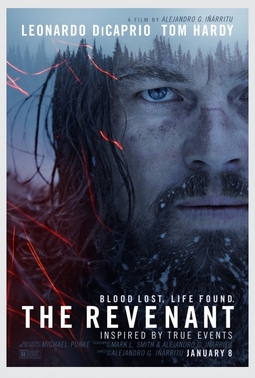
The_Revenant_2015_film_poster

Before I continue to catch up with reviewing the films of 2015 by taking a look at The Revenant, I want to ask a question and I request that you give this some serious thought.  Is Jeff Wells just a troll or is he seriously a moron?  Or maybe he’s both, that’s another possibility.  For those of you who stay out of the darker parts of the internet, Jeff Wells is a film blogger who thinks that, because he voted for Obama, he’s earned the right to regularly use his column to disparage women.  (Wells is the one who publicly complained that the lead of Diary of a Teenage Girl wasn’t, in his eyes, fuckable enough to be a compelling 15 year-old protagonist.)  Jeff Wells tweeted the following about The Revenant:

And Jeff Wells hasn’t been alone in claiming that only men can truly appreciate The Revenant.  On Overland, Alexandra Heller-Nicholas has an excellent post about this line of male critical thought.  Now, speaking for myself, I liked The Revenant a lot more than Heller-Nicholas apparently did.  But, at the same time, she hits the nail on the head when it comes to this idea that The Revenant is a film so intense and so full of agony that only men could possibly enjoy it.  Much like her, I felt as if “critics” like Jeff Wells and Rolling Stone‘s Peter Travers were personally challenging me, as a woman, to actually sit through The Revenant without running from the theater in disgust or hiding my eyes in terror.

And, quite frankly, that’s bullshit.  Yes, The Revenant is intense and yes, I did have a bit of a hard time watching that bear maul Leonardo DiCaprio but, at the same time, how would Jeff Wells or Peter Travers handle being mauled by a bear?  For that matter, how would either one of them handle being in a high-speed chase or being shot at?  Would either one of them be able to outrun an explosion or do any of the other stuff that regularly happens in films that supposedly only appeal to men?

(For that matter, how would Jeff Wells or Peter Travers handle monthly menstrual cramps or giving birth or anything else that women have to deal with in the real world?  I imagine they’d probably end up begging the bear to finish them off.)

And really, the whole point of The Revenant is that most human beings (regardless of gender) would not have survived being mauled by a bear or being buried alive or spending months exposed to the harsh wilderness or having pieces of their body start to decay.  These are all things that happen to hunter Hugh Glass (Leonardo DiCaprio) over the course of The Revenant and the film suggests that the only reason he survives is because he’s driven by a desire for revenge.  When Glass’s fellow hunter, the gruff Fitzgerald (Tom Hardy), decided to abandon Glass, he also murdered Glass’s son, Hawk.  Still immobilized by his wounds, Glass could only watch as Hawk was brutally killed.

(Interestingly enough, Fitzgerald is like Glass in that he has also survived a terrible injury.  Fitzgerald regularly wears a skullcap to hide the fact that he was scalped in the past.  In many ways, Fitzgerald is almost a shadow of Glass.  Glass has his son to remind him of what it means to be human but Fitzgerald has no one.  And after Hawk is murdered, neither does Glass.)

Though the film focused on Glass’s struggle to survive until he could again track down the men who abandoned him, I have to admit that my main concern was with the character of Jim Bridger (Will Poulter).  Bridger, after all, agreed to stay behind with Glass and Fitzgerald and to make sure that Glass received a proper burial after succumbing to his wounds.  Bridger was not present when Fitzgeralnd killed Hawk and buried Glass alive and expressed remorse after being falsely told that Glass was dead.  Still, The Revenant is a revenge flick and, as I watched, I found myself wondering if Glass would forgive Bridger or if he would take vengeance even on someone who was merely misguided.  (If you’ve ever seen a 70s revenge flick, you know that even sincere remorse is usually not enough to avoid being punished.)  Since the film continually asks whether or not Glass can survive without sacrificing his humanity, how he handles Bridger is one of the most important scenes in the film.

The Revenant opens with an absolutely terrifying sequence in which a group of hunters is slaughtered by a Native American tribe and it maintains that intensity through the entire film.  DiCaprio, Hardy, and Poulter all give excellent performances and special mention should also be made of Domhnall Gleeson, who plays the upright but ineffectual leader of the hunting party and for whom 2015 was a helluva year.  (Along with appearing in The Revenant, Gleeson also appeared in Brooklyn, Ex Machina, and Star Wars: The Force Awakens. )  It’s not always an easy film to watch (though, for me, the close-up of a wound oozing puss was a lot more unsettling than that bear mauling Glass) and there’s a few scenes where director Alejandro Inarritu gives in to his more pretentious tendencies but, for the most part, The Revenant is never less than watchable.

The Revenant is currently an Oscar front-runner.  Last night, it beat the highly hyped Spotlight at the Golden Globes.  Personally, as good as the film is, I think there are a lot of films that deserve a best picture nomination more than The Revenant.  It’s been a great year for film, after all.  That said, I do think The Revenant is definitely an improvement on Inarritu’s previous Oscar winner, Birdman.

The Revenant is an intense and harrowing film that can be seen and appreciated (or, for that matter, disliked) by anyone.  Don’t let anyone tell you differently!