I’m a big fan of the South Korean actor, Choi Min-sik, especially due to his performance in the film OLDBOY (2003). I remember buying the foreign DVD when the movie came out. I had a region-free DVD player so I was able to watch it back in the early 2000’s before everyone else knew about it. Back in those days, it felt like I knew something that nobody else knew, and it was pretty awesome. Choi would soon go on to star in movies like LADY VENGEANCE (2005) and I SAW THE DEVIL (2010), cementing himself as an icon. On his 64th birthday, I invite you to celebrate this fight scene from his legendary performance in OLDBOY!
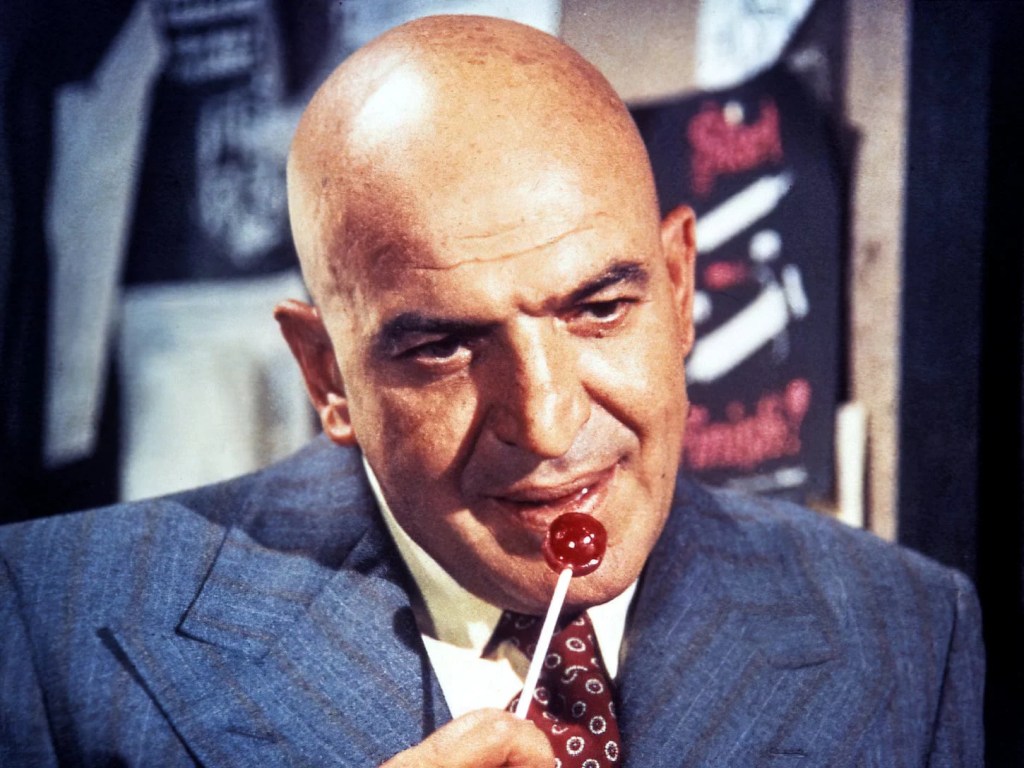
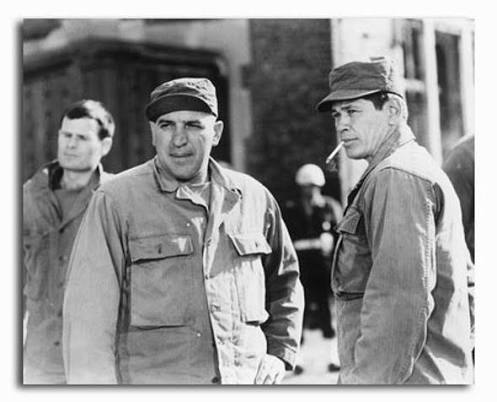
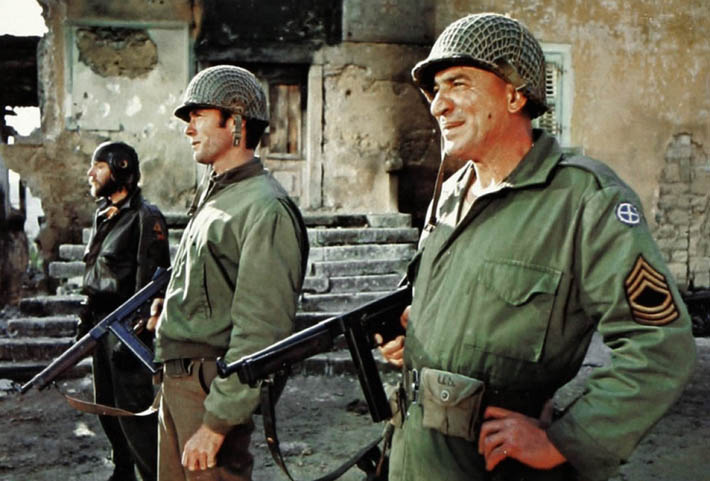
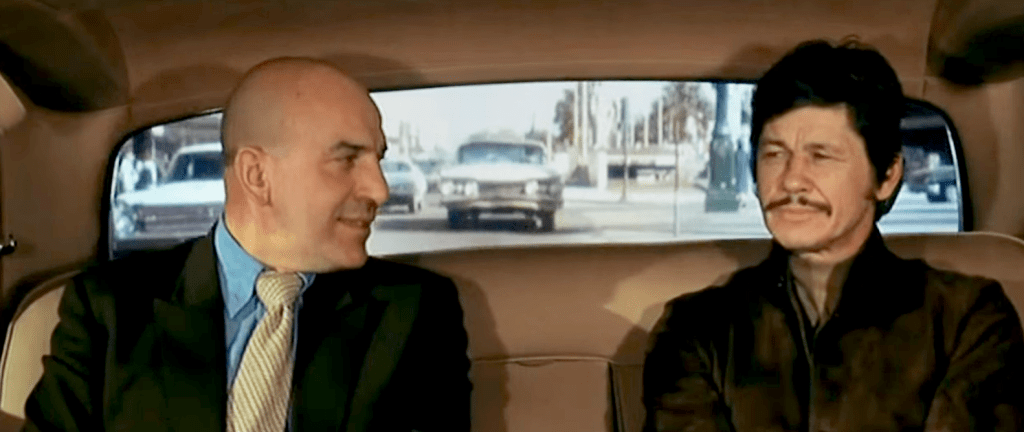
Telly Savalas would have been 104 years old today. He’s been in many of my favorite movies so I’m glad to celebrate him today with 4 Shots from 4 of my favorites!
Who loves ya, baby? (Telly Savalas as Kojak!)With Charles Bronson in THE DIRTY DOZEN!With Clint Eastwood & Donald Sutherland in KELLY’S HEROES!With Charles Bronson in VIOLENT CITY!
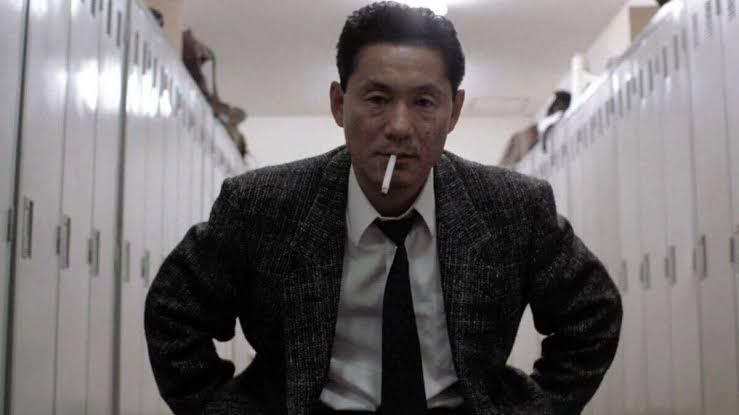
To celebrate the incredible Takeshi Kitano’s 79th birthday, I decided to revisit his directorial debut, VIOLENT COP (1989). I first discovered Kitano in the late 90’s when I saw that his film FIREWORKS (1997) was available for rent at my local Hastings Entertainment Superstore. Of course I rented it. It was slow, but it was also incredibly powerful, and I found myself paying attention to Kitano’s career. He has this incredible screen presence, and I was soon watching everything he came out with from BROTHER (2000) and BATTLE ROYALE (2000) to the update of ZATOICHI: THE BLIND SWORDSMAN (2003). I also looked back at the earlier work in his career, which brings us back to VIOLENT COP.
VIOLENT COP introduces us to Detective Azuma (Takeshi Kitano), a Tokyo cop whose methods are almost as brutal as the crimes he investigates. When his best friend, the corrupt cop Iwaki (Sei Hiraizumi), is murdered, Azuma uncovers a criminal network tied to drugs, corruption, exploitation, you name it! Through a series of beatings and threats, Azuma closes in on the professional killer, Kiyohiro (Hakuryu). Complicating matters is Azuma’s sister, Akari (Maiko Kawakami), a mental case and drug addict. When Akari is kidnapped due to his investigation, Azuma will stop at nothing to get his own, unique brand of justice.
First time director Takeshi Kitano brings an interesting and minimalist quality to VIOLENT COP through his long static shots and sparse dialogue. He’s able to create an atmosphere where the brutality of his story feels raw and natural. Actor Takeshi Kitano’s performance as Azuma follows suit. Once the violence comes, it resonates and lands extremely hard precisely because it’s presented in such a straightforward manner. Kitano’s film is way more realistic than most of us would probably care to admit.
Ultimately, VIOLENT COP doesn’t condemn or endorse Azuma, choosing to just observe him as his story leads to tragedy. As Kitano’s directorial debut, however, it introduces us to a unique and confident new voice… bleak, unsentimental, and unsettling. Kitano, the actor and the director, isn’t afraid to just stare at the camera and dare you to decide if there’s any difference between the good guy and the bad guy!
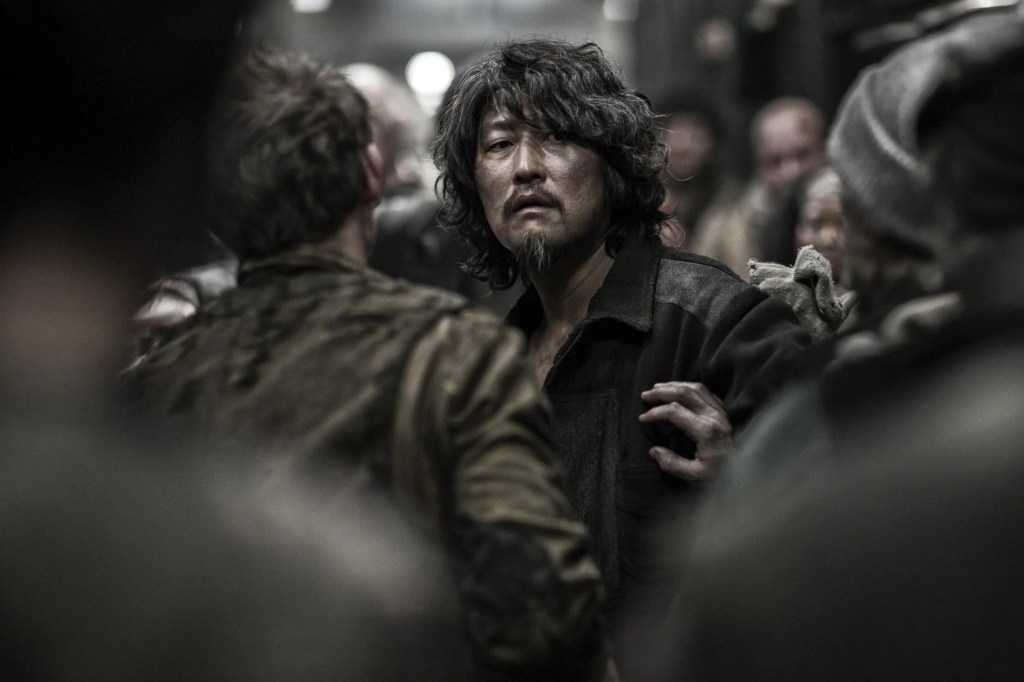
I discovered South Korean cinema when I ran across the blu ray for SHIRI (1999) at Best Buy some time around the turn of the century. Making the impulse buy, I discovered SHIRI to be an incredible action film. With my appetite sufficiently whetted, I hopped on the Internet and just started searching for more. The next movie I came across was JOINT SECURITY AREA (2000), another great film. I took notice of the actor Song Kang-ho in both films, so I started watching his career very closely. Soon he was starring in the psychological thriller SYMPATHY FOR MR. VENGEANCE (2002) and the serial killer film MEMORIES OF MURDER (2003). Not only was Song giving incredible acting performances, he was working for two of the great South Korean directors at the time, Park Chan-Wook and Bong Joon Ho. These two incredible directors were making the best films in South Korean cinema and Song’s fingerprints were all over their best work. Films like THE HOST (2006), THIRST (2009) and SNOWPIERCER (2013) soon followed, culminating in Song’s lead performance in Bong Joon Ho’s Oscar winning film PARASITE (2018), the first foreign language film to ever take home the Best Picture Oscar!
I have now been a fan of Song Kang-ho for over 25 years. He’s still working hard. I just noticed that he has a series that’s streaming on Hulu called UNCLE SAMSIK. I need to check that out. I also noticed that many of his best films are currently available for streaming on so many different platforms… Netflix, Tubi, the Roku Channel, PlutoTV, etc., etc.!
Check out this trailer for MEMORIES OF MURDER. If this doesn’t light your fire, your wood’s wet! Happy Birthday, Song Kang-ho. Thanks for a quarter century of entertainment!
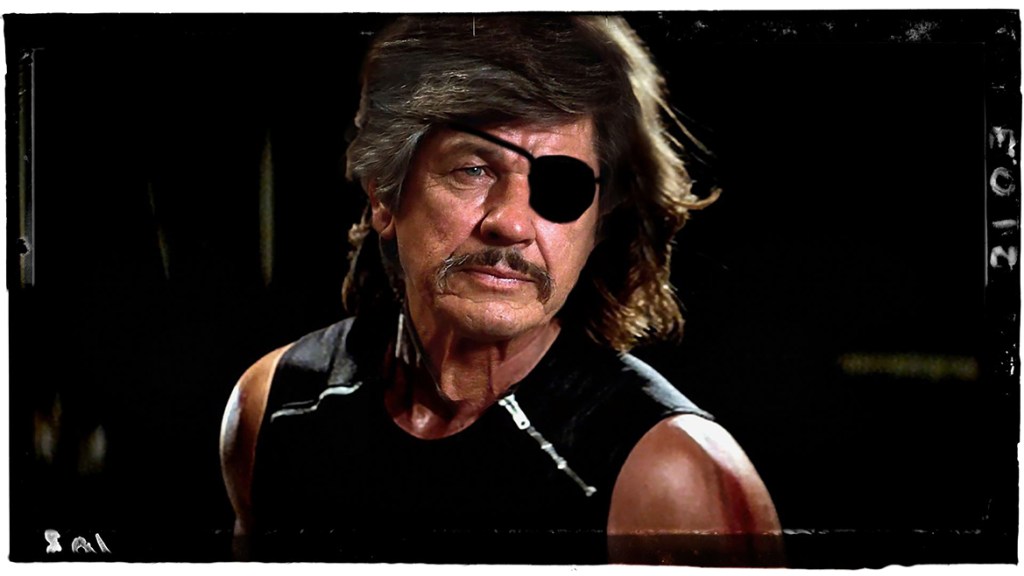
If you’re following the page today, you know that The Shattered Lens is celebrating the 78th birthday of legendary Director John Carpenter. Did you know that there was a time when the studio “suits” wanted Charles Bronson to play the role of Snake Plissken in Carpenter’s classic, ESCAPE FROM NEW YORK? A big star when the original idea of the film began kicking around, studio executives felt that an experienced, gritty actor like Bronson might be perfect for the role, especially since he was already a solid box office champ.
Carpenter, however, wanted a younger guy to play Plissken and may have even been a little intimidated to work with the veteran action star…
“Charles Bronson had expressed interest in playing Snake, but I was afraid of working with him. He was a big star, and I was this little-shit nobody.”
It all worked out well in the long run as Carpenter was eventually able to cast his first choice for the role, Kurt Russell, who was at an important stage in his own career as he was still in the process of reinventing his on-screen image from his days as a former child star and Disney star. John Carpenter had worked with Russell a couple of years earlier in the TV movie, ELVIS (1979), so he had confidence in the young actor. Russell turned out to be an incredible choice for the film and key to making it the classic it is today.
Still, for a Bronson fan like me, it’s quite interesting to know that there’s a multiverse out there that could have seen Bronson in the iconic role!
It has been a while since the “This Week in Charles Bronson” podcast has dropped a new episode focused on a specific Charles Bronson film. That ends today as our episode on the excellent 1973 badass cop film THE STONE KILLER is here for your listening pleasure. Join me and our host Eric Todd, along with special guests “Fanacek” (who hosts one of my very favorite pop culture podcasts) and on-line film critic Robert Baum, as we discuss the film from many different facets. You never know what rabbit holes we’ll go down, what theories we’ll share, or which crazy directions the conversation may head. We’re just fans of Charles Bronson, movies and TV shows, and we love to share that with each other and all of you.
One of the best things about THE STONE KILLER is its incredible cast. Besides Charles Bronson, we get the opportunity to dive off into the careers of cast members like Three’s Company alums John Ritter and Norman Fell, Oscar winner Martin Balsam, the Incredible Hulk‘s nosy reporter Jack Colvin, Papa Walton, and even B-movie queen Roberta Collins. Plus, many more!
So, if you have a little time on your hands, and you think it might be fun to listen to some extremely cool folks (or maybe movie nerds depending on your way of thinking) talking about Charles Bronson’s THE STONE KILLER, I’ve linked to the YouTube version below. It’s also available on Spotify and Apple Podcasts!
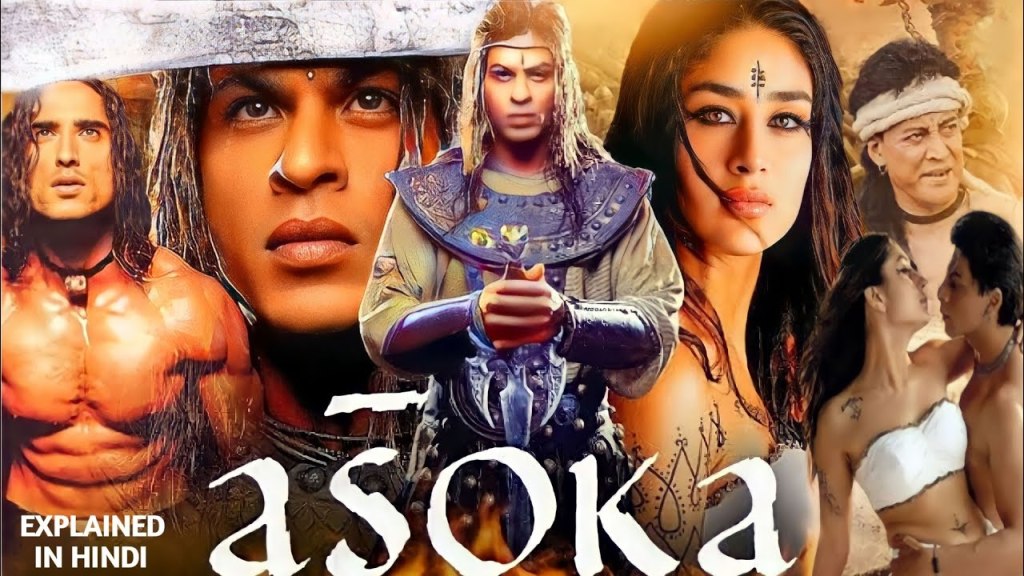
Before I get started with my review of the film ASOKA, it’s only fair that I state up front that I know nothing about Indian history. Although I have made good grades in all my prior World History courses, about all I seem to remember is the fact that King Henry VIII of England started the Anglican Church (the Episcopal Church in America) so he could divorce his wife. That’s it! Apparently, the Emperor Asoka is considered one of the most important figures in Indian history. The reason I wanted to mention these things is to cover myself if I make any ignorant and / or boneheaded remarks through the course of this review. With that being said, on with the show.
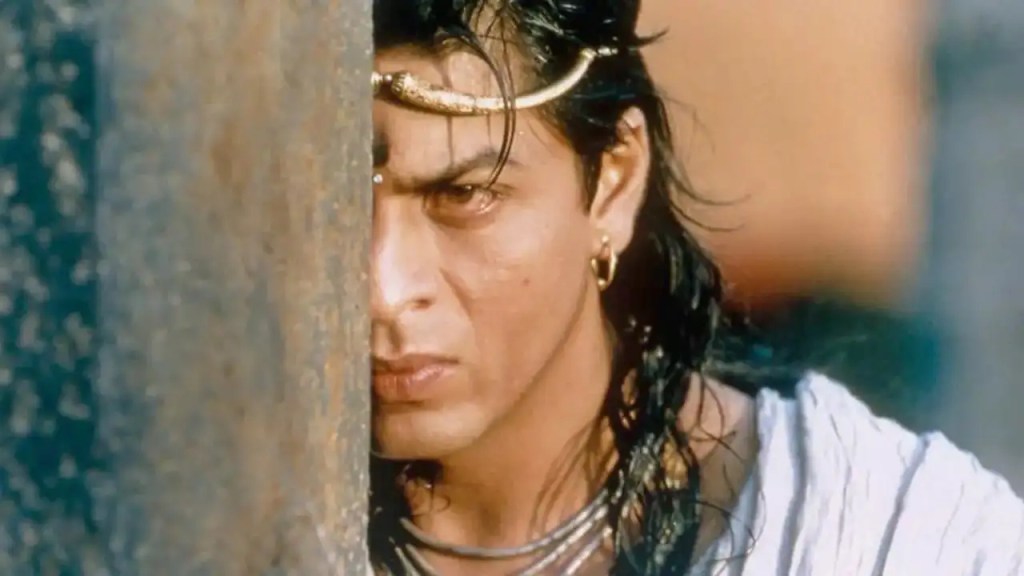
First, a summary of the plot: Young prince Asoka (Shah Rukh Khan) is pretty much an arrogant bada$$. Sensing that Asoka could realistically ascend to the throne, his brother Susima (Ajith Kumar) plots to have him killed. After easily, and quite stylishly I might add, fending off a couple of assassination attempts, Asoka is willing to fight whoever it takes to be king. Then, in concern for her son’s life, Asoka’s mom decides that she will never talk again unless he leaves town and resumes life in safety as a commoner (and I thought my mom knew how to put on a guilt trip!!!!).
While wandering the earth, and having taken on the name of his horse Pawan, he comes across a beautiful woman named Kaurwaki (Kareena Kapoor) who just happens to be singing and dancing provocatively in a beautiful stream. Thus begins a courtship between Kaurwaki (who is actually a princess in hiding after assassination attempts of her own) and Asoka / Pawan. Kaurwaki’s brother, the eight years old prince Arye, is also with them. Kaurwaki and Pawan fall in love and get married.
Just when you think life is too good, Pawan is called back home to check on his ailing mother. In a cruel twist of fate, Pawan is incorrectly told that Kaurwaki and Arye have been killed. This is where things get really rough… soon Asoka has a new wife, he’s extremely cruel towards others, and he even has some of his own family members killed. After thinking that he has lost his true love, it basically just boils down to him not giving a rip about anything. He mercilessly assumes the throne of his country, expands its territory, and kills whoever stands in his way. The movie culminates in a great battle in which Asoka tries to take over the territory of Kalinga, which happens to also be the territory that princess Kaurwaki and her brother are from. I’ll leave the rest for you to discover.
I really like ASOKA. The film is great to look at, and I’m not just talking about Kareena Kapoor’s dance sequences. I’m a fan of stylish films. That’s why directors who bring such visual style to their films, such as John Woo, Brian DePalma, and Sergio Leone are some of my favorites. Director / Cinematographer Santosh Sivan has made a very stylish film. Through his use of quick cuts, bizarre camera angles, slow motion editing, tightly choreographed action sequences, and epic battle scenes, Sivan has made a film that is extremely pleasing to the eye. This introduction to Sivan’s directorial work has stimulated my interest to explore his previous work as director and / or cinematographer. After watching this film, I noticed that he is also the cinematographer on DIL SE (1998), another beautiful movie.
In the lead role, I found myself mesmerized by the screen presence of Shah Rukh Khan. His character goes from arrogant youth, to love-struck suitor, to cruel emperor, to heartbroken victor. Although these transitions sometimes seemed somewhat abrupt, Khan’s performance was quite believable. I can see why he has been the top box office star of India over the last several decades. In the same way that a person can immediately sense the star power of Hong Kong actors like Chow Yun-fat and Lau Ching-wan, Shah Rukh Khan sticks out like a sore thumb. As Kaurwaki, Kareena Kapoor is very attractive and gives a good performance. By the way, did I mention her dance sequences (3 times at last count)? The other performance that really stood out to me was that of Danny Denzongpa. He plays a guy who seems to have more brawn than brains, is initially somewhat of an annoyance to Asoka’s character, and who eventually becomes one of his most loyal allies and friends. Their initial interactions are quite funny, and their growing friendship adds another level of emotional depth to the film.
I have one minor complaint with this film. My understanding is that after witnessing the extreme brutality and horrors of war, Emperor Asoka became a man of peace, embracing Buddhism, and spreading his beliefs across his nation. I can’t believe I’m saying this about a film that lasted close to three hours, but I wish the filmmakers would have included more about this phase of Asoka’s reign. I think this would have left a better taste in my mouth at the conclusion of the film, compared to ending the film right after the brutal battle of Kalinga.
All in all, ASOKA is a good place to spend a few hours. In the tradition of historical epics such as BRAVEHEART (1995), the experience may leave you emotionally drained, but you will not have wasted your time.
(FYI: for those interested, the film is streaming on Netflix at the time this review is being published!)
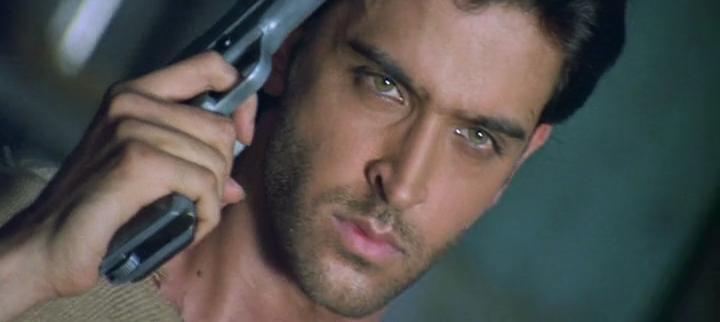
Happy 52nd Birthday to Bollywood actor Hrithik Roshan!
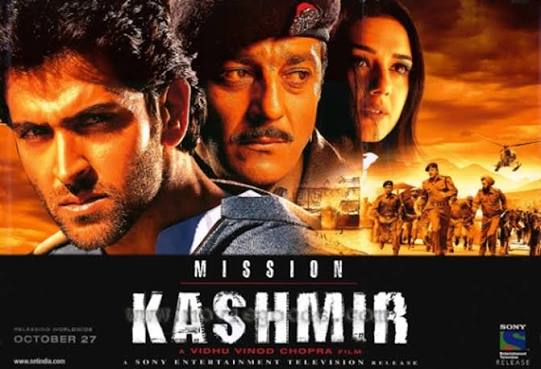
Around the turn of the century, I first became aware of the films being made in Bollywood, India’s Hindi-language film industry. It was then I noticed that the film MISSION KASHMIR was for sale at the Best Buy in Little Rock, AR. I figured that this must be a pretty good film to find itself manufactured, packaged, and being sold all the way over here in Central Arkansas. That was also around the time that I first signed up for Netflix. Not yet a streaming giant, Netflix was just a service for renting movies through the mail. I immediately put MISSION KASHMIR in my queue so I could check it out. This was only my third Bollywood experience, behind the very good films DIL SE (1998) and ASOKA (2001). I remember being fired up about the chance to see some new actors and discover a Hindi action film. Although not completely satisfying, I did find MISSION KASHMIR to be an enjoyable experience.
The plot finds Inspector Khan (Sanjay Dutt) living the good life. He has a beautiful wife (Sonali Kulkarni), a good son, lives in a beautiful house, and gets paid to periodically kick the posteriors of some bad Indians. Unfortunately, his success in his professional life has had some bad side effects. One particularly bad guy has put out the word that any doctor who treats Inspector Khan, or his family, will be killed, and as one scene proves, this guy is a man of his word. Next thing you know, Khan’s son falls and hits his head. Tragically, the boy dies because all of the doctors refuse to help him until it is already too late.
Seeking revenge, his face covered by a black ski mask, Khan tracks down the men responsible and viciously kills them all, including the innocent father, mother, and daughter of a family being held captive by the bad guys. The only survivor is the young son of the slaughtered family, Altaaf, who has terrifying dreams of the black-masked killer of his family. Inspector Khan, who feels extreme guilt over what he has done, allows his wife to talk him into bringing the boy to their house rather than allowing him to spend his childhood in an orphanage.
Life is just starting to get good again when Altaaf figures out that the killer of his family was actually his new father, Khan. After first pausing to try to kill Khan unsuccessfully, Altaaf takes off, not to be heard from again for 10 years. When Altaaf finally shows back up, he has turned into heartthrob Hrithik Roshan, is under the control of a psycho terrorist (played by Jackie Shroff) who has a plan to bomb the heck out of Kashmir, and has a new laundry list of goals in life:
Use childhood sweetheart for terror purposes even though I still love her – check!
Use kung fu training to good action effect – check!
DESTROY INSPECTOR KHAN AT ALL COSTS!!! – ??????
I’ll let you discover the results of goal number four.
Before I go into my thoughts on MISSION KASHMIR, I want to note that while the film is set against the backdrop of the Kashmir conflict, it mostly uses that setting for its story of personal melodrama and high-octane action. I am no expert on the region’s complex politics, so this review focuses only on what I think of the movie itself, with no added political commentary.
As a movie, MISSION KASHMIR has a lot of good things going for it. First and foremost, I am a fan of action films, and I was looking for some good action scenes. This film did not disappoint in that department. From the MATRIX-like introduction to Altaaf’s adult persona to the final attempts to thwart the master terrorist’s plot, the action is presented in a highly stylized manner. Wirework kung fu, slow-motion carnage, and a hero wielding a massive missile launcher aimed at bad guys make for a pleasant viewing experience in my book.
Secondly, the film features some good performances. Sanjay Dutt’s portrayal of Inspector Khan is commanding, and I found myself really pulling for his character. It is hard not to be sympathetic to a guy who endures as much as he does here. This was the first time I had seen Hrithik Roshan in a film. With his matinee idol good looks, Roshan was emerging as a major star of Hindi cinema, even challenging Shah Rukh Khan, the reigning megastar of Bollywood. Roshan gives a solid performance as the grown-up Altaaf and is especially strong in the action scenes. The other major performance comes from Preity Zinta, who plays the girl Altaaf loved as a child and still loves as a man. I had seen her before in DIL SE and really like the naturalistic, best-friend, girl-next-door vibe she brings to her roles, albeit a very beautiful girl next door. It is easy to see why Altaaf has always loved her. Finally, as with the other Bollywood films I have seen, this movie is just beautiful to look at. I think the greatest cinematography of landscapes in the world is being done in India.
I do have a couple of complaints with MISSION KASHMIR. First, clocking in at over two and a half hours, the movie is too long. The story could have been made into a very exciting ninety-minute film. As it is, the movie seems to drag in places, with the insertion of songs and sequences that do not add much to the proceedings. There were times I found myself thinking, “OK, I get it. He really loves her. Now let’s move on with it,” or “Not another song…” Secondly, I felt that some of the songs were simply not appropriate for what was happening on the screen. For example, there is one peppy little dance number that leads directly into a horrific tragedy. Granted, the scene is effective for the surprise element, but when the film should have been building action and suspense, it instead throws in this routine, which took me out of the movie for a bit. These are the only real complaints I had.
Overall, I did enjoy MISSION KASHMIR. The movie is filled with strong action sequences, along with good performances from a talented cast. Although it overstays its welcome in certain areas, I still recommend this film and give it a 7 out of 10.
Today is Nicolas Cage’s 62nd birthday. Join me and celebrate by watching this incredible clip from my favorite film of 2021, PIG! It’s currently streaming on Netflix!
Happy Birthday to one of my favorite people in the world, Jan Gan Boyd, Charles Bronson’s co-star in ASSASSINATION (1987)!
We’ll be back to that in a bit, but first a little about me. My parents purchased a VCR for our family sometime around 1985 or so. I was about 12 years old at that time, and it’s fair to say that I’ve been obsessed with movies ever since. It’s actually fair to say that I have somewhat of an obsessive personality, so when I latch onto something, I really, really latch on. At the very top of that list is my lifelong fascination with the actor Charles Bronson. To be completely honest with you, it’s a passion that not many people really understand or appreciate. Beginning around 1986 with my discovery of DEATH WISH 3, I would talk about his movies to my friends constantly. Now keep in mind that I was a young teenager and Bronson was around 65, with his best movie-making years well behind him. Charles Bronson was not high on the list of topics my friends wanted to discuss. I’m in my 50’s now, and my old high school friends still tease me about Charles Bronson. I don’t care, because I still think he’s awesome!
As a matter of fact, my obsession with Charles Bronson has only gotten stronger over the last five years or so. Back in November of 2021, I met a guy from Pennsylvania named Eric Todd who had started the “This Week in Charles Bronson” Podcast and Facebook page. After joining the page, we became fast friends. For the first time, through the Facebook page, I had a whole group of friends who love Charles Bronson as much, or at least close to as much, as I do. In the summer of 2022, when my wife and I drove 17 hours from my home in Arkansas to the Mahoning Drive-In in Lehighton, PA, to watch a triple feature of classic Bronson films, Eric asked me to join him on the podcast and while on-site at the drive-in, I recorded my first episode. I thought this would just be some fun social media or podcast activity where us “Bronson weirdos,” as we call ourselves, would discuss our hero and his movies. I never thought it would lead me to getting to meet some of the actors and actresses who actually worked with Bronson in the movies. Boy, was I wrong!
Through my participation with the “This Week in Charles Bronson” podcast and Facebook page, I have met Paul Talbot (author of the “Bronson’s Loose” and “Bronson’s Loose Again” books), Jordan Rhodes (co-star of MR. MAJESTYK and THE INDIAN RUNNER), Henry Brooks (writer of “Charles Bronson, More than a Vigilante, The Musical” ), Robert F. Lyons (co-star of DEATH WISH II, TEN TO MIDNIGHT and MURPHY’S LAW), and Lindsay Ireland (Charles Bronson and Jill Ireland’s niece and author of the book “Why Not Me?”). I have met fellow Bronson fans from all over the country and world. Not only have I met these people, but I’ve also developed some true friendships along the way. Eric and I now plan family vacations together, and if I ever find myself in a city where one of my “Buchinsky Boys” reside, I will definitely find the time to break bread with them. It’s one of the nicest communities I’ve ever been a part of, and I’m thankful for it.
To bring this full circle, one of my favorite people in the world, who I now consider a friend, just so happened to co-star with Charles Bronson and Jill Ireland in the 1987 action film, ASSASSINATION. Back in January of 2023, Eric and I were able to interview actress Jan Gan Boyd. It was such an honor to be able spend some time with her as she talked about working with Bronson, Michael Douglas, Richard Attenborough, Martin Kove, Ted Danson, and even Richard Roundtree. She remained close friends with Charles Bronson up until his death in 2003. If any of you would like to watch that podcast episode, I’ve linked to it below.
 Through the Shattered Lens