Star Wars: The Old Republic


As BioWare’s ad campaign boldly proclaims… the wait is over.

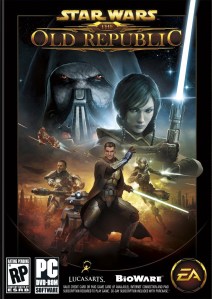
I don’t know how many Star Wars fans are still willing to embrace new products that come out without some measure of hesitation. I’m certain that many people still love Star Wars, and refuse to let their love be tainted by any of the more questionable decisions that the brand has made over the years. As a boy, I would certainly have counted myself amongst that group; as an adult, I simply feel free to make the choice not to give money to things that I don’t enjoy. It was definitely with a significant measure of hesitation that I placed a pre-order for BioWare’s brand-spankin’-new MMO, Star Wars: The Old Republic.

As the name implies, this game takes place during that lengthy and largely unexplored time of the Old Republic. Since the Republic persisted for thousands and thousands of years, it makes for a seemingly endless breeding ground for unique and individual stories without the need to be concerned with the absolute canon of the six Star Wars films. In other words, the further removed we are from characters like Luke Skywalker and Darth Vader, the easier it is to make a game that still feels like Star Wars… but doesn’t even attempt to infringe upon the films or their core events. The setting for The Old Republic is set some time after the events of the two “Knights of the Old Republic” games. Darth Revan, at least, is considered to be an almost-mythical figure in this time period. It still follows the progress of ongoing hostilities (if not outright war) between the Sith Empire and the Republic. Beyond that, the game’s story depends heavily (at least insofar as I’ve progressed myself) on which character class you’ve selected. Unlike other MMORPGs that you might have played in the past, the Old Republic is designed to provide a story and interaction-rich single player leveling experience. It uses a dialogue wheel with a variety of options and relies heavily on interactive conversations with NPCs to determine which quests your character obtains, what rewards you get from them, your alignment toward the Light or Dark sides of the Force, and how much your companions (more on this in a moment) like you. There are definitely still periods in your leveling experience which feel like a traditional grind; you will find yourself completing circuits of non-individual quests to shore up your XP total and bring in much-needed credits.

Based on your character class, you have a main personal story that you’re progressing through. My character, a bounty hunter, is attempting to be the overall winner in a massive competition of bounty hunters staged by the Mandalorians that requires me to go around the galaxy hunting the most difficult of targets – and the other hunters who have been assigned to the same targets. The missions specific to this bounty hunter storyline are accessed through single-character “phases” – areas only accessible to you – and serve to give the player the impression that they are advancing their character’s story along with their skills. Because these events are personal to the player and follow a linear progression, the NPCs involved become increasingly impressed with you, your reputation, and your abilities. Compared to other MMO-style games where your personal contribution to the world is rarely felt in any meaningful way, this game goes out of its way to try and make the player feel involved and important. This is particularly important, I think, in the context of the Star Wars setting. While of course the game involves fighting through seemingly endless hordes of creatures, rebels, insurgents, bandits, etc. in the wilds and in quest areas, the pacing of the game and the structure of the quests all seem bent toward keeping the feel of a Star Wars adventure. The game is not encouraging a long grind against increasingly formidable types of bats; your character has important business to be about, and just has to scythe through bad guys of various competency levels in order to complete that business.

Further adding to the immersion of the game is the aforementioned companion system. As you progress through your story, your character will acquire access to different companions. As you’d expect, these companions (one of them, anyway) joins you in battle and helps by fighting your enemies. In addition, your companions deal with the responsibility of gathering and crafting for the game’s profession system, which boasts an impressive variety of skills, from which your character may select three. Since your companions take care of most of this nonsense, it might sound like the professions are fairly hands-off. Fortunately or unfortunately, this is not really the case; you still must micromanage your crew of companions, dispatch them on missions, and set them to crafting. You cannot simply queue up a list of things for them to make or do, and it can quickly become tiresome to constantly refer to your crew management window and dispatch your minions. Unlike most of the game’s other features, this one does feel like it breaks the rhythm of your individual Star Wars story.

Incidentally, your friends still can have plenty to do with your experience in the game; situations called Flash Points call for parties to group up and take on significant challenges together (much like a dungeon in Everquest’s Lost Dungeons of Norrath, or in World of WarCraft). End game content is also available, but even with my early access, I certainly haven’t achieved such a high level as to be involved in any of that yet. Still, given the composition of the game so far, there is reason for me to remain optimistic about continuing game content.

The last thing rolling off my tongue is a little discussion of the space combat system. Yes! There is space combat! You can take your starship into space combat missions which are worth XP and credits for your character. They use a Starfox-style system of controls; your ship moves toward your mouse cursor, you have both lasers and missiles, and you can perform a barrel roll (the default key is the space bar!) You’ll have to deal with both enemy starfighters and capital class starships, and complete different objectives like escorting a friendly starship to safety, or destroying certain elite enemy targets, etc. It’s very much in the background (most of the action takes place ‘on the ground’ for your character) of the game, but it’s certainly a lot of fun, and the XP rewards are more than worth delving into it if you find the space combat minigame at all playable. My recommendation is to try it and have fun.

Trailer: Mass Effect 3 “Against All Odds”


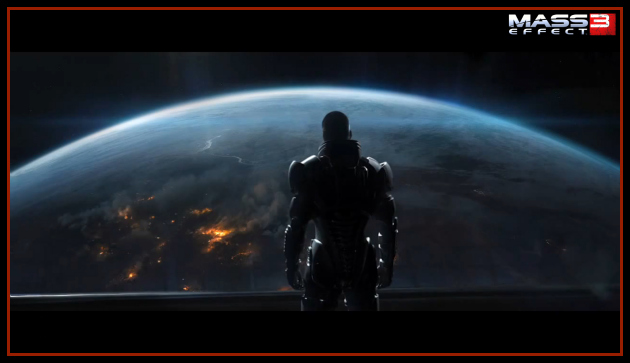
Mass Effect 3 is one of the most-anticipated gaming titles for 2012. It will be the third and final title that chronicles the character of Cmdr. Shepard and his fight to save the galaxy against the extragalactic threat of the “Reapers”. It’s developer, BioWare, has been quite busy since the title was first announced with showing gaming fans some tidbits about the game’s development. Most of the trailer which has come out about this game has been a mix of pre-rendered CG animation and actual gameplay footage which at times seems to be quite indistinguishable from each other.

The latest trailer for this game first premiered at this weekend’s Spike TV’s Video Game Awards. To say that the reaction to the trailer was a near-unanimous geekgasm would be an understatement. If there was a game that will pull gamers from their near-obsessive playing of Bethesda’s Skyrim it would be BioWare’s Mass Effect 3. This trailer is all gameplay and shows some of the latest gameplay mechanics (such as the dodge roll moves) during one of the game’s many stages.

I, for one, have already preordered and fully paid my N7 Collector’s Edition copy of this game and will just  have to wait for it’s release date of March 6, 2012.

Trailer: Mass Effect 3 – N7 Collector’s Edition Details


BioWare’s Mass Effect scifi rpg series has been a hit right from the start. The first two titles in the planned trilogy for the series (some have been calling it the Cmdr. Shepard Trilogy) have been received with a near universal acclaim for gameplay and it’s unique way of storytelling. In my opinion, this series has been one of the few which has begun to bridge the gap between gaming and storytelling where both have become integral part in making the series a success.

The third game has been one of the most-anticipated titles by gaming fans everywhere and just months away from release. The trailer above shows all the cool extras for those who pre-order the very limited N7 Collector’s Edition which will ship with the regular version of Mass Effect 3. Some of the extras mentioned seem more like fun fluff, but the classified extra character and the mission attached to them will be one of the highlights not to mention the robotic Geth-looking dog and the extra exclusive weapons.

Mass Effect 3: N7 Collector’s Edition is set for a March 9, 2012 release date with a price of $80.00.

You can be damned skippy sure that I’ve gotten my pre-order all confirmed and paid off.

Review: Dragon Age II: Legacy


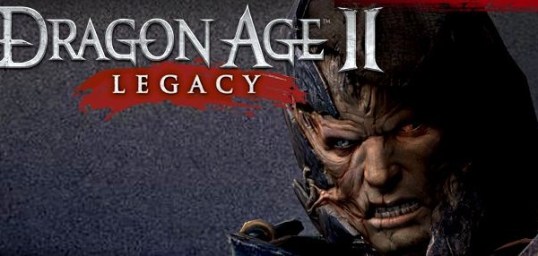
Dragon Age: Legacy is the first post-release DLC available for BioWare’s hit dark fantasy epic. Available for 800 MS Points (or $10), this DLC is launched from your in-game home (whether this is Gamlen’s House or the Hawke Estate, depending on when you launch the DLC) by interacting with a creepy statue that you’ve apparently kept as a memento. Depending on your difficulty settings, level, and party make-up, the DLC will take about 2 hours to complete. It is not noticeably more or less difficult than the primary game, but it does introduce a number of new adversary types that were not present in Dragon Age II (more on that later).

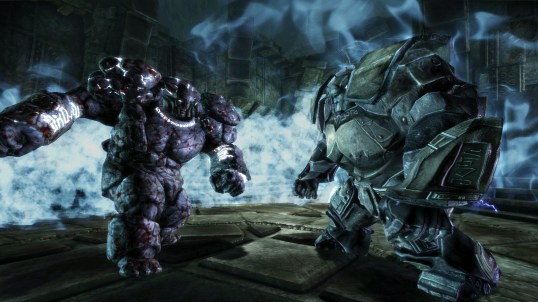
This DLC is visually impressive, using all new set pieces (including a set of desert ruins, a Carta base, and the interior of a Grey Warden fortress) and a location outside of Kirkwall or its immediate vicinity. Hawke and a chosen party of three head into the Vinmark Mountains in pursuit of a group of dwarven Carta members who have made an assassination attempt against Hawke. I have not completed the DLC with all of the different party members available, but I can safely say that there are significant (and pleasant) tie-ins for Varric, Anders, and Bethany (presumably Carver as well) as you proceed through the DLC. Although it is told largely through the prism of combat, as you would expect, there is a fairly hefty dose of story in Legacy. Several smaller stories are told through side quests, and the main plot thread takes us some place unexpected in the climactic scene as you confront the DLC’s final boss. The encounters in this DLC are a little more thought out than many of the ones in the original game, with scenarios such as enemy archers attacking from raised positions, and areas you are herded into that have been deliberately trapped (complete with activation levers! Try turning some of these traps on their owners instead!) New enemies include brontos (the large dwarven pack animals) which make charge attacks that will bowl members of the party over and have tough hides, the re-designed genlocks (who are now quite distinct from the hurlocks; especially their alphas!) and the Alpha darkspawn that were absent from Hawke’s foray into the Deep Roads in the original game. Also returning are the deep stalkers, who are in large-scale battles with spiders at several points during the DLC.

Legacy also features no fewer than three boss encounters that have some unique elements to them. The final boss uses a lot of impressive visual effects and set pieces, but quickly grows repetitive. You’ll see what I mean.

One of the selling points of this DLC will no doubt be the large amount of gold and gear that can be obtained by playing it. You should note before launching the DLC that you will find a goodly number of useful green items scattered throughout it, and the relative power of these items is determined by Hawke’s level when you enter the DLC. None of the new items improve as you level, so if you visit Legacy very early in the game (when you’re still leveling frequently and replacing gear often) you may not get the best bang for your buck. In addition, only Hawke’s new weapon is truly awesome; the other items may not be as useful later in the game when you have access to many powerful items. I personally attempted Legacy a few quests before proceeding into the Deep Roads, and then in a post-game save. Hawke’s new weapon (typed appropriately for you based on your weapon group, i.e. a dagger or a longsword) is pretty dang awesome. It will begin with a high damage for your level and add a little to a key attribute for your class. As you make your way through the Grey Warden fortress, it will gain three upgrades that you’ll select from a total pool of twelve, including an elemental damage upgrade.

Even before the sale of junk items from Legacy, you’ll have easily made 40 gold or more. In addition, your party will gain a large amount of experience in the play-through (for example, I leveled from 11-14 just through playing the DLC); especially if you complete all of the available side quests.

I genuinely enjoyed this one. It’s easily worth the $10 in my estimation, and shows the care that I thought was typical of DLC in the original

Song of the Day: Jade Empire Main Theme (by Jack Wall)


Today marks the end of E3 for 2011 and I have chosen one of the best intro music for any game ever created. The previous two songs chosen were from Bethesda role-playing games and while I stick to the same game genre I’ve moved onto who I consider the best RPG developers currently working today. The latest “Song of the Day” is by music composer Jack Wall and is the “Main Theme” to that oft-overlooked, but a classic rpg nonetheless, Jade Empire.

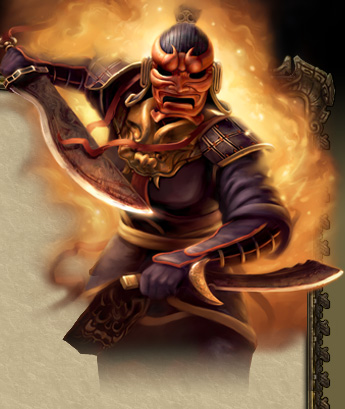
The “Jade Empire Main Theme” just hints at the epic that would become the Jade Empire story. Jack Wall does a great job of not just sticking to the usual classical European orchestral sound. He brings in traditional Asian musical instruments from throughout Chinese history. He even brings in some Japanese taiko drums to give this theme just a touch of that martial sound. This main theme really highlights the Asian themes and influences BioWare used to create the fictional realm that Jade Empire takes place. The way the music plays out it wouldn’t be too farfetched to hear it scoring an Ang Lee or Zhang Yimou wuxia epic.

Jade Empire is one of those games, despite having not as big a following as some of the bigger and more popular rpg franchises, whose fans are very vocal about their love not just for the game but for the soundtrack which I consider one of the best soundtracks ever composer for a video game.

E3 2011: Star Wars: The Old Republic Intro Cinematic Trailer


For the last half decade or so video game publishers have been trying to find a way to either topple Blizzard’s World of Warcraft from the top of the MMORPG mountain, but each and every attempt has failed on one level or another. Some rival MMORPGs have succeeded in slicing a small piece of the MMORPG market while others just failed utterly. EA tried in the last couple years with their Warhammer: Age of Reckoning, but that game failed in that it was rushed into the market broken in one way or another. It looks like EA will continue to try another attempt at WoW by using another iconic franchise and partnering that with one of the best rpg developers in the industry. The game that’s been hyping itself up at E3 for the past couple years is BioWare’s Star Wars: The Old Republic.

This MMORPG looks to continue the Star Wars: Knights of the Old Republic franchise from BioWare into this MMORPG iteration. The game has been in development for over two years now and as of this week’s E3 there’s still no definite date for it’s release on Windows PC other than sometime next year. Here’s to hoping that the long development time is BioWare and EA looking to not make the same mistake that occurred with the rush to market with Warhammer: Age of Reckoning.

Oh, BioWare did release a beautiful trailer of the game’s Intro Cinematic.

E3 2011: Mass Effect 3 (Trailer Deluge)


To say that Mass Effect 3 is one of the most-anticipated titles in the next 9 months would be an understatement. The franchise has been one of the most popular and critically-acclaimed video game series of the past five years and this third game looks to cap off a trilogy that many consider the Star Wars (original trilogy) of video gaming. The third game was highlighted not just in the Microsoft E3 Press Conference but also in EA’s own Press Conference which just goes to show how  much this game means not just to EA but to Microsoft (even after the franchise finally became available to PS3 users I still consider it an Xbox 360 franchise).

In both conferences so many trailers were unleashed on those who were in attendance. Whether it were gameplay trailers, more trailers hinting at the story, trailer’s showing the game in demo right up to certain gameplay changes made for this final leg of the trilogy. One piece of news that was interesting was announced during Microsoft’s press conference and that was Mass Effect 3 having Kinect (the hands-free Xbox 360 controller system) capabilities.

One piece of news that every fan of the game was waiting for and finally got was this: Release Date – 03.06.2012. I may end up catching a virulent case of the blahs and call off work on that date and the rest of the week.

What I Played Today: Jade Empire


Every so often – because I like old games better than I like new ones, or so I’m told – I like to revisit a classic game. I’m sure, if you read my columns often, you’ve noticed that by now. Continuing this month’s theme of BioWare inundation (spurred, of course, by the release of Dragon Age II and the Arrival DLC) today I decided once again to play a little Jade Empire. Longtime WRPG fans will remember the title from its 2005 debut. Newcomers to BioWare’s camp may have missed this jewel. In the interests of saving the integrity of the game for anyone who never played the original release, I’m going to avoid serious game spoilers here, even though the game has been out for six years now.

The first thing I’ll say is that this game holds up better than most other original XBox titles with graphics that are bearable, at least, and smooth play on the XBox 360. I never played the game when it was originally launched on XBox, and only got into it after a friend recommended that I fork over the cash to buy it on the XBox Originals in Marketplace. Smooth emulation aside, I immediately fell in love with the title. Jade Empire offers a highly interactive game-play experience (more on this later) that is settled on the solid foundation of classic BioWare RPG structure. We slowly accumulate a group of loyal followers, whose personal story develops through conversation options between major plot developments in the overall story. Although many of these characters follow what we might call the “BioWare Rules” in terms of their personality archetypes (although Dawn Star is unconventional, she still reeks of Carth Onasi, doesn’t she?) they’re predictably detailed, with a diverse set of backgrounds and motivations. In this respect, I hardly think that Jade Empire is the gold standard for WRPGs. Its relatively simple story progression doesn’t lend toward diverse side missions undertaken in far-off locales.

The game’s outstanding feature, however, is not the party members, the story, the voice acting, the graphics… or even the interesting-in-theory morality system of competing philosophies. Unfortunately, while the idea of two philosophies competing against one another (Open Palm and Closed Fist) sounds compelling, and a refreshing departure from someone merely being good or evil, light or dark side, it amounts to the same thing. The complex motivations that would drive a practitioner of the Closed Fist according to the game’s story ultimately don’t matter; points are accrued by being a jerk, just as always. Sliding scale morality systems are always going to be imperfect in general, of course, while we’re on the subject… but I almost feel as if Jade Empire could have benefitted from a dual system; having both a good vs. evil slider, as well as competing philosophies (in this scenario, we might wish for more than two that are so diametrically opposed). Oh, and why can’t we ever have a philosophy of neutrality in these games? Wouldn’t that be fun? Maybe not.

The reason I keep revisiting Jade Empire, attempting to jump off for the third time, is because of the interactive game-play system. Even Mass Effect with its shooter based game-play doesn’t explore the potential as deeply as Jade Empire, which plays successfully like some kind of action game, only with distinct RPG elements. It lacks the elaborate combos that we might see from Devil May Cry or similar games, but it interweaves level-ups and equipped items just like a more traditional RPG. Unlike latter-day BioWare offering Dragon Age, we are truly rewarded in Jade Empire for dodging, and knowing when (and from where) to use our different martial arts styles and their different unique powers. Now, of course, those who are traditionalists and would rather have the stats decide things (this also includes people who just aren’t that good at action games) I suppose this is probably frustrating. I personally think it’s mild enough that once you get the hang of it almost anyone could have fun with the system and be successful in the game. For me, this outstanding combat system makes the game incredibly easy to just drop in to and play. In fact, every time I load it up and play, I angst over how much fun it is… and how it’s the one game amongst all of BioWare’s RPGs that never got a sequel.

Oh, yeah, and as a side bonus, the game features a 2-D scroller style airplane game where you pilot your airship and fire your weapon straight up toward a variety of aerial enemies and hazards that cross the screen and generally try to ruin your day. All of these sequences but the first one are optional, but they provide a nostalgic element for me…  and completing them provides a bunch of XP within the game, too.

And hey, maybe if enough people realize what a great game Jade Empire was… we’ll get that sequel after all.

What I Played Today: Golems of Amgarrak


I was in quite a mood after playing so much Dragon Age II, and (as that led to) another full play-through of Dragon Age: Origins. I had originally planned to continue straight on to Awakening, and just complete the whole series. But then, as I was on my roll, I remembered that I had purchased a couple of DLC packs for Dragon Age: Origins a while back on the cheap. They had some kind of sale for half price DLC, or some such. I’d taken that opportunity to pick up both Witch Hunt and The Golems of Amgarrak… but while I’d completed the former some time ago, I’d never bothered to sit down and play through Golems. I took a look at the achievements, because I’m like that, and I realized that I needed to complete the DLC on a minimum difficulty of Hard in order to receive my e-recognition for my accomplishments.

Harkening back, I recall that Golems of Amgarrak was touted as an extra-difficult bit of DLC… it was, ostensibly, much harder than the regular game, even on the Casual difficulty. In short, this DLC was not intended for the faint of heart. This did nothing but excite me, but I did go into it expecting a higher degree of difficulty, and felt that I should use some caution.  Although I might be ‘that guy’ when it comes to gaining achievements in an expedient manner, I’m strangely honourable about some of them. It seemed to me that if I were going to defeat the DLC’s final boss on a Hard or Nightmare difficulty, I might as well play the whole DLC on that difficulty. So, I set my difficulty, and I chose to import a Warden from an Origins playthrough at level 20, a Dwarven sword-and-board warrior.

The DLC took a couple of hours to play through all the way. It introduces a semi-new area (yet another re-skin of the default Dwarven Thaig that we saw four times or more between the Origins game and the various DLCs) that paves the way into a completely new area. Amgarrak itself is a completely unique area replete with colour-switch puzzles, swarms of enemies (mostly of the more difficult types. I assumed there would be Golems, but I was treated to a plethora of Revenants, Arcane Horrors, and high-ranked skeletons as well), and a bunch of loot. Most of the loot proved to be useless, but it did provide upgrades to the Golem which I picked up on my way in. As one might expect, the Golem is the key to the whole deal. It has significant healing abilities, and while it can’t always fight its way out of trouble, the Golem is tough enough to escape from danger so long as your party features some tankier types.

Ultimately, I found the DLC a little on the disappointing side. It was about as substantial as I expected (given the average length of BioWare’s DLC add-ons) with a fairly large area to run through and a whole new party. However, in lieu of adding substantially to the story (as Leliana’s Song does, and Witch Hunt debatably does) the idea behind Golems of Amgarrak was to provide a very challenging play experience within the tactical game engine of Dragon Age: Origins. Earnestly, I didn’t feel the need to adjust my tactics much from playing the original game. Tank-type characters are still able to mostly take care of themselves, and the most effective approach for me seemed to be to focus on healing. The only encounter I had to repeat was a surprisingly difficult swarm of golems which jumps out at you in an optional chamber while in the process of acquiring golem upgrades. I was not particularly impressed by the Harvester, which seemed to be mostly a matter of managing a group of enemies and keeping on top of healing.

Anyway, I think this polishes off my experience with Origins. I’m very much anticipating a DLC – any DLC add-on, really – for Dragon Age II.

Review: Dragon Age 2


Unfocused Ramblings

After a long wait, I hope to be back and better than ever. I was originally planning to go off the board with MLB 2K11… which is still getting a review I might add … but Dragon Age II consumed my life for a while, and I have to talk about it. BioWare and I have had a rocky relationship. The first game of theirs which I played was actually Neverwinter Nights… which I got about halfway through before my friend told me to stop playing it and go back and hit Baldur’s Gate II: Shadows of Amn instead. It was a formative experience for me. Up until that time, I would have described myself as an irredeemable JRPG fan. Since that fateful day, I’m not sure I’ve ever enjoyed a JRPG as much again. Naturally, this launched my love affair with BioWare. There have definitely been parts of that relationship that I’ve enjoyed more than others. For me, as much as I enjoyed Baldur’s Gate II, the current generation of these games is really the golden age of WRPGs in my eyes.

Is Dragon Age II the best WRPG that I’ve ever played? Ultimately, I would have to say no. Its release was too obviously rushed, which is evident in the plethora of bugs available for your gaming pleasure (some of them pretty damaging to your game experience, and all of those impossible to correct when playing the console versions). In years past, it was always true that the PC release was preferable because the developer could release patches that would solve a lot of the known bugs, and knowledgeable use of the game’s console could solve a lot of other problems. Obviously console games still don’t have the latter option, and only (relatively) recently gained the former. But as time has gone on and computers have easily outpaced what I need them for in terms of work, it became steadily less economically viable for me to upgrade my GPU three times a year… especially when I could own one XBox 360 for four years and counting.

The potential annoyance factor only comes out occasionally – when games are pushed through release with known bugs, and you have some agonizing wait for them to be fixed for the console version. Unfortunately, this was definitely the case with Dragon Age II and it sapped some of the luster off of what I otherwise felt to be an extremely fun offering from one of my favourite developers.

Oh, and a little disclaimer before I begin complaining in earnest. As I am wont to do, I’m going to table any discussions about DLC, micro-transactions, and EA’s 2010+ marketing strategy of bundling add-ons with pre-orders and adding content at regular intervals to bridge the gaps between releases. I think we can all agree that it is one of the more brilliant marketing ploys (not that we’re giving EA credit for coming up with it, but that doesn’t really detract from the idea itself) that we’ve seen… ever. I think we can also all agree that regardless of our personal feelings, on the whole, it works. This was the first game I’ve pre-ordered in years, and I did it entirely to gain access to the launch DLC that I’d otherwise have to pay for. It wasn’t particularly onerous, since I knew I was going to purchase the game anyway, and EA knew for a fact that they’d sold me a copy six months before launch. I’m sure some executives slept very soundly knowing that they’d suckered yet another fan into pre-ordering titles and sitting around in anticipation of Amazon’s launch day delivery time.

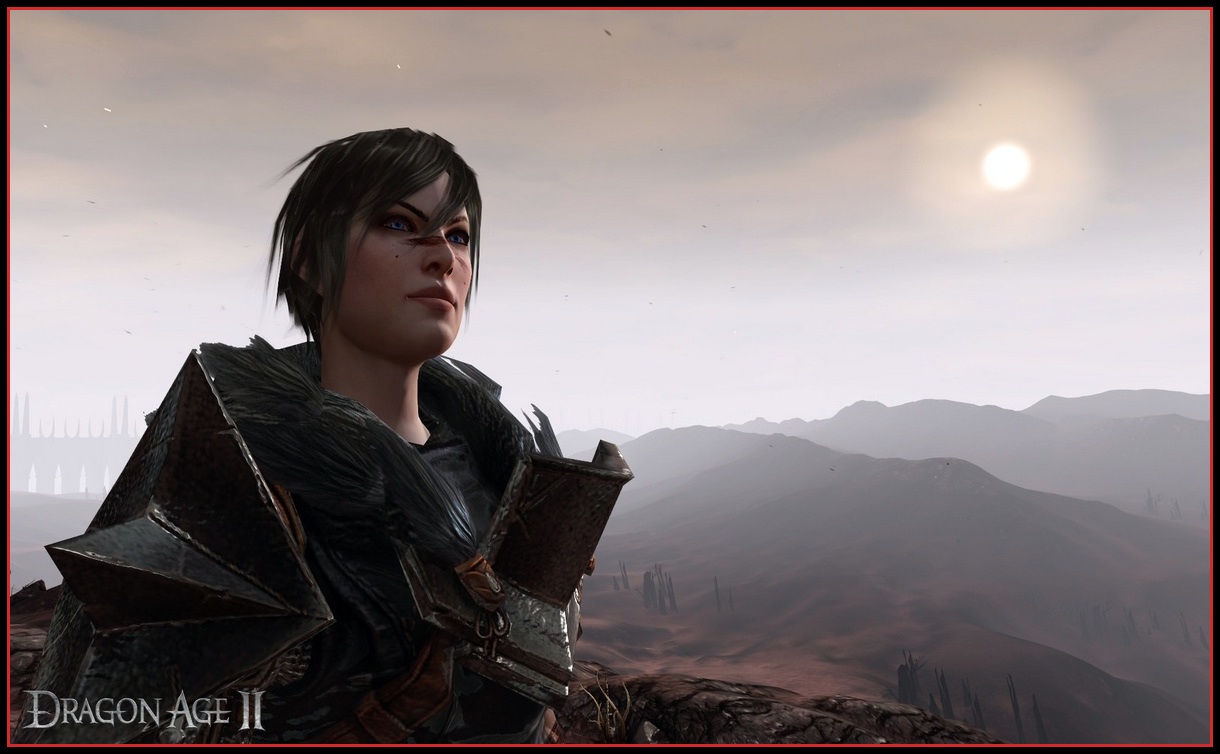
So how is Dragon Age II? As a sequel to the dark fantasy original, Dragon Age: Origins I would say that it both succeeds masterfully and disappoints completely. The feel of the two games is almost entirely different. In the original, we’re treated to a bleak literal-end-of-the-world scenario that is playing out before our eyes. Factions of whom we urgently require aid are fighting one another, the enemy is building in power, and in the grand tradition of Tolkien-esque fantasy, evil used to have a hell of a lot harder time of it. The sequel, rather, takes us through an eight-ish year period in the life of a single protagonist within the Dragon Age setting. It deals heavily with plot elements that were introduced in the original game and it has some obligatory cameos from characters we’ll recognize, but it otherwise is entirely stand alone. Gone is the overarching threat of a darkspawn-fueled apocalypse. Instead, the conflict centers around the city of Kirkwall, a deeply troubled metropolis that was formerly the center of a bustling slave trade in the ancient Tevinter Imperium.

We haven’t really gotten away from the slavery, however. Not only is Kirkwall infested with some of those very same modern-day Tevinter slavers, but the whole city lies under the pall of another form of slavery. As brutal as we may have found the treatment of mages in Ferelden – what with the vials of blood taken from every Apprentice that could allow them to be unerringly tracked down, or with the merciless hunting of unlicensed ‘Apostate’ mages – we only saw the tip of the iceberg in terms of both what mages have to suffer through, and what they’re capable of when they’re left unshackled. The picture painted by this conflict is an interesting one primarily for its gray morality. Very few issues in real life have the kind of clear-cut good and evil dynamics that we often see in video games. Real people are complex organisms with complex motivations. We are not a society of mustache-twirling villains tying maidens to railroad tracks only to be foiled by tights-wearing do-gooders from every angle. To an extent, we experienced this in Dragon Age: Origins as well. Both games mercifully liberate us from the point-based good-versus-evil system that characterized the Knights of the Old Republic games and others during that era.

In Dragon Age II we’re treated to a whole new system which bears a little resemblance to the party-favour style system we saw in Origins, but with a new twist. Now, our party members (as expected) either approve or disapprove of our protagonist, Hawke, and the actions we take as Hawke. The relative level of either ‘Friendship’ or ‘Rivalry’ (I’m sure you can figure out which is which) then begins to colour all of Hawke’s interactions with the rest of the party. Many of the changes are subtle, but Dragon Age II is rife with subtle-but-appreciated touches that make it stand out as a game above many of the other offerings in this same genre. These little touches serve ultimately to give this title a more authentic feel than many games that I’ve played over the years, and I appreciated the attention to detail. It seems an odd contrast with the various bugs, which, I really can’t state enough, were plentiful and ranged from mildly irritating to infuriating.

Oh, and while we’re unfocused, and while we’re talking about subtle details? An odd thing occurs in this game. One which I might have appreciated more than almost anything else in the whole thing. Each conversation option is responded to with a variant of the Mass Effect style conversation wheel – responses to the right tend to lead toward the conclusion of the conversation and have a certain tone, while ones to the left tend to be follow-up questions. Unlike Mass Effect, we are treated to some symbols which help to identify the tone of the message before Hawke plants her foot in her mouth. For example, a sarcastic or whimsical reply will be accompanied by a comedy mask icon. A decisive, aggressive reply is accompanied by a closed fist. A bribe is accompanied by an image of falling coins. And so on. Anyway, this in and of itself is nice, but the truly outstanding dialog feature of the game? If you reply consistently in one vein (i.e., if you are consistently sarcastic) then the filler dialog or automatic replies from Hawke begin to mirror that type of response. Again, using the ‘sarcastic Hawke’ as an example… the dialog which is default, that is, not under the control of the player. Eventually, if enough sarcastic replies are given in order to establish a pattern, Hawke will begin to respond in a sarcastic manner on her own. It adds a lot of character to Hawke solely based on how you’re already playing the game. I hope that you can see why I think this is one of the best (albeit very subtle) features that BioWare thoughtfully included for me in this title.

So, I suppose the real question is… what is Dragon Age II like? True to how it was promoted, it’s sort of a compromise between the FPS-action-with-RPG-elements style of Mass Effect 2 and the old-school WRPG tactical gameplay of Dragon Age: Origins. If what you loved most about Origins was how it harkened back to Baldur’s Gate II, you’ll probably find the combat system in Dragon Age II to be a bit on the shallow side. You’re still, of course, perfectly at liberty to pause the game, arrange your party, and launch a more tactical assault. On the harder difficulties, being discriminating and tactical pays off big dividends. However, the game clearly wants to draw in fans of the Mass Effect games with a pace that is overall faster, and a system that is much more streamlined. As a result of this intention, it’s pretty quick-paced… or, at least, it can be, with an optimized party on the lower difficulties. Don’t expect the same degree of difficulty that Origins could present, either, if you chose to visit Orzammar first and played on the higher difficulties. Although, again, on the higher difficulties Dragon Age II has its own challenges.

Let’s boil things down, shall we?

The Good

– It’s a beautiful, detailed, thoughtful world. We’re introduced to more of a setting we’ve been introduced to. In a lot of ways, Dragon Age II exceeds Mass Effect 2 in terms of expanding on an existing setting. If you were really drawn into the world of Dragon Age, you’ll find a lot to like in the sequel.

– The voice acting is exceptional. I can’t think of a single character whose voice acting was poor, whether you like the character or not (and – almost as a side note – I liked them all)

– The characters offer a lot to the narrative, and have some fantastic interactions. BioWare has done a stunning job letting the party members banter back and forth during quiet moments. Try different combinations. You won’t be disappointed!

– The slice-of-life style which follows a single character, Hawke, and her life is perhaps a bit less ‘epic’ on the overall than the Grey Warden’s quest, but it delves far deeper into the underlying themes of the setting.

– Combat system is streamlined and intuitive. You’ll recognize everything from Dragon Age: Origins and the menus are actually easier to navigate now.

– Party members have completely unique skills, maintain their own wardrobe, and maintain their personal opinions, which lets them keep a refreshing flavour each of their own.

– BioWare went out of their way to make crafting your own potions, Runes, poisons, grenades, and supplies more attractive. Given how frustrating it could be to locate certain components in Origins, it may almost seem like an overreaction for how simple things become in Dragon Age II – but it works well.

– Girthy. This game is pretty long. If you’re planning to do everything… settle in. You’re looking at forty hours of game-play or more.

– The DLC items (from every source!) are not the best items in the game. They’ll definitely serve you well in the early part of the game, but they’re outclassed by the mid-game, and they also don’t sell for a ton of money. Just having DLC gear won’t make this game a breeze for you, or render all other equipment useless. It’s a nice touch to actually be trying to upgrade my stuff, rather than just equipping Blood Dragon Plate and calling it a day.

The Bad

– Buggy. Buggy. Buggy. Buggy. I really can’t overstate this. Every game launches with bugs, but this one launches with an unacceptable amount, and an unacceptable severity. Patches have already cleared up a couple of them (even for the console versions) but I was still frustrated to see the sloppy polish on what is otherwise a very delicious fruit.

– Much of the tactical aspect of gameplay is gone. Baldur’s Gate II could be a serious pain in the ass sometimes, but it really rewarded good planning and a thorough knowledge of spells and mechanics. Dragon Age: Origins made a strong compromise between viable-console-game and hardcore-tactical-gameplay… this element isn’t nearly as strong in Dragon Age II.

– Did I mention the bugs? Seriously. Hopefully more of the issues in this game can be patched out.

– Overused sets. Although the set pieces are beautiful and I love the look of the game, it suffers from a bit of the Mass Effect syndrome, where there are a hundred caves which are all built using the same “cave” layout and look. Very disappointing to see a step backward here after what we saw from Origins, Awakening, and Mass Effect 2. I can only assume this is another aspect of rushed production.

– We revisit too many places. I understand the scope of the game, its focus on Kirkwall and the surrounding environs, and whatever else… but while I don’t mind re-treads within the city (especially in, as the game runs on, a number of years) it seems like there should be more unique locales around the city. It feels lazy for us to revisit the same places over and over again for quests in each Act of the game. I’ll mention it once more… it was probably intended to have a few more locales, and that was probably scrapped for time. I’m in no position to complain because I bought the game, and I loved it, but I would have loved it more if EA/BioWare had spent another month catering to my discerning tastes.

– The game seems to lack focus at times in terms of the narrative. I actually appreciated this characteristic as it seemed to mirror how a real person’s life would tend to pan out… but it does seem out of place in a video game. At times, it’s not clear where the game is headed.

– This may sound stupid, but I’m far from above personal pique, so… way too much energy spent on promoting the game prior to launch. Although their strategy of offering DLC items for interacting with people on the BioWare website or whatever else might have drawn in a couple of new fans, it almost assuredly annoyed a lot of fans who were planning to buy the game anyway.

The Bottom Line

BioWare has me, at least, hook line and sinker. In spite of my various whiny complaints. I can’t wait for their next release.