October True Crime: Too Close To Home (dir by Bill Corcoran)


The 1997 film Too Close To Comfort tells the disturbing story of the Donahues.

Nick Donahue (Rick Schroder) is a young attorney, a law school grad who has just joined the bar and who is still making a name for himself as a defense attorney.  He’s good at his job and if you have any doubts, his mother Diane (Judith Light) will be there to tell you why you’re incorrect.  Diane and Nick still live together.  They have the type of relationship where Diane casually walks into the bathroom to talk to Nick while he’s in the shower.

In short, they have a very creepy relationship.

Nick talks about needing to get a place of his own but his mother says that it’s too soon for him to spend all that money.  Nick wants to fall in love and marry a nice girl and start a family.  Diane doesn’t want Nick to have a life separate from her.  When Nick does end up marrying the sweet-natured Abby (Sarah Trigger), Diane snaps.  One night, Abby is abducted and is later found murdered.  Nick sobs and Diane holds her son and she doesn’t mention the fact that she’s the one who arranged for Abby to be killed.

The police figure it out, of course.  Diane wasn’t that clever.  When Diane is arrested and put on trial for murder, Nick is shocked.  With his mother facing the death penalty for murdering his wife, Nick steps forward to defend his mother in court.

Agck!  This movie!  Admittedly, this is a made-for-TV movie but it’s still creepy as Hell.  If anything, the fact that it was made for television make it even creepier than if it was a uncensored feature film.  Held back by the rule of television, the film has to hint at what would probably otherwise be portrayed as explicit.  That makes all of the little moments that indicate Diane’s madness all the more disturbing and frightening because they could be read several different ways.  This is a film where every line is full of a very icky subtext.  Diane is more than just an overprotective mother.  Her feelings for Nick are on a whole other level.

Fortunately, Judith Light is one of those actresses who excels at communicating subtext.  She delivers every line with just enough of an inflection that we know what she’s saying even if she doesn’t actually say it.  From rolling her eyes when Nick asks her to turn around when he gets out of the shower to the scene where she flirts with Nick’s new landlord, Light leaves little doubt as to what really going through Diane’s mind.  Rick Schroder has a far more simpler role as Nick but he still does a good job with the role.  He’s sympathetic, even when he’s refusing to accept the truth about his mother.

This film is all the more disturbing due to being loosely based on a true story.  The real Diana Donahue was named Elizabeth Ann Duncan and she was convicted of killing her son’s wife in the 1950s.  (Too Close To Home is set in the 90s.)  Her son really did defend her, all the way until her execution.  In real life, her son continued to practice law until 2023, when he was disbarred by the state of California.

As for the film, it’s a classic true crime made-for-TV movie that features Judith Light at her disturbing best.

Late Night Retro Television Review: Friday the 13th: The Series 1.22 “The Pirate’s Promise”


Welcome to Late Night Retro Television Reviews, a new feature where we review some of our favorite and least favorite shows of the past! On Fridays, I will be reviewing Friday the 13th: The Series, a show which ran in syndication from 1987 to 1990. The show can be found on YouTube!

This week, there’s something in the fog!  Can Micki and Ryan stop the horror of the thing in the fog?  FOG!

Episode 1.22 “The Pirate’s Promise”

(Dir by Bill Corcoran, originally aired on June 27th, 1988)

In the 18th century, a group of pirates killed their captain, Angus McBride, and stole his treasure.  They used the money to start a seaside village in New England and to become respectable citizens.  Over two hundred years later, the spirit of Captain McBride is hanging out in the fog and desiring vengeance on the descendants of his crew.

Hmmm …. this sounds familiar.

This episode has more than a little in common with John Carpenter’s The Fog.  This time, as opposed to it being the result of an anniversary curse, it’s a crazed lighthouse keeper named Joe Fenton (Cedric Smith) who summons the ghost of Captain McBride with a cursed foghorn but otherwise, much of the plot and the show’s imagery feels as if it was lifted directly from Carpenter’s classic horror film.  Captain McBride emerges from the fog several times during the episode.  He kills his victim’s with a hook and then tosses a few coins at Joe.

Micki and Ryan show up in town to retrieve the foghorn.  (This is another episode in which Jack is not present.)  It’s interesting how these cursed antiques often tend to end up in small towns, like the one in this episode or The Quilt of Hathor.  The previous few episodes featured Ryan having to say goodbye to someone as a result of a cursed item.  This time, it’s Micki whose heart is broken when the sweet proprietor of the local history museum is stabbed with a saber while trying to protect her.  The episode ends with Micki sobbing while Ryan tries to comfort her, which is quite a change from how these things usually go.  For once, Micki is the one who gets to show emotion while Ryan is the one who takes a more pragmatic approach to dealing with the horrors of the cured antiques.

As for the episode, it wasn’t bad.  Director Bill Corcoran did a good job of creating a properly ominous atmosphere and Cedric Smith was perfectly creepy as the evil lighthouse owner.  The low-budget was evident by the fact that the time itself seemed to be nearly deserted.  Even though the town was described as being small, it still seems like it should have been home to more than just a handful of people and I found myself wondering if maybe the show decided to save money by not hiring extras.  That minor quibble aside, this was an effective episode as long as you were willing to overlook the plot’s similarity to Carpenter’s film.

Next week, hopefully, Jack will come back and maybe Micki will have cheered up.  Someone likeable dies in every episode so you would think they would be used to it by now.

What Lisa Watched Last Night #216: The Danger Next Door (dir by Bill Corcoran)


Last night, I watched the latest Lifetime film, The Danger Next Door!

Why Was I Watching It?

Because it was on Lifetime, of course!  It’s been a while since I’ve gotten a chance to watch a Lifetime film on the night that it aired.  Seriously, my DVR is full of Lifetime films right now and waiting for me to dig into them come November.

What Was It About?

After getting mugged, pregnant Robin (Hannah Emily Anderson) and her husband, Ben (Jake Epstein) move to a small town.  At first, the town seems perfect but it’s hard not to notice that their next door neighbors, Guy (David Ferry) and Sharon (Kyra Harper), are a little bit too friendly.  Anyone who has watched a Lifetime film knows that no one that nice can be trusted and that’s certainly the case here.

What Worked?

I always love a good “small towns are evil” Lifetime film so, in that regard, The Danger Next Door delivered exactly what I wanted.  The town was pretty, the houses were big, and the melodrama was embraced.  Yay!

The film also featured Jake Epstein, playing a sympathetic character for once!  Epstein previously played Craig Manning on Degrassi.  I’ve seen him in a lot of other movies and shows since then but he’ll always be Craig to me!  Craig was one of the best characters on Degrassi, a bipolar musician with drug problems and a habit of breaking everyone’s heart.  I always hoped that Craig and Ellie would get together, though I do think Ashley was Craig’s soul mate.  Anyway, where was I?  Oh yeah, Jake Epstein was in this movie and it was good to see him!

What Did Not Work?

Towards the end of the movie, there were a few plot twists that demanded a lot of suspension of disbelief, even for a Lifetime film.

“Oh my God!  Just like me!” Moments

I have never been mugged but, when I was 16 years old, the house that I was living in was burglarized.  My mom, my sisters, and I woke up one morning to discover that the garage door was open, the microwave was missing, and someone had emptied out my mom’s purse.  Even more than that, though, they stole our feeling of being secure in our home.  I had nightmares for weeks afterwards and I even took to sleeping with a baseball bat next to my bed.  However, the bat was a bit heavy so, after a few days, I switched it out for a golf club.

One night, I thought I heard someone creeping outside my bedroom door at 3 in the morning.  I got up, grabbed my golf club, and creeped over to the door.  I took a deep breath, raised the club over my head, threw the door open, and swung at the first dark shadow that I saw.

“What the Hell, Lisa Marie!?” Erin exclaimed, as she (rather easily) avoided the club.

Looking back at it, I’m glad that I didn’t hit my sister in the face with a golf club.  I would have felt bad about that.  But there’s no worse feeling than having some stranger invade your personal safe place.  All these years later, I’m still a fanatic when it comes to locking all the doors, checking all the windows, and making sure I’ve got a golf club near the bed.

The movie did a good job of capturing that trauma.  I could definitely relate to Robin’s fears.

Lessons Learned

Never move to a small town.  No matter how bad and scary the city gets, it’s still safer than living in a small town.

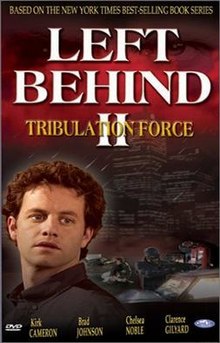
Film Review: Left Behind 2: Tribulation Force (dir by Bill Corcoran)


The 2002 film, Left Behind II: Tribulation Force, begins a week after the Rapture.  I have to admit that it took me by surprise when they mentioned that only a week had passed since the events that kicked off the first Left Behind film because the action in the original film seemed to go on for a lot longer than week.  I guess, if nothing else, that’s a lesson in the importance of keeping your film moving at a steady pace.

Speaking of pacing, Tribulation Force has a bit of quicker pace than the first film.  Now that everyone knows what happened, Rayford Steele (Brad Johnson) and Buck Williams (Kirk Cameron) can jump into action and start working to try to thwart the evil plans of Nicolae Carpathia (Gordon Currie).  Of course, at the start of the film, they’re told that it’s impossible to thwart the evil plans of Carpathia because the Bible has already predicted that he can’t be thwarted.  However, the Bible has also predicated that people will still try so I guess Rayford and Buck really don’t have that much of a choice.

Both Buck and Rayford get minor subplots that are designed to bring some humanity to all of the apocalyptic melodrama.  Rayford is still coming to terms with being left behind and struggling to forgive himself for not going to church with his wife and son.  To give some credit where credit is due, Brad Johnson is this film’s secret weapon.  He doesn’t really get to do much but Johnson brings just enough emotional reality to the role that his scenes have some depth that the rest of the film is missing.

As for Buck, he’s pursuing a tentative relationship with Rayford’s daughter, Chloe (Janaya Stephens).  Unfortunately, he’s also letting his assistant Ivy crash at his apartment and when Chloe stops by and discovers Ivy wearing a towel and an engagement ring, she assumes the worst.  Luckily, Buck’s able to say, “She’s my assistant” and that takes care of that.

Kirk Cameron is pretty much at the center of Tribulation Force, which is a problem because he’s totally miscast as a tough and respect journalist.  Carpathia, who really should have known better seeing as how he’s the son of Satan and everything, decides to turn Buck into the public face of his global news channel.  Unfortunately, there’s nothing about Kirk Cameron that suggests that any character he would play would ever have the gravitas or the charisma necessary to be the public face of any government.  As in the first film, Cameron comes across as being extremely earnest and a little bit dull.  He’s like the intern who accidentally screws up everyone’s lunch order.

Anyway, in Tribulation Force, everyone in the world loves Carpathia, even though he’s the most obviously evil dictator ever.  (The Rapture left behind not just the nonbelievers but also the extremely stupid.)  Carpathia announces the birth of a new world without borders and without religion.  Buck and Rayford plan to televise an interview with the Two Witnesses, who are waiting at the Wailing Wall.  But, to do that, they’re going to have to figure out a way to work around the fact that Carpathia controls all of the news channels….

Despite the fact that Tribulation Force is not as slow as the first film, the bulk of the film is still made up of people having long conversations about Biblical prophecy.  Like a lot of early faith-based films, Tribulation Force gets bogged down in explaining its message as opposed to showing the audience what that message means.  When Buck does finally reach the Wailing Wall, we do get to see some people get set on fire but, other than that, this is a very talky film.  As well, Tribulation Force can’t ever seem to decide just how powerful and all-knowing Carpathia is supposed to be.  At times, he has nearly supernatural powers and yet, at the same time, he’s totally incapable of seeing that Buck and Rayford are both plotting against him.  Is Carpathia a victim of his own hubris or is it just bad plotting on the part of the film?  I’ll leave it up to you decide.

Tribulation Force was followed by one more Left Behind film, World At War.  I’ll review that one in about 15 minutes!  Hope to see you then.


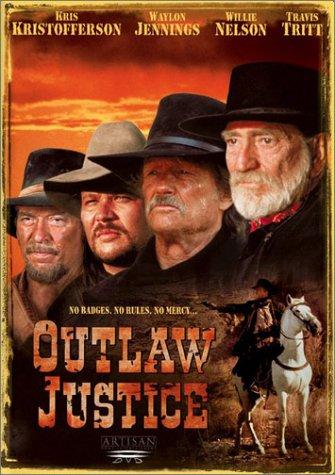
Outlaw Justice (1999, directed by Bill Corcoran)


During the closing days of the old west, the evil Holden (Sancho Garcia) guns down retired outlaw, Tobey Naylor (Waylon Jennings).  Tobey’s son, Bryce (Chad Willett), is determined to get revenge so he teams up with three members of Tobey’s old gang, Lee Walker (Willie Nelson), Jesse Ray Torrance (Kris Kristofferson), and Sheriff Dalton (Travis Tritt).  They ride into Mexico, searching for one final shootout.  Along the way, they befriend the locals, find time to rebuild a burned-out church, and bicker like aging gunslingers in a Larry McMurtry novel.  Chad Willett and Willie Nelson also find time to fall in love with local women because, obviously, the entire film can’t just be gunfights and church-building.

Outlaw Justice is a standard western, which is distinguished only by the casting of the pioneers of outlaw country music as actual outlaws.  Since this was made during the Lonesome Dove-Unforgiven era of westerns, there’s some talk about how Lee and Jesse Ray are past their prime but otherwise, it’s an angle that largely left unexplored.  Of the singers, Kris Kristoffeson and Travis Tritt are probably the best actors but Willie Nelson seems to be having the most fun.  (Nelson has enough natural charisma that he can get away with a lot.)  If you’re a fan of westerns who doesn’t demand too much from the movie you’re watching, Outlaw Justice will probably be entertaining enough.  Otherwise, it’s pretty forgettable.