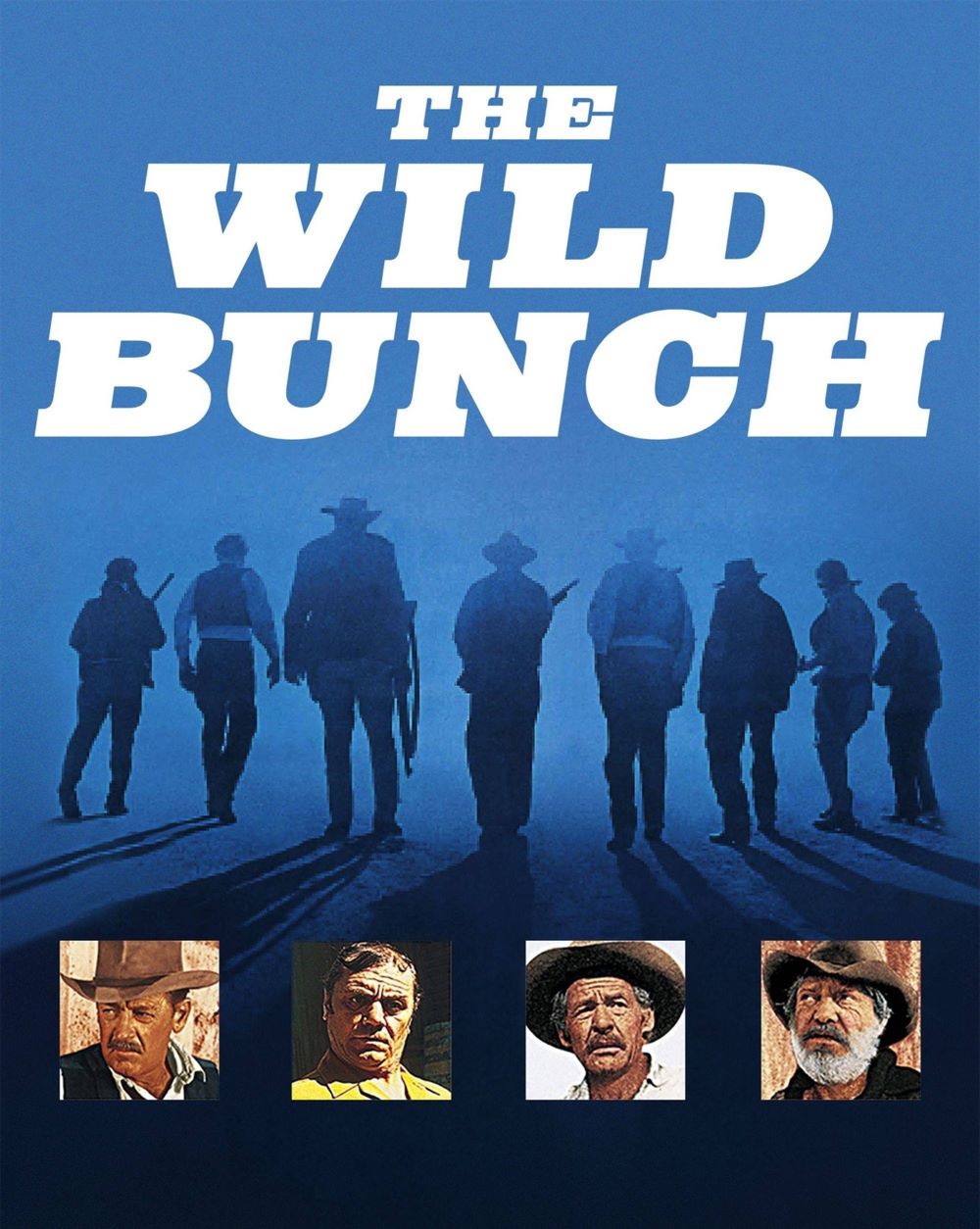
Review: The Wild Bunch (dir. by Sam Peckinpah)


“We’ve got to start thinking beyond our guns. Those days are closin’ fast.” — Pike Bishop

Sam Peckinpah’s The Wild Bunch stands out as a landmark in the Western genre, famous for its daringly harsh depiction of both violence and the fading mythos of the American West. Rather than following the traditions of earlier Westerns, the film presents a gritty portrait of aging outlaws on the edge of extinction, wrestling with a society that has evolved past them. It’s a movie that’s difficult to shake, both for its unapologetic style and the unresolved feelings it leaves long after the final shots ring out.

At its core, the story centers on Pike Bishop and his band—a crew of seasoned criminals aiming for one last grand heist as modernity encroaches on their world. Hoping to pull off a train robbery, they end up entangled in deeper complications after being betrayed and soon are thrust into the turbulence of the Mexican Revolution. Peckinpah builds a narrative where clear-cut morality falls away. The criminals and those pursuing them, supposed bringers of justice, are equally compromised and dangerous. This balancing act challenges the audience to reassess their sympathies, since the characters rarely line up as traditional heroes or villains.

The film’s notoriety is inseparable from its treatment of violence. In an era when Westerns often depicted gunfights as almost bloodless, The Wild Bunch arrived blazing with slow-motion fatalities, realistic wounds, and chaos that feels nearly documentary. Peckinpah didn’t intend to sugarcoat death; the film’s fight scenes are designed to unsettle rather than thrill, making viewers register the true cost of violence on screen. The movie’s most infamous sequences, particularly the opening and closing shootouts, still provoke debate over whether their artistry justifies their brutality. Peckinpah reportedly wanted to expose the real consequences of violence, not celebrate them, and the resulting imagery remains both striking and disturbing decades later.

Beyond its bloodshed, the film is packed with melancholy, exploring the futility and obsolescence of its central figures. The Wild Bunch themselves—Pike, Dutch, Lyle, Angel, and others—all feel the weight of their era’s end. They are not just outdated in terms of time; their entire way of life has been mechanized and modernized beyond their grasp. The film depicts this through powerful imagery, from horses being supplanted by cars and trucks to rifles giving way to machine guns. This mechanization highlights that Pike and his men live in a world that has moved on, leaving them behind. Their code of honor and rough camaraderie are relics in a brutal, mechanized landscape that favors efficiency and merciless violence. The emergence of rapid-fire weaponry and vehicles is more than a backdrop; it symbolizes their growing irrelevance and the passing of a wild, untamed frontier.

Technically speaking, The Wild Bunch is as impressive as it is influential. The cinematography captures wide Mexican landscapes with dust and sunlight, conveying both beauty and bleakness. The editing—particularly in the action scenes—was ahead of its time, with its expressive use of multiple camera angles and slow-motion adding an almost ballet-like rhythm to chaotic violence. The music, a mix of Jerry Fielding’s score and traditional Mexican songs, deepens the film’s sense of place and loss. All of this technical prowess merges in set pieces that are still studied by action directors today.

One of the film’s most enduring legacies is its profound influence on a slew of filmmakers in the years following its release. Directors like Martin Scorsese, Quentin Tarantino, and John Woo have all cited The Wild Bunch as a key inspiration, particularly in how it reshaped the depiction of violence and complex characters onscreen. Peckinpah’s innovative use of slow motion during action scenes transformed gunfights into sequences that feel almost balletic, bringing an eerie beauty to brutality. This technique became a hallmark of John Woo’s work, where slow-motion shootouts are choreographed with a dance-like precision, making the violence stylized yet emotionally impactful. Meanwhile, Scorsese and Tarantino embraced the moral ambiguity and character complexity Peckinpah championed, pushing their own stories beyond clear-cut good and evil. Through these directors and many others, The Wild Bunch continues to resonate and shape modern cinema.

The performances in The Wild Bunch are integral to its powerful impact, with its ensemble cast bringing layered humanity to otherwise rough, sometimes brutal characters. William Holden leads as Pike Bishop with a mix of weary charisma and existential urgency, embodying a man caught between the fading wild past and a ruthless present. Holden’s Pike is not just a leader of outlaws, but a man wrestling with his own moral contradictions—as loyal and protective as he is capable of cold violence. This complexity allows the character to stay compelling rather than becoming a cliché tough guy.

Ernest Borgnine as Dutch Engstrom offers a grizzled, weary presence, conveying the toll that years of violence have taken on his spirit, while Warren Oates imbues Lyle Gorch with a volatile and rebellious energy that adds tension within the gang. His brother, Tector Gorch, played by Ben Johnson, brings a contrasting steadiness, portraying a man caught between loyalty and survival. Robert Ryan’s portrayal of Deke Thornton, the relentless bounty hunter, stands out as a tragic figure torn between his past friendship with Pike and his duty. This character conflict gives the story a deeper emotional layer and adds weight to the relentless pursuit central to the plot.

Supporting performances by Edmond O’Brien as Freddie Sykes and Jaime Sánchez as Angel enrich the group dynamic, each adding distinct personality traits that feel authentic and lived-in. The chemistry between the cast helps ground the film’s heavy themes in real human experience, making the characters’ struggles with obsolescence and loyalty resonate beyond the screen.

However, despite the strong male performances, the film’s treatment of female characters is notably sparse and limiting. Women in the film often fall into marginal roles, lacking development or agency, which reflects the gender dynamics of many Westerns from the era but feels particularly dated today.

For viewers seeking straightforward heroism or moral clarity, The Wild Bunch can be a challenging experience. Its bleak, nihilistic worldview and refusal to deliver easy answers may leave some feeling drained. The story culminates in a violent, unresolved climax with no tidy resolution, emphasizing loss and the end of an era. But it is precisely this rawness and technical mastery that keep the film compelling and worthy of close viewing.

The Wild Bunch demands you shed simple notions of good versus evil and prepare for a rough, often brutal ride. It’s a story about men fighting not just other men but inevitability—caught between their own fading values and the relentless march of modernization and change. Peckinpah doesn’t offer comfort; instead, he forces the viewer to reckon with violence’s cost and the price of nostalgia. Even with all its grit and flaws, the film’s artistry and influence remain undeniable, securing its status as a masterwork that redefined Westerns and action cinema alike. It’s a wild ride that continues to inspire and provoke long after the credits roll.

October True Crime: The Chase (dir by Paul Wendkos)


When he died in 1988, Phillip Hutchinson was only 24 years old.

Born in Virginia, Phillip Hutchinson served in the U.S. Marines before he was discharged for desertion.  He went on to become a career criminal and a violent one at that.  By the time he was 24, he already had a long criminal record.  In Texas, he was convicted of aggravated assault and ended up with a life sentence.  He escaped from prison by stealing a truck.  (It was his third escape attempt.)  Fleeing Texas, he eventually ended up in Denver.  He is alleged to have robbed four banks in Denver before holding up the Rio Grande Operating Credit Union.  The 18 year-old teller was able to set off a silent alarm and Hutchinson ended up leading police on a chase through Denver.  Following Hutchinson in the air was a news helicopter.  At one point, Hutchinson crashed into an unmarked police car, killing Detective Bob Wallis.

After crashing his own car, Hutchinson continued to run on foot.  Eventually, he reached a trailer park.  He took John Laurienti as a hostage and forced the 73 year-old man to drive him past the police in his pick-up truck.  When the men in the news helicopter realized that the police didn’t realize that Hutchinson was in the truck, they dived down and blocked the truck from moving forward.  The cops, realizing their mistake, surrounded the truck and opened fire, killing Hutchinson while the cameraman in the helicopter continued to film.  John Laurienti escaped from the truck, uninjured.

Phillip Hutchinson really had no one but himself to be blame.  If he hadn’t robbed the credit union, he would have had the cops chasing him to begin with.  If he hadn’t rammed into the unmarked car and killed Bob Wallis, it’s possible that the police would have been more willing to negotiate before opening fire on him.  You can wonder what led to someone, by the age of 24, becoming a hardened criminal and that is something that should always be investigated.  In the end, actions do have consequences.

Phillip Hutchinson is one of those criminals who would probably be forgotten today if not for the fact that his death was not only captured on camera but also broadcast across the television airwaves.  Hutchinson has gone on to have a significant afterlife in various “documentaries.”  Remember World’s Wildest Police Videos?  (I’ve also read that the shoot-out is a popular video on various “forbidden” and “dark” websites but I’m not going to look to find out.)

1991’s The Chase was a made-for-television movie about Phillip Hutchinson and his final ride.  Casey Siemaszko plays Phillip Hutchinson as being a psycho redneck, which is probably not the far from the truth.  Siemaszko gives a good performance as Hutchinson but the majority of the film deals with the people who came into contact with Hutchinson on the final day of his life.  Ricki Lake plays the teller who set off the silent alarm.  Ben Johnson gives a moving performance as the old man who Hutchinson took hostage.  Barry Corbin plays Bob Wallis.  Megan Follows plays a drug addict who narrowly escapes Hutchinson.  Robert Beltran plays the man in the helicopter.  They all give good performances.  At the same time, for a film called The Chase, the Chase itself doesn’t actually start until we’re 70 minutes into the movie and it’s over pretty quickly.  If you’re watching this film for the action, you’ll probably be disappointed.

This film was written by Guerdon Trueblood, who also directed one of my favorite grindhouse films, The Candy Snatchers.  Trueblood’s script follows the standard disaster formula, in that there are a lot of subplots and filler leading up to the big event.  In other words, The Chase isn’t a film for everyone.  I’ll admit, though, that I teared up a little at the end.  Phillip Hutchinson may have been a violent criminal but his death brought a community together.

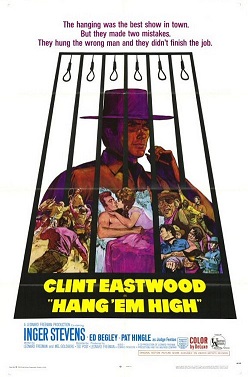
Hang ‘Em High (1968, directed by Ted Post)


1889.  The Oklahoma Territory.  A former lawman-turned-cattleman named Jed Cooper (Clint Eastwood) is falsely accused of working with a cattle thief.  A group of men, led by Captain Wilson (Ed Begley) lynch him and leave Cooper hanging at the end of a rope.  Marshal Dave Bliss (Ben Johnson) saves Cooper, cutting him down and then taking him to the courthouse of Judge Adam Fenton (Pat Hingle).  Fenton, a notorious hanging judge, is the law in the Oklahoma territory.  Fenton makes Cooper a marshal, on the condition that he not seek violent revenge on those who lynched him but that he instead bring them to trial.  Cooper agrees.

An American attempt to capture the style of the Italian spaghetti westerns that made Eastwood an international star, HangEm High gives Eastwood a chance to play a character who is not quite as cynical and certainly not as indestructible as The Man With No Name.  Cooper starts the film nearly getting lynched and later, he’s shot and is slowly nursed back to health by a widow (Inger Stevens).  Cooper is not a mythical figure like The Man With No Name.  He’s an ordinary man who gets a lesson in frontier justice as he discovers that, until Oklahoma becomes a state, Judge Fenton feels that he has no choice but to hang nearly every man convicted of a crime.  (Judge Fenton was based on the real-life hanging judge, Isaac Parker.)  Over the course of this episodic film, Cooper becomes disgusted with frontier justice.

HangEm High is a little on the long side but it’s still a good revisionist western, featuring a fine leading performance from Clint Eastwood and an excellent supporting turn from Pat Hingle.  The film’s episodic structure allows for Eastwood to interact with a motley crew of memorable character actors, including Bruce Dern, Dennis Hopper, L.Q. Jones, Alan Hale (yes, the Skipper), and Bob Steele.  HangEm High has a rough-hewn authenticity to it, with every scene in Fenton’s courtroom featuring the sound of the gallows in the background, a reminder that justice in the west was often not tempered with mercy.

Historically, Hang ‘Em High is important as both the first film to be produced by Eastwood’s production company, Malpaso, and also the first to feature Eastwood acting opposite his soon-to-be frequent co-star, Pat Hingle.  Ted Post would go on to direct Magnum Force.

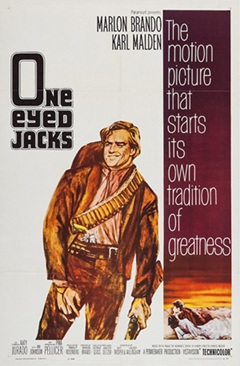
One-Eyed Jacks (1961, directed by Marlon Brando)


Rio (Marlon Brando), a young outlaw in the Old West, is betrayed by his partner and mentor Dad Longworth (Karl Malden) and ends up spending five years in a Mexican prison.  When Rio escapes, he gets together a new gang and heads for Monterey, California.  He wants to both get his revenge on Longworth and also rob the local bank.  Things get complicated when Rio actually confronts Longworth and suddenly realizes that he can’t bring himself just to gun the man down in cold blood.  Rio is not as ruthless of an outlaw as he thought he was.

However, Rio then meets and falls in love with Louisa (Pina Pellicer), Longworth’s stepdaughter  Longworth is willing to do whatever he has to keep Rio away from Louisa and, when Rio starts to think about going straight in an effort to win Louisa’s love, his new gang turn out to be even less trustworthy than his old partners.

A teenage rebellion film disguised as a western (and it’s not a coincidence that the main bad guy is named Dad), One-Eyed Jacks was Marlon Brando’s only film as a director.  The film was originally meant to be directed by Stanley Kubrick, who was working from a script written by a once-in-a-lifetime combination of Rod Serling and Sam Peckinpah.  Kubrick and Brando worked together to develop the film, with Brando insisting on Karl Malden as Dad.  (Kubrick wanted to cast Spencer Tracy.)  Ultimately realizing that working on One-Eyed Jacks would mean essentially taking orders from his star, Kubrick stepped down from directing so he could focus on Lolita and Brando took over as director.  The film finally went into production in 1958 and would not be released until 1961.  Brando’s perfectionism was blamed for the film going massively overbudget and, when it was finally released, One-Eyed Jacks was the first of Brando’s films to lose money.  The combined box office failures of One-Eyed Jacks and the remake of Mutiny on the Bounty left Brando in the cinematic wilderness for much of the 60s.

As for the film itself, One-Eyed Jacks takes what should have been a simple story and attempts to turn into an epic.  Rio spends a good deal of time brooding and the film seems to brood right along with him.  What starts out as a western becomes a forbidden love story as Rio and Louisa fall for each other.  Dad Longworth may be an outlaw-turned-sheriff but Malden plays him more as a possessive father who can’t handle that his two stepchildren — Rio and Louisa — are both turning against him and his strict rules.  Brando obviously viewed the film as being something bigger than a standard western.  Sometimes, his direction works and he does manage to get the epic feel that he was going for.  Other times, the film itself seems to be unsure what direction it wants to go in telling its story.  This is method directing.

Ultimately, One-Eyed Jacks is an interesting experiment, one that doesn’t really work but which still features Charles Lang’s outstanding cinematography and one of Karl Malden’s best performances.  As Brando’s only directorial effort, the film is a curiosity piece, one that will be best enjoyed by western fans who have the patience for something a little different.  And, for what it’s worth, based on the film’s visual beauty and the performances that he gets from the cat, I think Brando could have developed into a fine director with a little more experience.  However, it was not to be.


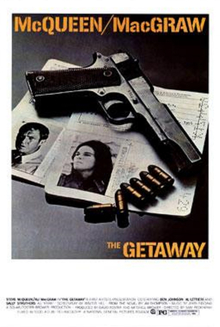
The Getaway (1972, directed by Sam Peckinpah)


Doc McCoy (Steve McQueen) is doing a ten-year sentence in a Texas state prison when he’s offered a chance at parole.  The only condition that Jack Benyon (Ben Johnson) gives Doc is that, once out of prison, Doc is going to have to plan and carry out a bank robbery with two other criminals, Frank (Bo Hopkins) and Rudy (Al Lettieri).  Desperate for his freedom and to be reunited with his wife, Carol (Ali MacGraw), Doc agrees.  On the outside, Doc carries out the robbery but it turns out that no one can be trusted.  With everyone double-crossing everyone else, Doc and Carol head for the border, pursued by the police, Rudy, and Benyon’s brother, Cully (Roy Jenson).

Based on a novel by Jim Thompson, The Getaway is a fast-paced and violent heist film.  It was on this film that Ali MacGraw and Steve McQueen first met and famously fell for each other.  Married to producer Robert Evans, Ali MacGraw left him for McQueen.  Their very real chemistry gives the film its forward momentum and it is so palpable that it doesn’t matter that the stunningly beautiful Ali MacGraw couldn’t really act.  Steve McQueen, on the other hand, is at his coolest in The Getaway.  McQueen was an actor who didn’t need much dialogue to say a lot and The Getaway features him at his tough and ruthless best.  Doc is not one of the good guys.  He’s a bad guy but not as bad as Rudy, Frank, Jack, and Cully.

As was typical of Peckinpah, The Getaway is full of small moments and details that make the movie’s world come to life.  While Doc and Carol flee across Texas, Rudy has a twisted loves story of his own with Fran (Sally Struthers, in a role that will surprise anyone who only knows her as Gloria Stivic).  Jack Dodson plays Fran’s kindly husband and gives a performance that reminds us of the human cost of crime.  Slim Pickens has a wonderful cameo as an old cowboy whose truck is hijakced by Jack and Carol.  Those who thought of Peckinpah as just being a director of violent thrillers often overlooked the moments of humanity that regularly emerged amongst all the bloodshed.

The Getaway was not given the critical acclaim it deserved when it was released but today, it’s regularly recognized as a career best for both Sam Peckinpah and Steve McQueen.

Retro Television Reviews: Blood Sport (dir by Jerrold Freedman)


Welcome to Retro Television Reviews, a feature where we review some of our favorite and least favorite shows of the past!  On Sundays, I will be reviewing the made-for-television movies that used to be a primetime mainstay.  Today’s film is 1973’s Blood Sport!  It  can be viewed on YouTube.

David Birdsong (played by Gary Busey, who was 29 at the time) is a high school senior with a potentially bright future ahead of him.  He’s the quarterback of his high school’s football team and it looks like he’s on the verge of leading his team to an undefeated season.  He’s getting recruited by all the big schools.  Scouts are coming to his games to watch him play.  He also has one of the highest GPAs at his school, though it’s suggested that might have more to do with his importance to the football team than his actual study skills.

“Don’t you have anything else you want to do with your life?” his high school principal (David Doyle) asks him and David’s reaction indicates that he’s never really given it much thought.  From the time he was born, David’s father, Dwayne (Ben Johnson), has been shaping his son to become a star athlete.  Dwayne is happiest when he’s watching David play, whether on the field or in the highlight reels that he keeps down in the basement.  When Dwayne sees that his son isn’t on the field, he’s the type of father who will get out of the stands and argue with the coach on the sidelines.  Dwayne continually tells David not to stay out too late.  The one time that David does, Dwayne slaps him hard enough to send his son to the floor.

Coach Marshall (Larry Hagman) is determined to get his undefeated season, no matter how hard he has to push his players.  The coach is the type who is convinced that his players respect him for his stern ways and his long-winded speeches but little does he realize that they all secretly despise him.  When one of his players drop dead of a heart attack during practice, Coach Marshall demands that the player stop being lazy and get up.  When he realizes that the player is never going to get up, Coach Marshall angrily asks, “Why did this have to happen now!?”  Later, at a pep rally, Coach Marshall announces that his team had a private meeting and agreed that they would win the final game in the player’s memory.  The team is disgusted but the rest of the town loves their coach.

David is never happier than when he’s on the field, playing football and being cheered by both the crowd and his team.  But, through it all, he sees reminders that the future in uncertain.  On the sidelines, David spots an injured player, watching the game with the knowledge that his dreams of getting a scholarship have ended.  When David visits a college, he’s reminded that being the best high school player doesn’t mean much in college and when he says that he’s a quarterback, he is told that his coach will ultimately decide who he is and David will accept the coach’s decision because David isn’t being offered a scholarship to think for himself.

When the film originally aired in 1973, it was called Birdsong but the title was changed to Blood Sport for both subsequent showings and for a European theatrical release.  Blood Sport is the more appropriate title because, even though the main character is named David Birdsong, the film is ultimately about all of the athletes who are expected to put their health at risk for the people on the sidelines.  It’s not just football that’s a blood sport, the film suggests.  It’s the entire culture that has sprung up around it, the one that cheers when players are at their best but which also looks away at the times when the players need the most help.

At 29 years of age, Gary Busey is a bit too old to be totally convincing as a high school senior but he still does a good job of capturing David’s gradual realization that he’s never really had any control over his own life.  Ben Johnson and especially Larry Hagman also give good performances as the two men who are living vicariously through David’s accomplishments.  Hagman is so believably obnoxious as the coach that you’ll want to cheer when someone finally finds the guts to stand up to him and tell him to just shut up for a minute.

The film ends on an ambiguous note, leaving many questions open about David’s future.  One hopes that he’s started to find the strength necessary to live his own life but it’s ultimately hard to say.  In the end, nothing is guaranteed, no matter how far you can throw a football.

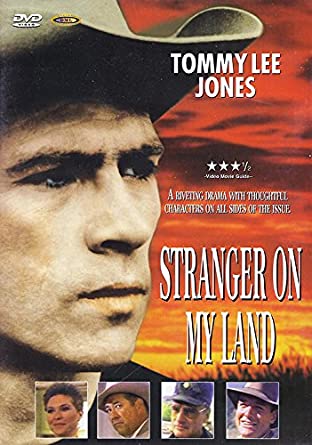
Stranger On My Land (1988, directed by Larry Elikann)


The Air Force wants to build a new air base in Utah but the Whitman family refuses to sell their ranch.  Bud Whitman (Tommy Lee Jones) served in Vietnam and he disapproved just as much of forcing Vietnamese villagers to move as he now disapproves of the idea of allowing the government to force American citizens to move.  When a judge rules that the Air Force can force the Whitmans to vacate their property under the rule of eminent domain, Bud announces that he still will not be moving.  With several of Bud’s old combat buddies showing up to support Bud, the villainous county surveyor, Connie Priest (Terry O’Quinn), prepares to take matters in his own hands.

Tommy Lee Jones vs. Terry O’Quinn?  That sounds like it should have the makings of a classic but Stranger On My Land is a largely forgettable made-for-TV movie.  A huge part of the problem is that O’Quinn’s character doesn’t have any real motivation beyond just being a prick and that seems like a waste when you consider the number of interesting villains that Terry O’Quinn has played over the years.  This is the actor who, in The Stepfather, actually made a multiple murderer seem a little bit likable.  Connie Priest seems like a villain that O’Quinn could have done a lot with if only the film’s script hadn’t been so simplistic.  Tommy Lee Jones is always well-cast as a modern day western hero but again, the script doesn’t do much with his character.  He’s just Tommy Lee Jones yelling at people to get off his property.  You could probably go to Tommy Lee Jones’s own ranch and have the exact same experience without having to sit through the rest of this movie.  Even Bud’s ethical objections to the Vietnam War feel like something that was just tossed in to assure the people watching at home that he’s not meant to be some sort of gun-toting militiaman.  The best performance in the movie comes from Ben Johnson, who is plays Tommy Lee Jones’s father.  That’s prefect casting.  If Ben Johnson wasn’t actually Tommy Lee Jones’s father, he probably should have been.

The main problem with Stranger On My Land is that it was made for television and it had to operate within the limits of what was acceptable for television in 1988.  The entire movie seems to be building up to a fierce battle between Bud and law enforcement but instead, it settles for a personal fight between Bud and Connie.  The film’s sudden ending doesn’t feel authentic but it does feel like what you’d expect to find on ABC in the late 80s.

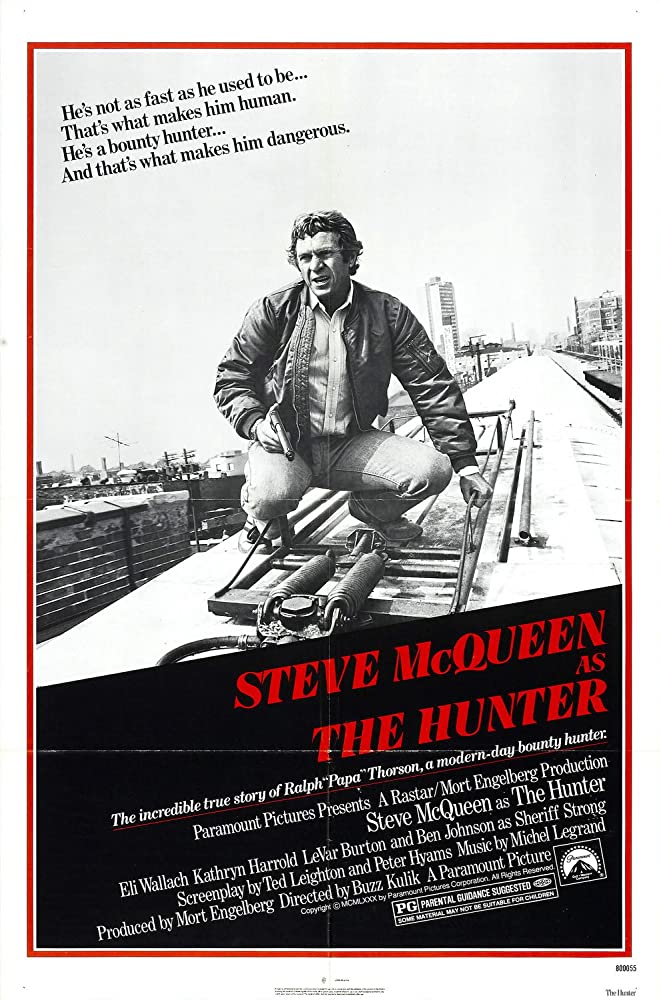
The Hunter (1980, directed by Buzz Kulick)


In The Hunter, legendary car nut, Steven McQueen, plays Papa Thorson, a bounty hunter who is a very bad driver.

That’s it.

That’s the joke.

Papa Thorson was a real-life bounty hunter, the Dog the Bounty Hunter of his day, and The Hunter was based on his own autobiography.  Maybe that explains why the film itself is so extremely episodic.  Thorson goes from one assignment to another, capturing criminals with relative ease and occasionally having to deal with an unappreciative sheriff (Ben Johnson).  Along the way, one of those criminals (Levar Burton) goes to work with Papa and becomes his protege.  Papa’s girlfriend (Kathryn Harrold) is pregnant and a crazed criminal (Tracey Walter) is targeting her because he wants revenge on Papa for putting him away.  It’s all Magnum P.I.-level stuff, without the backdrop of Hawaii to distract you from how predictable it all is.  It’s not terrible because there are a few good action scenes but it still feels more like a pilot for a weekly Papa Thorson television series than a feature film.

The Hunter was also Steve McQueen’s final film.  After The Towering Inferno, McQueen was inactive for most of the 70s.  He still received scripts and turned down good parts (including the roles of both Willard and Kurtz in Apocalypse Now) but the only film in which he appeared in a barely released version of An Enemy of the People.  It wasn’t until 1980 that McQueen finally started appearing in movies again, starring in both Tom Horn and The Hunter.  Tom Horn is an underrated western but The Hunter is largely forgettable.  Sadly, The Hunter would be McQueen’s last film as he died of lung cancer shortly after it was released.

McQueen was obviously ill during the filming of The Hunter, though he still had the laconic coolness that made him a star in the first place and he still looks credible, even at the age of 50, handling a gun and chasing criminals.  He doesn’t give a bad performance as Thorson and he even shows a talent for comedy.  Both Tom Horn and The Hunter show that McQueen wasn’t afraid to play his age.  Neither Tom Horn nor Thorson were young men and, in The Hunter, McQueen gets a lot of mileage out of being a cranky, middle-aged malcontent who has never figured out how to parallel park.  The film might be forgettable but Steve McQueen shows that, to the end, he was an actor who was often better than his material.

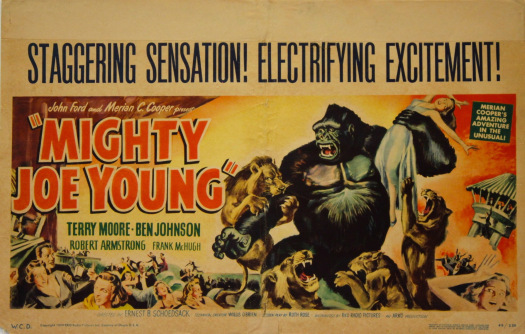
Beautiful Dreamer: MIGHTY JOE YOUNG (RKO 1949)


gary loggins's avatarcracked rear viewer

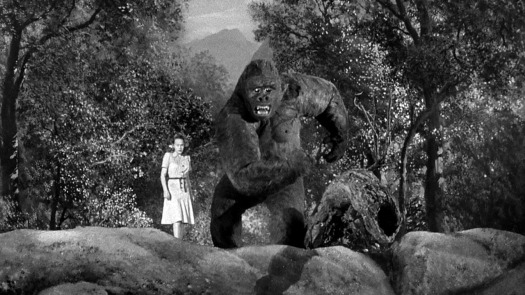
The folks who brought you KING KONG – producer Merian C. Cooper, director Ernest Shoedsack, writer Ruth Rose, animator Willis O’Brien – returned sixteen years later to the giant ape theme with MIGHTY JOE YOUNG, a classic fantasy that can stand on its own. Though the film usually gets lumped into the horror genre, it’s more a fable than a fright fest, a beautifully made flight of fancy for children of all ages, and one of my personal favorites.

In deepest darkest Africa, little Jill Young buys a cute baby gorilla from the natives. Twelve years later, impresario Max O’Hara, along with rodeo wrangler Gregg and his crew, travel to The Dark Continent in search of exotic animal acts for a new show he’s producing, when they come face to face with the now 12 foot tall, 2,000 pound gargantua, affectionately called Joe by a grown Jill. She’s the only…

View original post 677 more words

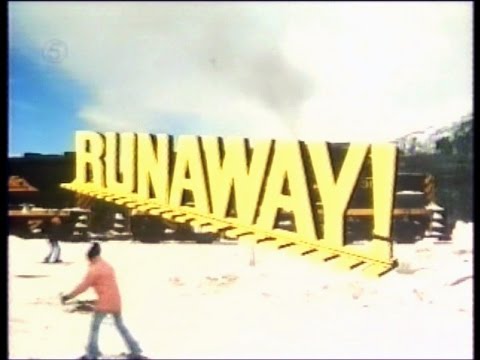
Coming Down The Mountain: Runaway! (1973, directed by David Lowell Rich)


Runaway! begins with a train starting a slow descent down a snowy mountain.  On board the train are collection of skiers, gigolos, conductors, and engineers.  One couple discusses their upcoming divorce.  An athletic father tries to bond with his less-athletic son.  A slick con artist tries to convince a depressed young woman not to throw herself from the train.  A group of skiers put on an impromptu concert, banging on their suitcases like bongo drums.  They get so loud that the conductor doesn’t even hear the engineer desperately trying to contact him.  What none of the passengers realize is that the train’s brake engines have frozen and the train is about to start hurtling down the mountain.  Unless the chief engineer can figure out a way to stop the train, everyone’s going to die!

Made for television in the year between the release of The Poseidon Adventure and The Towering Inferno, Runaway! is a low-key but entertaining disaster movie.  With a running time of only 70 minutes, Runaway! doesn’t waste any time getting down to business and, even if it is a low-budget movie, there’s no way that an out-of-control train racing down a mountain can’t be exciting.

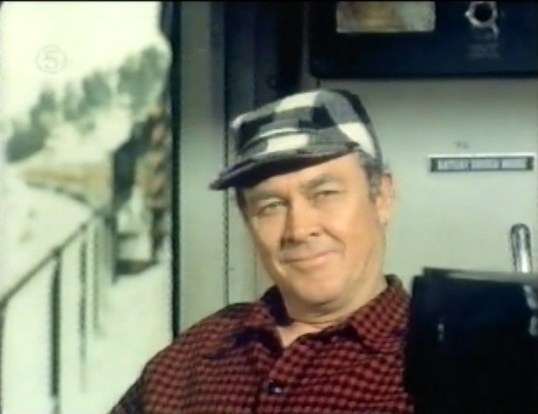
Compared to the other disaster movies of the era, Runaway! does not exactly have an all-star cast though there are some familiar faces.  Vera Miles and Ed Nelson are the divorcing couple while Martin Milner is the father who puts too much pressure on his son.  Ben Murphy is the gigolo who refuses to pay for a ticket on general principle while Darleen Carr is the woman who wants to jump to her death.  Most of them are just there as placeholders.  It’s obvious from the start that the real stars of the film are going to be the train and the mountain.  However, the famously gruff character actor Ben Johnson manages to make an impression just by being Ben Johnson.  Johnson plays the chief engineer and, as long as he’s manning the engine, you know that the train’s passengers are in good hands.

Runaway! has never been released on DVD or even VHS but it is currently available on YouTube.