Horror On The Lens: Son of Frankenstein (dir by Rowland V. Lee)


son_of_frankenstein_movie_poster

For those who might have a hard time keeping their Universal monster films straight, 1939’s Son of Frankenstein is the third Frankenstein film, following the original and Bride of Frankenstein.  It’s the first one to have been directed by someone other than James Whale.  It’s the one that features the one-armed policeman.  It’s the one that features Bela Lugosi as a vengeful grave robber named Ygor.  It’s also the final film in which Boris Karloff would play the monster.

And, on top of all that, it’s also a pretty good movie, one that holds up as both a sequel and stand-alone work!

Son of Frankenstein opens decades after the end of Bride of Frankenstein.  (How many decades is open for debate.  I’ve read that the film is supposed to be taking place in 1901 but there’s a scene featuring a 1930s-style car.  Let’s just compromise and say that the film is taking place in 1901 but someone in the village owns a time machine.  I think that’s the most logical solution.)  Henry Frankenstein is long dead, but his name continues to strike fear in the heart of Germans everywhere.  Someone has even tagged his crypt with: “Heinrich von Frankenstein: Maker of Monsters.”

Needless to say, everyone in the old village is a little uneasy when Henry’s son, Wolf von Frankenstein (Basil Rathbone) shows up at the castle.  In fact, they’re so uneasy that the local constable, Krogh (Lionel Atwill), pays Wolf and his family a visit.  Krogh explains that, when he was a child, the Monster ripped his arm out “by the roots.”  AGCK!

(That said, that really doesn’t sound like the Frankenstein Monster that we all know and love, does it?  I suspect there’s more to the story than Krogh is letting on…)

Wolf explains that he has no plans to bring the Monster back to life.  He then sets out to do just that.  Wolf wants to redeem Henry’s reputation and the only way to do that is to prove that Henry was not misguided in his quest to play God.  Helping Wolf out is Ygor (Bela Lugosi).  Ygor is a former blacksmith who was due to be hanged but, because of a malfunction with the gallows, he just ended up with a disfigured neck.

It turns out that Ygor happens to know where the Monster’s body is being hidden.  When Wolf brings the Monster back to life, he quickly discovers that Ygor’s motives weren’t quite as altruistic as Wolf originally assumed.  It turns out that Ygor wants revenge on the jury that sentenced him to death and now, he can use the Monster to get that revenge.

As for the Monster, he no longer speaks.  Instead, he just angrily grunts and he kills.  Whatever kindness he developed during the previous film was obviously blown up with Elsa Lanchester at the end of Bride of Frankenstein.  On the one hand, it’s fun to see Karloff as the monster.  On the other hand, it’s impossible not to regret that he doesn’t get to do much other than stumble around, grunt, and strangle people.  There are only two scenes where Karloff gets to show any real emotion and, in both cases, he does such a great job that you can’t help but regret that the monster is such a one-dimensional character in Son of Frankenstein.

But no matter!  Regardless of how the film uses (or misuses) the Monster, it’s still an entertaining 1930s monster film.  Basil Rathbone does a great job as the imperious but ultimately kindly Wolf von Frankenstein.  And Bela Lugosi’s natural theatricality makes him the perfect choice for Ygor.  To be honest, I actually think Lugosi does a better job as Ygor than he did as Dracula.  I know that’s blasphemy to some but watch the two films side-by-side.  Lugosi is clearly more invested in the role of Ygor.  Considering that Lugosi reportedly felt that he was mistreated in Hollywood, it’s tempting to wonder if some of his own anger informed his performance as the perennially mistreated and bitter Ygor.

Son of Frankenstein closed out the Karloff Frankenstein trilogy.  When Frankenstein’s Monster made his next appearance, he would be played by the same actor who later took over the role of Dracula from Lugosi, Lon Chaney, Jr.

(And interestingly enough, Lugosi would subsequently take over the role of the Monster from Chaney.  But that’ll have to wait for a future review…)
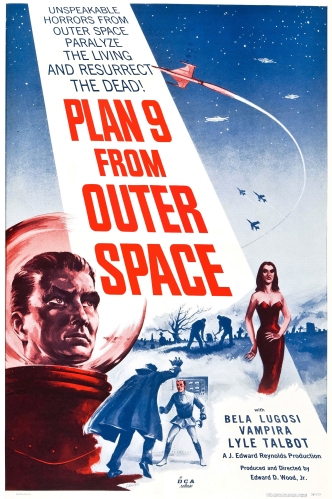
Horror On The Lens: Plan 9 From Outer Space (dir by Edward D. Wood, Jr.)


Plan_9_Alternative_posterWatching Ed Wood’s infamous Plan 9 From Outer Space is something of an October tradition here at the Shattered Lens!  And you know how much I love tradition!  (Add to that, I shared Bride of the Monster last night and I’m going to be reviewing at least two sci-fi horror films later today so it just seems appropriate to go ahead and share Plan 9 today!)

Incidentally, I know this film has a reputation for being the worst film ever made.  Personally, I don’t think that it deserves that reputation.  Is it bad?  By traditional standards of quality, I guess it can be argued that Plan 9 From Outer Space is a bad movie.  But it’s also a lot of fun and how can you not smile when you hear Criswell’s opening and closing statements?

Enjoy and be sure to read Gary’s review!

(And also be sure to read Jedadiah Leland’s tribute to Criswell!)

(On another note: Watch this as quickly as you can because, for the first time since we started Horror on the Lens, the films of Ed Wood are being yanked off of YouTube.  Copyright violations, they say.  Personally, I think that’s shameful.  First off, Ed Wood is no longer alive.  Wood had no children and his widow died in 2006, having never remarried.  Whatever money is being made off of his films is not going to support his family.  Wherever he is, I think Ed would be more concerned that people see his films than some faceless corporation make money off of them.)


Horror On the Lens: Bride of the Monster (dir by Ed Wood, Jr.)


Bride_of_the_Monster_(1956_movie_poster)

Today’s horror film on the lens is Edward D. Wood’s 1955 epic, Bride of the Monster.  The film itself doesn’t feature a bride but it does feature a monster, a giant octopus who guards the mansion of the mysterious Dr. Vornoff (Bela Lugosi).  Vornoff and his hulking henchman Lobo (Tor Johnson) have been kidnapping men and using nuclear power to try to create a race of super soldiers.  Or something like that.  The plot has a make-it-up-as-you-go-along feel to it.  That’s actually a huge part of the film’s appeal.

Bride of the Monster is regularly described as being one of the worst films ever made but I think that’s rather unfair.   Appearing in his last speaking role, Lugosi actually gives a pretty good performance, bringing a wounded dignity to the role of Vornoff.  If judged solely against other movies directed by Ed Wood, this is actually one of the best films ever made.

(For a longer review, click here!)

Horror Film Review: Dracula (dir by Tod Browning)


dracula_movie_poster_style_f

It pains me to say it but, of all the classic Universal monster films, Dracula is probably my least favorite.

I hate to say that because I love vampires and I love the story of Dracula.  I have read the book several times, I’ve seen several productions of the stage play, and I’ve seen a countless number of  Dracula films.  (Christopher Lee’s version is my favorite.)  The 1931 version of Dracula — while hardly being the first vampire movie — was still a very important moment in the history of horror cinema.  Every vampire film that has come out since owes a debt of gratitude to Dracula.  Bela Lugosi’s performance set the standard against which almost all vampires are judged.

I always want to love Dracula but … no, the film just doesn’t work for me.

Of course, we all know the film’s story.  Dracula (Bela Lugosi) comes to England from Transylvania.  He turns Lucy (Frances Dade) into a vampire and attempts to do the same thing to Mina Seward (Helen Chandler).  Mina’s fiancée, John Harker (David Manners) and father, Dr. Seward (Herbert Bunston), attempt to stop him with the help of Prof. Van Helsing (Edward van Sloan).  Renfield (Dwight Frye) serves as Dracula’s servant and eats bugs.  Dracula tells us that he does not drink … wine.  He talks about the music of the night.  His eyes get wide at the sight of blood and he hides his face when confronted with a cross.

Of course, though Dracula may have first appeared in Bram Stoker’s novel, the film is actually an adaptation of a stage play that was based on the novel.  That’s the main problem with Dracula as a movie.  It’s a very stagey film, one that never seems to quite break free of its theatrical origins.  It’s a rather slow-moving film, one that is full of awkward scene transitions and moments of dead air.  One need only compare it to F.W. Murnau’s Nosferatu or Carl Theodor Dreyer’s Vampyr to see just how visually bland Dracula really is.

Dracula‘s blandness is especially surprising when you consider that the direction is credited to Tod Browning.  Browning directed some of the best horror films of the silent era and, after the release of Dracula, he went on to direct the brilliant Freaks.  Dracula doesn’t feel like a Browning film but perhaps that’s because it actually wasn’t.  Reportedly, Tod Browning was struggling with depression during the filming of Dracula and was rarely on set.  Instead, most of the film’s direction was handled by cinematographer Karl Freund.  Freund had never directed a film before (though he would later acquit himself quite well with The Mummy) and Dracula‘s flaws were largely a result of that inexperience.

Well, that may be true or it may not.  Here’s what we can say for sure: Bela Lugosi’s work as Dracula holds up surprisingly well.  When seen today, it can be difficult to fairly judge Lugosi’s performance.  We’ve seen so many parodies and bad imitations that it’s difficult to imagine the impact that it may have had on audiences in 1931.  Lugosi was recreating his stage performance and it’s a very theatrical performance but, at the same time, Dracula is a character that doesn’t demand or require subtlety.  There’s a power to Lugosi’s performance.  Maybe it’s the piercing stare or the unbridled blood lust that seems to be reflected in his eyes.  Maybe it’s the accent.  Maybe it’s the haughty and arrogant way that he carries himself.  Whatever it is, it works.

No, Dracula does not hold up as well as you might hope.  But Bela Lugosi’s performance remains a classic.

Halloween Havoc!: Bela Lugosi in CHANDU THE MAGICIAN (Fox 1932)


gary loggins's avatarcracked rear viewer

chandu1

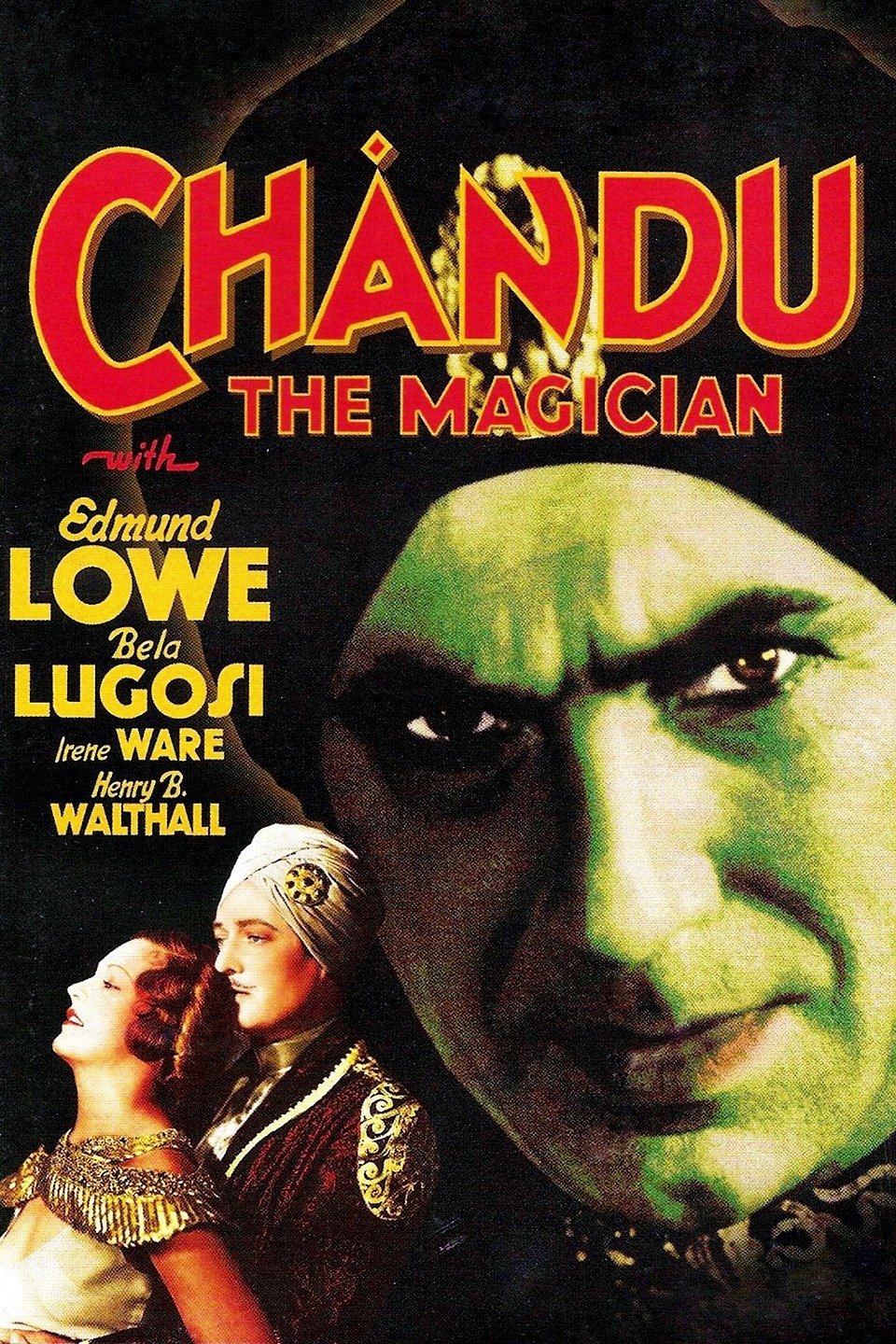
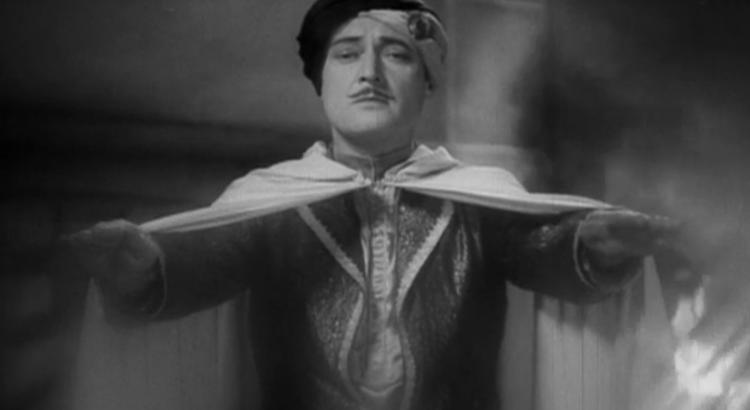
Thrills! Chills! Romance! Action! CHANDU THE MAGICIAN plays like a Saturday matinée serial aimed directly at the kiddie crowd. Based on a popular radio series, the film is pretty antiquated seen today, its saving graces being the special effects wizardry of co-director William Cameron Menzies and the deliciously evil Bela Lugosi as the megalomaniacal villain Roxor.

chandu2

The movie kicks off with the banging of a gong and an offscreen narrator ominously intoning “Chan-du the Magician”. A hand is used to wipe the screen credits, the first of Menzies’ many filmic tricks. We’re taken inside a temple where Frank Chandler, aka Chandu, has spent three years learning the ancient secrets of the mystic arts (move over, Dr. Strange!). He’s a yogi now, master of the hypnotic eye and astral projection, and demonstrates his prowess by performing the old Indian rope trick and walking through fire. His mentor bids him to “go…

View original post 682 more words

Horror Film Review: The Wolf Man (dir by George Waggner)


the-wolfman

“Even a man who is pure in heart, and says his prayers by night;

May become a wolf when the wolfbane blooms and the autumn moon is bright.”

— Gypsy Poem, The Wolf Man (1941)

Poor Larry Talbot.

We all know his story, of course.  The plot of the original Wolf Man is so iconic and has been imitated in so many other films that, even if you somehow have never seen the original 1941 film, you still know what happened.

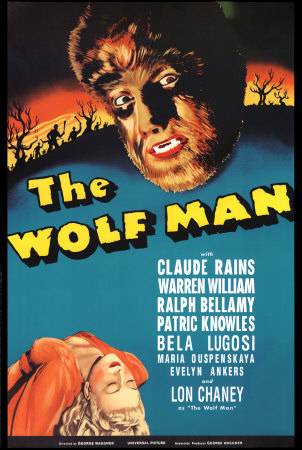
Larry (played by Lon Chaney, Jr.) is a loser.  When we first meet him, he is nervously returning to his childhood home in Wales.  (Chaney doesn’t sounds at all Welsh nor does he sounds like he’s from any other part of the UK for that matter, but that’s not really important.)  Larry’s older brother has recently died and Larry hopes that maybe he can reconcile with his father, Sir John (Claude Rains).  Larry’s brother was the favored son, the one who lived up to the Talbot name and made his father proud.  Larry, on the other hand, hasn’t really succeeded at anything he’s ever done.  To use the slang of the time, Larry comes across as basically being a lug.  A big dumb lug.

After discovering that his father really doesn’t seem to want to have much to do with him, Larry goes for a stroll through the nearby village.  He buys a silver-headed walking stick, mostly so he can flirt with the salesgirl, Gwen (Evelyn Ankers).  It turns out that there’s a gypsy camp nearby.  What better place to go on a date!?

Well, perhaps Larry should have just invited her to the movies.  Not only does a fortune teller (Maria Ouspenskaya) see something terrible in his future but Larry ends up getting bitten by what appears to be a wolf.  The good news is that Larry was bitten while saving the life of one of Gwen’s friends, which is certainly going to make him look like good boyfriend material.  The bad news is that the wolf was actually the fortune teller’s son, Bela (played by none other than Bela Lugosi).  It turns out that Bela was a werewolf and now, Larry’s going to be a werewolf too!

Larry, needless to say, is not happy about this.  But then again, Larry wasn’t happy before he became the werewolf either.  Lon Chaney, Jr. played Larry Talbot in five different movies and I don’t think he smiled once.  I guess that’s understandable, seeing as how he was a werewolf.  In every film in which he appeared, Larry would beg someone to kill him and put him out of his misery.  And, in every sequel, Larry would somehow be brought back to life and have to go through it all over again.  I guess he earned the right to be a little glum.

But still, even before he’s bitten in The Wolf Man, Larry is kind of a boring character.  The only time that he’s interesting is when he’s a wolf man.  And really, he’s a far more successful werewolf than human.  When we first meet Larry, he apologizing to his father for never living up to his expectations.  But once Larry turns into the Wolf Man, he finally manages to get things done.  When he’s the wolf man, Larry has the inner drive that he lacks as a human.

To me, the heart of The Wolf Man is not to be found in Chaney’s glum performance.  Instead, it’s in Claude Rains’s performance as John.  When we first meet Sir John, he seems like a rather imposing figure but, over the course of this 70 minute film, John slowly lowers his guard.  We discover that he’s actually a loving father and there’s something rather sweet about watching as he slowly welcomes Larry back into his life.  Of course, it all ends in tragedy.  These things often do.

Everything, from the set design to shadowy cinematography to the hard-working fog machine (which keeps the moors looking properly creepy) to the performances of Claude Rains and Maria Ouspenskaya, comes together to make The Wolf Man into a genuine classic of horror cinema.  And, of course, I have to mention the brilliant makeup job that was done to transform Chaney into The Wolf Man.  

Still, I have to wonder — why did Lugosi turn into an actual wolf while Chaney turned into this?

wm

Oh well, it probably doesn’t matter.  Just relax and enjoy the damn film, as a wise person somewhere once said.  Be sure to watch The Wolf Man this holiday season!

The Fabulous Forties #38: The Devil Bat (dir by Jean Yarbrough)


1940_devil_bat_012

The 37th film in Mill Creek’s Fabulous Forties box set was 1940’s The Devil Bat, which Gary Loggins reviewed on this site back in October.  Since, for the most part, I agree with Gary’s review, I’m going to recommend that you go read it and then I’ll just add a few thoughts of my own.

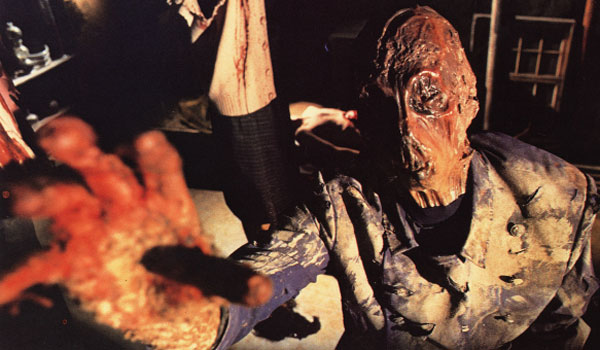
The Devil Bat is usually described as being one of the films that Bela Lugosi made during his decline, even though he made it just a year after appearing in a supporting role in the Oscar-nominated Ninotchka.  Lugosi plays Dr. Paul Carruthers, a small-town chemist who uses radiation to create a gigantic bat that he unleashes on everyone who he feels has wronged him.  The bat targets anyone who makes the mistake of wearing an aftershave lotion that Carruthers has created.

I would argue that there is a hint of genius to be found within The Devil Bat.

First off, there’s the fact that the giant bat is so clearly fake that it actually becomes rather charming.  Wisely, the film makes no effort to convince you that the bat is real.  Whenever that big, fake bat is lowered in on a bunch of often-visible wires, it works as almost a Brechtian alienation device.  In much the same way that Godard used jump cuts in Breathless, Devil Bat uses that big, fake bat to remind the audience that they are watching a film.  As a result, the audience has no choice but to think about the conventions of the horror genre and how their own world view has been shaped by watching movies like Devil Bat.

The other hint of genius is the satirical masterstroke of casting Bela Lugosi as a small town chemist.  Lugosi remains Lugosi, regardless of what role he plays.  When the film’s characters accept, without even a second glance, that Bela Lugosi, with his thick accent and his theatrical acting style, is a humble suburbanite, the film becomes a perhaps inadvertent satire of American conformity.

Needless to say, Lugosi was always a far better actor than he has ever been given credit for being.  In The Devil Bat, he plays Dr. Carruthers with a weary sense of resignation.  Carruthers never becomes a standard evil villain.  Instead, he’s a man who has been so beaten down by life that he now see no other option beyond using a giant bat to kill those who he feels has betrayed him.  Much as he would in Ed Wood’s Bride of the Monster, Lugosi brings an almost redemptive sadness to his mad scientist.

The end result is that poor, misunderstood and underestimated Bela elevates the entire film.

db

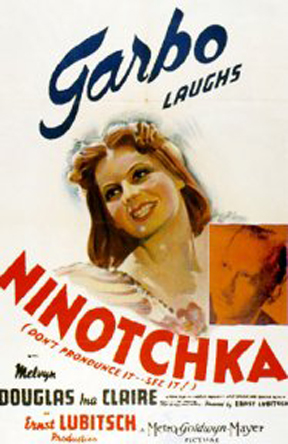
Cleaning Out The DVR #32: Ninotchka (dir by Ernst Lubitsch)


(For those following at home, Lisa is attempting to clean out her DVR by watching and reviewing 38 films by the end of today!!!!!  Will she make it?  Keep following the site to find out!)

Film_ninotchka

Oh my God, I love this movie!

First released in 1939, Ninotchka is many things.  It’s a love story.  It’s a comedy.  It’s a story of international intrigue.  It’s a political satire.  It’s a celebration of freedom.  And, perhaps most importantly, it’s a showcase for one of the greatest actresses of all time, the one and only Greta Garbo!

But you know what?  As great as Garbo is, she’s not the only worthy performer in this film.  Melvyn Douglas plays Garbo’s love interest and his performance is full of charm and class.  And guess who plays the main villain?  BELA LUGOSI!  That’s right — this was one of Lugosi’s few roles that did not require him to play a variation on his famous Dracula.  And, even if he doesn’t have a lot of scenes, Lugosi does a pretty good job in Ninotchka.  It’s interesting to see Lugosi playing an all-too real monster for once.

Ninotchka opens in Paris.  Three Russians are in town and they’re trying to sell some jewelry that was confiscated by the government during the revolution of 1917.  That’s right — they’re communists!  When they first show up in Paris, they make a big deal about hating the decadence of capitalism.  But then they meet Count Leon d’Algout (Melvyn Douglas), who proceeds to introduce them to the wonders of the free market.  Soon, the three of them are holed up in their luxurious hotel, ordering room service and having a nonstop party.

(Leon, incidentally, is working for the original owner of the jewelry.  The jewelry, as you’ve probably guessed, is what Hitchock would have called a macguffin.)

Once it becomes obvious that the first three Russians have been corrupted by western society, Ninotchka (Greta Garbo) is sent to bring them back to Moscow.  Ninotchka is a “special envoy” and, from the minute that she meets Leon, it’s obvious that she’s going to be a lot more difficult to corrupt.  For all of Leon’s charm, he cannot get Ninotchka to smile or drop her “all Marxist business” attitude.

Of course. from the minute that she first appears, we all know that Ninotchka is eventually going to loosen up and come to love both the west and Melvyn Douglas.  But what makes Garbo’s performance truly special is that we like and sympathize with Ninotchka even before she embraces decadence.  Even when Ninotchka is reciting Marxist-Leninist dogma, there’s a playfulness to the way Garbo delivers the lines.

That’s one reason why it’s so much fun to watch as Ninotchka (and Garbo) starts to actually relax and enjoy both Paris and life.  Wisely, the film doesn’t suggest that Paris has changed Ninotchka.  Instead, it merely shows that being in Paris and getting to know Leon has finally allowed her to act like the person that she was all along.

(Before her appearance in Ninotchka, Garbo was known for playing very dramatic roles.  Not only is this film about Ninotchka learning to enjoy herself.  It’s also about Garbo proving that she could play comedy just as well as she could play melodrama.)

Of course, eventually, Ninotchka and the three Russians are forced to return to Moscow and director Ernst Lubitsch does a wonderful job contrasting the glamour of freedom-loving Paris with the drabness of life under communism.  Just when it looks like Ninotchka is going to be forced to spend the rest of her life in her depressing apartment and missing the luxury of being able to wear silk stockings, her boss (Lugosi) tells her that she is being assigned somewhere else.  Ninotchka doesn’t want the assignment but, as Lugosi explains, the revolution doesn’t care what the individual wants.

Will Ninotchka and her friends ever find their way back to freedom and Leon?  Or will she remain trapped in the bureaucracy?  You’ll have to watch the film to find out!

I really liked Ninotchka.  Even 77 years after it was first released, it remains a wonderfully romantic and sweet-natured little comedy.  If you haven’t seen it, you definitely should!

Ninotchka was one of the many great films to be nominated for best picture of 1939.  However, the Oscar went to another famously romantic film, Gone With The Wind.

Cleaning Out the DVR Pt 6: All-Star Horror Edition!


gary loggins's avatarcracked rear viewer

allstar1

As many of you Dear Readers know by now, classic horror has always been my favorite genre. From the Universal Monsters to Bug-Eyed Aliens to Freddie Krueger and friends (fiends?), a good scary movie is a good time! Even a bad scary movie can be fun, if I’m in the right mood. So here are six (count ’em), yes six horror films I’ve recently watched, with some great horror actors and directors at their best (and worst!):

allstar2

MIRACLES FOR SALE

(MGM 1939, D: Tod Browning)

The first great horror director, Browning teamed with Lon Chaney Sr. in the silent era to shock audiences with films like LONDON AFTER MIDNIGHT and THE UNHOLY THREE. He kicked off the Golden Age of Sound Horror with DRACULA, followed by the controversial FREAKS. MIRACLES FOR SALE was his last film, and while it’s more of a locked-room mystery, it’s loaded with those bizarre Browning…

View original post 760 more words

4 Shots From 4 Films: Dracula, Island of Lost Souls, The Black Cat, Son of Frankenstein


Bela Lugosi was born 133 years ago today.  These 4 shots from 4 films are dedicated to him.

4 Shots From 4 Films

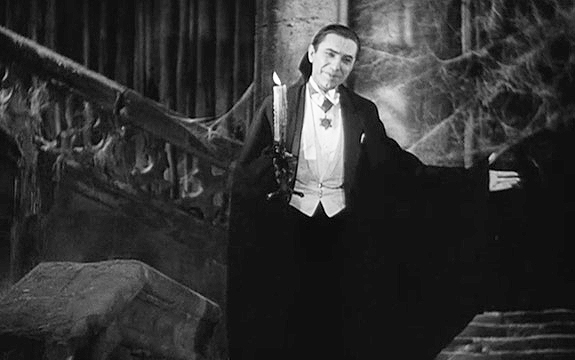
Dracula (1931, directed by Tod Browning)

Dracula (1931, directed by Tod Browning)

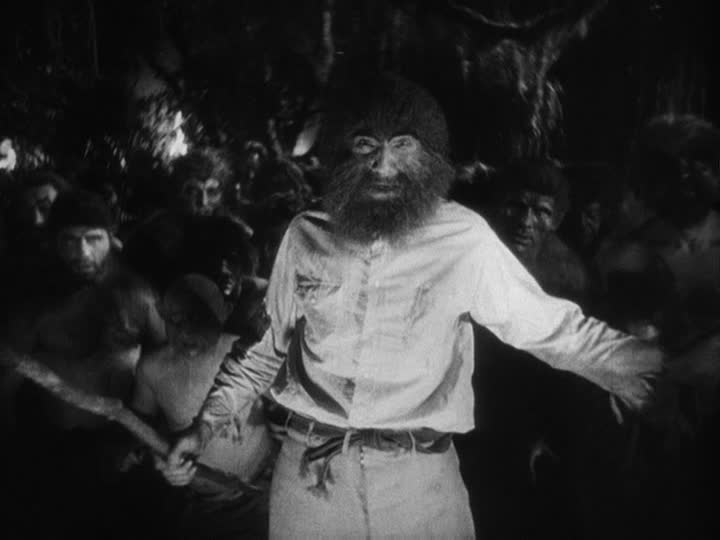
Island of Lost Souls (1932, directed by Erle C. Kenton)

Island of Lost Souls (1932, directed by Erle C. Kenton)

The Black Cat (1934, directed by Edgar G. Ulmer)

The Black Cat (1934, directed by Edgar G. Ulmer)

Son of Frankenstein (1939, directed by Rowland V. Lee)

Son of Frankenstein (1939, directed by Rowland V. Lee)