DRACULA 3D (2012) – Dario Argento, Rutger Hauer, and the folly of false expectations!


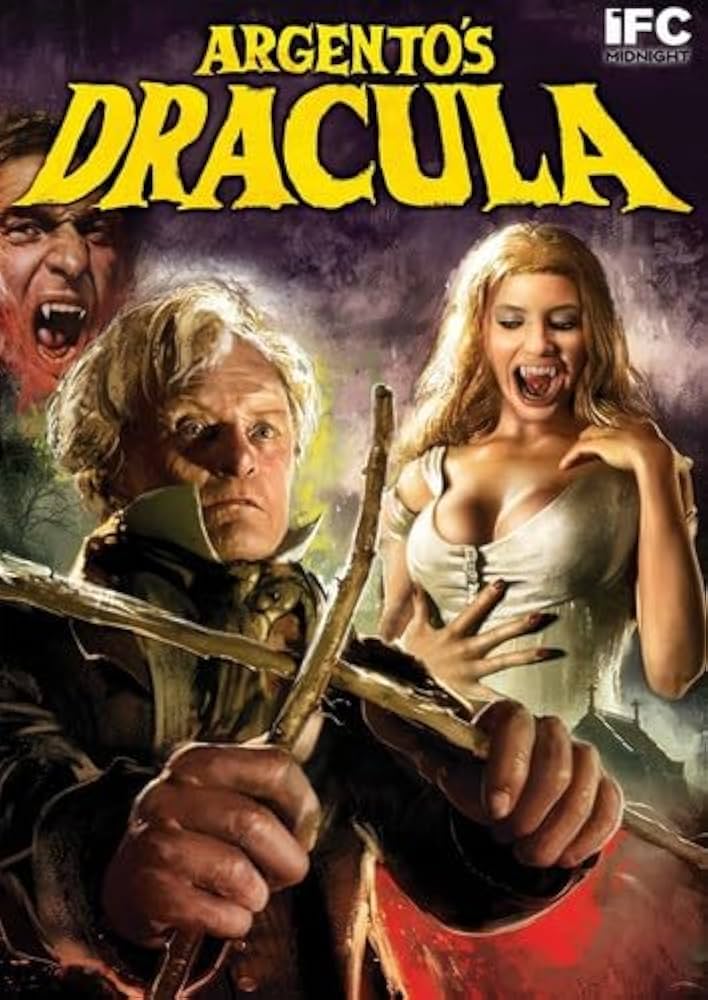
(Author’s note: I’m using the film’s original title of DRACULA 3D for my review. It seems to be going under the title of ARGENTO’S DRACULA as well, like in the image above. That’s also how I found it on Amazon Prime for my current viewing.)

If you’re one of my favorite directors or actors, I will watch all of your work, and I will probably like it. Such is the case with Dario Argento and Rutger Hauer. These two have been a part of so many great films over the years, but they have also been associated with some pretty bad stuff as well. I remember when I first read that Argento was making his own version of Dracula in 3D, and that Rutger Hauer would be playing the famous vampire hunter Van Helsing, the movie immediately went on my watch list. This means that I would google for more information every couple of days, as well as follow various entertainment-related websites looking for additional info. I also remember when the trailer was released. I specifically remember thinking that it looked awesome. I couldn’t wait to see it! And then it came out, and it seemed like everyone hated it. I made the mistake of reading reviews, which I often purposely avoid, and it seemed that many critics had a personal vendetta against the film. The reviewers weren’t content to just say it was a bad movie, they wanted me to know that it was an incompetent mess that everyone involved in should be completely ashamed of. There were a few exceptions to this universal shame, including my friend Lisa Marie Bowman, but that was definitely the general consensus. Because of this public disdain for the movie, I haven’t put that much effort into watching DRACULA 3D over the years. I’d started it a time or two, but I’d never actually finished it before. That is, until now. It’s a rainy day here in Central Arkansas, so I chose the movie for my wife and I to watch as the thunder rolled, and the rain came on in. 

The plot of the DRACULA 3D sticks to most of the things I remember about watching Dracula movies over the years. Count Dracula (Thomas Kretschmann) seems to be inflicting a sort of reign of terror in his part of the world and all the locals seem to know that going out into the woods by yourself at night is a bad idea, but they keep doing it anyway. The movie opens with Tanja (Miriam Giovanelli) going to meet her boyfriend in a barn for a late night sex romp. Sadly, after he gets satisfied, he refuses to walk her back to town. She throws her cross necklace at him and walks away in anger. Soon a big owl flies down on her, turns into Dracula and starts sucking her blood. The next person I remember meeting is an out of towner named Jonathan Harker (Unax Ugalde). It seems Count Dracula has called him to his castle to organize his library or something. He visits with Dracula for a bit, listens to wolves howling in the distance, and then heads to his room. It turns out that Tanja is not dead but is now living at the castle with Dracula. She invites herself in to tempt Jonathan, a married man, with her assets. Of course, it isn’t long before she’s trying to suck his blood. Dracula isn’t having any of that though, and he shows up and reminds Tanja that “he’s mine,” before attacking Jonathan’s neck like it’s a lobster tail at an all-you-can-eat seafood buffet in Branson, MO! Soon Jonathan’s wife, Mina (Marta Gastini), and her friend Lucy (Asia Argento) show up at Dracula’s place since Jonathan seems to have gone missing. Dracula proceeds to suck on Lucy behind her knee, turning her into a member of the undead, and then tries to turn Mina into his eternal love. Finally, after all the activities above, Van Helsing (Rutger Hauer), Dracula’s old nemesis, shows up to try to end his reign of terror once and for all. I’ve probably missed some important details, but I think I got the gist of it. Feel free to correct me in the comments if I missed anything important.    

After watching DRACULA 3D, the multitude of critics may have been right if all they cared about is a great movie by “movie criticism” standards. That just doesn’t describe me though. I watch movies because I like the people in them, and the people who make them. I certainly don’t expect perfection, and I certainly value entertainment over some self-important “message.” The critics have always gone out of their way to disparage my hero Charles Bronson, and I just keep watching his movies anyway. I have to admit I had that same feeling when watching DRACULA 3D. I think this movie is fun, and I don’t really give a shit what the critics think. Based on past movies like SUSPIRIA and BLADE RUNNER, maybe the critics have a right to expect more out of Argento and Hauer. But then again, if any person expected that level of cinema back in 2012 when they watched this movie, I wonder if they should consider going into another profession. DRACULA 3D never intended to compete with those classics. It is camp of the highest order, it’s on purpose, and it should be judged as such. The special effects are cheesy, the boobs are plenty, and the performances are over the top. Dario Argento has made some of the best movies I’ve ever watched. I don’t think he just forgot how to make a movie. This is the movie he meant to make, and, in my opinion, the campiness adds to the charm. Thomas Kretschmann gives a committed performance as Dracula, and Rutger Hauer is very serious as Van Helsing, without a hint of comedy or goofiness. With all the crazy things going on around them, I think their “serious” performances are perfect for the movie. If I had any complaint about the movie, it would be that Hauer doesn’t show up until over an hour into the one hour, 50-minute runtime. However, once he comes to town, Van Helsing pretty much takes over the movie from that point forward. As a big time, fan of Hauer, I enjoyed his Van Helsing turning badass and dispatching everyone who had seemed unkillable up to that point. 

My final word is if you’re truly a fan of Argento or Hauer, you should enjoy this film. Don’t expect TENEBRAE or THE HITCHER. Just enjoy it for what it is… a cheesy, B-movie take on a legendary story. That was enough for me!

The Films of Dario Argento: The Stendhal Syndrome


The Stendhal Syndrome is a real thing.

First noted by the author Stendhal, Stendhal Syndrome is something that happens when one is confronted by a sight that they never expected to see in person.  Usually, it’s a work of great art that triggers the condition and the viewer becomes so overwhelmed by the sight of it that they’re left disorientated and even dizzy.  People have reported it happening while visiting museums or historical cities.  Recently, a few teenagers made the news when they claimed to have felt the syndrome’s symptoms while at a Taylor Swift concert.

I know that it’s a real thing because I’ve actually experienced Stendhal Syndrome.  I was in Florence, the summer after I graduated from high school.  One minute, I was fine and even feeling a little bratty, as one does when they’re 18 and they have their entire future ahead of them.  But then I looked up at the sky and I saw the skyline of Florence, with its mix of the ancient and the modern and I suddenly became aware that I was in one of the oldest cities in the world and that I was standing on a street that had existed for centuries and I was looking at buildings and statues and paintings that most people would never get a chance to see in person and suddenly, the entire world seemed to be spinning around me.  I had to actually sit down for a few minutes to catch my breath because I was so overwhelmed with emotion.  My sisters assumed I was having an asthma attack but, even then, I understood that I was feeling something far different.  At that moment, history become very real for me and I understood that I existed in the same universe as every great artist and writer.  We were all a part of the same existence.

Dario Argento’s 1996 film, The Stendhal Syndrome, also takes place in Florence and features Asia Argento as Anna Mani, a police detective who is sent to the city to capture a serial killer.  When Anna visits a museum, she is overwhelmed by what she sees.  When she looks at Botticelli’s The Birth of Venus, she hears the wind that blows Venus’s hair.  When she views Bruegel’s Landscapes With The Fall Of Icarus she, perhaps significantly, becomes Icarus and flies through the air before crashing into the water below, where she shares a passionate kiss with a fish.  In the museum, Anna faints.  She drops her purse, giving Alfredo Grossi (Thomas Kretschmann) time to not only steal her gun but also the key to her hotel room.

Dazed and not even sure of who she is, Anna returns to her hotel.  A copy of Rembrandt’s The Night Watch turns into a doorway, which she steps through.  Finding herself on a rainy city street, Anna is reminded that she’s a detective and that she’s in Florence to catch a vicious killer.  When Anna steps back into her room, she discovers that she’s not alone.  Alfredo grabs her, rapes her, and abducts her.  Anna manages to escape and runs through the streets of Florence while a naked and blood-covered Alfredo screams in the night, which is one of the most disturbing scenes that Dario Argento has ever given us.  Alfredo continues to stalk Anna while Anna goes through some changes herself, buying a blonde wig and pursuing a relationship with a French art student (Julien Lambroschini).

The Stendhal Syndrome was the first of Argento’s film to feature CGI, not just in the scenes in which Anna enters the paintings but also in scenes where were literally follow the pills that she’s taken down her throat and where a bullet is seen to enter the face of one of Alfredo’s victims.  (Alfredo looks through the resulting bullet holes and winks at Anna on the other other side.)  Sometimes, the CGI is effective and sometimes it’s a bit too cartoonish for its own good.  At its most effective, the CGI inspires us to wonder if Anna is seeing reality or if she’s still trapped in her Stendhal Syndrome-inspired fantasy world.  The scene where disturbing graffiti comes to life may not exactly look real but it’s still undeniably effective.  At other times, the special effects just come across as being a bit self-indulgent on Argento’s part.

The film is at its best when it concentrates on the cat-and-mouse game between Anna and Alfredo.  As played by Thomas Kretschmann, Alfredo is one of the most terrifying characters to ever appear in an Argento film, a handsome and seemingly charming man who is actually fueled by pure evil and hate.  Alfredo is a villain who takes a definite pride in his ability to hide his true nature from the rest of the world.  At first, Anna seems almost too physically frail and emotionally open to be believable as a police detective but she soon proves herself to be far tougher than anyone realizes.  Anna, it turns out, has secrets of her own.  Shot roughly around the same time that Asia Argento was being victimized by Harvey Weinstein, the scenes where Alfredo attacks Anna are difficult to watch, as they should be.  Dario Argento took a lot of criticism (particularly from his former partner, Daria Nicolodi) for casting his daughter in a role where she is assaulted but the film itself is fully on Anna’s side.

The second half of the film loses its way a bit, though I can’t go into too much details without spoiling the plot.  Several of the first half’s intriguing ideas are abandoned.  Asia Argento gives a strong performance during the second half of the film, one that features some of her bravest and most revealing work.  That said, despite the strength of Asia’s performance, many of Anna’s actions still don’t make sense no matter how much the film tries to convince us that they do.  That said, the final scenes still carries an impact.

In the end, the film uses Stendhal Syndrome as a gimmick.  If you want to see a realistic film about Stendhal Syndrome, you’re probably out of luck because it’s not a condition that’s easy to capture cinematically.  But, as a thriller, The Stendhal Syndrome holds up well.  This is an uneven film but ultimately, what does work outweighs what doesn’t.

The (Reviewed) Films of Dario Argento:

  1. The Bird With The Crystal Plumage
  2. Cat O’Nine Tales
  3. Four Flies on Grey Velvet
  4. Deep Red
  5. Suspiria
  6. Inferno
  7. Tenebrae
  8. Phenomena
  9. Opera
  10. Two Evil Eyes
  11. Trauma

The Films of Dario Argento: Trauma


In 1993’s Trauma, Dario Argento tells a story of giallo horror, complete with a killer who wears black gloves, a camera that stalks through the streets of a rainy city, and plenty of eccentric red herrings.  The story is set and was filmed in Minneapolis, Minnesota, making this one of the two Argento films to be completely shot in America.

Trauma was also the first of Argento’s films to star his daughter Asia Argento.  Asia, who was 16 at the time of filming, plays Aura Petrescu, the daughter of Adriana (Piper Laurie) and Stefan (Dominique Serrand).  Aura is a bulimic drug addict, with track marks up and down her arms.  Having recently escaped from a mental hospital run by the eccentric Dr. Judd (Frederic Forrest), Aura is preparing to jump off a bridge and end her life when she’s grabbed by David (Christopher Rydell).  David works as a headline writer and an artist for a local TV news station.  David is also a recovering addict who takes sympathy on Aura and buys her breakfast.  Aura thanks David by stealing his wallet and running out of the restaurant.

After being  caught by the police, Aura is then returned to her home, a baroque mansion where Adriana works as a fake psychic.  When Aura arrives, Adriana is preparing for a séance.  She’s been hired to contact the spirit of a victim of The Head Hunter, a serial killer who has been chopping off people’s heads in Minneapolis.  As a storm rages outside, Aura again flees from the house.  Stefan and Adriana chase after her.  Soon, while a terrified Aura screams in the rain (in a scene that will remind some of Asia’s mother, Daria Nicolodi, freaking out at the end of Tenebrae), the Head Hunter is holding up what appeas to be the heads of her parents.

Terrified for her life, Aura goes through David’s wallet, finds his number, and calls him.  After setting Aura up at his house, David investigates who is chasing her and how those people are connected to The Head Hunter.  David also falls in love with Aura and Aura falls for him.  Unfortunately, as so often happens in the films of Dario Argento, the world is full of people who don’t care how in love two people are.  The people who are after Aura are determined to get her and if that pushes David back into the world of drug abuse, so be it.

Trauma is middle-of-the-road Argento, featuring some scenes that are touched with genius and other scenes that just feel a bit bland.  The cast is an interesting mix of veteran performers like Piper Laurie, Frederic Forrest, and Brad Dourif and younger actors like Christopher Rydell and Asia Argento.  Dario Argento is known for being a director who prefers for his actors to come in, hit their marks, and deliver their lines with a minimum amount of fuss and he’s complained about American method actors (like Tenebrae’s Anthony Franciosa, with whom Argento had a notoriously difficult relationship) who want to discuss every little detail of their character and their performance.  One can only imagine how he handled working with actors as outspoken and creative as Laurie, Forrest, and Dourif.  It must be said that those three actors all give memorable performances but none of them seem to be acting in the same film as Rydell and Asia Argento.  Rydell and Asia give rather earnest and straight-forward performances while Laurie, Forrest, and Dourif are all a bit more eccentric in the way they interpret their characters.  Piper Laurie, in particular, rejects subtlety and delivers her lines with all of the melodramatic force she can summon.  (It should be said that this is absolutely the right approach for the character that she’s playing.)  That said, it’s Fredric Forrest who truly seems to be on a different planet from everyone else, giving a performance that can only be described as weird.  Again, much as with Laurie’s self-aware melodrama, Forrest’s approach works well enough for his odd character, who I assume was named for the Dr. Judd who appears in Cat People.

The most controversial aspect of the film was the casting of Asia Argento as Aura, with some complaining of nepotism and others accusing Dario of exploiting his own daughter.  Personally, I think Asia does a perfectly acceptable job in the lead role, even if it’s obvious that she still had room to develop as an actress.  At the time the film was made, Asia was herself bulimic and the film’s most powerful scenes are the ones dealing with Aura’s own fragile sense of self-worth.  Along with being hunted by a serial killer and having lost her entire entire family, Aura is also an outsider in America.  The film paints a portrait of a society that doesn’t care about those living on the fringes.  The only person that Aura has to look out for her is David, himself a former resident of the fringe.  Christopher Rydell gives a good performance of David, playing him as someone who is trying to do the right thing and protect the victimized, even at the risk of his own sobriety.

(That said, there is one scene in which David receives a panicked phone call from Aura and Rydell’s underreaction suggests that the actor was not informed of just how desperate Asia Argento would sound when she later dubbed in her part of the conversation.)

Argento’s camera glides down dark hallways and through the streets of the city.  He films Minneapolis in the same way that many directors would film New Orleans and, as such, the film becomes a vision of Middle America through European eyes.  Because there’s a few issues with pacing and some clunky dialogue that was probably due to the Italian script being translated into English, Trauma is not Argento’s best.  It’s middle-of-the-road Argento but it remains intriguing, nonetheless.

The (Reviewed) Films of Dario Argento:

  1. The Bird With The Crystal Plumage
  2. Cat O’Nine Tales
  3. Four Flies on Grey Velvet
  4. Deep Red
  5. Suspiria
  6. Inferno
  7. Tenebrae
  8. Phenomena
  9. Opera
  10. Two Evil Eyes

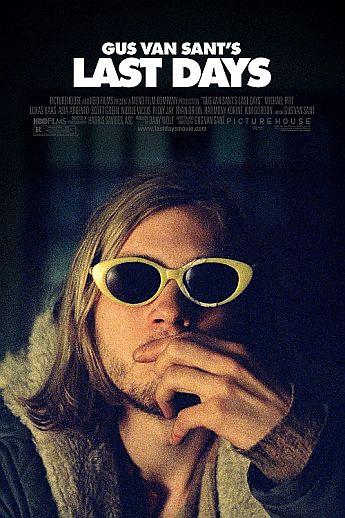
Icarus File No. 7: Last Days (dir by Gus Van Sant)


From 2002 to 2005, director Gus Van Sant offered audiences what he called his “Death Trilogy.”  2002’s Gerry followed two friends as they got lost in the desert and it featured what appeared to be a mercy killing.  2003’s Elephant was a mediation on the Columbine High School massacre and it featured several murders.  Finally, with 2005’s Last Days, Van Sant ended the trilogy with a film about a suicide.

Michael Pitt plays a world-famous musician who is suffering from depression.  Though the character is named Blake, no attempt is made to disguise the fact that he is meant to be Kurt Cobain.  When we first see Blake, he has just escaped from a rehab clinic and is walking through a forest.  There are no other human beings around and, perhaps not coincidentally, this is the only moment in the film in which Blake seems to be happy.  He even sings Home on the Range, shouting the lyrics like a little kid.

When he reaches his home, Blake’s demeanor changes.  He walks around the house with a rifle and pretends to shoot the four other people — Luke (Lukas Haas), Scott (Scott Patrick Green), Asia (Asia Argento), and Nicole (Nicole Vicius) — who are sleeping in his house.  Later, when those people wake up and attempt to speak to him, Blake is largely unresponsive.  When a detective comes to the door and asks if anyone has seen Blake, Blake hides.  When a record company exec calls to tell Blake that it’s time for him to tour again and that he’ll be letting down both his band and the label if he doesn’t, Blake hangs up on her.

Who are the people staying in Blake’s house?  Luke and Scott are both musicians but apparently neither one of them are in Blake’s band.  When Luke asks Blake to help him finish a song, Blake can only mutter a few vague words of encouragement.  Scott, meanwhile, appears to be more interested in Blake’s money.  Everyone in the film wants something from Blake but Blake wants to be alone.  In the one moment when Blake actually gets to work on his own music, his talent is obvious but so is his frustration.  With everyone demanding something from him, when will he ever have time to create?  With everyone telling him that it is now his job to be a rock star, how will he ever again feel the joy that came from performing just to perform?   

As one would expect from a Van Sant film, Last Days is often visually striking, especially in the early forest scenes.  In many ways, it feels like a combination of Gerry and Elephant.  Like those previous two films, it is fixated on death but stubbornly refuses to provide any answers to any larger, metaphysical  questions.  Like Elephant, it uses a jumbled timeline to tell its story and scenes are often repeated from a different perspective.  However, it eschews Elephant‘s use of an amateur cast and instead, Last Days follows Gerry’s lead of featuring familiar actors like Michael Pitt, Lukas Haas, and Asia Argento.  Unfortunately, though, Last Days doesn’t work as well as either one of the two previous entries in the Death Trilogy.

Last Days runs into the same problem that afflicts many films about pop cultural icons.  Kurt Cobain has become such a larger-than-life figure and his suicide is viewed as being such a momentous cultural moment that any attempt to portray it on film is going to feel inadequate.  No recreation can live up to the mythology.  The film itself feels as if it is somewhat intimidated by the task of doing justice to the near religious reverence that many have for Cobain.  As enigmatic as Gerry and Elephant were, one could still tell that Van Sant knew where he wanted to take those films.  He knew what he wanted to say and he had confidence that at least a few members of the audience would understand as well.  With Last Days, Van Sant himself seems to be a bit lost when it comes to whatever it may be that he’s trying to say about Cobain.  This leads to a rather embarrassing scene in which Blake’s ghost is seen literally climbing its way towards what I guess would be the immortality of being an icon.  One might wonder how Cobain himself would feel about such a sentimental coda to his suicide.

Last Days is a film that I respect, even if I don’t think it really works.  It does do a good job of capturing the ennui of depression and one cannot fault Van Sant for his ambition or his willingness to run the risk of alienating the audience by allowing the story to play out at its own slow and deliberate pace.  But ultimately, the film cannot compete with the mythology that has sprung up around its subject.

Previous Icarus Files:

  1. Cloud Atlas
  2. Maximum Overdrive
  3. Glass
  4. Captive State
  5. Mother!
  6. The Man Who Killed Don Quixote

4 Shots From 4 Daria Nicolodi Films: Deep Red, Shock, Tenebre, Opera


4 Shots From 4 Films is just what it says it is, 4 shots from 4 of our favorite films.  As opposed to the reviews and recaps that we usually post, 4 Shots From 4 Films is all about letting the visuals do the talking.

Today is Daria Nicolodi’s birthday!

Daria Nicolodi has been called the “unsung hero of Italian horror” and it’s an apt description.  Along with starring in several of the films that Dario Argento directed during the first half of his legendary career, Nicolodi also was responsible for the story of and co-wrote the script for Suspiria.  (Nicolodi has always said that Suspiria was based on a true story involving one of her ancestors.)  Argento’s decision to give the lead role in Suspiria to Jessica Harper, instead of Nicolodi, is often cited as the beginning of the end of their relationship.

(It’s also a shame — actually, a more accurate description would be to say that it’s a goddamn crime — that Nicolodi apparently will not have even as much as a cameo in the upcoming Suspiria remake.)

Nicolodi also appeared in films directed by Mario Bava, Luigi Cozzi, Michele Soavi, and several other distinguished Italian directors.  In Scarlet Diva, she was directed by her daughter, Asia Argento.

This edition for 4 Shots From 4 Films is dedicated to Daria Nicolodi!

4 Shots From 4 Films

Deep Red (1975, dir by Dario Argento)

Shock (1977, dir by Mario Bava)

Tenebre (1982, dir by Dario Argento)

Opera (1987, dir by Dario Argento)

20 Horror Icons Who Were Never Nominated For An Oscar


Though they’ve given some of the best, iconic, and award-worthy performances in horror history, the actors and actresses below have never been nominated for an Oscar.

Scarlet Diva

  1. Asia Argento

Perhaps because of charges of nepotism, people are quick to overlook just how good Asia Argento was in those films she made with Dario Argento.  Her work in Trauma especially deserves to be reevaluated.  Outside of her work with Dario, Asia gave great, self-directed performances in Scarlet Diva and The Heart is Deceitful Above All Things.

2. Jamie Lee Curtis

“Prom Night!  Everything is all right!”  Did you know that Jamie Lee Curtis received a Genie Nomination for her performance in Prom Night?  That could be because, in 1980, there weren’t that many movies being produced in Canada but still, Jamie was pretty good in that film.  And, of course, there’s a little film called Halloween

3. Peter Cushing

The beloved Hammer horror veteran did wonderful work as both Frankenstein and Van Helsing.  Personally, I love his odd cameo in Shock Waves.

4. Robert Englund

One, two, Freddy’s coming for you…

5. Lance Henriksen

One of the great character actors, Lance Henriksen gave one of the best vampire performances of all time in Kathryn Bigelow’s Near Dark.

David Hess, R.I.P.

6. David Hess

In just two films — Wes Craven’s Last House On The Left and Ruggero Deodato’s The House On The Edge of the Park — Hess defined screen evil.  If nothing else, he deserved an Oscar for composing The Road Leads To Nowhere.

boris-karloff-1939-the-man-they-could-not-hang

7. Boris Karloff

As our own Gary Loggins will tell you, it’s a crime that Boris Karloff never received an Oscar nomination.  He may be best remembered for Frankenstein but, for me, Karloff’s best performance was in Targets.

8. Camille Keaton

Yes, Camille Keaton did deserve a Best Actress nomination for I Spit On Your Grave.

Kinski and Butterfly

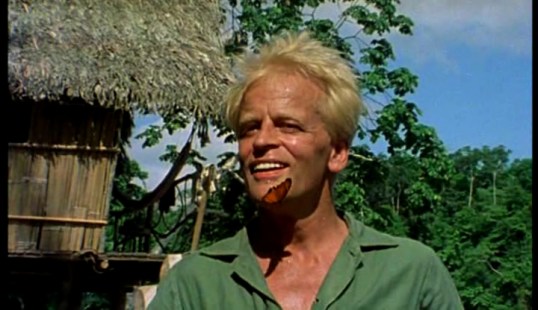
9. Klaus Kinski

The notorious and talented Klaus Kinski was never nominated for an Oscar.  Perhaps the Academy was scared of what he would do if he won.  But, that said, Kinski gave some of the best performances of all time, in films for everyone from Jess Franco to Werner Herzog.

Christopher Lee Is Dracula

10. Christopher Lee

That the amazing Christopher Lee was never nominated is a shock.  Though he will always be Dracula, Lee gave wonderful performances in films of all genres.  Lee always cited the little-seen Jinnah as being his best performance.


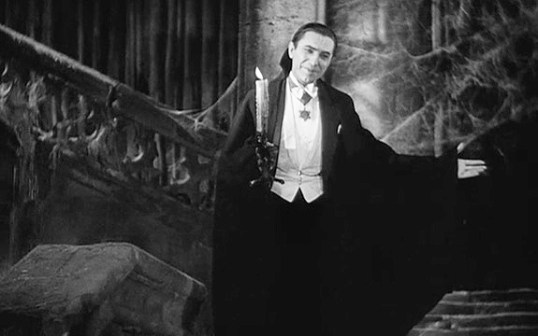
11. Bela Lugosi

The original Dracula, Lugosi never escaped typecasting.  Believe it or not, one of his finest performances was in one of the worst (if most enjoyable) films of all time, Ed Wood’s Bride of the Monster.

12. Catriona MacColl

This English actress gave three excellent performances in each chapter of Lucio Fulci’s Beyond Trilogy, with her performance in The House By The Cemetery elevating the entire film.

13. Daria Nicolodi

This Italian actress served as a muse to two of the best directors around, Dario Argento and Mario Bava.  Her award-worthy performances include Deep Red and, especially, Shock.

Near-Dark-Bill-Paxton

14. Bill Paxton

This great Texas actor gave award-worthy performances in everything from Near Dark to Aliens to Frailty.  RIP.

15. Donald Pleasence 

Dr. Loomis!  As good as he was in Halloween, Pleasence also gave excellent performances in Roman Polanski’s Cul-de-Sac and a nightmarish Australian film called Wake in Fright.

Roger Corman and Vincent Price

16. Vincent Price

The great Vincent Price never seems to get the respect that he deserves.  He may have overacted at times but nobody went overboard with as much style as Vincent Price.  His most award-worthy performance?  The Witchfinder General.

17. Giovanni Lombardo Radice

The greatest of all the Italian horror stars, Radice is still active, gracious, and beloved by his many fans.  Quentin Tarantino is a self-described fan so it’s time for Tarantino to write him a great role.

HenryPortrait

18. Michael Rooker

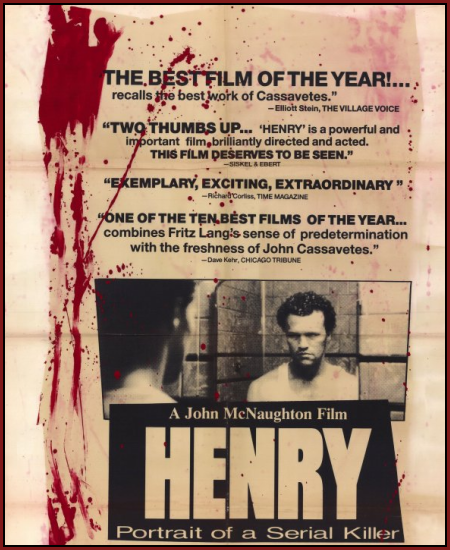
To many people, this great character actor will always be Henry.

19. Joe Spinell

This character actor will always be remembered for playing the lead role in the original Maniac but he also appeared in some of the most acclaimed films of all time.  Over the course of a relatively short career, Spinell appeared in everything from The Godfather to Taxi Driver to Rocky to Starcrash.  He was the American Klaus Kinski,

20. Barbara Steele

Barbara Steele has worked with everyone from Mario Bava to Jonathan Demme to David Cronenberg to Federico Fellini.  Among her many excellent performances, her work in Black Sunday and Caged Heat stands out as particularly memorable.

black-sunday

Cleaning Out The DVR Yet Again #25: Marie Antoinette (dir by Sofia Coppola)


(Lisa recently discovered that she only has about 8 hours of space left on her DVR!  It turns out that she’s been recording movies from July and she just hasn’t gotten around to watching and reviewing them yet.  So, once again, Lisa is cleaning out her DVR!  She is going to try to watch and review 52 movies by the end of Tuesday, December 6th!  Will she make it?  Keep checking the site to find out!)

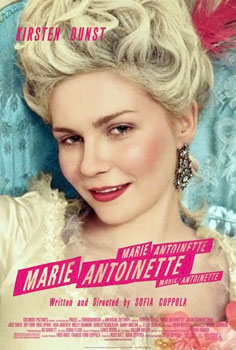
marie-antoinette_poster

On November 12th, I recorded 2016’s Marie Antoinette off of Starz.

Before I review Marie Antoinette, I think it’s important that you know that I am an unapologetic Sofia Coppola fan.  I love every film that she’s made and I look forward to her upcoming remake of The Beguiled.  At the same time, I can also understand why some people feel differently.  Sofia Coppola’s films are not for everyone.  For one thing, almost all of her films deal with rich people.  The existential angst of the wealthy and/or famous is not a topic that’s going to fascinate everyone.  When you watch a Sofia Coppola film, you never forget that you’re watching a film that’s been directed by someone who largely grew up in the spotlight and who knows what it’s like to have money.  An ennui born out of having everything and yet still feeling empty permeates almost every scene that Sofia Coppola has ever directed.  (If you have to ask what ennui is, you’ve never experienced it.)  Many viewers look at Sofia Coppola’s filmography and they ask themselves, “Why should we care about all these materialistic people?”

However, while Sofia Coppola may not know what’s it’s like to be poor (or even middle class for that matter), she does understand what it’s like to feel lonely.  Her filmography could just as easily be called “the cinema of isolation.”  It doesn’t matter how much money you may have or how famous you may or may not be, loneliness is a universal condition.  A typical Sofia Coppola protagonist is someone who has everything and yet still cannot connect with the rest of the world.  More often that not, they turn to excessive consumption in order to fill the void in their life.  To me, the ultimate Sofia Coppola image is not, regardless of how much I may love them, Bill Murray and Scarlett Johansson in Lost in Translation.  Instead, it’s Stephen Dorff (playing a far less likable version of Bill Murray’s Translation character) standing alone in the desert at the end of Somewhere.

Marie Antoinette, which was Sofia’s follow-up to Lost in Translation, is technically a historical biopic, though it makes little effort to be historical or accurately biographical.  Kirsten Dunst plays Marie Antoinette, the final queen of France before the French Revolution.  It was Marie Antoinette was accused of dismissing starving French peasants by announcing, “Let them eat cake!”  (For the record, it’s probable that Marie Antoinette never said that.  It’s certainly never heard in Coppola’s film.)

Marie Antoinette opens with the title character arriving in France at the age of 14.  She’s an Austrian princess who has been sent to marry the future king of France, Louis XVI (Jason Schwartzman).  From the minute we meet her, Marie Antoinette is portrayed as being a pawn.  Her mother arranges the marriage as a way to seal an alliance with France.  The king of France (played by Rip Torn) expects Marie Antoinette to get produce an heir to the throne as quickly as possible.  Meanwhile, her new husband is an infantile and immature fool who doesn’t even know how to make love.  Marie Antoinette finds herself isolated in a strange country, expected to be all things to all people.

And so, Marie Antoinette does what I always do whenever I’m feeling unsure of myself.  She hangs out with her girlfriends.  She throws expensive parties.  She gambles.  She flirts.  She shops.  She has fun, regardless of whether it’s considered to be proper royal behavior or not.  Occasionally, she is warned that she is losing popularity with the French people but she’s not concerned.  Why should she be?  She doesn’t know anything about the French people.  All she knows about is the life that she was born into.  She didn’t choose to be born in to wealth and power but, since she was, why shouldn’t she have a good time?

The French Revolution doesn’t occur until near the end of Marie Antoinette and when it does happen, it happens quickly.  And yet, the shadow of the revolution hangs over the entire film.  We watch the knowledge that neither Marie Antoinette nor her husband possess: eventually, they are both going to be executed.  And knowing that, it’s hard not to cheer Marie Antionette on.  She may be destined for a tragic end but at least she’s having a little fun before destiny catches up with her.

Kirsten Dunst makes no attempt to come across as being French or Austrian but then again, neither does anyone else in the film.  After all, this is a movie where Rip Torn plays the King of France without once trying to disguise his famous Texas accent.  Coppola isn’t necessarily going for historical accuracy.  Instead, in this film, Marie Antoinette serves as a stand-in for countless modern celebrities.  In the end, Marie Antoinette is portrayed as not being much different from Paris Hilton or Kardashian.  Meanwhile, the people who eventually show up outside the palace, carrying torches and shouting threats, are the same as the viewers who loudly condemn reality television while obsessively watching every episode of it.

Coppola’s stylized direction results in a film that is both thought-provoking and gorgeous to look at and which is also features several deliberate anachronisms.  (In many ways, Marie Antoinette blatantly ridicules the very idea that history can be accurately recreated.)  Perhaps because it was following up the beloved Lost In Translation, Marie Antoinette has never got as much praise as it deserves but I think it’s a film that is totally deserving of a reevaluation.

(Sidenote: Fans of Italian horror should keep an eye out for Asia Argento, who has a small but very important supporting role.)

The TSL’s Daily Horror Grindhouse: Demons 2 (dir by Lamberto Bava)


demons-2-2

1985’s Demons was such a success that it only took one year for it to be followed by a sequel.  Like the first film, Demons 2 was directed by Lamberto Bava and produced by Dario Argento.  (Once again, Argento is also credited with co-writing the script.)  Bobby Rhodes appears in both films, though he plays two different characters.  And again, it’s the same basic plot: watching a movie leads to an outbreak of a plague that transforms a group of people into a pack of murderous demons.

And yet, despite all the similarities, Demons 2 is a hundred times better than the first Demons.  And I say that as someone who really likes the first film.  There simply is no comparison between the two.  If Demons was a nonstop thrill ride, Demons 2 is a filmed nightmare.

Demons 2 takes place in a high-rise apartment building.  In the style of any good disaster movie, the first part of the film introduces us to the tenants and gives us just enough information so that we’ll be able to remember who is who.

For instance, in one apartment, we have George (David Knight) and his pregnant wife, Hannah (Nancy Brilli).  In another, we have a woman (Anita Bartolucci) who obsessively dotes on her dog.  Down the hall, ten year-old Ingrid Haller (Asia Argento, making her film debut) watches TV while her parents eat dinner.  In the basement, a gym instructor named Hank (Bobby Rhodes) shouts encouragement at a group of body builders.

And finally, in another apartment, a teenage girl named Sally (Coralina Cataldi Tassoni) sits in her bedroom and cries.  It’s her birthday but her parents are out for the night.  Meanwhile, her friends are gathered in the living room and wondering if Sally is ever going to come out of her room.  Sally is upset because her boyfriend didn’t come to the party.  Poor Sally.

In her sadness, Sally has turned on her TV but she’s barely watching.  And what’s on TV that night?  A horror movie, one that tells the same story as the one we saw in the first Demons and the one that we will eventually see again in Demons 2 (and also in Michele Soavi’s The Church).  A group of teenagers come across a dead demon.  When one of them accidentally gets splashed by the demon’s blood, he is transformed into a demon himself…

(If this sound familiar, that’s perhaps because the same idea was later used in 28 Days Later, a film that owns a not insignificant debt to both of the Demons films and Umberto Lenzi’s Nightmare City.)

Suddenly, the movie demon stops and seems to be staring straight at the unseen camera.  He starts to approach it, until his twisted face fills the entire TV screen…

Suddenly, the demon bursts out of the TV and infects Sally.  Sally finally leaves her bedroom and proceeds to attack everyone at her party, spreading the infection.  Meanwhile, acidic demon bile eats through the floor and drips into the apartments below, infecting everyone that it touches…

demons-2

And I do mean everyone!  If there’s anything that truly separates the Demons films from so many other horror films, it’s that literally anyone can be infected.  It doesn’t matter if you’re likable or if you’re funny or if you’re played by a familiar actor.  If you get infected, you’re going to turn into a demon.  Usually, when you watch a horror film, you can sure that children and pregnant women will automatically be safe.  Demons 2 wastes little time in letting you know that this isn’t the case as far as this film is concerned.

Demons was pretty much distinguished by nonstop action.  In Demons 2, director Lamberto Bava devoted more time to atmosphere and characterization.  As a result, Demons 2 features characters that we actually care about and  some truly haunting images, everything from Sally’s friends moving, in slow motion, down a dark hallway to Asia Argento watching as her parents are literally ripped into pieces in front of her.  If Demons was defined by its relentless heavy metal soundtrack, Demons 2 is defined by the ambient but haunting new wave music that plays through the majority of the film.  Demons was an action-horror film.  Demons 2 is a nightmare from which you cannot awake.

If you have the opportunity, I would say to watch both of the Demons films.  But if you have to choose only one to watch, go with Demons 2.

Horror Scenes I Love: Asia Argento Gets Hit By The Stendhal Syndrome


Since I just shared 4 shots from 4 Dario Argento films, I figured why not take this week’s horror scene that I love from an Argento film as well?

Argento’s 1995 film The Stendhal Syndrome has always gotten mixed review but I think it’s actually one of the better of his post-Tenebrae films.  In the scene below, police detective Anna Manni (Asia Argento) wanders through Florence and finds herself overwhelmed by the sheer beauty of the place.  Eventually, while looking at Bruegel’s Landscape With The Fall of Icarus, Anna is so overwhelmed that she faints and has a fantasy where she swims through the ocean and kisses a fish.  Of course, as this happens, she is watched by serial killer Alfredo Grossi (Thomas Kretschmann).

I have to admit that one reason why I like this scene (and this film) is because I had a similar experience when, the summer after graduating high school, I visited Florence.  No, I didn’t faint but I definitely found myself wandering around in a bit of a daze.  Standing in Florence is like finding yourself in the middle of living painting.  It’s an amazing experience and one that I recommend to everyone.

http://www.youtube.com/watch?v=0gMi_wQH_u0

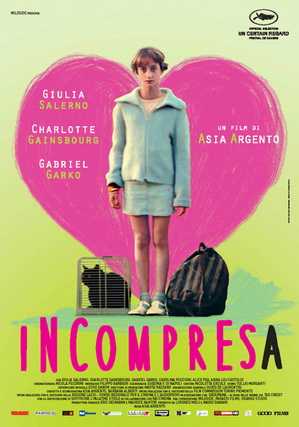
Film Review: Misunderstood (dir by Asia Argento)


Misunderstood_(2014_film)

I’ve always loved Asia Argento because, as both an actress and a public personality, she is tough, hard, and sexy all at the same time.  She’s not one of those actresses who feels the need to hide who she really is.  Watching her on-screen, you realize that she doesn’t give a fuck whether you like her or not.  Instead, she’s going to do whatever it is that she wants to do and, if you’re lucky, you might get to watch.  Some hold her responsible for the erratic output of Dario Argento’s post-Opera career but those people far too often fail to take into account that Asia, with her naturally off-center presence, has often been the most interesting thing about Dario’s later films. (Say what you will about Trauma, The Stendhal Syndrome, and Mother of Tears, they’re all better with Asia than without her.)  Asia Argento is one of those talented actresses who could never have played Ophelia because no one would ever believe that she would so easily drown.  Instead, she’d simply pull herself out of the water and then go kick Hamlet’s ass for being so indecisive.

If that paragraph sounds familiar, it’s because it’s the exact same paragraph that I used to start my review of Asia Argento’s directorial debut, Scarlet Diva.  I have no shame about recycling that paragraph for my review of Asia Argento’s third directorial effort, Misunderstood, largely because Misunderstood is, in many ways, a companion piece to Scarlet Diva.  Whereas Scarlet Diva was based on Asia Argento’s life as an international film star, Misunderstood is based on her famously dysfunctional childhood.  And, much as your enjoyment of Scarlet Diva was dependent upon how much you already knew about Asia’s life, how you feel about Misunderstood depends on whether you know that nine year-old Aria (Giulia Salerno) will eventually grow up to be Asia Argento.

Aria is the daughter of celebrities.  Her father (Gabriel Garko) is a famous actor who appears to be incapable of maintaining any sort of emotional attachment with his family.  Her mother (Charlotte Gainsbourg, made up to look like Asia’s real-life mother, the actress Daria Nicolodi) is an unstable and emotional musician who bitterly feels that she’s sacrificed her career for both her husband and her children.  She spends her time dramatically playing her piano and angrily arguing with the neighbors.

When we first meet Garko and Gainsbourg, they’re shouting at each other while eating dinner, a scene that should be painfully familiar to far too many of us.  It’s not surprising when Gainsbourg and Garko tell their three daughters that they are getting a divorce.  One of the daughters — who is obsessed with the color pink — goes to live with Garko.  Another daughter stays with Gainsbourg.  As for Aria, she finds herself constantly shuttling back and forth between her parents.  The film’s dominant image becomes one of Aria walking down a street, often between homes, while carrying a black cat with her.  (Her cat, by the way, is named Dac.  My black cat is named Doc.  That’s just one of the many things that made me relate to poor Aria.)  Aria is desperate to be loved but she’s almost too desperate.  Even her best friend eventually says that Aria is too clingy.

Misunderstood has been getting mixed reviews here in the States but anyone who has ever had to watch her parents split up will be able to relate to Misunderstood.  As I said, it helps to know that Aria will eventually grow up to be Asia Argento because, otherwise, parts of the film would be almost unbearably sad.  For those unfamiliar with Argento’s previous directorial efforts (Scarlet Diva and The Heart Is Deceitful Above All Things)it may take a while to get used to her exaggerated directorial style but, ultimately, it must be remembered that the film is not meant to be a literal representation of reality.  Instead, we are seeing things through the prism of the adult Asia’s memories of her dysfunctional childhood.  Asia Argento also proves herself to be a great director of actors and Charlotte Gainsbourg gives an amazing performance as an all-too human monster.

Reading some of the reviews of this film, all I can say is that many critics have misunderstood Misunderstood.  Is Aria always likable?  Of course not.  Does the film occasionally attempt to alienate the audience?  Yes, it does.  However, that’s always been the appeal of Asia Argento.  Largely as a result of the childhood that inspired Misunderstood, she never feels the need to pander as a filmmaker.  For those willing to give the film a chance, Misunderstood is an insightful look at what it’s like to grow up unwanted.  Asia is proving herself to be just as memorable a director as her famous father at his considerable best.