With today’s song of the day, we continue our Bonnie and Clyde theme!
This song is from 1968 and was inspired by Arthur Penn’s classic crime film, Bonnie and Clyde. Oddly enough, this song insists that Bonnie and Clyde were from Savannah, Georgia when everyone knows that they were from my part of the world, North Texas. Then again, “Savannah” does sound a bit better when set to music than “West Dallas.”
In this scene, from Arthur Penn’s 1967 film Bonnie and Clyde, Bonnie Parker (played by Faye Dunaway) writes a poem and tries to craft the future image of Bonnie and Clyde. Though it has none of the violence that made Bonnie and Clyde such a controversial film in 1967, this is still an important scene. (Actually, it’s more than one scene.) Indeed, this scene is a turning point for the entire film, the moment that Bonnie and Clyde goes from being an occasionally comedic attack on the establishment to a fatalistic crime noir. This is where Bonnie shows that, unlike Clyde, she knows that death is inescapable but she also knows that she and Clyde are destined to be legends.
(Of course, Dunaway and Warren Beatty — two performers who once epitomized an era but who are only seen occasionally nowadays — are already legends.)
4 (or more) Shots From 4 (or more) Films is just what it says it is, 4 (or more) shots from 4 (or more) of our favorite films. As opposed to the reviews and recaps that we usually post, 4 (or more) Shots From 4 (or more) Films lets the visuals do the talking.
103 years ago today, Arthur Penn was born in Philadelphia. In the 50s, Penn was one of the new crop of directors who made a name for themselves directing for television. Like most of his colleagues, he transitioned into film. Unlike many of his colleagues, he remained a fiercely iconoclastic director, one who was willing to challenge the conventions of Hollywood. While his early films often struggled at the box office, he was respected by actors and hailed as a visionary by the directors of the French New Wave.
In 1967, he and Warren Beatty changed the course of American cinema with Bonnie and Clyde. Penn followed up that classic film with movies like Alice’s Restaurant, Little Big Man, Night Moves, and a handful of others. When he died in 2010, Penn was hailed as one of the most influential (if sometimes underrated) directors of all time.
Today, in honor of the anniversary of his birth, the Shattered Lens offers up….
4 Shots From 4 Arthur Penn Films
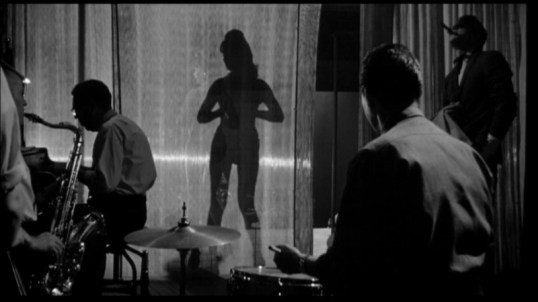
The Chase (1966, dir by Arthur Penn, DP: Joseph LaShelle)
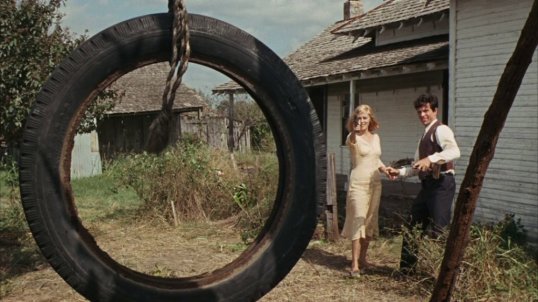
Bonnie and Clyde (1967, dir by Arthur Penn, DP: Burnett Guffey)
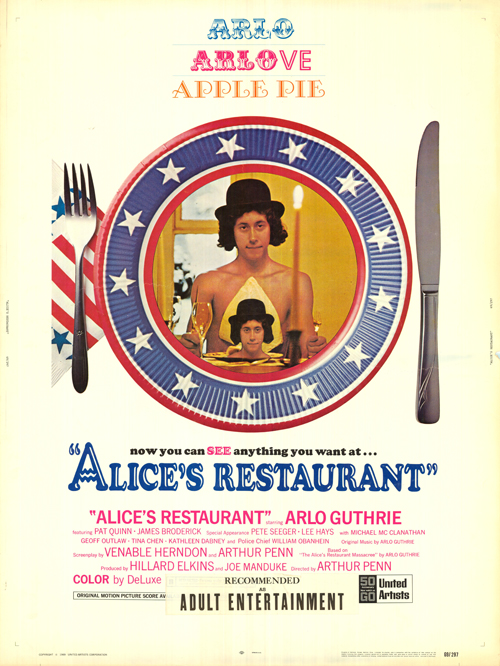
Alice’s Restaurant (1969, dir by Arthur Penn, DP: Michael Nebbia)
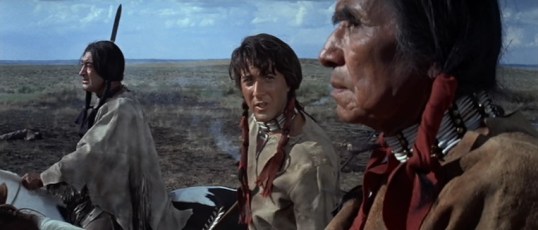
Little Big Man (1970, dir by Arthur Penn, DP: Harry Stradling Jr)
4 Or More Shots From 4 Or More Films is just what it says it is, 4 shots from 4 of our favorite films. As opposed to the reviews and recaps that we usually post, 4 Shots From 4 Films lets the visuals do the talking!
Today, let’s celebrate the year 1970! It’s time for….
4 Shots From 4 1970 Films
MASH (1970, dir by Robert Altman, DP: Harold E. Stine)
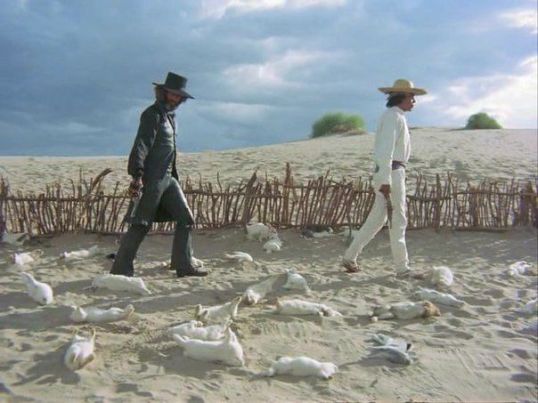
El Topo (1970, dir by Alejandro Jodorowsky, DP: Rafael Corkidi)
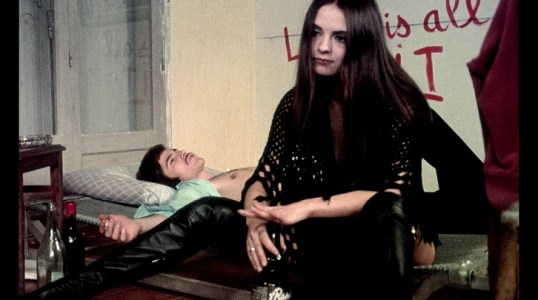
Nightmares Come At Night (1970, dir by Jess Franco)
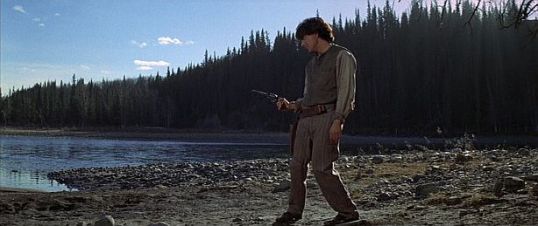
Little Big Man (1970, dir by Arthur Penn, DP: Harry Stradling Jr)
4 Shots From 4 Films is just what it says it is, 4 shots from 4 of our favorite films. As opposed to the reviews and recaps that we usually post, 4 Shots From 4 Films lets the visuals do the talking!
Today, we take a look at a classic cinematic year. It’s time for….
4 Shots From 4 1967 Films
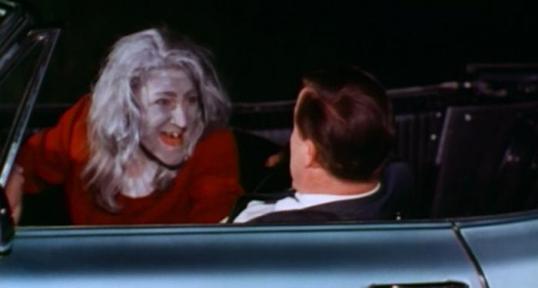
Something Weird (1967, dir by Herschell Gordon Lewis, DP: Andy Romanoff)
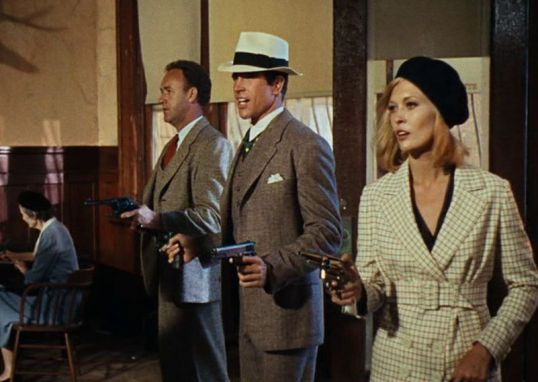
Bonnie and Clyde (1967, dir by Arthur Penn, DP: Burnett Guffey)
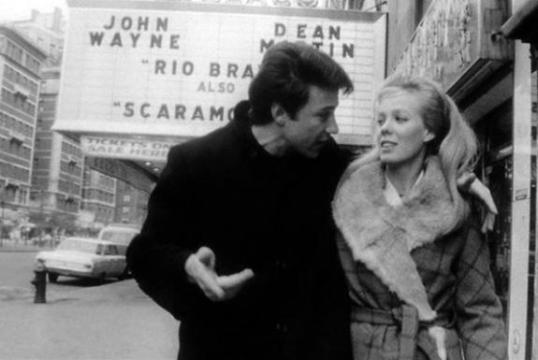
Who’s That Knocking On My Door (1967, dir by Martin Scorsese, DP: Michael Wadley and Richard Coll)
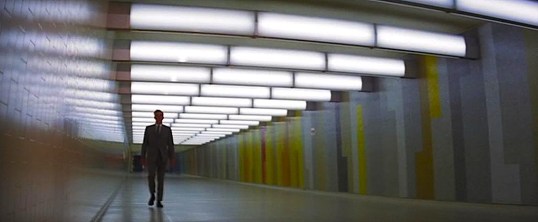
Point Blank (1967, dir by John Boorman, DP: Philip H. Lathrop)
4 (or more) Shots From 4 (or more) Films is just what it says it is, 4 (or more) shots from 4 (or more) of our favorite films. As opposed to the reviews and recaps that we usually post, 4 (or more) Shots From 4 (or more) Films lets the visuals do the talking.
101 years ago today, Arthur Penn was born in Philadelphia. In the 50s, Penn was one of the new crop of directors who made a name for themselves directing for television. Like most of his colleagues, he transitioned into film. Unlike many of his colleagues, he remained a fiercely iconoclastic director, one who was willing to challenge the conventions of Hollywood. While his early films often struggled at the box office, he was respected by actors and hailed as a visionary by the directors of the French New Wave.
In 1967, he and Warren Beatty changed the course of American cinema with Bonnie and Clyde. Penn followed up that classic film with movies like Alice’s Restaurant, Little Big Man, Night Moves, and a handful of others. When he died in 2010, Penn was hailed as one of the most influential (if sometimes underrated) directors of all time.
Today, in honor of the anniversary of his birth, the Shattered Lens offers up….
4 Shots From 4 Arthur Penn Films
The Chase (1966, dir by Arthur Penn, DP: Joseph LaShelle)
Bonnie and Clyde (1967, dir by Arthur Penn, DP: Burnett Guffey)
Alice’s Restaurant (1969, dir by Arthur Penn, DP: Michael Nebbia)
Little Big Man (1970, dir by Arthur Penn, DP: Harry Stradling Jr)
4 (or more) Shots From 4 (or more) Films is just what it says it is, 4 (or more) shots from 4 (or more) of our favorite films. As opposed to the reviews and recaps that we usually post, 4 (or more) Shots From 4 (or more) Films lets the visuals do the talking.
99 years ago today, Arthur Penn was born in Philadelphia. In the 50s, Penn was one of the new crop of directors who made a name for themselves directing for television. Like most of his colleagues, he transitioned into film. Unlike many of his colleagues, he remained a fiercely iconoclastic director, one who was willing to challenge the conventions of Hollywood. While his early films often struggled at the box office, he was respected by actors and hailed as a visionary by the directors of the French New Wave.
In 1967, he and Warren Beatty changed the course of American cinema with Bonnie and Clyde. Penn followed up that classic film with movies like Alice’s Restaurant, Little Big Man, Night Moves, and a handful of others. When he died in 2010, Penn was hailed as one of the most influential (if sometimes underrated) directors of all time.
Today, in honor of the anniversary of his birth, the Shattered Lens offers up….
4 Shots From 4 Arthur Penn Films
Mickey One (1965, dir by Arthur Penn, DP: Ghislain Cloquet)
Bonnie and Clyde (1967, dir by Arthur Penn, DP: Burnett Guffey)
Little Big Man (1970, dir by Arthur Penn, DP: Harry Stradling Jr)
Night Moves (1975, dir by Arthur Penn, DP: Bruce Surtees)
The Chase, a small-town Texas melodrama from 1966, opens with Robert Redford escaping from prison.
Redford is playing Bubber Reeves. Bubber, we’re told, has spent the last few years in a tough Texas prison, convicted of a murder that he didn’t commit. Now, he’s on the run and he’s probably returning to his hometown. His wife, Anna (Jane Fonda), still lives there, though Anna is now having an affair with Jake Rogers (James Fox). Jake is the son of the most powerful man in town, Val Rogers (E.G. Marshall). Jake also used to be Bubber’s best friend but now, he’s wracked with guilt about his affair with Anna.
Meanwhile, the townspeople are all worried that Bubber is going to seek revenge on the people who were responsible for him going to prison. Some of them know that he was actually innocent and some of them think that he’s actually the killer that he’s been made out to be but what they all have in common is that they’re worried about what Bubber’s gong to do when he shows up. Maybe they should have thought about the possibility of him getting mad and vengeful before they gave him a nickname like Bubber.
Anyway, Sheriff Calder (Marlon Brando) is convinced that Bubber is innocent but the townspeople still want him to allow them to gun Bubber down as soon as they see him. Sheriff Calder, however, is determined to keep the peace and make sure that the law prevails. He’s a man of unimpeachable integrity, working in a town full of people who are too cowardly to concern themselves with doing the right thing.
As everyone waits for Bubber to arrive. tempers come to the surface, a good deal of alcohol is consumed, and secrets are revealed. It all ends in tragedy, of course. One of the final scenes clumsily recreates the assassination of Lee Harvey Oswald. The Chase wouldn’t be an achingly self-serious film from 1966 if it didn’t.
There’s a few obvious problems with The Chase, the main one being that Robert Redford, who was 30 years-old when The Chase was released, looks surprisingly good for someone who has spent the last few years locked away in a tough Texas prison. Redford manage to escape from prison and run through a swamp without getting one single hair out of place. There’s nothing particularly dangerous about Redford in this film, which is surprising when you consider that The Chase was made just three years before Redford’s convincing turn as a laconic (if charming) killer in Butch Cassidy and the Sundance Kid. For The Chase to work, Bubber Reeves would have to be a force of nature but, whenever Redford’s on screen, you just find yourself wondering how someone who looks that good got stuck with a nickname like Bubber. The townspeople talk about Bubber like he’s a wild outlaw but Redford is just too laid back to pull it off. He comes across less like a wanted criminal and more like a California surfer who has somehow found himself in rural Texas.
As for the rest of the cast — well, there’s a lot of them. It’s a big ensemble film and good luck to anyone trying to keep track of who is related to who. Surprisingly enough, Marlon Brando is very convincing as a Texas sheriff, never allowing Sheriff Calder to turn into a stereotype. Less surprising is the fact that Robert Duvall, playing an frustrated husband, is also convincing in his role. Brando and Duvall, of course, would both go on to co-star in The Godfather. (Supposedly, when shooting of The Godfather began, Duvall was the only member of the cast with no fear of joking around with Brando, largely because they had bonded while working on The Chase.) Unfortunately, as good as Brando and Duvall are, they’re both let down in the hair department. Brando gets stuck with a hairpiece while Duvall is forced to go with a comb-over.
Some of the other performers are good and some of them are bad but none of them are particularly convincing as the residents of a small Texas town. James Fox, for instance, is very British. Jane Fonda and Angie Dickinson (cast as Calder’s wife) seem to be bored. E.G. Marshall is believably rich but never believably Southern. The other performers all tend to overact, especially once the people in town start drinking, shooting, hitting, and, in some cases, dancing. Somehow, Shelley Winters is not in the film, even though it seems like she should be.
The Chase was directed by Arthur Penn and written by Lillian Hellman. (The screenplay was based on a play and novel by Horton Foote.) Penn would follow up The Chase with Bonnie and Clyde and Alice’s Restaurant, two films that also dealt, for more successfully, with The Chase‘s themes of violence, community hypocrisy, and outlaw romanticism. Jane Fonda would go on to play Lillian Hellman in the 1977 film, Julia. For Julia, Fonda was nominated for an Oscar. For The Chase, she was not.
The Chase is one of those films that wants to say something important but doesn’t seem to be quite sure what. It’s a long and dramatic movie that doesn’t really add up to much. In the end, I think the main lesson to be learned here is not to allow your children to get a nickname like Bubber. There’s just no escape from a bad nickname.
Katie (Mary Steenburgen) is a struggling actress with an out-of-work husband (William Russ) and a deadbeat brother (Mark Malone). Desperately in need of money, Kate goes to an open audition and is immediately hired by Mr. Murray (Roddy McDowall), who explains that Katie will have to meet with one of the film’s investors, the wheelchair-bound Dr. Lewis (Jan Rubes). In the middle of a raging snowstorm, they go to Dr. Lewis’s home and, once they’ve arrived, Katie discovers that she is meant to replace an actress who looked exactly like her but who Dr. Lewis claims had a nervous breakdown. She’s told that she must stay the night so she can meet the director in the morning and when she tries to call her husband to let him know where she is, the line is dead. (For those born after 1996, the line being dead was the 80s equivalent of not being able to get a signal.) Dr. Lewis says it must be due to the storm but he promises to have Mr. Murray take her into town in the morning. Of course, the next morning, the car doesn’t start and it becomes clear that Dr. Lewis is not planning on ever letting Katie leave his home.
Dead of Winter is a throw-back to the type of gothic, damsel-in-distress films that actresses like Nina Foch, Ingrid Bergman, and Linda Darnell used to make back in the 1940s and 50s. If you can accept that anyone could ever be as naive as Katie, it’s not that bad of a thriller. Director Arthur Penn fills his movie with homages to Hitchcock and the scene where a drugged Katie wakes up to discover that she’s missing a finger is an effectively nasty shock. By the end of the movie, Mary Steenburgen has played three different characters and she does a good job as all three of them. Jan Rubes makes Dr. Lewis’s too obviously evil but Roddy McDowall is great as the polite but psychotic Mr. Murray. When Mr. Murray sees that Katie has tried to escape by climbing out a window, he yells, “Oh dear!” and only Roddy McDowall could have pulled that off.
Dead of Winter was Arthur Penn’s second-to-last theatrical film. After making films like Bonnie and Clyde, Little Big Man, and Alice’s Restaurant, Penn’s career went into decline as the American film industry became increasingly centered around blockbusters and Penn’s cerebral approach fell out of favor. After Dead of Winter, Penn would direct Penn & Teller Get Killed before returning to his roots as a television director. Penn ended his long and distinguished career as an executive producer on Law & Order.
There’s another Thanksgiving tradition besides gorging on turkey’n’trimmings and watching football (which usually ends up with me crashed on the couch!), and that’s listening to Arlo Guthrie’s 1967 story/song “The Alice’s Restaurant Massacree”. Here in chilly Southern New England, I catch the annual broadcast on 94-HJY (Providence’s Home of Rock’N’Roll) at noontime, just before the yearly chow down. Arlo’s one of our own, though born in Brooklyn a long-time Massachusetts resident, and still frequently plays concerts around the state (catch him if he’s in your neck of the woods, he always puts on a good show).
Director Arthur Penn stretched Arlo’s 18-plus minute autobiographical tune into a 111 minute film back in 1969. ALICE’S RESTAURANT is not a great film, but it is a good one, with Penn and coscenarist Venable Herndon hitting all the touchstones of the counterculture movement: free love (read: sex), drug use, the Vietnam War, long-haired…






 Through the Shattered Lens