Film Review: Francis In The Navy (dir by Arthur Lubin)


In 1955’s Francis In The Navy, Donald O’Connor plays Lt. Peter Sterling, an officer in the U.S. Army who gets word that his best friend, a talking mule named Francis (voice of Chill Wills), is about to be auctioned off by the U.S. Navy.  Sterling rushes to the Naval base but, along the way, his wallet gets stolen, he gets mistaken for an AWOL soldier, and Francis gets sold to a laboratory.

Hold on, I’m re-reading that last paragraph to make sure that I didn’t hallucinating typing all that…

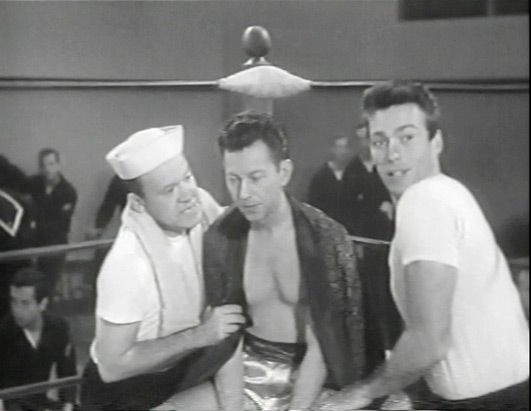
Peter argues that he’s not the AWOL soldier, he’s just someone who looks just like him.  Peter gets tossed into the psychiatric ward.  Francis advices Peter …. yes, the mule that can talk gives Peter advice on how to get out of the mental ward …. to pretend to be the AWOL sailor.  Unfortunately, the sailor is a champion boxer so that means Peter will have to enter the ring.  Peter, needless to say, is not a boxer.  Peter also falls for a nurse (Martha Hyer) but — uh oh! — she’s the sister of the AWOL soldier.  Well, that’s kind of awkward.  I don’t have a brother but if I did, I doubt I would ever want to make out with anyone who looked like him.  Like seriously….

Hold on, I’m re-reading that last paragraph to see if there’s anything that I need to add.

Like, seriously, what the Hell?  This movie has a talking mule, an oddly incestuous subtext, and Donald O’Connor playing two roles.  Doing some research, I discovered that this was the sixth film to deal with the adventures of Peter Sterling and Francis.  This was the last one of them to star Donald O’Connor, who apparently resented getting upstaged by a mule.  There was one more Francis movie after this one and it starred Mickey Rooney.  It was called Francis In The Haunted House so who knows?  Maybe I’ll review it for our October horrorthon.  (Don’t count on it.)

As weird as this film is, it’s kind of likable.  Donald O’Connor is a favorite of mine and this one featured O’Connor in two roles, as both the hapless Peter and also the sailor who goes AWOL and repeatedly refuses to help Peter out.  And, while I’m not really sure why he’s talking, Francis was actually cute.  I enjoyed the boxing scene where he attempted to help Peter out.  Unfortunately, there’s only so much a mule can do.

As for why I’m reviewing this movie, it’s because Clint Eastwood is in the cast.  He plays Jonesy, a friend of the AWOL sailor who becomes a friend of Peter’s.  Now, to be clear, Clint doesn’t do a lot in the movie.  He works Peter’s corner during the boxing match.  Otherwise, he spends most of the time in the background and he has a few scenes where he hangs out with the rest of the AWOL sailor’s friends.  That said, Clint does make an impression.  Even in this very early role, he had an impressive screen presence.  He’s the tallest guy there and he’s got the best hair.  Once you spot him in a scene, it’s hard to look away.

Francis In The Navy is historically significant because it’s the first film for which Clint Eastwood received on-screen credit.  (Eastwood previously appeared in films like Revenge of the Creature and Tarantula but his name wasn’t included in the credits.)  It’s an odd film, one that’s likable if you’re in an undemanding mood and you enjoy goof — extremely goofy — humor.  It would be forgotten if not for Eastwood’s appearance.  Seen today, this film, like Eastwood’s other early appearances, reminds us that everyone started somewhere.
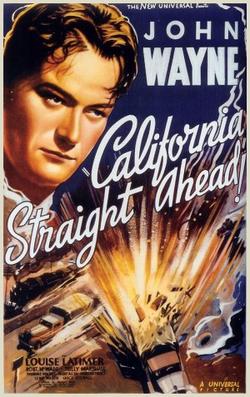
California Straight Ahead! (1937, directed by Arthur Lubin)


Biff Smith (John Wayne), fired from his job as a school bus driver, becomes a partner in a trucking company.  In order to show-up the railroads that are determined to put any potential competitors out of business, Biff and his fleet race a train to the Pacific Coast, where a boat needs to be unloaded before a labor strike begins.  Making this personal for Biff is that he’s in love with Mary Porter (Louise Latimer), the sister of Biff’s late business partner.  Embittered by her brother’s death in a trucking accident, Mary is now working for the head of the railroad, James Gifford (Theodore van Eltz).  Biff not only wants to prove that his small trucking firm can compete with the big boys but also wants to show Mary that her new boss is nothing but a smooth-talking weasel.

This film is from John Wayne’s B-movie star period, before John Ford cast him in Stagecoach and made him one of the biggest stars in the world.  California Straight Ahead! features Wayne in a contemporary role, though the movie still has a western sensibility.  There’s not much difference between a wagon train and Wayne’s fleet of trucks and, as in so many westerns, the greedy railroad baron is the villain.  This is one of Wayne’s better B-movie performances.  He was clearly comfortable in front of the camera by the time he made this movie and was no longer as stiff as he was in his earlier films.  California Straight Ahead! is a crowd-pleasing film that finds Wayne standing up for small businesses and their workers.  Though this may just be a 61-minute B flick, California Straight Ahead! reveals the movie star that Wayne would soon become.

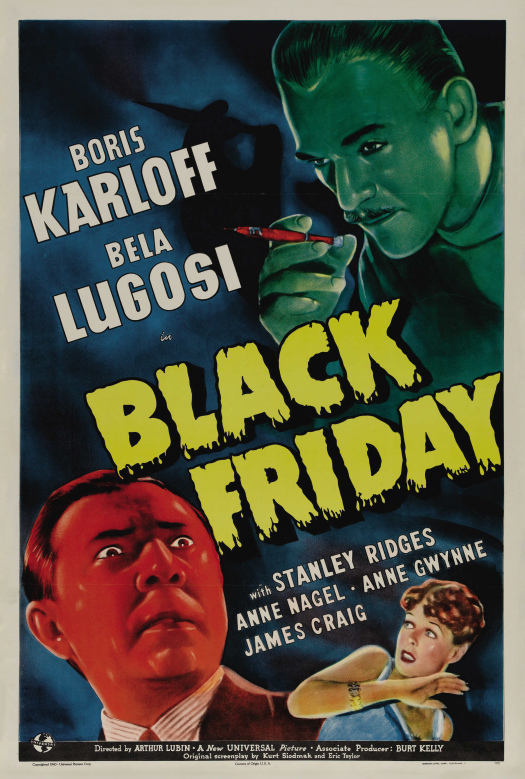
Horror Film Review: Black Friday (dir by Arthur Lubin)


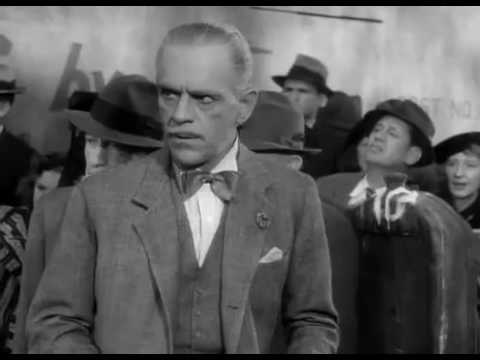
The 1940 film, Black Friday, opens with Dr. Ernest Sovac (Boris Karloff), a once-respected scientist, being led out of his cell on Death Row and being taken to the electric chair.  As he enters the death chamber, he hands one of the gathered reporters his journal.  Dr. Sovac says that he wants the reporter to know the true story of how he came to be on Death Row.  While the police strap Dr. Sovac into the electric chair, the reporter reads the journal.

It’s flashback time!

Months earlier, Dr. Sovac’s best friend, an befuddled English professor named George Kingsley (Stanley Ridges), is nearly fatally injured when he has the misfortune to get caught in the middle of an attempt to assassinate a gangster.  In order to save George’s life, Sovac performs a brain transplant, giving George part of the gangster’s brain.  George does recover but now he’s got the gangster inside of his head, trying to take control.  Much like Dr. Jekyll, George continually switches identities and becomes a viscous hoodlum who is looking for revenge against those who betrayed him, including gang boss Eric Marnay (Bela Lugosi).

Dr. Sovac, however, is more concerned with the fact that, before he died, the gangster apparently hid a good deal of money somewhere.  Sovac wants that money for himself so that he can build his own laboratory and hopefully help other people with otherwise incurable brain conditions.  Sovac tells himself that, once he gets his hands on the money, he can find a way to rid George of his evil alternative personality.  But until George finds the money, Sovac is content to allow George to continue turning into a murderous gangster.  Things, however, come to a head when George starts to threaten Sovac’s daughter (Anne Gwynne).

Black Friday is yet another Universal Horror Film featuring Boris Karloff was a mad scientist.  What makes Dr. Sovac a compelling character is that he starts out with the best of intentions.  He just wants to save the life of his best friend and Sovac’s desperation is increased by the fact that George himself was just an innocent bystander when he was injured.  Later, when Sovac starts searching for the gangster’s money, his intentions are again not necessarily bad.  He sincerely wants to do some good with that money and he uses those good intentions to justify allowing George to do some very bad things.  In the end, Sovac becomes so obsessed with being able to fund his laboratory that he loses sight of the price that both he and George are having to pay.  Karloff does a great job of playing Sovac, showing how a kind man manages to lose track of his morals until it is too late.  Stanley Ridges is also well-cast as George and does an excellent job of switching back and forth from being a befuddled professor to a ruthless gangster.  There’s an excellent scene in which George, attempting to teach his class, suddenly hallucinates that all of his students have become gangsters.  Ridges does a great job playing it.

Reportedly, the film was originally conceived with Karloff playing George and Bela Lugosi playing the role of Dr. Savoc.  However, Karloff said that he would rather play Savoc and, as such, Lugosi lost a role for which he probably would have been very well-cast.  Since Lugosi was a bit too naturally sinister for the role of George, he instead had to settle for a small role as a gang leader.  Lugosi, it should be said, is a convincing gangster but it’s still hard not to be disappointed that, in this film, he and Karloff don’t share any scenes together.

Previous Universal Horror Reviews:

  1. Dracula (1931)
  2. Dracula (Spanish Language Version) (1931)
  3. Frankenstein (1931)
  4. Island of Lost Souls (1932)
  5. The Mummy (1932)
  6. The Invisible Man (1933)
  7. The Bride of Frankenstein (1935)
  8. Dracula’s Daughter (1936)
  9. Son of Frankenstein (1939)
  10. The Invisible Man Returns (1940)
  11. The Wolf Man (1941)
  12. Ghost of Frankenstein (1942)
  13. Invisible Agent (1942)
  14. Frankenstein Meets The Wolf Man (1943)
  15. Son of Dracula (1943)
  16. House of Frankenstein (1944)
  17. The Invisible Man’s Revenge (1944)
  18. House of Dracula (1945) 
  19. Creature From The Black Lagoon (1954)

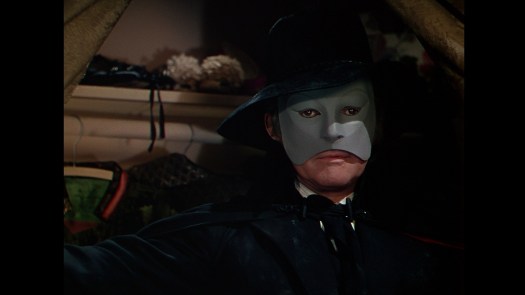
Halloween Havoc!: THE PHANTOM OF THE OPERA (Universal 1943)


gary loggins's avatarcracked rear viewer

Universal’s 1943 remake of the 1925 Lon Chaney Sr. classic THE PHANTOM OF THE OPERA is definitely an ‘A’ movie in every way. A lavish Technicolor production with an ‘A’ list cast (Claude Rains, Nelson Eddy, Susanna Foster) and opulent sets (including the Opera House interiors built for the ’25 silent), it’s the only Universal Horror to win an Oscar – actually two, for Art Direction and Cinematography. Yet I didn’t really like it the first time I saw it. It’s only through repeated viewings I’ve softened my stance and learned to appreciate the film.

Claude Rains’s performance in particular has made me a convert. As Erique Claudin, he’s a sympathetic figure, and one can’t help but feel sorry for him. When he’s let go from the orchestra by the maestro, after twenty long years as a violinist, his arthritis causing his playing to become subpar, I felt pity for…

View original post 438 more words

Halloween Havoc!: BLACK FRIDAY (Universal 1940)


gary loggins's avatarcracked rear viewer

The Twin Titans of Terror, Boris Karloff and Bela Lugosi, reteamed for their fifth film together in 1940’s BLACK FRIDAY. Horror fans must’ve been salivating at the chance to see the duo reunited after the success of the previous year’s SON OF FRANKENSTEIN, but left the theaters let down upon discovering Boris and Bela share no scenes together, and the bulk of the action is carried by character actor Stanley Ridges in a dual role.

The movie’s a variation on the old Jekyll & Hyde theme, with a twist: instead of a secret formula, the change occurs via brain transplantation! The preposterous premise finds Karloff on death row as Dr. Ernst Sovac, walking that last mile to his fate in the electric chair. Sovac hands his notes and records to a sympathetic newspaper reporter, and our film begins in earnest. Flashbacks relate the tale of kindly old English literature Professor…

View original post 415 more words

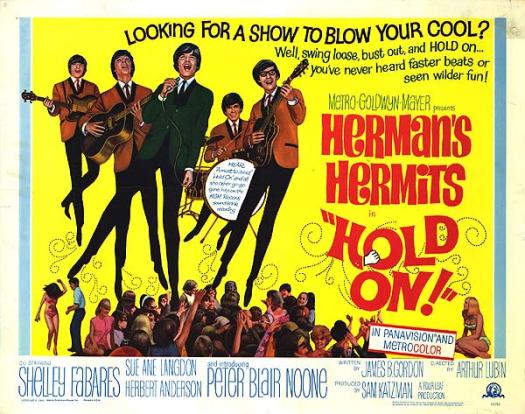
Rockin’ in the Film World #16: Herman’s Hermits in HOLD ON! (MGM 1966)


gary loggins's avatarcracked rear viewer

In yesterday’s  ‘One Hit Wonders’ post on the Blues Magoos, I told you Dear Readers my first concert was headlined by Herman’s Hermits, five non-threatening teens from Manchester, UK – Karl Greene, Barry Whitwam, Derek ‘Lek’ Leckenby, Keith Hopwood, and lead singer Peter Blair Denis Bernard Noone, known as Herman for his slight resemblance to cartoon character Sherman (of “Mr. Peabody and…’ fame). Their infectious, peppy pop rock and Herman’s toothy grin made the teenyboppers scream with delight, with hits like “I’m Into Something Good”, “Mrs. Brown You’ve Got a Lovely Daughter”, and “I’m Henry the VIII, I Am”. Even parents liked The Hermits, and they seemed destined to follow in the cinematic footsteps of The Beatles. MGM, who released their records stateside, concocted a ball of fluff for Herman and the lads called HOLD ON!, and any resemblance between that title and The Fab Four’s HELP! is strictly not

View original post 597 more words

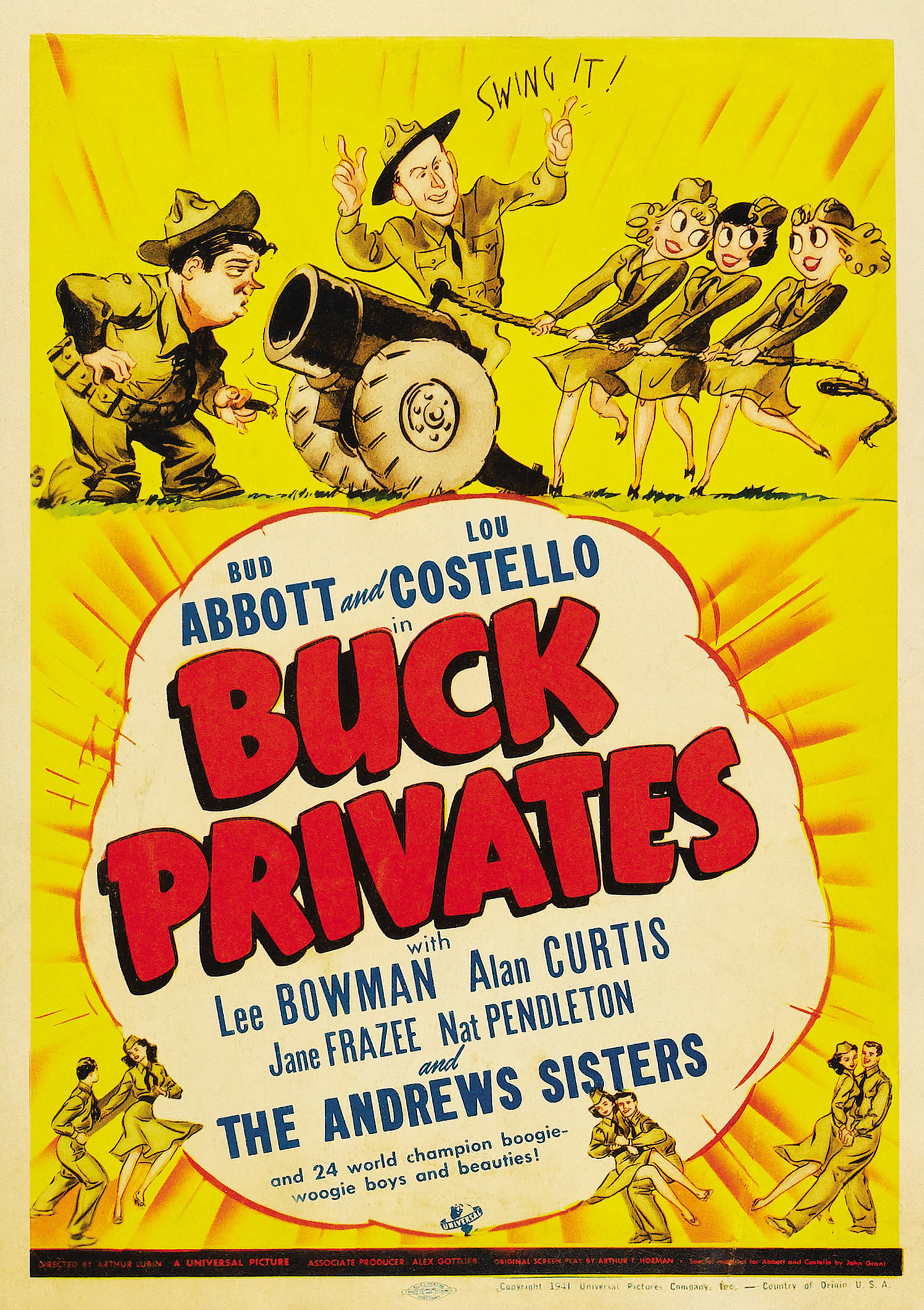
Caught in the Draft: Abbott & Costello in BUCK PRIVATES (Universal 1941)


gary loggins's avatarcracked rear viewer

buck1

The comedy team of Bud Abbott and Lou Costello don’t get much love these days. They belong to another era, but there was a time that Abbott & Costello were the most popular comedy duo in the nation, consistently landing in the top ten box office rankings. They honed their snappy patter and slapstick routines in burlesque, got national attention on Kate Smith’s radio show, and made their film debut in ONE NIGHT IN THE TROPICS. Universal Studios sat up and took notice, signing the boys to a contract and starring them in BUCK PRIVATES, creating a simple formula that would serve the team well for the better part of the decade: put Bud and Lou into a situation that allows them to perform their tried-and-true routines, add a romantic subplot, surround them with solid support, toss in some popular music acts, and let ’em run wild.

buck2

Slicker (Bud) and Herbie (Lou) are street…

View original post 432 more words

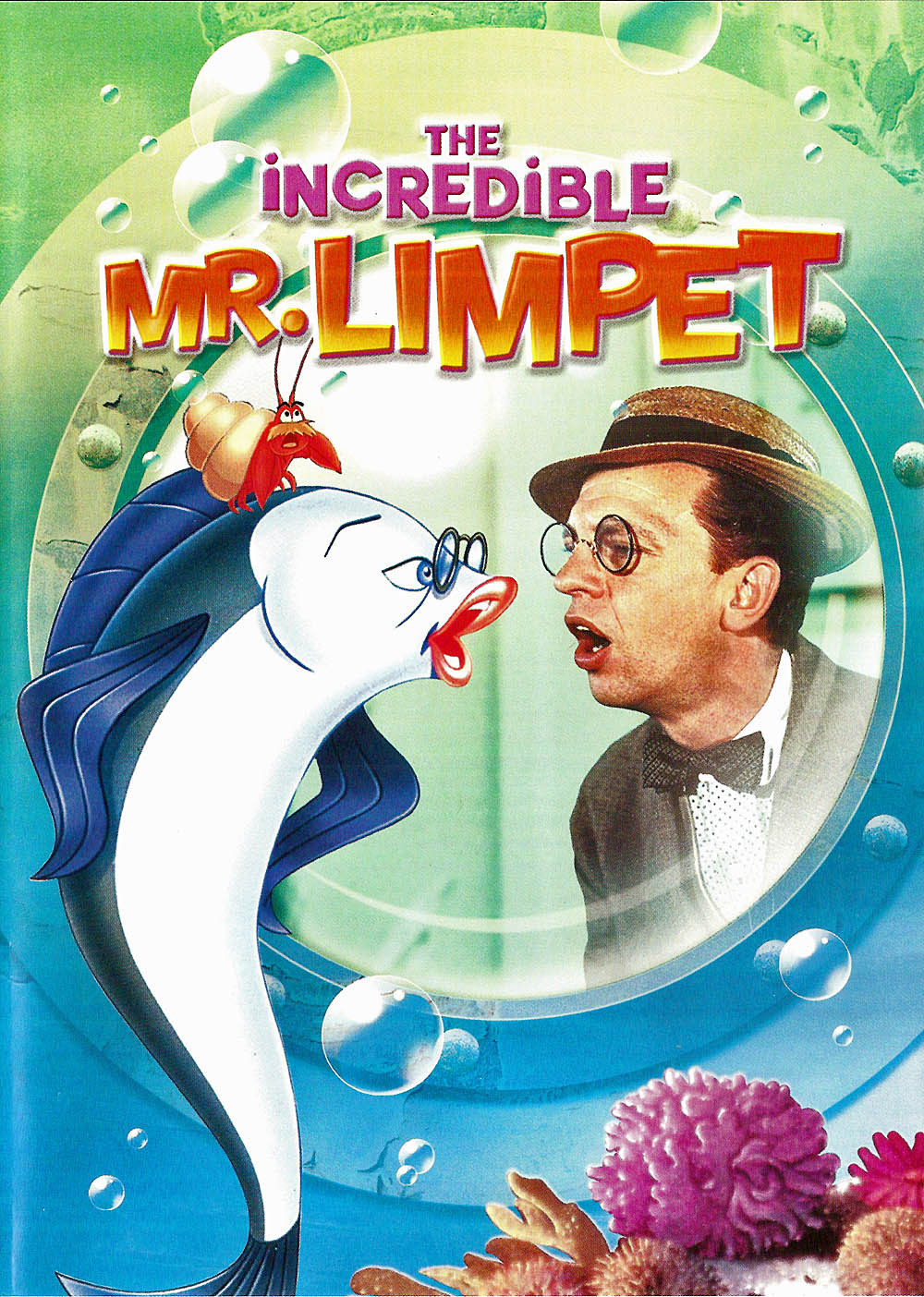
I Wish I Were A Fish: Don Knotts in THE INCREDIBLE MR. LIMPET (Warner Brothers 1964)


gary loggins's avatarcracked rear viewer

limpet1

Don Knotts’ popularity as Deputy Barney Fife on TV’s THE ANDY GRIFFITH SHOW led to his first starring feature role in THE INCREDIBLE MR. LIMPET. Knotts plays milquetoast Henry Limpet, a hen-pecked hubby and military 4-F who longs to be a fish and magically gets his wish. This Disneyesque fantasy-comedy benefits greatly from Knotts’ vocal talents and the animation of “Looney Tunes” vet Robert McKimson. In fact, the whole film would’ve been better off as a complete cartoon, because the live-action segments directed by Arthur Lubin distract from the aquatic antics of Limpet as an animated fish.

limpet2

Lubin was a former Universal contract director noted for five Abbott & Costello films (including their first, BUCK PRIVATES), the Francis the Talking Mule series, and TV’s MR. ED. You’d expect lots of slapstick with a resume like that, but no such luck. Instead, Knotts is put through some domestic paces with shrewish wife Carole Cook…

View original post 306 more words