The latest entry for Anime of the Day is the romantic comedy from Japanese animation studio J.C. Staff. I am talking about the quite popular anime series which had a 25-episode run in Japan’s TV Tokyo from October 2008 and March 2009. The series is Toradora! and is based on the light novel and manga by Takemiya Yuyuko.
This series is a romantic comedy and also one that is full of well-done drama. It’s an anime about relationships and stars two very atypical leads in Takasu Ryuji and Aisaka Taiga. Ryuji is the misunderstood highschool boy whose squinty eyes has labeled him a thuggish, criminal-type which causes some hilarious reactions from classmates and teachers both. Taiga is the doll-like tsudere-type who manages to scare everyone in her school due to her quick temper and improbable strong attacks. The two end up accidentally bumping into each other in the first day of classes and hilarity ensues from there.
Other characters such as Taiga’s friend Minorin (the weird, ditzy girl) and Ryuji’s best friend Kitamura Yusaku also lend their own personalities and relationship issues to the mix which ends up complication everyone else’s hook-ups. There’s also the kyuugere character in Kawashima Ami who is Yusaku’s very beautiful childhood friend whose attempt to hook-up with Ryuji causes other relationship complications which doesn’t untangle itself until very close to the end of the series.
Toradora! looks like the typical romantic comedy at first glance, but as one gets deeper into the series deeper layers in how the characters behave and their motivations for their earlier behaviors shine through. The comedy in the series actually begins to take a backseat to the complex romances in the show. We know from the beginning who should end up with who, but the journey the characters take to finally get to where they need to be in the end is the high point in the show.
For people new to anime this series is actually a very good starting point in the romantic-comedy genre as it takes the subject matter seriously and doesn’t pander to the usual easy hook of ecchi scenes and over-the-top comedy.
Believe it or not, originally I was brought on to be the anime guy. Granted, I haven’t always been the most active of people, but that’s my natural laziness taking over. But with the season being what it is, and me having drank enough, allow me to enlighten everyone about one of the finer horror anime out there, Higurashi no Naku Koro ni.
Previously Arleigh had posted up another yandere classic, School Days. The Higurashi visual novel predates said visual novel by three years. The big difference is that while School Days was a fairly well funded project (with many, many bugs in it!) and Higurashi was basically a doujinshi project.
Let me explain doujinshi for a very little bit. A lot of people make the mistake that doujinshi instantly equals porn comics. Now, if you attend Comiket, which is the single largest doujinshi convention in Japan, you could be excused for thinking that it’s all about comics, and more importantly, comics that solely deal in erotic content. However, doujinshi basically just means “self published”. Again, not a literal translation. You want literal? Fine. The literal translation is “same person periodical publication”. Basically this can be taken to mean a project taken on by someone without the financial backing of the mainstream media. This could mean either comics, games, or even anime. Yes, the more common genre are the comics, but there is a fairly decent market for self published games. Higurashi falls under the blanket of the self published games. From a visual standpoint, they were very raw. In fact, there’s a very good reason why it gets criticized for having bun hands.
Compare that to the anime character art, and the difference is quite obvious.
But if you can get past the rough character designs, (keep in mind that the true meat of the game comes from the story, not the graphics) then you’re in for a very good story with many a twist and turn along the way.
One thing I must say, based on the experiences I’ve had with people is that you should probably watch the anime first. Perhaps I’ve just been subjected to extremely rabid fans, but too many of them have an irrational hatred of the anime. I’ll accept that there is a chance the complaints are valid, because I have not personally played the visual novel (you play them, not read them. Trust me on this) but having seen all of the anime, even if the transition is not perfect, it’s still a fun watch that will keep you guessing right up until the answer arcs are shown.
Each arc starts out in a very light hearted manner, but make no mistake, this is a horror series at its core. The fact that such cute girls are at the center of it all makes it seem all the more horrific, especially with the actions that are taken throughout the various arcs. While it’s very difficult for anime to effectively show gore without getting to the ridiculous buckets of blood level, Higurashi manages to be very effective in its depictions of it, and some scenes are actually a bit shocking to see.
The thing is, you have to watch both seasons of the show, Higurashi no Naku Koro ni, and Higurashi no Naku Koro ni Kai, to get the true ending and find out the reason for all the happenings in the town of Hinamizawa during June of 1983, but it is well worth the time spent, and shows that anime can successfully pull off the horror genre.
For our latest Anime of the Day I have chosen the very controversial title School Days which aired from July through to September of 2007.
The series was adapted by anime studio TNK from the visual novel and eroge of the same title published by the company Overflow. School Days was your typical “harem” visual novel eroge where the main protagonist (most of the time male though there’s a few where it’s reversed and it’s a female) becomes involved with several of the female characters in the game. The goal of these eroge was to try and navigate through the many relationships between the protagonists and the many female characters around him (usualy in a sexual nature) and get the perfect ending which always ends up being the so-called “good ending”.
With School Days the main protagonist is one Makoto Ito who starts off as being a mild-mannered and polite high school student. This doesn’t last long as he become embroiled with the many female classmates he’s known for years and those he recently met. To say that the character of Makoto becomes addicted to having sex with his female classmates would be an understatement.
While there are several female characters in School Days who become involved with Makoto in one way or another it’s the duo of Kotonoha Katsura and Sekai Saionji who become rivals for Makoto’s affection. Just like the visual novel the anime series was adapted from (the visual novel was also adapted as a manga series) the complex and increasingly malicious attitudes by some of the leads in the series would lead to more than one tragedy for all involved. This is a series which starts off as a light-hearted harem title but as the series progresses towards its climactic finale it somehow takes a huge turn into the darkside that by the time it does make that turn the viewer has become so invested in the characters and the story that it becomes a major shock to the system.
School Days has become controversial since its release due to a real-life killing where a young high school girl kills her father with an axe which some thought as being too similar in tone to a sequence in the series. The controversy from such a real-life event caused the tv station broadcasting the series to replace almost half the running time of the final episode with an image of a nice boat and classical music playing in the background. This became such a major internet meme that saying “Nice Boat” has become the comment of choice when discussing controversial scenes and plot developments of any series that’d be ripe for studio censorship.
The series in all its form also emphasizes the character stereotype of yandere. School Days definitely has its major share of yandere characters and the many different endings to the visual novel shows how some of the yandere characters in the story deal with the callous way Makoto has dealt when dealing with their affections towards him. It gets bloody, violent and more than just a tad crazy-insane.
School Days is definitely one of the more seriously twisted anime offerings out there which doesn’t involved hentai in its description whatsoever. It’s a series that if it was a live-action series would be similar in tone and scope to many of filmmaker Ken Park’s films which deal with teenage highschool relationships, sex and the consequence which can come from it.
Hentai: slang for the Japanese term “hentai seiyoku” which literally means sexual perversion. A word used by Western fans of anime to signify anime/manga as being of the pornographic variety.
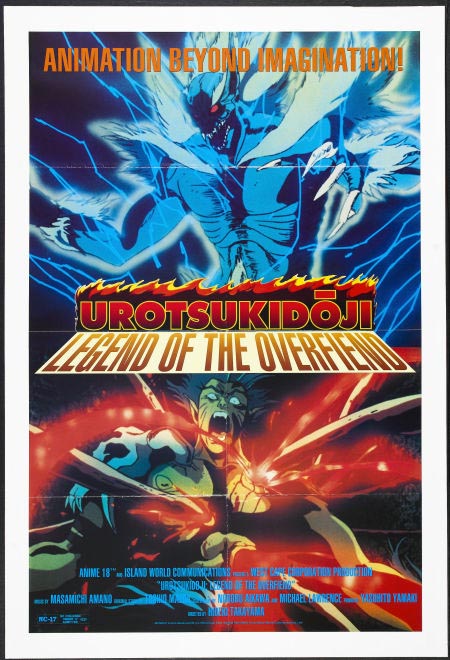
In 1990, during my junior year of high school, I was introduced to a form of animation unlike anything I had known before—the darkly imaginative and transgressive world of hentai. While explicit Japanese media had existed long before, the particular title that marked my first encounter with the genre was Chōjin Densetsu Urotsukidōji. The work did not simply define hentai; it transformed how adult animation would be viewed by audiences in both Japan and the West.
Prior to its release, erotic or explicit manga had long circulated quietly within Japan, often categorized separately from mainstream entertainment. Yet when mangaka Maeda Toshio’s Chōjin Densetsu Urotsukidōji was adapted into animation by director Takayama Hideki in the late 1980s, something shifted. The result was a film that combined the grotesque, the apocalyptic, and the erotic into a single overwhelming experience. Takayama’s adaptation was not content to merely illustrate Maeda’s ideas—it amplified them into a fever dream of violence and desire that pushed the medium into territory rarely explored in animation.
This era in Japanese media was also defined by strict obscenity laws. Direct depictions of genitalia or explicit intercourse were prohibited, both in live-action and animation. To circumvent these limitations, artists employed mosaics or invented visual metaphors. Takayama approached the problem with disturbing creativity: he replaced human anatomy with monstrous, tentacle-like appendages. These served a dual purpose—they satisfied censors while reinforcing the story’s occult and otherworldly atmosphere. Inadvertently, this gave rise to one of the most infamous tropes in hentai culture: “tentacle rape.” What began as a method of evading censorship evolved into a symbol of perversion, horror, and fascination.
Though Maeda initially regarded Takayama’s interpretation as excessively cruel and sadistic, he expressed admiration for the director’s ability to explore the darker undercurrents of his story. In time, Maeda’s own works would adopt similar motifs, blending eroticism with the supernatural. His later projects—including Yōjū Kyōshitsu Gakuen, Adobenchā Kiddo, and the enduring Injuu Gakuen La Blue Girl—refined the sensibilities born from Urotsukidōji, mixing violence, humor, and demonic imagery. These works often shifted in tone but never strayed far from the genre’s defining combination of horror and sexual excess.
Chōjin Densetsu Urotsukidōji can best be described as a collision of disparate influences: the mythic nihilism of H. P. Lovecraft, the explicit confrontational style of Larry Flynt, and the occult transgression of Aleister Crowley, all underscored by the philosophical cruelty associated with the Marquis de Sade. The film’s narrative combines apocalypse with pornography, constructing a universe where gods, demons, and humans become locked in violent and erotic cycles of destruction and rebirth. It is both a nightmare and a spectacle, a work that examines desire as an extension of cosmic chaos.
Watching the OVA as a seventeen-year-old was an experience of shock and bewilderment. Nothing in my understanding of animation prepared me for it. The optimism and adventure of series like Robotech, Starblazers, and Voltron stood in stark contrast to the nihilistic intensity of Urotsukidōji. If such a term had been common at the time, “culture shock” would have described it perfectly. Yet beyond my initial disorientation, I recognized something compelling beneath the shock value—a strange vision that treated eroticism not as mere indulgence but as a reflection of human fear and fascination.
Takayama’s film succeeded because it used obscenity as both spectacle and metaphor. The sexualized violence was horrifying, but it also emphasized the collapse of moral order within its world. The boundaries between sensuality and monstrosity blurred, suggesting that both sprang from the same primal source. In this way, Urotsukidōji transformed its limitations into aesthetic strength. Censorship forced invention, and invention created symbolism: the tentacle became an image of corruption, domination, and inhuman desire.
When Urotsukidōji began circulating in the West through VHS imports in the early 1990s, it acquired immediate notoriety. For many international viewers, the notion that animation could contain such extreme imagery was almost unthinkable. Western audiences, accustomed to animation as a medium for children or adolescent adventure, suddenly encountered a work that combined cinematic brutality with mythology and eroticism. Owning or viewing it became an act of curiosity and defiance. Accessing such media often meant seeking imported tapes or attending small conventions—a process that only heightened its sense of exclusivity and taboo.
Not everyone perceived Urotsukidōji as art. Its reputation became divisive; for some, it represented the most exploitative and grotesque tendencies of Japanese culture, while to others, it was a bold exercise in creative freedom. Regardless of one’s stance, its influence was undeniable. The film inspired countless imitators, establishing a visual and thematic template for subsequent hentai and “erotic horror” animation. Even as later works diversified into comedy, fantasy, and romance, the long shadow of Urotsukidōji remained.
There is also a deeper irony in its legacy. The same adaptation Maeda once criticized expanded the reach and visibility of his creation beyond what any manga publication could have achieved. The collaboration between artist and director—however fraught—produced a convergence of imagination that shaped both the erotic and horror dimensions of modern anime. In a broader sense, it demonstrated that the animated form could explore the same depths of transgression, myth, and existential dread that live-action cinema often reserved for its most daring auteurs.
Seen through this lens, Urotsukidōji becomes more than a piece of pornographic shock cinema. It emerges as a cultural artifact—one that reflects how desire, repression, and fantasy intersect within specific historical and artistic contexts. The work exposes how censorship and creativity can collide to produce unexpected invention, and how audiences, whether through fascination or outrage, help define a genre’s legacy.
For those of my generation, encountering Urotsukidōji was a defining moment that reshaped perception. It suggested that animation could express not only beauty and adventure but also the darker instincts of the human psyche. What began as disbelief evolved into a kind of reluctant respect for its ambition. Beneath the grotesque imagery lay a thematic depth that continues to invite examination—questions about power, violation, and the thin line separating horror from desire.
Today, both Maeda Toshio’s manga and Takayama Hideki’s adaptation occupy a controversial yet essential place in the history of Japanese media. They are remembered not only for their sensational content but for their cultural and aesthetic audacity. The story of Chōjin Densetsu Urotsukidōji endures because it refuses simplification—it is at once abhorrent and visionary, obscene yet strangely philosophical.
From the most ardent anime historian to the casual viewer, its reputation persists. Whether reviled or revered, Urotsukidōji remains the ultimate symbol of hentai’s origins and its infamous reach. It stands as both a warning and a testament: that art, when unfettered by convention and driven by instinct, can explore places society dares not name.
CW Network’s very popular tv series Supernatural looks to expand into a new media as Warner Home Video plans to release a 22-episode anime adaptation of the tv series. The series will come out in Japan this January of 2011 with acclaimed anime studio Madhouse doing the animation. The series’ first season will encompass the breadth of the original series’ first two season, but will have room for new content which explore and expand of the two Winchester Brothers’ early childhood as Hunters. Some secondary characters from the original show will also get a much more expanded role within the anime series.
I, for one, was quite excited when I first learned of this development. The original show has been a favorite of mine since it first debuted in the Fall of 2005. While for some the idea of an American TV series getting an anime adaptation might seem farfetched, but I think Supernatural‘s aesthetics lends itself well to the hyper-realistic conventions of anime. Madhouse has already shown it could do straight up horror with its very popular zombie anime series Gakuen Mokushiroku (Highschool of the Dead), so creating a series out of a show based on the supernatural and monsters and demons wouldn’t be too much of a stretch for the studio.
The Winchester Brothers in the anime will be voiced by the two same actors who dub the original series for airing in Japan: Yuya Uchida and Hiroki Touchi. There’s no word on whether the series will get an American dub version when the dvd/Blu-Ray comes out in the US so fans hoping to hear Jared Padelecki and Jensen Ackles voicing their anime counterparts may have to temper their hopes.
Time will tell if this anime adaptation will catch on in the US, but with Supernatural having such a huge and vocal fan-base there’s a chance it may just and allow a second season to be made.
Another AMV from the romantic-comedy anime series Toradora! is my pick for AMV of the Day.
There’s not much else to say about this series other than it’s a must-see. Unlike most romantic-comedy series this one actually tries to tone down the comedic aspect of the series, but not enough to give the whole thing a too-serious vibe. The characters have believable motivations and reactions to the goings-on around them. The series also dos a great job of matching up several characters initially only to have these matches re-done until the couples people want together end up together.
This particular AMV was created by Youtube user ChangitoLoko who also made four other AMV’s using Toradora! and its many characters. I will take a huge flying leap and guess that ChangitoLoko really enjoyed this series. The song he used for this AMV is Vanessa Carlton’s song, A Thousand Miles. This song has been used in many other romantic-based AMV’s in the last. I really liked this song as paired with scenes and characters from Toradora! though there might be spoilers for those who haven’t seen the anime so beware.
We are down to the last final episodes of this first season of Madhouse’s anime series adaptation of the zombie and ecchi manga series, Highschool of the Dead. The last episode was the start of the calm before what I hope to be the major storm that will take this series into a second season.
Episode 11 didn’t linger on too much on the fanservice side of the series with the exception of an all-too-brief look inside the school bus of Shido-san and his sex cultists. We get a glimpse at how Shido deals with the students who don’t conform to his twisted (albeit must be quite fun) outlook on the new world order as it stands now. The manga had shown that particular sequence of why that one student was thrown off the bus to be taken by the zombies. In this episode we didn’t see what caused his expulsion, but got a sense that the student didn’t want to join in on the bus orgy going on between the students with Shido-san acting as a sort of Aleister Crowley-like figurehead.
While inside the Takagi compound it looks like the episode skipped some more of the manga and didn’t show how Takagi’s father was finally swayed to allow Kohta to keep the groups weapons. I can understand the Madhouse writers trying to cram as much of the manga into a 13-episode season, but the way they’re going about things they could catch up to the manga by episode 13 which would definitely might be a sign that a second season won’t be in the offing. Here’s to hoping that the writers were just trying to move things along to the crisis which sends the group out of the compound and back into the dangers of the city-proper.
While the fanservice was limited the harem aspect of the story continued to grow as Rei literally threw herself at the mercy of Komuro but to no avail. Does Rei know that Saeko and Saya may be competing with her for Komuro’s attention? If that’s the case then Komuro definitely has shown quite a bit of restraint when it comes to Rei’s increasingly aggressive advances. There’s also the fact that Komuro and Saeko may have already sealed their partnership a few episodes past though we never really saw it but definitely implied.
The arrival of Shido-san into the compound definitely explains why Rei was so adamant to leave the safety of the bus early in the season. The fact that Rei dismissed Shido-san as less than worthy of her attention was a nice touch even though this could become a major problem for the group down the line. Even in the manga the fate of Shido-san and his group of students were not truly explained though not all of them could’ve survived their subsequent exile.
With two episodes left and with the major superpowers throwing nukes at each other, I hope that this calm has finally ended and the storm that’s been brewing since the group arrived at the Takagi compound can finally smash into the city. If there’s to be no second season then these last two episodes need to put the previous 11 in terms of action, horror and fanservice to shame. It’s the only way for the series to go out with a huge bang.
I finally came across an AMV which does a great job at melding song and images from the romantic-comedy anime series, Toradora!. This series is just getting it’s North American release and I saw the first episode (subtitled of course….don’t believe in dubbing) while over at this summer’s Anime Expo 2010 in LA. To say that the series put it’s romantic-comedy hooks into me would be an understatement. It helped that one of the characters sounded just like one of my favorite anime characters ever. I speak of the very awesome Manabi from the slice-of-life series from a few years back, Gakuen Utopia Manabi Straight!which also happens to be my favorite series ever. EVER.
For the past year or so one particular song has been used over and over again by AMV creators that it’s gotten to the point I’ve tired of hearing it. I’m talking of the song Fireflies by the group Owl City. So, it was a surprise that when I came across this Toradora!-based AMV using this Owl City song and I wasn’t bored by it. The song definitely fit well with the images the AMV’s creator (SweetMina93 on YouTube).
The AMV definitely has spoilers but it matters not as I’ve seen the whole series already, but even those who haven’t should still watch it even if they already know what happens. The joy sometimes is not the surprise of how things turn out but the journey the characters take to get to their destination. So, while I make this post I’ve been watching this AMV over and over for the past couple hours and I can’t stop.
I see that as a sign of a well-done and catchy AMV. Now, I must go back to watching the AMV for another hour or more.
We’ve now reached the midway point of MadHouse’s anime adaptation of the popular horror and ecchi manga series, Highschool of the Dead. Has the series lived up to the original manga source it’s based on?
Having seen every episode since I will have to give that question with a resounding yes as my answer.
Episode 7 starts off continuing with the very ecchi nature of the series as we see the women in the group in some way of undress and provocatively posed while doing so. Again, I will repeat that anyone still watching this series up to this point and still complaining about the heavy fan-service are just nitpicking. If these complainers don’t like the heavy fan-service then they should’ve dropped off the series around episode 2 and, most likely, after the previous episode. By this time of the series I think anyone still watching it either enjoys the heavy fan-service or has adapted and accepted it in some way. I’m definitely of the former.
This episode is notable for it’s introduction of the very last two characters which will join our interpid group of survivors. One is the little puppy Zeke and the other a little girl named Alice. The scene with Alice and her father looking desperately for a place of refuge from the mass of undead waling the streets is one of the most heartbreaking moments in this series. Say what one will about the series’ heavy reliance on it’s ecchi half, but when it wants to start plucking on the audience’s heartstrings it does it well. While Alice’s survival once the zombies start converging on her is not a mystery (I don’t think killing a second child in the series will happen two episodes in a row) it does show our group in hero-mode.
Takashi and Hirano are stand-outs in this episode. The former for showing some humanity and putting his life in danger to try and save Alice. The latter for contuining to be my favorite character in the series as he swings from his awkward “nosebleed” self whenever he sees the ladies in skimpy attire to the ice-cold sharpshooter when it’s time to kill zombies. I have a feeling that Hirano will be a character from this series who will be cosplayed heavily in the coming slate of 2011 anime conventions.
The rest of the episode goes by-the-numbers as the group loads up the Hummer parked in the garage with all the supplies, weapons and ammo it could carry and they head on out into the zombie-filled world looking to get across the bridges to find their families. Missing from this episode (the last couple in fact) is the villain of the series, so far. We haven’t seen the sleazy Shido-san and his bus full of followers. Does this mean that the infamous “bus orgy” scene from the manga has been skipped over or will it appear in the next couple episodes. For fans of the manga the answer better be yes or that may be the first disappointment they will have with this series.
Yes, if that’s the only disappointment fans will have with this series then it just shows how good it is that the storyline itself hasn’t been the focus of any complaint. Now, onto the second half of the season.
We’re now an third into the first season of Madhouse’s anime adaptation of the Highschool of the Dead manga. The first three episodes have been used mostly as a set-up to lay out the basic premise of the anime series in addition to introducing the main players. The third episode also sets-up conflict between two groups of survivors as our students (plus one ditzy school nurse) must contend with another teacher (Shido-san) who seems to have some ulterior motives in trying to proclaim himself the appointed leader of the surviving students and faculty in the school bus which just escaped from zombie-infested school.
So far, the series has followed closely the storyline from the manga. There’s been some minute changes to character backstory and certain scenes have been extended or given more time to develop unlike their original manga. Still the writers for the anime look comfortable enough in following the manga with some fidelity instead of venturing on a different path or switching the order of story-arcs around like how some anime adaptation of manga series in the past.
If there’s one thing to take away from this fourth episode it is that the Anime Network’s simulcast of the series definitely has censored the more ecchi scenes to make them more acceptable to North American audiences. I like to point out specifically the sequence at the gas station between Takashi, Rei and the crazed human who holds Rei hostage. In the manga this scene definitely remains uncensored (though it remains to be seen whether Yen Press will keep it that way when they bring the manga over to the North American market), but in the simulcast the scene has some of the details blurred out, but not enough that the audience cannot figure out what is going on.
I definitely think that the more blatant use of fan-service deeper into the series will get the same treatment. This definitely will mean the dvd set when its released better have these scenes uncensored or there will be much declarations of shenanigans sent Sentai’s way. But now that censoring of these scenes have been established further use of it in upcoming episodes shouldn’t come as surprise so I shall keep my complaints to this recap and leave it at that. Other than that the episode was good just like the previous three and I don’t see the series doing nothing but continue to be very good as it moves forward.




 Through the Shattered Lens