Late Night Retro Television Review: Friday the 13th: The Series 3.13 “Midnight Riders”


Welcome to Late Night Retro Television Reviews, a feature where we review some of our favorite and least favorite shows of the past! On Fridays, I will be reviewing Friday the 13th: The Series, a show which ran in syndication from 1987 to 1990. The entire series can be found on YouTube!

This week, the show attempts a change of pace!

Episode 3.13 “Midnight Riders”

(Dir by Allan Eastman, originally aired on January 29th, 1990)

An odd episode, this one.

Jack, Micki, and Johnny head out to a small town so that Jack can look up into the night sky and see a once-in-a-lifetime convergence of the stars.  However, possibly as a result of the convergence (it’s never really made clear), a bunch of dead motorcycle riders are resurrected and they rumble into town, seeking vengeance on everyone who took part in the death of their leader.  If the bikers can kill every one of them, their leader will be resurrected.  Finally, the ghost of Jack’s father (Dennis Thatcher) shows up and works with Jack to stop the bikers.  It turns out that Jack and his father had a difficult relationship.  Ryan had a difficult relationship with his father.  Johnny was falsely accused of murdering his father.  We’ve never met Micki’s father but he’s probably a jerk too.

The weird thing about this episode is that it didn’t feature a cursed antique.  Instead, Jack and the crew went to a small town and supernatural stuff started happening shortly after they arrived.  That’s okay, I guess.  In theory, there’s nothing wrong with trying something new.  But, at the same time, the cursed antiques were what set this show apart from all of the other supernaturally-themed television series out there.  Personally, even when the antique’s curse makes no sense, I still enjoy seeing what the show comes up with.

This episode had a lot of atmosphere and a typically good performance from Chris Wiggins.  The ghost bikers were never quite as intimidating as they should have been, despite all of the murders.  If anything, they reminded me a bit too much of Sometime They Come Back.  This episode was a change of pace and, as if often the case with things like this, it didn’t quite work.  Here’s hoping next week will have a cursed antique!

Late Night Retro Television Review: Friday the 13th: The Series 3.7 “Hate On Your Dial”


Welcome to Late Night Retro Television Reviews, a feature where we review some of our favorite and least favorite shows of the past! On Fridays, I will be reviewing Friday the 13th: The Series, a show which ran in syndication from 1987 to 1990. The entire series can be found on YouTube!

This week, Johnny screws up, making the type of mistake that Ryan never would have!

Episode 3.7 “Hate On Your Dial”

(Dir by Allan Eastman, originally aired on November 6th, 1989)

This week’s cursed antique is an old car radio from 1954.  Smear it with the blood of someone who has just died and the car will transport you back to …. 1954.  That seems like an oddly specific curse and a kind of pointless one.  What if the car radio ends up in the possession of someone who doesn’t care about 1954?

(And, to make clear, Jack does specifically state that the curse involves going back to 1954.)

The car radio does end up in the possession of Ray Pierce (Michael Rhoades), a racist auto mechanic who uses the car to go back to 1954 so that he can hang out with his father in Mississippi.  His father (Martin Doyle) is a member of the Klan, along with his friend, Joe (played, in an early performance, by Henry Czerny).  The 1954 scenes are filmed in black-and-white.  When the show travels back 1954, the first thing we see is an “I Like Ike” billboard, featuring Dwight Eisenhower and a Confederate flag.  Obviously, someone in the show’s Canadian writer’s room didn’t know who supported segregation in 50s and who didn’t.  There was a political party wrapping itself in the Confederate flag in 1950s Mississippi but it wasn’t the Republicans and their candidate wasn’t Dwight Eisenhower.

This episode features Johnny making another one of his trademark mistakes, this time selling the cursed radio to Ray’s “slow” brother, Archie (played by Cronenberg regular Robert A. Silverman).  Only after Johnny sells it does he realize it was probably cursed.  Micki yells at him for not checking the manifest before selling it.  Then Jack yells at him too.  Jack remains angry with him for nearly the entire episode.  It’s understandable that Jack would be upset but then again, maybe they shouldn’t have left inexperienced Johnny alone in the shop in the first place.  Maybe they shouldn’t even be selling antiques at all.  That would definitely solve the problem.

Anyway, this episode featured some of the worst Southern accents that I’ve ever heard and it also featured a cursed objects that didn’t make much sense.  Johnny learned an important lesson about being careful about selling things and I guess that’s a good thing.  That said, Ryan never would have made that mistake!

Danger Zone (1996, directed by Allan Eastman)


Framed on charges of dumping toxic waste, Morgan (Billy Zane) accepts a CIA mission to travel to the fictional African country of Zambeze and to track down his former friend, Jim Scott (Robert Downey, Jr.).  Scott is an ex-CIA agent who faked his own death and who is now leading a revolution against the oppressive government of Zambeze.  Scott knows the location of several barrels of uranium.  Also searching for the uranium is the ruthless Mr. Chang (Cary-Hiroyuki Tagawa).  Morgan teams up with Dr. Kim Woods (Lisa Collins) but soon discovers that he has to be careful of who to trust.

There is a surprisingly lot of talent in the cast of this film.  Along with Zane, Downey, Collins, and Tagawa, Ron Silver appears as the shady political operative who joins Morgan in Zambeze.  The cast may be good but it doesn’t take long to see that everyone in this film was there mostly for the money.  No one brings their A-game to Danger Zone and both Downey and Silver often look like they’re struggling to deliver their lines with a straight face.  Downey, especially, gives a self-amused performance, delivering his lines in a thick and indecipherable Southern accent.

(It is easy to forget that there was a time when Robert Downey, Jr’s career was regularly cited as being the ultimate Hollywood cautionary tale.  Everyone knew he was talented but, in the 90s, his well-publicized struggle with drug addiction and the time that he spent in jail made him practically uninsurable and unhirable.  He ended up appearing in a lot of films like this one before he eventually got clean and reinvented himself as the face of the MCU.  In the 90s, most people would probably have been shocked to hear that Downey would eventually win an Oscar and receive a standing ovation as he accepted it.)

Danger Zone does have some good action scenes.  The movie ends with an attack on a train that is actually pretty exciting.  Unfortunately, the rest of the film suffers from bad acting and an incoherent plot that makes Danger Zone almost impossible to follow.  You can fly into the Danger Zone but you won’t want to stay.

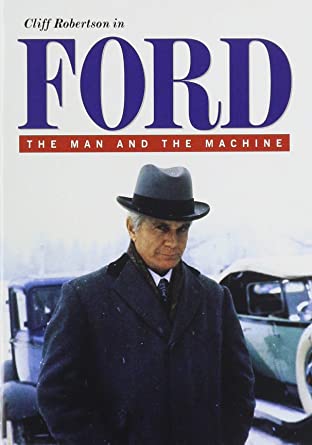
Miniseries Review: Ford: The Man and The Machine (dir by Allan Eastman)


Henry Ford changed the world, for both the better and the worst.

Starting from his own small workshop in Dearborn, Michigan, Henry Ford designed the first mass-produced automobile.  He transformed cars from being a luxury item to being something that nearly every family owned.  He created the concept of the assembly line.  He argued that workers needed to be paid a livable wage and he also advocated for an 8-hour workday.  At a time when every facet of American life was heavily segregated, he encouraged his factories an auto dealerships to hire black employees.  He was a pacifist, who took part in a widely-ridiculed but apparently sincere effort to try to convince the leaders of the world to just stop fighting.

Unfortunately, Henry Ford was also something of an unhinged lunatic, a man whose skill at engineering and his empathy for his underpaid workers did not necessarily translate into a sophisticated understanding of anything else.  When the workers in his factories tried to unionize, Ford employed violent strike breakers and he felt that most of the population were like a children and therefore incapable of governing themselves.  He understood how to make car but he also fell for all sorts of quack science and was a believer in reincarnation.

Worst of all, he was a rabid anti-Semite, who blamed almost all of the world’s problems on “Jewish bankers” and who played a huge role in popularizing a scurrilous work called The Protocols of Elder Zion in America.  Claiming to lay out the details of a Jewish plot to secretly control the world, The Protocols were a ludicrous document but many people believed them because they were promoted by Henry Ford, who was as big a celebrity in the early 20th Century as all of the social media influencers are today.  All these years later, The Protocols are still cited by anti-Semites.  A series of anti-Semitic editorials (which Ford later claimed to have signed off on but not actually written) were published in Germany under the title The International Jew, the World’s Foremost Problem.  Hitler wrote of his admiration for Ford in Mein Kampf.  Ford, it should be noted, did keep his distance from Hitler, though whether that was due to a personal distaste or the threat of an economic boycott is not known.  (Jewish leaders had already organized one successful boycott of Ford in the 20s, which led to Ford closing down his newspaper and offering up an apology.)  At the Nuremberg Trials, many of the Nazis said that they had first been introduced to anti-Semitism through the writings of Henry Ford.  Reportedly, when Ford saw newsreel footage of the concentration camps, he was so overcome with emotion that he collapsed from a stroke.

(Two years ago, when Nick Cannon regurgitated the usual anti-Semitic conspiracy theories on a podcast, he was pretty much saying the exact same thing that Henry Ford said at the start of the 20th Century.  Later, under threat of economic boycott, both Ford and Cannon would off up half-hearted apologies for their statements.  Ford continued to make cars.  Cannon continues to host a handful of television shows.  How does that work?)

First broadcast over two nights in 1987, Ford: The Man and the Machine was a Canadian miniseries about the long and controversial life of Henry Ford.  Cliff Robertson played Henry Ford.  Hope Lange played his wife while Heather Thomas played his mistress.  R.H. Thomson played Ford’s son, the sensitive Edsel.  Michael Ironside played Harry Bennett, a sinister figure who was hired to break up union activity and who eventually became Ford’s right-hand man.  If I remember correctly, I believe Canadian law actually required that Michael Ironside appear in almost every Canadian film and television show made in the 80s and the 90s.  His glowering presence and menacing line delivery practically shouted out, “Don’t mess with Canada,” and he does bring a note of genuine danger to his performance here.

Ford: The Man and the Machine opens in the late 20s, with an aging Henry Ford already starting to lose control of his mental faculties.  A series of flashbacks then show how Ford built his first engine, his first car, and eventually his first factory.  We watch as Ford goes from being an enthusiastic, self-taught engineer to being one of the most powerful men in the world.  Along the way, Ford grows arrogant.  The same stubbornness that led to his early success also leads to his later problems.  For all of his ability, Ford’s ego and his refusal to reconsider his conclusions leaves him vulnerable to both flattery and manipulation, whether it’s coming from the White House of Woodrow Wilson, from his own executives, or from the authoritarians who rose to power in Europe following the first World War.  As portrayed in the movie, he’s a loving father who also flies into a rage when Edsel designs a car on his own.  He loves his wife but he keeps a mistress.  He loves his family but he’ll always prefer to spend time working on his cars than spending time with them.  Henry Ford changes the world but his own hubris makes it impossible for him to change with it.

The miniseries is built around Cliff Robertson’s performance as Ford and Robertson does an excellent job in the role, convincingly playing Ford as he goes from being an enthusiastic dreamer to a paranoid millionaire to a doddering old man, a Bidenesque figuredhead who is only nominally in charge of his own company.  Neither the film nor Robertson shy away from showing us Henry Ford’s flaws.  Instead, both the production and the actor offer up a portrait of a complex man who transformed the way that people lived but who couldn’t escape from his own prejudices and resentments.  Ford: The Man and The Machine is a history lesson but it’s a valuable one.  If you’re a student of history, you’ll find much to think about in this miniseires.

For the record, I do drive a Ford and it’s a good car.  However, I tell myself that it’s named after Gerald Ford.