October True Crime: Summer of Sam (dir by Spike Lee)


First released in 1999, Summer of Sam is Spike Lee’s sprawling, frustrating, flawed, occasionally compelling, and ultimately rather intriguing film about the summer of 1977 in New York City.

As one can guess from the title, it was a summer that was dominated by the reign of terror of the serial killer known as the Son of Sam.  While New York suffered one of the hottest summers on record, the Son of Sam shot couples while they sat in their cars.  Because all of his victims had been women with long, dark hair, women across the city wore blonde wigs.  While the police searched for the killer, the city was also caught up in the World Series.  Club 57 was the hottest club in New York but a growing number of rebels, inspired by the news that was coming out of the UK, eschewed the glitz of disco for the gritty and deliberately ugly aesthetic of punk and the Mud Club.

Though the film is centered around the murders of the Son of Sam, he remains a largely shadowy figure in the film.  Played by Michael Badalucco, David Berkowitz spends most of his time in his filthy home, yelling at the dog across the street and writing cryptic messages on the walls.  He only gets a few minutes of screen time because the film is ultimately less about the Son of Sam’s crimes and more about how one Italian-American neighborhood in New York deals with the atmosphere of fear and paranoia created by those crimes.  It’s a neighborhood that’s ruled over by the ruthless but benevolent Luigi (Ben Gazzara).  When the two detectives (Anthony LaPaglia and Roger Guevener Smith) come to the neighborhood in search of information, they know that Luigi is the man to see.

Vinny (John Leguizamo) is one of the neighborhood’s citizens, a hairdresser who hasn’t let his marriage to Dionna (Mira Sorvino) stand in the way of his compulsive womanizing.  Vinny is the type who cheats on his wife and then goes to Confession to get forgiveness.  He’s the type who gets angry whenever Dionna wants to have sex with the lights on or do anything other than a quick three minutes in the missionary position.  When he realizes that the Son of Sam was watching him while he was having sex in a car with Dionna’s cousin and that he could have been one of his victims, Vinny starts to spin out of control.  Vinny’s childhood friend is Ritchie (Adrien Brody), who shocks everyone when he spikes his hair, puts on a Union Jack t-shirt, and starts speaking with a fake British accent.  Ritchie and his girlfriend, Ruby (Jennifer Esposito), embrace the punk lifestyle and even put one the Son of Sam’s letters to music when they perform at the Mud Club.

It’s an ambitious film but it’s also an overlong film, one where the slow spots can truly test the viewer’s patience.  With a 142-minute running time, Summer of Sam finds the time to touch on almost every trope of the late 70s.  Vinny and Dionna hit the clubs, where the usually quiet Dionna truly comes to life as she dances.  (Vinny’s moves are far less impressive.  Tony Manero would have laughed at him.)  Ritchie not only embraces punk rock but he also makes his money by performing in live sex shows.  When a mysterious man offers to give Vinny and Dionna a ride in his limo, it’s hard not to smile when it’s revealed that he’s taking them to the infamous sex club, Plato’s Retreat.  One can respect Lee’s ambition while still finding the film itself to be a bit too self-indulgent for it’s own good.

Spike Lee, for all of his other talents, has never been a particularly subtle director.  Vinny and his friends spend a lot of time hanging out at the end of street, strategically placed in front of a sign that loudly proclaims, “DEAD END.”  At one point, Vinny is inspired to run to his window and start screaming insults at the Son of Sam and Leguizamo’s histrionic delivery of the lines make it impossible to take his anguish seriously.  At the same time, there are moments that work brilliantly.  I particularly liked the scenes that took place during the blackout of 1977.  Luigi automatically knows how to keep control in his neighborhood and he sends his men out with baseball bats, channeling their aggression into a search for the phantom serial killer.  For every scene that doesn’t work, there’s a scene like the Baba O’Riley montage or Vinny, Dionna, Ritchie, and Ruby having a candlelit dinner.

“We really dig your vibe.”

John Leguizamo is shrill and miscast as Vinny, though I’m not sure if anyone could have made much of such a one-dimensional characters.  I preferred the performances of Mira Sorvino, Adrien Brody, and Jennifer Esposito, who all brought their characters to authentic life.  (I especially liked how Brody switched from being tough to being a wounded child at the drop of a hat.)  As is so often the case with Lee’s films, it’s the supporting actors who make the strongest impression.  I loved Mike Starr’s earthy performance as Ritchie’s father and Ben Gazzara’s sly turn as the neighborhood mobster.  Bebe Neuwirth is underused but memorable as Vinny’s boss.

The film is overstuffed and overlong but it effectively portrays a community in the grips of paranoia and anger.  In the end, the film is epitomized by a scene in which the neighbor’s dog enter David Berkowtiz’s living room and starts yelling at him in the voice of John Turturro.  It’s a scene that’s so ludicrous that it somehow becomes effective.  It’s a scene that most directors would have left on the editing room floor but Spike Lee included it.  It takes courage to write, film, and keep a scene like that.  Summer of Sam is a wreck of a film but it’s also ultimately a compelling portrait of a community coming apart.  In the end, just as in real life, Berkowitz is brought to justice and a community is left wondering what to do now.

Summer of Sam features some of Spike Lee’s best work and also some of his worst.  The film opens with columnist Jimmy Breslin describing New York as being the city that he both loves and hates and that’s the way that I feel about this film.  For all of its flaws, there’s enough strengths to make up for them.  It’s a New York story and, appropriately, it’s just as messy as the city that it is about.

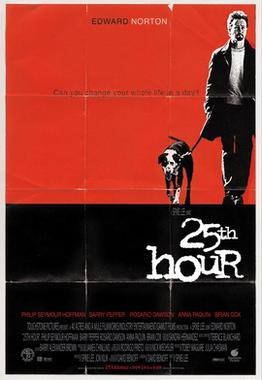
Film Review: 25th Hour (dir by Spike Lee)


(SPOILERS)

First released in 2003, 25th Hour is one of those films that gets better and better with each subsequent viewing.

Monty Brogan (Edward Norton) may have done some very bad things in the past but nearly everyone has benefited.  His childhood friends, a trader named Frank (Barry Pepper) and a teacher named Jacob (Philip Seymour Hoffman), both get to live vicariously through their friend, even if neither one of them is quite willing to admit it.  Monty’s father (Brian Cox) is a retired fireman who now owns a bar that was largely purchased with the money that Monty made from dealing drugs.  Monty’s girlfriend, Naturelle (Rosario Dawson), is “living high” off of the profits of Monty’s drug deals.  For that matter, so is Monty.  Monty has a nice apartment, a loyal dog, and a supportive boss named Uncle Nikolai (Levan Uchaneishvili).

Of course, Monty understands that he’s in the business of destroying lives.  When Monty first met Naturelle, he had just completed a transaction with a well-dressed businessman.  Years later, when Monty is sitting on a bench with his dog, that same man approaches him and begs for more drugs.  The man’s no longer wearing a suit.  Now, he’s apparently homeless and so addicted that he takes it personally when Monty informs him that he’s no longer in the drug-selling business.

Why is Monty no longer selling?  Someone told on Monty.  When the DEA showed up at his apartment, it didn’t take long for them to find the packages that he had hidden in the cushions of the couch.  For all of his swagger and confidence, it would appear that Monty wasn’t quite as clever as he thought he was.  Monty was arrested and subsequently sentenced to seven years in prison.

The majority of 25th Hour takes place during Monty’s final night of freedom, a night that he’s planning on spending it with Frank and Jacob, both of whom could have made the same mistakes that he did but, for whatever reason, they didn’t.  Needless to say, Monty’s got a lot on his mind.  For all of his attempts to hide it, Monty isn’t as tough as he pretends to be.  He knows that it’s not going to be easy for him to do seven years in confinement.  He’s terrified of getting raped in prison and he worries that he’s going to be locked in a holding cell with 200 other criminals.  Both he and his friends know that, even if he does survive, he’ll be a different man when he gets out.  Frank suggests that he and Monty could open a bar when Monty is released but they both know this is an empty promise.  Not only is Monty is scared of the future but he’s haunted by the past.  Is he getting what he deserves?  What if he had made different choices?  Will Nautrelle wait for him or, as some of his associates suggest, is she the one who betrayed him in the first place?

Over the course of the night, both Frank and Jacob are also forced to deal with their feelings towards Monty.  Frank is a Type A personality, the one who spends his day screaming into telephones and who eagerly looks forward to exploiting bad economic news for his own financial gain.  Frank says that Monty is getting what he deserves but, as the film progresses, it becomes obvious that Frank knows that he has more in common with Monty than he wants to admit.  Jacob, on the other hand, is a socially awkward teacher who is struggling to deal with a crush that he’s developed on one of his students (Anna Paquin).  If Frank fears that he’s more like Monty than he wants to admit, Jacob wishes he could be more like him.  At first, it’s hard to imagine that these three men could ever have been close friends but, as soon as you see them together, it all makes sense.

As directed by Spike Lee, one of American cinema’s greatest provocateurs, 25th Hour is more than just the story of one man’s last night of freedom.  Over the course of the film, Monty becomes a symbol of not just New York City but of America itself.  Driven by self-interest, Monty has spent his life ignoring the consequences of his actions and, now that he has no choice but to confront them, it’s too late.  During the film’s most famous scene, Monty stares in a mirror while his reflection rants against every single neighborhood and ethnic group in New York City.  The rant is such a powerful scene that it’s easy to miss the most important point.  Only at the end of the rant does Monty’s reflection admit that he’s as much to blame for his life as any of them.

Oh yes, the Rant.  The Rant is so famous that I was almost tempted to not mention it in this review, just because it doesn’t seem as if there’s much left to be said about it.  Even people who dislike the film seem to be in agreement that the Rant is one of the most powerful and incendiary moments in early 21st century cinema.  The Rant gives us a portrait of a divided and angry society in collapse and it’s a portrait that is probably even more relevant today than it was when the film was first released.  The Rant feels like such a classic Spike Lee moment that it’s surprising to discover that the Rant was included in the script even before Lee was attached to the film.

http://www.youtube.com/watch?v=bLtq4n59Vic

A few things about the Rant:

  1. The film deliberately leaves it ambiguous as to whether or not Monty is actually speaking.  We see the back of his head and his reflection but the movement of his head rarely seems to match the movement of his reflection.  Regardless of whether Monty is actually speaking or just imagining the rant, the scene does make clear that, even on his way to prison, Monty can only truly express himself while alone.  Of course, once he’s locked up, Monty’s not going to be alone for at least seven years.
  2. “Enron!”  I have to admit that, when I recently rewatched film, I laughed when Monty started ranting about Enron.  I can vaguely remember a time when everyone was obsessed with Enron and Halliburton and all that other stuff so I found it funny that I briefly had to struggle to recall just what exactly Enron was.  16 years from now, I wonder if people will watch old movies and TV shows and say, “Why are they all so obsessed with Russia?”

As well-done and brilliantly acted as it may be, the Rant has tended overshadow an even better moment.  It has been said that the key to a successful work of art is a good ending.  As a writer, I can tell you that endings are a hundred times more difficult than beginnings.  Fortunately, 25th Hour has an absolutely brilliant ending.

After having finally convincing Frank to beat him up (in an effort to make himself look tougher once he arrives in prison), Monty is being driven to the prison by his father.  As they leave New York City, Monty takes one final look at the city and it’s citizens enjoying freedom that he’ll never again have.  (This is such a New York City that you can’t help but feel that it’s adding insult to injury that Monty’s going to have to serve his time upstate.)  As he drives, Monty’s father begins to talk…

It’s all about decisions and consequences.  Monty made his decisions years ago.  Over the course of Monty’s last night of freedom, Frank, Jacob, Naturelle, and even Uncle Nikolai made their decisions.  And now, as he drives his son to prison, Monty’s father is forced to make a decision of his own.  There’s so much great acting to be found in 25th Hour but, during that final soliloquy, Brian Cox upstages all of them.  Brian Cox is one of those character actors who seems as if he’s been around forever.  He’s the type of dependable actor who, much like Monty’s father, is often taken for granted.  If nothing else, you have to be thankful for a film like 25th Hour because it gives everyone a chance to be reminded of just how brilliant an actor Brian Cox truly is.

(Here’s a random bit of a Brian Cox trivia.  While everyone knows that, in Manhunter, Brian Cox was the first actor to play Hannibal Lecter, he also played Winton Churchill the same year that Gary Oldman won an Oscar for playing the same role in Darkest Hour.)

25th Hour is not an easy film to watch.  At times, it’s one of the most depressing films ever made.  It’s tempting to say that, as bad as things ultimately turn out for him, you’re glad that Monty has his father and his friends but that’s really not true.  No matter how much his friends care about him or how much Naturelle and his father love him, Monty’s going to prison and his story is simply not going to have a happy ending.

And yet, 25th Hour is one of those films that you can’t look away from and, after you watch it, you simply can’t forget.  Every time I watch 25th Hour, I find new details to appreciate.  With each subsequent viewing, the pungent dialogue becomes even more multi-layered.  With each subsequent viewing, Monty becomes even more of an intriguing and tragic figure.  This is a film that makes you appreciate the brilliance of Edward Norton and mourn the fact that Barry Pepper rarely gets roles as good as his role here.  With each viewing, 25th Hour reminds you of what a great talent we lost when we lost Philip Seymour Hoffman.  It’s film that gets better with each viewing.

Assuming that Monty survived and managed to stay out of trouble, he should be out of prison by now.  Hopefully, wherever he is, he’s doing okay.