Quickie Review: Dredd 3-D (dir. by Pete Travis)


Dredd

“Only one thing fighting for order in the chaos: The men and women of the Hall of Justice. Juries… Executioners… Judges.” — Judge Dredd

In 1995 there was a little sci-fi/action film called Judge Dredd that was one very anticipated film by fans of the title character. Judge Dredd was one of those comic book characters who was beloved by the hardcore comic book fans (and British readers worldwide). When news broke that the character was going to get his own film adaptation there was rejoicing but then the first shoe dropped. Sylvester Stallone will play the title character and worse yet he will have a sidekick in the form of one Rob Schneider. Even with this casting news there was still hope the film will at least do the property justice. I mean how can one fuck up an ultra-violent comic book that was tailor-made to become an action film. Well, let’s just say that the filmmakers involved and everyone from Stallone to Schneider all the way to the veteran Max Von Sydow failed to deliver a bloodsoak look into a dystopian future with a no, nonsense lawman to police the streets of Mega-City One.

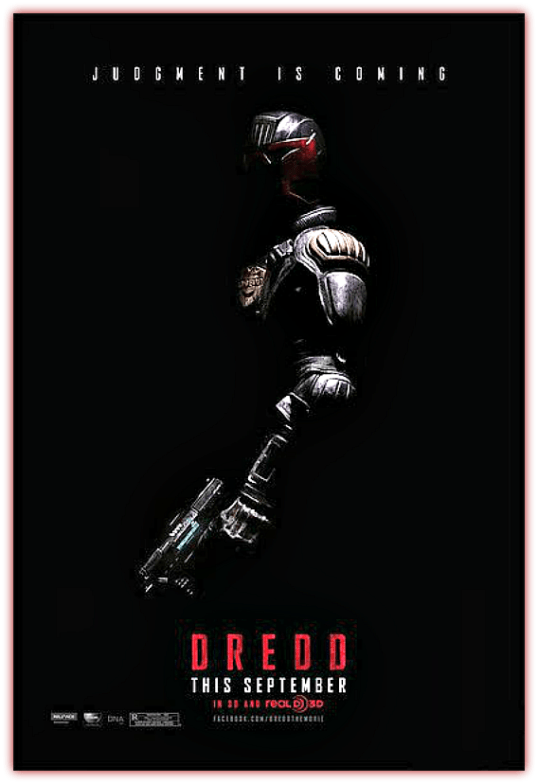
So, it was a surprise when there was an announcement that the character  will get another film but a reboot instead of a sequel. It seems everyone who had a stake in the Judge Dredd property wanted to forget the 1995 Stallone version. I couldn’t blame them for this decision. Out goes Stallone in the title role and in his place is Eomer himself, Karl Urban to don the iconic Judge helm. He would have a partner in the form of Judge Anderson (who’s a rookie in this reboot and it’s through her eyes that we get to learn the rules of the Dredd world) as played by Olivia Thirlby. The reboot was to be helmed by British filmmaker Pete Travis using a screenplay by Alex Garland (28 Days Later and Sunshine) and was simply titled Dredd and would be filmed in 3-D.

There was trepidation about the film and rumored on-the-set differences between Pete Travis and Alex Garland marked the reboot as a troubled film at best and a dead-on-arrival at it’s worst. When the film finally made it’s premiere at San Diego Comic-Con 2012 the reaction from attendees who saw the film was a near-unanimous praise for it. The same could be said for the reaction of those who saw it two months later at the Toronto International Film Festival. It was being called a film that was a throwback and homage to the violent action films of the 80’s and early 90’s. This was high praie and one reason I decided to go see it.

I was very glad that I made the decision to see it when it made it’s worldwide release. Dredd 3-D was exactly as those who praised it turned out to be.

The film opens up with a fly-over of Mega-City One (looking like the location shoot of Johannesburg expanded to a 1000x through the judicious use of CGI and matte backgrounds effects) and the world which created the massive hive city of 800 million whose borders stretched from Boston in the north to Washington, D.C. in the south. It’s Karl Urban’s voice as Judge Dredd who we learn all this from right before the film segues into a fast-paced and violent action scene. One that shows just how violent Mega-City One is (people in malls and on the streets who get gunned down by stray fire get collected by automated garbage droids who also clean the pools of blood) and just how good Judge Dredd really is at his job.

Dredd 3-D is a simple story of a veteran cop who must evaluate a rookie whose psychic abilities would make her an invaluable member of the law enforcement group known as the Judges. The story brings these two disparate individuals into a massive apartment complex called The Peach Trees to investigate a triple homicide which brings them into conflict with the film’s villain in the form of Lena Headey as the brutal head of the gang called the Ma-Ma Clan. The film moves from one violent set-piece action to the next as Dredd and Anderson must find a way to escape the lockdowned Peach Trees and take out the Ma-Ma Clan in the process.

Yes, Dredd 3-D was a very good film and despite the story being so barebones that at times it resembled a video game with the way each sequence was a way to move from one floor to the next with the danger getting worst by the floor. It was the simplicity of the story that was also it’s major advantage. We got to know Dredd and Anderson (more of the latter than the former) and their actions throughout the film made for some very good character development. Even the tough, nigh-indestructible Dredd gained a semblance of sympathy for those he was very used to executing on-sight if the law deems it not whether it’s true justice.

Even the use of 3-D in the film was one of the better uses for what many still call a gimmick and a way for theater-owners to charge a higher ticket price for. The film was done in native 3-D and when it was paired with the super slo-mo sequences when characters where under the effects of the reality-altering drug Slo-Mo it literally created scenes of art. I suspect that we might see more films which uses this 3-D slo-mo effect in years to come. It was just that well done.

Now the big question is whether Karl Urban has erased the abomination that was Stallone’s performance in the same role 17 years past. The answer to that question would be a resounding yes. Urban never once takes off the iconic Judge helm and must act through his body language, dialogue delivery and, literally, the lower half of his exposed face. He made for a convincing Judge Dredd and not once did he go against character with one-liners and witty quips to punctuate an action scene. Not to be outdone would be Lena Headey as Madeleine Madrigal (hence Ma-Ma Clan) as the clan boss who was a mixture of reined in violence and psychopathy who was also going through a level of ennui that she made for a great villain. This was a woman who was so feared by the vicious and violent men in her command yet we never doubt that she was still the scariest of the whole bunch. There’s also Olivia Thirlby as the rookie Judge Anderson who brings a semblance of compassion and sympathy to the proceedings yet still able to kickass and take names not just with her psychic abilities but also with the Lawgiver (as the Judge’s firearms were called).

Dredd 3-D doesn’t try to explore the nature of violence that’s inherent in man or some other philosophical bullshit some filmmakers nowadays try to put into their action films. This film just decided to tell the proper Judge Dredd story and knew that ultra-violence would be a necessary component if the story was to remain true to the source material. In the end, the film did it’s job well and, even though it was by accident, it was still able to lend a level of thought-provoking themes and ideas about violence and its use.

Film Review: Harry Potter and the Deathly Hallows — Part 2 (dir. by David Yates)


Well, we all knew it would have to end someday and now, it’s over.  The Harry Potter film series, which began way back in 2001, is concluding right now in a theater near you.  On Friday night, me, Jeff, my sister Erin, and our friend Evelyn went down to the AMC Valley View and we saw Harry Potter and the Deathly Hallows, Part 2. 

The cinematic story of Harry Potter is over and yes, I did cry as I watched it end.  I didn’t just cry because of the movie, though the movie itself is one of the best of the year and it has one of those wonderful endings that just makes it impossible to remain dry-eyed.  No, I cried because — with this film — an era of my life is truly over.  

When the first Harry Potter film came out, I was only 16 and still trying to deal with the fact that I had been diagnosed as being bipolar just a few weeks earlier.  I felt alone and broken and destined to spend the rest of my life on the outside looking in.  The three hours that I spent watching Harry Potter and the Sorcerer’s Stone were three hours when I didn’t have to worry about suddenly bursting into tears and having everyone around me worrying about whether or not I was actually taking my hated medication.  For three hours, I could escape to another world where those who were different were celebrated precisely because they were different.  For three hours, I could imagine that just maybe I had a special purpose for existing too and maybe I had benevolent wizards and witches looking out for me too.  And I’m sorry if all that sounds trite in retrospect but, when you’re 16 and you think you’re too damaged to love, anything that gives you hope and pleasure in the present is a precious treasure.

Over the years, I eventually came to realize that being bipolar was hardly a curse and, as I matured and grew up and discovered new things, there was always a Harry Potter film either playing or about to come out.  Whether I was escaping high school, graduating college, or dealing with just every good or bad thing that makes up life, Harry Potter — this character who I first met (in book form) when I was 13 — was always there.  So, at the risk of sounding overdramatic, the end of Harry Potter is the end of a chapter of my life.

One final personal note: As I watched Harry Potter and the Deathly Hallows, Part Two, I had three dolls (or action figures, as boys insist on calling them) in my purse.  These dolls — Harry, Hermione, and Ron — came out around the same time as the second Harry Potter film and my mom (who collected dolls) ordered them off of Ebay three years ago, shortly before she entered the hospital for the final time.  Now, my mom was not a huge fan of the Harry Potter series but she knew that I loved it and that’s why she made those dolls her final gift to me.

And those are some of the reasons why I found myself crying as I watched the finale of Harry Potter.  However, there’s another reason why I cried and that’s that this is just a great film and the perfect conclusion to the series.

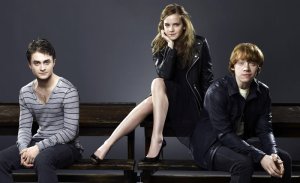
Essentially, Harry Potter and the Deathly Hallows, Part Two starts up immediately after the conclusion of Part One.  Dobby is dead, Lord Voldemort (a wonderfully neurotic Ralph Fiennes) and the Death Eaters are intent on destroying everything, and Severus Snape (Alan Rickman, wonderful as always) is in charge of Hogwarts.  After spending the first part of Deathly Hallows as fugitives, Harry Potter, Ron Weasley, and Hermione Granger (Daniel Radcliffe, Rupert Grint, and Emma Watson) return to Hogwarts to take a final stand against Voldemort.  Things end in a surprisingly bloody battle (this film is not for children) that leaves several characters dead and ultimately reveals that one wizard wasn’t the saint we always assumed he was while another is revealed to be the secret hero of the entire series.

Let’s get one question out of the way right now: will non-Harry Potter fans be able to follow this film?  Uhmmm…no.  Sorry.  Then again, why would a non-Harry Potter fan be at a film called Harry Potter and The Deathly Hallows Part Two anyway?  I mean, seriously, if you’re just going to film because everyone else is doing it than who are you to bitch anyway?  This is what you non-Harry Potter fans need to do.  Stop reading this review.  Go watch the previous Harry Potter films.  Watch them in order.  Take your time because Deathly Hallows is going to be in theaters for a while.  And then, once you’ve become immersed in the story, go see how it all concludes.  And then come back here and read rest of this review.

Okay, so is everybody up to date?

Cool.

One of the more interesting features of the Harry Potter series is that so many different directors (each with his own definite, individual style) have been involved in bringing these films to the screen.  Among Harry Potter fans, hours can literally be spent debating the merits (and weaknesses) of Chris Columbus, Alfonso Cuaron, Mike Newell, and David Yates.  My own theory is that each director was perfectly suited for each film he directed.  The audience-friendly vision of Chris Columbus was what the first two films needed, just as Prisoner of Azkaban needed Cuaron’s far darker vision and Mike Newell’s attention to character made Goblet of Fire one of the best of the Harry Potter films.  And while David Yates may not be as well-known (or critically acclaimed) as Newell or Cuaron, he brings exactly the right tone to Harry Potter and the Deathly Hallows, a perfect combination of spectacle and humanity.  It is to Yates’ credit that the scenes in which the characters simply talk to each other are just as compelling as the dramatic sequences where Voldemort and the Death Eaters attack Hogwarts.  Yates understands that this material could easily come across as silly or childish and to his credit, he never allows the audience to simply dismiss this film as a lot of blathering about wands and CGI magic.  As opposed to other directors who have given us summer blockbusters, Yates takes his film seriously.

And, fortunately, so does his cast.

One of the great pleasures of the Harry Potter series is that it’s given American audiences the chance to discover (and rediscover) some of the great British character actors and a lot of them show up (some for only a matter of minutes) here in the finale.  Maggie Smith, Jim Broadbent, Julie Walters, Robbie Coltrane, Gary Oldman, John Hurt, David Thewlis, Emma Thompson, and Jason Isaacs all put in appearances.  Kelly MacDonald has a great scene playing a ghost, Helena Bonham Carter is perfect as the evil Bellatrix Lestrange, and Alan Rickman is brilliantly ambiguous as Severus Snape.  (And yes, Snape’s actions are explained in this film and yes, I did cry.)

Ralph Fiennes plays so many villains that I now find myself expecting him to show up killing people in every movie I see.  He’s like a British Christopher Walken.  Still, it’s easy to take an actor like Fiennes for granted.  For the entire Harry Potter series to work, Lord Voldemort can’t just be an ordinary villain.  He’s got to be the sum total of all things evil and deadly.  You’ve got to believe that people would be scared to speak his name.  Great heroes need a great villain and Fiennes’ Voldermort is a great villain.

Ultimately, however, the true credit for the success of the Harry Potter series belongs to three actors who have literally grown up on the movie screen — Daniel Radcliffe, Rupert Grint, and Emma Watson.  The producers are fortunate indeed that the cute kids that they cast over a decade ago have all grown up to be talented, attractive, and likable actors.  If the first part of Harry Potter and the Deathly Hallows seemed to showcase both Grint and Watson (almost to Radcliffe’s expense), part 2 is most definitely centered on Harry Potter.  That doesn’t mean that Watson and Grint aren’t good in this film.  They are and they get to share one of the best movie kisses of 2011.  (As well, for those who keep count, Grint says “Bloody Hell,” three times in the film.)  But, for obvious reasons, this film is all about Harry and Radcliffe’s performance as Harry.  It’s a challenge for Radcliffe and it’s a challenge that he more than succeeds at conquering.  As the film ended, I realized that I was sad to know that the adventures of Harry Potter were done but I was excited to see what the future will hold for Radcliffe, Grint, and Watson. 

Incidentally, Harry Potter and the Deathly Hallows Part 2 has been released in both 3-D and 2-D.  We saw the 3-D version and if you have any knowledge of how I feel about 3-D (and how motion sick I tend to get while watching 3-D films) then that should show you just much I love the Harry Potter series.  I loved it so much that I was even willing to overlook my hatred of 3-D.  The 3-D here (which was added after the film has already been filmed) doesn’t really add much to the movie.  There were a few cool moments where I was all like, “Look, I can reach out and grab a piece of Voldemort,” but otherwise, the 3-D was a negligible factor as far as the overall film was concerned.

Still, there was one interesting thing about the 3-D.  The theater we saw the movie in was half-way empty.  At the same time, the neighboring theater — in which the 2-D version was playing — had a line of people waiting to get in.  They were not only waiting to see the 2-D version, they were waiting to see a showing that wouldn’t even begin until a full 90 minutes after the 3-D version started.  I mention this because, in the wake of Avatar, so many people have taken it for granted that 3-D is the future of movies and soon, as long as a film is in 3-D, we won’t have to worry about the difficult stuff like an interesting plot or compelling characters.  However, 3-D has become an overexposed gimmick.  For every film like Cave of Dreams that uses 3-D to craft an actual artistic statement, there’s a 1,000 films like Priest which use 3-D just because it’s an easy way to trick sucks into spending an extra dollars to see a crappy film. 

What so many filmmakers seem to forget is that the majority of film goers are not looking for 3-D.  We’re just looking for a good film.  And sometimes — like with Harry Potter and the Deathly Hallows — we get lucky and we find a great film.

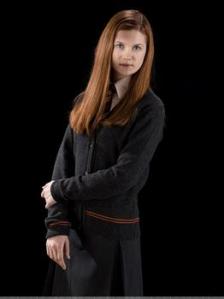
(Oh, and one last thing: I know everyone always expects me to claim to be just like Hermione but actually, I’ve always related more to Ginny Weasley.  Like her, I’m the youngest of four siblings, I’ve got red hair, and I always get my man, in the end.)

Film Review: Resident Evil: Afterlife (Dir. by Paul W.S. Anderson)


Last Friday, I saw the latest Resident Evil film — Resident Evil: Afterlife.

What can I say about Resident Evil: Afterlife?  I’ve been trying to figure that out for two days now.  For obvious reasons, this movie — like the other Resident Evil films — is just a video game put up on screen.  The film is a collection of set pieces that are all built around various characters having to complete tasks in a certain amount of time.  You can almost imagine various instructions popping up on the screen: “Clear the roof so that Alice can land her plane.”  “Swim through the basement to get the weapons cache.”  “Reach The Underground Tunnel Before The Building Explodes.”    In the lead role of Alice, Mila Jovovich still can’t act and director Paul W. S. Anderson still seems to believe that any cinematic weaknesses can be covered up by slow motion.

(By the way, there’s a chance that you might see the name Paul W. S. Anderson in the opening credits and you might say something like, “I guess he has to make movies like this so he can make movies like There Will Be Blood.”  Do not say this out loud because, while it’s totally understandable that you might be hyperactive and therefore, you sometimes say the first thing that pops into your head or maybe  you just sometimes get in a kinda ditzy state of mind and you might just happen to forget that Paul W. S. Anderson is not Paul Thomas Anderson, the people you saw the movie with will still be making fun of you at least two days later.)

This is the type of movie that critics hate and that , all things considered, I should probably hate too.  After all, I’ve devoted a lot of time and energy to criticizing Avatar for having a predictable plot.  So, how can I not hate a film, like Resident Evil: Afterlife, that doesn’t even have a plot to begin with?

Well, I didn’t hate Resident Evil: Afterlife.  I certainly didn’t love it and I think that it’s a total failure of as a zombie film (but then again, we all know the Resident Evil films aren’t really zombie films to begin with) but the movie is really the epitome of stupid fun.  The movie doesn’t pretend to be anything other than that. 

Sometimes, you just have to stop worrying and go with the flow.

I have to admit that I’ve never actually played the Resident Evil games before and whenever I’ve seen any of the movies, I’ve had to take my good friend Jeff with me so that he could explain what was going on.  To be honest, I’ve made him explain it to me several times and I still don’t quite get it all but he’s so cute when he tries.  I did try to watch him play one of the Resident Evil games once.  At one point, he started talking back to the imaginary people on the TV screen, saying, “No, how about you go down there and find them!?”  So, to be honest, that’s what I think about when I think about Resident Evil

(And, to be honest, I kind of wish that — at one point during the movie — either Alice or her sidekick Claire — played by Ali Larter — had said something along those lines instead of just blindly agreeing to run off alone into hordes of zombies.  It’s what I would have said.  “You want me to go swim through the flooded basement to retrieve those weapons?  Hey, fuck you, Mr.  Man.  You go do it if you want those freaking guns so much…”)

Anyway, I’ve been told that the big deal in this film is that Wentworth Miller shows up playing Claire’s brother, Chris.  Apparently, Chris is a big deal in the game.  He doesn’t really do much in this film but that’s okay.  Jovovich and Larter kick more than enough ass on their own.  Since I’m always a fan of any movie that features women fighting back (as opposed to just waiting to be rescued), that was fine with me.

Anyway, the demonic dogs and all the usual zombies all show up but, to be honest, their presence is almost an afterthought.  They don’t have much to do.  If I did really have any huge complaint with this unambitious film, it’s that you never really believe that the zombie apocalypse would be that hard to survive.  The zombies, quite frankly, are way too metrosexual.

But as I said before, this is a fun film as long as you don’t think about it.  It’s a movie to see with a group of friends so you can all take turns making silly comments.  On the plus side, the film’s opening — in which Tokyo is destroyed — is very well done and the film has an excellent musical score.  This is a movie that was designed to be played loud.

Oh — and the 3-D effects?  Actually, the 3-D effects were surprisingly good and Anderson actually makes good use of them.  Admittedly, they made me feel car sick but that’s on me.  Don’t blame the movie.