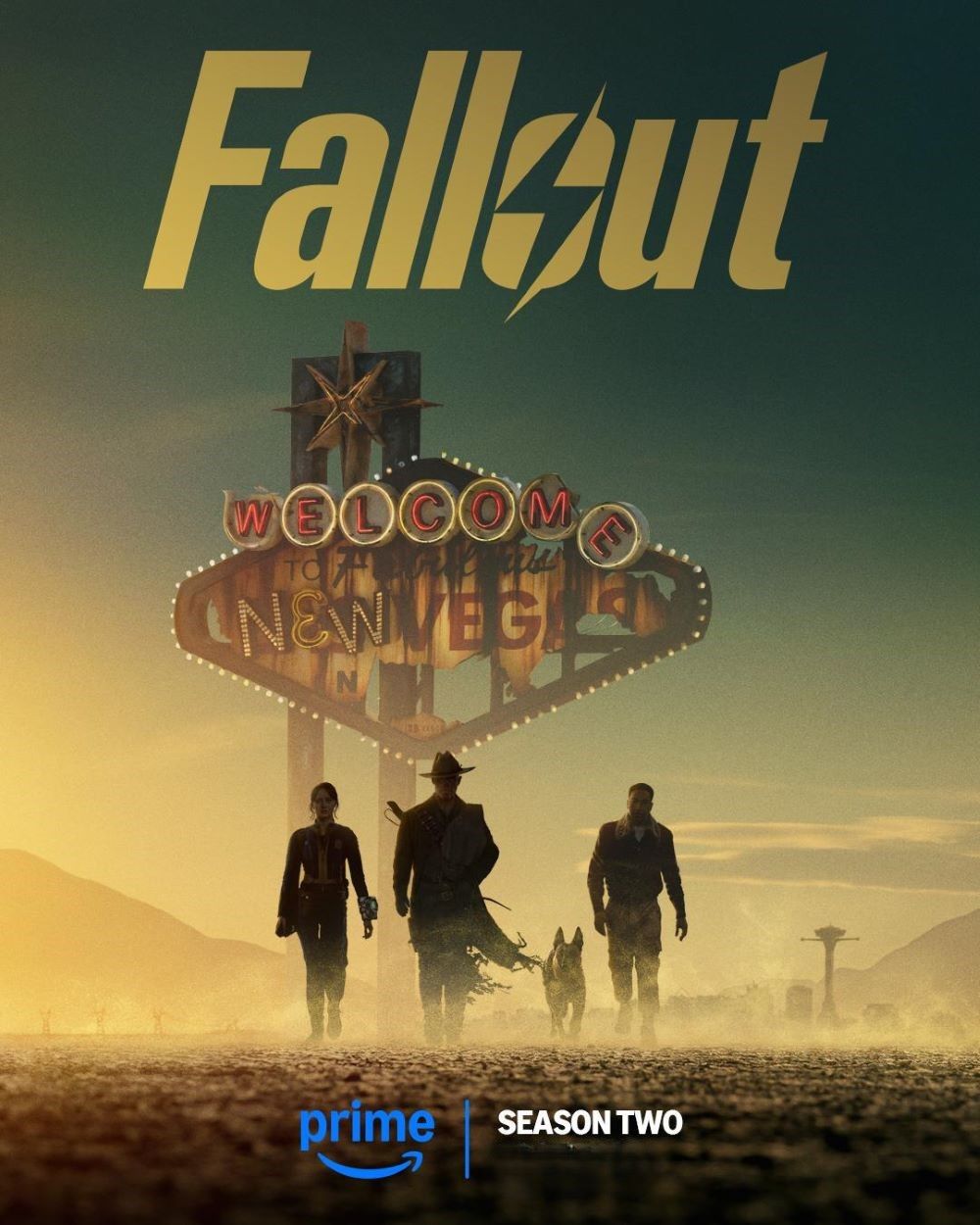
Review: Fallout (Season 2, Episode 3 “The Profligate”)


“If you think everyone else is the bad guy, chances are, you’re the bad guy.” — Lucy McLean

Episode 3 of Fallout season 2 takes a deliberate breath after the season’s earlier frenzy, shifting focus to simmering tensions and the cracks forming within key factions. It trades some high-octane action for deeper dives into moral gray areas and character dilemmas, while sprinkling in plenty of nods to the game’s lore that will thrill longtime fans. The result is an episode that feels more introspective than explosive, building quiet dread that hints at bigger fractures ahead without fully detonating them just yet.

The spotlight falls heavily on Caesar’s Legion this time around, turning their rigid hierarchy into a pressure cooker of internal strife. Lucy finds herself right in the thick of it, her wide-eyed vault dweller optimism clashing hard against a group that views compromise as heresy. Hanging in the balance between rival power plays, she becomes a symbol of the wasteland’s brutal tug-of-war, where diplomacy often looks more like desperation. It’s a tough spot for her character, one that tests her limits and forces some uncomfortable reflections, though the episode spends more time on the surrounding politics than her personal evolution at first.

The Ghoul shines in his signature blend of cynicism and cunning, navigating a high-stakes deal that underscores his “ends justify the means” survival code. His interactions with NCR remnants carry that dry, world-weary edge, laced with flashbacks that keep peeling back layers of his pre-war life under influences like Vault-Tec and figures from New Vegas lore. These moments aren’t just backstory—they tie directly into his current ruthlessness, showing how old betrayals and power games echo into the irradiated present. It’s the kind of character work that makes his choices feel earned and uneasy, never fully heroic or villainous.​

Meanwhile, Maximus’s path with a Brotherhood superior veers into unexpectedly dark territory, blending camaraderie with the order’s uglier underbelly. What starts as armored antics at a familiar Nuka-Cola site uncovers dilemmas about who gets to claim “civilization,” hinting at rifts that could shake the Brotherhood to its core. His arc builds to a tense crossroads, mirroring the Legion’s own divisions and raising questions about loyalty in a world where ideals curdle fast. It’s a smart parallel that keeps the episode’s themes cohesive without feeling forced.

Guest spots add some unexpected flair, like Macaulay Culkin’s turn as a Legion figure whose quirky menace fits the faction’s cultish vibe perfectly. He brings a bureaucratic fervor to the role, emphasizing how the Legion ritualizes its brutality right down to succession squabbles over key artifacts. These cameos feel organic, enhancing the world rather than stealing focus, and they nod to the games’ eccentric cast without overwhelming the main threads.

Pacing-wise, this hour simmers more than it boils, which might test viewers craving constant momentum. Lucy’s predicament holds steady for a stretch, the Ghoul operates in the shadows, and Maximus’s detour unfolds gradually before tensions spike. That restraint pays off by letting atmosphere build—the Legion camp’s stark crosses and sun-scorched decay capture the series’ horror-Western mashup beautifully. Locations like Camp Golf and NCR outposts evoke New Vegas nostalgia, but twisted into symbols of faded glory, reinforcing the show’s point that no empire endures unscathed.

For game fans, the episode is a treasure trove of subtle references, from Legion dynamics to Securitron teases, woven in ways that serve the plot rather than just fan service. Newcomers won’t feel lost, as the context emerges naturally through dialogue and fallout from prior episodes. Visually, it’s peak Fallout: practical effects make the wasteland feel lived-in and lethal, with practical power armor clanks and irradiated horrors that pop off the screen.​​

By the later beats, the episode starts hinting at shifts in the power balance, leaving characters at pivotal junctures without spelling everything out. Lucy grapples with harsh realities that could harden her edge, the Ghoul’s gambit ripples outward in unpredictable ways, and Maximus faces choices that test his place in the Brotherhood. These teases set up a powder keg for the back half, where alliances fray and the wasteland’s chaos might force some reluctant team-ups or betrayals.​​

All told, episode 3 delivers a balanced mix of lore love, character depth, and atmospheric tension, even if its slower gear occasionally mutes the thrill. Strengths like the Ghoul’s layered flashbacks and faction parallels outweigh any mid-episode lulls, making it a solid bridge that primes the pump for escalation. In a season already nailing the games’ spirit, this one reminds us why Fallout endures: beneath the satire and shootouts lies a grim meditation on humanity’s stubborn flaws.
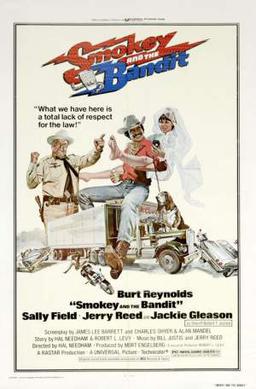
Scene I Love: The Bandit Breaks The Speed Limit in Smokey and the Bandit


In honor of National Speed Limit Day, today’s scene that I love features Burt Reynolds breaking the speed limit over and over again in 1977’s Smokey and the Bandit.  This scene is almost enough to make me want to go on a road trip.

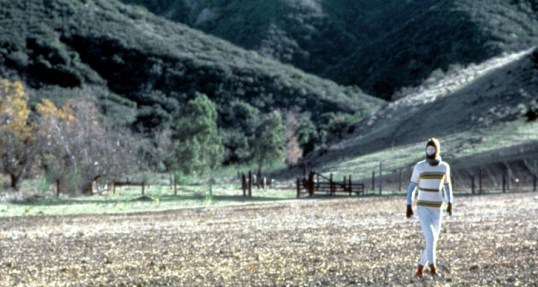
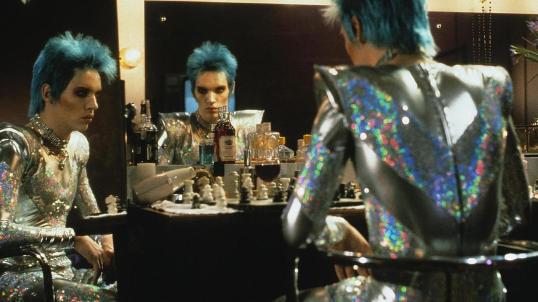
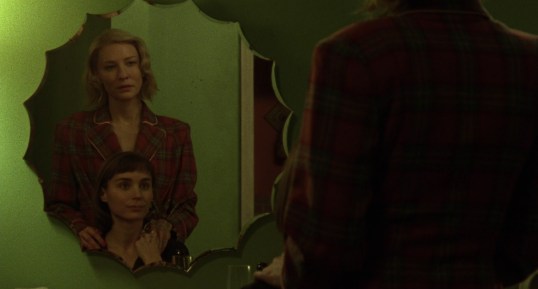
4 Shots From 4 Films: Special Todd Haynes Edition


4 Shots From 4 Films is just what it says it is, 4 shots from 4 of our favorite films. As opposed to the reviews and recaps that we usually post, 4 Shots From 4 Films lets the visuals do the talking.

Today, the Shattered Lens wishes a happy birthday to director Todd Haynes!  It’s time for….

4 Shots From 4 Todd Haynes Films

Safe (1995, dir by Todd Haynes, DP: Alex Nepomniaschy)

Velvet Goldmine (1998, dir by Todd Haynes, DP: Maryse Alberti)

I’m Not There (2007, dir by Todd Haynes, DP: Edward Lachman)

Carol (2015, dir by Todd Haynes, DP: Edward Lachman)

Live Tweet Alert: Join #FridayNightFlix for The Alternate!


As some of our regular readers undoubtedly know, I am involved in a few weekly watch parties.  On Twitter, I host #FridayNightFlix every Friday and I co-host #ScarySocial on Saturday.  On Mastodon, I am one of the five hosts of #MondayActionMovie!  Every week, we get together.  We watch a movie.  We tweet our way through it.

Tonight, at 10 pm et, I will be hosting #FridayNightFlix!  The movie?  2000’s The Alternate, starring Eric Roberts!

If you want to join us this Friday, just hop onto twitter, find The Alternate on Prime or Tubi, start the movie at 10 pm et, and use the #FridayNightFlix hashtag!  I’ll be there happily tweeting.  It’s a friendly group and welcoming of newcomers so don’t be shy.

See you there!

Moments #32: The First Morning Of 2026


I took this picture yesterday, from my bedroom window.  It’s the first picture that I took in 2026.  This is the morning on January 1st, 2026.  It may not be my best photograph but it’s an important one.  It’s the first image of the year.  I love this tree.  In just a few months, that ugly, scary old tree will no longer be an eyesore.  It’ll be full of green leaves and I’ll have a wonderful view.

Previous Moments:

  1. My Dolphin by Case Wright
  2. His Name Was Zac by Lisa Marie Bowman
  3. The Neighborhood, This Morning by Erin Nicole
  4. The Neighborhood, This Afternoon by Erin Nicole
  5. Walking In The Rain by Erin Nicole
  6. The Abandoned RV by Erin Nicole
  7. A Visit To The Cemetery by Erin Nicole
  8. The Woman In The Hallway by Lisa Marie Bowman
  9. Visiting Another Cemetery by Erin Nicole
  10. The Alley Series by Erin Nicole
  11. Exploring The Red House by Erin Nicole
  12. The Halloween That Nearly Wasn’t by Erin Nicole
  13. Watchers and Followers by Erin Nicole
  14. Visitors by Erin Nicole
  15. Fighting by Case Wright
  16. Walking In The Fog by Erin Nicole
  17. A Spider Does What It Can by Erin Nicole
  18. Downtown Richardson, In The Rain by Erin Nicole
  19. Me, our kids, and ONCE UPON A TIME IN HOLLYWOOD! by Bradley Crain
  20. The Statues of SMU by Erin Nicole
  21. Exploring the Back Yard Of An Abandoned House by Erin Nicole
  22. The Ugly Old Swing by Erin Nicole
  23. The Fourth of July In My Town by Erin Nicole
  24. A 4th of July Tradition: Blurry Firework Pictures! by Erin Nicole
  25. That Doll by Erin Nicole
  26. Invasion of the Dolls by Erin Nicole
  27. The Dollhouse by Erin Nicole
  28. Jake and Max by Erin Nicole
  29. The Morning of October 26th by Erin Nicole
  30. Casper The God by Erin Nicole
  31. Carrying The Flag by Erin Nicole

Music Video of the Day: I Can’t Drive 55 by Sammy Hagar (1984, dir by Gil Bettman)


52 years ago, on a date that will live in infamy, President Richard Nixon signed into law the national speed limit of 55 Miles Per Hour.  Though the law was later repealed, the scourge of the speed limit continues.

Though this song is just a little before my time, it still feels like it was specifically recorded just for me.  I have always considered traffic laws, not just the laws themselves but the way they are enforced, to be the epitome of everything that can go wrong when people blindly respect authority.

As for the video, it also feels like it was specifically filmed for me.  It’s actually a fun little video with a sense of humor and who hasn’t wanted to tell a traffic judge what he can do with his gavel?

Enjoy!

Icarus File #25: 1941 (dir by Steven Spielberg)


In the year 1979, a young Steven Spielberg attempted to conquer comedy in the same way that he previously conquered horror with Jaws and science fiction with Close Encounters of The Third Kind.  Working from a script written by Robert Zemeckis and Bob Gale, Spielberg made a film about the days immediately following Japan’s attack on Pearl Harbor.  The name of the film was 1941 and it remains Steven Spielberg’s only attempt to direct a full-out comedy.  There’s a reason for that.

The film follows a large group of characters over the course of one day and night in 1941.  It’s been six days since Pearl Harbor was attacked and the streets of Los Angeles are full of young men who are preparing to ship out and older man who are paranoid about when the next attack is going to come.  However, Major General Joseph Stilwell (Robert Stack) just wants to see Dumbo at the local theater.  Meanwhile, his womanizing aide (Tim Matheson, giving the same performance here that he did in National Lampoon’s Animal House) just wants to get Stillwell’s aviation-lusting secretary (Nancy Allen) into an airplane.

Elsewhere, Ward Douglas (Ned Beatty) is happy to allow Sgt. Tree (Dan Aykroyd) and his men (including John Candy) to set up on an anti-aircraft gun in his front yard.  Ward’s daughter, Betty (Dianne Kay), is only concerned about entering a dance contest with her friend, Maxine (Wendie Jo Sperber).  Cpl. Sitarski (Treat Williams) and dishwasher Wally Stephens (Bobby D iCicco) both hope to be Betty’s partner and their rivalry leads to a massive (and seemingly never-ending) brawl.

While Ward deals with the gun in his front yard, another concerned citizen — Claude Crumm (Murray Hamilton) — keeps watch from atop of Ferris wheel, along with amateur ventriloquist Herbie Kazlminsky (Eddie Deezen).

But that’s not all!  Susan Backilinie recreates her role from a previous Spielberg film, skinny dipping while the Jaws theme plays in the background and running straight into a submarine that is commanded by Commander Akiro Mitamura (Toshiro Mifune, trying to maintain his dignity).  Mifune decides to attack Hollywood but no one on the submarine is sure where that is.  Christopher Lee appears as an arrogant German who is along for the ride.  Slim Pickens shows up as a lumberjack who is temporarily captured by the Japanese.  John Belushi plays Wild Bill Kelso, who flies his airplane through Los Angeles.  Warren Oates yells and laughs.  Dick Miller, Elijah Cook Jr. and Lionel Stander show up in small roles.

“Since when is Steven funny?”  According to Peter Biskind’s Easy Riders, Raging Bulls, this was the reaction that most of Spielberg’s friends had when he announced that his next film would be a screwball comedy set during World War II.  Watching the film, one gets their point.  The majority of the film’s humor comes from people looking at the camera and screaming.  There’s a lot physical comedy, which would undoubtedly work in small amounts but which grows rather tiring when it’s dragged out to the extent that Spielberg’s drags it out.  (A brawl at a USO show seems like it should be funny but Spielberg allows it to go on for too long and the careful choreography takes away any element of spontaneity.)  The film attempts to duplicate the style of Animal House (and it’s probably not a coincidence that Matheson, Belushi, and director John Landis all have roles in the film) but Spielberg often seems as if he’s trying too hard.  There’s nothing subversive about the humor.  It’s more antic than funny.

A huge problem is that there really isn’t much of a story here.  Spielberg, who is normally one of Hollywood’s best storytellers, attempts to do a loose, Altman-style ensemble film and the result is that none of the characters feel alive and there’s never any sense of narrative momentum.  There are a few performers who manage to make an impression amongst all the explosions and the yelling.  John Belushi has the advantage of not having to share the majority of his scenes with anyone else.  Warren Oates’s manic energy is more than welcome.  Wendie Jo Sperber deserved more screentime.  Murray Hamilton and Eddie Deezen frequently made me laugh.  There’s a wonderful moment where Robert Stack’s intense general cries while watching Dumbo.  But, for the most part, the film never comes together.

That said, 1941 is definitely a Steven Spielberg film.  It received three Academy Award nominations, for Cinematography, Sound, and Visual Effects.  (All three of those categories, not surprisingly, are more associated with spectacle than with comedy.)  The film looks great!  Spielberg’s attention to detail is there in the production design and the costumes.  Watching 1941, you can see Spielberg’s talent while also seeing why he never directed another comedy.

Previous Icarus Files:

  1. Cloud Atlas
  2. Maximum Overdrive
  3. Glass
  4. Captive State
  5. Mother!
  6. The Man Who Killed Don Quixote
  7. Last Days
  8. Plan 9 From Outer Space
  9. The Last Movie
  10. 88
  11. The Bonfire of the Vanities
  12. Birdemic
  13. Birdemic 2: The Resurrection 
  14. Last Exit To Brooklyn
  15. Glen or Glenda
  16. The Assassination of Trotsky
  17. Che!
  18. Brewster McCloud
  19. American Traitor: The Trial of Axis Sally
  20. Tough Guys Don’t Dance
  21. Reach Me
  22. Revolution
  23. The Last Tycoon

Made For TV Movie Review: Talk To Me (dir by Graeme Campbell)


Talk To Me, a made-for-television film that first aired on ABC in 1996, takes viewers behind the scenes of daytime talk show.

The Howard Grant Show has built a strong audience based on airing stories that appeal to the more prurient interests of viewers.  Howard Grant (Peter Scolari) may have started out hosting a show about “issues” but now his show features wives who strip, girlfriends who cheat, and the occasional fist fight.  While Howard presents himself as being a smooth-talking, compassionate advocate for society’s forgotten victims, the truth of the matter is that he’s a puppet who reads from a teleprompter and who wears an earpiece so that he can be told which questions to ask.  Sadie (Veronica Hamel) is the one who is in charge of the show and she’ll exploit anyone and anything to get ratings.

Idealistic Diane Shepherd (Yasmine Bleeth) is hired to work as a segment producer for Howard’s show.  Diane used to work on a talk show called “Margolis.”  Margolis was cancelled because it was too concerned with “issues.”  Still, Diane is hoping that she can bring the same earnest approach that she learned at Margolis to The Howard Grant Show.  Why does Diane believe this?  Why does it not occur to her that an approach that got her previous show canceled might not be appreciated at her new show?

Because Diane is kind of an idiot.

The movie doesn’t want us to think of Diane as being an idiot.  We’re supposed to be on Diane’s side and we’re supposed to be just as shocked as she is when Sadie reveals just how manipulative the talk show game is.  Unfortunately, Diane comes across as being so incredibly naive that it’s hard to really take her or her concerns seriously.  It’s one thing to be upset at the way Sadie manipulates the show’s guests.  It’s another to consistently be surprised by it.  Diane spends so much of the movie being shocked that I eventually lost all respect for her.  Diane cross the line from idealism into stupidity.  Yasmine Bleeth’s wide-eyed performance doesn’t help matters.  I watched this movie and wondered how Diane could even survive living in New York, let alone working there.

Jenny Lewis plays Kelly, a drug-addicted prostitute that Diane recruits to appear on the show.  Talk to Me does a good job of showing how the show manipulates Kelly and then essentially abandons her once her episode has been filmed but, again, there’s nothing particularly surprising about any of it.  I would have to imagine that, even in 1996, most people understood that Jerry Springer wasn’t a paragon of virtue and that his show was more interested in exploiting than helping.  Talk To Me feels like an expose of something that had already been exposed.

The best thing about the film is Peter Scolari’s performance as Howard Grant.  Scolari does such a good job as the unctuous talk show host that it’s actually a shame that the character didn’t get more screentime.  (That said, there is a neat twist involving his character towards the end of the film.)  Scolari perfect captures Howard’s fake but superficially appealing concern for his guests.  He asks the most exploitive of questions but he does so in a gentle voice and his television audience loves him for it.  Howard is remote and quiet off-camera but on-camera, he comes alive.  He was born to talk to people.  It’s just too bad that the conversation often ruins their lives.