The great actress Karen Black would have been 86 years old today.
Karen Black does not receive a lot of screentime in Nashville but she definitely makes an impression as the driven, self-centered, and oddly likeable Connie White. (“She can’t even comb her hair” — Connie White on Julie Chrisite.) Here she is, performing one of the songs that she wrote herself for the film. The audience was largely made up of actual Nashville residents, who reportedly very much appreciated Black’s performance.
4 Or More Shots From 4 Or More Films is just what it says it is, 4 shots from 4 of our favorite films. As opposed to the reviews and recaps that we usually post, 4 Shots From 4 Films lets the visuals do the talking!
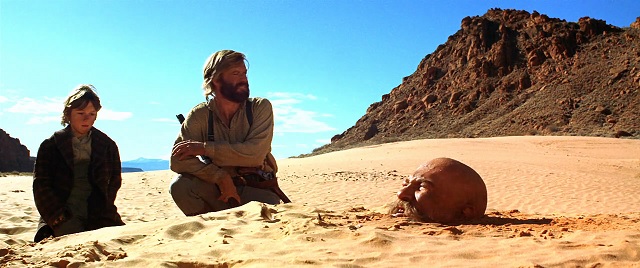
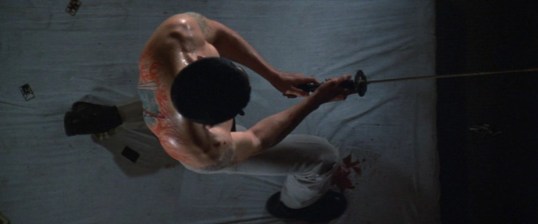
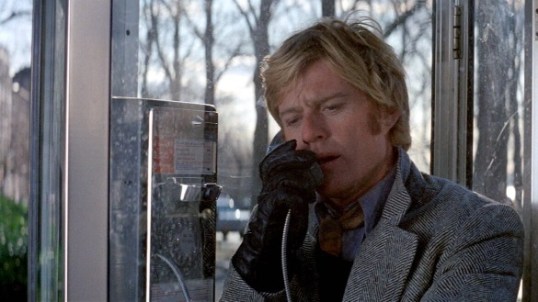
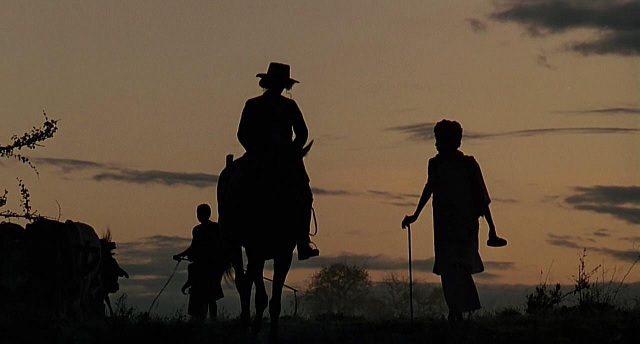
90 years ago today, Sydney Pollack was born in Indiana. Though Pollack got his start as an actor, he soon moved into directing and was one of the key television directors of the 1960s. He eventually branched out into film, making a name for himself as a director of intelligent and sensitive comedies and dramas. Though he only directed 21 films over the course of his career, his films received a total of 48 Oscar nominations and 11 wins. 1982’s Tootsie and 1985’s Out of Africa were both nominated for Best Picture. Out of Africa won. Pollack also returned to acting in the 90s, making a name for himself as a skilled character actor. I’ll always remember him from Eyes Wide Shut, intimidating Tom Cruise while playing pool.
In memory of Sydney Pollack, here are….
4 Shots From 4 Sydney Pollack Films
Jeremiah Johnson (1972, dir by Sydney Pollack, DP: Duke Callaghan)
The Yakuza (1974, dir by Sydney Pollack, DP: Duke Callaghan and Kozo Okazaki)
Three Days of Condor (1975, dir by Sydney Pollack, DP: Owen Roizman)
Out of Africa (1985, dir by Sydney Pollack, DP: David Watkins)
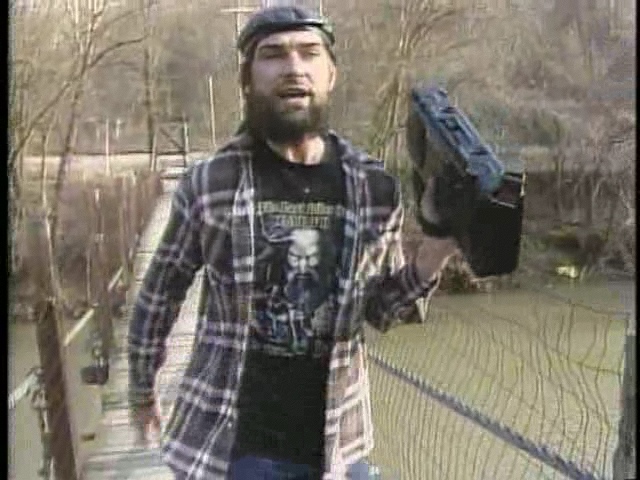
Last year I reviewed the 2009 documentary, THE WILD AND WONDERFUL WHITES OF WEST VIRGINIA, which focused on Jesco White and the out of control White family from Boone County, West Virginia. Today, I’m going back to the original 1991 documentary, DANCING OUTLAW that first introduced us to Jesco and his family. Directed by Jacob Young and premiering as part of the PBS “Different Drummer” documentary series, this program would go on to win a 1992 Emmy Award, as well as a 1993 American Film Institute Award for “Best Documentary.” It would also turn Jesco into a celebrity and pop culture figure in West Virginia. This amazing documentary is currently available on YOUTUBE, and I highly recommend it to any person who’s interested in seeing what poverty and unchecked drug and alcohol abuse will do to the human brain.
DANCING OUTLAW is where we first meet Jesco White, an amazingly talented mountain tap dancer, who has multiple personalities and a never ending love and respect for his dad, who gave him his talent and his dancing shoes, if not necessarily an outspoken love. The documentary is smart enough to show us Jesco performing on multiple occasions, thus establishing that Jesco is a truly talented and unique dancer. The multiple personalities seem to come from years of huffing gasoline and lighter fluid that has destroyed his brain. Despite his talent, we are able to observe that Jesco is completely lost as a human being, based on his own words that he willingly shares with us, as well as what we learn from others.
We meet Jesco’s mom Bertie Mae White, the miracle woman, for the first time in DANCING OUTLAW. One of the more emotional parts of THE WILD AND WONDERFUL WHITES OF WEST VIRGINIA was the fact that Bertie Mae passed away during the year the film was made. Here, however, we meet Bertie Mae almost 20 years earlier and get a better feel for what she was like as a younger, healthier woman. We find out how proud she is of her husband Donald “D.” Ray White. We also see that she’s fiercely protective of her kids, and that they love her, even if she can’t control them. I’ve said before that I can see some of my own Grandma Crain in Bertie Mae.
We also meet Jesco’s wife, Norma Jean White. This is not a match made in heaven, as they fight non-stop, with Jesco usually threatening to kill her at some point. Bertie Mae makes it clear that nobody in their family wanted them to get married, yet here they are anyway… married, divorced, married again. Norma Jean tells us some interesting stuff about Jesco, mainly filling us in on his three distinct personalities:
Jessie – She says Jessie is the most beautiful, perfect man you could ever ask for.
Jesco – She says Jesco is the devil himself.
Elvis – She says she has to be silent and just enjoy Elvis. Jesco comments that the Elvis side of his personality is what calms him down and keeps him from wanting to kill everyone else in the world.
I think there’s something to West Virginians and multiple personalities. My wife is from West Virginia, has the last name of White, and often references her different personalities. Luckily, the ones I’ve met so far are pretty nice! On a side note, I’m not sure what became of Norma Jean because she’s never referenced in THE WILD AND WONDERFUL WHITES OF WEST VIRGINIA. Based on all of their arguing, I’m hoping they just got divorced, and I pray that she’s not buried somewhere out there in a holler! (Author update – Jesco was married to Norma Jean up until her death in 2009).
One of the more interesting parts of the documentary is when Jesco, Norma Jean, and Jesco’s brother Dorsey tell us about the night their dad, D. Ray White, was killed. Prior to telling us the events that led to his death, we’re treated to some video footage of D. Ray singing and performing his 52 mountain tap dancing steps. He was a truly amazing performer, and you can’t help but think that Jesco will never be quite as good as his dad. However, the events that led to his death can easily be summed up as follows: all kinds of people were partying together, which means abusing alcohol and drugs, when a fight started, and a person out of their right mind blew him away. It’s a sad waste, but it’s also a natural result of a family and community that’s deep into poverty, drugs and alcohol. Not only do we see how profoundly this affects Bertie Mae, Jesco and the rest of the family in this documentary, but we can also see the aftermath of his death, and the unbroken circles of drug use and violence again in THE WILD AND WONDERFUL WHITES OF WEST VIRGINIA. It’s ultimately both sad and pathetic.
In DANCING OUTLAW, we first meet Jesco’s sister Mamie, as well as his brothers Poney and Dorsey. The only thing I want to say about these three is that we’re updated on each of them in THE WILD AND WONDERFUL WHITES OF WEST VIRGINIA. The passage of time hasn’t been real kind to Mamie, as she’s gone from a pretty, wild, fun-loving woman to a scary, unstable woman who will do anything, including illegal things, to make money. Dorsey is dead from an accidental shooting, and Poney has proven to be the smartest of the bunch by taking his kids and moving to Minnesota for a fresh start. At least there’s one success story since he was able to get away.
At the end of the day, the documentary just kind of ends where it began, with Jesco and Norma Jean sitting at their trailer and arguing. There really is no “happy” way to end a movie about people like Jesco White and his family. I follow a lot of Jesco’s family members on social media, and I think the notoriety they have received from these documentaries has done nothing but make things worse for them. They are almost all struggling with the effects of poverty and drug abuse to this day. In some ways, these people don’t seem real, but the truth is that they are real, and that we know people like them in our own lives. Heck, we may be people like them. Our issues may not be the same, but our lives often contain unbroken cycles of making the same mistakes over and over again and then wondering why we can’t be happy. If nothing else, watching the slow-motion train wreck of another person’s life can hopefully inspire us to get our own shit together!
I’ve included the YouTube link to the DANCING OUTLAW below if you want to see for yourself!
I’m happy to see Edgar Wright back making movies. It’s been a while since 2021’s Last Night in Soho, and this time around, he’s remaking 1987’s The Running Man. Based off the story by Stephen King, Ben Richards (Glen Powell, Twisters, Hit Man) is a man who needs some help, living in the slums with his wife (Jayme Lawson, Sinners, The Batman) and child. To earn a high stakes reward, he joins The Running Man, a tv show that puts him in the spotlight for 30 days while everyone hunts him down. Should he survive, his family will be set. The movie looks like it has a good cast, with Colman Domingo (Sing Sing) and Josh Brolin (Dune) also in the mix. Admittedly, I’m curious of what the soundtrack to this will be like, given Wright’s flair for pairing scenes with music.
The Running Man will be in theatres this November.
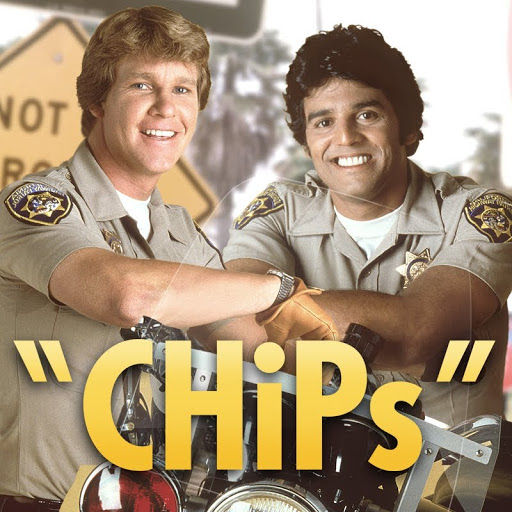
Welcome to Late Night Retro Television Reviews, a feature where we review some of our favorite and least favorite shows of the past! On Mondays, I will be reviewing CHiPs, which ran on NBC from 1977 to 1983. The entire show is currently streaming on Prime!
It’s time for the fourth season! Ponch and Baker — but especially Ponch — continue to keep Los Angeles safe for pedestrians and motorists.
Episode 4.1 “Go-Cart Terror”
(Dir by John Florea, originally aired on September 21st, 1980)
It’s time for season 4 of CHiPs, a.k.a The Ponch Show!
Seriously, if there’s anything that really stuck out about the fourth season premiere, it’s that Baker’s character was pretty much superfluous. Yes, Baker was out there on his motorcycle and helped Ponch catch this week’s bad guys, two thieves played by Larry Storch and Sonny Bono. But, ultimately, it was Ponch who did the important things.
Who coached the CHP-sponsored go-cart team to victory over the fire department’s? Ponch!
Who rescued a woman from a van after she crashed into a lake? Ponch!
Who always knew the right thing to say? Ponch!
Who did everyone talk to when they had a problem? Ponch!
This episode established that Frank ‘Ponch” Poncherello is the greatest human being who ever lived. Baker …. well, he tries. Baker’s nice and dedicated to the job but, in the end, he can only watch with amazement as Ponch solves all of the world’s problems.
I read over on the imdb that Larry Wilcox did not enjoy working with Erik Estrada and he felt that Estrada was the producer’s pet. Watching this episode, I can see why Wilcox would have felt like that. It’s hard to believe that, when this show first started, Baker was the competent one while Ponch was the nervous screw-up who kept making mistakes and who always seemed to be on the verge of getting written up. The fourth season premiere celebrates Ponch as being the supercop who the rest of Los Angeles looked up to. Sorry, Mr. Wilcox …. you may be the better actor but it’s hard to compete with the Estrada of it all.
As for the episode itself, it was typical CHiPs. The criminals were captured after being chased on the freeway and a bunch of kids learned an important lesson about proper go-cart safety. When the go-cart team had to raise money to compete in the next race, Ponch told all the adults that the kids had to come up with a plan because it was their team and the whole point of the go-cart experience was to learn responsibility. You tell ’em, Ponch! I mean, goddamn, Ponch is the man! Anyway, the kids held a car wash and I think the only reason they did that was so the show could have an excuse to have Randi Oakes show up in short shorts and get sprayed by a hose. I hope Ponch talked to the producers about treating Randi Oakes with respect.
I liked this episode, even though I did feel bad for Larry Wilcox. It was silly and fun.
In keeping with my theme of celebrating Arkansas in pop culture today, I’ve chosen superstar Glen Campbell and one of his classic hits for my song of the day. Campbell was born in Billstown, Arkansas, which is about 20 miles from where our kids were raised in Southwest Arkansas. I know several members of his family, and they are so proud of Glen. And why shouldn’t they be?! From cranking out hit records to starring in the movie version of a great work of Arkansas literature, TRUE GRIT, Campbell is a one-of-a-kind talent, and all of Arkansas is proud to call him our own! Enjoy my friends!
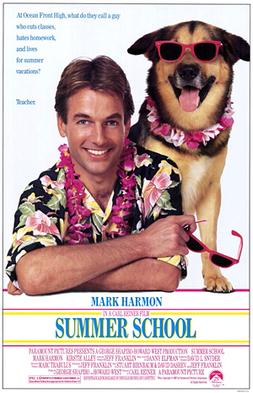
SummerSchool was the movie that made flunking out look like fun.
Freddy Shoop (Mark Harmon) is a relaxed, fun-loving gym teacher who is looking forward to spend his summer in Hawaii until he’s assigned to spend the summer teaching remedial English in summer school. (His girlfriend goes to Hawaii without him.) Freddy’s not happy about giving up his summer and he’s prepared to just spend his days taking his students to the beach, the amusement park, and the zoo. But when he finds out that he’s going to lose his job unless his students pass the big test at the end of the summer, he gets serious and discovers what teaching is supposed to be all about.
When I was growing up, SummerSchool seemed to be on television all the time. If it wasn’t on HBO, it was on one of the local stations, usually right before summer began. The summer school kids seemed to be having too much fun for kids stuck in school. I don’t think my classmates in Baltimore would have been as happy about losing their summer as the students in this film. Everyone who has seen this film remembers Dave and Chainsaw (Gary Riley and Dean Cameron) making jokes and showing everyone The Texas Chainsaw Massacre. They also remember Anna-Maria (Fabiana Udenio), the Italian exchange student who took summer school to work on her English. They remember Freddy letting one of his students move in with him, which doesn’t seem like a good idea even if she was played by Courtney Thorne-Smith. Myself, I remember Robin Bishop, the teacher next door, who was played by an extremely sexy Kirstie Alley. (This was one of the many 80s films in which Kirstie Alley made being uptight seem sexy.) Of course, Robin was dating the snobbish principal who was trying to get Freddy Shoop fired.
I’m not going to sit here and say that SummerSchool is a great film. It’s a dumb comedy with an uplifting message about what a good teacher can accomplish. However, SummerSchool is a very likable film, an enjoyable 80s teen romp that suggests summer school was the place to be in the late 80s. Mark Harmon, Kirstie Alley, and all the students give good performances. How many future horror nerds were inspired by Dave and Chainsaw? Legendary nice guy Carl Reiner directed and the movie itself is amiable and amusing enough to be watchable.