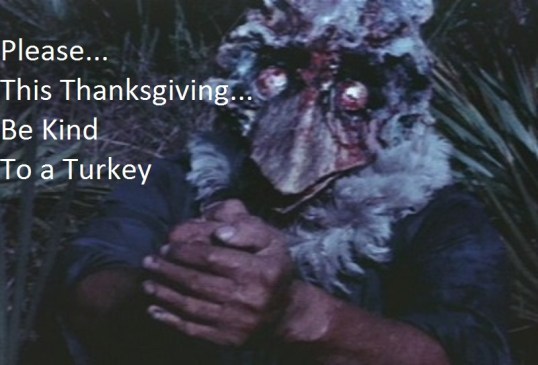
Happy Thanksgiving!
Please be kind to the turkeys in your life.
Happy Thanksgiving!
Please be kind to the turkeys in your life.
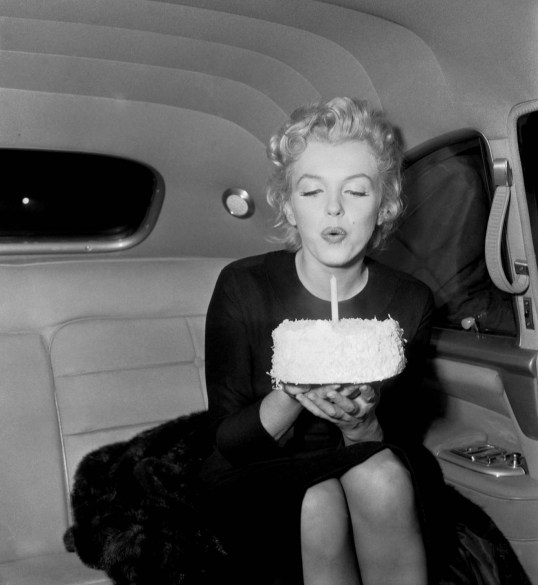
Today is not just Thanksgiving! Today is also the birthday of the co-founder and the editor-in-chief of Through the Shattered Lens, Arleigh Sandoc!
Sing it, Marilyn!
Next month, it will have been 15 years since Arleigh asked me if I wanted to collaborate on this wonderful site. Wow — FIFTEEN YEARS! In a world where most entertainment-related blogs tend to close up shop after their third entry, we’ve been going for fifteen years and we’re just getting better and better.
So today, while I give thanks for so much, I will definitely be giving thanks for Arleigh and his friendship and also, for the trust that he’s put in me over the years. I love TSL. It gave me some direction at a time when I desperately needed it and it built up my confidence at a time when I was at my most fragile.
Happy birthday, Arleigh! Here come the cats!
No, not that cat! These cats!


by Erin Nicole
Happy Thanksgiving!
Happy Thanksgiving!
Enjoy!
Welcome to Late Night Retro Television Reviews, a feature where we review some of our favorite and least favorite shows of the past! On Wednesdays, I will be reviewing 1st and Ten, which aired in syndication from 1984 to 1991. The entire series is streaming on Tubi.
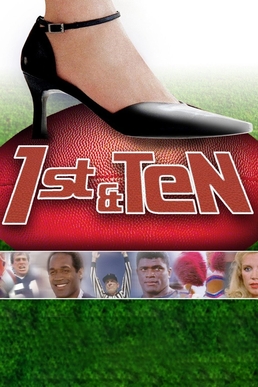
Yay! Training camp is over!
Episode 2.6 “The Unkindest Cut”
(Dir by Bruce Seth Green, originally aired on September 29th, 1986)
When arrogant quarterback Johnny Valentine refuses to enter drug rehab, Diana reacts by having him traded to Buffalo. Johnny may be a superstar but he won’t be playing for the Bulls. That means that Yinessa, the player who nearly kicked off the team twice, is now the starting quarterback. Yinessa also makes up with his girlfriend (Katherine Kelly Lang) so I guess he’s having a good week.
Bubba has to lose five pounds to retain his starting position. When he goes in to be weighed, it appears that he’s only lost four pounds. Bubba quickly takes off his gold watch and he makes weight! Good for Bubba, I guess.
Finally, Rick Lampert (Marcus Allen) shows up at training camp is given a number 32 jersey by T.D. Parker (O.J. Simpson). Lampert’s like, This is your number. Parker replies that the number now belongs to Lampert. Awwww! In the role of T.D. Parker, O.J. Simpson has a way of slashing his way to the heart of the matter,
Training camp finally ended with this episode and I’m glad about that because those training camp episodes were getting really dull. I have to be honest, though. We’re halfway through the second season and I still don’t feel like I know any of these characters. Donald Gibb occasionally makes me laugh as Dr. Death. And, as T.D. Parker, OJ Simpson seems like a really nice guy. Otherwise, though, this show feels oddly hollow. Of course, that may be because I’m watching the syndicated version, which apparently edited out a lot of nudity and bad behavior on the part of the players.
Oh well. Let’s see how the team does! This episode ends with Diana saying she wants to win a championship. Does Yinessa have it in him to lead the team with victory? With OJ Simpson as his coach, he better!
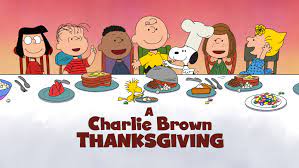
Thanksgiving is just a few hours away! If you’re like my family, you’re probably already working on your Thanksgiving meal. But, if you’re not, don’t worry! Take a lesson from A Charlie Brown Thanksgiving. Snoopy, Linus, and Woodstock didn’t have much time but they still came up with a feast fit for a… well, maybe not a king or a queen but still, they did their best.
In this special, Charlie Brown has unexpected guests coming for Thanksgiving. Luckily, Snoopy, Woodstock, and Linus are there to help him prepare a meal. Toast and popcorn balls might not seem like a typical Thanksgiving dinner but, as this special shows, it’s not the food that makes Thanksgiving special. It’s the company.

BREAKING IN (1989) opens with veteran safecracker Ernie Mullins (Burt Reynolds) pulling a job at a rich guy’s house, only to be surprised when a young, amateurish thief named Mike (Casey Siemaszko) turns up at the same place to raid the fridge. Immediately taking a liking to the kid, Ernie decides to offer Mike a chance to learn his trade. Thus begins a partnership, and odd-couple friendship, where the two men pull a series of jobs together, with Ernie passing on his knowledge to his young protege who seems to be enjoying the sudden influx of cash into this life. Unfortunately, the generation gap causes some problems as Mike doesn’t necessarily take heed to Ernie’s advice to never being too greedy or flashy. Soon, Mike is renting high rise apartments and buying fancy cars with cash. When they pull a big job on the 4th of July, will Mike’s less than frugal ways drag them both down?!
Written by the excellent, independent writer and director John Sayles (MATEWAN, EIGHT MEN OUT) and directed by Scottish director Bill Forsyth (LOCAL HERO), BREAKING IN is a reminder of just how great Burt Reynolds is in the right role. In his 50’s at the time this was filmed, Reynolds gives a relaxed, lived-in, character performance that comes across as effortlessly cool, and he does it without having to rely on his trademark charm and big grin. The late 80’s were a time when Burt was no longer a box office superstar, and BREAKING IN seems to be an unjustly forgotten entry in his hugely successful career. After this, Burt would find TV success on EVENING SHADE, and he’d be nominated for an Oscar for his role in BOOGIE NIGHTS (1997), but his Ernie Mullins stands out to me as one of his last great film roles. Casey Siemaszko is good as Mike, but this is Reynolds’ show and he’s overshadowed even in a solid performance. As far as the other supporting performances, Sheila Kelley stood out to me as a sharp-tongued prostitute who Siemaszko falls in lust with. The poem she shares about a man’s “balls” is a highlight of the film as far as I’m concerned, and further illustrates the quality of Sayles’ screenplay!
I like the way that BREAKING IN feels low-key, even as the characters engage in their various criminal heists. This can be credited to director Bill Forsyth who turns what could have been a standard master / apprentice crime film into something that feels somewhat realistic. The pacing is slow as Reynolds passes on his knowledge, and for some people it may be too slow, but that’s one of the things I really liked about the movie. The two men really get to know each other. That way, when they have disagreements and blow ups a couple of times, they’re still able to respect each other and patch things up. That’s how things are in the real world, as opposed to most movies where a simple disagreement will almost certainly lead to ridiculous consequences. BREAKING IN respects its characters in a way that’s unique to most crime films.
At the end of the day, BREAKING IN is a gem that is at its best as a lighthearted character study of a professional thief whose time is passing him by. Burt Reynolds rarely got to play roles this subtle, and I think he made the most of the opportunity. As a big fan of Reynolds, I highly recommend this one.
Welcome to Retro Television Reviews, a feature where we review some of our favorite and least favorite shows of the past! On Wednesdays, I will be reviewing the original Love Boat, which aired on ABC from 1977 to 1986! The series can be streamed on Paramount Plus!
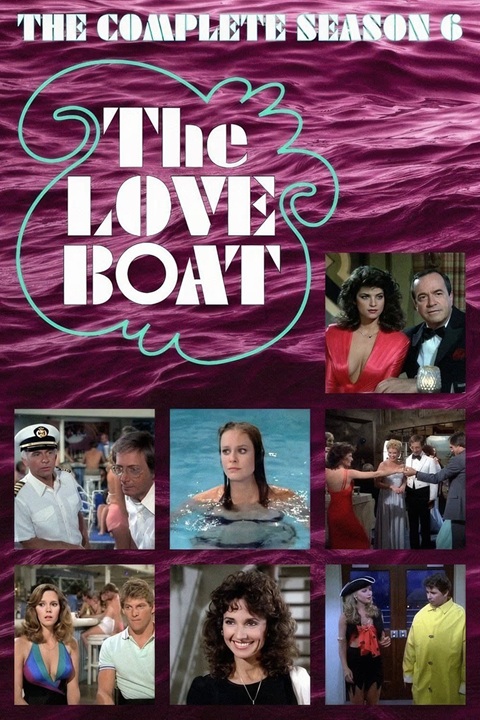
This week, the Love Boat goes a little bit country.
Episodes 6.27 and 6.28 “Country Music Jamboree”
(Dir by Richard Kinon, originally aired on April 30th, 1983)
It’s the special, two-hour country music cruise!
I have to admit that I lost interest in this episode as soon as I saw the banner in the Love Boat lobby that read “County Music Jamboree.” Country music’s not my thing. I lost even more interest when Florence Henderson showed up as country singer Annabelle Folker. Florence Henderson was a frequent guest on both Fantasy Island and The Love Boat and I can’t think of a single time that I was ever happy to see her name in the credits. Whenever she appeared, she almost always seemed like she was trying too hard. Her performances always brought to mind dinner theater and holiday special guest spots.
Annabelle was traveling with her boyfriend (Bert Convy) and the three orphans (Michael Evans, Angela Lee Sloan, and Neil Billingsley) that she was planning on adopting. The problem was that her boyfriend didn’t want to adopt the kids. But then, he changed his mind because the show was nearly over and the storyline needed a happy ending. Seriously, the kids were obnoxious as Hell.
While that went on, singer Holly Hartmann (Jessica Walter) was upset to discover that her husband (Mel Tillis) was secretly writing songs for an up-and-coming singer named C.G. Thomas (Tanya Tucker). Holly was not happy when she found out but then she sang Stand By Your Man and that solved everything.
The Love Boat chef (Pat Buttram) was upset that his kitchen implements kept disappearing. That’s because Isaac, Doc, Gopher, and Julie were stealing them so that they could form a country-western band. Meanwhile, two fat people (Kenny Price and Lulu Roman) boarded the boat and never stopped eating.
(Don’t give me that look, I didn’t write the script.)
Effie Skaggs (Minnie Pearl) sold homemade elixirs from her cabin while Doc attempted to romance her granddaughter (Misty Rowe). When Effie got sick, she refused to accept any of Doc’s strange modern medicine. No antibiotics for Effie Skaggs!
Jeannie Davis (Beth Howland) feared that her husband (Steve Kanaly) would learn that her latest piece of jewelry was given to her by a man with whom she had an affair. A jewelry appraiser (Sherman Hemsley) insisted on finding out how much the jewelry was worth. Jeannie feared that her husband would suspect something was amiss when he discovered how expensive it really was. She begged the appraiser to lie about how much it was worth. The appraiser said that he could not risk damaging his reputation but then he decided to lie anyway.
Gopher and Isaac tried to get a picture with Dottie West (a singer who played herself) but Dottie just wanted to rest.
Is that it? Is that all of the storylines or is that just all my exhausted mind can remember? Seriously, this was a busy two-hour episode. It was an annoying episode too. Maybe I’d feel differently if I was into country music. Of the guest stars, Mel Tillis and Jessica Walter gave the best performances. Of the Love Boat crew, no one came out of this episode with their dignity intact.
This was a cruise to miss.

This cruise? This cruise was a perfect 10 out of 10 on the How Coked Up Was Julie Scale.
4 Shots From 4 Films is just what it says it is, 4 shots from 4 of our favorite films. As opposed to the reviews and recaps that we usually post, 4 Shots From 4 Films is all about letting the visuals do the talking.
Today, the Shattered Lens wishes a happy birthday to director Mark L. Lester. It’s time for….
4 Shots From 4 Mark L. Lester Films
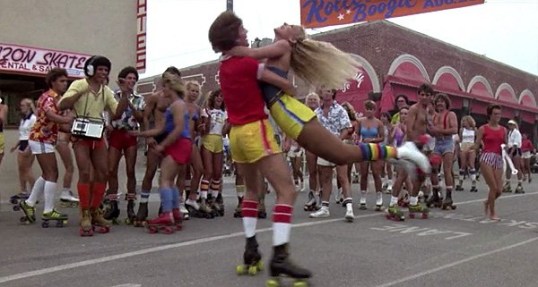
Roller Boogie (1979, dir by Mark L. Lester, DP: Dean Cundey)
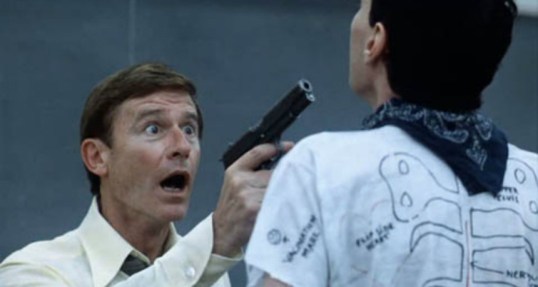
Class of 1984 (1982, dir by Mark L. Lester, DP: Albert Dunk)

Commando (1985, dir by Mark L. Lester, DP: Matthew Leonetti)

Public Enemies (1996, dir by Mark L. Lester, DP: Misha Suslov)
Today’s song of the day comes from the American Anthem soundtrack.
Steve Tevere has thrown a tripus!

