The Horsemen Are Back In The Final Trailer For Now You See Me: Now You Don’t


It’s probably not a good sign that the “final” trailer for Now You See Me: Now You Don’t dropped today without me previously hearing that a third movie was coming out.  I enjoyed the first two Now You See Me movies and I am looking forward to seeing the third one but I wonder how many people really remember either one of them.  Ten years is a very long time, especially now.

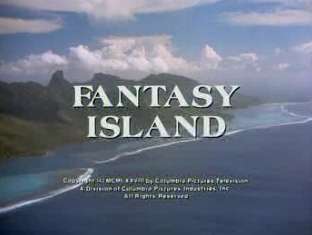
Retro Television Review: Fantasy Island 7.17 “Awakening of Love/The Imposter”


Welcome to Retro Television Reviews, a feature where we review some of our favorite and least favorite shows of the past!  On Tuesdays, I will be reviewing the original Fantasy Island, which ran on ABC from 1977 to 1984.  The show is once again on Tubi!

It’s time for a trip to 1984.

Episode 7.17 “Awakening of Love/The Imposter”

(Dir by Bob Sweeney, originally aired on March 17th, 1984)

Wendy Collins (Robin Mattson) is a beautiful model who cannot overcome her trust issues.  She fears that she might be frigid and she even resists Roarke’s attempts to make her fantasy of finding true love come true by setting her up with photographer (Rod McCrary).  Wendy finally reveals the truth to Roarke.  She grew up in a troubled home and, as a result, she has a hard time trusting people.  She’s only had one lover and the lover was….

“An older man?” Roarke asks.

“A woman,” Wendy reveals.

The camera zooms in on Roarke looking shocked.

Welcome to 1984!  Now, today, it’s pretty obvious what would happen.  Wendy would fall in love with the photographer’s assistant, Carla (Renee Lippin), and she would realize that there was nothing wrong with that.  But this episode aired in 1984, which means that Wendy has to find the courage to tell the photographer that her previous lover was a woman and that the photographer will then have to be willing to say that it doesn’t matter.  Basically, Wendy’s fantasy is to be reassured that she’s straight despite having had one same-sex relationship.

Yes, well, hmmm …. hey, what’s going on in the other fantasy?

Arthur Crane (John Davidson) has a compulsive disorder that leads to him assuming other people’s identities.  That’s quite a serious problem and Fantasy Island plays it for laughs.  Roarke tells Lawrence to follow Arthur around the Island and to keep Arthur from taking on anyone else’s identity.  Lawrence is terrible at his job.  (Tattoo could have done it!)  Arthur pretends to be a movie producer.  Arthur pretends to be Mr.  Roarke.  (Okay, that did make me laugh.)  Arthur pretends to be a doctor so Mr. Roarke zaps Arthur into an alternate universe where he is a doctor and he’s going to have to perform surgery on someone who has had a cerebral hemorrhage.  Arthur points out that he doesn’t really have any medical skills or training..  Then he looks at the comatose patient and discovers that it’s ….. HIMSELF!

This storyline had potential but it was done in by some seriously bad acting and the fact that the fantasy was comedic so the viewer knows from the start that Arthur is not going to accidentally kill himself on the operating table.

This was a rather dated trip to the Island.  The main theme seemed to be that Lawrence was thoroughly incompetent.

4 Shots from 4 Anime: Mecha Edition


Mecha: The name derives from a shortening of the English words “mechanism” or “mechanical” into the Japanese “mecha”

Last time I chose 4 shots from some chosen anime I went the isekai route. This time around I have chosen four shots from some of the more popular and well-received anime of the mecha variety.

This genre of anime has been around as far back as the 1940’s with earliest known mecha-related work being the 1940 manga “Electric Octopus” (Denki Dako). Yet, the subgenre of mecha as we we know of it today as the “super robot” was with the landmark anime from 1972 with Go Nagai’s “Mazinger Z.” This series would establish the many tropes and baseline rules of what mecha has become and will continue to be.

So, here are four shots from four very good to great mecha anime that fans new and old has watched at least once.

Mobile Suit Gundam 00 (dir. by Seiji Mizushima)
Tengen Toppa Gurren Lagann (dir. by Hiroyuki Imaishi)
Macross Plus (dir. by Shinichirō Watanabe)
Neon Genesis Evangelion (dir. by Hideaki Anno)

Scenes That I Love: Travis Bickle’s Paranoid Monologue from Taxi Driver


Taxi Driver is nearly 50 years old but it’s still one of cinema’s most definitive portraits of urban paranoia and societal detachment.  Travis (played by Robert De Niro) obsesses on the city that he harshly judges even though he’s as much a part of New York as those who he wishes will be washed away.

This scene features Robert De Niro, Martin Scorsese, and Paul Schrader at their definite best.  I imagine that, for a lot of people, this is one of those scenes that solidified their opinions on New York City.  For the record, the last time I was in New York, everyone was fairly pleasant.  They weren’t exactly friendly but I also didn’t get my bag stolen.  (Those of us who don’t live in New York tend to assume that we’ll get mugged as soon as we leave JFK.)

I do worry about the future of New York, especially with the election that is being held today.  To say I’m not a fan of either of the two front runners would be an understatement but, at the same time, it’s not my place to tell people in New York City how to vote.  (I’m a big believer in not telling people in other cities and states how to vote.  Whenever anyone from up north asks me why Beto didn’t win in 2018, I tell them the truth.  A bunch of pro-Beto yankees came down here and got on everyone’s nerves right before they voted.)  Instead of telling people what to do, I’ll just say that I sincerely hope that whatever happens will work out as well as it possibly can.

(That’s another reason I don’t endorsements.  “Vote for the candidate who will work as well as he possibly can,” probably isn’t going to gets the cheers that some other slogans would.)

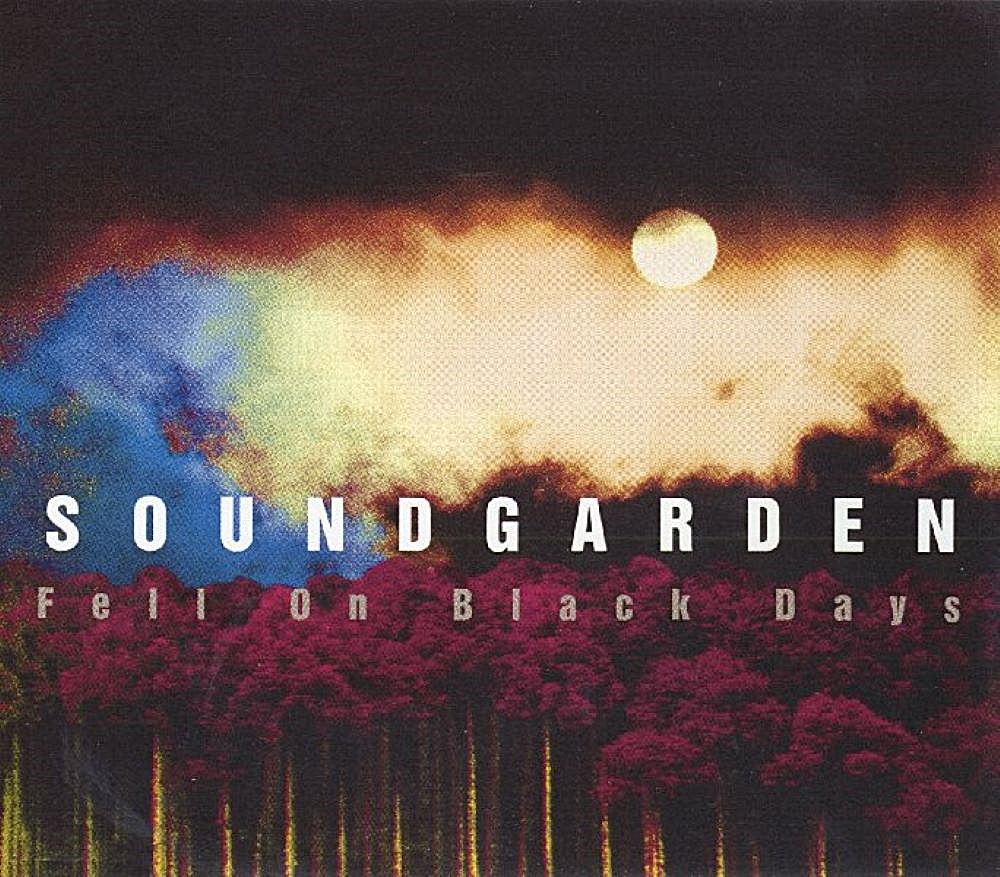
Song of the Day: Fell on Black Days (by Soundgarden)


As the latest “Song of the Day,” Soundgarden’s Fell on Black Days stands out as one of Chris Cornell’s most hauntingly introspective songs. It captures that quiet terror of realizing, almost suddenly, that life has slipped into a dark space without a clear cause. The lyrics don’t dramatize depression or despair—they circle it, giving voice to numb reflection rather than clear tragedy. Cornell doesn’t sing from a place of theatrical pain but introspective confusion, which makes it all the more relatable: that sense of waking up one day and finding that something within has gone dim.

Cornell’s vocal performance is the emotional backbone of the song. His delivery is restrained at first, almost conversational, carrying that familiar mix of grit and vulnerability that made his voice so magnetic. As the song builds, the tension burns through his tone—he never screams, but you feel the anguish vibrating at the edges. It’s that ability to stay melodic while channeling raw feeling that separates him from many of his grunge-era peers. You can hear both power and exhaustion inhabiting the same breath.

Musically, Fell on Black Days moves with a slow, uneasy groove that fits the song’s mood of quiet dread. Instead of following a typical rock rhythm, it flows a little off-kilter, giving it that feeling of imbalance Cornell describes in the lyrics. The guitars are thick and moody but not overly heavy, letting the vocals breathe. Thayil’s riffing feels more like a shadow behind the melody, while the bass and drums give it a tired, rolling heartbeat. It’s less about flashy playing and more about atmosphere—a sound that matches the weight of realizing your life has turned darker without you noticing.

Fell on Black Days

Whatsoever I’ve feared has come to life
And whatsoever I’ve fought off became my life
Just when everyday seemed to greet me with a smile
Sunspots have faded and now I’m doing time

Now I’m doing time
‘Cause I fell on black days
I fell on black days

Whomsoever I’ve cured I’ve sickened now
And whomsoever I’ve cradled I’ve put you down
I’m a search light soul they say
But I can’t see it in the night
I’m only faking when I get it right
When I get it right
‘Cause I fell on black days
I fell on black days

How would I know
That this could be my fate
How would I know
That this could be my fate, uh yeah

What you wanted to see good has made you blind
And what you wanted to be yours has made it mine
So don’t you lock up something that you wanted to see fly
Hands are for shaking not tying

No, not tying
I sure don’t mind a change
Yeah, I sure don’t mind
Sure don’t mind a change
I sure don’t mind a change

‘Cause I fell on black days
I fell on black days

How would I know
That this could be my fate
How would I know
That this could be my fate

How would I know
That this could be my fate
How would I know
That this could be my fate

I sure don’t mind a change

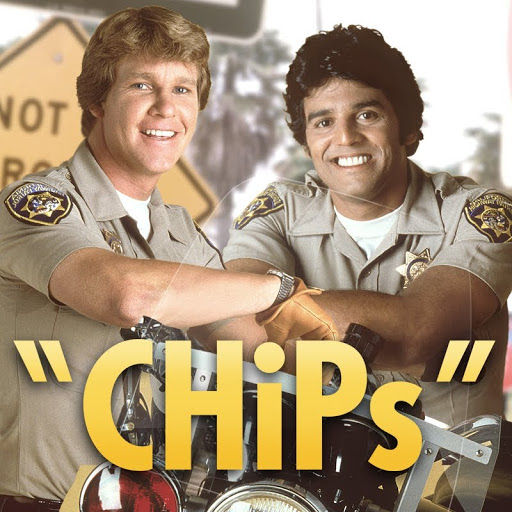
Late Night Retro Television Review: CHiPs 4.20 “Dead Man’s Riddle”


Welcome to Late Night Retro Television Reviews, a feature where we review some of our favorite and least favorite shows of the past!  On Mondays, I will be reviewing CHiPs, which ran on NBC from 1977 to 1983.  The entire show is currently streaming on Prime!

This week, the CHiPs team investigates an accident and a guest star gives a really terrible performance.

Episode 4.20 “Dead Man’s Riddle”

(Dir by Michael Caffey, originally aired on May 10th, 1981)

An accident in the mountains causes three cars to explode and one driver to die.  Since the dead driver was a captain with the Los Angeles fire department, the MAIT Team is sent out to recreate the accident and to try to figure out what happened.  They know that at least three cars were involved in the accident.  One driver died.  One driver is in the hospital.  And the other driver appears to be missing.  Getraer suspects that the accident could be due to people racing each other in the mountains.

What makes this episode odd is the casting of Joanna Kerns as psychiatrist Colleen Jacobs.  She’s assigned to the MAIT Team.  She actually drives through the mountains frequently and she even gets involved in racing sometimes.  In fact, she saw one of the cars right before the accident!  At first, she doesn’t bother to share this with anyone.  Instead, she just sits in the background with a guilty look on her face.  Finally, Jon Baker — in an unmarked car — tricks her into trying to race him.  That’s when she finally confesses….

….and faces absolutely no consequences!  Oh sure, Getraer gets a little annoyed and says that it would have been helpful if Dr. Jacobs had been honest from the start.  But Dr. Jacobs is allowed to continue to work with the MAIT Team.  Even though she intentionally withheld evidence from investigators, she’s not charged with obstruction.  Ponch tells her that she’s getting a chance to redeem herself which I don’t think is police policy.  No one comments on the fact that, even though she was worried that she may have previously caused a fatal accident, she still tried to race Baker.  Does no one care that, at the very least, she appears to have no impulse control?

Making things even stranger is that Joanna Kerns gives one of the worst performances that I have ever seen as Dr. Jacobs, delivering half of her lines as if she’s struggling not to laugh.  Even when she’s admitting her fear that she may have been responsible for the accident, she still seems like she’s on the verge of breaking out into laughter.  It’s very odd.

Speaking of odd,  an eccentric old man named Max (Owen Brooks) claims that he saw a UFO before the crash.  (Dr. Jacobs laughs when she repeats this.)  It turns out that he just saw a hubcap flying through the air.

In the end, it’s proven that the captain was not at fault in the accident.  That’s all that anyone really seems to care about.  I assume that Dr. Jacbos and Baker then proceeded to race each back to Los Angeles.

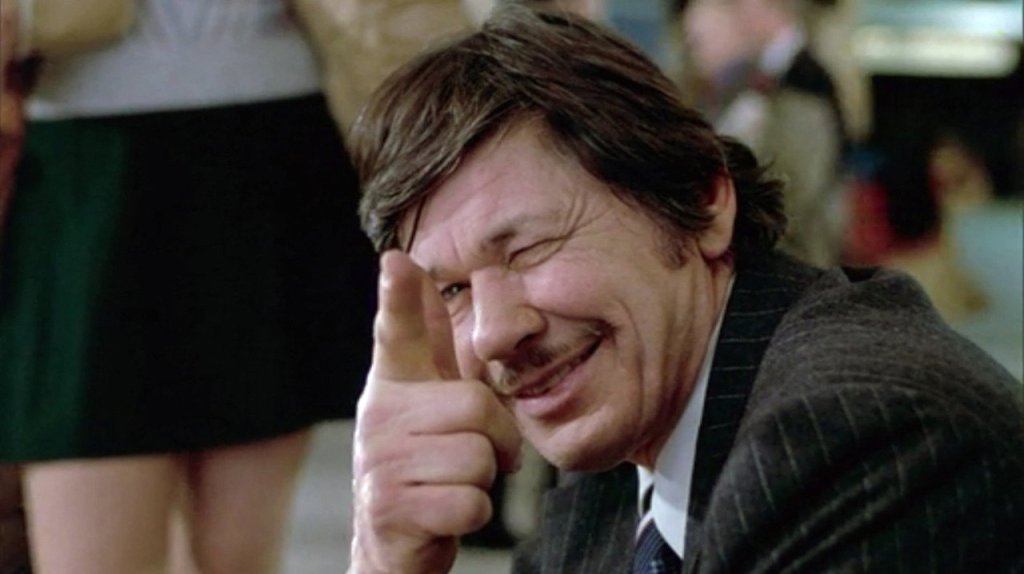
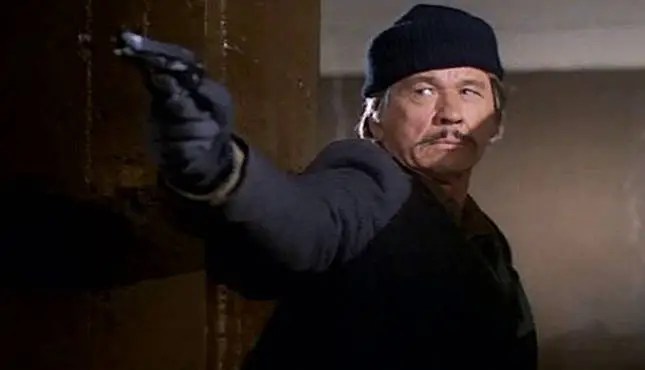
5 Shots From 5 Films: The Charles Bronson DEATH WISH Edition! Happy Birthday, Charlie!!


5 Shots From 5 Films is just what it says it is, 5 shots from 5 of my favorite films. As opposed to the reviews and recaps that we usually post, 5 Shots From 5 Films lets the visuals do the talking!

The greatest tough guy of the movies, Charles Bronson, was born 104 years ago today. 

Death Wish (1974)
Death Wish II (1982)
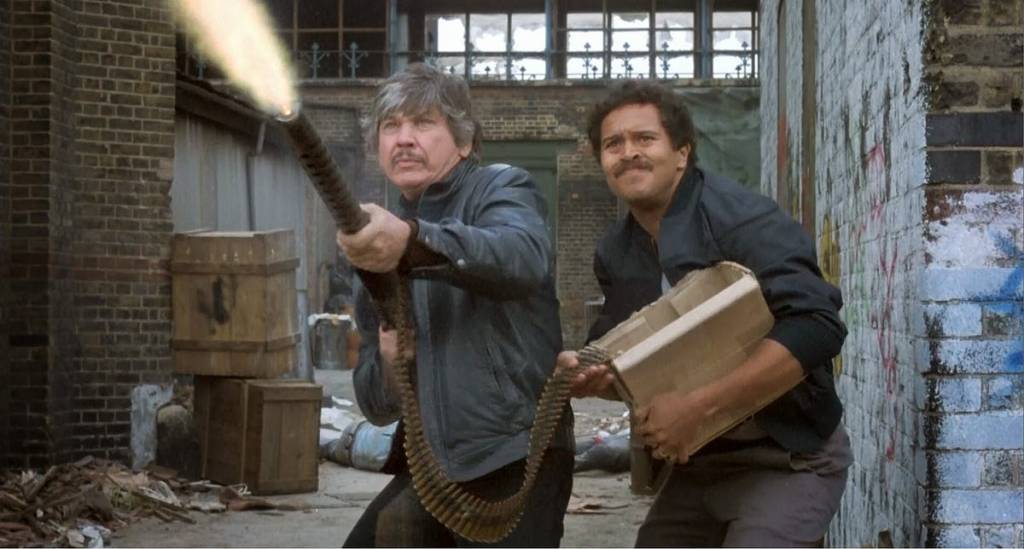
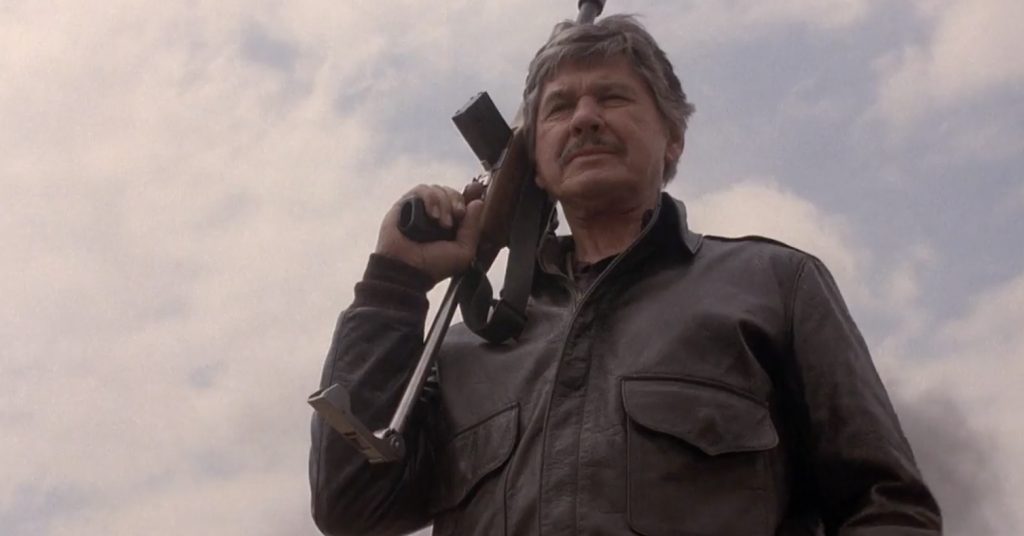
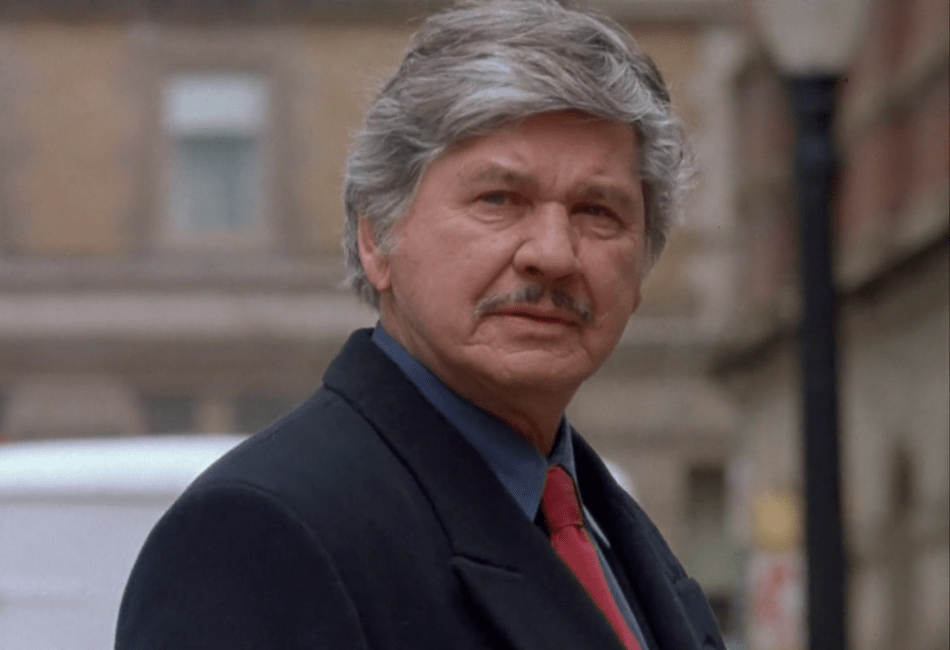
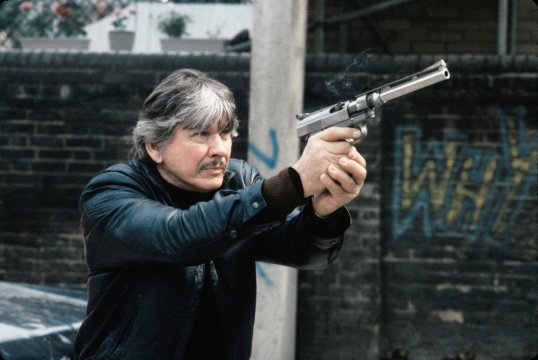
Death Wish 3 (1985)
Death Wish 4: The Crackdown (1987)
Death Wish V: The Face of Death (1994)

Lisa Marie’s Six Favorite Charles Bronson Films


Brad listed his top Bronson films so I guess I should list mine!  Below are my six favorite Bronson films.  (Why 6?  Because Lisa doesn’t do odd numbers!)

Now, to make clear, I’m not the Bronson expert that Brad is so I will picking from a smaller pool of selections.  But no matter!  Let’s do this!
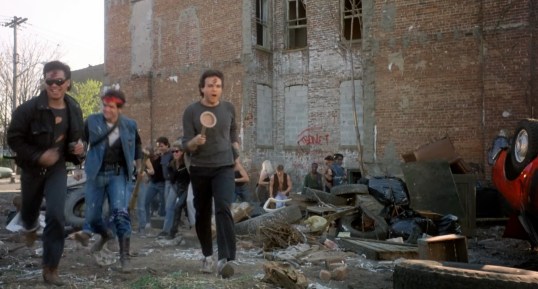
6. Death Wish III (1985, dir by Michael Winner) 

Yes, I have to start with Death Wish III.  The Death Wish sequels are definitely a mixed bag but Death Wish III was wonderfully over-the-top, a film that cheerfully dropped Bronson in the middle of an absurd circus and allowed him to tame the lions, as it were.  I will always love this film for the presence of Plunger Guy, a bad guy who heads into battle carrying a plunger.
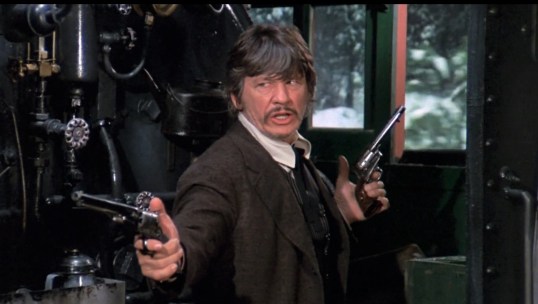
5. Breakheart Pass (1975, dir by Tom Gries)

This is an enjoyable mix of a western, a murder mystery, and an adventure film.  Charles Bronson is a mysterious man on a snowbound train.  Charles Durning, Ben Johnson, Richard Crenna, Jill Ireland, and Ed Lauter co-star and everyone — especially Johnson and Durning — bring a lot to their roles.  This may not be one of Bronson’s best-known films but it is one of his most enjoyable and Bronson himself is at his most likable.
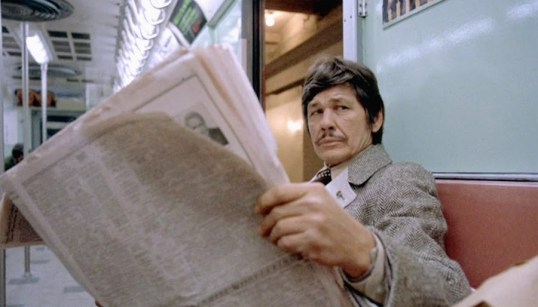
4. Death Wish (1973, dir by Michael Winner)

“My heart bleeds a little for the less fortunate,” Bronson’s Paul Kersey says at the start of the film and those of us watching immediately say, “C’mon, Charlie, really?”  That said, one reason why Death Wish works as well as it does is because Bronson actually gives a very good and very emotionally honest performance as a man who finally snaps and starts to take the law into his own hands.  (I love the barely veiled contempt that’s present whenever Paul talks to his son-in-law.)  Not surprisingly, considering that it was directed by Michael Winner, Death Wish is an often-sordid film that doesn’t have a hint of subtlety.  But it’s also brutally effective, a film that captures the way a lot of people feel when they hear about reports of out-of-control crime.  Even today, it’s easy to see why Death Wish was the film that finally Bronson a star in the United States.
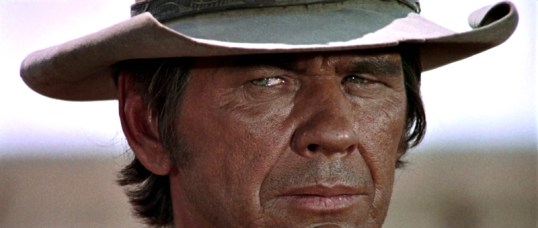
3. Once Upon A Time In The West (1968, dir by Sergio Leone)

Bronson plays Harmonica in the most epic of all of Sergio Leone’s spaghetti westerns.  Leone pays homage to the American western while also gleefully subverting it.  The quiet and unemotional Bronson is the film’s hero.  Henry Fonda is the sadistic villain who guns down a child.  Jason Robards is an outlaw.  While I don’t consider it to be quite as good as either The Good, The Bad, or the Ugly or Once Upon A Time In America, Once Upon A Time In The West is still one of Leone’s masterpieces.
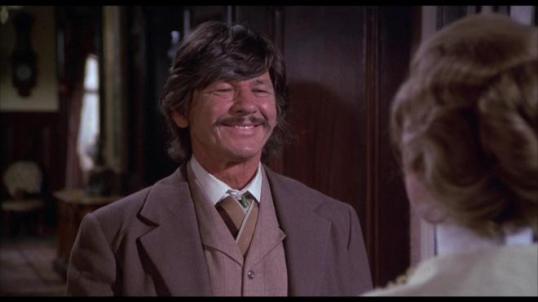
2. From Noon Till Three (1976, dir by Frank D. Gliroy)

For all of his reputation for being a tough guy who didn’t show much emotion, there was no denying Bronson’s love for his second wife, Jill Ireland.  From Noon Till Three brings Bronson and Ireland together in a film that is a third western, a third romantic comedy, and a third social satire.  It’s a film that gives Bronson a chance to show off his romantic side and it might leave you surprised!  The film also featured Jill Ireland’s best performance in a Bronson film.  I always highly recommend this one.  It’s proof that there was more to Bronson than just shooting the bad guys.
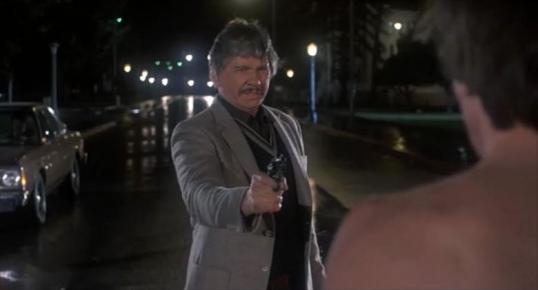
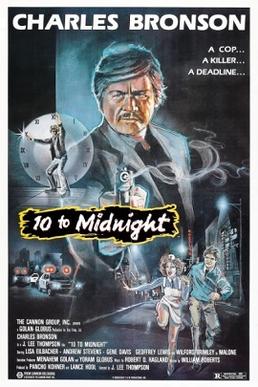
  1. Ten To Midnight (1983, dir by J. Lee Thompson)

This is the ultimate 80s Bronson film and one that I like for a reason that might surprise you.  On the one hand, you’ve got Bronson as a tough cop, Andrew Stevens as his liberal partner, and Gene Davis as the disturbingly plausible serial killer, Warren Stacy.  Bronson is great as the world weary cop.  His scenes with Stevens are amusing and, at times, even poignant.  (It helps that Stevens was the rare co-star that Bronson liked.)  Davis is terrifying and the film’s final moments are very emotionally satisfying.  (“No, we won’t.”)  But the reason why I love this film is because of the relationship between Bronson’s cop and his daughter, who played by Lisa Eilbacher.  Their scenes together — testy but loving — are well-acted by both actors and they always make me think of me and my Dad.  Ten To Midnight is the Bronson film that actually makes me cry.