The Outsider, Review By Case Wright


hp4.jpg

Isn’t it just awkward when you’re trying to make friends and people run away because unbeknownst to you, you are an inter-dimensional-hell-beast?  It’s right up there with telling people that you’ve had the best barbecue ever and you’ve only ever been to Smokey Bones or having Nickelback as your ringtone or quoting “The Notebook”.  It’s just …GAH!

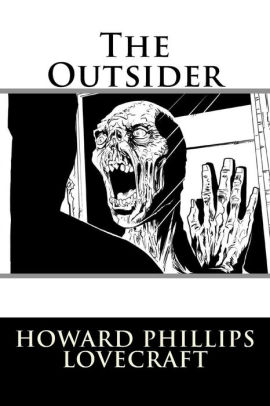
In “The Outsider”, Lovecraft tells the story from the monster’s POV.  Shelley did it for the first time in Frankenstein, but it is rarely done; we don’t want to put ourselves into the Devil’s shoes.  Even today, the Devil’s POV is scorned – see Joker reviews.  The creature in “The Outside” actually seems kinda nice, but lonely.  The monster-beast crawls and claws its way out of a crypt and goes up people in a church and wonders what must be chasing him because everyone is running for their lives.  This goes on for A WHILE! People flee and he has no idea what’s going on.

Finally, he sees the monster, he goes to touch the horrible creature, and his outstretched finger touches a mirror.  I enjoyed the twist.  If done right, the Devil is always appealing.  Breaking Bad made Bryan Cranston a total badass and he did terrible things, but we rooted for him.  Like Walter White who only felt akin to his blue meth at the end, this creature is scorned so he flees into the night doing whatever Hell-Beasts do; my guess it has something to do with making robocalls or working for Ticketmaster.

This Halloween season I’ve been strung out on short-stories for days because I’m amazed at the ability to convey a story in limited space like a Haiku.

See you, tomorrow.
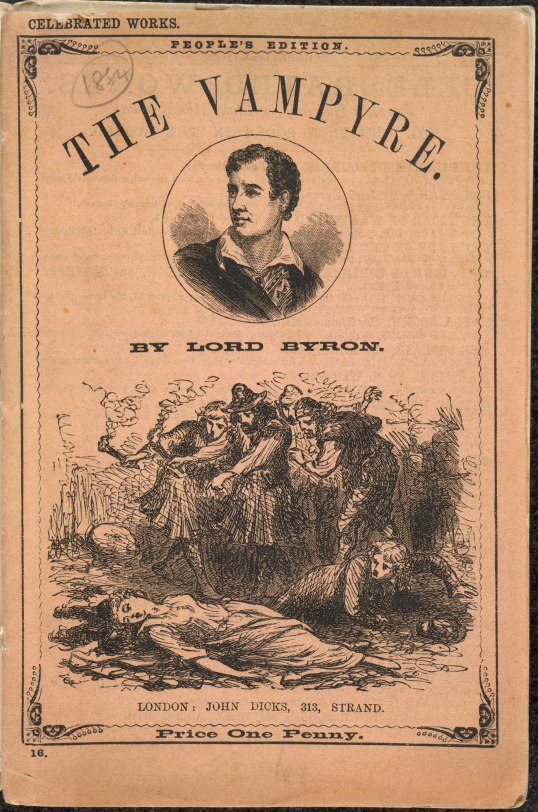
Book Review: The Vampyre by John William Polidori


Though The Vampyre was often erroneously attributed to Lord Byron, it was written by John William Polidori

First written way back in 1816, The Vampyre is a story about an amazingly naive young gentleman named Aubrey who becomes friends with the mysterious Lord Ruthven.

Everything about the enigmatic Lord Ruthven would seem to suggest that he’s a vampire but Aubrey never figures that out while he and the nobleman travel across Europe.  Even after an inkeeper’s daughter dies of a vampire attack shortly after telling Aubrey about vampires (and, also, immediately after the sudden arrival of Ruthven), it still doesn’t occur to Aubrey that there might be something strange about Lord Ruthven.  When Lord Ruthven is mortally wounded by bandits, he makes Aubrey swear an oath that he will not tell anyone about Ruthven’s death for a year and a day.  Aubrey promises to keep the oath.

Now, apparently, back in the 19th century, people took those oaths very seriously because, even after Lord Ruthven shows up alive once again and now claiming to be the Earl of Marsden, Aubrey can’t tell anyone that he saw Ruthven die.  Even after Ruthven starts to court Aubrey’s sister with the obvious intention of draining her blood, Aubrey still cannot bring himself to break his oath.  Is it because oaths were really that important or is it that Aubrey himself is as in thrall of Ruthven as his sister?

John William Polidori was a physician and a writer, as well as a contemporary and friend to Mary Shelley, Lord Byron, and Percy Shelley.  The Vampyre was conceived and written as a part of the same contest that saw Mary Shelley write Frankenstein.  Though Polidori’s story is understandably overshadowed by Mary Shelley’s (and, it must be said, Polidori was nowhere near as good a writer as his famous friends), it’s still historically significant as the first “romantic” vampire tale.  It’s the story from which so many others have sprung.

Many have also speculated that the story was based on Polidori’s friendship with Lord Byron, with Polidori represented by the unstable Aubrey while the self-centered but charismatic Lord Ruthven was perhaps meant to be a stand-in for Byron himself.  This may be true or it may not.  (When it comes to Byron, the Shelleys, and Polidori, it’s always perhaps a bit too tempting to read too much between the lines.)

The Vampyre is a historically important piece of work so, if you’re a fan of vampires, you have to read it.  Flaws and all, we owe much to Lord Ruthven and John William Polidori.


Weekly Reading Round-Up : 10/13/2019 – 10/19/2019


Ryan C. (fourcolorapocalypse)'s avatarRyan C.'s Four Color Apocalypse

We have three first issues and one last issue to go over this week and so, in the spirit of taking last things first —

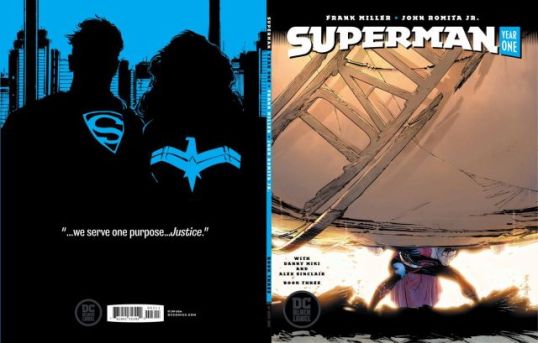
A mercy killing that arrives three issues too late, Frank Miller and John Romita Jr.’s Superman : Year One #3 exits the world the same way it came in — with no clear idea of its reason for being and no coherent plan to at least fool us into thinking it has one. Miller’s script changes narrators frequently but tone never, Romita’s art is up and down and seriously down when it’s down (a splash near the end of this one features arguably the worst Wonder Woman illustration I’ve ever seen in my life), and precisely why this non-canonical revisionist take on Superman’s origin even exists is, at this point, anyone’s guess. It doesn’t count for anything, it only plays around with surface-level details of…

View original post 770 more words

Is “Free Shit” Worth Anything?


Ryan C. (fourcolorapocalypse)'s avatarRyan C.'s Four Color Apocalypse

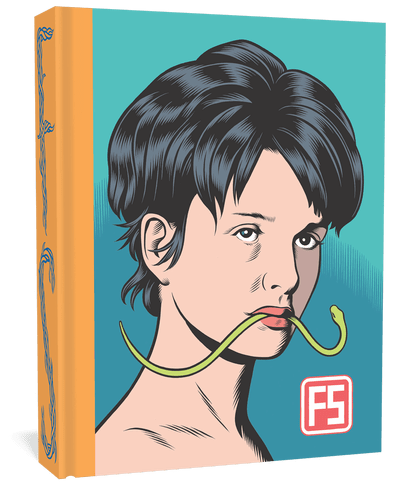
For nearly two decades, celebrated comics auteur Charles Burns has been occasionally self-publishing a “secret” ‘zine that he gives away to — I dunno, a select few people in his “inner circle,” I suppose is the best way to define it. Friends, fellow cartoonists, for all I know maybe even the occasional critic. Not that I’m one of them, mind you, but despite never landing a copy personally I’ve certainly heard tell about it — a “process ‘zine” of sorts, featuring everything from rough sketches to finished drawings, some of which make their way into Burns’ widely-released work, most of which don’t. It’s called Free Shit, and now the entirety of its contents (as far as I know, at any rate) have been made available to the unwashed masses via a nice little digest-sized hardback published by Fantagraphics.

On first flip-though — as well as subsequent ones — it…

View original post 679 more words

Dagon- by HP Lovecraft, Story Review, By Case Wright


Dagon

Dagon by HP Lovecraft is a brief story that strives to set up his “mythos”. HP Lovecraft made Stephen King’s work possible and his first name HP makes me think of my favorite tangy steak sauce. I doubt there is a a connection to Lovecraft and steak sauce, but who knows?  Maybe they’ll be some discovered works where the Old Ones try to consume humanity and the world, but are placated with deliciousness of HP?

HP2.jpg

HMMMMMMM. Yum.

Dagon is short; it clocks in at 5 pages, but that was interesting enough to inspire the film Dagon- Lisa’s Dagon Review.   The story is written by as a memoir of man who is strung out on steak sauce for days…I mean heroin…no….wait…morphine- that’s it.  His name is never mentioned; so, I’m calling him Doug.  You heard it first – his name was Doug.

Doug was a naval officer … somehow.  I mean really the only thing this guy seemed to know how to do correctly was morphine.  His ship is attacked and captured by the Germans without any description of a fight.  Was he in the French Navy? He and his crew are captured and the only people more incompetent than he is are the Germans who easily let him escape.  Also, he has no concept of navigation.  Are we sure he was attacked by the Germans or were they on a mercy rescue mission?

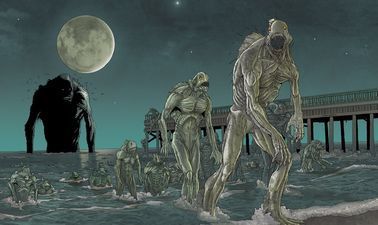
His wee row boat runs aground on a murky grossness that smells of rotting dead fish.  So, he’s in Maine?  HIYO!!!!  He discovers that there is a temple of sorts worshiped by Fish-men … really.  This is a recurring theme in Lovecraft’s books: incompetent sailors and archaeologists uncover interdenominational cities with monsters. Doug even sees one of these walking fish sticks and it freaks him out so much that he goes and insane and swears off Red Lobster forever.  Somehow, he manages to get back out to sea and gets rescued, but seeing the monster and their weird island makes him really need morphine.

The story was quick paced and you can see how his “mythos” would evolve. It is also clear that “Incompetent weirdos find slime monsters” was likely the working title of most of Lovecraft’s works.  He also uses the word Bas-Relief a lot, which makes me think of a fish in sunglasses hanging out on a lounge chair rather than stone carvings of soldiers doing things.  The big lesson from his work is that if you’re doofus, you’ve probably already met Dagon or Cthulhu.

You be the judge. What do you think of when you read Bas-Relief:

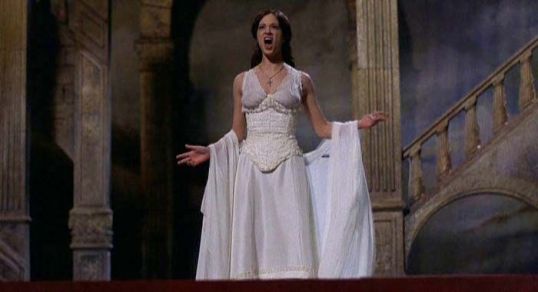
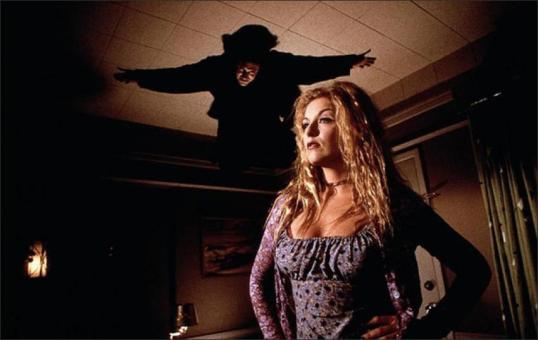
4 Shots From 4 Films: Blade, The Faculty, The Phantom of the Opera, Vampires


4 Shots From 4 Films is just what it says it is, 4 shots from 4 of our favorite films. As opposed to the reviews and recaps that we usually post, 4 Shots From 4 Films lets the visuals do the talking!

This October, we’re using 4 Shots From 4 Films to look at some of the best years that horror has to offer!

4 Shots From 4 1998 Horror Films

Blade (1998, dir by Stephen Norrington)

The Faculty (1998, dir by Robert Rodriguez)

The Phantom of the Opera (1998, dir by Dario Argento)

Vampires (1998, dir by John Carpenter)

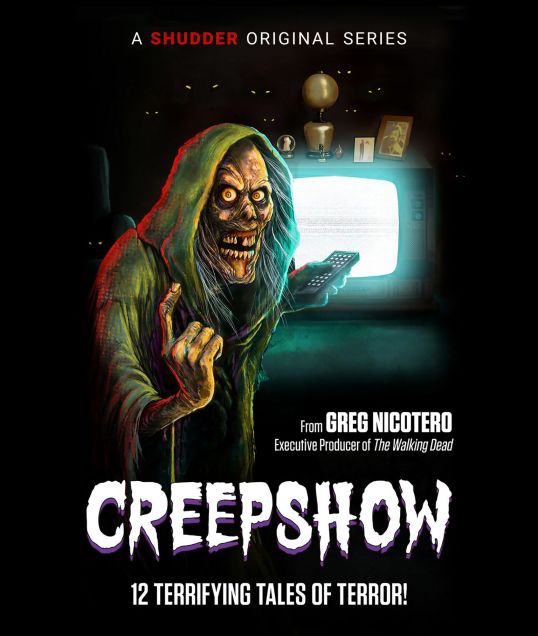
Creepshow, S1 Ep 4, The Companion & Lydia Lane’s Better Half


Creepshow

Happy horrorthon! This episode followed the trend of the second story being the better of the two, but really it showcases a two short films every week.  I never really watched short films before because they sounded impossible  You have twenty minutes or less to put a story together and give it some heft.  It’s interesting to see how it’s accomplished.  Short stories are one thing, but a film has establish shots and tension in short order…pun intended.

The stories tend to be very straight forward; you really can’t spoil them.  The Companion- a boy makes a Golem who kills his mean brother.  Lydia Lane’s Better Half- Lydia is trapped in an elevator with a woman she killed.  Yes, the second one is better. I like that elevator horror is slowly becoming a sub-genre, but does everyone have to be crushed between floors?

The Companion opens with a teenager who is repeatedly abused by his older brother.  This changes when he goes to a farm and finds a Golem-Scarecrow.  At first, the Golem wants to kill him because he isn’t holding a magical cane…really.  The deceased farmer in the story created the Golem because after his wife passed, he was lonely; so, he created a Golem-Scarecrow….as you do. Well, the Golem murders people if they aren’t holding his dead wife’s cane.  Whatevs.  As with most of the first stories, the acting was fine and the story was fine.  Not great, but it did allow me to pass the time during physical therapy exercises.

The second story starred one of my favorite actresses and people- Tricia Helfer.  I loved her in BSG, she’s great in Burn Notice and Lucifer, and she does the Tulip Ride for the Seattle Humane Society.  She has the drive and talent of a million people, which means that there are 999,999 very sad lazy people out there because of Tricia Helfer.  This short film was no different! She plays Lydia Lane, a high-powered CEO, who passes over her protege Celia for a CFO position.  Later, a struggle ensues and Celia gets accidentally impaled in the head with a glass award killing Celia and she needs to get the body out of the office building and hide it.  She seems to be getting close to an escape until an earthquake causes the elevator to stop.  UH OH.

After Celia’s death, there’s virtually no monologue or dialogue. Tricia Helfer has to deliver suspense and fear with movement and facial expressions alone- she does.  It becomes a one-woman show …. except for Celia who is a possible zombie, but it could also be that Lydia is losing her mind and it’s this ambiguity that makes the story really pop.  The direction by Roxanne Benjamin was excellent as well. She has a great future in both action and horror.

These stories are really important because they are great and they give opportunities to new directors with a lot of talent!


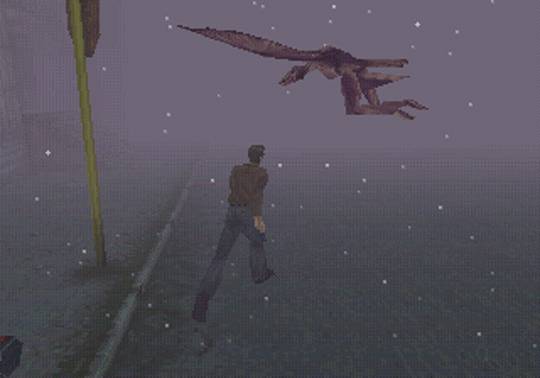
Silent Hill Memories


I was sixteen when Silent Hill first came out for the Playstation.

From the first minute I played it, I was hooked and Silent Hill would go on to become the first video game that I ever seriously got into.  I would study the game.  I would go online, in those early days of the world wide web, to read the theories of other players and visit the occasional Geocities-hosted fan page.  I actually got very upset when innocent nurse Lisa Garland was lost to the town’s curse.  I was also amazed to discover that the game’s storyline and ending could change depending on whether or not I saved Cybil Bennett.  A video game with multiple endings that went beyond just “good” and “bad?”  This was a big deal back in 1999!

Looking back after all these years, there are four main things that I remember about Silent Hill.

First off, and I know I’m not alone,I remembered the opening and especially the music that played during the scenes of Harry Mason driving down that foggy road:

Secondly, I remember the scenes that played after the game’s ending, which featured all of Silent Hill‘s characters blowing their lines, missing their cues, and laughing about it.  Today the animation may look primitive but back in 1999, seeing this at least provided some comfort if you got one of the bad endings, especially the “bad” ending where you defeated the monster but your daughter died (“Thank you, Daddy … goodbye.”) and then you ended up dead in your car.

I remember the nearly legendary fifth ending of the game, in which Harry Mason ended up getting abducted by aliens.  In the days before YouTube, when you had to trust word-of-mouth, there were some people who insisted that this ending was just an urban legend while there were others who couldn’t stop bragging about how they had gotten the alien ending while the rest of us just had to settle for the “saved the world and your daughter” ending.  When I finally managed to get the UFO ending, I was so happy that I felt like I was the one who had been abducted by aliens.

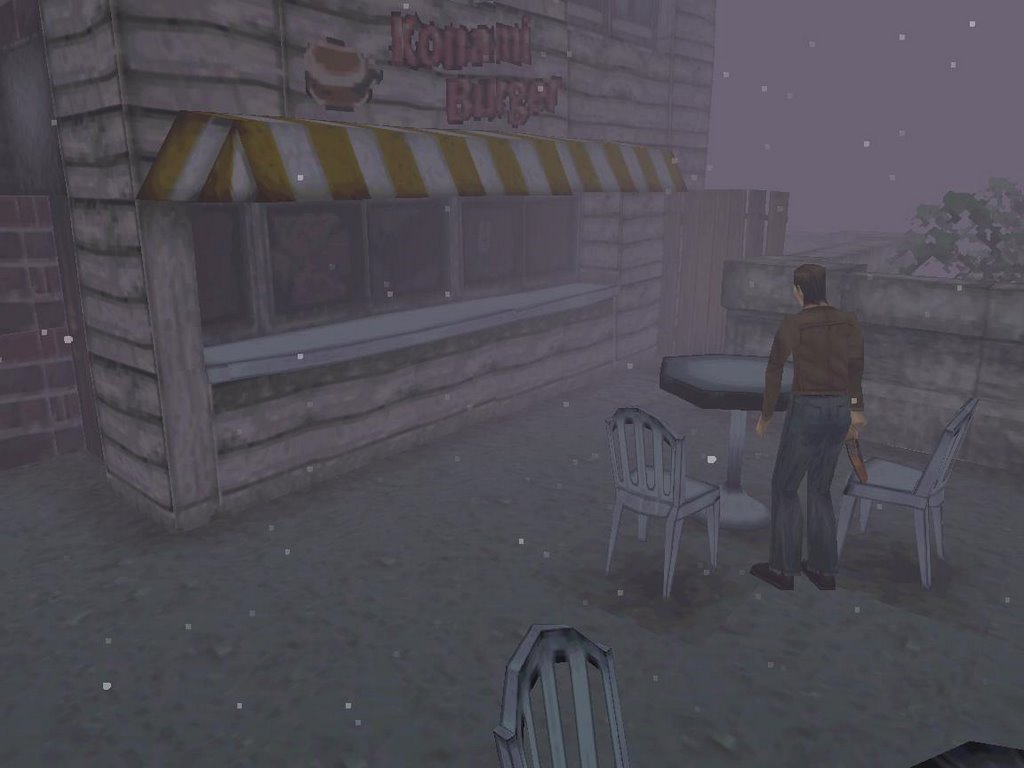
Finally, the main thing I remember about Silent Hill is that I was never very good at it.  I was the player who always ended up getting lost and walking around in a circle.  I can’t remember how many times I played before I managed to not die in the diner.  As soon as I heard the radio static that indicated that I was about to get attacked, I started to run because I know I wasn’t a good enough shot to fight off any of the game’s monsters.  Harry Mason was searching for his daughter and I was probably the worst possible person to lead him in that search because I somehow always managed to get Harry killed.  It didn’t matter how many times I played the game, I never really got good at it.  Even when I finally managed to get the best ending possible, it was only after saving and reloading the game a countless number of times.

I may have never been good at the game but I still enjoyed leading Harry to his death and occasionally to one of the good endings.  Silent Hill is what taught me that there was more to video games than just jumping and shooting and for that, I will be forever thankful.

Get In The Loop On “Alay-Oop”


Ryan C. (fourcolorapocalypse)'s avatarRyan C.'s Four Color Apocalypse

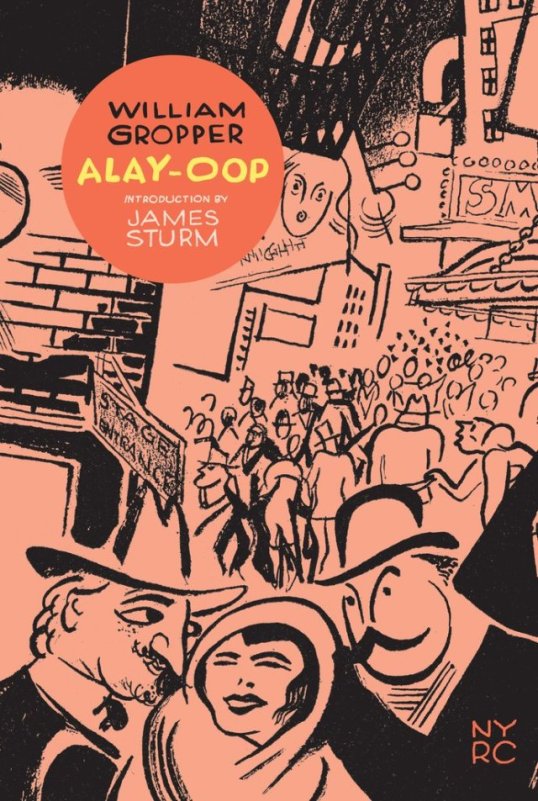
Long before there was Jerry Springer, there was William Gropper.

Which isn’t, believe it or not, to say that the two men have much of anything in common : Gropper was a masterfully skilled cartoonist and fine artist, Springer a cheap carnival barker who profited on the exploitation of his guests’ misery, but they both milked the notion of the so-called “love triangle” for all it’s worth — it just so happens that the premise is worth a whole lot more in the hands of a sympathetic and smart illustrator than it is a sleazy talk show host.

I’m guessing that this assertion requires little by way of concrete evidence, but just in case, New York Review Comics has recently issued a handsome hardcover edition of Gropper’s largely-forgotten 1930 sequential story Alay-Oop, a book that may just be able to stake a legitimate claim to being the first so-called…

View original post 536 more words

Should You Throw Your Money Into The “Black Budget”?


Ryan C. (fourcolorapocalypse)'s avatarRyan C.'s Four Color Apocalypse

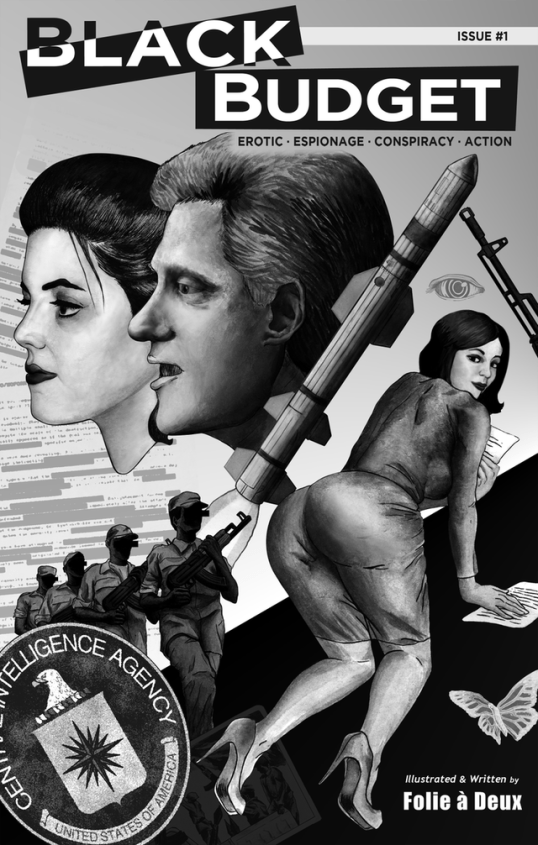
In my time, I’ve certainly reviewed some strange comics for this site (and others), but few have left me as legitimately perplexed as Black Budget #1, the self-published debut issue of what appears to be an ongoing series by the pseudonymous Folie a Deux — a guy who certainly wears his heart on his sleeve in that he’s unafraid to put his conspiratorial worldview and personal sexual fetishes out there for all to see. And while I always salute cartoonists willing to “bare all” in the metaphorical sense, my admiration for their fearlessness and/or obliviousness doesn’t extend so far as to give their work a free pass. You want a positive review out of me? You’ve gotta earn it on the page.

That’s all well and good, of course, but what’s especially tricky to determine about this comic is whether or not it does, in fact, “earn it.” On…

View original post 668 more words