Rest in Peace, George Romero


George Romero has died, at the age of 77.

I wrote this in 2015:

When I say “George Romero,” you probably immediately think of zombies.  And why not?  Night of the Living Dead is perhaps the best known zombie film ever made and Dawn of the Dead is perhaps the second best known.  Day of the Dead and Land of the Dead both have their fervent admirers.  Without the work of George Romero, there would be no Walking Dead.  Without the zombie films of George Romero, countless children would have never grown up to become horror filmmakers.  Without George Romero, there would have been no Italian zombie films, which means that I would never have fallen in love with Italian horror and I wouldn’t have been tweeting about it that day in 2010 when Arleigh asked me if I wanted to be a contributor to this website.

Though he had directed commercials and a few industrial films, 1968’s Night of the Living Dead was George Romero’s first feature film.  His first!  I cannot even imagine what it must feel like to totally change the face and history of cinema with your very first feature film.  All modern horror films owe a debt not only to Night of the Living Dead but to all of Romero’s subsequent films as well.

Romero, himself, didn’t necessarily set out to be a horror film director.  As he himself often said, the main reason that he and his associates made Night of the Living Dead was because they knew there was a market for cheap horror films.  He followed up Night of the Living Dead with Touch of Vanilla, a hippie love story that few people saw.  And while Romero eventually did accept that he would be forever known as a horror filmmaker, his films were always concerned with more than just scaring people.  Whether intentional or not, Night of the Living Dead is a powerful allegory about prejudice and mankind’s inability to work together.  (For all the zombies, the film’s scariest scene comes at the end when the African-American Ben is shot by a redneck deputy and casually tossed onto a pile of bodies.)  The Dario Argento-produced Dawn of the Dead was a satire of consumerism while The Crazies suggested that people were already so crazy that it was hardly necessary for a chemical spill to bring out the worst in us.  In Martin, Romero cast a weary eye on organized religion while Land of the Dead was perhaps Romero’s angriest film, taking on the state of post-911 America.  With films like Creepshow and The Dark Half, Romero showed that he was one of the few directors who could successfully adapt the sometimes unwieldy prose of Stephen King to the screen.  It’s a shame that his long-rumored adaptations of The Stand and The Dark Tower turned out to be just that, rumors.

Yes, George Romero was a great horror filmmaker but more than that, he was a great director period.  He never sacrificed his independence, choosing to make some of his best-regarded movies in Philadelphia.  He never compromised his message, offering up visions of the world that continued to grow bleaker and bleaker.  Though he never received the awards that he deserved or, to be honest, the critical acclaim that he was owed, George Romero will be remembered as one of the most important American filmmakers of all time.

George Romero died, of lung cancer, surrounded by his loved ones.  Reportedly, he died listening to The Quiet Man soundtrack.

Rest in peace, George.

Confessions of a TV Addict #2: A Fan’s Appreciation of Adam West


gary loggins's avatarcracked rear viewer

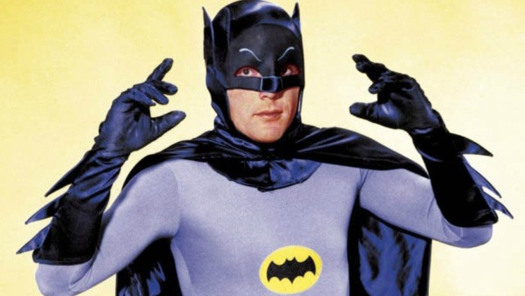
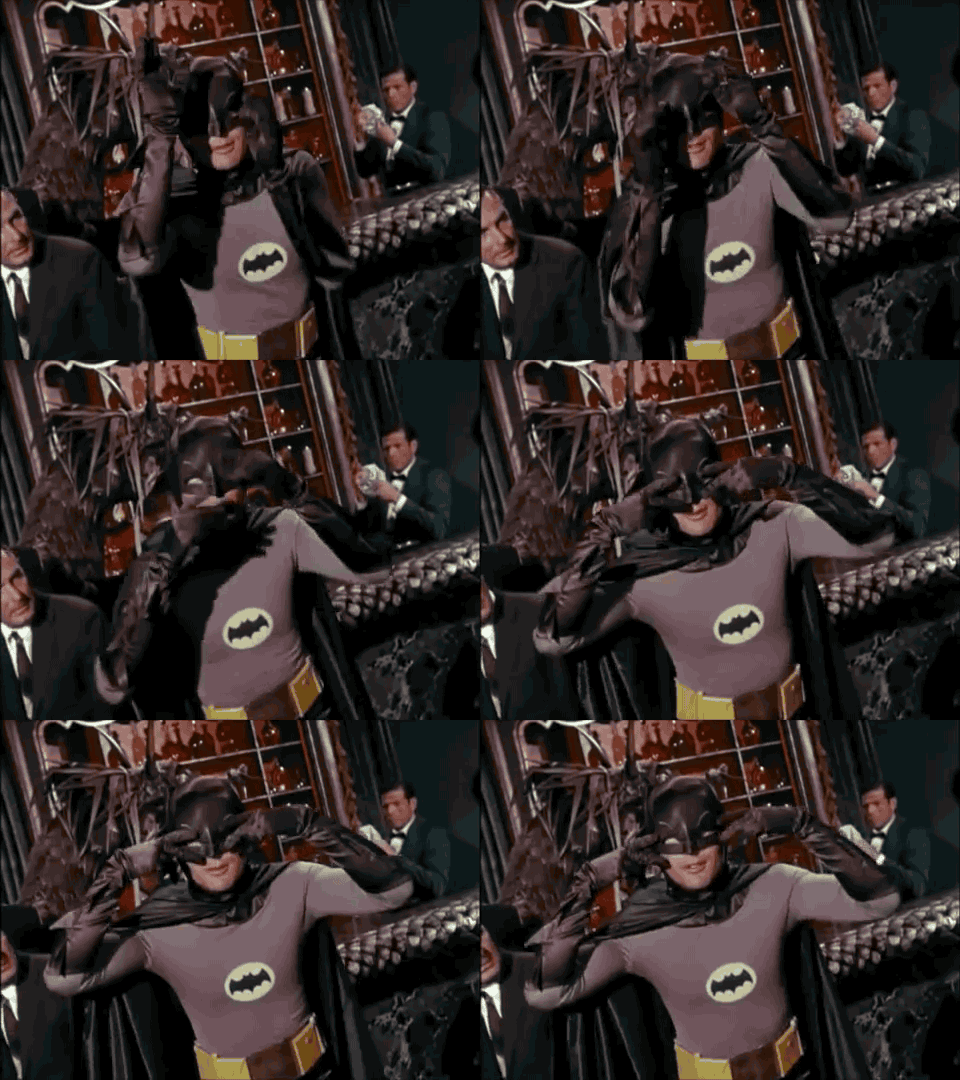
Adam West, who died June 9th at age 88, will never be ranked among the world’s greatest thespians. He was no Brando or Olivier, no DeNiro or Pacino. His early career wasn’t very distinguished: one of Robert Taylor’s young charges in the final season of THE DETECTIVES, Paul Mantee’s doomed fellow astronaut in 1964’s ROBINSON CRUSOE ON MARS, the bumbling romantic lead in The Three Stooges’ THE OUTLAWS IS COMING (1965). Were it not for one role, no one would be mourning his loss today. But that one role, as millionaire Bruce Wayne aka BATMAN, captured the imagination of an entire nation, and remains the hero of an entire generation.

It’s hard to describe to anyone who wasn’t a kid in 1966 just what BATMAN meant to us. The series was a comic book come to life, before comics became “dark and brooding” little psychodramas for fanboys. Comic Books were OUR medium…

View original post 473 more words

Remembering Roger Moore: THE MAN WITH THE GOLDEN GUN (United Artists 1974)


gary loggins's avatarcracked rear viewer

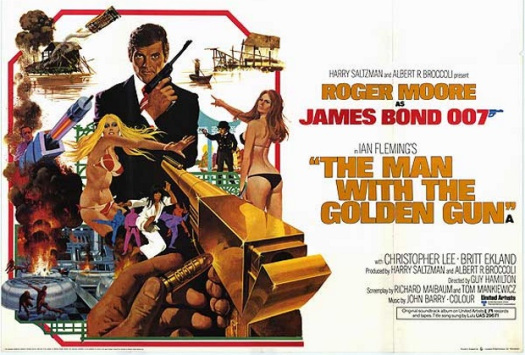
I didn’t realize Sir Roger Moore was 89 years old when I first heard he’d passed away on May 23. But as Mick Jagger once sang, time waits for no one, and Moore’s passing is another sad reminder of our own mortality. It seemed like Roger had been around forever though, from his TV stardom as Simon Templar in THE SAINT (1962-69) though his seven appearances as James Bond, Agent 007.

There’s always been a rift  between fans of original film Bond Sean Connery and fans of Moore’s interpretation. The Connery camp maintains Moore’s Bond movies rely too much on comedy, turning the superspy into a parody of himself. Many point to his second, THE MAN WITH THE GOLDEN GUN, as an example, but I disagree. I think the film strikes a good balance between humor and suspense, with Roger on-target as 007, and the great Christopher Lee (who’d guest starred in Moore’s syndicated…

View original post 482 more words

50 Years Ago Today: The Beatles’ SGT. PEPPER’S LONELY HEARTS CLUB BAND (Capitol Records 1967)


gary loggins's avatarcracked rear viewer

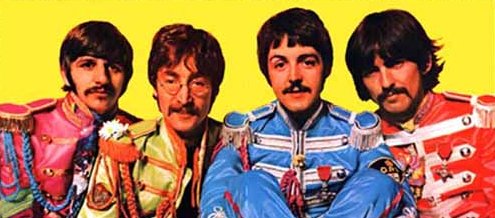
June 2, 1967. The beginning of the so-called “Summer of Love”. The underground hippie culture was grooving toward the mainstream. And those four loveable mop tops, The Beatles , released their eighth album, “Sgt. Pepper’s Lonely Hearts Club Band”, on America’s shores, ushering in the concept of “concept albums” that still reverberates in music today. The Fab Four were Fab no more, but genuine artists, with a little help from their friend, producer George Martin.

The Beatles had stopped touring  the previous year, tired of the grind and the hysterical screaming that drowned their music out. They had done some experimenting in the studio with “Revolver”, their previous LP, but “Sgt. Pepper” was something different. Martin and the band members, influenced by both The Beach Boys’ “Pet Sounds” and Frank Zappa’s “Freak Out!” discs, utilized then cutting edge studio techniques (tape loops, sound effects, varying speeds) and instrumentations (sitar, harmonium, Mellotron, tubular bells, even…

View original post 651 more words

In Memory of Gregg Allman


gary loggins's avatarcracked rear viewer

RestThe music world lost another giant yesterday when Southern rocker Gregg Allman died at age 69. This wasn’t exactly unexpected, as the hard-living Allman suffered from health problems brought on by years of hard partying.

Born in Richmond Hill, GA in 1947, Gregg and his older sibling Duane were more interested in music and girls than school. They formed bands (Hour Glass, Allman Joys), toured the south and Midwest, and did some recordings, without much success. Returning to their Georgia roots, the band signed with Phil Walden’s Macon-based Capricorn Records, a label specializing in the burgeoning Southern Rock movement (Marshall Tucker Band, The Outlaws, Wet Willie, Delbert McClinton, etc). Their third release, the double LP LIVE AT FILLMORE EAST, put them on the map as a major band:

Tragedy struck the band when Duane died in a 1971 motorcycle accident, followed the next year by another crash taking bassist Berry Oakley…

View original post 207 more words

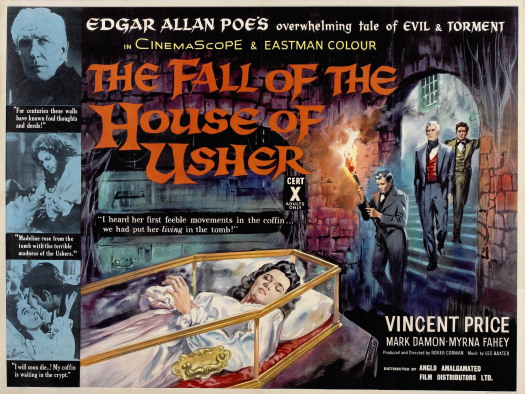
Happy Birthday Vincent Price: THE FALL OF THE HOUSE OF USHER (AIP 1960)


gary loggins's avatarcracked rear viewer

I’ve covered Vincent Price’s film work 17 times here, which must be some kind of record. Can you tell he’s one of my all-time favorite actors? Vincent Leonard Price, Jr. was born May 27, 1911 in St. Louis, Missouri. The elegant, eloquent Price was also an avid art collector and gourmet cook of some note. He’s justifiably famous for his film noir roles, but Price etched his name in cinematic stone as one of filmdom’s Masters of Horror.

Price starred in his first fright film way back in 1940 with THE INVISIBLE MAN RETURNS . But it wasn’t until 1953’s 3-D outry HOUSE OF WAX that he became tagged as a horror star. Later in that decade, he made a pair of gimmicky shockers for director William Castle ( THE HOUSE ON HAUNTED HILL , THE TINGLER), and in 1960 began his collaboration with Roger Corman on movies based (loosely, mind you) on the works of Edgar Allan Poe. The first…

View original post 584 more words

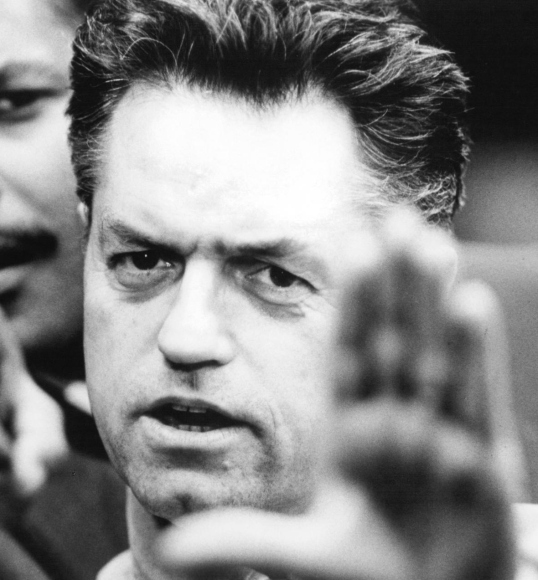
Jonathan Demme, RIP


I just saw, on twitter, that Jonathan Demme died today in New York City.  He was 73 years old.

It’s ironic that Jonathan Demme’s best known film was the dark and harsh Silence of the Lambs because Demme was actually one of the most humanistic directors out there.  Starting with his work for Roger Corman in the early 70s, Demme worked in all genres.  He did gangster movies, action films, quirky comedies, socially conscious documentaries, and serious prestige dramas.  His directorial debut, Caged Heat, features one of Barbara Steele’s best performances and is considered to be the standard by which all other women in prison films are judged.  His concert film, Stop Making Sense, is widely considered to be the best concert film ever made.  His work on Silence of the Lambs continues to influence the horror genre to this day and Philadelphia was the first studio picture to be made about AIDS.  Even his remake of The Manchurian Candidate was better than the typical remake.  No matter what genre he was working in, the thing that remained a constant was Demme’s own interest in the human condition.  His films felt alive in a way that few directors have ever been able to duplicate.  His influence is obvious in the work of everyone from Wes Anderson to Paul Thomas Anderson to Alexander Payne.

Demme may be best known for The Silence of the Lambs but my favorite of his films will always be Rachel Getting Married.

Jonathan Demme, RIP.

RIP in Blues Heaven, J. Geils


gary loggins's avatarcracked rear viewer

Appropriately, I was just leaving Fenway Park in Boston with my friends when we heard the news that guitarist J. Geils had died. The J. Geils Band were legendary here in Massachusetts, a gritty, down-to-earth blues rock band who had a string of hits in the 70’s, then reemerged again in the 80’s at the height of MTV’s heyday. The band, fronted by charismatic lead singer Peter Wolf and propelled by the bluesy harmonic licks of Magic Dick, released their first album in 1970, and hit the road to tour the country incessantly. They became known as one of the hardest working (and hardest rocking) bands in America, and hit it big on FM radio with their 1972 LP “LIVE! FULL HOUSE”, featuring the single “Lookin’ for a Love”:

The first time I caught them was in ’73, touring in support of their album “BLOODSHOT”, with the hit “Give It to Me”…

View original post 143 more words

RIP, Ya Hockey Puck: Don Rickles on Film and Television


gary loggins's avatarcracked rear viewer

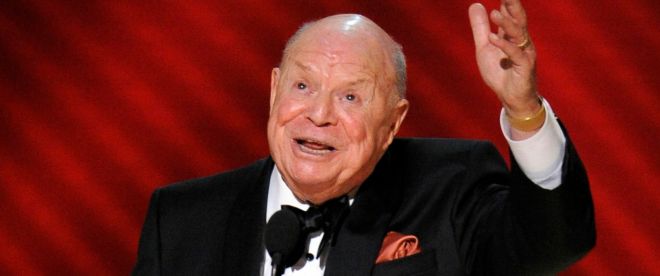
“Mr. Warmth”, the great Don Rickles, died yesterday at age 90. He was outrageous, rude, definitely non-PC, and hysterically funny. Rickles threw his verbal brickbats at everybody regardless of race, creed, national origin, or political persuasion, and it was all in good-spirited fun. There will never be another stand-up comic quite like Don Rickles, especially in today’s “safe space” world, and it’s a pity, because if we can’t all laugh at ourselves, if we can’t take a joke, then it’s time to pack it in.

Something I didn’t know about Don Rickles is he didn’t start out to be “The Merchant of Venom”. He intended to become a serious actor, studying at the prestigious American Academy of Dramatic Arts in Manhattan. Frustrated with his lack of acting jobs, Don began doing stand-up as a way to gain exposure. When he was heckled by some audience members, he heckled ’em right back…

View original post 382 more words

Goodbye, Don Rickles, and Thank You For The Laughter


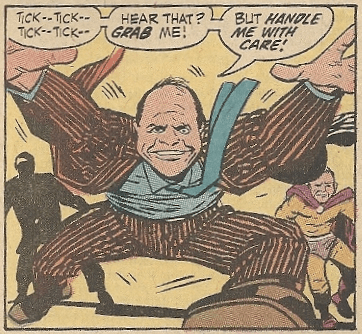
Don Rickles, as drawn by Jack Kirby

Oh man, Don Rickles.

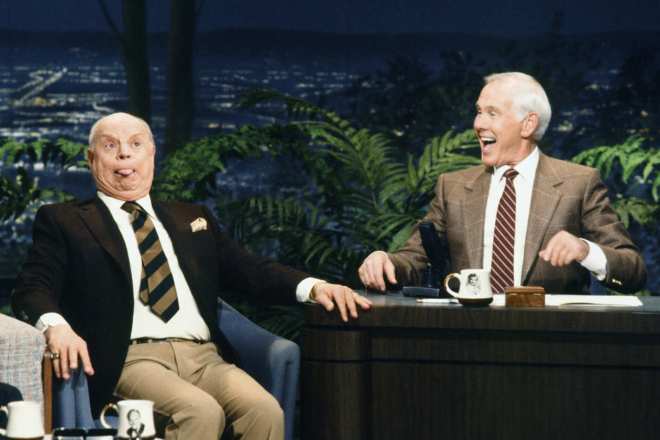
Remember when they used to show old episodes of Saturday Night Live on Comedy Central?  I once watched an episode from 1984.  The host was Don Rickles.  His opening monologue was pure Don Rickles, which is to say that he insulted everyone in the audience.  It didn’t matter who the person was, Rickles was going to insult them.  He insulted John Madden.  He insulted Brandon Tartikoff, the president of the NBC.  He insulted the people who had just come in from off the street.  I don’t remember much about the specific insults.  The main thing that I remember is that the audience absolutely loved it.  Even before Rickles thanked them all for being good sports, the audience was eating out of his hand.

Don Rickles was the King of Insult Comedy.  His nickname was Mr. Warmth.  The nickname was not as ironic as you might think.  Off-stage, Rickles was reportedly a kind and generous man.  And, on-stage, Rickles may have insulted the audience but he did it with a twinkle in his eye and he always thanked him at the end.  His humor may have been built on insults but it was also built on self-depreciation.  The only person he made fun of more than the guy sitting in front row of the audience was himself.  Going to one of his shows might lead to you being called a “hockey puck,” but Rickles’s ultimate message was always that we’re all in this together.

As funny as Rickles was, he was also lucky enough to start his career in the 1950s.  (Reportedly, he got his big break when he saw Frank Sinatra in the audience, said, “Make yourself at home, Frank.  Hit somebody!” and insulted his work in his last movie.  Sinatra loved it.)  If Don Rickles had started his career this century, his politically incorrect humor would have gotten him banned from most clubs and Amy Schumer and Lena Dunham would have led a twitter campaign to have him incarcerated.  Don Rickles was lucky enough to by funny at a time when comedians were actually rewarded for making us laugh.

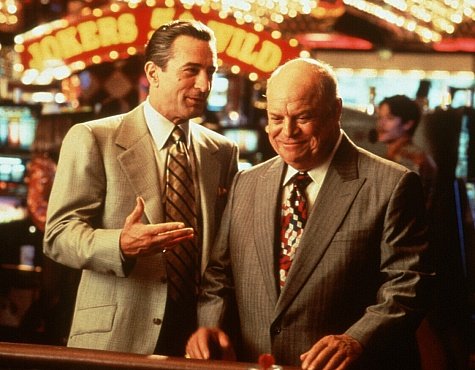
What was your favorite Don Rickles role?  He always said that his grandkids only liked him because he voiced Mr. Potato Head in the Toy Story films.  Rickles also had a rare dramatic role in Martin Scorsese’s Casino, more than holding his own against heavyweight actors like Robert De Niro and Joe Pesci.

Don Rickles died today at the age of 90.  I would say rest in peace but I don’t think Don Rickles would have appreciated the “in peace” part.  I will just say goodbye, Mr. Rickles and thank you for the laughter.