AMV of the Day: Star x Crossed (Romeo x Juliet)


RomeoXJuliet

The latest “AMV of the Day” is from an anime adaptation of one of the Bard’s most beloved work: Romeo and Juliet. There was an earlier chosen AMV from awhile back that also used this anime adaptation and one I consider a big favorite. Well, I found another well-made AMV using this same series and this time instead of taking the symphonic metal route for choice in music the video goes old-school 80’s rock ballad.

“Star x Crossed” combines both Romeo x Juliet and the classic Roxette rock ballad from the 80’s, “Listen To Your Heart”, to great effect. The song itself actually fits in perfectly with the anime which takes the star-crossed couple of the title in a fantasy setting. The series combines romance, drama and action in equal amounts. In fact, I would guess that the anime version of Juliet is less damsel-in-distress and lover-in-waiting and more an equal or surpasses Romeo in both character development and skill.

The video itself shows scenes of Juliet not just as the object of Romeo’s affection, but also someone who can hold her own in a fight. Plus, she’s a redhead which should make Lisa Marie happy as long as she doesn’t start trying to do sword-fighting like the character in the video.

The video’s creator is sinycatarina and it’s been an eye-opener finding her work in the AMV scene. This creator is very good and I’ve already marked another of her video’s for a future installment.

Anime: Romeo x Juliet

Song: “Listen To Your Heart” by Roxette

Creator: sinycatarina

Past AMVs of the Day

Ten Years #30: The Smashing Pumpkins


Decade of last.fm scrobbling countdown:
30. The Smashing Pumpkins (1,058 plays)
Top track (36 plays): I of the Mourning, from Machina: The Machines of God (2000)

2000 might have been one of the most optimistic years in American history. Bill Clinton was still president, the massive corporate effort to overcome a Y2K electronic doomsday scenario had succeeded impressively, the medical field was speeding towards a glimmering utopian future of nanobots and stem cell technology, and we had just wrapped up the Kosovo conflict to conclude a rare decade characterized more by sincere humanitarian intervention than by capitalist imperialism. Though we would soon plummet back to the social and political stone age in successive waves of decadence, this naive teenager’s outlook on the future was a dreamy ideal of progress. If there was trouble in the air, I never felt it. Whatever concerns the future might bring were fundamentally tied to it, not to the here and now.

Every Smashing Pumpkins album struck me in a fairly unique way. Each Siamese Dream track seemed like an overwhelming independent entity; I would get hung up on a song like “Rocket” and listen to it over and over again for days before moving on to the next. Mellon Collie and the Infinite Sadness I enjoyed more as a collective, basking in the roller coaster romp from ecstasy to sadness to rage that characterized juxtapositions like “Thru the Eyes of Ruby”, “Stumbleine”, and “x.y.u.” Adore kind of washed over me as a kid, and while I appreciate it more today, I will never quite get over the absence of Jimmy Chamberlin.

On Machina: The Machines of God, I think the vision of an album really overtook the band. Each song felt like a part of the collective to a greater degree than ever before. The highs and lows were all subdued. There was more total sound encompassing everything, while the edges of the heaviest tracks were dulled–while “We Only Come Out At Night” and “Tales of a Scorched Earth” certainly belong together as elements of a greater emotional road trip, “With Every Light” and “Heavy Metal Machines” were substantially closer in their musical approach and production. If Mellon Collie was a pendulum swinging violently between beauty and aggression, Machina rocked gently and subtly around its zen point. I fell in love with it even more than with Mellon Collie or Siamese Dream–a feat I did not think possible.

It might go against the popular grain to speak of Machina as the best Pumpkins album–of “I of the Mourning” and “Age of Innocence” as their best songs or “Stand Inside Your Love” as their best single. But these are definitely my favorites. I felt a perfect connection between the overall vibe of this album and my outlook on the world in 2000. “I of the Mourning” captured it perfectly for me–a positive cultivation of a sense of longing framed not by some mournful acoustic guitar but by that encompassing futuristic dream that characterizes the sound of Machina from start to finish.

Perhaps the stars just all aligned in the right place and time. Machina seems more like a personal testament to the band’s experiences together leading up to their impending break-up than a commentary on the state of the world. “Age of Innocence” functioned in retrospect as a clear final farewell. But it was a positive farewell, looking brightly to the uncertain future, and as such it seemed to coalesce with our passage into a new millennium. The 21st century promised, falsely as it turned out, to be a little less compulsive than the last, and I think Corgan likewise saw himself waving farewell to an endearing yet tumultuous phase in his life. I’ll leave you with that closing song:

We dismiss the back roads
and ride these streets unafraid
resort to scraping paint
from our bones unashamed

no more the eye upon you
no more the simple man

desolation yes, hesitation no
as you might have guessed, all is never shown
desolation yes, hesitation no

and in my prayers I dream alone
a silent speech to deaf ears:
If you want love, you must be love
but if you bleed love, you will die loved

no more the lie upon you
cast in stone the autumn shade

desolation yes, hesitation no
as you might have sensed, we won’t make it home
desolation yes, hesitation no

before the rites of spring
come to mean all things
a little taste of what may come
a mere glimpse of what has gone

cause for the moment we are free
we seek to bind our release
too young to die, too rich to care
too fucked to swear that I was there

desolation yes, hesitation no
as you might have guessed, we won’t make it home
desolation yes, hesitation no

Ten Years #31: Turisas


Decade of last.fm scrobbling countdown:
31. Turisas (1,040 plays)
Top track (96 plays): In the Court of Jarisleif, from The Varangian Way (2007)
Featured track: Miklagard Overture, from The Varangian Way

The Varangian Way was one of the last albums I expected to matter when I grabbed the pre-release leak in 2007. Having owned Battle Metal (2004) since its release, I remembered Turisas as a run of the mill band with one really outstanding song–Sahti-Waari–and a bunch of generic try-too-hard epic numbers to their name. It took about one minute in 2007 to realize that this band had achieved one of the most impressive turn-arounds in the history of metal. A captivating concept album packed with outstanding vocals and folk instrumentation, a brilliant symphonic backdrop, and thoroughly convincing lyrics, The Varangian Way was my favorite album of 2007 and remains a top 10 all time contender for me today. Mathias Nygård and company crafted an inspiring musical journey from Viking Age Scandinavia through Russia to the seat of the Byzantine empire with all the gloss of a Hollywood blockbuster. From the symphonic prog suspense of “The Dnieper Rapids” to the drunken folk romp of “In the Court of Jarisleif” to the orchestral majesty of “Miklagard Overture”, Turisas employed a world of musical styles to uniquely capture every stage of the voyage. As a concept album, they delivered the full package to an extent that is perhaps only trumped by Blind Guardian’s Nightfall in Middle-Earth. This was no fluke, either. Their follow-up album, Stand Up and Fight (2011), might have lacked the fulfilling sense of completeness that only a concept album can deliver, but it by and large maintained the level of quality of its predecessor, ensuring that Battle Metal could be remembered as a freshman effort and not the more accurate representation of their matured sound. Their fourth studio album, Turisas2013, is set to release this Wednesday (August 21st). While its awkward title and cover art will require some substantiation, I have really high hopes.

I’ll leave you with the lyrics to “Miklagard Overture”. I especially love how Turisas cultivate the power of names to really drive this anthem home; they employ the fact that Constantinople is known in so many languages as a testament to its glory. I personally visited Istanbul last summer, and I can confidently say that it remains one of the most overwhelming cities on this earth, breathing 2000 years of history not in ruin but in vibrant life. Turisas manage to do it justice in a way few other artists could.

Long have I drifted without a course
A rudderless ship I have sailed
The Nile just keeps flowing without a source
Maybe all the seekers just failed

To Holmgard and beyond
In search of a bond
Far from home I’ve come
But the road has just begun

Breathing history
Veiled in mystery
The sublime
The greatest of our time
Tsargrad!

“Come with us to the south
Write your name on our roll”
I was told;

Konstantinopolis
Sui generis
The saints and emperors
Of bygone centuries
The man-made birds in their trees
Out load their paean rings
Immortality!

In astonishing colours the East meets the West
The hill-banks arise in their green
In wonder I sit on my empty chest
As we glide down the strait in between

To Holmgard and beyond
In search of a bond
Distant church bells toll
For their god they chant and troll

Breathing history
Veiled in mystery
The sublime
The greatest of our time
Tsargrad!

The Norwegian of rank
In the court of The Prince
I was convinced

Konstantinopolis
Ten gates to eternity
Seen all for centuries
Your inconquerable walls
Your temples and your halls
See all, hear all, know all

My sun rose in the North and now sets in the South
The Golden Horn lives up to its name
From tower to tower a chain guards its mouth
Unbreakable, they claim

To Holmgard and beyond
In search of a bond
Adventures lie ahead
Many knots lie unravelled on my thread

Breathing history
Veiled in mystery
The sublime
The greatest of our time
Tsargrad!

Konstantinopolis
Queen of the cities
Your welcoming smile
Made all worthwhile
The sweat and the pain

Bathing in gold
Endless rooftops unfold
The sun sets for a while just to rise again

Great walls
Great halls
Greatest of all, Miklagard

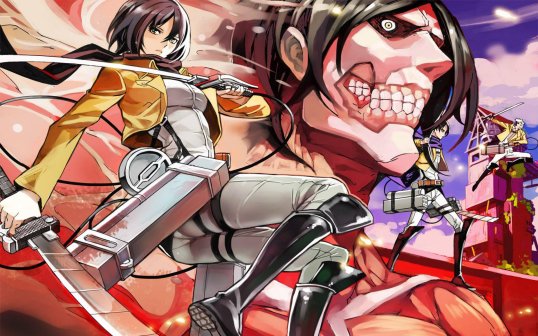
AMV of the Day: Protectors of the Earth (Shingeki no Kyojin)


Shingeki no KyojinThe latest AMV of the Day has taken Japan and the rest of the anime-watching world by storm. I’m talking about the horror-action series Shingeki no Kyojin (“Attack On Titan”) that’s based on the manga of the same title by Hajime Isayama. This particular AMV uses the tried-and-true song “Protectors of the Earth” by Two Steps from Hell.

What is Shingeki no Kyojin?

It’s horror combined with dark fantasy, action and drama. It’s pretty much about whats left of humanity hiding behind massive walls that’s suppose to protect them from the giant humanoid-looking Titans who have no other goal but to devour every human they come across. It’s what would happen if you crossed the zombie apocalypse with giants instead of shambling corpses.

This video by LTTuall AMV does a great job of using the track from by Two Steps from Hell to create an action-packed anime trailer that shows some of the reasons why this anime series has become so popular so quickly.

Anime: Shingeki no Kyojin

Song: “Protector of the Earth” by Two Steps from Hell

Creator: LTTuall AMV

Past AMVs of the Day

Ten Years #32: Elliott Smith


Decade of last.fm scrobbling countdown:
32. Elliott Smith (946 plays)
Top track (95 plays): Southern Belle, from Elliott Smith (1995)
Featured track: St. Ides Heaven, from Elliott Smith

This October will mark ten years since Elliott Smith’s tragic death. I remember hearing the news only a few months after I started listening to him. The Royal Tenenbaums was my favorite movie at the time, and I picked up his self-titled album after hearing Needle in the Hay in the suicide scene. As if the album’s lyrics weren’t bleak enough already, the relevance of my first experience of Elliott Smith to his death added a whole new weight. It’s a pleasant if odd coincidence that the album soon became intimately tied with one of the most positive experiences of my life.

Smith died in October, and I shipped off to basic training the following month. Music deprivation–the only really challenging aspect of the whole three month process–came to an end when I was marched out of my barracks with my confiscated cd collection back in tow and shipped off to my year-long advanced training. I hopped on a plane in a bitter sub-zero St. Louis February and fell back off in the palm-tree coastal paradise of Monterey, California. Elliott Smith was spinning all the while, and it kept on playing until I left that strange and beautiful place for good. Something about the juxtaposition of Smith’s depressing lyrics and ethereal performance perfectly captured the simultaneous homesickness and bewilderment that I experienced as a rural 19 year old alone and out of his element with an enormous Army pay check, left to roam the hills of one of America’s most affluent coastal cities every night. That otherworldly vision of a serene Pacific bay surrounded by city lights will always go hand-in-hand with this album for me, and I can’t bring myself to listen to any other Elliott Smith recording without being overcome by a desire to put his self-titled back on, close my eyes, and relive the experience. It might not be exactly what Smith had in mind when he recorded it, but I would rather like to remember him for the beauty lying beneath his depression than for his death.

Ten Years #33: Аркона


Decade of last.fm scrobbling countdown:
33. Аркона (909 plays)
Top track (49 plays): Покровы небесного старца, from От сердца к небу (2007)
Featured track: Гой, Купала!!!, from От сердца к небу

It’s no coincidence that a lot of folk-oriented Slavic metal bands have more of an edge than their western counterparts. There is a spirit of primitivism and barbarism that seems to permeate these acts; while Alestorm and Korpiklaani are reveling in booze, bands like Arkona are delighting in something more savage. Grittier distortion, harsher vocals, lower quality production, and a tendency to incorporate black metal all play a role. While this has allowed a lot of Slavic folk metal bands to capture a slightly deeper, more introspective connection to their cultural roots, it has also reduced their accessibility. Arkona are impervious to this consequence; they manage to invoke that essence of savage Slavic glory while still constructing songs I wouldn’t hesitate to recommend to people unconditioned to extreme metal. This is due in part to their above-average production quality (obviously lacking in a youtube rip), but more so to Masha’s wildly diverse range of sung and screamed vocals, often accompanied by a glorious operatic Russian chorus.

As with the last entry in my last.fm series, there is not much I care to say about Arkona that I did not already cover in a previous post. Their position as my 33rd most listened to band of the past decade is no accident. Hell, they’re the initial reason I learned how to transliterate Cyrillic.

Song of the Day: Mako (by Ramin Djawadi)


PacificRimOST

Finishing off my Pacific Rim soundtrack trifecta is the Mako Mori theme by Ramin Djawadi.

The first two parts of this trio were the theme to Pacific Rim and the theme to Gipsy Danger. Both were composed by Ramin Djawadi (the film’s composer) and featured lead guitar work by Tom Morello of Rage Against the Machine. My third choice and latest “Song of the Day” was simply titled “Mako”. This part of the soundtrack occurs primarily during a Drift sequence in the film that becomes the unifying thread to the relationship between Rinko Kikuchi’s Mako Mori character and IDris Elba’s Stacker Pentecost role. Ramin Djawadi has singer and songwriter PRiscilla Ahn join him in this song as we see an important backstory play out within the Drift. It’s Mako’s past history with the kaiju and Stacker and why she’s so determined to become a jaeger pilot despite her adopted father’s reservations.

With this track we see that Djawadi can handle emotional musical pieces as well as the more hard rock and chest-thumping sections of the film’s score. It helps to have Priscilla Ahn’s melodic harmonizing backing up Djawadi’s composition which starts off gradually and dream-like before it transitions into a soaring string movement that Djawadi’s mentor, Hans Zimmer, wished he could pull off.

To say that the Pacific Rim soundtrack was just as awesome as the film it was composed for would be an understatement. These three choices were just my personal favorites. There were more throughout the 25-track soundtrack and each and everyone of them fits the film perfectly.

Ten Years #34: Hiroki Kikuta


Decade of last.fm scrobbling countdown:
34. Hiroki Kikuta (909 plays)
Top track (105 plays): A Wish, from Seiken Densetsu 2 (Secret of Mana) (1993)

Hiroki Kikuta–or 菊田裕樹 as I like to tag my artists–is in reality my #1 most listened to artist of the past decade, if only because Premonition from Secret of Mana has been my cell phone ring tone since something like 1999. (I actually manually recorded the song on my phone and set it up as a ring tone back before you could load mp3s.) The fact that I still have yet to tire of it is a testament to just how great the Secret of Mana soundtrack was. I regard the first half of the 1990s as the pinnacle of video game music, thanks in no small part to Square’s exquisite attention to audio at the time. Hiroki Kikuta, like Yasunori Mitsuda two years later, was something of a no name in the world of vgm who Square tasked with an enormously high-demand project and who rose to the challenge in full.

Everything I could desire to say about Kikuta I’ve already summed up in the Secret of Mana entry to my video game music series last year, so I’ll make this entry to my current post series brief. Suffice to say I think Kikuta was a brilliant composer on par with Uematsu and Mitsuda. He unfortunately made some relatively poor career choices which prohibited him from being tasked with enough high budget game projects to make his name as much of a lasting fixture in the history of vgm as these latter two, but the Secret of Mana soundtrack rightly deserves a place among the finest gaming music ever conceived.

Ten Years #35: Blur


Decade of last.fm scrobbling countdown:
35. Blur (850 plays)
Top track (43 plays): Parklife, from Parklife (1994)

It wasn’t until about 1996 that my mother decided it would be acceptable to allow me to purchase cds. Prior to that, all non-Evangelical Christian music and television was banned in our household (aside from The Beatles and Pink Floyd; she liked them as a kid, so they must have never done drugs or any of that Satanic stuff). Her lovely father was exploiting me for slave labor at that point for the fair wage of 25 cents an hour, and I found that, at $8 a pop through the BMG music distribution club, I could buy a new cd every four days. I quickly replaced all of my secret cassette recordings of radio singles with actual albums, and some time the following year that lead to the acquisition of Blur’s Parklife. I was initially appalled to find that it did not contain “Song 2”–the only Blur track that most Americans have ever heard–and considered writing to BMG demanding my money back for their faulty advertising. How dare they sell me some other cd by a band that, according to my radio, only ever wrote one song worth listening to.

Well, suffice to say I gave it a few more listens and it became one of my lasting favorites of that decade. I was oblivious to its tongue-in-cheek social commentary at the time. What I heard was a vision of some foreign, advanced culture in which people spoke in tantalizing accents and could sing about subjects other than religion without resorting to aggression. The novel experience of a world beyond a particularly self-isolating yet prominent American subculture and its proclaimed enemies (grunge music and video games–we hadn’t reinstated the Crusades yet) is largely responsible for my persistent, overly glamorous and unrealistic Europhilia today. Blur’s ability to craft a sound that perfectly reflected the modern British life they were mocking placed them at the forefront of this experience. For me at the time, the most popular band in Britain was a close-kept secret. To have grown up and realized they really were one of the most talented and creative bands of their generation is just icing on the cake. Blur remains one of my most listened-to non-metal bands today–my 35th most-played band of the past decade–and I can’t imagine I’ll tire of them any time soon.

Song of the Day: Gipsy Danger (by Ramin Djawadi)


PacificRimOST

This latest “Song of the Day” will be the second of what will be a trifecta of my favorite tracks from the Pacific Rim soundtrack by composer Ramin Djawadi. The first one was the main theme from the film and featured Rage Against the Machine lead guitarist Tom Morello providing lead guitar work. This second track I’ve chosen is siply titled “Gipsy Danger”.

Where the main theme has been everyone’s favorite in the entire soundtrack it’s difficult not to enjoy the motif for the main character of the film. Let’s be honest and just admit to ourselves that the main character in Pacific Rim is the jaeger christened Gipsy Danger. The track which introduces her theme in the film actually precedes the main theme. We actually hear the “Gipsy Danger” theme right from the start of the film. It combines some of the hard rock melodies and chords from the film’s main theme, but also expanding on the deep bass tone (sounding like a fog horn blowing) that punctuates throughout this theme more than it did in the main theme. This deep sound I always thought of as the “monster arriving” musical cue. It appears not just when Gipsy Danger makes her initial appearance but also whenever a kaiju emerges from the ocean and makes landfall to cause destruction. It’s a sound cue similar to classic giant monster flicks from Japan that announces either Godzilla or one of his kaiju brethren which was followed-up by the iconic monster scream.

We get both the rock and roll and heroic sound from the main theme combined with the more ominous musical cue in this chosen track. It pretty much focuses on one of the film’s taglines about creating monsters to fight monsters. The Gipsy Danger jaeger is a monster in her own right. But then she’s our monster and we always have a fondness for monsters as long as it’s our own.