Full disclosure: I was a Kickstarter backer and beta tester for this game.
So recently, Asymmetric’s “Word Realms” was released to the public as a semi-finished product. I say semi-finished because, by their own admission, there are many changes still to go. If the studio name sounds vaguely familiar, it’s probably because you’ve happened across the popular browser-based game “The Kingdom of Loathing” in the past. As a long, long, long time fan of the browser based game, I simply couldn’t resist when the opportunity came to support their new endeavour – an animated game effort with (presumably) the same kind of sarcastic humour and potential, and one based even more promisingly in the realm of words.
So here’s the skinny. Word Realms challenges you to play a lot of “Scrabble”. The combat involves forming words out of randomly generated banks of letters. Each letter has a score value, and the higher the score, the more damage that you do. It’s really that simple. So if you’ve been dominating your friends at “Words With Friends” for the last five years, then you should find yourself quite at home here, but with a catch: the combat timer is somewhat swift, and you’ll need to think quickly about your word, rather than spending days on it. Generating valuable words quickly is as important a skill as knowing how to dump off the random “Z” letters that come into your life. Frankly, I found the experience quite immersive, but your own mileage may vary based on just how much you enjoy the word games in your life.
The problem with Word Realms is that, even explored to its utmost, there just isn’t that much girth to be explored. While the game definitely has the potential to absorb an entire afternoon away from you, I’m not sure it has much more than that. There’s a small amount of replayability, I suppose, and the game does have some fun mini-games (found through the story mode in the form of dream sequences; you’ll see) and a fairly deep crafting system. I still maintain that the core game-play is probably just not substantative enough for most single player gamers who are, frankly, looking for something to suck up their free hours. That said, the $11 price tag guarantees five or six totally engrossed hours. I’m not sure how much better most modern single player experiences do in terms of bang for your buck.
For what its worth, I enjoyed Word Realms. I backed it for substantially more than $11 and I certainly don’t regret that choice. If you’re looking for something to do it would be hard to go wrong with this title. Oh, and as for the acerbic wit of Kingdom of Loathing? If you enjoy the browser game the humour will translate easily to you.
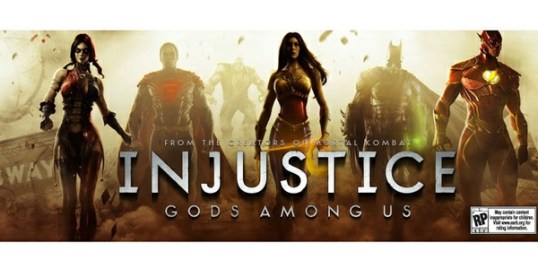
On my way home recently, I saw a subway poster for Injustice: Gods Among Us, depicting DC Comics characters The Joker really to take a crowbar to the Green Lantern. That seemed interesting, but when I found out that it was a fighting game, I didn’t expect much. Most of the fighting games I’ve played will just toss a number of characters together and have them fight without any real reason to do so. The only game of recent memory to do anything different was Marvel vs. Capcom 3, where you eventually found yourself doing battle with Galactus, but even then, getting to that point was merely a set of random battles from Point A to Point C. After finding out that Ed Boon, creator of Mortal Kombat was involved, I had a feeling the fighting would be good but still empty.
Injustice’s single player game is done in such a way that it gives every character (24 in all, half heroes / half villains) a chance to shine or fall. I haven’t gone all the way through it, but each chapter of the game focuses on a particular hero and the events in that have him or her confronting an enemy to further push the narrative. While I’m not familiar with the story behind it (I’ve always been more of a Marvel than DC fan), it’s compelling enough that I at least want to know what happens next.
The story starts with the full on destruction of Metropolis at the hands of The Joker. As Batman interrogates him, Superman intervenes and we come to find that The Joker somehow manipulated him into killing Lois Lane and his unborn son. The result of this knowledge causes the scene to end in a way that reflects some of the darker tones of the Warner Animated movies like Batman: Under the Red Hood. It shifts to an alternate universe story where – from what I tell – Superman is the ruler of the world with some of the heroes siding with him and becoming your enemies. Can he be defeated? Only crazy button mashing and timing will tell.
As fighting games go, the mechanics to Injustice are very simple. Rooted in the Mortal Kombat style of fighting, you have your basics. Back lets you block anything coming at you high or from the air. Down blocks low sweeps and kicks. Using the diamond formation of console buttons, your light attacks from the 360’s X button / PS3s Square button. Medium Attacks are the 360s Y button / PS3’s Triangle and Heavy comes from the A button / X on the PS3. It’s a good layout that helps the battle flow fast. Combos are also very easy to execute, most of them being of the quick left, right, button press or down, forward button variety. The B button / Circle acts as a special character feature. I thought this was really cool in that every character has either an ability that can be enhanced – Green Lantern charges his ring, Aquaman creates a water shield or Superman uses the Sun to make him stronger. For those were are less than meta, their gadgets / weapons change. Batman brings in a swarm of mini bats, Nightwing’s escrimas fuse together to form a staff and Wonder Woman switches from her lasso to her sword & shield.
InJustice also uses a meter system similar to Street Fighter IV. As you get hurt or string attacks, this meter will fill up in stages. You can use a stage to pull off more advanced moves or if you allow it max out, you can unleash a Signature Move. Some of them are very cool – Both Superman and The Flash have one that I love to do – while others – like Green Lantern’s and The Joker are smile inducing. These are fun, but it would have been nice to maybe incorporate 2 different ones per character. That’s just me.
The backgrounds are used very well in Injustice. If you happen to be near an object that can be used – say a car that’s parked in front of Wayne Manor, a quick bumper button tap lets you smack your opponent with it or throw it at them. Other stages have multiple levels that let you take the battle high or low and damage your enemy in the process. From the street of Gotham City, I sent Solomon Grundy into a chemical truck that exploded, and sent him flying upwards, bouncing off of various apartments until he landed on the roof of a building. That was downright awesome, and strung together with the right combo just adds to the feeling that you’re working with some pretty powerful characters. I haven’t smiled like that since some of my little brother’s Dragonball Z games. Other locations include the Hall of Justice, The Batcave, Atlantis, Themyscira, Arkham Asylum and The Fortress of Solitude. Some of the other locations have multiple levels that be accessed.
And that power can easily be abused, especially when the game goes online. As previously mentioned, the players are divided between those with superpowered abilities (Shazam, Superman, Green Lantern) and the weapons based fighters. I gave the online game a try, which has a number of different modes. While the one on one battles are nice, I liked the Survivor Mode that puts a player as the one everyone needs to dethrone. What’s sweet here is that you can alternate from a theatre mode that lets you watch two people fight or switch over to the current list of people who have waiting to take on the winner. The reigning champ only has so much health to work with from game to game, and I watched one fellow using Black Adam keep everyone at bay with distance shots. Another used Superman and just kept lasering the opponent. It has room for some cheezy moves, but that’s common with just about any fighter, I think. My Nightwing couldn’t even get close. Then again, I’m not the best fighter in the ring. Every fight you have, whether it’s offline or online gives you some sort of XP, which can be used to unlock and use new Portrait Cards, alternate costumes and backgrounds for your Badge (made popular by Call of Duty).
In terms of problems, the only complaint I have about Injustice is that I hoped there would have been more tailoring to the relationships between the characters. Other than that, the game’s just grand. Marvel vs. Capcom 3 had this system where depending on who you chose and who you were up against, you would get some banter that was character specific. For example, if your tag team of 3 in that game were made up of Thor, Captain America and Iron Man, you’d have an opponent recognize that group as the Avengers. If X-23 faced off against Wolverine, she’d ask him who really was the best at what they do. Injustice does this to a small degree, only happening when you perform a Wager match in a round. Wager matches allow you to bet some of your Meter Power. This results in a scene where the players throw a line at each other before charging at full speed. Whoever wins gains some health. The loser has the opponent’s meter level match his or her damage. Sometimes it works out, other times, it’s just alright. I wanted more of that. My favorite so far is the Nightwing / Joker interaction:
Joker: “I liked you better as Robin.” / Nightwing: “I liked you better in Arkham.”
Overall, Injustice: Gods Among Us is a great game to play if you’re in either into fighting games or are a fan of the DC Universe. I’m curious as to what the downloadable content is going to contain.
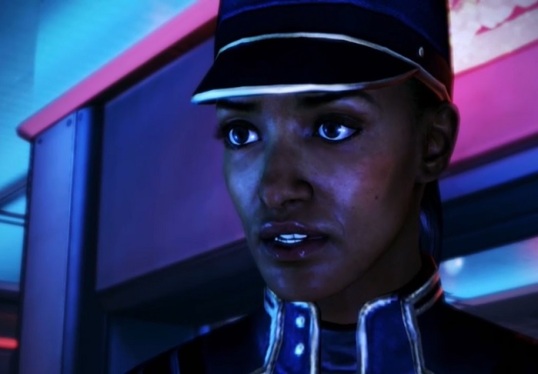
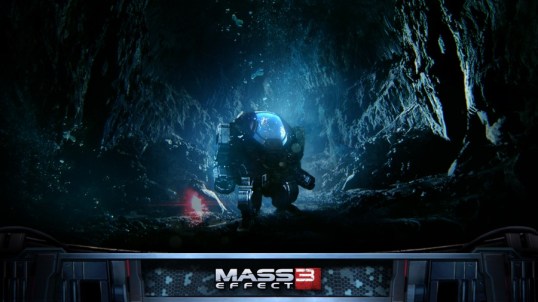
Well, it’s been quite a journey, hasn’t it? We’ve followed Commander Shepard across the years, and across the galaxy, battling against nothing less than our complete annihilation. But there’s one last shot in the chamber, it seems, as a sinister conspiracy seems aimed at killing off the legendary Commander Shepard. Such is the plot of the new Mass Effect 3 “Citadel” DLC, now available for 1200 MS Points.
Note that this review openly discusses details from the original Mass EFfect 3 game. So if you somehow still haven’t played it and still want to, come back and read us later. It’s alright, I won’t be offended.
I know that people have mixed feelings about content DLCs for Mass Effect 3, the ending of which is very definitive. Even with the “best” ending and the added fluff of the “Extended Cut” DLC released last summer, there isn’t anywhere else for Shepard’s story to go after the credits roll. While the “best” ending leaves Shepard’s ultimate fate ambiguous, Bioware has told us that Shepard’s story is over. So what is there to add to the gameplay of Mass Effect 3? I actually think Bioware has done a decent job of addressing this; I enjoyed the “Leviathan” DLC if only for its interesting story reveal. “Return to Omega” is cutting room floor stuff; the conclusion of Aria’s plot arc belonged in the original game, but at least its spot in the Mass Effect story makes sense. But “Citadel”… “Citadel” is one fine DLC. I would have said that the gold standard for Bioware’s DLC before this one was probably “Lair of the Shadow Broker”, which added substantially to my Mass Effect 2 experience, had an interesting plot, and some interesting combats interwoven with some great moments for Liara and Shepard.
“Citadel” is better, and it is better because it honours what has been Mass Effect’s biggest strength all along: the characters. The party interaction. The dialogue. The combat system in Mass Effect 3 is very polished, and it functions very well for what it needs to do, but I would not play Mass Effect 3’s campaign for just the combat sequences. Instead of just fighting through waves of mooks, Shepard finds himself blending into a gala at a casino, blending in at the roulette table and socializing with the who’s who of the Citadel… in between casually shutting down cameras and bypassing security while a companion distracts nettlesome guards. Meanwhile, another companion is sneaking through the ventilation system, all so you can get one single crack at someone who may or may not have answers Shepard wants. It is probably worth noting that this DLC is simply not self-serious in the way that the rest of Mass Effect 3 is. If you feel a shift in tone is dramatically inappropriate, this DLC could rub you the wrong way I suppose.
Things open with orders to put the Normandy in to the Citadel for refits and repairs, where our old friend Admiral Anderson has given over his (ridiculously) swanky Citadel apartment for your use. Anderson does not anticipate ever leaving Earth again; even if he survives the final confrontation with the Reapers, the effort to rebuild Earth is something he knows he can’t walk away from. Once there, you end up meeting Joker for sushi in a highly exclusive restaurant on the Citadel. Things go south soon after, and Shepard is forced to deal with yet another problem dragging him away from the master situation of the Reapers. Things culminate in what could possibly be the most difficult combat in the game (about which I will reveal nothing at all; better that way). I found that I didn’t mind.
The thing about “Citadel” is that it’s genuinely lighthearted and funny, with razor-sharp writing. It’s a remarkably refreshing detour from the otherwise dour tone of Mass Effect 3. The game’s tone is, largely, completely warranted… but this DLC provides a break from the agonizing struggle of the war that the original game really, for the most part, lacked. Combat sequences breezed by in a frenzy of faced-paced action and constant party banter, making me think fondly on the constant party interactions from Dragon Age II. The respites between the action sequences are more of the same. Granted, just shoving characters into the setting of Shepard’s ultra-unbelievably-luxurious-swanky Citadel apartment doesn’t feel as organic as another scenario might… but gathering party members on the Normandy is a bit of a contrivance as well, isn’t it? Let’s give Bioware a pass here. They try hard to get your old squad members involved. Tons of characters return from the previous games, offering them more screen time than they otherwise received in Mass Effect 3… including the opportunity to once again use fan-favourite Wrex as a squad member (really, what’s a squad without a Krogan?)
If you’re still angry about Mass Effect 3’s ending, after all of the time, discussion, and the “Extended Cut” DLC (and, if you are, I certainly don’t blame you – it was a travesty) then you may not find the send-off this DLC gives to the characters and the scenario any more satisfying… but, on the other hand, you might. I thought it was a nice fan-service sort of addition to the Mass Effect canon, and a fun adventure besides. Incidentally, this DLC occupied me for at least three hours so far, and I haven’t gone through everything it offers. You should make your own decisions on whether it is priced fairly based on this.
I went diving through the XBox Live Arcade’s new releases the other day. And you all know what that means! Yes, I’ve played Skulls of the Shogun, a new release by new developer 17-BIT (their only release to date, as far as I’ve determined), and available for 1200 Microsoft Points which (I think) is something like $15. The game draws inspiration from the classic GBA title “Advance Wars” in its game play, while its visual style reminds me of the classic XBox Live Arcade release “Castle Crashers”.
In its single player mode, the game follows the story of the tactically brilliant General Akamoto… after his death. He arrives in the afterlife prepared to claim all of the glory that his countless victories in life earned him, and is instead consigned to a bleak shore outside of the afterlife proper with only a few skeletons to keep him company. Obviously unsatisfied, Akamoto (you, the player!) begins gathering undead soldiers for an assault on the gates of the afterlife, to claim what is rightfully his. You soon learn the truth; Akamoto was stabbed in the back in life by his right hand man, Kurokawa, a noted coward. Immediately after stabbing you, Kurokawa fell on a spear, and was able to arrive in the afterlife first. There, he assumed your identity (and one of your daisho swords) and generally left everyone pretty torqued off in his wake.
Each mission (or multiplayer level) begins with each side commanding units drawn from a small pool. At first, you have access to only the slow-moving but defensively powerful Infantry and the faster but more vulnerable Cavalry. Soon after, you gain access to Archers, who are vulnerable in close combat, but very powerful at range. Archers are lethal to Infantry, whom they can outrun, but are outpaced by Cavalry and can’t fire when the enemy has closed in, while Cavalry can’t win a stand-up fight with Infantry, you see? Of course, your units can power-up in battle by consuming the skulls of the fallen. Each skull increases the maximum hitpoints of the unit, heals it somewhat, and if you eat three skulls you enter a Demon form, which gains a second action on each of your turns. The game also adds another twist in the form of Monks, spellcasting allies that you gain through capturing their shrines on the battlefield. Monks gain new spells from eating skulls, and can turn the course of a battle.
Your other main unit of concern is the General, a powerful unit (with an Infantry’s defense, the highest attack of all, and reasonable speed), however, the loss of the General means the loss of the mission. For this reason, it’s often wise to simply let the General hang around (in fact, each turn you go without ‘activating’ your General to give him orders, he heals a hitpoint and gains a maximum hitpoint, this is called ‘Meditating’, and is unique to the General) behind his men and direct the battle. Your units can also group together in tight formation to prevent the enemy from speeding past – an invaluable tactic that can help to protect your Archers, Monks, and General.
Although the unit list is limited and the game’s rules are not difficult to learn, there’s definitely some strategic depth to the game. In addition, the dialogue of the game is tight and fairly humourous, and the game itself is fun to play. You can’t ask for much more than that.
What is there to say about Telltale Games’ work on the adventure game The Walking Deadother than they seem to have gotten exactly what has made the comic book series so popular with both readers and critics. The show has slowly gotten to the same level, but not until Telltale Games has a spin-off of Robert Kirkman’s title gotten it all right. The first two episodes has been a great exercise in showing the panic, strain and utter despair that falls on the remaining living survivors of a zombie apocalypse that has descended on the world.
Episode 3, “Long Road Ahead”, continues where the previous episode left off with Lee, Clementine and the rest of the group back at their walled off motel compound outside of Macon, Georgia. It’s only been a couple weeks or so since the events at the dairy farm and we see the added strain of dwindling supplies has brought on. We also see the decisions made by certain characters at the farm affecting the group and creating even bigger divisions between Lily and Kenny. Stuck in between these two strong personalities is Lee (the player) and this episode does an even greater job of making his decisions that much harder to pick when situations (usually stressful ones) come up.
This episode has been seen by fans of the games as the turning point which has cemented this title as one of the best games of 2012. The writing continued to improve under the pen of Gary Whitta who seem to be channeling his inner Kirkman as some heartwrenching moments and deaths occur throughout Episode 3. One such death has become one of the biggest WTF moments in gaming for 2012 that I would be surprised if it doesn’t make many top 10 lists for the year when it comes to gaming’s biggest moments. I know that the sequence surprised me which led to lots of stunned silence, followed up by screaming at my TV then admiration for actually pulling off something that could turn off many players, but instead hooked those still on the fence about whether they should continue playing this episodic title.
The other deaths in this episode were more of a slow burn where we already know the fate of one of the characters and the reaction of another to this situation was unbearably sad, but understandable considering the situation which led up to it. All througout these situations the player as Lee was forefront in how things developed and the choices one gets to choose from doesn’t telegraph how things would unfold. It didn’t help that the timer on making each decision still added a level of stress that most games never fully grasp despite higher budgets and better graphics.
If there was one thing that kept this episode from becoming truly great it’s the controls when something interactive actually occurs where players have to do more than choose what to say. It’s still clunky and awkward on both the Xbox 360 and the PS3, but not as much on the PC which tells me that Telltale Games have been porting the title from a PC base rather than the other way around. For some gamers this keeps the game from becoming immersive despite the great writing, but for me it was a minor inconvenience that never took away from the narrative and the visuals.
The episode ends with a bit of hope as Lee and his group picks up three new faces, but also ends in an ominous cliffhanger as we find out that Clementine may have been keeping things from Lee that could endanger (this being the world of The Walking Deadits a good bet it’ll be dangerous) not just her, but the rest of the group. The fourth episode has now been released for all systems and with the new season of the tv show set to premiere it looks like now is a good time to get back to the Walking Deadstate-of-mind.
2K Games and Gearbox Software have finally unleashed the sequel to it’s successful IP, Borderlands on game consoles, and wow, it’s wonderful to return to this universe. Some of my friends on Xbox Live introduced me to the original game and we had quite a bit of fun making our way through it. It was easy to have the sequel on our must play lists.
Here’s what you need to know about Borderlands. The game exists within a barren wasteland known as Pandora. In this place, we have The Vault. If found and opened, it will yield an unimaginable treasure, and as a result, Vault Hunters come from far and wide to seek it out. Along the way, you end meeting some strange characters and fighting against weirder ones. What set Borderlands apart was that it was something of a shooter / Role Playing Game and that it also contained a massive amount of weaponry. Working off of an XP system, you can upgrade your character by killing any enemies you find on the landscape, which is normal for any RPG, but the amount of different weapons in the game was massive.
It was rare to run into the same gun twice.
Borderlands 2 basically picks up where the last game left off in terms of development. Gearbox has introduced four new types of characters to work with, new landscapes and guns. Since the graphics engine is more akin to games like XIII and maybe even The Legend of Zelda: The Wind Waker, the game moves very fast and there’s little lag online when playing with 3 other players in a Co-Op battle.
The guns in the game all have attributes of their own, such a reload factors, damage strength and scope strength (if they have them). Some guns can be used as grenades when they use up a clip. Others have Elemental qualities (which I love), in that they can set enemies on fire, shock them with lightning or shoot corrosive acid. As you level up in the game, so the available weapons, so you’ll find yourself selling or discarding the ones you’ve carried along for more powerful upgrades – unless of course you happen to own one revolver or two that you just can’t part with. Trust me, that happens.
The four characters in Borderlands 2 are the Siren (my personal favorite), who has a focus on Elemental Ability and healing factors on the battlefield. The Gunzerker is pure brute force, can duel wield weapons and can beat an animal senseless with his melee tactics. The Commando can send out a sentry turret as a backup in battle. The Assassin, new to Borderlands, has tactics similar to Ghost Recon: Future Soldier, where he can blend in with the background and send out a decoy to confuse the enemy. His sword allows for massive melee damage when he’s out of ammo.
The skill tree system in Borderlands 2 has been upgraded from the first game as well. There are upgrade paths for every character with a limited amount of points to use, which help ensure that once you fully fill a skill tree – say one that allows you to cause elemental damage to everyone in the environment when using a Siren’s Phaselock ability – you’ll want to play the game over again to work on another path. It helps to shape just how you want your character to go, and is really fun when working in a team environment. One character can focus on healing the team, while another can be pure attack. If you have communication between your players, there’s no limit to how well you can do in a battle.
If Borderlands has any limitations, it’s that you can’t benefit from having your Single Player character work in a Co-Op environment. For example, if you have a level 20 Gunzerker, he can jump into a friend’s game who is only at the start and be a major effect on the battlefield, but it gives that high level character next to nothing in XP as they’re only fighting characters that are far weaker than them. Additionally, the high level character won’t benefit from any of the missions in the game (after all, they’ve already gone through them in their own game) In a way, it’s very smart, because it helps newer players level up, but the best way to go through a Co-Op game is to start from the very beginning together. This way, you all can level up around the same time and move forward as a group.
Overall, Borderlands 2 is a fantastic game to play if you have a team to work with, moves very quick and has no shortage of ammo or enemies to blast away to your heart’s content.
Entirely by accident, I discovered a game called Faster Than Light (FTL) while I was making my weekly perusal through the library over at Great Old Games. Because I like spaceships and bright shiny stars, I was instantly intrigued. Without really taking the time to learn a whole lot about the game, I went ahead and made the purchase. At $9, I didn’t feel like I had to get much return on my investment. After having sunk roughly a billion hours into FTL since that purchase, I’ve subsequently learned that FTL was funded by Kickstarter (another rousing success story! Go Kickstarter!), is actually new, despite having been on Great Old Games, and there was some buzz before it came out that I literally can’t believe that I didn’t hear even a single whisper about. I guess I haven’t been reading enough blogs after all.
My embarrassment over this game being news to me is a side issue, however. I have played Faster Than Light. Extensively. Allow me to tell you how it is, so you can decide whether that daunting $9 price point is worth it for you.
It’s great! Go buy it!
Well, alright. Let’s start with the premise. FTL is a Roguelike that stars you as the commander of a lone Federation starship with vital intelligence on the Rebel armada which you need to hustle across seemingly the entire galaxy to return to the last Federation fleet before they’re stomped by the aforementioned Rebels. Going against space type, we’re not rooting for the Rebels this time, as they are brutal, corrupt, jerks. On your journey, your ship will pick up space scrap which is used as currency. You need as much of this currency as possible in order to upgrade your single cruiser’s capabilities (the possibilities for this are extensive, including eight main ship systems, three subsystems, up to four weapon slots and three drone slots, three ‘augmentation’ slots for special systems, and your crew itself which starts small but can be expanded and include powerful alien species. So yeah.) You will need to upgrade your systems if you want to survive the long trek to the Federation fleet, and even more so if you intend to successfully defeat the final boss located there.
Your advance across the galaxy is star by star across multiple ‘sectors’ of space, with the Rebel armada in pursuit all the while, seeking to bring you down before you can bring your vital information to the Federation. Each star contains a random event, which can range from absolutely nothing, to running laser gun battles in asteroid fields, nebulae, or near stars that are experiencing solar flares. Suffice to say, given the random generation and the large range of customization options, no trek across the stars is ever exactly the same. Add in the fact that the game ultimately features about twenty unique ships each with its own unique interior layout and a unique starting loadout (some of which are much stronger than others) and you have a game that you can sink a great deal of time into.
The primary things that you, as a player, will need to do include managing your crew (crew members can be assigned to ‘man’ your ship systems. They can also be moved around to repair damaged systems, fight shipboard fires, repair hull breaches, board enemy craft, or repel boarders against your own), battling enemy ships with your craft’s weapons, drones, and boarding parties, and purchasing new upgrades and equipment to create a load-out that you feel like can go the distance. Finding combinations of weapons and special systems that work well for you is a big part of the game, and the only way that you will ultimately be able to experience any success against the final boss – an extremely difficult encounter, particularly if you are not prepared for it.
The downside for some players will be the difficulty. Faster Than Light is not an easy game. Not by a long shot. For those unfamiliar with Roguelikes, runs of horrific luck leading to catastrophe and death are incorporated by design. It is not a “problem” with the game that you might encounter a series of random events with no way out that lead to your ship exploding in the very first sector, or right before your confrontation with the boss. Death is deadly. There aren’t save points, folks, you’re back to the start if you go down in flames. This is, again, by design. It is not a “problem”, but it could be a reason why you would prefer not to play the game. So if the difficulty thing doesn’t appeal to you – and I didn’t even mention a learning curve that’s somewhat difficult to quantify – Faster Than Light may not be entirely to your liking. Of course, you may end up addicted anyway, and end up on a spiral of increasing frustration. I don’t personally recommend that path, but it’s your mouse to break, as they say.
The graphics “look like a flash game” as I’ve been told, which I suppose is true enough, but the game has spot-on sound effects and an excellent environmental music score that provides exactly the right touch of ambiance while you play. I found the graphics adequate, if nothing to rave about, and there’s something charming about the presentation, which is reminiscent of older video games and tugs at my nostalgia strings in a way that I find appealing. I definitely find myself recommending the game, even freely acknowledging that it may not be for everyone. After all, what game is?
For those who are interested, you can acquire FTL off of its official website or on Steam. You can also purchase the DRM-free version on GOG, but this version is only available for Windows platforms. Regardless, of where you get it, the game will be $9 until the sale price ends, after which it will price out at a whopping $10. So, act now, or whatever.
So, remember how everyone hated the ending to that highly anticipated, trilogy-culminating, pre-order bonanza of a FPS RPG called Mass Effect 3? I do. Later, when Bioware got around to releasing an expanded and updated ending, it seems like only about half of the original ME3 crowd came back to see it. Part of it might have just been exhaustion over the whole ME3 ending saga – it was mostly fatigue that kept me from running to my XBox to plunge into the depths of the new ending. I suspect others are sticking to their guns; they heard that the “new” ending isn’t really new at all, just an expansion on existing events and themes. So they’re not interested. The Indoctrination crowd didn’t find much to love in the new ending, so diehards of that theory or whatever… probably didn’t need to rush back to see things unfold.
Others I suspect are in a third camp. They want an excuse to play the game again, but they don’t really feel like doing Chronos Station and Earth. At least, not as a standalone. It’s not like those missions were some glowing paragon of what ME3 could be. All of the heavy stuff happens earlier, and Earth doesn’t have the fun factor that the final assault on the Collector Base did. It’s kind of a long slog, when you get right down to it. In fact, the whole game is pretty heavy, and I’m not sure it bears back-to-back play-throughs with as much grace as the previous installments did. I, at least, noted Mass Effect lover and apologist, have completed Mass Effect and Mass Effect 2 probably a dozen times each. I have completed Mass Effect 3 once. Just once. I continued to play the multiplayer occasionally, keep that readiness nice and blue, and waited patiently for a time when I would feel the urge to play the game once again.
It turns out that the urge returned when BioWare finally dropped their first single player content DLC: Leviathan.
Leviathan starts with the story of a man named Dr. Bryson, a scientist on the Citadel who is investigating celestial phenomenae. Specifically, he is rooting around through old monster legends and other such seeming nonsense for any kind of clues that might have survived from a previous cycle about the Reapers. In the course of this research he discovered something that is – potentially – even more interesting… an artifact that is linked to a space monster they’ve dubbed ‘Leviathan’. A creature so powerful that it was capable of downing a Reaper in single combat. Something that seems impossible. But, Bryson does have this weird glowy artifact, and he seems pretty sure… and, since we’re completely desperate for even the tiniest possible edges at this point in our seemingly unwinnable battle against extermination… I eventually acceded that it was probably worth tracking down Bryson’s assistant, who went to an asteroid mining facility in order to follow up on a possible second artifact. Needless to say, hilarity ensues, and Shepard embarks on several missions, broken up by return visits to the lab for analysis, before the climactic scene on an eerie ocean planet about which the less I say, the better.
In terms of DLC, Leviathan is no Lair of the Shadow Broker. While it does appreciably expand on some story elements of Mass Effect 3 (specifically, you gain some fun information about the Reapers. This DLC answered one of my most irritatingly nagging questions about the background of the Reapers. Fun!) and it provides a handful of fun missions – the ocean planet, it’s worth stating, is a gorgeous backdrop for the mission that takes place there – it lacks the character driven tension of Lair. I would put it more on par with the “Arrival” DLC for ME2. You don’t have much reason to get invested in the new characters you meet, and so they feel disposable in a way the core cast never would have. That having been said, I don’t know how many of you returned to ME2 to complete Arrival, but I felt it was a well-spent $10, and I feel the same way about Leviathan. It has a good atmosphere, a couple of cool weapons and new modifications for your gun toting pleasure, and a very impactful revelation at the end.
Incidentally, if you have any interest in ME3 single player DLC at all, there’s extra incentive to acquire Leviathan. Fan interest has seemed much less driven for ME3 DLC than in previous titles… presumably because the ending to the game is as final as it is. Shepard’s story can’t continue, it can only expand.
Telltale Games released the first episode in their adventure game The Walking Deadmonths ago. Due to some of their past titles not panning out despite hype from the studio this time around it seems like Telltale may have finally found their groove with this game set in the zombie apocalypse world created by critically-acclaimed comic book author Robert Kirkman. With the first episode, A New Day, the company was able to capture the chaos and danger of the early days that was only hinted at in the comic book and in the AMC tv series.
That first episode introduced gamers to the two main characters that would be the focus of this horror-adventure title. Lee Everett and Clementine were characters rare in licensed video games in that they’re original to the title and also one of the better written and realized fictional characters in gaming. The first episode did a great job in setting up these two characters and the world that some thought the problems that has plagued Telltale Games with their episodic titles would pop up once more: great beginnings that would fizzle out with each new episode.
I’m happy to say that episode 2, Starved For Help, doesn’t fall in Telltale Games’ past pattern. In fact, this latest episode in the game actually builds on the strength of the first episode and improves upon what made it fun and very good while minimizing some of the flaws with that initial episode. We find Lee, Clementine and the survivors of the first episode (how a player made their decisions on who lives or dies in the first episode will determine the roster for episode 2) still at the motel complex from the first episode. They’ve been largely kept safe at their makeshift haven but the prospect of dwindling supplies has forced Lee and the group to venture out into the surrounding forest to forage for food. It’s during one such foraging mission that the group comes across another group that would kick-off the story for Starved For Help.
Telltale Games doesn’t try to recap too much of the first episode in this follow-up, but does let the dialogue between Lee and others remind gamers about their decisions in the first episode and how it has affected the situation Lee and his group has itself in. The addition of some new members to the group doesn’t feel forced but actually feel quite welcome as it helps keep the growing rift between two factions in the group from becoming too static. In fact, this episode actually makes some of the decisions made by characters we initially found to be on our side to be counter-productive and dangerous while those who came off as too rigid and confrontational end up being more sympathetic.
It’s during these dialogue sequences where players once again have a timed-limit to make their dialogue choices and decisions that The Waling Deadcontinue to impress. Once again players must make their dialogue-choices from four choices that doesn’t really come off as evil, good, indifferent, etc. It’s up to the player to determine just exactly which dialogue answer best fit the sort of game they’re playing. I’ve played through both episodes trying out myriad of choices available to me and with each and every different choices the game plays out much differently, but still continues to straddle the grey area. There’s no good or bad decision and it’s what makes this game’s dialogue-mechanic so much better than most games that use something similar.
The action part of the episode has some tweaks to QTE (quick time event) combat mechanic that makes targeting a tad better than what was available in the first episode, but this part of the game still remains the weakest link in what has so far been a stellar game. After just two episode I wouldn’t be surprised if most fans of the title just wish for the QTE’s to go away and let actions in future episode be determined by dialogue choices. It would definitely help keep the gamer’s from being pulled out of the narrative immersion they find themselves in.
Starved For Help is a great example of how a studio can learn from it’s past mistakes and improve on the template they’ve decided on from the beginning. Even the story that unfolds in episode 2 is a huge improvement from the first episode that was very good to begin with. We see Telltale Games handle the themes of survival vs living, moral grey areas in an apocalyptic world and survival at the cost of others with deft hands that best exemplifies what has been great about the comic book series. There’s been times when the narrative in the game actually comes off as more subtle and less exposition-heay than Kirkman’s own writing which for some is an improvement in itself.
With two episode now released it’s going to be interesting if Telltale Games can continue their new found groove of keeping things consistently good to great which their past games didn’t seem to have. Now three episodes remain and from the ending of episode 2 the group has found a new reprieve from their dire problem of low supplies, but at a cost that may come back to haunt Lee, Clementine and others.
Unfortunately, this particular editorial can’t pass without some background information being passed around first. The story is a sad one at times, but I think you’ll find the resolution as satisfying as I have! Do let me know!
Some of you may have heard of the popular webcomic Penny Arcade. A much smaller chunk of you are probably familiar with the two games that Penny Arcade released in the year 2008, parts one and two of On the Rain-Slick Precipice of Darkness… a story which blended Penny Arcade’s unique style of humour and its unique visual style with a modern RPG engine to create a new gaming experience. Most of you who bought the first two games are further familiar with the catastrophic announcement in 2010 that Hothead Games was going to proceed with the Deathspank franchise over producing the third title in the Penny Arcade series… and that… the Penny Arcade series was cancelled.
Ouch.
Double ouch to people who really enjoyed the first two titles, and were looking forward to the conclusion of the story of Tycho Brahe and Jonathan Gabriel.
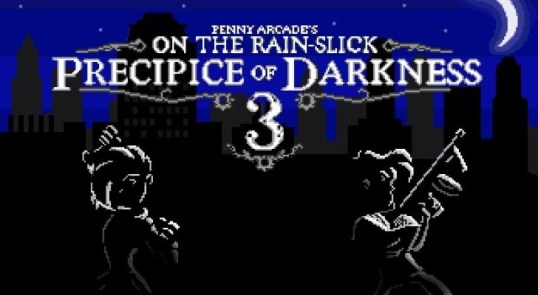
But then in 2011, a ray of hope emerged. Zeboyd Games, producers of such titles as Breath of Death VII: The Beginning and Cthulu Saves the World, had signed on to the project. In development? Rain-Slick 3. Only now, instead of using Penny Arcade’s comic book visual style and a more modern RPG engine, we were going to experience a fully pixelated 16-bit treatment of the story and the world, and it was to be released in a more Indie fashion.
Fine by me!
Now, in mid-2012… the new game is here. I have played it. And I would like to tell you all about it.
Rain-Slick 3 continues the story immediately after it left off at the end of Rain-Slick 2. Our heroes Tycho Brahe and Jonathan Gabriel, of the Startling Developments Detective Agency, have slain two Gods, and by a prophecy spoken by Tycho’s own father, this has brought the world to the brink of oblivion. Unfortunately, it seems, we must balance that against the fact that the ongoing presence of these ancient Gods has infused a great amount of evil into the world, from wicked hobos and rampaging mimes to the occurrence of ghosts, ghouls, and other supernatural critters. Railing against this destiny, Tycho and Gabe enlist the help of a head in a jar and a mysterious woman detective who shares a past connection with Tycho, in an effort to halt the ongoing conflict before it spirals out of control.
The gameplay is pure 16-bit RPG. Characters use a job system which is not unlike a pared-down version of that used in any Final Fantasy game, with jobs having certain special abilities gained as they level up. However, Rain-Slick wants to be fun for the player, and actually doesn’t allow you to grind (enemy groups disappear when defeated, and do not return!), so un-used jobs level up concurrently with those currently equipped, albeit at a slower rate, and your characters can equip multiple jobs with no penalty. Combining a useful suite of skills can create truly devastating fighters, so there is definitely a strategic aspect to how you equip your jobs, and how you choose equipment which can either cover weaknesses or heavily accent strengths. It gives a decent feel of customisation to the player, which is otherwise somewhat lacking as the player’s own avatar is absent from the game’s cast of characters (although referenced several times as having participated in previous events) and the game plays like a traditional RPG – there are no Mass Effect style conversation wheels to be found here.
The game’s charm is in its simplicity, and its storytelling. Although the story is predictably broken up by long chunks of combat-heavy dungeon, it remains infused with the humour and ability of the guys from Penny Arcade – not insubstantial! – and hints of that artwork style, used for character portraits and enemy models. Of particular amusement value are the names of enemies, always accompanied by a short description, which really rekindle the feel of the first two games. Zeboyd has done a marvelous job in continuing the saga, even though the game plays absolutely differently from the original two titles.
If you still have any interest in this series, I highly encourage a purchase! Rain-Slick 3 is available on Xbox Live Marketplace or Steam, or through the Penny Arcade store. The official site also notes that it should become available for iOS and Android in the future, and Penny Arcade notes the possibility of free updates to expand upon the core game. For a pittance of $5, this game is likely to do nothing but impress you from start to finish.



 Through the Shattered Lens