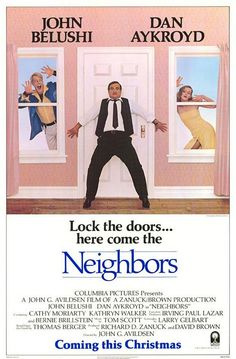
Neighbors (1981, directed by John G. Avildsen)


Uptight suburbanite Earl Keese (John Belushi) is paranoid about his new neighbors, Vic (Dan Aykroyd) and Ramona (Cathy Moriarty).  Ramona continually tries to seduce Earl (and everyone else) while Vic is loud and obnoxious, always telling off-color jokes and insinuating that Earl is less of a man than he is.  Earl thinks that there’s something mentally wrong with Vic but Earl’s wife and daughter (played respectively by Kathryn Walker and Lauren-Marie Taylor) love both Vic and Ramona.  Over the course of one very long night and morning, Earl grows more and more suspicious even as he starts to feel truly alive for the first time in several years.

Based on a novel by Thomas Berger, Neighbors is an unfortunate attempt at dark comedy that also turned out to be the final film appearance of John Belushi.  It’s appropriate that Belushi’s final film featured him with his comedic partner and best friend, Dan Aykroyd, though I think most of their fans would rather remember them for The Blues Brothers than Neighbors.  Originally, Aykroyd was cast as Earl while Belushi was meant to play Vic but the two actors decided to switch roles at the last minute.  It takes a while to get used to seeing Belushi as an uptight character who worries about the neighbor’s dog digging up his flower garden but Belushi actually does give a good performance as Earl, revealing that he had more range as an actor that most suspected.  Aykroyd and Moriarty also give good performances, though Aykroyd’s performance is not as much a departure as Belushi’s.  Earl is an amiable eccentric with several out-there beliefs, which also sounds like a good description of Dan Aykroyd.

Why, despite the talented cast, does Neighbors fail?  Director John G. Avildsen was the wrong choice to direct the film.  From the first shot of Earl and Vic’s two houses sitting on a hill and looking like left-over sets from The Addams Family, Avildsen directs in a cartoonish manner that is not appropriate for a comedy-of-manners.  The book’s humor comes from Earl becoming progressively more and more unstable but, in the movie, Earl seems to be unhinged from the start.  Bill Conti’s musical score drives him every point with a thudding obviousness.  Conti’s style was perfect for the soaring anthems of Rocky but not for a comedy like Neighbors.

Unfortunately, this would be Belushi’s final film.  Neighbors was released in December of 1981.  John Belushi died four months later.
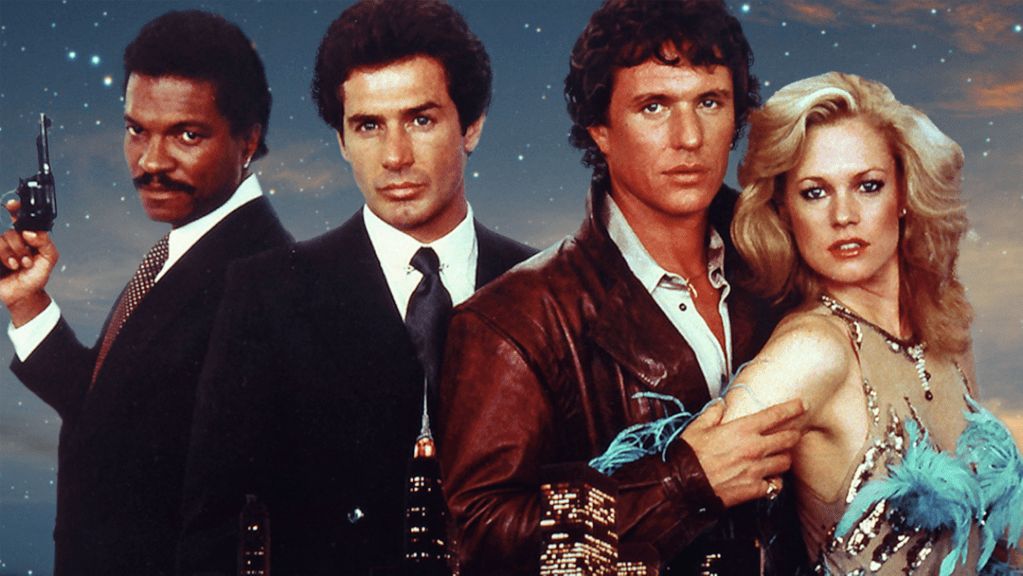
#MondayMuggers – Why FEAR CITY (1984)?


Every Monday night at 9:00 Central Time, my wife Sierra and I host a “Live Movie Tweet” event on X using the hashtag #MondayMuggers. We rotate movie picks each week, and our tastes are quite different. Tonight, Monday January 27th, we’re watching FEAR CITY starring Tom Berenger, Billy Dee Williams, Jack Scalia and Melanie Griffith.

So why did I pick FEAR CITY, you might ask?

  1. I’m a huge fan of Tom Berenger. SOMEONE TO WATCH OVER ME (1987 with Mimi Rogers), SHOOT TO KILL (1988 with Sidney Poitier), MAJOR LEAGUE (1989 with Charlie Sheen), and LAST OF THE DOGMEN (1995 with Barbara Hershey) are some of my very favorite films. He’s an outstanding actor and screen presence. Tom Berenger is one of those actors who I always enjoy seeing on screen.
  2. FEAR CITY is directed by Abel Ferrara. Abel Ferrara is one of those directors who makes movies about the very worst in society. His films MS. 45 (1981), KING OF NEW YORK (1990), and BAD LIEUTENANT (1992) are all movies that intrigued me greatly as I was trying to discover who I was growing up in the 80’s and early 90’s. 
  3. The sleaze is off the charts in FEAR CITY, with so many big-time stars, and set in New York City of the 1980’s. From everything I’ve read, this a time capsule of a place that no longer exists. If I ever make it to New York City, I’ll be greeted with a place that’s designed more like Disney World. I think it’s interesting to see the city as presented here!
  4. I also think it will be interesting to see what it’s like to experience a movie like FEAR CITY as part of a group. I discovered this film as a teenager in the 80’s. I remember being a little embarrassed as I watched the film, especially with its large serving of nudity (from big stars) and graphic violence. I’ve watched films in groups with the most extreme graphic violence imaginable and no one batted an eye. I’m looking forward to seeing how this plays out.

So join us tonight to for #MondayMuggers and watch FEAR CITY! It’s on Amazon Prime.

Monday Live Tweet Alert: Join Us for Extreme Justice!


As some of our regular readers undoubtedly know, I am involved in hosting a few weekly live tweets on twitter and occasion ally Mastodon.  I host #FridayNightFlix every Friday, I co-host #ScarySocial on Saturday, and I am one of the five hosts of Mastodon’s #MondayActionMovie!  Every week, we get together.  We watch a movie.  We snark our way through it.

Tonight, for #MondayActionMovie, the film will be 1993’s Extreme Justice!

It should make for a night of fun viewing and I invite all of you to join in.  If you want to join the live tweets, just hop onto Mastodon, pull up Extreme Justice on YouTube, start the movie at 8 pm et, and use the #MondayActionMovie hashtag!

Enjoy!

Scenes That I Love: Mozart Meets The Emperor in Amadeus


Today is Mozart’s birthday so, of course, today’s scene from the day comes from 1984’s Amadeus.  In this scene, the Emperor (Jeffrey Jones) delivers his critique to Mozart (Tom Hulce) and anyone who has ever had to deal with an idiotic critic will be able to relate.

“There’s too many notes!”

What really makes this scene work, along with Hulce’s reaction, is Jones’s blandly cheerful manner.  The Emperor really thinks he’s being helpful!

4 Shots From 4 Films: Special Dancing Edition


4 Shots From 4 Films is just what it says it is, 4 shots from 4 of our favorite films. As opposed to the reviews and recaps that we usually post, 4 Shots From 4 Films lets the visuals do the talking!

4 Shots From 4 Films

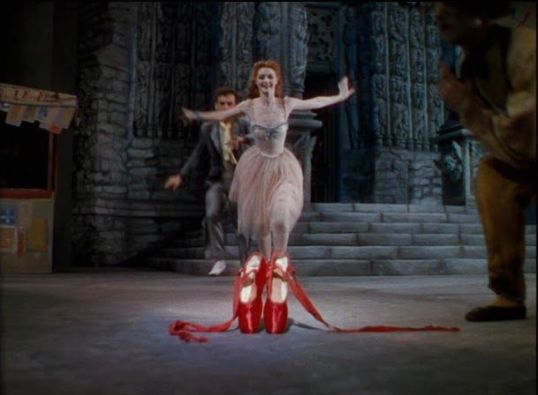
The Red Shoes (1948, dir by Michael Powell and Emeric Pressburger, DP: Jack Cardiff)

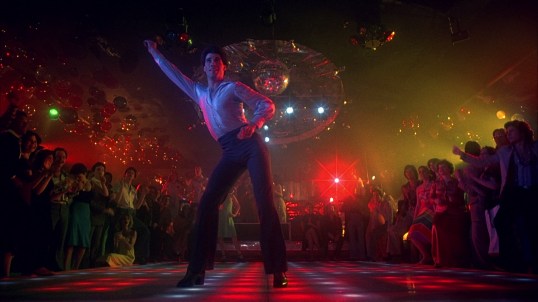
Saturday Night Fever (1977, dir by John Badham, DP: Ralf D. Bode)

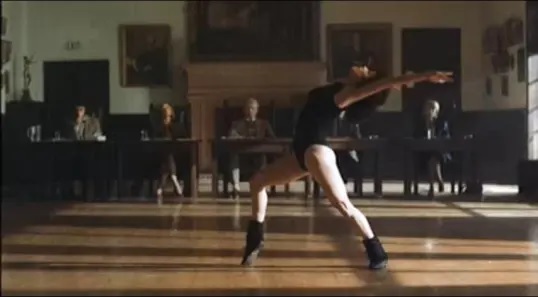
Flashdance (1983, dir by Adrian Lyne, DP: Donald Peterman)

Chicago (2002, dir by Rob Marshall, DP: Dion Beebe)

Film Review: The Cardinal (dir by Otto Preminger)


The 1963 film, The Cardinal, opens with an Irish-American priest named Stephen Fermoyle (Tom Tyron) being instituted as a cardinal.

In a series of flashbacks, we see everything that led to this moment.  Stephen starts out as an overly ambitious and somewhat didactic priest who, over the years, is taught to be humble by a series of tragedies and mentors.  It’s a sprawling story, one that encompasses the first half of the 20th Century and, as he did with both Exodus and Advice and Consent, Preminger tells his story through the presence of several familiar faces.  Director John Huston plays the cardinal who takes an early interest in Stephen’s career.  Burgess Meredith plays a priest with MS who teaches Stephen about the importance of remaining humble and thankful.  When Stephen is in Europe, Romy Schneider plays the woman for whom he momentarily considers abandoning his vows.  When Stephen is assigned to the American South, Ossie Davis plays the priest and civil rights activist who teaches Stephen about the importance of standing up for those being oppressed.  In the days leading up to World War II, Stephen is sent to Austria to try to keep the local clergy from allying with the invading Nazis.  Stephen also deals with his own family drama, as his sister (Carol Lynley) runs away from home after Stephen counsels her not to marry a good Jewish man named Benny (John Saxon) unless Benny can be convinced the convert to Catholicism.  Later, when his sister becomes pregnant and Stephen is told that she’ll die unless she has an abortion, Stephen is forced to choose between his own feelings and teachings of the Church.  Along the way, performers like Dorothy Gish, Cecil Kellaway, Chill Wills, Raf Vallone, Jill Haworth, Maggie McNamara, Arthur Hunnicut, and Robert Morse all make appearances.

All of the familiar faces in the cast are used to support Tom Tryon and Tryon needs all the support that he can get.  Despite Otto Preminger’s attempts to make Tom Tyron into a star, Tryon eventually retired from acting and found far more success as a writer of the type of fiction that Stephen Fermoyle probably would have condemned as blasphemous.  Tryon gives a stiff and unconvincing performance in The Cardinal.  The entire film depends on Tryon’s ability to get us to like Stephen, even when he’s being self-righteous or when he’s full of self-pity and, unfortunately, Tryon’s stiff performance makes him into the epitome of the type of priest that everyone dreads having to deal with.  Tryon gives such a boring performance that he’s overshadowed by the rest of the cast.  I spent the movie wishing that it would have spent more time with John Saxon and Burgess Meredith, both of whom give interesting and lively performances.

The Cardinal is a long and rather self-important film.  The same can be said of many of Preminger’s films in the 60s but Exodus benefitted from the movie star glamour of Paul Newman and Eva Marie Saint and Advice and Consent was saved by an intelligent script.  The Cardinal, on the other hand, is a bit draggy and makes many of the same mistakes that many secular films make when they try to portray Catholicism.  Oddly enough, The Cardinal received more Oscar nominations than either Exodus or Advice and Consent.  Indeed, Preminger was even nominated for Best Director for his rather uninspired work here.  Considering the number of good films for which Preminger was not nominated (Anatomy of a Murder comes to mind), it’s a bit odd that The Cardinal was the film for which he was nominated.  (Of course, in 1944, the Academy got it right by nominating Preminger for his direction of Laura.)  The Cardinal is largely forgettable, though interesting as a type of self-consciously “big” films that the studios were churning out in the 60s in order to compete with television and the counterculture.

Film Review: Exodus (dir by Otto Preminger)


First released in 1960 and based on a novel by Leon Uris, Otto Preminger’s Exodous is two films in one.

The first half of the film takes place in Cyprus in the days immediately following World War II.  A young war widow named Kitty (Eva Marie Saint) is sightseeing when she learns of the Karaolos Internment Camp, where the British are interning thousands of Jewish refugees who demand to be allowed to go to the land that will eventually become the State of Israel.  Kitty visits with General Sutherland (Ralph Richardson), who oversees the camp and who is rumored to secretly be Jewish because of his relatively benevolent attitude towards the internees.  Disgusted by the anti-Semitism displayed by many of the British officers (one of whom is played by Kennedy in-law Peter Lawford), Kitty volunteers at the camp and learns about the Holocaust from those who survived it.  She also meets Ari Ben Caanan (Paul Newman), a former officer in the British army.  Ari manages to get control of a cargo ship, one that is renamed Exodus.  Six hundred refugees stage a hunger strike, vowing that they will willingly starve to death rather than be returned to Europe.

The second part of Exodus takes place in what will become the modern State of Israel.  It follows Ari, Kitty, and several of the passengers of the Exodus as they adjust to life and continue to fight for a land of their own, despite the opposition of the British and much of the rest of the world.  Karen (Jill Haworth) is a young woman who searches for her father, a brilliant man who has been driven into a nearly catatonic state by the horrors of the Holocaust.  Dov Landau (Sal Mineo) is an explosives expert who survived Auschwitz as a Sonderkommando and who was repeatedly raped by the guards at the camp.  Dov joins the Irgun, a paramilitary organization that the British consider to be terrorists.  Leading the Irgun is Ari’s uncle, Akiva (David Opatoshu), and Dov soon finds himself being targeted by both the British and the Arabs who, despite the moderating efforts of men like Taha (John Derek, who would later direct Ghosts Can’t Do It), want to violently force the Jews out of the land.

Legend has it that, after a private screening on Exodus, comedian Mort Sahl turned to director Otto Preminger and said, “Otto, let my people go.”  And it’s true that Exodus is a very long film.  Preminger, who started out making film noirs like Laura, spent the latter part of his career making “important” epics and, like many Golden Age directors struggling to compete with television and the 60s counterculture, he tended to make long, star-studded films that dealt with current events and which pushed the envelope just enough to be controversial without actually being radical.  However, I would argue that the three-hour running time of Exodus is justified.  To understand why Ari, Dov, Karen, and the other passengers of the Exodus would rather risk their lives by staying in what will become the State of Israel, one has to understand both what they went through to get there and also the anti-Semitism that they faced even in post-World War II Europe.  If Exodus were made today, it would be a mini-series.  Since it was made in 1960, it was instead a 3-hour film with an intermission.

Exodus holds up relatively well, with the sprawling action anchored by the presence of a cast of familiar faces.  Paul Newman and Eva Marie Saint bring a good deal of movie star glamour to scenes that would have otherwise just been dry exposition.  The film’s heart truly belongs to Jill Haworth and Sal Mineo, both of whom bring two life characters who have very differing views of the world.  Karen remains an optimist, one who is convinced that people can live together.  Dov, fueled by his own guilt and anger, has no room for negotiations and compromises.  Mineo received his second and last Oscar nomination for his performance in Exodus, though he lost to Peter Ustinov’s showy turn in Spartacus.  Exodus itself was clearly made with a hope for Oscar glory.  While Exodus did pick up a handful of nominations, it was left out of the five movie Best Picture slate.  The Academy only had room for one historical epic and they went for John Wayne’s The Alamo.  The eventual winner was The Apartment, the best of the nominated films.  (Indeed, even if Exodus had taken the Alamo’s spot, The Apartment would still be the best of the nominees.)  The Oscars aside, Exodus remains a good example of the type of epic filmmaking that once defined the Hollywood studios.

The Art Of War (2000, directed by Christian Duguay)


In The Art of War, Wesley Snipes plays Neil Shaw, an UN operative who is framed for the assassination of a Chinese diplomat and who must uncover the real conspiracy while also proving his innocence.  Proving his innocence means engaging in a lot of conflict while using investigation techniques that were cribbed from the Mission Impossible films.

Featuring a lot of war but not much art, The Art of War has a few good action scenes and an overly convoluted storyline that sometimes makes the film feel like a retread of another film in which Snipes was framed for a crime he did not commit, U.S. Marshals.  It’s hard to take seriously any action hero who works for the United Nations but Wesley Snipes is credible in the action scenes and he could deliver a one-liner with the best of them.  (Of all the bad things you can say about the IRS, the worst is that it put one of our best action stars in prison.  Unforgivable!)  The supporting cast is good, featuring Donald Sutherland, Maury Chaykin, Anne Archer, and Michael Biehn.  The final battle between Snipes and the person who is revealed to be the main villain is exciting but, overall, The Art of War is overlong and overcomplicated.  Neil Shaw is cool but he’s no Blade.

#SundayShorts with WEDLOCK (1991)!


Since Sunday is a day of rest for a lot of people, I present #SundayShorts, a weekly mini review of a movie I’ve recently watched.

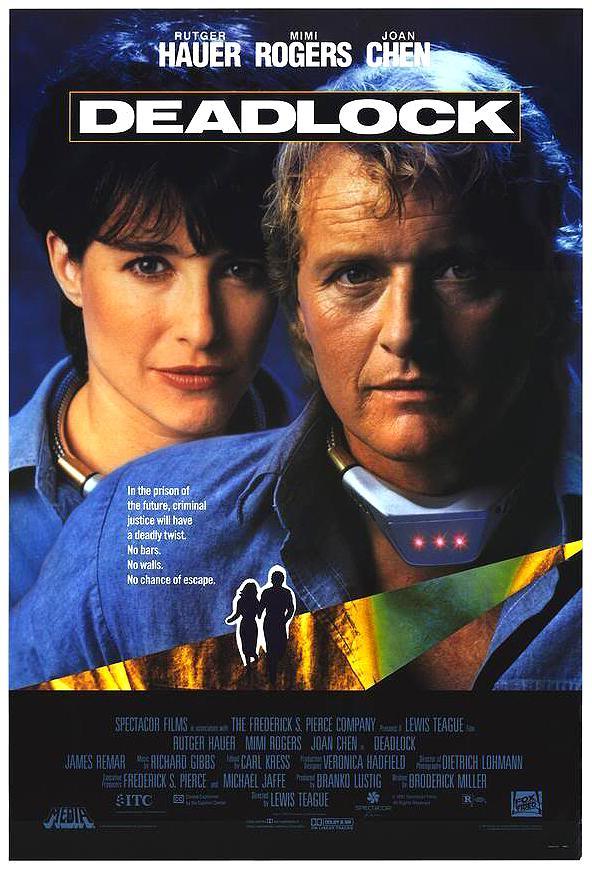
Master diamond thief Frank Warren (Rutger Hauer) pulls off a big job with the help of his fiancé Noelle (Joan Chen) and his best friend Sam (James Remar). Unfortunately, after the job is finished, Noelle unceremoniously ends her courtship with Frank when she shoots him multiple times because she’s now hooked up with Sam. The next time we see Frank, who somehow survived the close-range shootings, he’s on a bus to a prison called Camp Holliday, which is run by Warden Holliday (Stephen Tobolowsky). Camp Holliday is a high-tech prison where each inmate is gifted a collar containing an explosive device that also happens to be electronically connected to another inmate. As long as the two prisoners are within 100 yards from each other, it’s all good. If they are separated by more than 100 yards, their collars will explode leaving a bloody nub where their head used to be. And since nobody knows who their “wedlock partner” is, trying to escape is not a strong option. One day fellow prisoner Tracy Riggs (Mimi Rogers) comes to Frank and tells him that she’s his wedlock partner. Through a variety of circumstances, the two are able to escape, but they still must maintain their 100-yard proximity as the authorities try to track them down. Meanwhile, Sam and Noelle, and even Warden Holliday, have all teamed up to try to find where Frank stashed the diamonds prior to heading to prison. And what about Tracy, who’s side is she really on?

I didn’t have the Home Box Office channel when I was growing up, so I wasn’t aware of this film until it premiered on home video as “DEADLOCK.” Of course, being a huge fan of Rutger Hauer, I rented it as soon as possible. The key to lower budget, made-for TV movies working will always be tied to three things: an entertaining premise, a game cast, and a director who can put the movie together. I’m happy to report that WEDLOCK has each of these things. Even though we had seen exploding neck collars in prison before in THE RUNNING MAN (1987), I like the way this film ties one prisoner’s fate to another’s. That extra dimension makes for some exciting moments in the film. Rutger Hauer is especially good in WEDLOCK. If any other actor was in the lead, I honestly doubt I would have enjoyed it as much, but with him it becomes a fun movie. And the fact that he’s tied to the beautiful Mimi Rogers for most of the movie makes it that much more fun. The remainder of the cast goes pretty far over the top, but that’s okay because subtle character portrayals are not part of the equation in these types of movies. James Remar and Joan Chen are fun as the initial betrayers and current pursuers, Basil Wallace is effectively evil as a bully and fellow inmate, and Stephen Tobolowsky is his usual fun self as Warden Holliday.  Director Lewis Teague has a pretty nice resume of interesting films leading up to WEDLOCK, including ALLIGATOR (1980), FIGHTING BACK (1982), CUJO (1983), CAT’S EYE (1985), and NAVY SEALS (1990). He does a fine job here, as the movie has many well executed scenes that play out at a nice pace. Overall, I’ve always been a fan of low budget action movies that are done well. This one fits the bill for me.  

Five Fast Facts:

  1. Rutger Hauer and Joan Chen worked on 3 films together, including WEDLOCK. I have a soft spot in my heart for their film THE BLOOD OF HEROES (1989) and recommend it. I thought their other movie, PRECIOUS FIND (1996) was pretty bad. I watched it one time in the 90’s and haven’t watched it since.
  2. WEDLOCK received a Primetime Emmy nomination for “Outstanding Individual Achievement in Sound Editing for a Miniseries or a Special.”
  3. Even though WEDLOCK was set “in the future,” early in the film we see a movie theater marquee showing the Steven Seagal movie MARKED FOR DEATH (1990). I found that interesting considering that Basil Wallace is a bad guy in WEDLOCK, and he played twin brother bad guys in MARKED FOR DEATH. Danny Trejo also has small parts in both WEDLOCK and MARKED FOR DEATH.
  4. Mimi Rogers starred in another film in 1991 called THE RAPTURE. It’s a thought-provoking film that some people love, and some people hate. I personally found it intriguing, and it features a really strong performance from Rogers.
  5. In 1995, the film DEADLOCK 2 was released. It’s not a sequel as it doesn’t build on the events of the first film or bring back any of the characters, but it is set in a world of exploding prison collars. The film stars Esai Morales and Nia Peeples.  

When I rented the film in the early 90’s, it was called DEADLOCK. I’m sure I owned it on VHS at one point in my life.

Check out the trailer below:

Scene That I Love: The “Knife Fight” from Butch Cassidy and the Sundance Kid


Today would have been Paul Newman’s 100th birthday!

For today’s scene that I love, we have Paul Newman winning a fight in 1969’s Butch Cassidy and the Sundance Kid.

“There aren’t any rules for a knife fight.”