Film Review: X-15 (dir by Richard Donner)


James Stewart, Charles Bronson, and Mary Tyler Moore!?  All in a film directed by Richard Donner!?

Well, kind of.

James Stewart does not actually appear onscreen in 1961’s X-15.  However, he does provide the narration, explaining to us the origins of the NASA’s X-15 project and why it’s important that America be the first to explore and conquer space.  He talks about the men who risked their lives to test the rocket and the women who supported them and who started every day with the knowledge that they might never see their husband again after he left for work.  There’s something undeniably comforting about hearing Stewart’s voice in this film.  It’s the voice of an idealized America.  It’s a little weary.  There’s definitely a bit of age in the voice.  It’s the voice of a man and a country that has had to survive a lot, especially over the past few years.  But it’s also an incurably optimistic voice.  You hear that voice and you know that everything is going to be okay.

Richard Donner’s directorial debut, X-15 is a docudrama that often plays out like a commercial for the X-15 and America’s young space program.  The film mixes actual footage of the X-15 with scenes of the pilots returning (and sometimes not returning) home.  The emphasis is on each man doing what needs to be done to make the program a success and each woman doing what she has to do to support her man.  Throughout the film, there are scenes where the wives and the girlfriends of the pilots hear sirens and explosions and silently hope that they won’t be the one getting the call.

Making her film debut, Mary Tyler Moore plays Pamela, the girlfriend of pilot Matt Powell (played, in rather dull fashion, by David McLean).  When Pamela first arrives at the base, the wives warn her about overreacting to every explosion.  Major Rinaldi (Brad Dexter) warns her to not even try to get pregnant because that would take Powell away from the program.  (When Rinaldi talks to Pamela, he comes across as more than just being a 50s-style sexist.  That would be expected, considering that the film was made in 1961.  Instead, Rinaldi actually comers across as being rather threatening.  It’s kind of disturbing, to be honest.)  Pamela comes to understand the importance of Matt’s work and Matt …. well, Matt’s kind of dull.

Actually, despite being played by wonderful character actors like James Gregory and Kenneth Tobey, just about every man in this film is kind of boring.  This is one of those films that celebrates the idea of cold, hard professionalism.  No one shows much emotion, even when one of the pilots is killed in an accident.  No one is blamed.  No one is shouted at.  It’s just something that happens and everyone understands the risks.  It’s actually an admirable attitude and one reason why I have a thing for pilots.  But the deliberate blandness of the pilots in X-15 makes it difficult to keep track of who’s who.  The only male actor who makes a real impression is Charles Bronson, playing Lt. Col. Brandon.  Bronson’s incredible screen presence makes up for the fact that his character doesn’t have much of a personality.

That said, it’s a bit of a disappointment that Jimmy Stewart is not onscreen and Mary Tyler Moore has to share her scenes not with Bronson but instead with the dull David McLean.  When the film was released in 1961, it was providing audiences with something that they hadn’t seen before and I imagine it was truly exciting to see a rocket fly, however briefly, into space.  However, modern audiences have seen Top Gun and Top Gun: Maverick.  I’ve seen The Right Stuff, which covers much of the same material as X-15.  As a result, when viewed today, X-15 is a bit dull and features little of the flair that would characterize Richard Donner’s later directorial efforts.  Today, the main reason to watch the film is for Stewart, Moore, and Bronson.  Not having them acting opposite each other feels like a huge missed opportunity.
Film Review: Broken Arrow (dir by Delmer Daves)


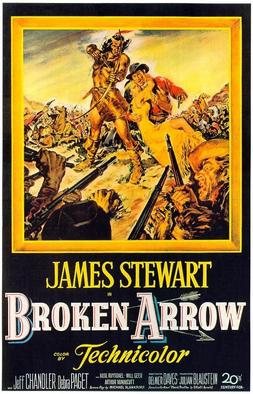
The 1950 film, Broken Arrow, takes place in the years following the Civil War.

Having survived the war, frontier scout Tom Jeffords (James Stewart) just wants to get away from his fellow countrymen for a while.  During the Civil War, Jeffords saw the worst that humanity had to offer and the experience has left him cynical about the idea of bringing civilization to the American frontier.  Tom just wants to be left alone.  Still, when he comes across a 14 year-old Apache who has been shot in the back, Tom stops to help.  Though wounded, the Apache still tries to attack him.  He’s learned not to trust the white man.  Broken Arrow is a film that suggests that he has good reason not to.  Indeed, Broken Arrow was one of the first major Hollywood productions to attempt to treat the American Indians with sympathy and fairness.

Tom saves the Apache’s life and reunites him with his tribe.  When the Apaches attack and kill a group of nearby gold prospectors, they allow Tom to live but they warn him to stay out of their territory.  However, circumstances make it impossible for Tom to do that.  When Tom arrives in Tucson, the citizens are incredulous that he allowed the Apache child to live.  When Tom learns the Apache language and customs and marries an Apache woman named Sonseeahry (Debra Paget), it causes the other whites to distrust him even more.  However, it is Tom’s eventual friendship with the Apache chief Cochise (Jeff Chandler) that eventually lands Tom in the middle of the conflict between the Apaches who want to preserve their way of life and the white men who want their land.

Broken Arrow is a well-intentioned film, in the way that mildly liberal films from the 50s tended to be.  The U.S. government and its citizens are criticized for breaking their promises and their treaties to the Apache but the film’s ultimate message is one of compromise and understanding.  The bigoted whites may be the villains but then again, so is Geronimo (Jay Silverheels) for refusing to accept Cochise’s desire for peace.  Cochise is the film’s hero specifically because he calls for setting aside differences and living in peace with the white man, despite his own distrust of their leaders.  The majority of the extras were Apache, though Neither Jeff Chandler nor Debra Paget were of Native descent.  Both of them give good performances that largely avoid the stereotypes of the time.  Chandler received his only Oscar nomination, for Best Supporting Actor, for his performance in this film.

That said, the unnominated Jimmy Stewart dominates the film and that’s not really surprising.  (It should be noted that, while Stewart was not nominated for this film, he was nominated for his performance in Harvey, that same year.)  Stewart may have first found fame as the happy and go-lucky face of Middle America but his experiences in World War II left a definite mark on him.  He returned from the war a much more serious figure and every character that he played (even the lovable Elwood in Harvey) had more than a hint of melancholy to him.  Stewart plays Tom as being a troubled soul, someone who is still struggling to come to terms with the destruction and cruelty that he saw during the Civil War.  There’s an authenticity to Stewart’s performance, leaving little doubt that he understood exactly what Tom was going through.  Broken Arrow ends on a note of compromise and racial harmony but it’s a sad film because we know what waits in the future for Cochise and his people.  Tom Jeffords fights to bring peace to the frontier but it’s a peace that won’t last.  And, as played by Stewart, Tom seems to understand that better than anyone.

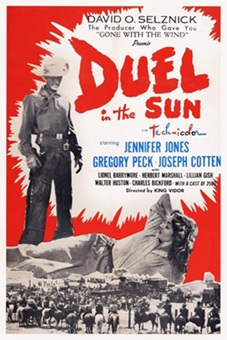
Duel In The Sun (1946, directed by King Vidor)


After her father is executed for killing her mother and her mother’s lover, “half-breed” Pearl Chavez (Jennifer Jones) is sent to live with her father’s second cousin, Laura Beth McCanles (Lillian Gish).  Laura is the wife of rancher, politician, and all-around racist Senator Jackson McCanles (Lionel Barrymore).  Worried that Pearl’s beauty and uninhibited manner will get her into trouble, Laura arranges for Pearl to meet with a minister known as The Sinkller (Walter Huston) who instructs Pearl on how to be a “good” girl.

Wanting to make Pearl bad and his, Lewton “Lewt” McCanles (Gregory Peck) becomes obsessed with Pearl and is soon forcing himself on her on a regular basis.  When the good McCanles brother, Jesse (Joseph Cotten), leaves the ranch despite being in love with Pearl, Pearl tries to find a good husband in the form of Sam Pierce (Charles Bickford).  Lewt responds by gunning Sam down and then goes on the run.  It all leads to an overwrought duel in the sun as the two doomed lovers take aim at each other.

Duel In The Sun is credited to veteran director King Vidor and there are a few shots of the western landscape that do feel typical of Vidor’s work.  However, Duel In The Sun’s true auteur was its producer, David O. Selznick.  Still looking to recapture his earlier success with Gone With The Wind and eager to make his future wife, Jennifer Jones, into an even bigger star than she was, Selznick obsessed over every detail of Duel In The Sun, pushing Vidor and a host of other directors (including Josef von Sternberg, William Dieterle, William Cameron Menzies, Otto Brower, and Sidney Franklin)  to make the film more steamy, more melodramatic, more violent, and more visually epic.  Reportedly, while Video was trying to shoot the film’s titular duel, he had to call cut several times when Selznick ran into the scene with a water bottle to spray more “sweat” onto Jones and Peck.  Today, the stiff Peck seems miscast as the black sheep of the family, the reserved Jones is even more miscast as a mestiza, and the plot is clearly too simplistic to carry the film’s epic ambitions.  A few impressive shots aside, Duel In The Sun is just boring,  In the 40s, though, the film’s relative openness about sex generated enough controversy to make Duel In The Sun into a box office hit.  It was one of the two top-grossing westerns of the 40s, beating out Red River, My Darling Clementine, Fort Apache, The Ox-Bow Incident, and several other films that were actually good.

Unlike Jones, Peck, and even usually reliable stalwart like Lionel Barrymore and Walter Huston, Joseph Cotten at least emerges from this film with his dignity intact.  Playing the good brother, Cotten gets to underplay while everyone else is overplaying and it turns out to be the right approach for him.  Surviving Duel In The Sun was no easy feat but Cotten pulled it off.

The Hong Kong Film Corner – FULL CONTACT (1992) – Ringo Lam & Chow Yun-Fat get extreme! 


Chow Yun-Fat is most often mentioned in the same breath as director John Woo when discussing Hong Kong action films, and for good reason when you consider the classic films they made together. However, Chow also worked with director Ringo Lam on five different occasions during his Hong Kong heyday. They first worked together in CITY ON FIRE (1987), before moving on to PRISON ON FIRE (1987), WILD SEARCH (1989), and PRISON ON FIRE II (1991). They would work together for the last time in 1992’s FULL CONTACT, which is my personal favorite of their five films. 

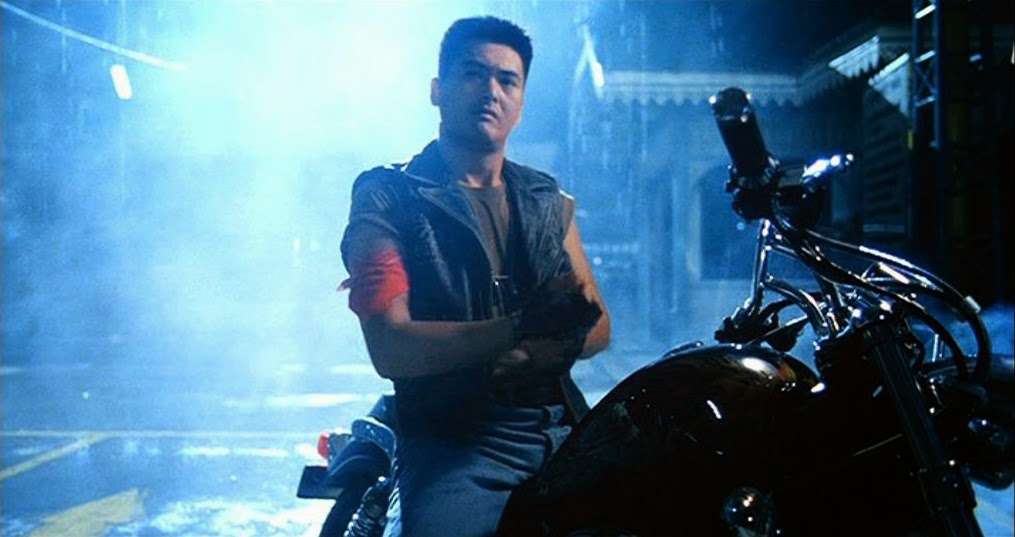
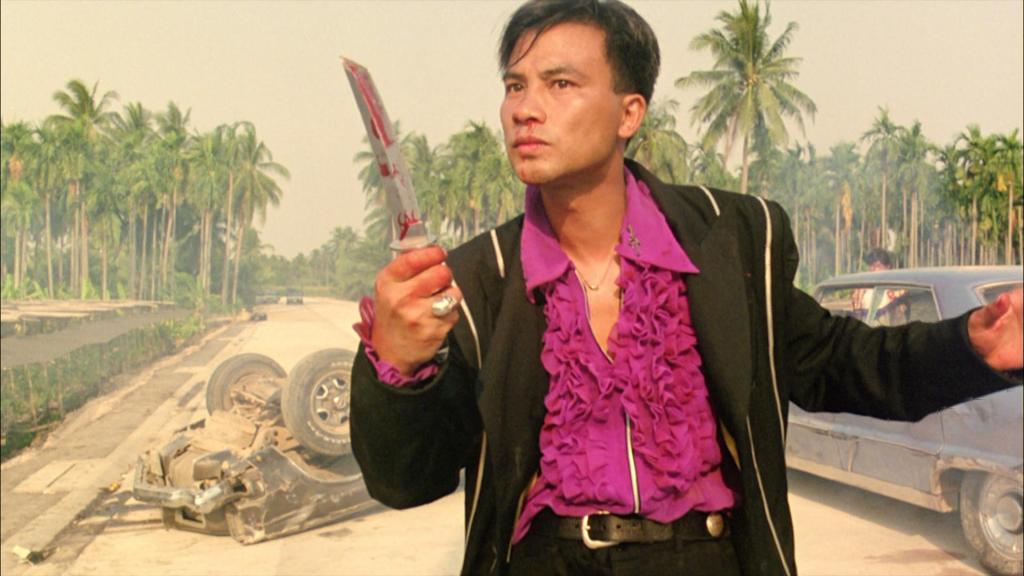
In FULL CONTACT, Chow plays Jeff, a bouncer at a bar in Thailand, where his girlfriend Mona (Ann Bridgewater) performs nightly interpretive dance / stripper routines. When Jeff’s best friend Sam (Anthony Wong) gets in trouble with a local loan shark, Jeff rides his big motorcycle over and collects Sam, kicks the collective asses of the loan shark and his goons, and even finds the time to slice and dice some wrists with his butterfly knife. The problem is solved for the night, but Jeff, Sam, and their buddy Chung (Chris Li) know that they’re going to have to come up with some cash to satisfy Hung sooner or later. So, Jeff sends Mona back to Hong Kong, while they team up with Sam’s flamboyantly gay, psychopathic cousin Judge (Simon Yam), and his crew made up of Deano (Frankie Chan) and Virgin (Bonnie Fu), to steal a shipment of arms. Unfortunately for Jeff, Judge has made a deal with loan shark Hung to use them for the arms heist, but then kill them once it’s over. After they pull off the job, Judge shoots Chung in the face and tries to kill Jeff, but instead the two men find themselves in an exciting car chase that ends when they both crash outside of an innocent family’s personal residence. They then engage in an epic fight, with a severely injured Jeff escaping into the home as the homeowner’s are brutally gunned down. Judge forces a freaked out, whining, whimpering Sam at gunpoint to go in the house and shoot his friend Jeff, which he does. After Sam walks out of the house, Judge and Deano blow the place all to hell with Jeff managing to get out of the house in just the nick of time with the family’s dog. Shot full of holes and missing a couple of fingers, Jeff must heal and plot his revenge on the friend who betrayed him and stole his girl, as well as the gay psycho who wanted to make love to him before trying his best to kill him!

I love the movie FULL CONTACT, but it must be noted that it’s quite different from any of Chow Yun-Fat’s prior action films. First, his character Jeff is quite different than the flawed, but heroic characters he had been playing. In this film, he’s still a major badass as he’s riding his Kawasaki motorcycle and twirling his butterfly knife, but there’s not much that’s heroic about his character. Instead, he’ll do pretty much anything for money, and when he’s betrayed, his motivation is little more than cold, hard vengeance. I say “little more” because he does take care of a funny looking dog, and he does try to get some money to help the young girl that was horrifically scarred for life when her house blew up. These specific actions make him better than the psychos surrounding him. Second, Ringo Lam ramps up the violence to extreme levels. This is one of those films that love blades, and when the blades come out, hands are impaled, skin is sliced, and digits are sure to go flying! The film also likes its guns, and the bullets don’t just make a little red spot when they hit. Rather, there’s a good chance blood is going to graphically splatter everywhere. It’s somewhat nihilistic in its approach to violence. And finally, the characters themselves are so extreme that they don’t seem to exist in the real world, which is quite different from Ringo Lam’s usually more gritty work. Aside from Chow’s extreme badass, Yam is completely over the top as the gay psychopath Judge, Frankie Chan’s Deano is nothing more than a dumb brute, Bonnie Fu’s “Virgin” is a sex obsessed, psycho slut, and Anthony Wong’s Sam swings wildly from a whining wuss to a vicious, remorseless killer. Only Ann Bridgewater’s stripper / girlfriend seems to occupy a place on planet earth. I don’t say any of the above items as a criticism of the film. The things I like most about FULL CONTACT is the different type of action character for Chow, and the extreme action sequences. What this film lacks in style, it makes up for in sheer madness and ultra violence. 

The cast and crew of FULL CONTACT is top notch. Chow Yun-Fat and Anthony Wong are both three-time winners of the prestigious Hong Kong Film Award for Best Actor, and Simon Yam has won one himself. Chow and Yam are the real standouts here. While he’s effective in his role, this is not the best example of Anthony Wong’s greatness. For that, I recommend the film BEAST COPS (1998). Director Ringo Lam made incredible films in Hong Kong prior to his death in 2018, winning the Hong Kong Film Award as Best Director for his prior collaboration with Chow Yun-Fat, CITY ON FIRE. It’s so good that Quentin Tarantino paid clear homage to it in RESERVOIR DOGS. Lam would also make several films with Jean Claude Van-Damme of varying quality, but I highly recommend his 1997 film FULL ALERT, with Hong Kong super actor Lau Ching-Wan. It’s incredible. The final person I want to mention is composer Teddy Robin Kwan. From the very opening shot, FULL CONTACT’s rocking soundtrack perfectly matches the action on the screen. There’s a revenge training sequence in the film that plays out to guitar riffs, beating drums, and vocals that get you completely pumped up for revenge. It’s not a surprise that Kwan is also a multiple Hong Kong Film Award winner for Best Original Film Score over the years. 

Overall, I easily recommend FULL CONTACT knowing full well that it won’t appeal to everyone. The truth is that Hong Kong audiences of the time were not eager to see Chow Yun-Fat in this different type of role and the film is not one of his bigger hits. With that said, FULL CONTACT has a very solid cult following, with its big stars, great director and extreme action. Anyone interested in Hong Kong films of the 80’s and 90’s has to see this one. 

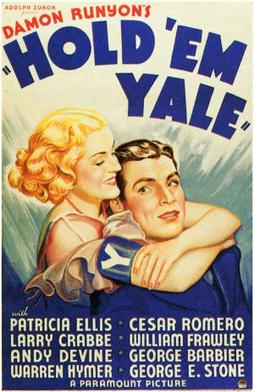
Hold ‘Em Yale (1935, directed by Sidney Lanfield)


Georgie, the Chaser (Cesar Romero) is a con artist who works for a low-level gangster named Sunshine Joe (William Frawley).  When Georgie reads about an heiress named Clarice van Cleve (Patricia Ellis) who impulsively falls in love with any man wearing a uniform, Georgie pretends to be a member of the Foreign Legion and tracks her down.  Georgie thinks that Clarice’s father will pay him off, just as he’s paid off all of her other suitors.  Instead, Clarice’s father disinherits her and Clarice ends up living at Georgie’s place, along with his other criminal associates (Andy Devine, Warren Hymer, and George E. Stone).

Georgie reacts by getting out of town, leaving Clarice behind with his good-natured gang.  However, even the gang gets tired of Clarice insisting that they dress up for dinner and that they all get a good night’s sleep.  After Sunshine Joe cheats them out of their money, the remaining criminals head to the Yale-Harvard football game, hoping to win some bets and to set Clarice up with the player that her father wants her to marry, studious benchwarmer Hector Wilmot (Buster Crabbe).

Just a little over an hour long, HoldEm Yale is actually a pretty amusing movie.  It was based on a short story by Damon Runyon and all of the characters are familiar Runyon types, streetwise but good-natured criminals who enjoy drinking and gambling and the film gets a lot of laughs out of their reactions to Clarice’s attempts to civilize them.  Patricia Ellis is great as the ditzy Clarice and this film provides a chance to see Buster Crabbe playing a character who isn’t a natural-born athlete for once.  It’s a minor film but worth watching for the cast and the snappy dialogue.  Who would have guessed a good movie could be built around Ivy League football?


“Don’t Lie”, Dir. Alex Magana, Short Film Review By Case Wright


So we meet again….Alex … Magana. Now look, I assume that most of my readers are good, kind, and decent, but what if you’re not?! I mean what if you’re not that great or you did one REALLY bad thing that you feel guilty about. I’m not saying putting your neighbor in a woodchipper kind of thing, but let’s just include the lessor felonies. If you just need that self-flagellation, my dear ne’er-do-well compadre, this film and Alex Magana is for you.


Alex Magana assaults the senses and art herself. In fact, from the hackneyed plots to the p*rn quality acting, he is the Ed Wood of the digital age! If you don’t believe me, check out the “Smiling Woman”… SERIES…yes, it’s a series! I refuse to call it a franchise! I won’t do it! Luckily, your misery is brief because as terrible as Alex Magana’s films are – he can’t write stories longer than 4 minutes.

“Don’t Lie” shows an influencer, who I think seems a little old for the gig; however, we must let all things slide with Alex. Typically, Alex just films out of his apartment and the hall in his apartment building. The lead actress could be homeless or just live near the building; so, she could be young, but life on the street is hard. In fact, all of the actors could be homeless and this brief filming was their only exposure to …. home. *Sheds Tear*

The story continues where her boyfriend stages her murder to gain additional subscribers, which doesn’t make sense because why subscribe to the deceased? But, Whatever. A psycho then teaches her and her boyfriend a lesson about … honesty… with a knife. Apparently, neither she nor her boyfriend understand how their legs can make them move around and even away from things or people.

If we look at “Don’t Lie” like an industrial film, like “The Importance of Good Manners”, “Why you should drive safely”, and “Don’t ever put that in your Bu..” anyway. My point is that maybe “Don’t Lie” is salvageable as a lesson film. The lesson is this: Don’t let Alex Magana have any recording devices! EVER! He’s got to be stopped! He’s really prolific! How is paying for all this very very low budget dreck?!

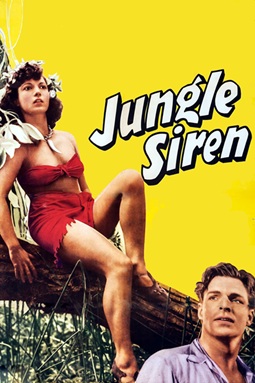
Jungle Siren (1942, directed by Sam Newfield)


Captain Gary Hart (Buster Crabbe) and his sidekick, Sgt. Mike Jenkins (Paul Bryar), are sent to the jungles of Africa, where Nazi infiltrators are encouraging Chief Selangi (Jess Lee Brooks) to side with the Third Reich and allow them to set up a base.  In their effort to stop the Nazis, Hart and Jenkins are aided by Kuhlaya (Ann Corio), a woman whose parents were killed by Selangi and who now lives in the jungle with a chimpanzee and a doctor (Milton Kibbee) who serves as her protector.  Kuhlaya carries a bow and arrow, which she used to battle the Nazis.  Hart and Jenkins have actual guns and probably could have ended the Nazi plot early just by using them as soon as they arrived but then the movie couldn’t be stretched to 68 minutes.

This is a pretty bad Poverty Row film, memorable just for Crabbe’s typically earnest and athletic performance and the presence of Ann Corio, who was a famous stripper in the 40s who tried to transition into films after Mayor La Guardia ordered the closure of New York’s burlesque houses.  Corio had legs for miles but she was a terrible actress.  At one point, Mike Jenkins says that if he keeps exercising, “I’ll have a physique like Buster Crabbe!”  That’s about as clever as this slow-moving film gets.

As is typical of jungle films that were made in the 40s, the “tribesmen” are pretty much treated as if they’re interchangeable and the only one who is given a personality is the evil Selangi.  Several of them are killed over the course of the movie, not because they were doing anything wrong but just because they were in the wrong place.  (The most egregious example is an innocent native who ends up with one of Kuhlaya’s arrows in his back because he was unfortunate enough to step in front of Selangi at the last moment.)  No one, our heroes included, really seems to care about them or their future.  Even by the standards of the era, Jungle Siren feels extremely condescending and prejudiced in its portrayal of the natives.  The idea that the Nazis, with their Aryan obsession, would ever team up with Chief Selangi is just one of the film’s problems.

Director Sam Newfield was responsible for some entertaining and cheap westerns.  I’ve reviewed a few of them.  He should have stayed out the jungle.

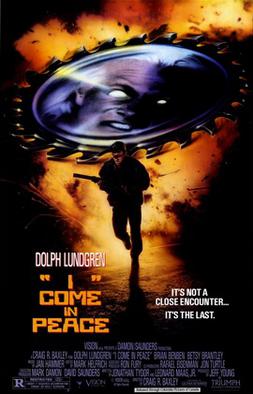
I Come In Peace (1990, directed by Craig R. Baxley)


“I come in peace.”

“And you go in pieces.”

How have I not reviewed this one yet?

Dolph Lundgren is Jack Crain, a Houston cop who teams up with FBI agent Larry Smith (Brian Benben) to investigate who is killing criminals in H-town.  The killer is a drug dealer but not your everyday drug dealer.  He’s an alien named Talec (Matthias Hues) and he’s figured out how to say “I come in peace,” but the rest of the English language is beyond him.  “I come in peace,” turns out to be the scariest phrase you can hear when you’re being pursued by a white-haired, intergalactic mass murderer.  His targets include Jesse Vint and Michael J. Pollard.  This terminator wannabe is after character actors!

On the second-tier action stars of the 90s, Lundgren was the one who could actually act.  Van Damme could actually do all the acrobatic stunts his characters did but he couldn’t show emotion like Lundgren.  Steven Seagal seemed like he could handle himself in a fight but he lacked Lundgren’s self-aware humor.  Lundgren plays Jack as almost being a parody of the type of hard-boiled cop who is always getting yelled at by the commissioner for wasting the city’s money.  Brian Benben is remembered, by some, as the star of HBO’s Dream On, the sitcom that convinced a generation of young men that there’s nothing women love more than obscure pop cultural obsessions.  Benben is actually pretty funny in I Come In Peace.  He’s the everyman who can’t believe he’s having to deal with an intergalactic drug dealer.  Good heroes need a good villain and Matthias Hues is just right as the drug dealing alien who literally doesn’t know what he’s saying.

If you want to see a Terminator rip-off with nonstop action, a memorable villain, frequently (and intentionally) funny dialogue, an Al Leong cameo, and Dolph Lundgren as a hero who pushes people around just because he feels like it, I Come In Peace is the movie for you!

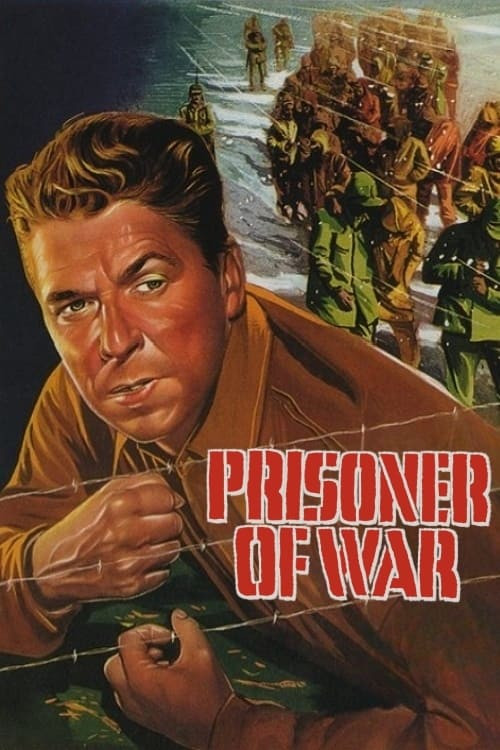
Prisoner of War (1954, directed by Andrew Marton)


The setting is the Korean War.  After getting information that American POWs are being tortured and brainwashed in North Korean prisoner-of-war camps, Major Hale (Harry Morgan) assigns Webb Sloane (Ronald Reagan) to go undercover.  After parachuting behind enemy lines, Webb spots a group of POWs being marched through the snow and joins the group.  From the minute that Webb joins the march, he begins to observe war crimes.  The death march itself, with the POWs being forced to move in freezing weather, is itself a war crime.  At the POW camp, Webb discovers the presence of an arrogant Soviet interrogator (Oscar Homolka) and a routine designed to break the POWs down until their ready to betray their native country.  Some POWS, like Captain Stanton (Steve Forrest), refuse to break.  Others, like cowardly Jesse Treadman (Dewey Martin), break all too quickly.  Webb sends the information back to Hale and eventually tries to make his escape.

It’s not terrible.  That the North Koreans and, later, the North Vietnamese tortured their POWs and forced some of them to denounce America is a matter of the historical record and, for a 1954 film, Prisoner of War doesn’t shy away from the brutality of the torture that POWs were often subjected too.  Of all of Reagan’s film, Prisoner of War had the strongest anti-communist message, though Reagan himself feels miscast as a hard-boiled secret agent.  (Reagan’s affability comes through even in a film set in a POW camp.)  Sending someone undercover into a prisoner of war camp and then hoping that they’ll find a way to escape doesn’t sound like the most efficient way to determine if the Geneva Convention is being violated.

The film features a dog who is found by one of the POWs.  Don’t get attached.

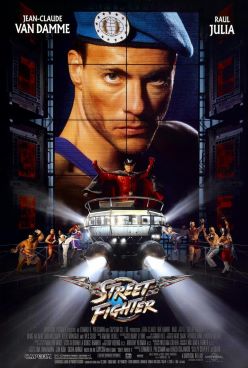
Street Fighter (1994, directed by Stephen E. de Souza)


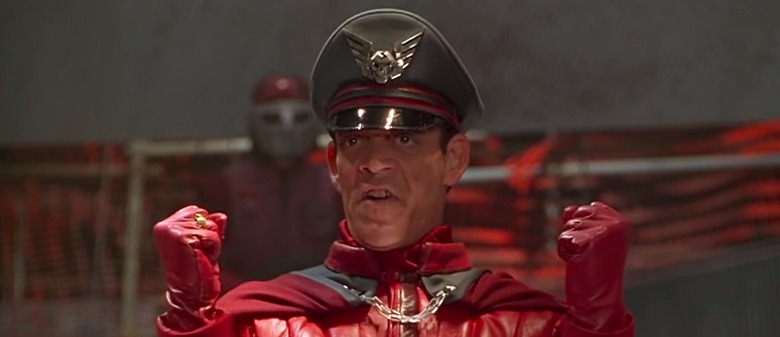
What does the M. stand for in M. Bison?

Originally, it was supposed to stand for Mike but my theory is that it stands for Marvelous because how else can you describe Raul Julia’s performance as the villain of Street Fighter?  Julia was dying of stomach cancer when he played Bison, a condition reflected by his gaunt appearance.  But Julia still obviously threw himself into every scene, delivering every melodramatic line as if it was the most important piece of dialogue that he had ever been trusted with delivering.  As a film, Street Fighter is an overedited mess that features one of Jean-Claude Van Damme’s worst performances.  Raul Julia saves it, though.  He gets some of the worst lines and transforms them into the best lines through sheer determination.  That man could have read the phone book and made it interesting.

Jean-Claude Van Damme is Col. Guile in this early video game adaptation.  This isn’t one of Van Damme’s better performances.  He doesn’t really play the Guile from the game.  Instead, he’s just Van Damme with a blue beret and an American flag on his bicep.  Far better are Damian Chapa as Ken and Bryon Mann as Ryu, even though neither gets to do as much as a fan of the game would want them to.  Ming-Na Wen is a promising Chun Li but, instead of focusing on her fighting skill, the movie gets bogged down in trying to set her up for a sequel that would never come.  Are you a fan of Cammy?  Don’t get excited because all Kylie Minogue does is ask Guile if he’s okay.  I did like Wes Studi as Sagat and Gregg Rainwater and Peter Tuiasosopo as T. Hawk and Honda but it still feels like only Raul Julia gives a performance that can compete with the video game version of his character.

There were four editors credited for Street Fighter and maybe that explains why the fights are a mess and the plot is impossible to follow.  It’s a video game adaptation and I don’t demand much but I would like to know who is winning each fight.  The film’s visual scheme, meant to duplicate the look of the game, showed some promise but the editing gave the movie a frantic feel that made it difficult to really appreciate the production design.

There’s never really been a good Street Fighter film but I still think it could happen with the right cast and crew.  If Mortal Kombat could (eventually) be turned into a decent movie, why not Street Fighter?  I still don’t think anyone will ever top Raul Julia as M. Bison, though.  Raul Julia made you believe in Pax Bisonica!

“And peace will reign and all humanity will bow to me in humble gratitude.” — M. Bison