When I first started writing for Through the Shattered Lens, I wasn’t sure how long my reviews should be. I went over to Rotten Tomatoes and I read their guidelines for reviews and I discovered that a review should be, at minimum, 300 words long.
300 words? I thought, I can do that!
Truth be told, sometimes I can’t. Sometimes, you see a movie where it’s a struggle to even come up with 300 words. When that happens, I resort to filler. I’ll tell you about my weekend. I’ll tell you about a funny thing that happened to me in high school. I’ll give you a long-winded story about my early days as a TSL reviewer. I’ll do whatever I need to do to make sure that I can reach at least 300 words.
The importance of filler was clearly on the mind of David DeCoteau when he directed the 1999 film, Witchouse. (And yes, that’s how the title is spelled.) Typically, a film has to run a minimum of 65 to 70 minutes for it to be considered a feature film. Witchouse features three minutes of opening credits, three minutes of closing credits, and a lot of stock footage from a film called Dark Angel: The Ascent. In fact, the film uses the Dark Angel stock footage not once but twice. The finished film runs 72 minutes so obviously David DeCoteau and Full Moon Pictures got what they needed out of all that filler. Fortunately, the audience gets what it needs as well. Witchouse is a film that announces from the start that it shouldn’t be taken too seriously.
The film takes place at a mansion in Dunwich, Massachusetts on a stormy night. Elizabeth (Ashley McKinney) has gathered together a group of friends for a party. When her friends arrived, I assumed they had all gone to high school together. Imagine my surprise when I learned that the characters were all supposed to still be in high school! Elizabeth wants to hold a seance so that she can contact the spirit of her ancestor, a witch named Lilith (Ariauna Albright). Centuries ago, Lilith was burned at the stake. Elizabeth is hoping to bring Lilith back from the dead and she’s willing to sacrifice her friends to do it. Her friends, for the most part, just want to have sex in a big creepy mansion and who can blame them?
If this plot sounds familiar, it’s probably because the story itself was largely lifted from Night of the Demons, with the horribly burned Lilith even resembling the decaying Angels from Kevin Tenney’s classic shocker. Witchouse is never quite as much fun as Night of the Demons. For instance, there’s nothing in Witchouse that can match the subversive oddness of the lipstick scene from Night of the Demons. At its best, Witchouse is occasionally atmospheric and it features decent performances from Ashley McKinney and Monica Serene Garnich. At its worst, the film is kind of boring.
That said, I will give Witchouse credit for totally frustrating my autocorrect. How does one pronounce Witchouse?
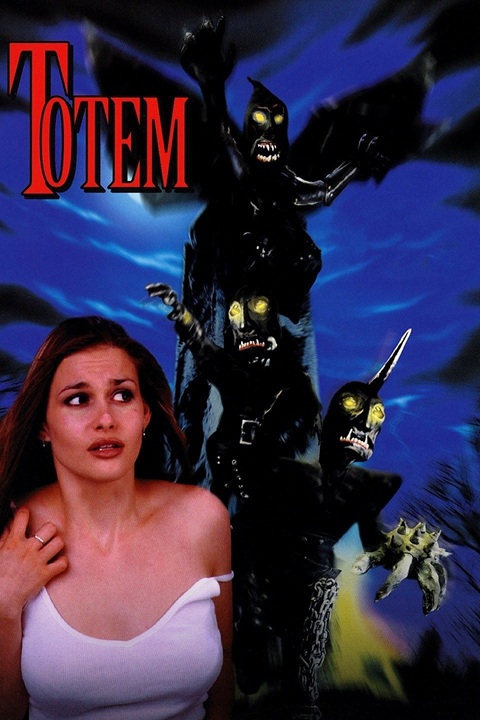
1999’s Totem opens with a young woman named Alma Groves (Marissa Tait) running through the wilderness.
She runs until she reaches an isolated cabin. Entering the cabin, she finds five other people have already arrived. She doesn’t know who they are and they don’t know her. In fact, she doesn’t even know why she suddenly felt the need to stop eating lunch and to run until she found the cabin. She’s not even sure how she found herself in the wilderness to begin with. Everyone else at the cabin has a similar story. They were all going about their day until, suddenly, an image of the cabin entered their mind and they felt compelled to run until they found it.
At first, Paul (Jason Faunt) comes across as being a chivalrous and friendly jock type. Leonard McKinney (Eric W. Edwards) is a cocky womanizer who is upset that he was compelled to leave in the middle of having sex (or so he claims). Robert Cole (Tyler Anderson) is the angry rebel who is reluctant to talk about his past. As for the other women, Roz (Sacha Spencer) is sarcastic while Tina (Alicia Lagano) is a seemingly innocent high school student. Along with Alma, the six of them are trapped in the area by an invisible force field.
While trying to determine where the invisible barriers have been placed, the six of them come across a cemetery and three sinister-looking statues. As the night continues, it becomes clear that, whenever someone dies, one of the statues comes to life. But why are there six people and only three statues? “Three to be killed and three to kill!” Robert says.
Directed by David DeCoteau and produced by Charles Band’s Full Moon Pictures, Totem is about as incoherent as you would probably expect from this production team. However, it’s a cheerful sort of incoherence, one where the confusing story is at least told with some energy and the entire thing has a “make it up as you go along” sort of feel to it. It’s remarkable how the people in the cabin keep figuring out all of the extra rules that determine how the three killer statues work. Myself, I sat through all 68 minutes of this film and I’m still not quite exactly sure what was going on. That said, the confusing nature of the story works to the film’s advantage. At its best, Totem manages to achieve a sort of dream-like intensity. Who hasn’t had that dream about finding yourself in the middle of nowhere with absolutely zero clue how you got there or how to get home?
You know what else works to this film’s advantage? That 68 minute running time. The film essentially feels like an extended episode of an old horror anthology show. Think of it as being a bloody episode of something like Night Gallery or Tales From The Crypt. It’s a piece of gory fun that doesn’t really require too much of the audience. It’s cinematic junk food and that is definitely meant as a compliment.
1987’s Cellar Dweller opens with Jeffrey Combs playing an artist.
Sitting in his art studio (located in the cellar of his home), Combs draws a picture of a monster and he adds a few Lovecraftian occult symbols and — uh oh! — the monster comes to life and start to destroy everything that Combs holds dear. Combs discovers that he can stop the monster by setting his drawings on fire but, in the process, Combs also destroys himself.
This ten minute prologue features Jeffrey Combs at his best, bringing his neurotic Re-Animator energy to the role of the artist who discovers just how dangerous an active imagination can be. One reason why Combs is a horror icon is that he can win your sympathy even while playing a character who does some objectively stupid and terrible things. Unfortunately, once the prologue is over, so is Jeffrey Combs’s role in the film. He may be first-billed but he doesn’t appear after the opening credits.
The film jumps forward to 1987. Cartoonist Whitney Taylor (Debrah Farentino) is the latest artist to take residence at Mrs. Briggs’s Institute For The Arts, which just happens to be in the same house that was once home to Jeffrey Combs’s artist. Mrs. Briggs (Yvonne DeCarlo) is a noted critic of modern art. In fact, Whitney and Mrs. Briggs disagree so vehemently about art that you really do wonder why Whitney would apply to the Institute in the first place.
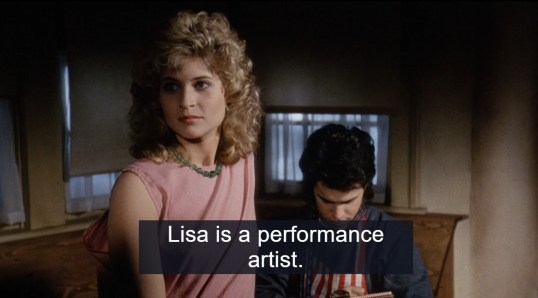
There’s a few artists at the Institute. Norman (Vince Edwards) is a tough guy writer. Philip (Brian Robbins) is a bad boy artist. Amanda (Pamela Bellwood) is a former rival of Whitney’s and the two still hate each other. (Whitney seems to rub a lot of people the wrong way.) Best of all, there’s a performance artist named …. LISA!
Lisa is played by Miranda Wilson.
Frustrated with Amanda, Whitney gives into her worst instincts and draws a cartoon the features a monster killing her rival. Uh-oh. Soon, the monster has reemerged from the cellar and Amanda has disappeared. One-by-one, the other residents are picked off and their deaths appear in Whitney’s cartoons. The monster claims that he dwells wherever there is imagination but Whitney is convinced she’s figure out a way to destroy him and bring everyone back. Has she? You’ll have to watch the film to find out!
Produced by Charles Band’s Empire Pictures, Cellar Dweller is an enjoyably macabre little tale. It’s only 77 minutes long and the fast pace makes the film feel like an extended episode of a horror anthology series. The monster and the plot feel like they could have been lifted from a 50s horror comic and the other artist are all memorably eccentric. The cast appears to be having a ball. It’s a fun treat for horror fans like you and me.
Cellar Dweller was directed by special effects specialist John Carl Buechler and he does a good job with the monster. It’s both intimidating and kind of goofy at the same time. A year after Cellar Dweller, Buechler directed his best known film, Friday the 13th Part VII — The New Blood. That film too was likably goofy.
Who is the Sleeper and why is he stalking the girls of the Alpha Gamma Theta sorority?
That’s one of the many questions raised by 2012’s The Sleeper, an unexpectedly diverting homage to the classic slasher films of the 80s. The Sleeper doesn’t really worry too much about answering that question. This is a film that understands that the old slasher films were effective precisely because they rarely provided any answers. All one really needs to know about the Sleeper (effectively portrayed by Jason Jay Crabtree) is that he’s got a collection of tools, he’s surprisingly quick on his feet, and he can do a lot of damage with a little hammer.
The Sleeper takes place in 1981, a smart choice for a number of reasons. 1981 was one the biggest years when it came to the American slasher boom and The Sleeper does a good job of recreating the aesthetics of the era, right down to a freeze frame final shot. Setting the film in 1981 is also an admission that most of the old school slasher films wouldn’t work in an era in which people are not dependent on landline phones. As if to emphasize this point, the film has the Sleeper calling his victims before attacking. It’s 1981. There’s no way to block the number! By setting the film in 1981, the filmmakers are able to avoid having to come up with an awkward excuse for why no one has their phone with them. Even better, none of the characters are influencers. Instead, they’re just college students who are trying to enjoy their night.
For the most part, the potential victims are all likable. You don’t want to see harm come to any of them, which definitely builds up the suspense once the Sleeper starts doing his thing. Because the characters are all college students with active social lives, it’s believable that people wouldn’t freak out about them suddenly disappearing. I remember that, when I was in college, I would go several days without seeing some of my best friends and only occasionally did I suspect that they had fallen victim to a hammer-wielding killer. I especially liked the character of Ava (Ali Ferda), who was sarcastic and outspoken but who, most importantly, never became a caricature. Indeed, all of the characters seem refreshingly human and multi-faceted, even if they do conform to certain slasher stereotypes.
This film also wins major points for including a disco line dnace that comes out of nowhere but which is charmingly awkward. The song playing is definitely more 90s techno than 80s disco but still, watching the cast doing their best on the dance floor was one of the film’s more unexpected treats.
Finally, towards the end of the film, Joe Bog Briggs (credited by his real name, John Bloom) makes a cameo appearance as a doctor and yes, he wears a bolo tie. It’s impossible not smile at the sight of him.
Bloody but also witty, The Sleeper was a diverting slasher surprise.
In college, my best friend Evelyn and I came up with the “Extra Person Rule for Road Trips.”
The Extra Person Rule stated that no matter how many people we were traveling with, we would always remember to invite one extra person, someone who was pleasant but to whom we really didn’t really have a particularly close personal connection. That way, if we got kidnapped by a serial killer, we would have someone around who could heroically sacrifice herself while giving the rest of us an opportunity to escape. She needed to be likable so she wouldn’t get on our nerves during the trip but also not someone who we would feel guilty about losing if worst came to worst. We quickly learned that the secret to making the Extra Person Rule work was to make sure that the extra person didn’t know she was the extra. As such, you would usually have to invite a decoy extra as well. It could get complicated.
Fortunately, Evelyn and I never actually got abducted by a serial killer whenever we went on a road trip but it was still something for which we felt we should be prepared. It’s a scary world out there. You have to be ready for anything.
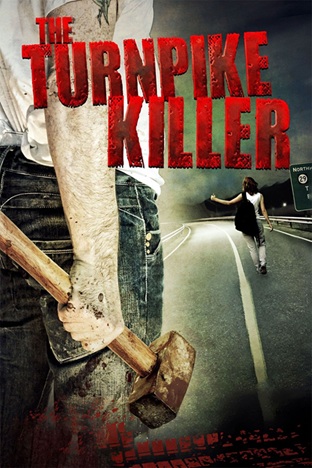
I found myself thinking about the Extra Person Rule while watching 2009’s The Turnpike Killer. Jon Beest (Bill McLaughlin) is the film’s title character, a serial killer from New Jersey who crosses into New York and kills several people over the course of 88 minutes. If I ever ran into Jon Beest, I would definitely want to have an extra person around, though I’m not sure it would have helped. Jon Beest is about as determined a killer as a big bald man named Beest can be. As for why Jon Beest is known as the Turnpike Killer, he apparently dumps some of his victims’ bodies along the New Jersey turnpike.
What to say about The Turnpike Killer? It’s an odd little film. It has too much of a misogynistic streak for me to recommend it but, at the same time, I do have to admit that it is effectively filmed and acted. It creates and maintains a convincing atmosphere of grit and sleaze. The images are grainy and the gore is often disturbingly realistic. There’s a twist at the end that comes from almost out of nowhere and it’s hard not to wonder if that twist is the reason why this otherwise simple film has two credited directors. Almost despite myself, I appreciated the weirdness of it.
I will give the film unreserved credit for one thing. Bill McLaughlin is absolutely terrifying as Jon Beest and the film wisely does not turn him into a Freddy Krueger-style quip machine. He’s not some clever, erudite man with an amazing, if twisted, brain. Instead, he’s …. well, he’s pathetic. The same can be said of most real-life serial killers. If you look at most real-life serial killers, you’ll see that they’re much more likely to be someone like Jon Beest than Hannibal Lecter. When the film works, it’s because Jon Beest seems like the killer that you actually could find waiting for you on a dark road or in the shadows of a New York apartment.
And if you do run into him, you better hope you have an extra person.
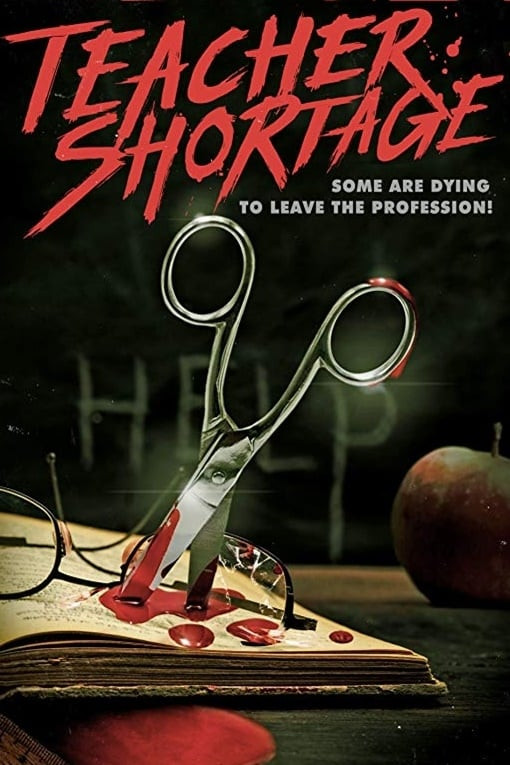
2020’s Teacher’s Shortage starts off with a genuinely disturbing suicide scene.
In a high school classroom, the teacher hands out the yearbooks. Everyone, including the teacher, has a good laugh when they see that one of their classmates has been labeled an “ugly skank,” in her class photo. The only person who doesn’t laugh is the victim of the prank. She runs from the classroom, hides in a bathroom stall, and eventually smashes a mirror and slits her wrists.
It’s disturbing because this is something that actually does happen. This is especially true in the age of social media, when it’s so important to fit in and say the right thing and have a certain number of people following you and liking whatever it is that you’re offering up. With the rise of AI and the increase of people stupid enough to fall for AI, this is something that is only going to get worse. In our efforts to create a better and more connected world, we’ve actually created a world where there’s even more incentive to be a bully.
The rest of the film never quite duplicates the power of its opening. It’s a slasher film in which the killer is tracking down and murdering teachers from the high school. The film was directed by Troy Escamilla, who also did Party Night.Party Night was a not-bad homage to the slasher films of the 80s. The main thing that made Party Night work was Escamilla’s obvious love for the genre and it should be noted that the kills in Teacher Shortage are effectively done. I could have done without the red-tint that the film uses whenever the killer attacks but I can understand what Escamilla was going for. In those scenes, his love for the genre comes through.
Unfortunately, the non-kill scenes are extremely slow. I have no doubt that the film is accurate in its portrayal of burned-out veteran teachers and overly earnest rookies but, whenever there’s any scene featuring more than three or four lines of dialogue, the viewer will probably find themselves checking the clock. This is one of those films that felt far longer than its 86 minutes, largely because the editing (with the exception of the kill scenes) was so poorly realized that every scene just seemed to drag on for an eternity.
The other problem with the film is that I wasn’t particularly shocked by the identity of the killer. In the best giallo tradition, Escamilla attempts to generate some suspense about who is actually underneath the killer’s mask but it’s not hard to figure out. By process of elimination, it’s easy to note who is accounted for and who isn’t during each kill. There was really only one suspect. I guessed the killer after about 15 minutes of watching and I was hoping that I was wrong. I was hoping there would be some sort of out-of-nowhere, totally bonkers twist that wouldn’t make any sense but which would at least add some life to the movie. Unfortunately, there was not.
For horror fans, there’s a lot of blood and there’s also Brinke Stevens. That said, there’s not a lot of suspense. This is ultimately a pretty forgettable slasher film.
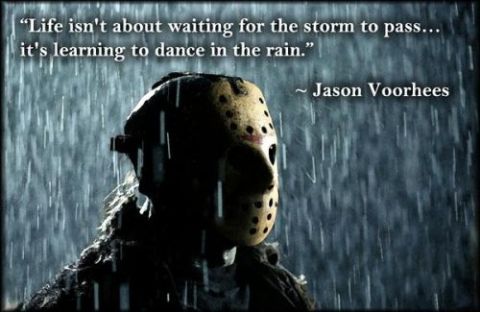
Today is the second Friday the 13th of 2026! (We’ve got another one coming up in November.) Some people consider Friday the 13th to be unlucky but those people have obviously never been the only “good girl” at a weekend party up at Camp Crystal Lake. Ask any of them and they can tell you just how lucky Friday the 13th can be.
To our readers who are currently struggling today, we make the following suggestion: Sit back and enjoy the antics of those fun-loving kids up at Camp Crystal Lake. It’s a lot safer to watch them than to be them!
In fact, in case you need help picking which movie to watch, I have reviewed every single Friday the 13th! here on the Shattered Lens! I personally recommend that you watch parts 1, 2, and 4 but it’s totally up to you! Here’s some links to my reviews:
The world will still be here when you get back, I promise. Tonight, I will be hosting #FridayNightFlix and I’ll be showing a classic Charles Bronson film to everyone who survives the day. The details will be posted soon. (In about 15 minutes, in fact….)
“What you started here today? About to get a whole lot worse.” — Nomada
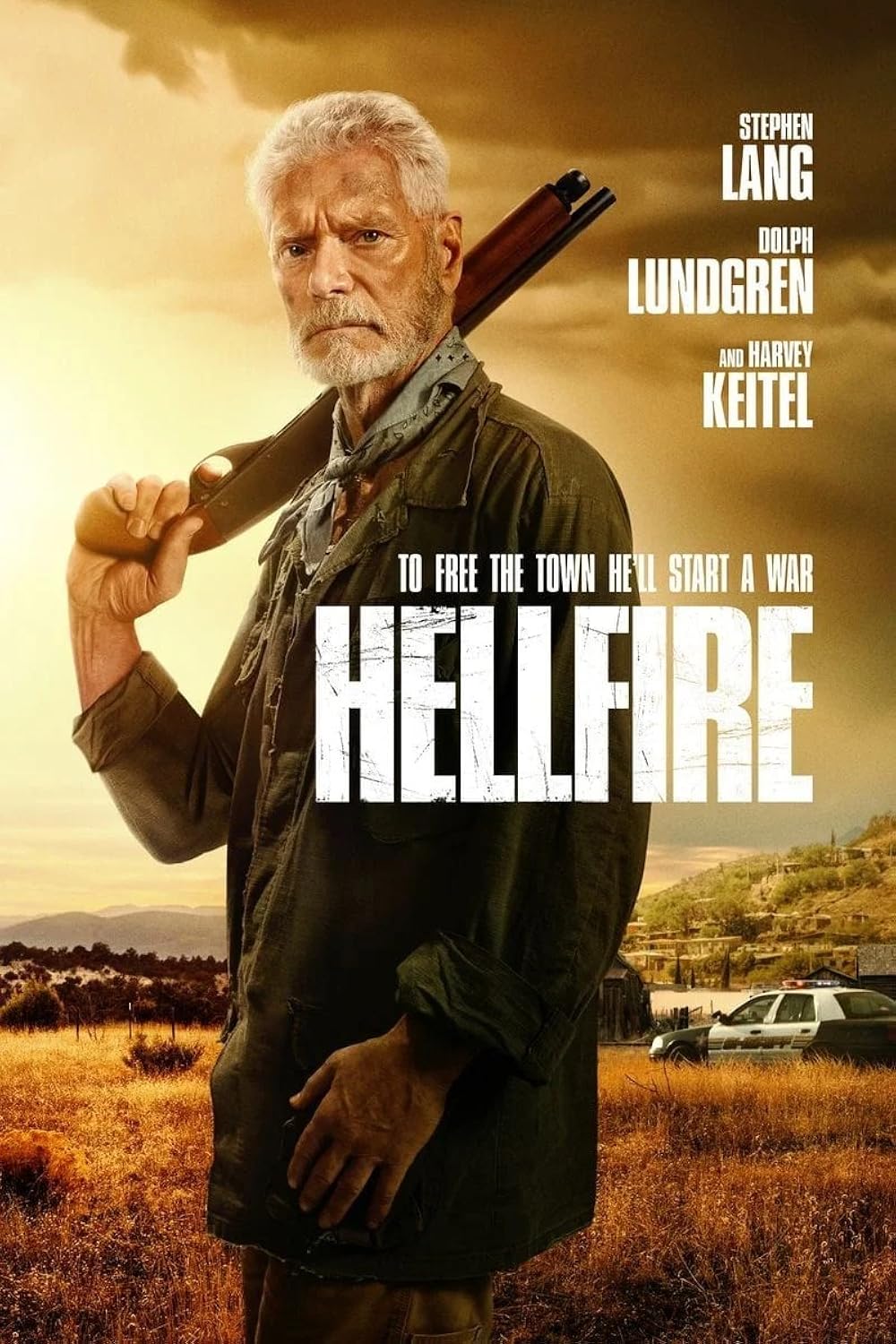
Hellfire is the kind of mid-budget, throwback action-thriller that knows exactly which bar it’s aiming for—and then mostly clears it with room to spare. Set in 1988 and built around a classic “mysterious drifter wanders into a rotten town” premise, it leans hard into familiar tropes but finds some personality in its cast, pacing, and sense of place. It’s not a game-changer for the genre, but if you’re in the mood for a lean, old-school small-town showdown, it gets the job done more often than not.
The setup is comfort food for action fans. A nameless drifter, played by Stephen Lang, rolls into the dying Southern town of Rondo, where the locals are quietly suffocating under the control of drug boss Jeremiah Whitfield, a politician-connected crime lord who pretty much owns the place. The bar owner Owen gives the drifter some work and a meal, the sheriff shows up to strongly suggest he move along, and you can basically feel the town holding its breath, waiting for somebody—anybody—to push back. That somebody, obviously, is this guy, who’s soon nicknamed Nomada and revealed to be an ex–Green Beret with a messy past and a higher capacity for violence than his weathered demeanor suggests. The story is straightforward to the point of being telegraphed, but that simplicity is part of its appeal; you always know what lane Hellfire is driving in.
Performance-wise, the movie’s biggest asset is Lang. At this point, watching him settle into the “old guy you really shouldn’t mess with” archetype is half the fun, and Hellfire plays that card well. He doesn’t oversell the trauma angle, but the film gives him just enough flashbacks and quiet beats—like those bath-time war memories—to suggest a guy who’s been stuck in fight mode for decades and doesn’t know what to do with peace. His physicality is still convincing, and director Isaac Florentine is smart about staging the action around what Lang does well, letting him move with purpose instead of pretending he’s 30 years younger. He’s not reinventing the “wandering warrior” type, but he grounds Nomada enough that you buy people trusting him even when they’re terrified. There’s a warmth under the stubble and scars that gives the character a little more dimension than the script strictly requires.
The supporting cast is a mixed bag, but the core players are solid. Harvey Keitel’s Jeremiah Whitfield is exactly the kind of villain you expect in this setup: soft-spoken, smug, and insulated by money and enforcers. He doesn’t get a ton of screen time, but there’s something appropriately gross about how casual he is with other people’s lives, like he’s already factored their suffering into his monthly budget. Dolph Lundgren shows up as the corrupt sheriff Wiley, playing the heavy who’s technically the law but functionally just another thug with a badge. Lundgren brings some weary menace to the role, and there’s a nice little tension in how much he’s genuinely bought into Jeremiah’s world versus how much he’s just too compromised to get out. Scottie Thompson’s Lena, Owen’s daughter, is the emotional anchor; she’s the one with something real to lose, and while the film doesn’t push her arc especially far, she’s likable enough that you care when things go sideways.
On the weaker end, Michael Sirow turns in a caricature performance as Spencer, the entitled and whiny son of Jeremiah, all sneers and petulance that feels like it stepped straight out of a ’80s cartoon villain playbook without any nuance to back it up. Similarly, Johnny Yong Bosch as enforcer Zeke sleepwalks through every scene that isn’t action, delivering a by-the-numbers performance for a character supposed to be the crime boss’ dangerous right-hand man; even in the fights, it’s rote and uninspired, missing the edge that could’ve made Zeke a real threat.
On the character side, Hellfire actually does a bit more groundwork than you might expect from what is essentially a B-movie revenge Western in modern dress. The early stretch spends time letting you feel the town’s exhaustion and fear—bars that are half-empty, people looking over their shoulders, everyone resigned to Jeremiah’s stranglehold. That world-building pays off once the violence kicks in, because it’s clear what’s at stake beyond simple body count or spectacle. The film also tries to deepen Nomada’s backstory, hinting at survivor’s guilt and a lingering sense that he’s been wandering from one moral debt to another, but it never quite connects those dots in a satisfying way. By the time the movie starts circling around for a full-circle emotional payoff, you can see what it’s going for, yet the groundwork feels a little thin, like pages were cut or ideas left half-developed.
Pacing-wise, Hellfire is tighter than its 95-ish-minute runtime might imply, and that’s mostly a compliment. The first half is surprisingly light on action, preferring to simmer instead of boil; you get a few scuffles and tense stand-offs, but Florentine holds back on the big fireworks. When things finally explode—hostages, ambushes, warehouses, the works—the film shifts into a mode that feels like controlled chaos, mixing gunfights, hand-to-hand scraps, and vehicle beats with a clarity that’s increasingly rare in this budget range. The trade-off is that the final act feels a bit rushed, like the movie suddenly remembered it had to tie off multiple arcs and body the main villains within a fairly strict time limit. The last stretch does what you expect it to do, including Jeremiah’s fiery fate, but it doesn’t linger long enough to fully earn the emotional weight it’s shooting for.
The action itself sits in that “serviceable to occasionally inspired” space. Florentine, coming from a background in stunt-heavy genre work, keeps things clean and legible; you always know who’s shooting at whom and from where. The shootouts can get cheesy—there’s a bit of that “nobody can hit anyone until the plot needs it” energy—but there are also flashes where staging and geography line up to deliver genuinely satisfying beats. A warehouse sequence where Nomada protects Lena while taking out multiple attackers is a standout, capturing both his tactical skill and the desperation of the situation. The film clearly favors quality over volume; genre die-hards who want wall-to-wall mayhem might wish for more set pieces, but the ones you get mostly land. If anything, some of the tonal shifts—bouncing from grim brutality to borderline goofy machismo—don’t always mesh perfectly, though that’s also kind of baked into the retro B-movie DNA.
Visually, Hellfire doesn’t reinvent the wheel, but it looks better than a lot of its DTV-adjacent peers. Shot in Arkansas and set in the late ’80s, it leans into dusty small-town Americana: sun-faded storefronts, weathered bars, lonely roads. Ross W. Clarkson’s cinematography keeps things grounded, with an emphasis on practical locations and natural light that makes the town feel like an actual lived-in place rather than a backlot abstraction. The period setting isn’t showy—you’re not constantly being smacked with nostalgia props—but it subtly shapes the world, especially in how isolated and cut-off Rondo feels without modern communication and surveillance everywhere. The score by Stephen Edwards does what it needs to do, nudging tension along without ever becoming a character in its own right.
Where the film stumbles is mostly in how predictable and occasionally clumsy it can be. You can see many of the beats coming from miles away: the town’s breaking point, the betrayals, who will die to motivate whom. There is one darker turn that genuinely catches you off guard, and it helps shake the movie out of its comfort zone for a bit, but the script overall is content to color inside the genre lines. Some dialogue leans on cliché, and a few supporting characters feel like they wandered in from a rougher first draft—the kind of broad sketches you’ve seen a dozen times before. It’s never bad enough to sink things, but it does cap how high Hellfire can climb; this is a movie that’s satisfied with solid rather than special.
Still, taken on its own terms, Hellfire works. It gives Stephen Lang a solid platform to do what he does best, surrounds him with a fun mix of seasoned character actors, and delivers enough muscular, clearly shot action to justify the ticket or rental. The town feels real enough that you actually care whether Nomada cleans it up, and the film respects the basics: clear stakes, likable underdogs, villains you’re happy to see go down in flames. If you go in expecting a tight, modest, R-rated throwback with a few rough edges and a couple of standout moments rather than a new genre benchmark, you’ll probably come away satisfied. It’s generic, sure—but it’s the kind of generic that remembers to give you characters to root for, action you can actually see, and just enough personality to make the ride worth taking.
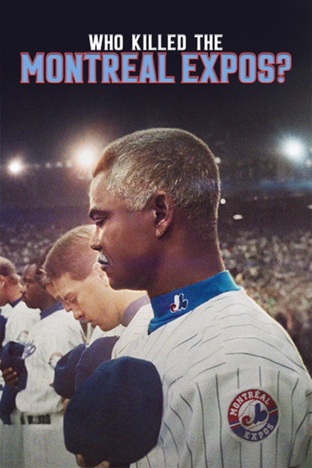
Who Killed The Montreal Expos? is a documentary about the first major league baseball franchise to be located outside of the United States. From 1969 to 2004, the Expos played in Montreal, Canada. The documentary shows how the Expos became a source of pride for the people of Montreal and how it also became a source of one of their greatest heartbreaks when, after years of financial mismanagement, it relocated and became the Washington Nationals.
I guess one reason why I could relate to this documentary was because, before they got the Nationals, Washington had two baseball teams known as the Senators. The first Senators moved to Milwaukee in 1961 and became the Twins. The second team to be known as the Senators relocated in 1971 and became my team, the Texas Rangers. Sometimes, it’s hard for me to believe that my beloved Rangers once had a different name and played for a different city. I can’t imagine how much it would hurt if the Rangers ever announced that they were leaving Texas. But, as the Expos showed in 2004 and as the Chicago Bears are showing right now, even the most storied of franchises can relocate.
Who Killed The Montreal Expos? offers a lot of theories of what led to Montreal’s team leaving from Washington D.C. A players strike in 1994 ended a season that could have taken the Expos to the World Series. In 1995, several bad trades led to the Expos going from being the best team in the league to the worst. The team was in need of a new stadium but could never seem to raise the funds to build one. The documentary puts most of the blame on the second-to-last owner, an American who a lot of people think was planning to move the team all along. In the end, it doesn’t seem like there was just one reason for the Expos leaving Montreal. It was a perfect storm of hardships and mistakes and, unfortunately, it was the baseball fans of Montreal who suffered.
I don’t know who’s to blame. I just know it hurts when your team leaves. Montreal, I hope your Expos return soon! And I pray my Rangers never leave Texas.
“It’s not about us anymore. It’s warning everybody that thing’s coming.” — Staff Sergeant 81
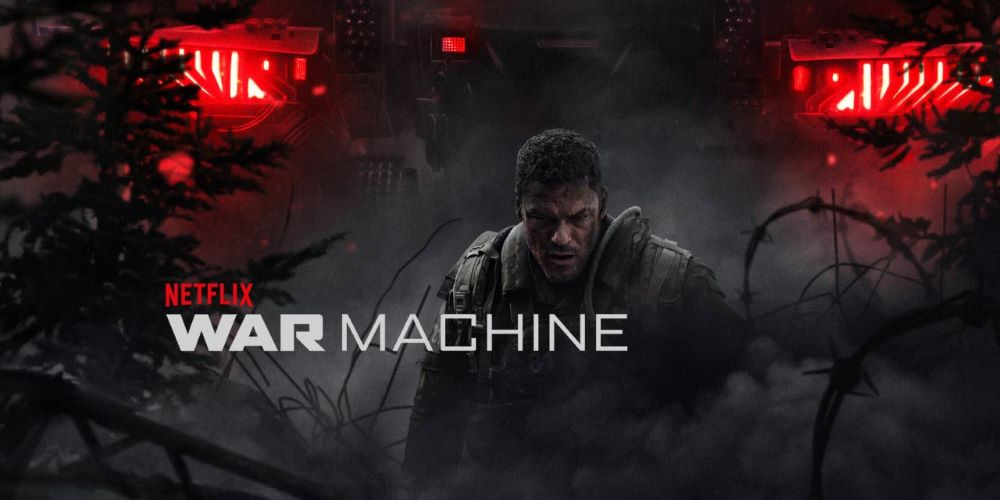
War Machine is a slick, mid-budget sci-fi actioner that mostly does exactly what it promises: put Alan Ritchson in a killbox with something inhuman and let the cameras roll. It is also a film that keeps bumping up against more interesting ideas than it has time—or maybe courage—to fully explore.
Set around a Ranger Assessment and Selection Program (RASP) training exercise, War Machine drops a squad of U.S. Army candidates into what should be a controlled simulation and then twists the dial from “routine” to “existential threat” in a single, nasty turn. Patrick Hughes uses the military-training frame as a clean, modular structure: we get the briefing, the banter, the march into the woods, and then the sense that something is just off before the real problem reveals itself. That problem, teased heavily in marketing, is a non-human adversary that pushes the movie from grounded war-games thriller into full-on sci-fi horror-action.
On a pure premise level, the film is almost aggressively simple: what if you locked a handful of Rangers-in-the-making in with an advanced, alien threat and watched them improvise their way out? The script never strays far from that line. It moves briskly from beat to beat—contact, casualties, regroup, “this isn’t part of the exercise,” reveal—without a lot of digressions. That tightness keeps the pacing snappy, but it also means character work often comes in shorthand: a line about a family here, a rivalry there, enough to suggest depth without really digging for it.
Ritchson is easily the film’s biggest asset, and the filmmakers know it. Coming off Reacher, he arrives with a built-in persona: the big, capable, slightly sardonic soldier who you just instinctively trust to solve violent problems. War Machine leans into that, but it also asks him to play a little more vulnerability than his Amazon series typically allows. There are moments—usually between set-pieces—where you see the strain and confusion creeping in, and the performance keeps the movie from turning into a pure pose-fest.
Most of the supporting cast is drawn in broad strokes but works well enough in the moment. You get the expected squad dynamics: the true believer, the skeptic, the joker, the one who freezes when things get ugly. The film rarely surprises you with what these people do, but the actors sell the camaraderie, and when bodies start dropping, the losses feel at least momentarily sharp instead of purely mechanical. Still, if you walked out of the movie and had trouble naming more than two characters, that would be understandable; the movie cares more about how they move than who they are.
Hughes’ direction sits in that modern streaming-action pocket: clean, serviceable, with a couple of standout moments but nothing that radically redefines the genre. The early training beats are shot with a straight military grit that grounds the later sci-fi escalation; you can feel the weight of gear, the slog of the environment, the tight focus on lines of advance and retreat. When the alien threat fully enters the frame, the film shifts into a more stylized mode, with harsher lighting, heavier VFX integration, and some nicely framed silhouette shots that emphasize size and speed over detailed anatomy.
Action-wise, War Machine is at its best when it uses geography and tactics instead of just spraying bullets into darkness. A mid-film set-piece in a partially collapsed structure, where the squad tries to funnel the creature into a kill zone, shows how much more interesting the movie becomes when the characters think rather than simply react. You get coordinated movement, overlapping lanes of fire, and the sense of a plan barely holding together. Other sequences lean more on chaotic spectacle, with quick cuts and digital mayhem that get the job done without really sticking in your memory.
The creature itself—both in concept and in execution—is solid, if not iconic. Hughes has mentioned that his original instinct was to completely hide the sci-fi angle in marketing and even within the film for as long as possible, turning the reveal into a full-on genre pivot. You can feel that tension: the movie is structured like a long-burn mystery, but the way it’s framed assumes you already know there is some kind of alien or advanced threat in play. As a result, the first half can feel like it is coyly dancing around a surprise that you walked in expecting, which blunts some of the intended impact.
Once revealed, though, the alien threat has a tactile, physical presence that helps sell the danger, especially when Ritchson is forced into close-quarters encounters. The effects and practical elements blend reasonably well, particularly in dim environments where the film smartly avoids overexposing any weaknesses in the design. You’re never watching the thing and thinking “instant classic,” but you also rarely feel like you’re staring at a dated video-game cutscene, which is no small feat at this budget level.
Where War Machine wobbles is in its relationship to its own ideas. The RASP setting, the simulated-mission-gone-wrong structure, and the presence of an unprecedented threat all hint at questions about how militaries adapt to non-traditional warfare, how much human soldiers matter in a future of machines, and what “training” even looks like when the enemy doesn’t follow any known playbook. Every so often, the screenplay brushes up against those questions—usually in a line about command decisions or acceptable losses—and then quickly retreats back into “shoot, move, communicate.”
There is also a thread about trust in authority and the expendability of trainees that could have turned this into a sharper, more cynical film. Instead, War Machine opts for a more earnest, almost old-fashioned faith in individual bravery and brotherhood. The movie clearly admires these soldiers and wants you to admire them too, so it stops short of really indicting the system that put them in harm’s way. That choice keeps the tone accessible and avoids turning the movie into a lecture, but it also leaves some dramatic meat on the bone.
In terms of craft, this is very much a “Friday night streamer” movie—for better and worse. It looks good enough on a living room screen, with clean sound design that makes each impact and gunshot feel beefy without blowing out your ears. The editing rarely confuses basic spatial relationships, which already puts it ahead of a lot of action on the platform, but it also seldom lingers long enough on a moment to let you fully savor the choreography or the creature’s movement. You get the sense of a film that has been trimmed for pace and attention-span metrics more than for rhythm or mood.
There has already been talk of this being a “spectacle worth watching” if you like Ritchson and sci-fi action, paired with the caveat that it is a decent, familiar entry in a crowded space whose lead performance carries it over the line. That feels about right. War Machine is not trying to be the next genre landmark; it is trying to give fans of Reacher a chance to see their guy punch, shoot, and strategize his way through a different kind of nightmare. On that level, it mostly delivers.
The ending leaves the door open for more, without dunking you in a full-on cliffhanger. You can watch this, feel like you got a complete story, and still understand why the creative team is already floating sequel ideas and talking about “War Machines” in the plural. Whether that happens will depend on the usual streaming calculus—completion rates, social buzz, how long people keep it in their “Recently Watched.” Creatively, there is room to expand the world and dig into the implications that this first film mostly uses as background texture.
If you come to War Machine looking for tight, character-driven military sci-fi with big thematic swings, you’ll probably walk away thinking about what could have been. But if you want a solid, competently staged sci-fi shoot-’em-up anchored by a physically commanding lead turn, this is a pretty easy recommendation—especially if you are already waiting for the next season of Reacher and need something in the same physical, bruising register to fill a couple of hours.


 Through the Shattered Lens