I love the 1959 film, Attack of the Giant Leeches.
The set up is a classic one. In the humid bayous, a sweaty and unappealing store owner (Bruno VeSota) discovers that his much younger wife (the great Yvette Vickers) has been cheating on him. In one scene, he forces his wife and her lover to enter the swamp. It’s terrifying because the swamp is full of …. GIANT LEECHES! I’m a Southern girl. I’ve spent some time in the bayous. Let me tell you, swamps are creepy enough without the addition of giant leeches.
Full of sultry melodrama and bayou atmosphere, Attack of the Giant Leeches is one of the best of the giant monster films of the 50s. It’s amazing was radiation can do!
2006’s The Moment After 2 picks up where The Moment After ended.
In the days after the Rapture, the Global Alliance has taken over the world. The government seeks to control everything. Paper money is becoming a thing of the past and instead, everyone is expected to pay via a chip that’s been implanted in their hand. Not having a chip means going to prison and probably being executed for being a subversive. The Global forces, led by the sadistic Commander Fredericks (Monte Rex Perlin), are hunting down dissidents. People are being reeducated. It’s the type of world that, in reality, a lot of people want, even if they hide it behind a bunch of class struggle rhetoric.
Former FBI agent Adam Riley (David A.R. White) is on Death Row but he gets a chance for freedom when the prison transport is attacked by a rebel group. When the other prisoners ask Adam to come with them, Adam takes one look at all the bodies of the people killed during the attack and refuses. He’s not a follower of Global but he doesn’t want any part of the rebel militia’s demand of “an eye for an eye.” Instead, Adam wanders through the desert until he finds a community of Christians. He’s reunited with the Rev. Jacob Krause (Brad Heller), from the first film. He also meets Carissa (Andrea Logan White), a woman with whom he is in love. However, she’s married to Richard (Mark Atteberry) and we all know what the Bible says about adultery. Of course, the world is now a dangerous place and, with Fredericks executing every Christian he finds, maybe Adam will still get his chance. Adultery may be a sin but moving in on a new widow is not.
Meanwhile, Adam’s former partner and friend, Charles Baker (Kevin Downes), is recruited to track Adam down. If Charles captures Adam, maybe Charles’s wife Rebecca (Deanne Morre) will be releases from prison. Or maybe not. You really can’t trust the Global Alliance.
One thing that I appreciated about this film is that Adam, despite plenty of opportunities to give into temptation, stayed true to the commandment that “Thou Shalt Not Kill.” A lot of faith-based, apocalypse films tend to use the end times setting as an excuse to turn its characters into quip-ready action heroes, gunning down the forces of the world government and blowing up buildings without a second thought. This film, though, is smart enough to say, “Hold on, the whole anti-killing thing still applies, regardless of how bad things get.”
As for the rest of the film, it’s well-made and the cast is decent. That may sound like faint praise but, after you’ve watched enough low-budget faith-based productions, you come to appreciate the ones that at least feature a steady camera, a clean soundtrack, and actors who can at least show a modicum of emotion. As tempting as it may be to laugh at the heavy-handedness of the Global Alliance, those of us who remember the COVID lockdowns will never forget some of the suggestions that were made for dealing with people who were judged to be noncompliant because they didn’t want to observe curfew or close their businesses. Much like the first film, The Moment After 2 is a decent thriller, one that works nicely for our paranoid times.
That Richard Burton is today best-remembered for his tumultuous marriages to Elizabeth Taylor and for his performances in several less-than-worthy films is unfortunate as Burton was also one of the most highly regarded staged actors of his generation. In fact, late in his life, Burton often expressed regret that he had ever left the stage for films to begin with.
In 1964, Burton played Hamlet on Broadway, in a production that was directed by John Gielgud. (Gielgud also provided the voice of the Ghost.) This is a video-recording of both that production and Burton’s acclaimed performance. Burton brings an intense and almost divine madness to the role. Watching, one can see why Burton would have preferred to have been remembered for this instead of for playing Mark Antony.
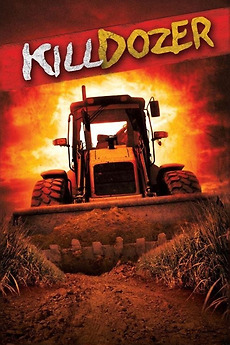
Six construction workers (played by Clint Walker, Carl Betz, Neville Brand, James Wainwright, James A. Watson, and Robert Urich) are boated to an isolated island off the coast of Africa. An oil company has assigned them to build an airstrip on the island. On the first day of work, they come across a meteorite buried in the ground. When one of the men tries to pick up the meteorite with the bulldozer, a blue light envelops the bulldozer and, at the same time, fatally injures Robert Urich. Possessed by the meteorite, the bulldozer starts to track the remaining workers down, killing them one-at-a-time. It’s a killdozer!
Based on a short story by Theodore Surgeon and made-for-television, Killdozer asks the question, “Have you ever seen a big, bulky bulldozer attempt to sneak up on someone?” Given that Killdozer is not fast and it’s not very agile, it should be easy to escape it but the construction keep doing dumb things, like getting drunk or trying to hide inside a copper tube instead of just running away. The surviving men wonder how they are going to make it until help eventually arrives. Maybe if you hear Killdozer coming, you should could just step to the side or maybe you could even run behind Killdozer. Instead, the construction workers keep trying to fight it head-on. Every time Killdozer pauses from noisily rolling across the island and sits still because it senses one of the workers might be nearby, I’m reminded that Killdozer is an absolutely ludicrous film but that it’s also wonderfully strange and that it’s also impossible to enjoy it on some level.
The cast is good and, for the most part, so is the straight-forward, waste-no-time direction. The Killdozer deserved an Emmy and maybe its own series but instead, it just had to settle for cult stardom.
Sinbad (Sergei Stolyarov) returns to his land after going on a great quest. He sees that half of the citizens are rich and happy and always dancing. He sees that the other half are poor and never happy. Those of us watching see that the film’s version of Persia looks a lot like Russia. Sinbad announces that he is going to capture the Bird of Happiness and bring it back to his people. He sets sail and is given help by the daughter of Neptune. Sinbad visits many lands and spend some time underwater, where Neptune offers him the hand of his daughters and there’s also an octopus hanging around and watching in the background. Sinbad never finds the Bird of Happiness but it doesn’t matter because he realizes that his people have all the happiness that they need in Persia.
The Magic Voyage 0f Sinbad may seem like a strange Sinbad film and that’s because it was never a Sinbad film in the first place. It was actually a Russian film called Sadko, about a young Russian man who tries to prove himself by finding the Bird of Happiness. In America, Sadko was even released under its original name and plot in 1953. No one paid much attention to it.
Then, in 1962, Roger Corman got his hands on the American distribution rights for the film and he decided to rerelease it. He changed the title to The Magic Voyage of Sinbad and he hired a young film student to write narration for the film and to also “translate” the film’s dialogue so that it could be dubbed into English. The very Russian Sadko instead became a film about Sinbad, the legendary Persian sailor.
The Corman version went on to become the better-known version, largely because it was featured on Mystery Science Theater 3000. Personally, I prefer the Corman version because the badness of the dialogue and the overly solemn narration go a long way toward making up for the fact that this is a 79-minute movie about someone searching for something and failing to find it. After making so many grand promises, Sinbad returns to his home and tells everyone that he actually lied and they don’t need the Bird of Happiness to be happy. The film ends abruptly, probably because the people rose up and tossed Sinbad in the ocean at that point.
As for that film student who wrote the script, Francis Ford Coppola later did alright for himself.
First released in 1983, Hostage is an Australian film about Christine (Kerry Mack) and Walter Maresch (Ralph Schicha).
Christine is a young woman who escapes from her abusive father by going on the road with a traveling carnival. She runs the dart-throwing booth. It’s a simple life but she’s happy with it. She has friends and she has freedom. When Walter, an enigmatic German drifter, joins the carnival, there’s an immediate attraction between him and Christine. Christine sleeps with him a few times but she makes it clear that she’s not looking for anything serious or permanent. Walter announces that, if Christine doesn’t marry him, he’s going to shoot himself. Christine rolls her eyes and leaves his trailer, just to hear a gunshot as she walks away. At the hospital, Walter refuses to get treated until Christine promises to marry him.
Christine does marry Walter, both to keep him from dying and also because she’s pregnant. Walter survives his gunshot wound and turns out to be the type of husband who alternates between being wildly romantic and being coldly abusive. Walter wants to have lot of a children. He’s upset when Christine gives birth to a girl. “The next one will be a son!” he announces. Walter also spends a lot of time complaining about how weak the Australians are compared to the Germans. And, of course, there’s another huge issue with Walter.
HE’S A NAZI!
Walter is a neo-Nazi. For whatever reason, it takes Christine forever to figure this out. Walter drags to Christine to Germany and then gets mad when Christine doesn’t stand along with all of his friends while watching The Triumph of the Will. Christine opens up Walter’s keepsake box and finds a picture of his father wearing a Nazi uniform and also an iron cross. Walter’s friends are all blonde Aryan types who are constantly talking about how Germany has lost its way. And yet Christine doesn’t really seem to get that Walter is a Nazi until Walter starts talking about blowing up buildings and robbing banks.
Eventually, back in Australia, Walter and Christine rob a string of banks and the tabloids are soon describing them as being a modern-day Bonnie and Clyde. Walter is happy but Christine just wants to grab her daughter and escape from him. That proves to be easier said than done. Walter’s not just a Neo-Nazi. He’s also totally insane….
Amazingly enough, this is based on a true story. Christine wrote about her ordeal and her book was adapted into Hostage, a film that may look like a typical exploitation film but which is actually a rather engrossing drama about a naive girl who finds herself trapped with a monster. The film is full of moments that stick with you, like when a policeman comes by Christine’s trailer and manages to totally miss her signals that she’s currently being held, at gunpoint, by Walter. Kerry Mack and Ralph Schicha both give strong performances as Christine and Walter. Schicha especially deserves a lot of credit for turning Walter into a believable villain as opposed to just a caricature. One reason why Walter is so dangerous is because he’s such an idiot and Schicha does a great job of showing what happens when stupidity mixes with confidence. In one of the film’s more over-the-top moments, Walter and his friend Wolfgang drag Christine to Turkey. At first, Walter and Wolfgang are cocky but the trip becomes a violent and (literally) bloody disaster.
Hostage brings a real nightmare to life. Sadly, even after she freed herself of Walter, Christine continued to live a difficult life. She died of hypothermia in 2019.
Unflinching, subversive, and dripping in corrosive dark humor, Sion Sono’s Cold Fish (2010) doesn’t just showcase Japan’s taste for genre-bending horror—it rips open the underbelly of polite society and exposes what writhes beneath. If I Saw the Devil was a descent into the abyss of revenge, Cold Fish is a fever-dream trek through manipulation, depravity, and the most repressed corners of the psyche. Built around the crucible of violence and sex, Sono’s film dares viewers to question not only the shape of evil, but whether the forces that awaken it could be lurking in anyone.
Before Cold Fish, Sono had already established himself as a subversive force in horror with his earlier film Suicide Club (2001), which helped him gain a loyal cult following and introduced him to the genre scene at large as an innovative and provocative filmmaker unafraid to challenge conventions. With Cold Fish, Sono refined his style, offering a tighter, more psychologically driven narrative that accelerates the intensity while probing deep societal anxieties.
Inspired by the real-life Saitama serial murders of the 1990s, committed by dog breeder Gen Sekine and his common-law wife Hiroko Kazama, Cold Fish draws chilling authenticity from these events. Sekine and Kazama ran a pet shop and poisoned several customers before dismembering their bodies to conceal the murders. Sono reimagines this disturbing history by transforming the pet shop into a tropical fish store and fictionalizing details while preserving the core themes of manipulation, complicity, and violence.
The story opens with Nobuyuki Syamoto, the definition of a beaten-down everyman: a tropical fish shop owner whose daughter openly hates her stepmother, whose marriage is half-drowned in silent resentment, and who drifts through life as little more than a shadow. From the outset, Syamoto’s passivity sets a tremulous undertone—terrible things are happening, but he isn’t doing much to stop them. That changes the moment his daughter Mitsuko is caught stealing and rescued by the charismatic Yukio Murata, proprietor of a flashier fish store. Murata’s manners and generosity are overwhelming, almost caricatured, yet there’s an edge of anticipation: something is amiss, and Sono lets the feeling gradually curdle beneath his gentle facade.
Murata’s initial charm morphs into coercive control as he manipulates the Syamoto family into his orbit. When Syamoto is coerced to become Murata’s “business partner,” the narrative takes its first graphic, kinetic turn: a sales pitch for a rare tropical fish goes lethally wrong. Murata poisons a buyer in cold blood, then erupts into violence, forcing Syamoto and his wife into complicity by helping dispose of the body. The shift is immediate and nightmarish—the performance by Denden (Murata) snaps from quirky salesman to a near-mythical monster, as terrifying for his unpredictability as for his casual approach to killing.
From here, Cold Fish dives into a spiral of murder, sexual domination, and psychological torture. Murata and his partner Aiko have murdered dozens, perfecting the art of erasing their victims. As the body count rises, Sono’s camera remains hauntingly restrained: eschewing frantic cuts for long takes, keeping his characters center-frame, locking viewers in Syamoto’s dread-soaked POV. We are forced to witness every mechanical step in the pair’s routine—the body disposal, the literal scattering of ashes, the casual cruelty.
What makes Cold Fish such a disturbing experience is not merely the gore (though the final act is blood-soaked chaos), but the way deviance is normalized, even made bureaucratic. Murata’s operation feels part nightmare, part dull corporate job. This banality breeds horror. At times, Sono punctuates scenes with black comedy: surf rock tunes play in the background as mutilated bodies are processed in Murata’s shop, and his wife’s participation has a twisted, deadpan humor that makes the violence doubly unsettling.
Syamoto’s trajectory is the film’s secret weapon. By trapping us in his perspective, Sono draws out the uncomfortable reality of learned helplessness, craven compromise, and the latent violence beneath a repressive facade. Syamoto isn’t a hero or anti-hero, but a study in desperation and dissolution. His initial submission slowly ferments into rage, and when he finally snaps, the violence is primal and cathartic—a vengeance that feels less like triumph and more like an act of obliteration. Instead of a neat moral arc, Sono’s script is obsessed with the ambiguity of retribution: what festers beneath apathy, what trauma does when left unaddressed, and what the need to act breeds when suppressed for too long.
This thematic preoccupation connects Cold Fish to the likes of I Saw the Devil: both movies use revenge not as justice, but as a mirror for corruption—how far can the ordinary man go before he becomes indistinguishable from the monsters tormenting him? Sono’s film is ultimately more nihilistic, using social commentary as a subtle undertow, with critiques of Japanese conformity, sexuality, and family decaying beneath the surface. The result is a film that is both emotionally exhausting and intellectually provocative.
Technically, Cold Fish offers Sono at his most focused. The cinematography is subtle but relentless, with natural camera movement amplifying character reactions rather than indulging in spectacle. The use of Mount Fuji as a backdrop for scenes of violence is striking and effective. Costume, color palette, and setting all speak of an ordinary world slowly overtaken by surreal terror. The score plays off these moments, with music choices ranging from nervy tension to surf-rock irony.
The performances are uniformly superb. Denden is magnetic as Murata—making each mood shift obvious, unpredictable, and horrifying. Mitsuru Fukikoshi’s portrayal of Syamoto is raw, fragile, and ultimately explosive. The supporting cast amplifies the film’s extremes without ever feeling cartoonish. Sono pushes them to the edge, finding both tragedy and queasy humor in their unraveling. The sound design, especially in scenes of dismemberment and violence, is overwhelming and intense—forcing the audience into a sensory trap that mirrors Syamoto’s psychological implosion.
Yet Cold Fish isn’t just an exercise in gore or cruelty—it’s an autopsy of repression, cowardice, and compulsion, watched through the lens of a culture known for its traditions of obedience. The film asks what drives people to murder, what keeps them silent, and what happens when those limits are breached. It never gives viewers easy sympathies or clean answers, and the ending is deliberately unnerving—Syamoto’s transformation is complete, but it isn’t heroic, nor is it redemptive.
For some, the film’s length and relentless tone will be too much. Others have pointed out its over-the-top final act, and some feel the excessive violence is hard to justify. However, these very qualities are what cement Cold Fish as a significant work in contemporary Japanese horror—it’s the sort of movie that claws at you for days, sticking in the brain with its grim humor and powerful sense of unease. Like I Saw the Devil, it’s less about catharsis than about exposing the permanent scars left by evil and revenge, and the horrifying possibility that what lurks under the surface of normality is just waiting for an invitation to come out.
Ultimately, Sion Sono’s Cold Fish is an important piece of modern horror—not simply for its brutality, but for its relentless psychological excavation and perverse humor. By channeling the real Saitama serial murders into a study of psychological torment and complicity, Sono creates a film that is designed to provoke, to disturb, and to make audiences ask where the boundaries of morality might finally break. For genre fans, it’s a bracing, unforgettable experience; for those who approach with caution, it’s both a warning and an invitation to glimpse the heart of darkness just beneath the surface.
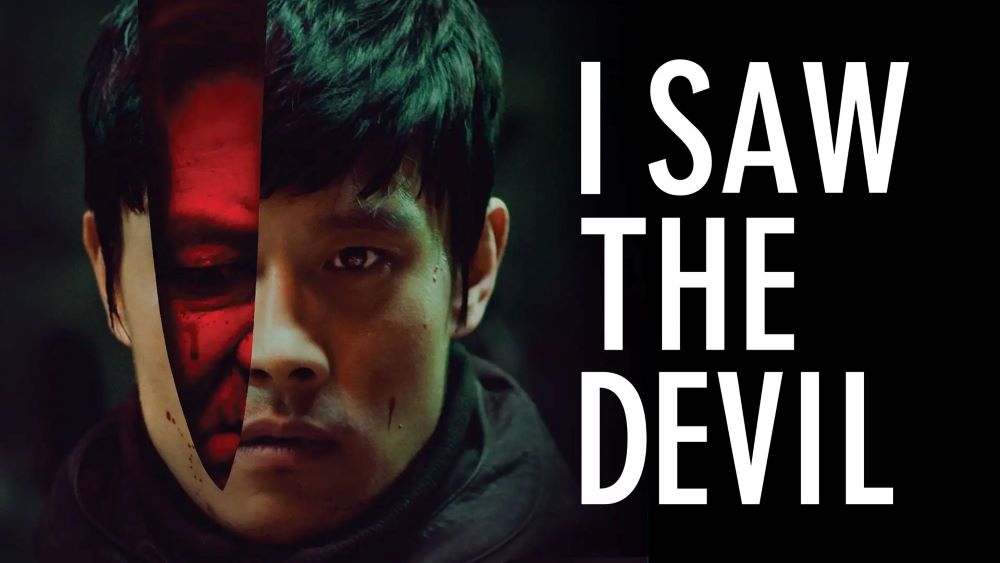
I Saw the Devil (2010) is a film that refuses to play by the rules of typical revenge thrillers. Instead, it pushes the boundaries into some of the most brutal and unflinching territory South Korean cinema has to offer. Directed by Kim Ji-woon, the movie blends elements of horror and psychological thriller, creating a hybrid that’s as disturbing as it is compelling. Much like Kingdom, it blurs the lines between genres—what starts as a revenge story quickly morphs into something darker and more extreme, turning familiar tropes into a raw exploration of evil’s destructive power.
The story follows Soo-hyeon (Lee Byung-hun), an intelligence agent whose fiancée becomes the victim of a sadistic serial killer named Kyung-chul (Choi Min-sik). Instead of a straightforward pursuit of justice, Soo-hyeon dives into a nightmarish game of cat and mouse. His goal? To inflict suffering on Kyung-chul in return, not for closure but for unleashing a kind of revenge that is almost self-destructive. Repeatedly capturing and releasing Kyung-chul, Soo-hyeon becomes trapped in a cycle of violence that steadily erodes his moral boundaries.
That cyclical pattern forms the backbone of the film, adding a rhythm that oscillates between moments of calm and bursts of brutal violence. Scenes of horror are often tinged with dark humor, adding an unsettling layer to the narrative. One standout moment occurs in a remote farmhouse, where Kyung-chul meets his twisted friend Tae-joo, a cannibalistic serial killer who treats violence like a casual dinner conversation. This scene exemplifies the film’s unsettling ability to find morbid humor in the most horrific circumstances, emphasizing how evil—when normalized—becomes almost banal.
Choi Min-sik’s performance in I Saw the Devil is chilling, showcasing his ability to embody pure evil. It’s a stark contrast to his role in Oldboy, where he played Oh Dae-su, a man seeking revenge for his own suffering. Here, Choi’s Kyung-chul is the embodiment of savagery—an inhuman predator with no remorse, no moral compass, just pure chaos. The role reversal highlights the incredible range of an actor whose presence can turn the screen into a nightmare. This flip from sympathetic avenger to monstrous villain makes the film’s exploration of morality even more compelling.
The film’s approach to violence is unabashed and graphic. Scenes of sexual assault, torture, and murder are depicted in unflinching detail, sparking inevitable debates about whether it’s gratuitous or necessary. Kim Ji-woon doesn’t hold back — he wants you to feel the full weight of evil in its most visceral form. This isn’t horror for shock’s sake; it’s a brutal mirror held up to the darker sides of human nature, exploring how unchecked vengeance can corrupt and destroy everything in its path.
Beyond the violence, I Saw the Devil probes deeper questions about morality and obsession. Soo-hyeon’s transformation from devastated lover to relentless avenger is portrayed with subtlety—they’re not just chasing a killer; they’re unraveling themselves. Lee Byung-hun brings a quiet intensity to his role, capturing the tragic descent into obsession and madness. The film makes you ask: how far can you go to punish someone before you become what you hate? And is vengeance ever truly justified? These aren’t easy questions, but I Saw the Devil forces you to sit with them.
Visually, the film is bleak and cold—mirroring its themes of alienation and moral decay. Kim Ji-woon keeps things straightforward, focusing on clear visuals that highlight the starkness of both urban and rural settings. The action scenes are brutal but precise, often choreographed with a sense of dark beauty that enhances their impact. The pacing is tight—about two hours—delivering a relentless story that never quite lets go of the tension.
The soundtrack and sound design don’t overshadow the visuals but add to the sense of dread. Quiet moments are ominous; violent sequences are thunderous, immersing viewers fully into this nightmare landscape. Every detail, from lighting to camera angles, emphasizes the film’s mood: raw and unsettling from start to finish.
The themes extend beyond personal revenge, touching on broader issues of societal trauma and the cyclical nature of violence. Korea’s history of brutal trauma and social upheaval echoes in the film’s exploration of how wounds—personal or national—can perpetuate more violence if left unresolved. It’s a brutal reminder that revenge can become a self-fulfilling prophecy, devouring everyone involved.
But make no mistake: I Saw the Devil is a challenging film. It doesn’t shy away from explicit content or disturbing themes. It’s brutal, unrelenting, and sometimes hard to watch. But that’s its power. It forces viewers out of their comfort zones and confronts uncomfortable truths about justice, evil, and our capacity for cruelty.
I Saw the Devil is a landmark in Korean cinema—an uncompromising look at revenge as a corrosive force. Its fusion of extreme horror and psychological drama creates a haunting experience that stays with you long after the credits roll. It’s not just a revenge story; it’s a primal reflection on what it means to be human—and what it costs to seek vengeance in a world full of monsters.
“Man is a feeling creature, and because of it, the greatest in the universe….”
Hell yeah! You tell ’em, Peter Graves!
Today’s Horror on the Lens is 1956’s It Conquered The World. Graves plays a scientist who watches in horror as his small town and all of the people who he loves and works with are taken over by an alien. Rival scientist Lee Van Cleef thinks that the alien is going to make the world a better place but Graves understands that a world without individual freedom isn’t one that’s worth living in.
This is one of Corman’s most entertaining films, featuring not only Graves and Van Cleef but also the great Beverly Garland. Like many horror and science fiction films of the 50s, it’s subtext is one of anti-collectivism. Depending on your politics, you could view the film as either a criticism of communism or McCarthyism. Watching the film today, with its scenes of the police and the other towns people hunting anyone who fails to conform or follow orders, it’s hard not to see the excesses of the COVID era.
Of course, there’s also a very persuasive argument to be made that maybe we shouldn’t worry too much about subtext and we should just enjoy the film as a 50s B-movie that was directed with the Corman touch.
Regardless of how interpret the film, I defy anyone not to smile at the sight of ultra-serious Peter Graves riding his bicycle from one location to another.
Here, for your viewing pleasure, is It Conquered The World!
1999’s TheMomentAfter opens with the world in a panic. Millions of people have suddenly vanished into thin air, leaving only their clothes and their loved ones behind. On a news program, three expects are brought in to discuss what might have happened. A New Age-y woman argues that “Mother Earth” is eliminating overpopulation. A wild-eyed man argues that people have been abducted by UFOs. And finally, a man with a neatly trimmed beard argues that it’s the rapture. The bearded man is dismissed as being a crank.
Two FBI agents — Adam Riley (David A.R. White) and Charles Baker (Kevin Downes) — are assigned to investigate the disappearances. Charles is himself shaken because he knew a few people who disappeared. As they drive around the city and talk to people, they hear the same story. People who went to church regularly and were Christian vanished while their less faithful loved ones watched. Adam comes to suspect that there might be something to the Rapture Theory. Charles, bitter because his wife recently suffered a miscarriage, has no time for it.
As often happens in a crisis, the government grows heavy-handed and sinister. The President announced that he’s going to follow the lead of Europe and “suggest” that everyone get a chip implanted in their hand. Charles gets the chip without hesitation. Adam keeps finding excuses to put it off, even though he’s mandated to get one as a federal employee. With the country turning into an authoritarian dystopia, Charles and Adam are assigned to track down a renegade preacher (Brad Heller), who is telling his followers not to get chipped.
Stories about the end time have always been popular when it comes to faith-based films. A lot of that is because the Book of Revelations is written in such a way that there’s a lot of different ways that one can interpret it. As a result, it’s always interesting to see how “the mark of the Beast,” will be represented in these films. Sometimes, it’s a tattoo. Sometimes, it’s an invisible mark that only demons can see. In this one, it’s a chip that works as a credit card. And while it’s easy to scoff at this film’s conspiracy theories and the shots of people staring at their palms, some of us still remember how, during the COVID lockdowns, there were more than a few people in positions of influence who argued that the citizenry shouldn’t be allowed in stores or restaurants or anywhere else unless they could show proof they had gotten the vaccine and kept up with the boosters. There were even some who said that the National Guard should go door-to-door and force the shot on people. (For the record, I did get the vaccine but, when I started hearing about monthly boosters and all that other stuff, I decided that one shot was more than enough for me.) There is definitely an authoritarian impulse out there, one that comes out whenever there’s a crisis. One reason why films like this one continue to find an audience is because real-life governments often behave like the dictatorship portrayed in The Moment After. Of course, in the movie, everyone can at least say they were influenced by the Devil. In real life, it just comes down to pettiness and a need to tell other people what to do.
As for The Moment After, it’s a low-budget but fairly well-done thriller, one that keeps the preaching to a minimum and doesn’t feature a lot of the problematic elements that one tends to find in movies like this. White and Downes both give effective performances. It avoids the histrionics that tend to define a lot of other apocalyptic films. This is not a film that’s going to convert anyone but it does a good enough job creating an atmosphere of paranoia and growing dread that it works as a thriller.







 Through the Shattered Lens