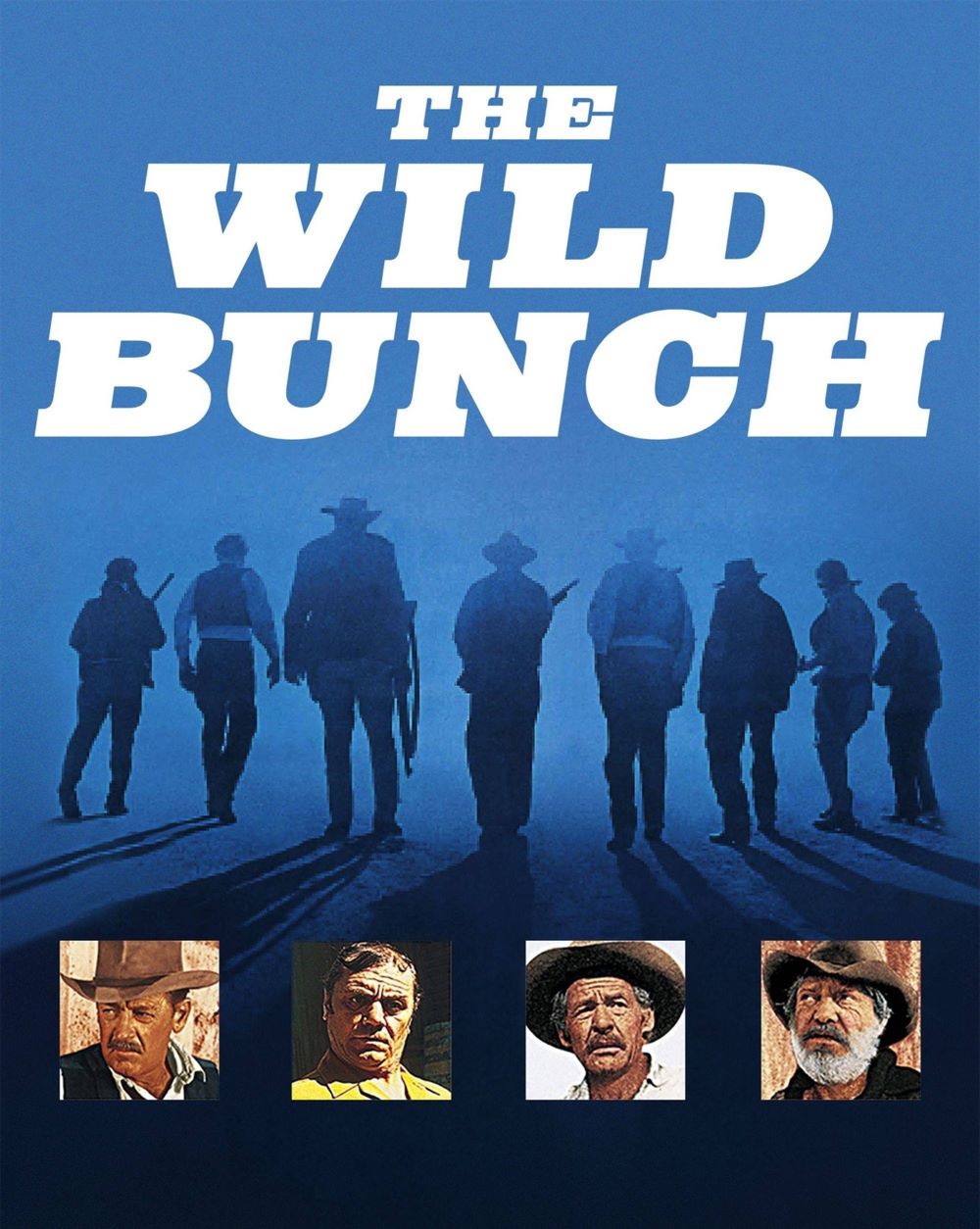
Review: The Wild Bunch (dir. by Sam Peckinpah)


“We’ve got to start thinking beyond our guns. Those days are closin’ fast.” — Pike Bishop

Sam Peckinpah’s The Wild Bunch stands out as a landmark in the Western genre, famous for its daringly harsh depiction of both violence and the fading mythos of the American West. Rather than following the traditions of earlier Westerns, the film presents a gritty portrait of aging outlaws on the edge of extinction, wrestling with a society that has evolved past them. It’s a movie that’s difficult to shake, both for its unapologetic style and the unresolved feelings it leaves long after the final shots ring out.

At its core, the story centers on Pike Bishop and his band—a crew of seasoned criminals aiming for one last grand heist as modernity encroaches on their world. Hoping to pull off a train robbery, they end up entangled in deeper complications after being betrayed and soon are thrust into the turbulence of the Mexican Revolution. Peckinpah builds a narrative where clear-cut morality falls away. The criminals and those pursuing them, supposed bringers of justice, are equally compromised and dangerous. This balancing act challenges the audience to reassess their sympathies, since the characters rarely line up as traditional heroes or villains.

The film’s notoriety is inseparable from its treatment of violence. In an era when Westerns often depicted gunfights as almost bloodless, The Wild Bunch arrived blazing with slow-motion fatalities, realistic wounds, and chaos that feels nearly documentary. Peckinpah didn’t intend to sugarcoat death; the film’s fight scenes are designed to unsettle rather than thrill, making viewers register the true cost of violence on screen. The movie’s most infamous sequences, particularly the opening and closing shootouts, still provoke debate over whether their artistry justifies their brutality. Peckinpah reportedly wanted to expose the real consequences of violence, not celebrate them, and the resulting imagery remains both striking and disturbing decades later.

Beyond its bloodshed, the film is packed with melancholy, exploring the futility and obsolescence of its central figures. The Wild Bunch themselves—Pike, Dutch, Lyle, Angel, and others—all feel the weight of their era’s end. They are not just outdated in terms of time; their entire way of life has been mechanized and modernized beyond their grasp. The film depicts this through powerful imagery, from horses being supplanted by cars and trucks to rifles giving way to machine guns. This mechanization highlights that Pike and his men live in a world that has moved on, leaving them behind. Their code of honor and rough camaraderie are relics in a brutal, mechanized landscape that favors efficiency and merciless violence. The emergence of rapid-fire weaponry and vehicles is more than a backdrop; it symbolizes their growing irrelevance and the passing of a wild, untamed frontier.

Technically speaking, The Wild Bunch is as impressive as it is influential. The cinematography captures wide Mexican landscapes with dust and sunlight, conveying both beauty and bleakness. The editing—particularly in the action scenes—was ahead of its time, with its expressive use of multiple camera angles and slow-motion adding an almost ballet-like rhythm to chaotic violence. The music, a mix of Jerry Fielding’s score and traditional Mexican songs, deepens the film’s sense of place and loss. All of this technical prowess merges in set pieces that are still studied by action directors today.

One of the film’s most enduring legacies is its profound influence on a slew of filmmakers in the years following its release. Directors like Martin Scorsese, Quentin Tarantino, and John Woo have all cited The Wild Bunch as a key inspiration, particularly in how it reshaped the depiction of violence and complex characters onscreen. Peckinpah’s innovative use of slow motion during action scenes transformed gunfights into sequences that feel almost balletic, bringing an eerie beauty to brutality. This technique became a hallmark of John Woo’s work, where slow-motion shootouts are choreographed with a dance-like precision, making the violence stylized yet emotionally impactful. Meanwhile, Scorsese and Tarantino embraced the moral ambiguity and character complexity Peckinpah championed, pushing their own stories beyond clear-cut good and evil. Through these directors and many others, The Wild Bunch continues to resonate and shape modern cinema.

The performances in The Wild Bunch are integral to its powerful impact, with its ensemble cast bringing layered humanity to otherwise rough, sometimes brutal characters. William Holden leads as Pike Bishop with a mix of weary charisma and existential urgency, embodying a man caught between the fading wild past and a ruthless present. Holden’s Pike is not just a leader of outlaws, but a man wrestling with his own moral contradictions—as loyal and protective as he is capable of cold violence. This complexity allows the character to stay compelling rather than becoming a cliché tough guy.

Ernest Borgnine as Dutch Engstrom offers a grizzled, weary presence, conveying the toll that years of violence have taken on his spirit, while Warren Oates imbues Lyle Gorch with a volatile and rebellious energy that adds tension within the gang. His brother, Tector Gorch, played by Ben Johnson, brings a contrasting steadiness, portraying a man caught between loyalty and survival. Robert Ryan’s portrayal of Deke Thornton, the relentless bounty hunter, stands out as a tragic figure torn between his past friendship with Pike and his duty. This character conflict gives the story a deeper emotional layer and adds weight to the relentless pursuit central to the plot.

Supporting performances by Edmond O’Brien as Freddie Sykes and Jaime Sánchez as Angel enrich the group dynamic, each adding distinct personality traits that feel authentic and lived-in. The chemistry between the cast helps ground the film’s heavy themes in real human experience, making the characters’ struggles with obsolescence and loyalty resonate beyond the screen.

However, despite the strong male performances, the film’s treatment of female characters is notably sparse and limiting. Women in the film often fall into marginal roles, lacking development or agency, which reflects the gender dynamics of many Westerns from the era but feels particularly dated today.

For viewers seeking straightforward heroism or moral clarity, The Wild Bunch can be a challenging experience. Its bleak, nihilistic worldview and refusal to deliver easy answers may leave some feeling drained. The story culminates in a violent, unresolved climax with no tidy resolution, emphasizing loss and the end of an era. But it is precisely this rawness and technical mastery that keep the film compelling and worthy of close viewing.

The Wild Bunch demands you shed simple notions of good versus evil and prepare for a rough, often brutal ride. It’s a story about men fighting not just other men but inevitability—caught between their own fading values and the relentless march of modernization and change. Peckinpah doesn’t offer comfort; instead, he forces the viewer to reckon with violence’s cost and the price of nostalgia. Even with all its grit and flaws, the film’s artistry and influence remain undeniable, securing its status as a masterwork that redefined Westerns and action cinema alike. It’s a wild ride that continues to inspire and provoke long after the credits roll.
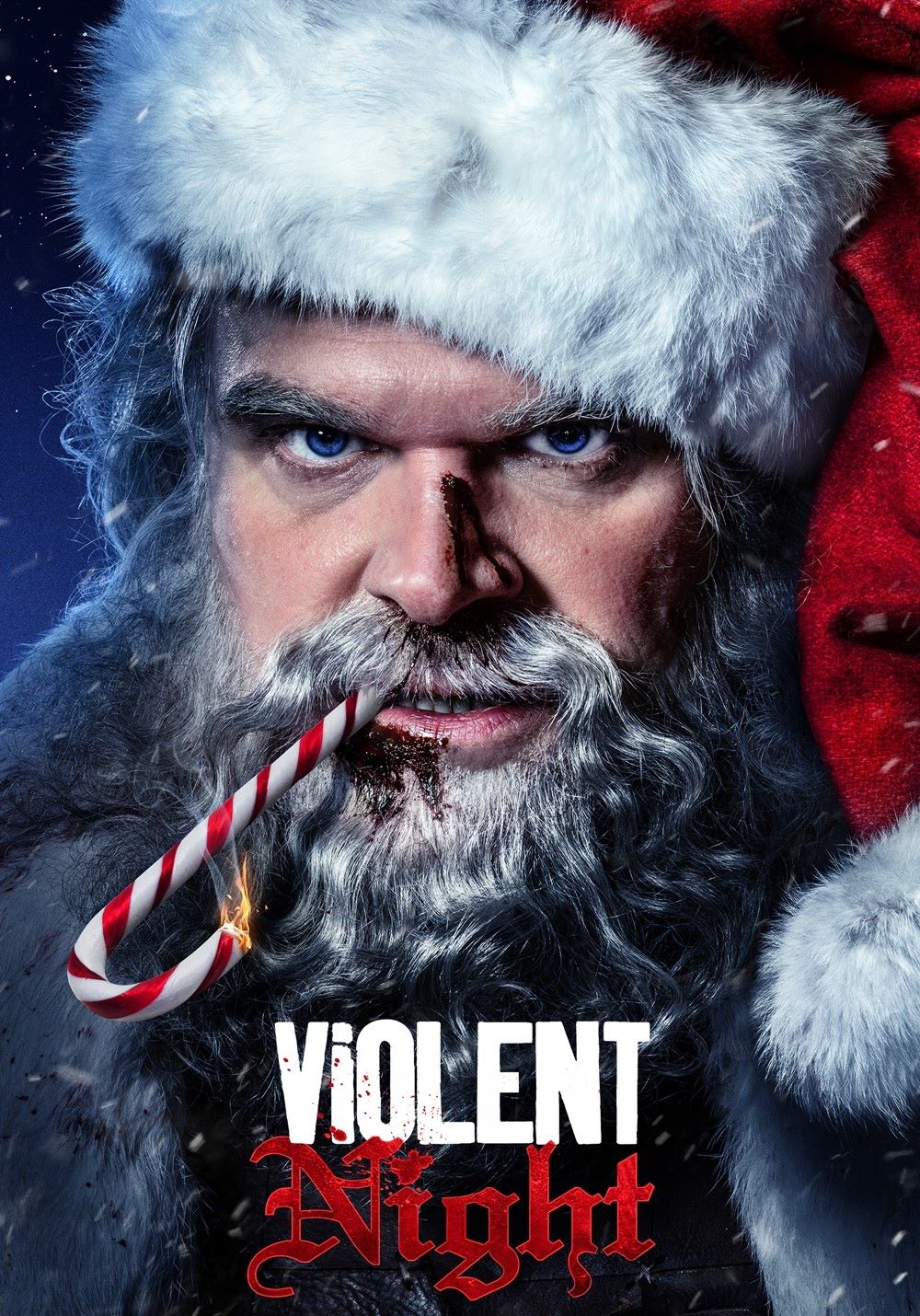
Review: Violent Night (dir. by Tommy Wirkola)


“Ho Ho holy shit.” — Santa Claus

Violent Night (2022), directed by Tommy Wirkola, is a wild ride that shakes up the traditional Christmas movie formula by turning Santa Claus into a battle-hardened warrior. David Harbour stars as this unconventional Santa, who is far from jolly; he’s a grizzled, somewhat cranky, and disillusioned figure with a Viking warrior past. The movie sets itself apart with a premise that throws a group of ruthless mercenaries into a wealthy family’s Christmas Eve gathering, only to discover Santa isn’t the harmless old man they expected. Instead, he’s a fierce protector who fights back with brutal efficiency.

The story unfolds at the mansion of the affluent Lightstone family during their holiday reunion. The family is full of tension, with secrets and resentments bubbling just beneath the surface. When a gang of mercenaries led by the villainous Scrooge (John Leguizamo) invades the house to steal a fortune rumored to be stashed there, the family members become hostages. Among them is Trudy, a young girl who still believes in Santa and becomes an emotional anchor for the story. What follows is a chaotic clash as Santa unleashes his warrior skills in a bloody and often darkly humorous fight to protect Trudy and take down the intruders.

One of the strongest aspects of Violent Night is David Harbour’s performance. His Santa is not the usual cheerful holiday icon but a rough-around-the-edges hero with a quick wit and a fierce sense of duty. Harbour brings a compelling mix of grit and warmth, making Santa both intimidating and surprisingly endearing. His fight scenes are impressively choreographed, with inventive use of Christmas-themed props that add a unique flavor to the action. The humor, often delivered through clever one-liners and absurd situations, enhances the movie without overloading it, striking a balance between dark comedy and action thriller.

The action sequences are a highlight, filled with creative and over-the-top violence that turns traditional Christmas decorations into lethal weapons. From candy canes to Christmas lights, the film embraces its outrageous concept fully, often with a smirk and knowing wink to the audience. This approach to action and humor makes it feel like a holiday-themed grindhouse film, which will certainly appeal to viewers looking for something different from typical festive fare.

However, the film is not without flaws. The storyline sometimes leans too heavily on clichés and predictable twists, particularly around family drama and criminal motives. While the Lightstone family members are meant to add complexity to the narrative, many come across as caricatures, which lessens emotional impact. The pacing occasionally suffers as well, with some scenes dragging or feeling repetitive amid the barrage of action. Furthermore, the movie’s tone can be uneven—certain moments of humor or sentimentality clash with brutal violence, which might alienate viewers who prefer more consistent storytelling.

The supporting cast delivers performances that range from serviceable to over-the-top, fitting the film’s campy and exaggerated style. John Leguizamo’s Scrooge is a memorable villain with a sneer and attitude that fits the tone, while Beverly D’Angelo adds a touch of dark humor as the wealthy matriarch. The character of Trudy serves as the emotional heart of the film, grounding the chaos with a child’s innocent belief in magic and goodness. Yet, some secondary characters feel underdeveloped, existing mostly to provide fodder for the violence or comedic moments.

Visually, Violent Night embraces the glitz and cold grandeur of a wealthy family’s mansion, contrasted sharply by the gritty and bloody action that unfolds. The cinematography and production design showcase the holiday setting effectively, using wintery landscapes and elaborate Christmas decor as backdrops that add to both the festive and lethal atmosphere. The film keeps a brisk pace, aided by energetic direction, though it sometimes prioritizes style over substance.

In terms of themes, Violent Night plays with the clash between holiday cheer and harsh realities, exploring ideas about family, belief, and redemption through its unusual take on Santa Claus. It taps into a more cynical view of Christmas but ultimately doesn’t abandon the underlying message of hope and protection. This mixture, however, occasionally feels forced, as the violent antics often overshadow character development and emotional depth.

Overall, Violent Night is an entertaining and unconventional holiday film that is best enjoyed with an appetite for absurdity and dark humor. It stands out for pushing boundaries with its brutal action scenes and a refreshingly gruff Santa, offering a festive movie experience that fits more in the niche of chaotic fun rather than heartwarming tradition. While it may not win over purists looking for classic Christmas storytelling, it offers a distinctive alternative for those who want their holiday films with a hard edge and plenty of explosive moments. For viewers who can embrace its mix of camp, carnage, and seasonal spirit, Violent Night delivers a wild, memorable ride that defies expectations.

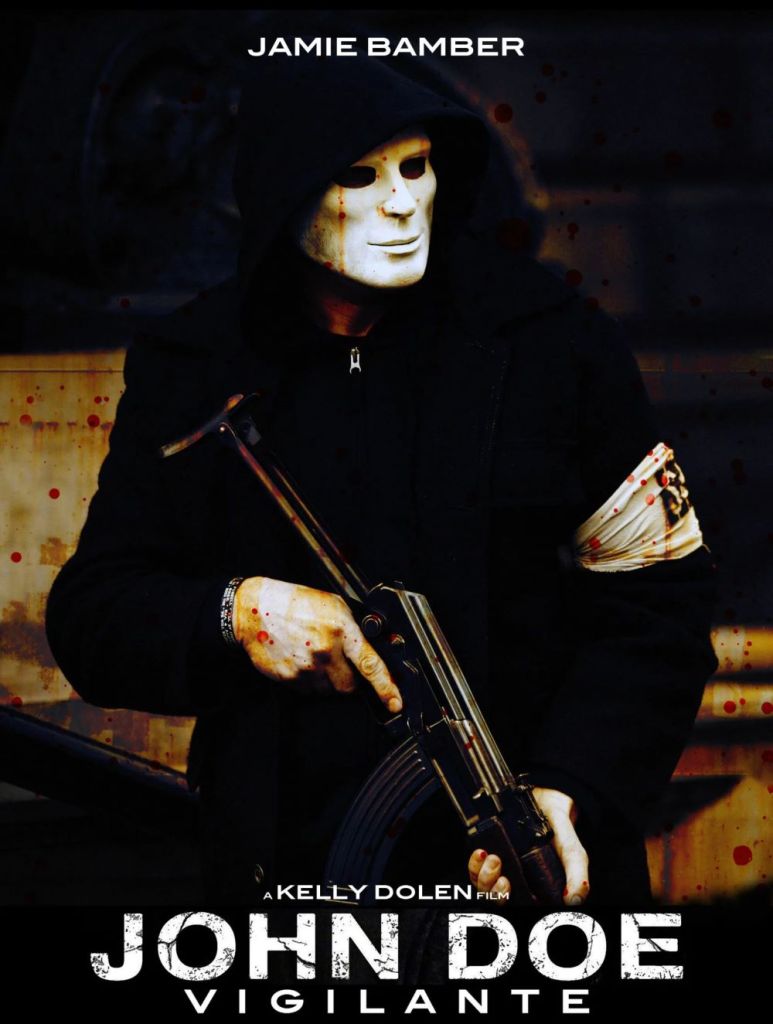
Review: John Doe: Vigilante (dir. by Kelly Dolen)


“They failed us… so what choice did I have?” — John Doe

John Doe: Vigilante, directed by Kelly Dolen and released in 2014, is a blunt and provocative take on the vigilante thriller, brimming with social commentary and visual grit. The film revolves around John Doe, played by Jamie Bamber, whose world is shattered by the violent deaths of his family members. Disillusioned by a justice system that barely delivers justice, Doe transforms himself into a vigilante, targeting repeat offenders who continually evade real consequences. The narrative takes a non-linear approach, jumping between timelines using mock interviews, courtroom debates, and TV news segments to piece together Doe’s story and the societal mania swirling around him.

The structure of the film is both one of its most engaging features and a source of occasional frustration. Rapid switches between documentary-style “talking head” interviews, real-time action, and flashbacks keep the viewer on their toes. While this can create some dramatic momentum, it also leads to a sense of disconnect, as the story sometimes trades clarity for style. Still, there’s an undeniable energy to this format. The movie feels urgent and relevant, throwing the audience directly into a conversation about law, order, and the places these systems break down.

A major focus of the film is on the media’s influence over the public’s perception of vigilantism. The mixed portrayal of John Doe as both a monster and a folk hero reflects how quickly public sentiment can tilt depending on who’s doing the telling. There’s an uncomfortable suggestion that cycles of violence and public outrage are not only connected but sometimes dependent on the news cycle to fuel them. The film hammers this point home repeatedly, sometimes at the expense of nuance. It isn’t shy about waving its message in the viewer’s face, with characters often delivering speeches about justice, victimization, and the failings of society.

Despite some heavy-handedness, Jamie Bamber’s performance is the glue holding everything together. He plays Doe with a haunted distance rather than unrestrained rage, showing a character who’s been hollowed out by tragedy and driven by a cold, relentless sense of necessity. He’s not a cartoonish avenger—his actions clearly torment him, and his moments of uncertainty make the character believably conflicted. However, the supporting cast doesn’t fare as well, with most roles feeling thin and underdeveloped. Journalists, detectives, and secondary victims drift in and out, often serving mainly as delivery devices for the film’s ceaseless thesis statements about crime and morality.

The violence in John Doe: Vigilante is unflinching and rarely sensationalized. Confrontations come fast and harsh, depicted with practical effects that drive home the ugliness of the acts themselves. This directness serves to emphasize the horror of violence, whether enacted by criminals or by Doe himself. The film’s refusal to sugarcoat these scenes will appeal to viewers who prefer realism and discomfort to stylized action, but it may push others away due to its unrelenting bleakness.

On the plus side, the movie does succeed in keeping the viewer guessing about its core question: Is Doe’s crusade righteous or an invitation to chaos? His victims are almost unfailingly depicted as monsters, which blunts some of the intended ambiguity, but the reaction from the world around him—copycat crimes, protests, media manipulation—spins the plot in more interesting directions. The broader implication is that once a society loses faith in the courts, retributive justice becomes both appealing and very, very dangerous. While the film mostly sticks to familiar genre beats, it does occasionally land a punch that lingers. Scenes showing a growing vigilante movement in response to Doe’s actions are particularly thought-provoking, inviting viewers to consider how collective anger can quickly spiral out of control.

However, the film repeatedly stumbles over its own desire to make a point. Its depiction of evil is strikingly black-and-white, and the justice system is rendered in frustratingly broad strokes. Very little time is spent on the possibility of innocent people being caught in the crossfire or of criminals ever achieving redemption. All the nuance falls to Bamber’s performance, as the rest of the characters serve mostly as echoes of his trauma or mouthpieces for the script.

Dialogue can also be a weak point. Characters often speak in loaded, over-serious refrains about crime and victimhood. If you’ve seen other media with vigilante themes, especially ones grappling with morality, John Doe: Vigilante might give you déjà vu. It isn’t particularly subtle and tends to repeat itself, particularly in the latter half, as perspective shifts and news segments rehash similar arguments. By the time the final acts come around—with a pivotal, tension-drenched scene of Doe delivering his last “message” to the public—the narrative momentum has already started to lag.

Still, the film isn’t without its bright spots. Its editing, especially the way flashbacks are woven into the present narrative, is creative and keeps certain plot elements hidden until just the right moment. There are a few bold narrative choices—one involving a child’s perspective near the end is a standout—that briefly elevate the film above its otherwise standard revenge-thriller fare. These are the moments that will stick with viewers long after credits roll.

At its core, John Doe: Vigilante is angry and bruising, with its heart firmly pinned to its sleeve. It wants to provoke discomfort and debate, not offer easy answers or escapist fun. The movie wrestles with questions of what justice really means when institutions fail, and whether violent reckoning is ever justifiable—even for the worst of the worst. It doesn’t ultimately land on a satisfying conclusion, but that may be the point.

John Doe: Vigilante stands as a solid and sometimes stirring entry in the vigilante genre, bolstered by a committed lead performance and raw intensity but hampered by heavy-handed dialogue, weak supporting characters, and a lack of moral complexity. For viewers who enjoy gritty crime films and are open to films that raise difficult, unsettling questions, John Doe: Vigilante is worth checking out. Just don’t expect it to pull its punches—or to give you any tidy resolutions.

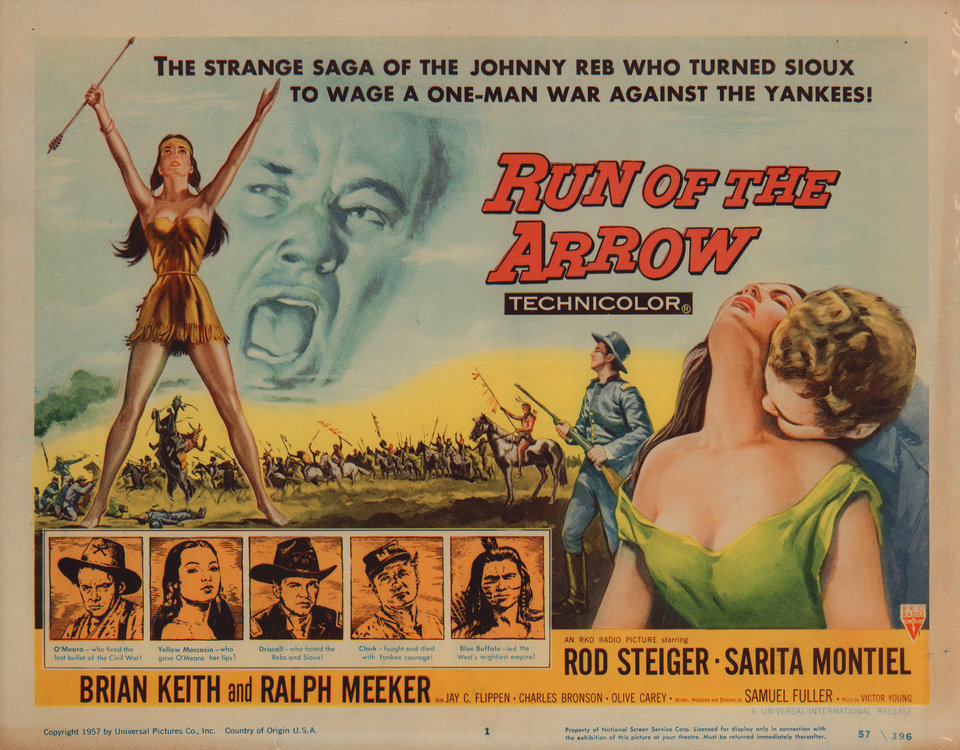
Brad reviews Samuel Fuller’s RUN OF THE ARROW (1957), starring Rod Steiger and Charles Bronson! 


RUN OF THE ARROW opens up on April 9th, 1963, with confederate sharpshooter O’Meara (Rod Steiger) shooting a Union lieutenant named Driscoll (Ralph Meeker). This turns out to be the final shot fired in the Civil War as General Lee is in the process of surrendering to General Grant. It also turns out to be Driscoll’s lucky day, as a slight warping of the bullet causes O’Meara’s aim to be off just enough for him to survive. With no more war to fight and with a heart full of hate for the Yankees, O’Meara declares himself to be a man without a country and decides to head out west towards the land of the Indians. As part of his travels he happens across Walking Coyote (Jay C. Flippen), an aging, renegade Sioux scout who’s headed back home to die. Walking Coyote takes O’Meara under his wing and teaches him the Sioux language, as well as many of their customs. When they’re captured by a band of Sioux warriors led by Crazy Wolf (H.M. Wynant), and are being prepared to be killed, Walking Coyote invokes the “run of the arrow”, a ritualistic game that could save their lives. Unfortunately, no one has ever survived the run of the arrow. But today, it seems there’s a first time for everything, as O’Meara survives just long enough to be found, hidden, and saved by the beautiful Indian squaw Yellow Moccasin (Sarita Montiel). Yellow Moccasin nurses him back to health and presents him to her tribal chief, Blue Buffalo (Charles Bronson), who spares his life since he survived the run. Blue Buffalo also welcomes O’Meara into their tribe and allows O’Meara and Yellow Moccasin, who have fallen in love, to get married and adopt the mute orphan boy, Silent Tongue, as their own son. Things seem to be going well until Sioux Leader Red Cloud (Frank DeKova) and Army General Allen (Tim McCoy) reach an agreement that allows for an Army Fort to be built in a narrowly defined area. While the construction of the fort is entrusted to an honest man of integrity named Captain Clark (Brian Keith), the agreement is ultimately sabotaged by the murderous Crazy Wolf, and then further by the Indian hating Captain Driscoll… yes, that same Union soldier that O’Meara shot on the last day of the war! When the fighting starts again, will O’Meara prove himself to truly be a Sioux warrior willing to kill American army soldiers, or is a part of his heart still with his country?

Director Samuel Fuller’s RUN OF THE ARROW is a movie about the damage that occurs when human beings allow their hearts to be so filled with bitterness and hate that they quit caring about other people. It’s also about what happens when those same people run into rational people of good will, and we find out if they’re still capable of even considering the possibility that their own hate has blinded them from the truth. In other words, it’s a film that’s possibly more relevant today than it was when it was made in 1957. Bitterness and hate is represented by the characters of O’Meara (Steiger), Crazy Wolf (Wynant), and Lieutenant Driscoll (Meeker). O’Meara hates Yankees, Crazy Wolf hates the white man, and Driscoll hates the Indians. The rational people of good will are the characters of Yellow Moccasin (Montiel), Blue Buffalo (Bronson), and Captain Clark (Keith). Yellow Moccasin saves O’Meara, when everyone else would have just let him die. Blue Buffalo engages in honest conversation with O’Meara and even welcomes him into their tribe. Captain Clark shows O’Meara an empathetic ear and kindness when so many others have told him to just get over himself. The actions and fates of the characters play out against this dynamic of hatred versus humanity, with the results underscoring just how tragic it is when people focus on the things that separate us rather than the things that unite us. It’s all so unnecessary, but it’s also a realistic vision of the world we live in. The film also struck me as particularly violent for a 50’s western, which also underscores that reality.

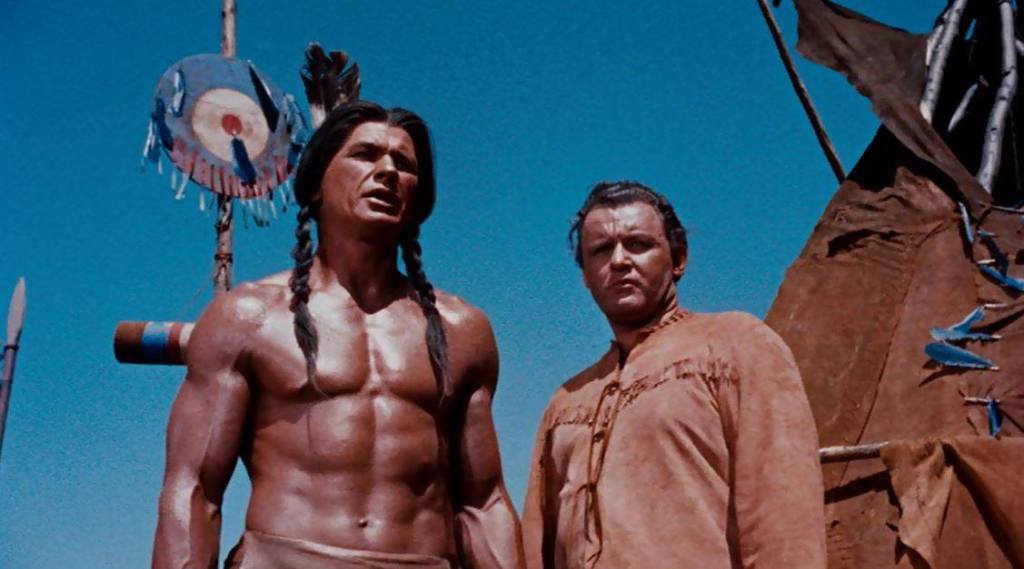
Some of the performances are very effective in the film. Rod Steiger’s Irish, confederate Sioux is an interesting character and the actor gives it his all as you’d expect. I’m a big fan of Steiger and his performance here only solidifies my respect for him. Brian Keith’s Captain Clark arrives fairly late in the proceedings and comes across as a tough, but honest man of integrity at a point when the movie really needs him. He has an excellent scene with Steiger where he debates the old confederate’s reasons for renouncing his citizenship with both sound logic, empathy, kindness and a hint of likable sarcasm all at the same time. It’s one of the best scenes in the film. And likewise, Charles Bronson, the most buff Hollywood Indian to ever strip down to a loincloth, comes across as a reasonable and kind tribal chief in his dealings. Bronson had played Indians before, but he was usually more of the renegade, warpath variety, so it was nice seeing him as a good guy here. H.M. Wynant took the renegade Indian role here which you might have expected for Bronson at the time. He’s suitably fierce but one-dimensional. The same can be said for Ralph Meeker as Lieutenant Driscoll. He’s pretty much just a stereotypical jerk. He’s good at being a jerk though! And Sarita Montiel, voiced by Angie Dickinson, is quite the beauty as Yellow Moccasin. We discussed H.M. Wynant and RUN OF THE ARROW with author Steven Peros on the “This Week in Charles Bronson Podcast.” Check out that interview below:

I’ve recently heard RUN OF THE ARROW compared to Kevin Costner’s DANCES WITH WOLVES, and there are definitely many similarities. I won’t go into all of those here, but one of the things I appreciated the most about RUN OF THE ARROW is the fact that the movie makes its feelings known about politics. In a movie filled with characters who have had their lives upended by the various decisions of political leaders, director Samuel Fuller has crafted a story that focuses most sharply on defining the quality of men based on what’s in their “hearts.” When it’s all said and done, oftentimes the only control we have is the way we respond to the events in our lives, and that’s not politics, it’s personal. To drive this home, in one of their conversations, Walking Coyote tells O’Meara that he could have been a chief if he had wanted to be. When O’Meara pushes the old scout on why he didn’t want the position, Walking Coyote responds with, “Because I hate politics!” On that point, I couldn’t agree more. 

Brad’s “late night” movie review: THE NAKED CAGE (1986), starring Shari Shattuck and Angel Tompkins!


It’s a hard knock life for Michelle (Shari Shattuck). One moment she’s a hardworking teller at the local bank who loves her horse, Misty. The next moment she’s sentenced to three years in the women’s penitentiary for a crime she didn’t commit. And life is damn tough in prison. There’s the prison warden Diane (Angel Tompkins) who, when she’s not participating in lesbian dalliances with inmates, is offering Michelle protection, but only if she agrees to act as a spy for her. When Michelle says no, Diane sets her up to be brutalized by the sadistic Rita (Christina Whitaker), the bitch who’s responsible for her being in the pen in the first place! Now having to dodge the threat of rape from prison guard Smiley (Nick Benedict), as well as the constant threat of shiv-induced death at the hands of Rita, it seems Michelle may have finally received a lifeline with the arrival of a new prison guard named Rhonda (Lucinda Crosby). Rhonda seems to show some extra interest and empathy in Michelle’s plight, and she just may be in a position to help her with the wrongful conviction. That is, if Michelle can survive one more night in THE NAKED CAGE!! 

Recently, I’ve been trying to watch movies I’ve never seen before that star actors or actresses who worked with Charles Bronson. Tonight, I decided to look for a film starring Angel Tompkins, a Facebook friend, who worked with Bronson in the 1986 cop film from Cannon Films called MURPHY’S LAW. In that film she plays Jack Murphy’s ill-fated ex-wife, where she gives an uninhibited and committed performance in what would have been a throwaway role for many actresses. Not Angel… she took the role very seriously and is actually quite memorable in her couple of scenes. Paul Talbot’s book BRONSON’S LOOSE AGAIN has a chapter on the film, and he was able to interview Tompkins who told of just how much effort went into to her preparation. I recommend the book to anyone interested in Bronson or those numerous actors and actresses who worked with him in the 70’s, 80’s, and 90’s. Filmed the same year as MURPHY’S LAW, I thought it might be fun to see how committed she is in the role of the corrupt warden in Cannon’s THE NAKED CAGE. 

I’ll admit that I am not an expert on the “women in prison” genre of film. I did go through my Pam Grier phase that started with movies like COFFY (1972) and FOXY BROWN (1974), but did extend as deep as the Jack Hill “women in cages” films THE BIG DOLL HOUSE (1971) and THE BIG BIRD CAGE (1972). But those movies had Pam Grier in the cast which provided a couple of ample reasons for me to watch. THE NAKED CAGE does have some interesting things going for it. Like most of Charles Bronson’s 1980’s output, the movie was produced by Cannon Films, the international symbol of quality moviemaking from the 1980’s. And then there’s Angel Tompkins herself. She’s quite the sexy lady, having appeared in films like PRIME CUT (1972) and THE TEACHER (1974). Cannon Films and Angel Tompkins drew me in, but what about the film itself? Is it worth a watch? 

I’ll go ahead and say that for me, THE NAKED CAGE was worth the watch. This kind of movie only works for me if I like the cast. Shari Shattuck is appealing in the lead role of Michelle, a good woman, who’s wrongly convicted, but who soon finds levels of toughness she never knew she had in order to survive. I remember Shattuck starring in films like POINT OF SEDUCTION: BODY CHEMISTRY 3 (1994) with Andrew Stevens. My wife and I also watched the entire DALLAS TV series a few years ago where Shari had an extended role in season 13. She starts out here as a sweet and innocent lady, and by the end she’s wielding guns and knives like a lifelong delinquent, and I liked it! Angel Tompkins does not disappoint as the corrupt warden who seduces the inmates in order to meet her own sexual needs, as well as manipulating them into playing her larger games of control over the rest of the prison. Overall, she plays the role pretty straight, but is once again quite uninhibited when it comes to the more mature content. To me though, the most enjoyable performance comes from Christina Whitaker as the psychotic Rita. Not content with just ruining Michelle’s life, she’s determined to murder her behind the prison walls as well. From the beginning of the film where the fugitive Rita had Michelle’s estranged husband snorting cocaine off her boobs, all the way to the final frames, Whitaker chews every piece of scenery that comes into view. She’s the character I’ll remember whenever I think of THE NAKED CAGE. 

There are some things I didn’t like very much about the film. Prison guard Smiley’s sadistic rapist isn’t fun at all to watch, but his character’s fate is well deserved and somewhat satisfying when it finally occurs. Also, I didn’t care for the manipulation of the character of the drug addict Amy, played by Stacey Shaffer. She had worked very hard to beat her addiction, and in a world where many of us know people who have been lost to addiction, it’s not easy to watch her tragic fall. 

Overall, if you enjoy “women in prison” films, I think you’ll probably like this one. It’s certainly not perfect, but being a fan of Cannon Films and Angel Tompkins, I thought it was an enjoyable way to spend a Friday night while I was waiting for my wife to get home from work! 

Review: Kraven the Hunter (dir. by J. C. Chandor)


Kraven is Sony’s latest attempt to mine its Spider-Man-adjacent characters for cinematic gold, this time taking a stab at Sergei Kravinoff, better known as Kraven the Hunter. Even if you’re going in with rock-bottom expectations set by Morbius or the patchy Venom films, you might find yourself torn between mild intrigue and full-on indifference. The movie doesn’t bomb, but it certainly doesn’t soar either—it lands squarely in the “it’s fine, I guess” territory, buoyed by a handful of positive elements but weighed down by a laundry list of issues.

The film tries to position itself as a darker, grittier entry in Sony’s Spider-Man Universe but ultimately falls flat in several key areas. The movie follows Sergei Kravinoff (Aaron Taylor-Johnson), a man battling his toxic past and violent instincts, trying to define himself apart from his ruthless father, Nikolai (Russell Crowe). While Taylor-Johnson puts in a committed, physical performance and the action sequences deliver some visceral excitement—with brutal fight scenes and a snowy prison breakout standing out—the film struggles to transcend its predictable, shallow narrative.

One of the strongest aspects of Kraven is its commitment to visceral, intense action. The movie doesn’t shy away from bloody, fierce fights, embracing Kraven’s nature as a hunter rather than a hero. Physicality is a highlight here with Taylor-Johnson convincingly portraying the character’s power and agility. Some of the choreography—such as a snow-covered prison escape and a jungle chase—inject adrenaline into the movie, complemented by Russell Crowe’s imposing presence as the domineering father. Ariana DeBose’s Calypso and Alessandro Nivola’s Rhino provide interesting, if underdeveloped, counterparts that add flavor to the otherwise monochrome supporting cast.

However, the film is weighed down by a paint-by-numbers storyline that treads the well-worn path of antihero origin stories without adding fresh insight or emotional texture. The plot feels cliched and forgettable, with many moments so awkward and stilted that the dialogue and narrative flow could easily be accused of being AI-generated—and that accusation wouldn’t be out of place. This mechanical, artificial quality in the script creates a disconnect that makes characters seem like hollow archetypes rather than fully realized people. It’s as if the story was stitched together by a formula rather than human creativity, robbing the film of natural humor, depth, or emotional impact.

The biggest glaring example of this artificiality comes in the odd use of CGI for some of the characters’ facial movements. In particular, a scene with DeBose’s Calypso involved digital manipulation of her mouth and eyes to sync dialogue after filming, creating an uncanny, often distracting effect. This technique, reminiscent of the awkward, jarring movement of digitally animated mouths on still images, recalls the uncomfortable “Annoying Orange” vibe and highlights a troubling overreliance on technology rather than retakes or better production planning. It is a standout low point that further reinforces the impression of a rushed or overly engineered project.

The emotional core of Kraven revolves around the toxic father-son dynamic, which Crowe and Taylor-Johnson approach with convincing intensity, though the writing undermines their efforts with repetitive, obvious lines. The other characters, including Calypso, Rhino, and the Foreigner, suffer from limited screen time and one-dimensional arcs, often serving only to advance the plot mechanically rather than enrich the story. The film’s isolation from the broader Spider-Man universe also makes the stakes feel lower, leaving Kraven’s violent vendetta somewhat directionless and detached from broader consequences.

Visually, the film is inconsistent. While it nails gritty, physical action sequences, the CGI and digital alterations break immersion. The attempt at a darker, more grounded tone battles against these technical missteps and a narrative stuck in early-2000s superhero tropes.

Kraven offers some genuinely brutal action and committed performances but is hamstrung by a formulaic, AI-esque script and distracting technical glitches like the digital mouth-sync. It feels like a film caught between creative ambition and lazy execution, where flashes of potential are overwhelmed by awkward dialogue and uninspired plotting. For fans craving raw action or eager to see a Spider-Man villain on screen, it may be a mildly watchable diversion; for anyone seeking a fully fleshed-out, emotionally engaging story, Kraven is likely to disappoint.

Review: Icefall (dir. by Stefan Ruzowitsky)


“You don’t find redemption in warmth. You fight for it in the cold.” — Ani

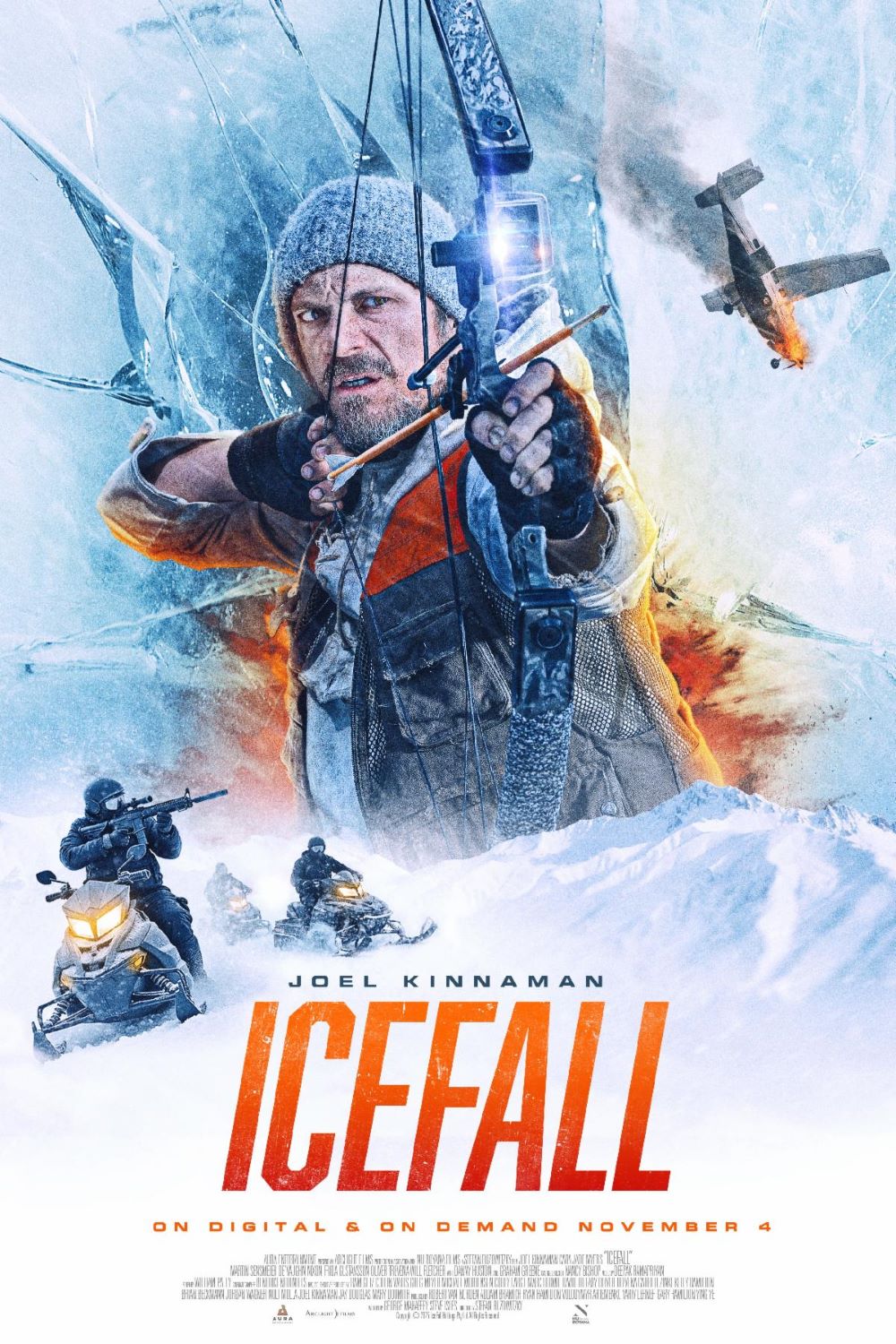
Icefall (2025) is a survival thriller set deep in a frozen wilderness where Ani, a determined Indigenous game warden, and Harlan, a grizzled poacher, find themselves forced together to evade criminals hunting down a crashed plane’s cash stash. Their uneasy alliance forms the heart of the movie, supported by the biting cold, shifting ice, and relentless danger that keeps the tension alive throughout.

The film benefits significantly from its leads’ performances, especially Joel Kinnaman’s portrayal of Harlan. Kinnaman has become something of a seasoned veteran in this kind of gritty thriller and action role, having built a career playing characters who balance toughness with a hint of vulnerability. His familiarity with this genre brings a dependable authenticity to Harlan, who feels weathered but not worn out, someone who understands survival instinctively. Alongside Cara Jade Myers’ portrayal of Ani, their on-screen chemistry roots the film in more than just action beats, making their relationship genuinely engaging amid the harsh landscape.

Speaking of the environment, Icefall uses its setting as more than just a backdrop. The fragile ice and near-empty wilderness create natural obstacles that heighten the sense of peril, reinforcing the story’s theme that nature itself is an adversary. The melting ice becomes a constant threat, lending the narrative a slow-burning pressure that’s as effective as any chase or gunfight. This atmospheric tension is one area where the film really earns its keep, immersing viewers in the dangerous beauty of its frozen world.

However, Icefall stumbles when it comes to story originality and pacing. The film’s premise feels familiar—dangling on the edge of a formula that fans might recognize as similar to the 1993 Sylvester Stallone thriller Cliffhanger. While Cliffhanger had that film’s villain as a magnetic and complex antagonist, Icefall misses that mark. Its criminals lack charisma and depth, removing a vital layer of excitement and tension from the story. Without a compelling foil for Harlan and Ani, many confrontations fall flat, and the thriller’s pulse falters.

The plot is further weakened by a somewhat cluttered narrative, introducing a secret government biohazard subplot that feels shoehorned in and detracts from the simpler core survival story. Characters occasionally make choices that seem more dictated by the demands of the script rather than believable motivations. These factors lead to inconsistent pacing, which can frustrate viewers looking for a tight, focused thriller.

Visually, the film offers moments of stark beauty but is uneven technically. Some sequences perfectly capture the isolating chill and danger of the icy wild, while others suffer from abrupt editing and less convincing digital embellishments that distract from the intended immersion. The cinematography shifts between grand vistas and awkward close-ups, occasionally disrupting the flow of tension.

Characterization is uneven as well. Ani shines intermittently but sometimes veers into typical thriller protagonist territory, exhibiting moments of indecision or cliché. Kinnaman’s Harlan remains the more grounded and believable figure, benefiting from his extensive experience playing similar roles. Meanwhile, the villains fail to rise above stereotype, lacking the nuance or menace that could have made the story pulse with higher stakes.

Still, when the film settles into the rhythm of survival—the crunch of snow underfoot, the slow erosion of trust, the ever-present threat of dissolving ice—Icefall delivers a tense, atmospheric experience. It’s not a revelatory thriller, but it does offer enough grit and moodiness for a single viewing, especially for fans of cold-climate survival dramas.

Icefall is a mixed bag: it has strong performances, especially from Joel Kinnaman, who clearly knows the ropes of this genre and plays an experienced, weathered survivor with ease. The film’s use of environment is a big plus, giving it an edge that many thrillers lack. Yet it suffers from an unoriginal plot that recalls better films like Cliffhanger but without their charismatic antagonists, plus narrative distractions and technical inconsistencies. It’s an okay watch for those in the mood for a frosty thriller with solid leads but never quite rises to leave a lasting impression.

The Hong Kong Film Corner – What are in those DUMPLINGS (2004)?


DUMPLINGS (2004) centers on Mrs. Li (Miriam Yeung), a former actress now in her forties, who’s struggling with getting older and no longer being attractive to her husband, Mr. Li (Tony Leung Ka-Fai). It seems he’s more interested in his beautiful young masseuse than he is in her, which leads Mrs. Li to seek out Aunt Mei (Bai Ling), an ex-gynecologist from mainland China who has a reputation in the underground for her expensive “miracle” dumplings that promise a fountain of youth. Initially appalled by Aunt Mei’s not-so-secret ingredients, once she starts looking better, Mrs. Li begins to not only accept the recipe, but she also starts to relish it. Soon she’s making passionate love to her husband and finding herself the envy of her friends again. But what is that fishy smell and why is she so itchy all of a sudden? And does it even matter if she feels young and beautiful again?!! Expanded into a feature length movie from a segment of the 2004 anthology film, THREE…EXTREMES (2004), DUMPLINGS ponders just how far we’re willing to go to defy the aging process. 

I recently reviewed the category III Hong Kong film THE UNTOLD STORY, one of the most graphically violent films I could possibly imagine. Today, I’m discussing the category III film DUMPLINGS. While receiving the same rating, these movies couldn’t be more different. While THE UNTOLD STORY presents murderous violence in horrific detail, DUMPLINGS makes us imagine what it’s like to be so vain that unspeakable and immoral acts against others are meaningless as long as we feel good about the way we look. Even though the film gives away the “secret” of the dumplings somewhere in the first twenty minutes, I’m not going to give it away here. Just know that it’s repulsive, and the gleeful manner with which Aunt Mei goes about her work is every bit as sick to me as serial killer Wong in THE UNTOLD STORY. At the end of the day, each of us must ask what we’re willing to do to feel good about ourselves. In DUMPLINGS, it appears that the characters will do anything it takes! 

This is the first time I’ve ever watched a film directed by Fruit Chan, whose MADE IN HONG KONG (1997) swept all the major Hong Kong Film awards a number of years before this film came out. Blending culinary horror with human self-obsession, his DUMPLINGS is a patient film, willing to let his gruesome story seep into our bones without relying on a lot of graphic shock value. Chan doesn’t flinch from showing the extreme subject matter a number of times, but he still crafts an almost elegant film that deals with real world human emotions, albeit extremely selfish and morally bankrupt ones. He also gets really strong performances from the cast. Bai Ling’s casually demented and sexualized turn as the eternally young Aunt Mei is the showpiece of the film, with her cleavage practically in a supporting role all to themselves. Her performance was strong enough to earn her the Hong Kong Film Award for Best Supporting Actress for this movie. Miriam Yeung, who was best known at the time for her fluffy romantic comedies like LOVE UNDERCOVER (2002) and THREE OF A KIND (2004), is solid as the lady whose desire for beautiful, tight skin allows her to willingly abandon basic human dignity, transforming into a remorseless monster just below the surface of that skin. And finally, Tony Leung Ka-Fai, as the philandering husband who thinks with his male anatomy more than he does with his heart, is suitably effective in the way he makes us wish Mrs. Li would have just accepted the aging process and left his sorry ass from the very beginning. 

Overall, DUMPLINGS is a slow burn that will reward patient and attentive viewers with a tale of madness that touches on real world petty concerns while using extremely sick and twisted subject matter. As viewers, our discomfort with both that subject matter and the unchecked evolution of the characters seem to almost be the point. I don’t know how much you’ll truly enjoy the film, but I can’t imagine it not provoking a reaction.

Review: Glass Onion: A Knives Out Mystery (dir. by Rian Johnson)


“Everyone loves a puzzle until it’s time to solve it.” — Benoit Blanc

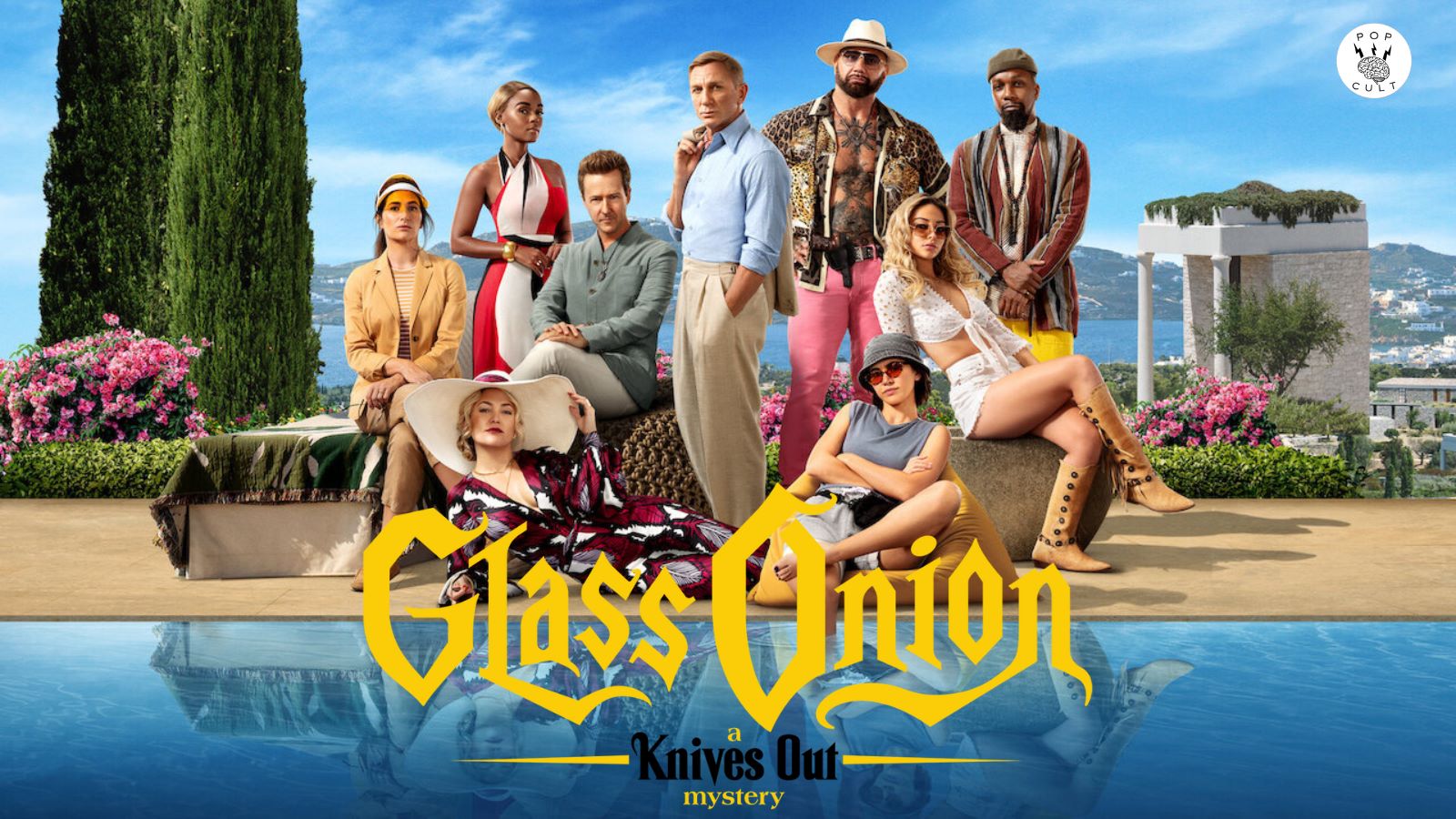
Glass Onion: A Knives Out Mystery is a follow-up to the original Knives Out film, starring Daniel Craig as the ingenious detective Benoit Blanc. It builds on the premise of a murder mystery but wraps it inside a colorful, satirical commentary on wealth, influence, and the human condition. Set on the private island of a tech billionaire named Miles Bron, the story assembles a quirky cast of characters, all entangled in complicated relationships that unravel layer by layer. The casual tone of the movie masks a sharp, incisive look at the absurdities of the ultra-rich and the moral compromises they often make.

From the outset, Glass Onion shines with its clever blending of classic whodunit tropes and contemporary social critique. The gathering on the island is ostensibly for a murder mystery party, but the tension quickly escalates when the lines between game and reality blur. As detective Benoit Blanc begins to peel back the layers, it becomes clear that the story is much more than just a puzzle; it’s a reflection on fame, fortune, intellectual theft, and the lengths people will go to protect their reputations and secrets. The mystery itself is engrossing, delivering plenty of twists and turns that keep viewers guessing without feeling predictable.

The characters are vividly drawn, each embodying a certain archetype of privilege and excess, yet crafted with enough depth to avoid caricature. Miles Bron, in particular, captures the archetypal tech mogul—brash, arrogant, and unapologetically wealthy—but his flaws and vulnerabilities make him an intriguing focal point. His colorful group of friends each contribute their quirks and motives, creating a dynamic interplay that enriches the plot. Through their interactions, the film deftly explores themes of betrayal, sycophantic behavior, and the moral decay that can accompany unchecked power.

Edward Norton’s portrayal of Miles Bron has often been linked to Elon Musk, mostly because Bron’s flamboyant personality and billionaire tech mogul status seem reminiscent of Musk. However, director Rian Johnson and Norton himself have been clear that the character is not based specifically on Musk. Instead, Miles embodies the broader archetype of “tech bros”: exceedingly wealthy, extremely arrogant, and more than a bit sociopathic. Norton’s portrayal blends charm, obliviousness, and bravado, embodying this tech mogul stereotype more than mimicking any particular real-life figure. This approach allows the film to critique the broader billionaire culture, using Miles as a symbol of its excesses and absurdities, rather than targeting one individual.

A distinctive feature of Glass Onion is how it incorporates the reality of its production during the height of the COVID-19 lockdown. Set in May 2020, during global lockdowns, the film naturally weaves in social distancing and mask-wearing as part of its narrative fabric. This not only adds an element of authenticity but also becomes a device to reveal character traits—whether sincere compliance or performative adherence. The pandemic protocols also shaped production logistics, reducing extras and focusing tightly on the main cast, creating an intimate but tense atmosphere. By anchoring the isolation of its characters in a real-world health crisis, the film echoes classic mystery confinements while feeling relevant and immediate.

Emotional stakes in Glass Onion are amplified through Helen, who arrives on a personal mission to uncover the truth behind her sister’s death. Unlike many self-interested guests on the island, Helen represents a disruptive force challenging the privileged elite. Her story adds urgency and depth, highlighting themes of justice, accountability, and silence’s costs. This subplot weaves seamlessly into the larger narrative, enriching the mystery’s resolution with meaningful emotional weight.

Visually, the film dazzles with opulent settings and a vibrant color palette that amplify the sense of excess and detachment characterizing the guests’ lives. The private island itself almost becomes a character—a lush, insular playground where drama explodes amid luxury. Production design and cinematography balance whimsy with darker undertones, while costumes and set details root satire in an authentic world.

Craig returns as Benoit Blanc with a mix of charm, wit, and gravitas, anchoring the film amidst eccentric chaos. Blanc’s character delights as a master detective who enjoys intellectual puzzles but wrestles with moral questions. Meanwhile, the supporting cast gives nuanced performances that capture their characters’ complexities and motivations.

Narratively, Glass Onion triumphs by delivering an engaging mystery while embedding incisive social commentary on inequality and hypocrisy. The film compellingly probes how wealth and influence can obscure truth and the costs endured by those who confront power. The sharp, often humorous writing makes it both entertaining and thought-provoking.

Whether viewed casually or analyzed deeply, Glass Onion offers much to enjoy. Plot twists, sharp dialogues, visual style, and strong performances combine for an engrossing experience. At its core, the story emphasizes how the pursuit of personal gain can harm others, and reckoning with uncomfortable truths demands courage and sacrifice.

Ultimately, Glass Onion is a skillfully crafted, entertaining mystery that surpasses typical genre fare. It balances suspense, humor, and social critique naturally and compellingly. Cementing Rian Johnson’s success in the Knives Out franchise, it reclaims his reputation after the contentious backlash to The Last Jedi. While fan expectations proved insurmountable in that galaxy far, far away, Glass Onion confirms Johnson as a brilliant filmmaker capable of crafting sharp, layered stories. The film invites audiences to not only solve a crime but also reflect on integrity, power, and humanity’s search for justice and meaning. Its impact lingers long after the credits roll.

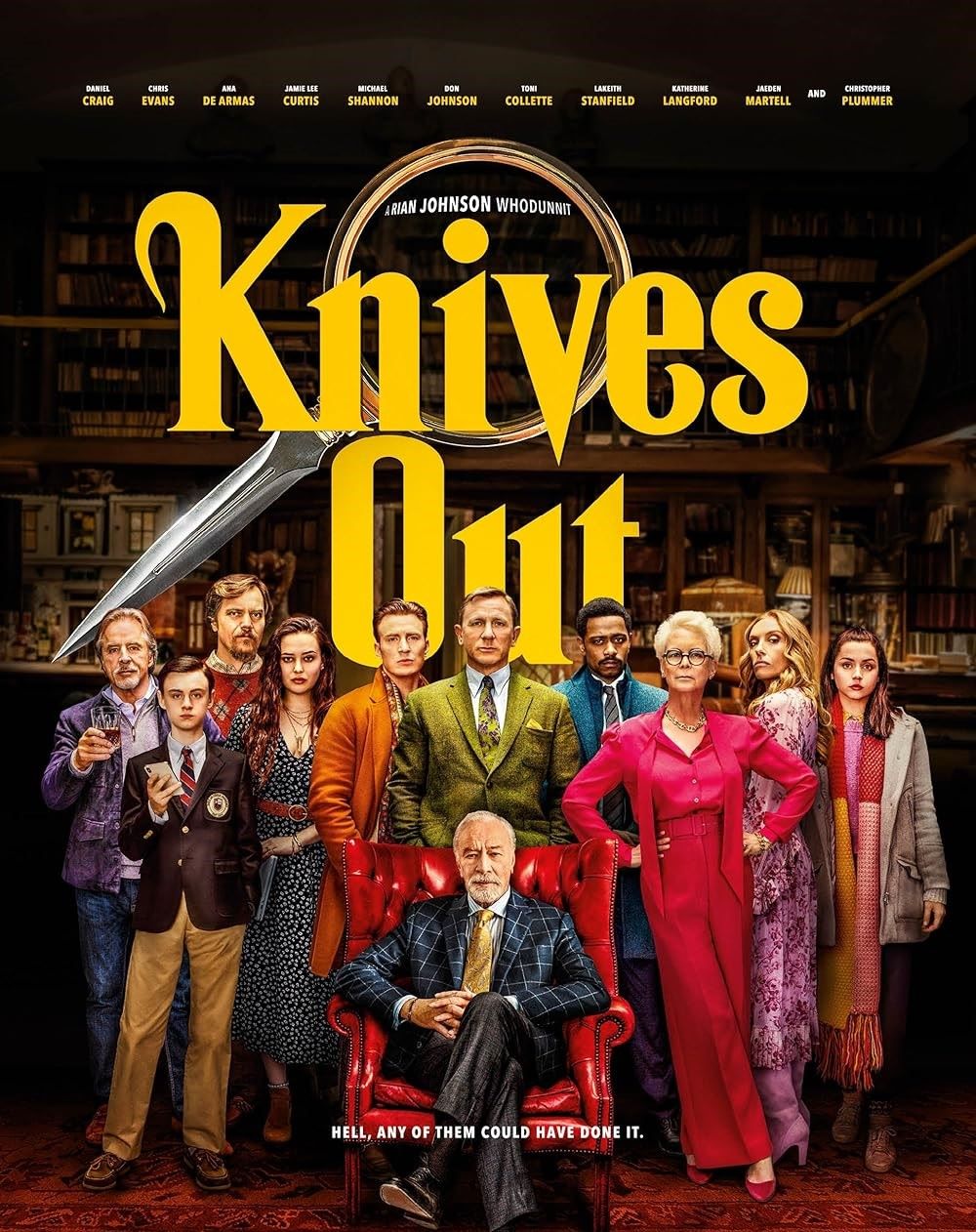
Review: Knives Out (dir. by Rian Johnson)


“The family is truly desperate. And when people get desperate, the knives come out.” — Benoit Blanc

After shaking up galaxies far, far away with Star Wars: The Last Jedi, Rian Johnson returned to solid ground in 2019 with Knives Out, a film so self-assured and inventive it practically felt like a director catching his breath while reminding the world what made him exciting in the first place. It was his first movie after that polarizing Star Wars entry, and he used the opportunity not to go bigger, but smarter—to take something intimate, character-driven, and refreshingly old-school and make it gleam again. Knives Out landed as a kind of palate cleanser for both him and the audience: a modern mystery that leaned into genre nostalgia while reinventing it with sharp humor and social bite. The result wasn’t just a change of pace—it was a confident display of craft from a filmmaker unbothered by his critics, operating with absolute control over every frame, every line, and every perfectly timed smirk.

The setup couldn’t be more classic: a wealthy family patriarch, Harlan Thrombey, turns up dead after his 85th birthday, leaving behind a tangled household of suspects, secrets, and strained smiles. His death looks like suicide, but something isn’t right. Enter Benoit Blanc, a Southern gentleman detective hired anonymously to snoop through the wreckage of lies and grievances. The scenario drips with vintage whodunit flavor, but Johnson’s genius lies in retooling that familiarity into something electrifyingly modern. The Thrombeys aren’t just eccentric millionaires—they’re avatars of American entitlement, each convinced of their own superiority while quietly dependent on the man they pretend to revere. By building his mystery around a clan that mirrors contemporary divisions of money, politics, and self-deception, Johnson injects wit and purpose into the genre without ever losing the fun of the game.

Jamie Lee Curtis plays the confident matriarch Linda, Michael Shannon the resentful son Walt, Toni Collette the spiritual grifter Joni, and Don Johnson the smirking son-in-law Richard—all of them playing heightened but recognizable shades of selfishness. Their sniping exchanges during the first act are among the film’s best sequences, packed with fast banter, political jabs, and casual hypocrisy. Johnson directs these moments like a verbal tennis match, letting personalities bounce and clash until the family’s shiny façade cracks enough for true frustrations to spill out. It’s sharp, funny, and chaotic, showing early on that no one in the Thrombey family is as self-made or self-aware as they claim to be.

Amid that colorful ensemble, the performance that most stunned audiences came from Chris Evans as Ransom Drysdale, Harlan’s playboy grandson and the family’s unapologetic black sheep. Coming off years of playing Marvel’s resolutely noble Steve Rogers, Evans dives into Ransom with visible glee, turning him into a figure of charm and mystery whose motives are never quite clear. He’s magnetic from the moment he appears—witty, cynical, a little dangerous—and Johnson clearly relishes using Evans’s clean-cut image to toy with expectations. Ransom strides into the story radiating confidence, but there’s a guarded, almost predatory intelligence behind his grin. His scenes crackle because the audience can’t quite decide where to place him: is he the rare Thrombey who sees through the family hypocrisy, or is he spinning his own kind of manipulation? That tension between self-awareness and deceit gives his every line an edge. Watching Evans in this role feels like a release for him and a thrill for viewers, a testament to both his range and Johnson’s intuitive casting.

Opposite that moral uncertainty stands Ana de Armas’s Marta Cabrera, Harlan’s kind and soft-spoken nurse who suddenly finds herself at the heart of the story. Marta grounds the entire film emotionally, her decency cutting through the Thrombeys’ arrogance like sunlight in a dusty room. She’s the migrant caretaker who everyone claims to love while casually condescending to, a detail Johnson uses to expose how often politeness masks prejudice. Marta’s inability to lie without vomiting, played initially for laughs, gradually becomes symbolic—a kind of moral honesty that makes her unique in a house ruled by deception. De Armas brings layered vulnerability to the role, balancing fear, guilt, and compassion with natural ease. Through her, Johnson turns the whodunit into something more human and emotionally resonant. She isn’t just a witness or a suspect; she’s the beating heart around which all the greed, paranoia, and privilege revolve.

Then there’s Daniel Craig’s Benoit Blanc, whose arrival shifts the film into another gear entirely. His Southern drawl—equal parts poetic and perplexing—sets the tone for what becomes one of Craig’s most playful performances. After years of portraying the stoic James Bond, he’s clearly having the time of his life as a detective who investigates with both intellect and intuition. Blanc operates less like a hard-nosed cop and more like a philosopher; he believes that solving a crime means understanding human weakness as much as evidence. His famous “donut hole” speech perfectly captures the balance Johnson strikes between earnestness and absurdity. Blanc may revel in his own melodrama, but he also brings heart to chaos, observing people’s contradictions without losing his sense of wonder. The result is a detective who’s less about revelation and more about revelation’s moral cost.

Visually, Knives Out belongs to a rare category of films that are so meticulously crafted they could be paused at any frame and still look compelling. Johnson and cinematographer Steve Yedlin transform Harlan’s mansion into a breathing character—an architectural echo chamber of secrets. The walls are lined with strange trinkets, elaborate paintings, and heavy mahogany furniture that suggest old money’s suffocating weight. There’s something both cozy and claustrophobic about the space, which mirrors the tension between family warmth and poisonous resentment. The camera glides through it with purpose, lingering on small details that gain meaning later, and the autumn-colored palette—deep reds, browns, and golds—wraps everything in an inviting melancholy. It’s as much a visual experience as it is a narrative one, and few modern mysteries feel as tactile.

Johnson’s writing keeps that sense of precision. The plot unfolds like clockwork, but the mechanics never feel mechanical. Instead, he keeps viewers off-balance by blending humor with genuine suspense. Instead of relying entirely on high-stakes twists, Johnson builds tension through empathy, giving us access to characters’ doubts and stakes rather than just their clues. The result is a mystery that keeps the audience guessing in emotional and moral dimensions, not just logical ones. Every revelation says as much about character as it does about the crime.

Underneath the quick humor and ornate mystery structure, Knives Out doubles as a satire of class and entitlement. Johnson sketches the Thrombeys as people who talk endlessly about fairness, morality, and self-reliance yet collapse into panic when their material comfort is threatened. Through them, he captures a peculiar American irony: the people most obsessed with earning their status are often those most insulated from real struggle. When the family gathers to argue over wealth and loyalty, Johnson doesn’t need to exaggerate—they expose themselves with every smug phrase and self-justified rant. It’s social commentary that’s biting but never heavy-handed because it plays out through personality instead of sermon.

Nathan Johnson’s score carries the story forward with playful precision, shifting from tension to whimsy in sync with the characters’ shifting loyalties. There’s something almost dance-like about the film’s rhythm: scenes of laughter can spiral into confession, and interrogations can dissolve into comedy without losing a beat. The editing supports that agility, cutting crisply between overlapping dialogue and close-ups that reveal just enough expression to keep us alert. Johnson’s sense of pacing feels theatrical in the best way—it’s about timing and tone rather than spectacle.

As with many of Rian Johnson’s works, contradiction fuels the story’s appeal. Knives Out is cynical about human greed but oddly hopeful about individual decency. It mocks arrogance but rewards empathy. Even when it toys with genre clichés, it does so out of affection, not scorn. Johnson clearly understands that mystery storytelling is as much about character and morality as deduction, and he uses humor and chaos as tools to explore who people become under pressure. The movie’s sophistication lies in how effortless it feels—its layers unfold smoothly, but the craft behind them is razor sharp.

The film’s ending closes with a visual that redefines power without needing words. After a story filled with deceit, pretension, and the scramble to control a legacy, it concludes on an image that says everything about perspective—who actually holds the moral high ground and how quietly dignity can win. Like the rest of the movie, it’s both playful and pointed, leaving you smiling while still turning the characters’ behavior over in your mind.

Looking back, Knives Out stands as a defining moment in Rian Johnson’s career. After the spectacle and dialogue storms of The Last Jedi, this lean, ensemble-driven mystery reaffirmed his strengths as a writer-director who thrives on structure, rhythm, and human contradictions. It’s a film that takes as much pleasure in observation as revelation, brimming with sly humor and performances that sparkle across the moral spectrum. Anchored by Ana de Armas’s poignant sincerity, Daniel Craig’s eccentric brilliance, and Chris Evans’s unpredictable charisma, it became one of the most purely enjoyable movies of its time. Witty without pretense, political without lecturing, and perfectly balanced between cynicism and heart, Knives Out remains proof that the old whodunit can still cut deep—and that Rian Johnson’s sharpest weapon is still his storytelling.