Cleaning Out The DVR: The Comedians (dir by Peter Glenville)


Not to be mistaken for the Taylor Hackford-directed, Robert De Niro-starring disaster from a few years back, The Comedians is a film from 1967 that follows several different people as they attempt to survive day-to-day life in Haiti, back when Haiti was ruled by the dictator, Papa Doc Duvalier.

Richard Burton stars Mr. Brown (Richard Burton), a deeply cynical and world-weary Englishman who owns what passes for a luxury hotel in Haiti.  Though Mr. Brown hopes to be able to sell the hotel and get out of Haiti, he is also having an affair with Martha (Elizabeth Taylor), the German wife of Pineda (Peter Ustinov), the ambassador from Uruguay.  Mr. Brown tries to avoid politics, which it turns out is not easy to do when you’re living under a murderous regime.

Complicating Mr. Brown’s life is Major Jones (Alec Guinness), a retired British army officer who has come to Haiti to do business but who is promptly imprisoned when it’s discovered that he was invited to come to the island by a minister who was subsequently declared to be an enemy of the state.  The fascist Captain Concasseur (Raymond St. Jacques) arrests Major Jones and Mr. Brown takes it upon himself to try to get Jones released.  Unfortunately, Major Jones doesn’t quite understand how serious his situation is and he’s convinced the Haitians that he’s not only a brilliant military leader but that he can also arrange for them to receive a cache of weapons, which he claims he has hidden in a Miami warehouse.

Meanwhile, Mr. and Mrs. Smith (Paul Ford and Lillian Gish) have also arrived on the island, hoping to set up a vegetarian center in Haiti.  (Mr. Smith even once ran for President of the U.S. as the candidate of the Vegetarian Party.)  In many ways, Mr. and Mrs. Smith serve as a stand-in for clueless American activists, obsessing over minor issues while ignoring the larger problems that are right in front of their faces.

From the start, The Comedians establishes Haiti as being a dangerous place, a country where the people live in fear of the brutal police and where the poor struggle to survive day-to-day while their rulers live a life of luxury.  It’s a place where political dissidents regularly disappear, though the police aren’t above murdering people in public as well.  It’s a country where the State rules supreme, controlling the citizens through both fear and a fierce cult of personality.  Rebels like Dr. Magiot (James Earl Jones) only want the country to be free but they know that, as long superpowers like America are supporting the regime, there’s little that the rebels can realistically hope to accomplish.

A major theme running through The Comedians is that the real suffering of the Haitian people is often overshadowed by the strategic concerns of the United States.  Unfortunately, pretty much the same thing happens within the film itself.  While there’s several black actors in supporting roles, the story focuses on the white characters and, as a result, it sometimes feels like the film’s message is less about the people being oppressed and more about how unfortunate it is that people like Brown, Jones, and the Smiths are being inconvenienced by it all.  Like many similarly well-intentioned political films from the late 60s, The Comedians get so bogged down in all of the personal dramas that it loses sight of what’s actually the important part of the story.  The film is often seems more interested in Brown and Martha’s affair than in the conditions that would lead to people like Dr. Magiot risking their lives to bring about change.

For the most part, it’s a well-acted film.  Richard Burton’s natural self-loathing is put to good use and Alec Guinness has a few poignant scenes as a pathological liar who doesn’t realize how much trouble he’s actually in until it’s too late.  (Guinness also has a scene where he wears blackface and pretends to be Burton’s maid.  He does this in order to escape from the secret police and the film doesn’t treat it as being a joke but it’s still rather cringey to watch.)  Elizabeth Taylor is miscast as Martha and her German accent comes and goes but Paul Ford and Lillian Gish do a good job playing clueless Americans.  Perhaps the film’s strongest performance comes from Zakes Mokae, who doesn’t say much as a member of the secret police but who exudes menace every time that he’s on screen.  Still, as well acted at it may be, the film is slowly paced and always seem hesitant about taking any position beyond a general sense that dictatorships are bad.

That said, there’s nothing wrong with reminding people that dictatorships are bad.  That’s especially an important message today.  The past few years have left me convinced that a lot of people secretly yearn for a dictatorship and would be willing to trade their freedoms for a false sense of security.  Though the film may struggle dramatically, it’s still works as a warning about what true authoritarianism actually is.

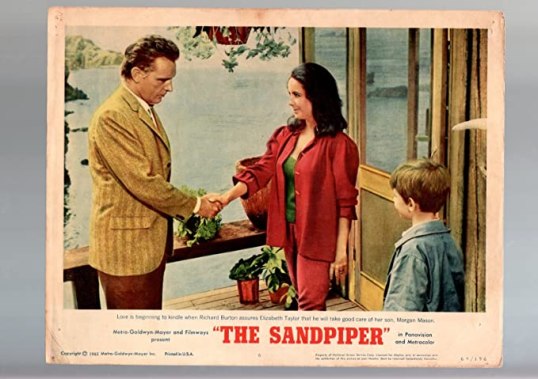
 

Cleaning Out The DVR: The Sandpiper (dir by Vincente Minnelli)


I recorded The Sandpiper that last time that it aired on TCM.  This 1965 film is one of the many films that Elizabeth Taylor and Richard Burton made together after they fell in love during the making of Cleopatra.  And while it’s true that Who’s Afraid of Virginia Woolf? won Taylor an Oscar and probably should have won one for Burton as well, the majority of the Taylor/Burton films were overproduced melodramas that often seemed as if they’d been rushed into production in order to capitalize on the couple’s tabloid popularity.  Unfortunately, Virginia Woolf aside, neither Taylor nor Burton seemed to bring out the best in each other as actors.

The Sandpiper finds Taylor playing Laura Reynolds, an artist who lives in a California beach house with her young son, Danny (Morgan Mason).  Laura is a free spirit who believes that everyone, including her son, should have the freedom to make their own choices.  She is resistant to any and all authority.  She’s a bohemian, a rebel, the type who doesn’t care what society has to say and who flaunts her refusal to follow the dictates of respectability.  Good for her!  However, she’s also Elizabeth Taylor, which means that she’s impossibly glamorous and even her “cluttered” beach house looks like it’s a hundred times more expensive than anything that anyone viewing the film will ever be able to afford.  Though Taylor tries hard, there’s nothing convincingly bohemian about her.

Richard Burton plays Dr. Edward Hewitt, who runs the nearby Episcopal school.  Dr. Hewitt is not a free spirit.  Instead, he and his wife, Claire (Eva Marie Saint), very much believe in structure and playing by the rules.  They believe in a traditional education and, when a judge orders Danny to be enrolled at their school, that’s what Hewitt plans to give him.  This, of course, brings Hewitt into conflict with Laura.  Both of them have differing ways of looking at the world and Laura is not a fan of religion in general.  However, since they’re played by Burton and Taylor, they’re destined to fall in love and have a scandalous affair.

Dr. Hewitt is one of the many religious figures that Burton played throughout his career.  In fact, Burton played so many alcoholic priests that I spent most of the movie assuming that Hewitt was an alcoholic as well.  However, he’s not.  He’s just Episcopalian.  That said, Burton delivers every line of dialogue in his trademark “great actor” voice and every minute that he’s onscreen just seems to be full of self-loathing.  Even before he cheats on his wife, Hewitt seems to hate himself.  Of course, once Burton does start cheating on his wife, it only gets worse.  The film presents Hewitt as being something of a hesitant participant, someone who knows that he’s doing the wrong thing but he simply cannot stop himself.  Laura, meanwhile, is presented as being someone who is fully willing to break up a marriage to get what she wants.  One gets the feeling that 1965 audiences probably just assumed they were watching the true story of how Taylor and Burton fell in love during the making the Cleopatra.  That said, it’s all pretty tame.  Just like Taylor, director Vincente Minnelli was too much of a product of the old Hollywood to truly embrace this story for all of its sordid potential.

If you’ve ever wanted to watch Charles Bronson debate religion with Richard Burton, this is the film for you.  Bronson plays a sculptor and an atheist who upsets Hewitt by calling him “reverend.”  Bronson is actually more convincing in the film than either Burton or Taylor, bringing a rough authenticity to his role.  Whereas Burton and Taylor both seem to be going through the motions, Bronson comes across as if he actually has a personal stake in the film’s story.  It’s not enough to save the movie, of course.  Fortunately, a year later, Liz and Dick would be used to better effect in Who’s Afraid of Virginia Woolf?


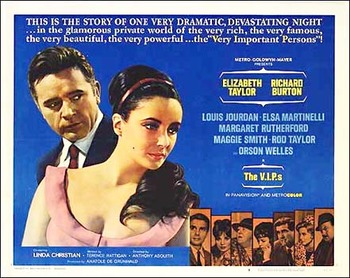
Cleaning Out The DVR: The V.I.P.s (dir by Anthony Asquith)


The 1963 film, The V.I.P.s, is about a group of very important people who have all shown at Heathrow Airport at the same time, all in an effort to get the Hell out of England.  They’ve all got their own individual reasons for wanting to leave the country but the important thing is that they all want to leave.  Unfortunately, a fog has rolled onto the runway and the plane can’t take off.  Because this film was made in 1963, all the passengers are allowed to leave the plane and wait, overnight, in a hotel.

Among the Very Important People:

Flamboyant film producer Max Buda (Orson Welles, playing a version of himself) needs to leave London before he receives a gigantic tax bill.  Accompanying him is his latest discovery, Gloria Gritti (Elsa Martinelli).  Max is the type who does things like barging into the plane’s cockpit and demanding to know why the pilots aren’t willing to risk crashing the plane.  That may sound self-centered on Max’s part but Welles is such a charmer that you forgive him.  Add to that, he’s trying to avoid paying taxes and that’s something that I can definitely get behind.

The Duchess of Brighton (Margaret Rutherford) is an eccentric but impoverished noblewoman who is going to lose her home if she doesn’t fly to Florida and take on a somewhat demeaning job.  The Duchess is the type who struggles to find room in the overhead compartment for her ludicrous oversized hatbox.  She’s never really been out in the real world before.  Margaret Rutherford won an Oscar for her performance, which is occasionally amusing but never particularly subtle.  (Have you seen Airport?  Rutherford has the Helen Hayes role, basically.)

Lee Mangrum (Rod Taylor) is a businessman who is on the verge of losing his business.  Miss Mead (Maggie Smith) is his secretary.  Miss Mead is secretly in love with Lee, who somehow hasn’t noticed.  We’re supposed to sympathize with Lee but he’s so incredibly clueless that it’s hard not to feel that Miss Mead could do better.

Finally, we have Frances Andros (Elizabeth Taylor).  Frances is one of the most popular film stars in the world.  She’s married to Paul Andros (Richard Burton), who is very wealthy and who, like most Burton characters, is also very moody.  Frances has decided to leave Paul and go to America with her lover, Marc Champselle (Louis Jourdan).  However, the fog gives Paul a chance to come to the airport and try to talk Frances out of leaving him.

Make no mistake about it, Liz Taylor and Burton are the main attraction here.  Welles, Rod Taylor, Rutherford, and Smith all get plenty of scenes but it’s obvious that the people behind The V.I.P.s understood that most of the audience would be there to watch Liz and Burton acting opposite each other.  This was, I think, the first film that they made together after falling in love on the set of Cleopatra.  Due to Cleopatra’s legendarily difficult production, it was released around the same time as The V.I.P.s, despite going into production years before the latter film.  Audiences could go watch Liz and Dick fall in love in Cleopatra and then head over to a different theater and watch the two of them fight in The V.I.Ps.  Elizabeth Taylor may be playing Frances Andros and Richard Burton may be playing Paul Andros but they really might as well be playing themselves.

The V.I.P.s is a big and glossy film, the type of movie that the Hollywood studios used to make as their way of saying, “See!  You won’t get this on TV!”  It’s frequently silly but it’s also undeniably watchable.  While Burton and Taylor’s later films tended to feature the two of them at their worst, they’re both actually really good in The V.I.P.s and the scenes where they argue have an emotional heft to them that, with the exception of Who’s Afraid of Virginia Woof?, wasn’t found in their other films.  For once, you watch the film and you really do hope that Liz and Dick will work things out and stay together.  The V.I.P.s may be dated (just try to chase someone through an airport or get off a delayed flight now) but it’s still entertaining.

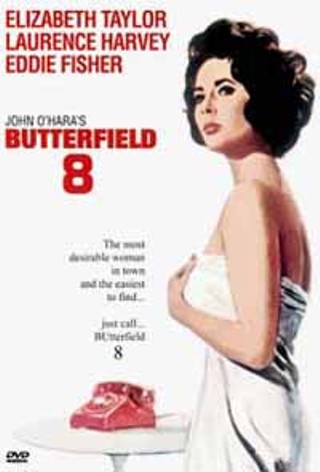
Cleaning Out The DVR: BUtterfield 8 (dir by Daniel Mann)


“Mama, face it,” Gloria Wandrous (Elizabeth Taylor) announces in the 1960 film, BUtterfield 8, “I was the slut of all time!”

Personally, I think Gloria is being a little bit too hard on herself. Certainly the film suggests, in its 1960 way, that she’s promiscuous and that she only sleeps with men for money but that doesn’t necessarily make her the slut of all time. For one thing, I would think that the slut of all time would have more options than just a wimpy pianist played by Eddie Fisher or a depressing, self-absorbed businessman played by Laurence Harvey.

“I still say it stinks,” Elizabeth Taylor said, almost immediately after winning her first Oscar for her performance in BUtterfield 8 and she’s kind of right. BUtterfield 8 is not a particularly good film, though not quite as bad as Taylor seemed to believe it to be.

Taylor won the Oscar after suffering a near fatal bout of pneumonia and having to undergo a tracheotomy. Along with saying that the film stunk, Taylor also often said that she only won her first Oscar because she nearly died. That may or may not be true but the thing is, Taylor’s the best thing in this overwritten and overheated mess of a movie. She certainly gives a better and more sympathetic performance than Laurence Harvey, who is cast as her married lover, Wilson Liggett. We’re meant to sympathize with Ligget but Harvey plays him as if he’s in a permanently sour mood and, after just a few minutes of listening to him bitch about every little thing, the viewer will get sick of him. It’s hard to really see what Gloria Wandrous sees in this whiny alcoholic.

Then again, the only other option that the film gives Gloria is Steve Carpenter, the pianist played by Eddie Fisher. Steve can’t decide if he’s in love with his boring girlfriend, Norma (Susan Oliver) or if he’s in love with Gloria. However, Steve has no problem letting Gloria borrow one of Norma’s dresses so that she can wear it when she goes home to visit her mother and I have to say that if I was Norma, Steve would be finding a new bed to sleep in after that. Gloria tells Steve that he needs to decide who he’s in love with but Steve jut can’t do it. Of course, in real life, Eddie Fisher left Debbie Reynolds so that he could marry Elizabeth Taylor. (A year or so later, Taylor left Fisher so that she could marry Richard Burton.)

BUtterfield 8 is one of those films that was undoubtedly considered to be daring when it was first released, seeing as how it acknowledged that people had sex without getting married first. (GASP!) Of course, though the film acknowledges that people have sex, it still makes sure to let us know that no one’s happy afterwards and that promiscuity eventually leads to death. (I mean, BUtterfield 8 may have taken risks but it still knew better than to defy the production code.) Seen today, the entire film is rather tame, talky, and slow but the star power of Elizabeth Taylor still comes through. The film opens with a lengthy sequence of Gloria getting ready for her day and, as you watch it and, more importantly, as you watch Elizabeth Taylor, you find yourself thinking that this is what a movie star is supposed to be. She dominates the film and she manages to credibly deliver even the most overheated pieces of dialogue. (Just try to imagine Jennifer Lawrence delivering the “slut of all time” line and you’ll immediately understand the difference between the movie stars of the past and the movie stars of the present. Of course, you could also say the same thing about trying to imagine a young Elizabeth Taylor in Silver Linings Playbook or The Hunger Games.) In fact, one could argue that Taylor’s performance is almost too good for the material. The film, in its 1960 way, suggests that Gloria would be better off if she just settled down but it’s impossible to imagine Taylor’s Gloria Wandrous settling for the stiffs played by Laurence Harvey and Eddie Fisher.

Though Elizabeth Taylor was correct about BUtterfield 8‘s overall quality, it’s still a good example of what star power can do for an otherwise mediocre film.

Film Review: Tom & Jerry (dir by Tim Story)


Kayla Forester (Chloe Grace Moretz) has recently arrived in Manhattan, fleeing her go-nowhere hometown in Pennsylvania.  She’s determined to finally do something with her life, spurred on by the feeling that there are other people who are just as young as she is but who have already managed to get their lives together.  She doesn’t have much work experience but she has endless ambition and she’s also willing to lie, cheat, and steal if it means finding a better life.

Tom Kat (played by himself) is an aspiring pianist and creator of ludicrously elaborate mouse traps who finds his ambitions hampered by the fact that he’s a cartoon cat who can’t talk and who has a habit of getting involved in elaborate mishaps.  Even his attempts to make a meager living by playinf piano in Central Park are continually thwarted by all of the other cartoon animals that are lurking around New York City.  (“Look!” a little boy announces, “that cat’s playing a piano!”  His father explains that it’s common to see all sorts of strange things in New York.)

Jerry Mouse (playing himself) is Tom’s longtime rival.  A cartoon mouse who is also a plucky kleptomaniac, Jerry has recently arrived in Manhattan.  He’s looking for a home and he wastes no time in reigniting his decades old feud with Tom and, of course, engaging in countless acts of petty thievery.

Together, they solve crimes!

Well, no, actually, they don’t.  Instead, they commit a few.  Kayla gets things started by stealing someone else’s resume and getting a job working at a luxury hotel.  Under the mistrustful eye of event manager Terence Mendoza (Michael Pena), Kayla tries to make sure that two celebrities, Ben (Colin Jost) and Preeta (Pallavi Sharda ), have the perfect wedding in the hotel’s ballroom.  Despite being in no way qualified for her job, Kayla proves to be a quick learner and she even manages to deal with the hotel’s temperamental head chef, Jackie (played, somewhat inevitably, by Ken Jeong).  The only problem is that Jerry has moved into the hotel as well.  Realizing that a mouse could ruin the entire wedding, Kayla hires Tom to track the little rodent down.  Tom and Jerry better work out their differences before the wedding because Ben and Preeta are scheduled to ride two cartoon elephants down the aisle and you know how elephants feel about mice!

Tom & Jerry is a hybrid film, a mix of live action and animation.  New York City is real.  All of the human characters are played by actual humans.  However, every single animal — from the title characters to the elephants to Ben’s bulldog to the pigeons that fly over Central Park and provide a chorus to the action — is a 2D cartoon character.  It’s actually a pretty cute idea and, to the film’s credit, it doesn’t waste anyone time with elaborate excuses for why this is.  Everyone in the film simply accepts that they live in a world with cartoon animals.  No one is particularly surprised with Kayla hires a cartoon cat to take care of the cartoon mouse problem.

Tom & Jerry works whenever it focuses on the title characters.  It’s actually a lot of fun to watch the two of them chasing each other through a live action New York City and never suffering any injuries regardless of how many mallets they hit each other with.  Unfortunately, the film slows down whenever it focuses on the human characters.  Chloe Grace Moretz is one of the best actresses of her generation and it’s always nice to see her playing a character who isn’t being stalked or having to deal with some sort of unimaginable tragedy but still, Kayla’s story is never really interesting enough to justify taking the focus away from Tom and Jerry.  For most of the movie, poor Michael Pena gets stuck playing the film’s designated villain, even though Terrence is basically just doing his job.  In the end, of course, everyone learns an important lesson and they’re all the better for it but most viewers would probably trade the lesson for more of the mouse and the cat.

Still, whenever it’s just Tom and Jerry doing their thing, this is a cute movie.  I just wish the movie hadn’t gotten bogged down with everything else.

Spring Breakdown: Deadly Excursion: Kidnapped From The Beach (dir by Brian Skiba)


When last we checked in with the McCarthy family, Samantha (Samaire Armstrong) and her daughter Ellie (Alexandria DeBerry) were kidnapped while on vacation and ended up getting stranded on a remote beach.  Fortunately, they were saved by the combined efforts of the FBI and Samantha’s husband, David (Corin Nemec).  One of the kidnappers, Ian (Jonathan Bouvier), managed to escaped and a few people got shot but, fortunately, it appeared that everyone was safe.

That all occurred in the 2019 Lifetime film, Deadly Excursion.

Deadly Excursion: Kidnapped From The Beach checks in with the McCarthy family a year or two later and we discover that 1) David and Samantha’s marriage is now a lot stronger and 2) the family apparently didn’t learn much from their last time they got kidnapped while on vacation.  This time, ignoring the warnings of the FBI, Samantha and David go to Florida to support Ellie as she leads her beach volleyball team to a national championship.  Unfortunately, Samantha and David are also followed by Cesar Rodriguez (Matt Cedeno) and Cesar’s son, Miguel (David Meza).  Cesar and Miguel have plans to kidnap the entire family.  Meanwhile, Ian is still wandering about and looking for a chance to redeem himself, despite the fact that he’s currently #15 on the FBI’s Most Wanted List.

Got all that?

The question is, “How many times can the same thing happen to the same family?” and the answer here seems to be “At least twice.”  Indeed, it may require a certain suspension of disbelief to buy that the McCarthys could actually learn so little from their last vacation but, then again, suspension of disbelief is what Lifetime movies are all about.  As I’ve said many times, you don’t necessarily watch a film like this because you’re looking for a realistic film about kidnapping.  You watch a film like this for the beach scenery and the melodrama and for the familiar faces of the likable actors who play the film’s lead roles.  Say what you will about David McCarthy and his decision-making abilities, it’s always fun to watch Corin Nemec play a role like this.  Nemec always throws himself into it, delivering his lines with just the right mix of drama and humorous self-awareness.  And, again, he’s a likable actor.  You like David because it’s impossible not to like Corin.  You hope that he’ll get back together with his family because the three of them just seem like they belong together.

Of course, there are a few differences between the first Deadly Excursion and the second.  The first Deadly Excursion found the family being held hostage on an island.  This time, they’re held hostage in a luxury hotel and I have to say that the hotel is really quite impressive.  If I was going to be held hostage, I’d want to be held hostage there.  It also leads to an interesting scene where one of the family members manages to briefly escape, just to discover that even the people who aren’t involved in her kidnapping don’t necessarily want to get involved.  Sadly, that’s probably very true to life.  You can be just as isolated in a city as you can be on a deserted island.

Deadly Excursion: Kidnapped From The Beach won’t take you by surprise but the beach scenery is gorgeous and the cast is likable and sometimes, that’s all you need.

Previous Spring Breakdown 2021 Entries:

  1. The Beach Girls and the Monster
  2. Top Secret!
  3. Jaws: The Revenge
  4. Hunk
  5. Love In A Goldfish Bowl
  6. Eureka


The Unnominated: Auto Focus (dir by Paul Schrader)


Though the Academy of Motion Picture Arts and Sciences claim that the Oscars honor the best of the year, we all know that there are always worthy films and performances that end up getting overlooked.  Sometimes, it’s because the competition too fierce.  Sometimes, it’s because the film itself was too controversial.  Often, it’s just a case of a film’s quality not being fully recognized until years after its initial released.  This series of reviews takes a look at the films and performances that should have been nominated but were,for whatever reason, overlooked.  These are the Unnominated.

The 2002 film Auto Focus start out as almost breezy satire of the perfect all-American life and it ends with an act of shocking violence.  It’s based on a real-life mystery, a murder that revealed a secret life.

When we first see Bob Crane (Greg Kinnear), he’s a disc jockey and a drummer living in the suburbs of Los Angeles in the mid-60s.  He’s got what would appear to be the ideal life.  He’s got a nice house.  He and his wife (Rita Wilson) seem to be devoted to each other.  His children are adorable.  He goes to church.  He tells corny Dad jokes.  He’s got a quick smile and a friendly manner and it’s impossible not to like him.  When he gets offered the lead in a sitcom, his happiness and enthusiasm feels so generous that it’s impossible not to be happy for him.

Of course, the show is a comedy that takes place in World War II POW camp, which doesn’t really sound like a surefire hit or really anything that should be put on the air.  (“Funny Nazis?” Crane says in disbelief when he’s first told about the project.)  Still, with Crane in the lead role, Hogan’s Heroes becomes a hit and, for a while, Bob Crane becomes a star and it seems like it couldn’t have happened to a more deserving guy.

The problem, of course, is that Crane seems like he’s too good to be true and we all know what they say about things like that.  From the start, there are hints that Crane may be hiding another side of his personality.  His wife, for instance, is not happy when she discovers his stash of pornographic magazines in their garage.  (“They’re photography magazines!” Crane protests with a smile that’s a bit too quick.)  Crane obviously enjoys the recognition that comes from being the star of a top-rated show.  He starts hanging out at strip clubs, occasionally playing drums with the club’s band and watching the dancers with a leer that’s really not all that different from the smile that he flashes whenever he asks anyone if they want an autograph.

Crane also meets John Carpenter (Willem DaFoe), an electronics expert who introduces him to the then-expensive and exclusive world of home video.  As opposed to the clean-cut and smoothly-spoken Crane, Carpenter is so awkward that it’s sometimes painful to watch him move or listen to him speak.  He’s the epitome of the Hollywood hanger-on, the type who has deluded himself into thinking that his celebrity clients genuinely like him and enjoy his company.  He and Crane become fast friends, though it’s always obvious that Crane considers himself to be better than Carpenter.  However, Carpenter is the only person with whom Crane can share the details of his secret life.

The film covers several years, from the late 60s to the mid-70s.  Crane goes from being so clean-cut that he neither drinks nor curses to being so addicted to sex that he can stop himself even when it starts to destroy his career and leads to him losing everything that he loves.  Carpenter and Crane’s friendship becomes progressively more and more self-destructive until the film ends in violence and tragedy.

Auto Focus begins on a light and breezy note but, as Crane’s addiction grows, the film grows darker.  By the time the movie enters the 70s, the camerawork becomes more jittery and the once soft-spoken Crane seems to be drowning in his own anxiety.  He becomes the type who causally goes from talking to Carpenter about how he wants to direct the world’s greatest sex film to cheerfully announcing that Disney has decided to cast him in a film called SuperDad.  Auto Focus‘s key scene comes towards the end, when Crane is a guest on a silly cooking show and shocks the audience by harassing a woman sitting in the front row.  When the audience boos, Crane flashes his familiar smile and it becomes obvious just how much of Crane’s life has been spent hiding behind that smile.  By the end of the film, not even Crane himself can keep track of whether or not he’s a wholesome comedy star or a self-destructive sex addict.

Both Greg Kinnear and Willem DaFoe gave Oscar-worthy performance in Auto Focus, performances that hold your interest even after their characters sink to some truly low depths.  The film makes good use of Kinnear’s amiable screen presence and Kinnear convincingly creates a man who wishes that he could be the person that he’s fooled everyone into thinking that he is.  By the time he’s reduced to begging his agent (well-played by Ron Leibman) to find him a game show so that he can finally stop doing dinner theater, it’s hard not to have a little sympathy for him, even if the majority of his problems are self-created.  As Carpenter, DaFoe is convincingly creepy but, at times, he’s also so pathetic that, again, you can’t help but feel a little sorry for him.  At his worst, Carpenter is the 70s equivalent of the twitter user who stans a celebrity by sending them adoring tweets and then picking fights with anyone who disagrees.

Unfortunately, the Academy nominated neither Kinnear for Best Actor nor DaFoe for Best Supporting Actor.  The competition for Best Actor was fierce that year, with Nicolas Cage, Michael Caine, Daniel Day-Lewis, and Jack Nicholson all losing to Adrien Brody in The Pianist.  While Kinnear deserved a nomination, it’s hard to say who I would drop from that line-up to make room for him.  As for DaFoe, I would argue that he was more deserving of a supporting actor nomination than The Hours‘s Ed Harris or The Road To Perdition’s Paul Newman.  Perhaps DaFoe was just too convincing as the type of clingy groupie that most members of the Academy probably dread having to deal with.

Nominated or not, Auto Focus is a disturbing and ultimately sad look at the darkness that often hides behind a perfect facade.


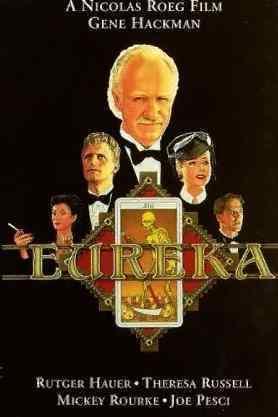
Spring Breakdown: Eureka (dir by Nicolas Roeg)


In this 1983 film, Gene Hackman plays Jack McCann, a prospector who is determined to either get rich or freeze to death as he wanders around Alaska in the 1920s.  When he’s not having sex and philosophical discussions with the local witch, Freida (Helena Kallianiotes), Jack desperately searches for gold.  Jack is convinced that gold is all that he needs to be happy, though Freida counsels him that it’s also important to pursue more Earthly delights.  Everywhere Jack looks, he sees people dying in the snow.  In fact, Jack nearly dies himself until he stumbles across a mountain full of gold.  As gold dust pours down on him, he celebrates while having flashbacks to Freida writhing in ecstasy.  It’s just that type of film.  When Jack tells Freida about his claim, he asks what’s going to happen next.  Freida tells him that it’s both the end and the beginning.  Once again, it’s just that type of film.

At this point, Eureka jumps ahead 20 years.  The year is 1945.  World War II is coming to an end.  Jack is no longer freezing and starving to death in Alaska.  Now, he is one of the world’s richest men.  He even owns his own island in the Caribbean.  Jack has a huge house, a beautiful view of the ocean, and all the money in the world.  One could even say that his life has become an exclusive beach vacation, an eternal Spring Break, if you will.  And yet, even with all of his money, Jack has fallen victim to ennui.  He was happier when he was poor and starving and seeking warmth from Freida.  Now, he’s got an alcoholic wife (Jane LaPotaire) and his daughter, Tracy (Theresa Russell), is in love with a dissolute aristocrat named Claude (Rutger Hauer), to whom Jack takes an instant dislike.  Claude claims that Jack has stolen his wealth from the Earth.  Claude is the type who eats gold and then promises to return it to Jack as soon as he can.  That’s something that actually happens.  It’s kind of silly but Rutger Hauer is such a charmer that he nearly pulls it off.

Claude and Tracy aren’t the only thing that Jack has to worry about.  An American gangster named Mayakofsky (Joe Pesci) wants to take over Jack’s island so that he can build a casino on it.  However, despite the best efforts of Mayakofsky’s attorney (Mickey Rourke), Jack is still not willing to sell.  When hitman Joe Spinell shows up outside the estate, are Jack’s days of ennui numbered?

Of course, they are!  That’s not really a spoiler.  Eureka is (loosely) based on the real-life murder of Sir Harry Oakes, an American-born prospector who was thought to be one of the world’s richest men when he was brutally murdered in the 40s.  Jack is, of course, a stand-in for Oakes while Mayakofsky is based on Meyer Lansky, the mobster who many people suspect ordered Oakes’s murder.  Lansky was never charged with the crime.  Instead, Oakes’s son-in-law, Count Alfred de Marigny, was arrested and charged with the crime.  After a trial that made international news and was described as being “the trial of the century,” de Marigny was acquitted and the murder of Harry Oakes remains officially unsolved.

It’s an interesting story and it seems like one that should perfectly translate to film.  Surprisingly though, Eureka doesn’t really do it justice.  The film was directed by one of the masters of cinematic surrealism, Nicolas Roeg.  Roeg, of course, is probably best remembered for films like Performance, Don’t Look Now, Walkabout, and The Man Who Fell To Earth.  As one might expect from a Roeg film, Eureka is visually stunning but, as a director, Roeg can’t seem to decide whether he’s more interested in Jack’s ennui or in all the soapy melodrama surrounding Jack’s murder.  As such, neither element of the film gets explored with any particular depth and the resulting film, while always watchable, still feels rather shallow and disjointed.  (After taking forever to reach the end of Jack’s story, Eureka then turns into a rather conventional courtroom drama.  Theresa Russell does get to utter the immortal line, “Did you cut off my father’s head?” but otherwise, it’s kind of dry.)  The film is at its strongest when Jack is just a prospector in Alaska.  The harsh landscape and the crazed dialogue is perfect for Roeg’s dream-like style.  Once the film moves to the Caribbean, it suffers the same fate that befell Jack when he become rich.  It loses its spark.

That said, Eureka has its moments.  Any film that features Gene Hackman, Mickey Rourke, Joe Pesci, Rutger Hauer, and Joe Spinell all acting opposite of each other is going to have at least a few scenes worth watching.  I particularly liked Pesci’s surprisingly subdued performance as Mayakofsky.  With everyone else in the film chewing every piece of scenery on the island, Pesci wisely underplays and is all the more menacing for it.  While Eureka ultimately doesn’t add up too much, it’s worth watching at least once for the cast.

Finally, my personal theory is that Harry Oakes’s murder had more to do with the Duke and Duchess of Windsor (formerly King Edward VIII and Wallis Simpson) than it did with Meyer Lansky.  (The Duke was the governor of the Bahamas at the time of Oakes’s murder.)  But that’s just my opinion.

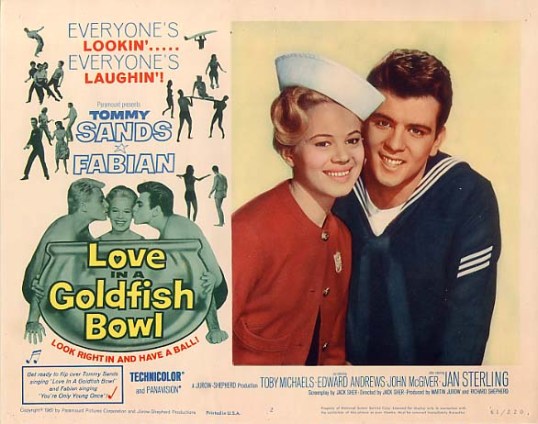
Spring Breakdown: Love In A Goldfish Bowl (dir by Jack Sher)


The 1961 film, Love in a Goldfish Bowl, tells the story of two college students.

Gordon Slide (Tommy Sands) and Blythe Holloway (Toby Michaels) are best friends.  Their relationship is strictly platonic, though everyone at the college assumes that they’re more than just friends.  Gordon and Blythe both share the common bond of coming from broken but wealthy families and they both want to do something more with their lives than just following the rules.  Blythe is a good student, the daughter of a senator.  Gordon is styles himself as being a cynic, or at least what was considered to be a cynic by the standards of 1961.  (James Dean would have probably called him a phony.)  The school’s headmaster (John McGiver) suspects that 1) Gordon and Blythe are more than just friends and 2) that Gordon is a bad influence on Blythe.  He even orders them to stop seeing each other, which I guess is something that headmasters could get away with in 1961.

Still, it’s going to take more than some stuffy authority figure to keep Gordon and Blythe for enjoying their Spring Break!  Especially when Gordon’s mother happens to own a beach house, which would be the perfect place for the two of them to hang out.  Despite knowing that each of their parent probably wouldn’t approve of them spending the break together, Gordon and Blythe decide to do just that.  Blythe even gets permission for her father, albeit by duplicitous means.  (Gordon imitates the headmaster on the phone.  Wow, that wild and crazy Gordon.)

At first, the beach house seems like the perfect place for Gordon and Blythe to unwind.  But when they meet Giuseppe La Barba (Fabian Forte), things start to change.  A member of the Coast Guard, Giuseppe plots to steal Blythe away from Gordon, with his schemes causing Gordon and Blythe to reconsider their feelings for each other.

Considering that this film is 60 years old, it’s perhaps not surprising that Love In A Goldfish Bowl often feels like it’s a rusty time capsule that someone buried in the sand on a California beach.  Everything from the intrusive headmaster to the scandal of divorce to the domestic routine that both Gordon and Blythe naturally slip into as soon as they arrive at the beach house makes this film feel almost as if it comes from another planet.  While the film is critical of adults who don’t understand what it’s like to be young and idealistic, it also ultimately ends with the suggestion that the adults might not be so clueless themselves.  It’s a bit of a wishy-washy approach to what little conflict the film has to offer up.

My point here is that Love In A Goldfish Bowl is an amazingly innocent little film, the type of Spring Break movie that would cause even your grandma to say, “Those kids really need to loosen up and live a little.”  Usually, I kind of like time capsule films like this, just because I’m a history nerd and I’m always interested in seeing how people used to live and communicate.  Unfortunately, Love In A Goldfish Bowl is a remarkably slow 88 minutes and neither Tommy Sands nor Toby Michaels have enough chemistry to be interesting as friends, let alone as a chaste couple waiting for their wedding night.  Fabian has a little bit more screen presence than Tommy Sands but overall, this is a pretty bland affair.

Ultimately, this film is mostly interesting as an example of what beach movies were like before AIP reinvented the genre with the Frankie and Annette beach party films.  Thank goodness people finally learned how to celebrate being young and on the beach.

Spring Breakdown: Hunk (dir by Lawrence Bassoff)


Released in 1987, Hunk tells the story of Hunk Golden (John Allen Nelson).

At first glance, Hunk seems to have everything.  He lives in a huge house on the beach and he’s good-looking and muscular enough that he can actually pull off the rainbow speedo look.  Women want to be with Hunk and men want to be Hunk.  He’s rich.  He can eat all the food in the world without putting on a single pound.  He’s got a great smile and wonderful tan and he even knows karate!  Hunk drives a red convertible that has a personalized license plate, one that reads: HUNK.  If anyone else did it, it would seem narcissistic but Hunk can pull it off.

However, Hunk is deeply dissatisfied with his life.  As he explains to his psychiatrist, Dr. Sunny Graves (Rebecca Bush), he wasn’t always Hunk Golden.  He used to be a nerdy writer named Brady Brinkman (played by Steve Levitt).  After Brady’s girlfriend left him for an aerobics instructor, he somehow managed to write a guide to how to become rich.  Brady’s wasn’t sure where his inspiration came from but he was still able to make a fortune off of it.  After Brady moved to the beach to work on his next project, he discovered that being wealthy didn’t mean anything unless he also had the right look.

That’s when he was approached by O’Brien (Deborah Shelton), an emissary of the devil (James Coco).  O’Brien turned Brady Brinkman into Hunk Golden and taught him how to be …. well, how to be a hunk.  The only condition was that, after a number of months, Hunk would have to give up his soul to the devil.  Hunk agreed but now, with the deadline approaching, Hunk isn’t so sure that he wants to condemn his soul to eternal damnation.  Is being the hottest guy on the beach really worth an eternity of burning in fire and being poked with those little pitchfork things?

Now, it probably won’t come as a surprise to our regular readers to discover that this film was produced and distributed by Crown International Pictures.  From the 70s through the 80s, Crown International specialized in low-budget exploitation films, with a surprisingly large number of them taking place on the beach.  Nowadays, of course, the Crown International filmography can be found in countless Mill Creek boxsets.  Hunk can be found in several.  I own enough Mill Creek boxsets that I’ve probably got a dozen copies of Hunk in my DVD and Blu-ray collections.

That said, while the film’s low budget is obvious in every frame, Hunk is actually slightly better than the typical Crown International beach film.  While it seems to take forever for Brady to become Hunk, the film has got a likable cast and it actually delivers its message about self-acceptance with a surprising amount of sincerity.  This is the rare Crown International Film with a heart and, for every joke that falls flat (and there’s several), there’s at least a few unexpectedly clever moments.  The film takes an especially strange turn once Hunk becomes a celebrity and starts to wonder if he should accept the devil’s invitation to become a demon and help start a world war.  Steve Levitt and John Allen Nelson both do a good job playing Brady and his alter ego, though all of Nelson’s dialogue appears to have been dubbed.  James Coco delivers his evil lines with a properly devilish glee.  Incidently, this was also Brad Pitt’s first movie.  While he had no dialogue and went uncredited, he can be easily spotted as an extra in one of the beach scenes.

See him?

If you’re looking for silly and occasionally strange 80s beach movie, you could do worse than to check your Mill Creek boxsets for a copy of Hunk.