Horror Film Review: The Raven (dir by Roger Corman)


“Shall I ever see the rare and radiant Lenore again?” — Dr. Erasmus Craven (Vincent Prince)

“How they Hell should I know?” — Dr. Adolphus Bedlo (Peter Lorre)

This exchange comes from Roger Corman’s 1963 film, The Raven, and it pretty much epitomizes the film.  Very loosely based on the poem by Edgar Allan Poe, The Raven was one of the many Poe adaptations that Corman did with Vincent Price.  As opposed to the other films in Corman’s Poe cycle, The Raven was a flat-out comedy, one that parodied the other films in the cycle.  Reportedly, Peter Lorre improvised his response to Vincent Price’s question about Lenore.  In fact, Lorre improvised a good deal of his performance and his jokes sometimes even took Corman by surprise.  As a result and despite the fact that Richard Matheson did write a script for the film, The Raven is one of those films that feels like it was made up while the camera was rolling.

The Raven is a film about three sorcerers who are always fighting and arguing with each other.  Dr. Erasmus Craven (Vincent Price) spends his time mourning the late Lenore.  The evil Dr. Scarabus (a frail-looking Boris Karloff) has his own castle where he lives with the ghost of the late Lenore (Hazel Court).  Dr. Adolphus Bedlo (Peter Lorre) is a sarcastic ne’er-do-well who saw Lenore in Scarabus’s castle and was transformed into a talking raven as a result.

In raven form, Dr. Bedlo flies over to Craven’s castle and convinces Craven to transform him back into human form.  After informing Craven that Scarabus has Lenore’s ghost in his castle, the heart-broken Craven decides to head over to Scarabus’s castle and get some answers.  Accompanying the group is Craven’s daughter, Estelle (Olive Sturgess) and Bedlo’s son, Rexford (Jack Nicholson, looking somewhat lost in the role of a boring young man).

At the castle, Scarabus puts on an act of being a friendly and gracious host but the opposite soon turns out to be true.  In fact, the entire castle is full of secrets and it quickly turns out that hardly anyone — with the exception of Estelle and Rexford — are who they actually claim to be.  It leads to a battle in magic between Craven and Scarabus.  I nearly described their battle as being “epic” but that’s probably not the right world.  It’s epic by the standards of Roger Corman but actually, the big battle is just as jokey as the rest of the film.

The Raven is definitely not a film that’s meant to be taken seriously.  One gets the feeling that Corman knew that the presence of Price, Karloff, and Lorre would make the film a success no matter what the film was like so he decided to have some fun with it.  (Price and definitely Lorre appear to have been in on the joke while Karloff was perhaps a bit less so.)  To be honest, the film’s only earnest moments come courtesy of Oliva Sturgess and Jack Nicholson but, because Nicholson is Nicholson, you watch those earnest moments waiting for Rexford to arch an eyebrow or flash that devilish grin.  Unfortunately, he doesn’t.  Jack is pretty boring here.

The Raven, if we’re going to be honest, is probably too jokey for its own good but it’s still hard to resist the charm of Price, Lorre, and Karloff.  The film is a chance to see three horror icons acting opposite each other and, as a result, it’s a fun film for horror fans.  Vincent Price breaks the fourth wall at the end of the film and it’s hard not to love it.
Horror On The Lens: Messiah of Evil (dir by Willard Huyck)


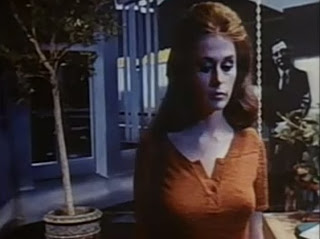
MOE Mariana HillWith only five days left until Halloween, I wanted to make sure that I continued an important tradition here at the Shattered Lens by sharing this film with our faithful and wonderful readers.  Messiah of Evil was first released in 1973 and, since it’s in the public domain, it has since been included in a countless number of bargain box sets from Mill Creek.

I can still remember the first time that I saw Messiah of Evil.  It was on a Monday night, many years ago.  I had recently picked up a 10-movie DVD box set called Tales of Terror and I was using the movies inside to try to deal with a bout of insomnia.  I had already watched The Hatchet Murders (a.k,a. Deep Red) and The House At The Edge of the Park and, at two in the morning, I was faced with a decision.  Should I try to sleep or should I watch one more movie?

Naturally, I chose to watch one more movie and the movie I chose was Messiah of Evil.  So, there I was at two in the morning, sitting at the edge of my bed in my underwear and watching an obscure horror movie while rain fell outside.

And, seriously — this movie totally FREAKED me out!

Messiah of Evil tells the story of Arletty (Marianna Hill), a neurotic woman who drives to an isolated California town in order to visit her father.  Her father is an artist who specializes in painting eerie pictures of large groups of black-clad people.  However, once she arrives at his home, Arletty discovers that her father has vanished and left behind a diary where he claims that a darkness has overtaken the town.

Meanwhile, a mysterious man named Thom (Michael Greer) is wandering about town with two groupies (played by Anita Ford and Joy Bang) and interviewing random townspeople.  One crazed man (Elisha Cook, Jr.) explains that “the dark stranger” is returning.  After meeting Arletty, they all end up moving into her father’s house.

But that’s not all.   There’s also an odd albino man who shows up driving truck and who eats mice….

Messiah of Evil is literally one of the strangest films that I’ve ever seen.  It’s shot in a dream-like fashion and the much of the film is left open to the viewer’s interpretation.  There are two classic scenes — one that takes place in a super market and one that takes place in a movie theater and the movie’s worth watching for these two scenes alone.

Messiah of Evil is a film that will be appreciated by all lovers of surrealism and intelligent horror and I’m happy to share it with you today.

October Positivity: The Prodigal Planet (dir by Donald W. Thompson)


The last film in the Thief In the Night series, 1983’s The Prodigal Planet picks up where Image of the Beast left off.  Computer technician and post-Rapture Christian David Michaels (William Wellman, Jr.) is on the verge of being sent to the guillotine when he’s rescued by Connie (Terri Lynn Hall).  Connie may be wearing the uniform of UNITE and she may have the mark of the beast but she insists to David that she is actually on his side.  Not having much choice but to believe her, David joins Connie in a military grade RV.  They drive away from Des Moines just as a nuclear explosion takes out the whole city.

After seven years of being ruled over by Brother Christopher and the UN, the world is on the verge of ending.  (As the film’s narrators informs us, “Plane Earth is dying and the disease is sin.”)  Nuclear war has broken out, destroying cities and killing the majority of the citizens.  David is determined to get to Albuquerque, where he and a group of Christians plan to wait for the final judgment.  Government agent Jerry (Thom Rachford), who is one of only two characters to have appeared in every Thief In The Night film, is close behind but both he and his men are starting to show the signs of radiation sickness.

(Russell Daughten also returns as the Rev. Matthew Turner, with his apocalypse chart that explains each step of the end of the world.  Daughten’s role is small in this one, which is a shame as his grim Santa Claus screen presence was one of the best things about Image of the Beast.)

Along with the remnants of UNITE and a few survivors who have yet to take the mark, the world is also populated by “mutants,” humans whose faces are permanently scarred by the radiation.  They dress like monks and stalk empty and deserted city streets.  Their goal is to destroy anyone who they believe is responsible for the end of the world.  David and Connie rescue a scientist named Linda (Lynda Beatie) and her teenage daughter, Jodi (Cathy Wellman), from a group of mutants.  Linda is wracked with guilt because she previously put all her faith in science.  Jodi is bitter over how the world has turned out and, initially, she’s upset when David allows a mutant named Jimmy (Robert Chestnut) to join them in their journey.

With The Prodigal Planet, it’s obvious that director Donald W. Thompson had hopes of setting up an epic conclusion for the Thief in the Night films.  Not only does the film move the action out of Iowa and into other parts of the country but the film also runs for 127 minutes.  (By comparison, A Thief In The Night barely last over an hour.)  Unfortunately, most of that running time is taken up with David talking and trying to convert everyone that he meets.  On the one hand, considering what’s going on in the film’s world, it makes sense that David would do that.  On the other hand, it doesn’t exactly make for exciting viewing.  A film that features nuclear explosions and mutants should never be this slow or boring.  If the previous Thief In The Night films achieved a dream-like intensity, The Prodigal Planet dutifully plods along.  For every scene that works (like an extended sequence in which Linda and Jodi explore a city that isn’t as deserted as it first appears), there are other dramatically inert scenes that encourage the viewer to just about anything other than pay attention to what is happening on the screen.

(It doesn’t help that William Wellman, Jr. — despite appearing to be the only professional actor in this film — displays a bit of a blah screen presence in the role of David.  The scene where he tells Jodi that she’s spoiled because she’s pretty fails not because he’s necessarily wrong about Jodi as much as because Wellman can’t make David’s “tough love” approach compelling.  He just comes across as being a jerk.  The series was better off when the less polished but far more sincere Patty Dunning was the lead character.  As for Wellman, he was far more interesting as the morally conflicted national guardsman in The Trial of Billy Jack than he is here.)

Donald W. Thompson hoped to make a fifth Thief In the Night film, one that would feature The War in Heaven and bring the story to its prophesized conclusion.  Unfortunately (or not), he was never able to raise the money to do so.  And, as such, the saga of UNITE, Brother Christopher, and David Michaels came to a close with The Prodigal Planet.

Big Freakin’ Snake (2023, directed by Dustin Ferguson)


People are being killed in snake attacks across Los Angeles and the sheriff and a scientist are determined to discover why.  The Sheriff says that there hasn’t been a snake attack in over 40 years.  His father dealt with the last batch of attacks.  Now, it’s time for the new sheriff to pick up his father’s legacy and discover why people are dying from snake attack.

Could it be because of the big freakin’ snake!?

Nah, son, that snake’s not that big.

There actually is a big snake at the start of the movie, which slithers its way through Los Angeles and wraps itself around a building but most of the movie is just scenes of people screaming at normal sized snakes that don’t appear to actually be aggressive.  A lot of familiar B-horror folk show up to get bitten but the special effects budget only allowed for one actual snake attack to really be shown.  If you’ve ever wanted to watch Brinke Stevens fight a rubber snake in a bathtub, this film is for you.

Big Freakin’ Snake is short, only 40 minutes long, and it is obviously not meant to be taken seriously so I can’t criticize it too much.  But for a movie called Big Freakin’ Snake, it sure didn’t have many big snakes.

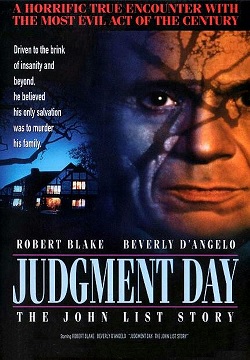
October True Crime: Judgment Day: The John List Story (dir by Bobby Roth)


In 1971, a 46 year-old account named John List committed a shocking crime.

To the outside world, John List was a normal suburbanite.  He was perhaps a little bit strict but then again, it was 1971 and all of the traditional morals that John List had grown up with were being challenged in the streets and in the movies.  Neither he nor his family were particularly sociable but again, it was assumed that they just liked the privacy that was afford to them by the mansion in which they lived.  List was married to Helen.  They lived with their three teenage children and List’s 84 year-old mother.  John List was a hard worker, he taught Sunday School, and, again, he was seen as being perfectly normal.

On November 9th, 1971, John List methodically murdered his wife, his children, and his mother.  He left his mother in her upstairs apartment while the rest of his family was laid out, in sleeping bags, in the ballroom.  (Detectives later surmised that List stopped in the middle of his murder spree to have lunch and then attended his son’s soccer game before taking him home and killing him.)  List left behind several notes, explaining that he was in a bad financial situation and that he feared that his family was heading down an immoral path that would have condemned their souls to Hell if he hadn’t killed them first.  And then, John List vanished.

For the rest of the 70s and the 80s, John List was phantom.  Some speculated that he had committed suicide while others thought that he had changed his identity and had probably remarried.  In 1987, the classic thriller The Stepfather was released in theaters.  Inspired by List’s crimes, The Stepfather starred Terry O’Quinn as Jerry Blake, a real estate agent who was obsessed with creating the perfect family.  The Stepfather imagined its killer as a friendly but rigid man who snapped whenever his illusion of perfection was threatened.  It also imagine him as someone who moved from town to town, searching for a new family that wouldn’t let him down.

As for the real John List, it turned out that those who suspected him of having changed his identity were correct.  And, just as The Stepfather suggested, he had remarried and was actually now a real stepfather.  List remained free until his story was included in a 1989 episode of America’s Most Wanted.  A forensic scientist included a bust of what John List might have looked like in 1989 and a viewer realized that the bust looked a lot like an accountant named Bob Clark.  “Bob Clark” was arrested and eventually, he confessed that he was actually John List.  Despite his attorney’s attempt to argue that he was not guilty by reason of insanity, John List was eventually convicted of five counts of murder.  He spent the rest of this life in prison, dying of natural causes in 2008.

The 1993 film Judgement Day: The Story of John List tells the story of List’s crimes and his subsequent attempt to build a new life for himself.  John List is played by Robert Blake, which turns out to be a bit of a problem as Blake gives such a twitchy and obviously unstable performance that it’s hard to believe that he could have successfully gone into hiding for 18 years.  Carroll Baker and Beverly D’Angelo are not given much to do as, respectively, List’s mother and List’s first wife while David Caruso appears as the detective who is determined to catch List.  Though this film was made long before CSI: Miami, I still found myself expecting Caruso to say something quippy and put on his sunglasses.

Judgment Day doesn’t add much to the story of John List.  It certainly doesn’t offer up any new insight into what led to List becoming a murderer, beyond the fact that List himself was just kind of a jerk.  It’s pretty much a by-the-numbers production that’s only interesting today because of Blake’s subsequent legal problems.  (For the record, I’ve always felt Robert Blake was innocent.)  When it comes to John List films, stick with The Stepfather.

Horror Film Review: Empire of the Ants (dir by Bert I. Gordon)


Ants are interesting creatures.  On the one hand, they work hard and they can design and build a complex home in just a matter of hours.  They’re loyal to the other members of their tribe and they all happily do whatever needs to be done to keep their community healthy and moving forward.  They’re family-orientated.  They take care of their children.  They eat earth worms.  They fight other ants.  They can carry several pounds over their own weight.  They like to move in a single-file line.  These are all things that people, in general, admire.  If you had to hire someone to do some yardwork, you would want someone who had the attitude of an ant.

At the same time, ants also have no respect for privacy, they tend to get everywhere, and they bite you and leave behind those ugly red marks that take forever to go away and that can itch like heck.  I was once outside barefoot, helping someone wash his car, when I suddenly felt a really intense pain in my foot.  I looked down and saw that I had stepped straight into an ant hill.  It was not only an ant hill but it was a FIRE ANT HILL!  I grabbed a hose and I washed all of the ants off my foot but it was still one of the most painful experiences of my life.  Ants are hard-working and industrious but they’re also kind of mean and they really don’t like humans.  (Maybe they would like us more if people stopped kicking ant hills and using magnifying glasses to set them on fire.)  Ants will break into your house and then bite you when you tell them to go away.  My point is that you might like ants but ants do not like you and you better remember that!

The 1977 film, Empire of the Ants, is all about humanity’s mixed feelings towards ants.  Joan Collins plays a shady real estate agent who leads a group of potential home buyers into the bayou because she wants to trick them into buying some worthless property on a nearby island.   What Collins and her clients don’t know is that a barrel of radioactive waste was recently dumped off of a nearby boat and when the waste washed on shore, a bunch of ants got into it and it caused them to become giant ants!  The giant ants are industriously creating their own sugar-based society but they’re also attacking and brainwashing humans!

Needless to say, this is a Bert I. Gordon film.  Gordon took his “Mr. Big” nickname quite literally and, as a result, he spent almost his entire career making movies about animals and occasionally humans who were turned into giants by radiation.  Apparently, radiation can do anything!  Empire of the Ants is a typical Gordon film, in that the special effects are just bad enough to be kind of charming.  The ants are either awkwardly super-imposed into the scene or they are clearly made out of plastic.  There’s a scene where an ant grabs a man by his neck and it would be really terrifying if not for the fact that the ant’s head appears to have been made from Styrofoam.  Unfortunately, even though the special effects are bad in an amusing way, Empire of the Ants is still a pretty boring film.  Gordon devotes way too much time to the people heading out to look at Joan Collins’s beachfront property.  No one is watching a film like this for human drama.

This movie is based on a short story by H.G. Wells.  Wells, reportedly, considered it to be the worst thing he had ever written.

Horror Film Review: Beginning of the End (dir by Bert I. Gordon)


The 1957 film, Beginning of the End, is perhaps the ultimate horror film for people who dislike Illinois.

Because it’s a Bert I. Gordon film and Gordon took his “Mr. Big” nickname seriously, it deals with giant monsters.  In this case, the monsters are a bunch of locust who ate all of this radioactive grain that was being stored in a silo.  The locusts grew to giant size and then they went on a rampage.

Fortunately, the rampage appears to be localized to Illinois.  Apparently, the locusts have enough respect for state boundaries that they know better than to hop into Indiana, Missouri, or Wisconsin.  Instead, the locusts take out the farming community of Ludlow and then start making their way to Chicago, perhaps hoping to battle the Chicago Outfit for control of the city’s politics.  Do they seriously think Mayor Daley is just going to sit back while a bunch of locusts overrun his city?

The government wants to cover up the locust rampage because they don’t want to risk a mass panic in the 47 states that they actually care about.  (This film came out before Alaska and Hawaii joined the Union.)  However, when enterprising reporter Audrey Aimes (Peggie Castle) comes across the remains of Ludlow and discovers that the U.S. military has taken over the area, she is determined to discover what happened.  She hooks up with Dr. Ed Wainwright (Peter Graves), whose work in making food bigger led to the giant locust attacks in the first place.  In most movies, Ed would shoulder most of the blame for the locust attack but Beginning of the End seems to understand that these things happen when you’re dousing food with radiation and then keeping the food in a poorly secured silo.

Of course, the main reason why it’s not Ed’s fault is that Ed is played by Peter Graves and seriously, who could blame anything on Peter Graves?  Graves was one of those actors who could deliver even the silliest of dialogue with a straight face and he certainly gets to do that in Beginning of the End.  He seems to be taking the situation seriously, even if no one else is.

One reason why it is a little bit difficult to take the situation seriously is because it’s about giant locusts.  Now, make no mistake about it.  I’m enough a country girl that I know how destructive locusts can be.  The problem is that locusts may be destructive but they don’t look all that menacing.  Even giant locusts just look like really ugly grasshoppers.  This film uses a lot of rear projection and still photography to create the idea of giant locusts crawling over buildings and threatening the soldiers who have been sent to fight them.  As is so often the case with Bert I. Gordon’s film, there’s a definite charm to the cheap special effects.  But still, locusts are locusts.

Chicago haters will love the scene where General Hanson (Morris Ankrum) announces that the locusts have only left him with one option, the drop an atomic bomb and wipe the city off the face of the Earth.  Fortunately, Ed is there to suggest another solution.  Good old Peter Graves.  I don’t know what we would have done without him.

As a final note, I’ll just mention that the poster for this film is actually more exciting than the film itself:

Horror on the Lens: Baffled! (dir by Philip Leacock)


Leonard Nimoy is a race car driver who can see into the future and who uses his powers to solve crimes!

Seriously, if that’s not enough to get you to watch the 1973 made-for-TV movie Baffled!, then I don’t know what is.  In the film, Nimoy takes a break from racing so that he and a parapsychologist (played by Susan Hampshire) can solve the mystery of the visions that Nimoy is having of a woman in a mansion.  This movie was meant to serve as a pilot and I guess if the series had been picked up, Nimoy would have had weekly visions.  Of course, the movie didn’t lead to a series but Baffled! is still fun in a 70s television sort of way.  Thanks to use of what I like to call “slow mo of doom,” a few of Nimoy’s visions are creepy and the whole thing ends with the promise of future adventures that were sadly never to be.

Enjoy Baffled!  Can you solve the mystery before Leonard?

October Positivity: Image of the Beast (dir by Donald W. Thompson)


1981’s Image of the Beast picks up from where A Distant Thunder ended.

The world is in economic and political chaos, largely as a result of millions of people vanishing a few years before.  (The government says the people were abducted by UFOs but everyone left behind knows it was actually the rapture.)  Brother Christopher and the United Nations are controlling the world.  Order is kept by UNITE.  Those who fail to get the Mark on either their palm or their forehead are not allowed to buy food or get healthcare.  In fact, Brother Christopher has declared that the mark is no longer optional and anyone who refuses to get it will be executed.

A Distant Thunder ended with Patty Myers (Patty Dunning) facing the guillotine and that’s where Image of the Beast picks up.  She is given one final chance to voluntarily take the mark before being put under the blade but, in obvious fear and shock, Patty says nothing.  Two UNITE soldiers tie her the ground, with her neck directly under the guillotine’s blade.

Finally, Patty yells, “I want the mark!”

However, at the same time that Patty makes the declaration, an earthquake hits and the skies turn black.  The cowardly soldiers run off, leaving Patty under the blade.  Realizing that she is witnessing the breaking of one of the apocalyptic seals, Patty attempts to free herself from her bounds.  Unfortunately, she moves around so much that the loosened blade comes crashing down and she promptly loses her head.

So much for Patty!

The action then shifts to a new character, a Christian rebel named David Michaels (William Wellman, Jr., who also played a different role in every single Billy Jack movie).  David, who has disguised himself as a member of UNITE, is looking for Leslie (Wenda Shereos), another Christian who escaped from execution during the earthquake.  David doesn’t find her but he does stumble upon Kathy (Susan Plumb), Kathy’s son (Ben Sampson), and the Rev. Matthew Turner (Russell S. Doughten, JR., who not only produced the Thief In The Night films but who also directed films like Nite Song).  Rev. Turner lives in a farmhouse and looks a lot like Santa Claus.  He has a helpful graph on his wall that can be used to understand just how far along the world is into the apocalypse.

As Rev. Turner explains it, computers are the new “golden calf.”  Why, people believe that computer can do anything better than humans!  They’re letting computer run their lives and Brother Christopher is using that to his advantage!  (Keep in mind, this film was made in 1981 so the computer that he’s talking about are those big, boxy computers that took hours to do the simplest tasks.)  Fortunately, David used to be a computer technician and he thinks that he’s come up with a way to 1) create a counterfeit mark and 2) corrupt Brother Christopher’s precious computer system!

(Calculators, interestingly enough, are referred to as being hand computers.  If nothing else, this film proves that paranoia about technology is hardly a new phenomena.)

Much like the previous films in the series, there’s a lot of scenes of the heroes trying to sneak around Des Moines without blowing their cover and revealing themselves to be believers.  And like A Distant Thunder, there’s a lot of talk about events that are happening that we never actually see.  This one of those films that deals with its low budget by having all of the big events happen off-screen.  The characters in this film spend a lot of time listening to breathless news reports on the radio and on television.  And while that can feel a bit anti-climatic, it’s also strangely effective in its way.  It captures the feeling of finding yourself in a situation where you’re never quite sure if you’re hearing the truth and it also captures the feeling of helplessness that comes from knowing that there are huge things happening that you can’t control.  While the film is a bit too talky for its own good, director Donald W. Thompson does a good job of creating an atmosphere of sustained paranoia.  Every time that David and Kathy walk around Des Moines, you’re expecting someone to grab them.  The fact that Des Moines, itself, is hardly a shadowy metropolis adds to paranoia.  “If this could happen in Iowa,” the film seems to be saying, “it could happen anywhere.”

Image of the Beast was a success on the church circuit and it was followed by one final Thief in the Night film, which I will discuss tomorrow.

October Hacks: Valentine (dir by Jamie Blanks)


A holiday slasher, 2001’s Valentine tells the story of five girls and the nosebleed-prone incel who has never forgiven them for not dancing with him in high school….

Well, no, actually, it’s a bit more serious than that.  In high school, dorky Jeremy Melton asked four popular girls to dance with him at the Valentine’s Day dance.  Shelley, Lilly, and Paige rejected him and were rather rude about it.  Kate was polite and promised that maybe she would dance with him later.  Only Dorothy agreed to dance with him but when Dorothy and Jeremy were subsequently discovered making out underneath the bleachers, Dorothy falsely claimed that Jeremy forced himself on her.  School jock Joe beat up Jeremy and humiliated him in front of the entire school.  Jeremy ended up in a reform school and was eventually sent to a mental institution.

Years later, everyone has grown up.  Shelley (Katherine Heigl) is a medical student.  Lily (Jessica Caufiel) is dating an artist named Max (Johnny Whitworth) and having to deal with Max’s angry ex, Ruthie (Heddy Burress).  Dorothy (Jessica Capshaw) is insecure and dating the caddish Campbell (Daniel Cosgrove).  Paige (Denise Richards) is still living her life as if she’s everyone’s favorite mean girl.  And Kate (Marley Shelton) is in an on-and-off again relationship with Adam (David Boreanaz), a recovering alcoholic and writer.  No one is really sure what has happened to Jeremy but when someone starts picking off the members of their group and they start to get morbid Valentines in the mail, everyone starts to wonder if maybe Jeremy has returned.

Of course, this group isn’t going to let the fact that a murderer is stalking them keep them from throwing a big Valentine’s party as Dorothy’s house.  These are extremely stupid people, as you may have guessed.  It’s a bit of an awkward party, largely because everyone is having relationship issues and Ruthie Walker shows up and yells at everyone.  Things get even more awkward when the a killer wearing a cupid’s mask shows up and starts killing everyone at the party.

I always remember Valentine as being a really big deal when it was first released but, when I was doing a little research for this review, I discovered that Valentine was actually considered to be a flop at the box office.  Maybe I just got in into my head that it was some sort of huge success because Valentine was one of those films that used to show up on Showtime constantly.  I think I’ve seen the film’s ending over a hundred times, just while waiting for the next movie to start.

As far as slasher films go, it’s adequate without being particularly memorable.  The killer is creepy but the victims are all so shallow that it’s difficult to have much sympathy for them.  Probably the most interesting thing about this film is that all of the supporting characters are so strange and perverse that it almost feels as if they’ve wondered over from an old giallo film.  This the type of film where everyone’s either an ex-addict or a notorious con artist or an underwear thief.  Undoubtedly, the best supporting character is Ruthie Walker, if just because she’s the only character in the film who is willing to call out everyone on their shallowness.  Unfortunately, Ruthie doesn’t come to a good end but she does get the best death scene in the film and, when it comes to something like Valentine, that has to be considered a triumph.

Anyway, Valentine ends with the set up for a sequel but it never happened.  Valentine’s Day remains an awesome holiday!  Don’t let any killer cupids ruin it for you.