Horror Film Review: The Bride and the Beast (dir by Adrian Weiss)


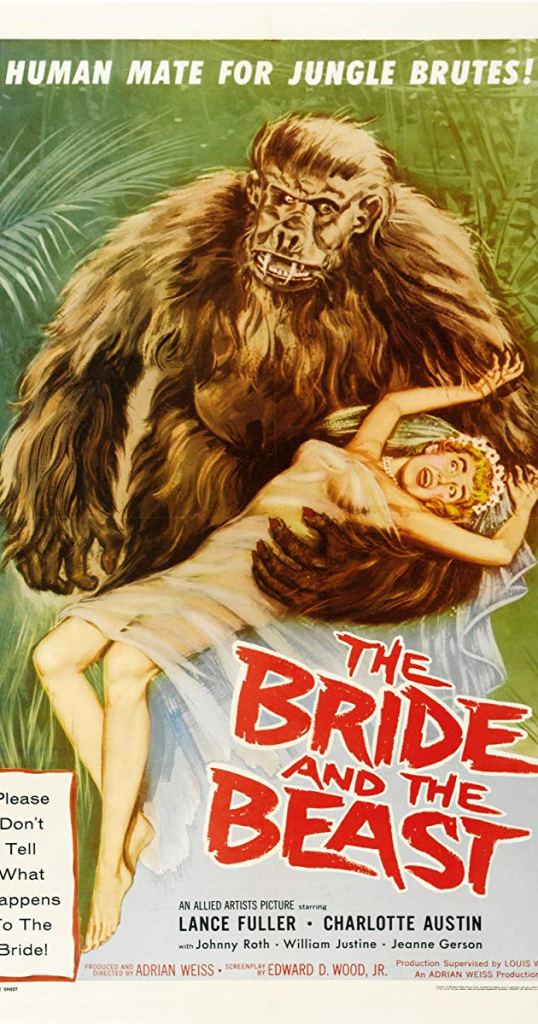
The 1958 film, The Bride and the Beast, tells the story of newlyweds Dan (Lance Fuller) and Laura Fuller (Charlotte Austin).  Dan is an overly macho and chauvinistic big game hunter who is so into hunting and capturing animals that he even keeps a gorilla named Sparky in the basement of his home.  I’m not really sure that’s legal and, even if it is, the logistics of keeping a gorilla in your home seem like they would be beyond the capabilities of moron like Dan.  Then again, when Sparky gets loose and tries to attack Laura, Dan is forced to shoot him.  So, I guess the movie was kind enough to prove my point.

Laura, though grateful to be alive, cannot stop thinking about Sparky and soon, she’s having dreams about her past life as a gorilla.  Because Dan doesn’t believe that his wife was once a gorilla, he takes her to the jungles of Africa for their honeymoon.  While Dan proves himself to be not quite the ideal romantic husband by keeping himself busy by hunting a killer tiger, Laura finds herself being drawn back to her former existence as the Queen of the Gorillas.  Dan may be able to save his camp from the tiger but will he be able to save his wife from the primates that want her for their bride?  And will Laura maybe be smart enough to realize that a normal husband would not react to his new bride hatred of hunting for forcing her to go on a safari for her honeymoon?  I mean, really, everything that happens in this film is pretty much Dan’s fault.  Here’s hoping that Laura divorced him and married a smarter 50s hero.  Like maybe Jeff the pilot from Plan 9 From Outer Space.  Now that was a man!

This very low-budget film, which is full of stock footage and sets that wobble whenever any of the actors bump into them, has gained some attention in recent years because the script was written by Edward D. Wood, Jr.  As such, there’s a scene in which Laura undergoes hypnosis and delivers a monologue about how much she loves her angora sweater.  (“It felt like the fur of a small kitten.”)  The nonsensical plot and dialogue could only have come from Ed Wood.  Unfortunately, Wood himself didn’t direct the film.  That job falls to Adrian Weiss and, as a result, the film’s direction doesn’t feature any of the quirky weirdness that one typically associates with a Wood production.  The film gets off to a good start, with Dan revealing that he keeps a gorilla in his basement and coming across like some sort of mad scientist but, once the action moves to the jungle, things start to drag as Weiss takes a bland and workmanlike approach to a story that demanded a more imaginative approach.

The film does conclude on an enjoyably odd note, one in which overly macho Dan discovers that it takes more than a rifle and a hunting hat to be king of the jungle.  In the end, though, this film is mostly just for Ed Wood completists.
Horror on the Lens: Baffled! (dir by Philip Leacock)


Leonard Nimoy is a race car driver who can see into the future and who uses his powers to solve crimes!

Seriously, if that’s not enough to get you to watch the 1973 made-for-TV movie Baffled!, then I don’t know what is.  In the film, Nimoy takes a break from racing so that he and a parapsychologist (played by Susan Hampshire) can solve the mystery of the visions that Nimoy is having of a woman in a mansion.  This movie was meant to serve as a pilot and I guess if the series had been picked up, Nimoy would have had weekly visions.  Of course, the movie didn’t lead to a series but Baffled! is still fun in a 70s television sort of way.  Thanks to use of what I like to call “slow mo of doom,” a few of Nimoy’s visions are creepy and the whole thing ends with the promise of future adventures that were sadly never to be.  And it’s a shame because I’ve always wondered what was going on with that couple at the airport!

(I should mention that this is a personal favorite of mine and, as our longtime readers have probably noticed, I share it every Horrorthon.  I’m sharing it earlier than usual this month because, today, I’m having to take my car in to get the driver’s side window repaired.  I have no idea how long I’ll be at the shop but I look forward to watching Baffled when I get back!)

Enjoy Baffled!  Can you solve the mystery before Leonard?

October Positivity: The Climb (dir by John Schmidt)


2002’s The Climb is about two mountain climbers who begin as rivals and end up as friends.

Derrick Williams (Jason George) is an arrogant and cocky climber, the type who enjoys conquering mountains for his own personal glory.  (See where this heading?)  Even though his girlfriend’s father (Clifton Davis) does not approve of him, Derrick still says that he’s planning on marrying her.  Or at least, he does until he finds out that she’s pregnant and he realizes that being a father will require him to take on a lot of new responsibilities.

Michael Harris (Ned Vaughn) is a selfless climber who sees every climb as a team effort and who does everything for the Glory of God.  (Again …. see where this heading?)

Businessman Mack (Dabney Coleman, bringing a villainous edge to a character who I don’t necessarily think was meant to come across as being villainous) hires Derrick and Michael to climb a notorious mountain, all as a way to promote his business.  At first, Derrick doesn’t want to climb with anyone else but when his girlfriend tells him that she’s pregnant, he decides that he could use some time away from her and promptly heads off to the mountain.  Michael, on the other hand, is reluctant to climb because he doesn’t trust Mack’s company to keep all of their promises.  Michael feels that climbing the mountain for Mack would be the same as endorsing the company and telling people that the company is an honest company.

You can probably guess what happens.  Michael and Derrick climb the mountain.  They talk.  They bond.  They discuss they’re differing views on religion.  And then one of them tragically dies and the survivor is forced to reconsider his life.  It’s not a surprise when one of them dies because a movie like this can only really work if one of the two friends has tragically passed away before the end credits.  And it’s not really a surprise as to who passes away because it’s not like a faith-based movie is going to kill the guy who needs to learn a lesson about taking responsibility and being a father.  From the start, it’s obvious who among the two is doomed and, as such, there’s not much suspense to be found in The Climb.

On the plus side — and yes, I realize that I do always go out of my way to find something positive to say about nearly every movie I review but that’s just because I think every movie has something about it that can be appreciated — some of the climbing sequences are visually impressive.  It’s obvious that the film’s producers decided to spend a little money on the mountain scenes and, as a result, the scenery is nice to look at.  I’m a fan of nice scenery and I’ve sat through more than a few bad films just to see a pretty mountain.

Personally, and this won’t come as a surprise to anyone who knows me, I’ve never felt the need to climb a mountain.  If I can see what the top looks like from the ground, that’s enough for me.

Film Review: Brothers (dir by Arthur Barron)


First released in 1977 and based on the real-life story of prison activist George Jackson, Brothers opens with David Thomas (Bernie Casey) being charged with robbing a gas station.

Thomas explains that, while he was in the car with the people who robbed the station, he personally had nothing to do with the robbery and did not know that it was going to happen.  Thomas’s attorney tells Thomas that the smart thing to do would just be to plead guilty.  That way, Thomas will probably just spend a few months in jail as an accessory and then he’ll be a free man.  Instead, the judge sentences Thomas to a sentence of one year to life in prison.  Essentially, Thomas will be in prison until the State decides to let him out.

Thomas serves his sentence at Mendocino Prison, where he has to deal with threats from both the white prisoners and the guards.  Thomas’s cellmate is Walter Nance (Ron O’Neal), a political activist who tells David that he’s “letting your time do you.”  Nance educates David, teaching him about both chess and radical politics.  Soon, David is publishing an underground newsletter that is discreetly passed around amongst the black prisoners.

Meanwhile, on the outside, David’s younger brother, Josh (Owen Pace), is trying to free David from prison.  Josh approaches a radical professor named Paula Jones (Vonetta McGee) and asks for her help in publicizing David’s case.  Paula is at first skeptical but, after she reads David’s writings, she starts to correspond with him.  Soon, David and Paula have fallen in love.  However, when Walter is murdered by the racist guards and David starts to organize within the prison, both David and Paula find themselves being targeted by the government.

As I said at the start of this review, Brothers is based on a true story.  David Thomas is based on George Jackson, who was sentenced to a year to life for robbery and who, while serving time in Soledad Penitentiary, wrote two books that made him a cause celebre amongst political radicals in the early 70s.  Paula Jones is based on Angela Davis, who was placed on the FBI’s Most Wanted list after a gun registered in her name was used by Jackson’s younger brother during a shoot-out at a courthouse.  (The shoot-out, which is depicted in the film, led to the murder of Judge Harold Haley and the deaths of Jonathan Jackson and two prisoners.)  George Jackson was later shot and killed while attempting to escape San Quentin.  In the film, the fate of David Thomas is just as violent but slightly more poetic.

There’s still a considerable amount of controversy as to whether or not George Jackson was a hardened criminal or an innocent man who was targeted for his activism.  Brothers is firmly on the side of George Jackson and Angela Davis, portraying them both as activists who are fighting back against an unjust system that is determined to hold them down and destroy them if necessary.  Bernie Casey and Vonetta McGree both give good performances as David Thomas and Paula Jones.  Casey, in particular, smolders with an intensity that makes him instantly believable as someone who could organize a rebellion.  Unfortunately, the film itself moves a bit too slowly for its own good and it ends on a false note, suggesting that David’s sacrifice has managed to unify both the white and the black prisoners against the guards.  Considering that, up until that point, the film had been honest about racism in prison, the ending feels like an attempt to provide some hope to an otherwise downbeat story.  Unfortunately, the hope doesn’t feel earned.  Still, Brothers is an interesting historical document, one that deals with issues that are still being fought over to this day.

The TSL Horror Grindhouse: Simon, King of the Witches (dir by Bruce Kessler)


Simon (Andrew Prine) is a bearded man who lives in a storm drain and who says that he is on a quest to become a god.  He also says that he’s a warlock and he wants to make sure that everyone understands that there’s a huge difference between being a wizard and being a warlock.  Don’t call Simon a wizard!

Simon’s quest for godhood hasn’t led to much success so he makes his living selling trinkets and charms to gullible people.  One night, the police arrest him for vagrancy.  While sitting in jail, Simon meets Turk (George Paulsin), a gay male prostitute who quickly becomes Simon’s first disciple.  With the help of Turk, Simon is introduced to upper class society.  It turns out that Turk’s clients include several very wealthy people.  Simon is a hit on the party circuit.  Slumming hippies view him as a potential guru.  Wealthy people view him as a humorous oddity.  Simon meets other occultists and starts to engage in bizarre rituals.  He finds time to date Linda (Brenda Scott), the daughter of the totally square district attorney.  Some people insist that Simon is a fake and some people say he is the real thing.  For his part, Simon is soon getting revenge on all of his enemies and taking part in all sorts of freaky ceremonies as he continues his quest for supreme power.

Don’t let the supergroovy name fool you.  Like a lot of films about the 60s and 70s counterculture, Simon, King of the Witches is remarkably dull.  The action moves slowly.  The plot never really makes that much sense.  Andrew Prine gives a wonderfully over-the-top performance as Simon but the rest of the cast never really seems to wake up.  The film’s most interesting moments are the ones where Simon effortlessly switches from upper class society to “street” society.  Undoubtedly, this film’s portrait of jaded people looking for the new thing and getting taken advantage of by a sociopathic grifter felt very familiar in the 70s.  And, actually, I guess it still does.  There’s still a lot of wannabe gurus out there and a lot of people who have neither the willpower nor the intelligence to see through them.  But the film itself just too boring to really be effective.  Probably the most interesting thing about the film is that Simon seems to be a mix of Charles Manson and Rasputin.  Like Manson, Simon knows how to take advantage of those who are lost and seeking a place where they can belong.  And, like Rasputin, Simon turns his sordid lifestyle into an asset when he’s trying to thrill the stuffy old folks.

As I mentioned earlier, the film’s saving grace is Andrew Prine’s intense performance as Simon.  Prine himself was an up-and-coming actor with a bright future ahead of him until his girlfriend, Kathryn Kupcinet, was murdered in 1963.  As the boyfriend, Prine was immediately a suspect.  Though the police quickly cleared him, the scandal still derailed his career and he ended up spending the rest of his career in films like The Town That Dreaded Sundown, Amityville II, and Simon, King of the Witches.

Playing With Fire (1985, directed by Ivan Nagy)


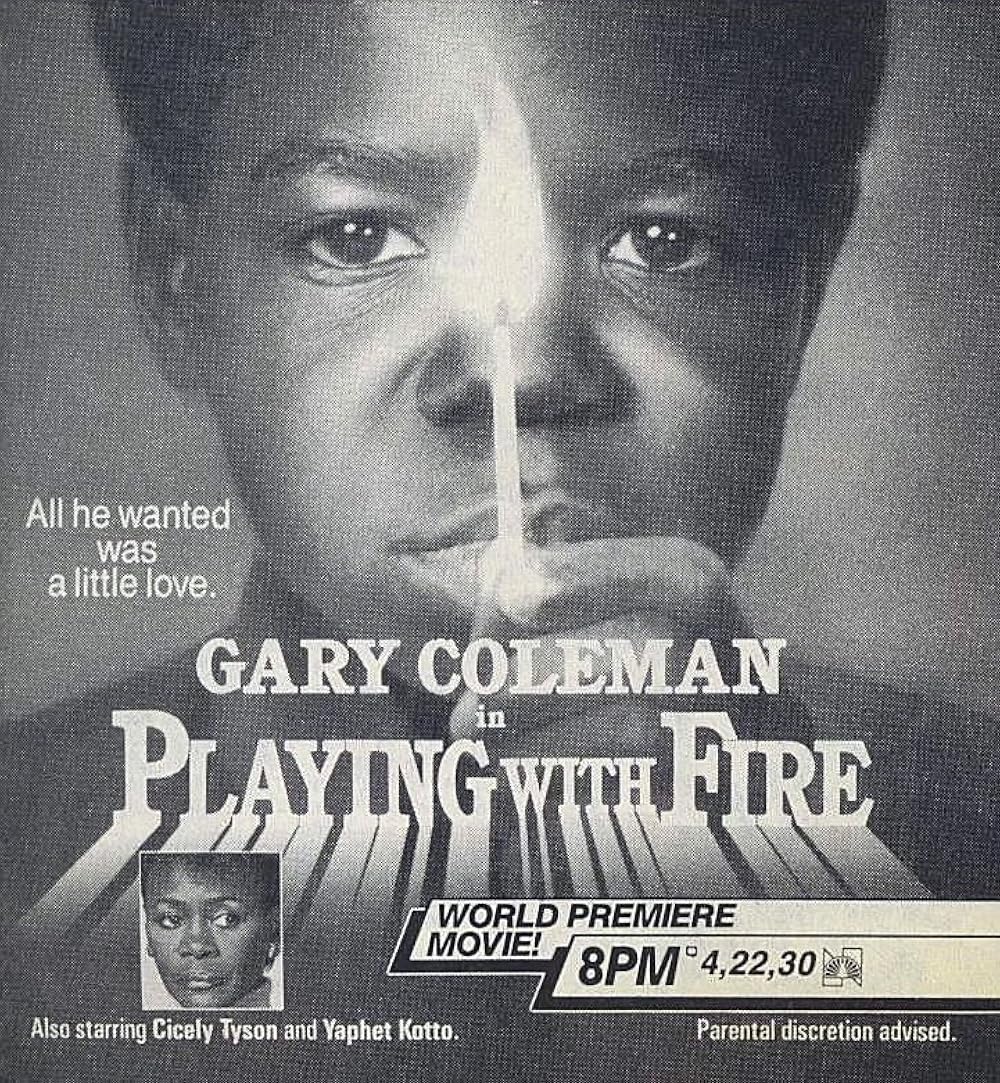
David Phillips (Gary Coleman) is a teenager who sets fires when he gets upset.  He has many reasons to be upset.  His parents (Ron O’Neal and Cicely Tyson) are getting divorced and are constantly fighting.  His teachers at school are always getting on his back.  He has to take care of his younger siblings and his dog.  He can’t even get the bigger kids in school to let him play basketball with them.  At first, David just plays with his lighter but, after he accidentally sets his mother’s coat on fire, David discovers that he likes to watch things burn.  David and his mother both claim it’s just coincidence that David is always nearby whenever a fire breaks out but Fire Chief Walker (Yaphet Kotto) knows what’s really going on.  After David nearly burns down his house, Walker tries to reach him before it’s too late.

This isn’t really meant to be a horror film  but it’s shot like one, with plenty of scenes of Gary Coleman staring at a burning fire with a possessed-look in his eyes.  The movie tries to make David sympathetic but the scene where he threatens his own dog with a lighter suggests that David has more problems than just his parents splitting up.  This was Gary Coleman’s first dramatic role.  I think it may have also been his only dramatic role.  It’s not that he’s not convincing as a really angry kid.  It’s just that he’s Gary Coleman so, no matter how much the movie tries, it still comes across as being a special episode of Diff’rent Strokes where Arnold becomes a pyromaniac.  Coleman tries to play up the drama of the situation but it’s hard not to laugh whenever he looks shocked at one of the fires that he has just started.  Every scene seems like it should end with Conrad Bain showing up with the cops.

For years, this movie was next to impossible to find but finally, someone found an old VHS tape in their garage and uploaded the movie to both YouTube and the Internet Archive, ensuring the world will never forget the time that Gary Coleman played with fire.

One final note: the director is better known for eventually becoming business partners with notorious Hollywood madam, Heidi Fleiss.

“Whisperer”, Short Film Review, By Case Wright


Hi Horror and Case Lovers! So, I could not find a title card image for this short, but clowns scare the $#!% out of me so here we are. Just remember, that’s their real skin, not makeup. The oversized shoes and red nose are just to get you to let your guard down before they kill you! Now, you are able to face the world once again!

The short begins with a college student doing some cleaning at home. He checks the hallways and he sees…. yes a clown! Damn it! WHY?! WHY?!

Clowns, between you and me – why are you even a thing? I know what motivates you to make people mess their pants regardless of the season- you must feed, but why?! Can’t you just be anything else and still feast upon the living?

The Clown confronts the young man and…. he tries to kill him with a crowbar, but the would-be victim fights back with GUNS!!!
Yes, GUNS ARE THE ANSWER! GUNS! They are Clown Repellent! They are Clown-Be-Gone!
The Crowbar vs Clown is pretty effective too.

Now, is this short the result of two bored frat guys? Probably, but I’m ok because clowns are a menace!
Yes, it ends with a gun solving the Clown Menace! This short worked for me!

Horror Film Review: Premature Burial (by Roger Corman)


Poor Guy Carrell (Ray Milland!)

The character at the center of the 1962 Edgar Allan Poe adaptation, The Premature Burial, Guy spends his days terrified of being buried alive.  Like his father before him, Guy suffers from a disease that can make him appear to be dead despite actually being alive.  Guy is convinced that his father was buried alive and swears that he could even hear his father crying for help inside of his tomb.  Though his fiancée, Emily (Hazel Court), insists that Guy is driving himself mad with his fears, Guy continue to spend his time trying to invent a coffin from which one can easily escape.  Even after Emily and Guy are married, Guy continues to obsess.

Finally, faced with the prospect of opening his father’s tomb to discover whether or not his father truly was buried alive, Guy appears to drop dead of a heart attack.  But is he really dead or is he about to be buried alive!?  And who is responsible for the series of mysterious events that apparently drove Guy to collapse of fright?  Watch the film to find out!  Or read the Edgar Allan Poe short story.

This was the third of Roger Corman’s Edgar Allan Poe adaptations and it’s the first one to not feature Vincent Price as the lead character.  For the most part, the members of the small cast all do a good job with their roles.  Ray Milland is both sympathetic and a little frightening as the obsessed Guy.  Heather Angel is properly enigmatic as Guy’s overprotective sister and Hazel Court will keep you guessing as far as her character’s motivations are concerned.  Dick Miller has a small but key role as a grave digger who seems to take just a little bit too much enjoyment from his work.  The film’s atmosphere is properly gothic and, if the film isn’t as visually audacious as the first two Poe films, Corman still finds time to include a creepy and psychedelic dream sequence.

That said, Vincent Price is still very much missed.  Corman reportedly wanted to use Price but, because Corman produced and financed the film  himself, Corman’s former business partners at American International Pictures would not allow Price to appear in the film.  (Price was under exclusive contract to AIP.)  By the time Corman and AIP worked out their disagreements and again joined forces, Ray Milland had already been cast in the lead role.

While the actors all do a good job, it’s hard to deny that Guy Correll would have been an ideal role for Vincent Price, even if it would have meant essentially re-doing his performance from The Pit and the Pendulum.  It’s not just that the film misses Price’s theatrical acting style.  The film also misses the energy that Price brought to the previous two Poe films.  The Premature Burial moves at a stately pace and, in the end, it’s a bit too slow and respectable for its own good.  Price would have jazzed things up and made a decent film into a truly memorable one.  Fortunately, Price would return for the later Poe adaptations.

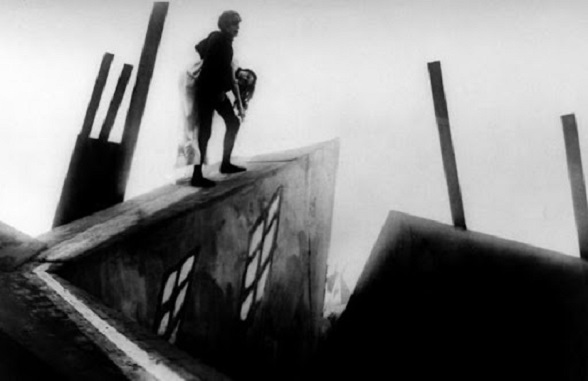
Horror on the Lens: The Cabinet of Dr. Caligari (dir by Robert Wiene)


The Cabinet of Dr. Caligari (1920, dir by Robert Wiene, DP: Willy Hameister)

The Cabinet of Dr. Caligari is a film that I’ve shared many times previously on the Shattered Lens.  The first time was in 2011 and then I shared it again in 2014, 2015, 2016, 2017, 2018, 2019, 2020, 2021, and 2022!  Well, you know what?  I’m sharing it again because it’s a classic, it’s Halloween, and everyone should see it!  (And let’s face it — it’s entirely possible that some of the people reading this post right now didn’t even know this site existed in any of those previous years.  Why should they be deprived of Caligari just because they only now arrived?)

Released in 1920, the German film The Cabinet of Dr. Caligari is one of those films that we’ve all heard about but far too few of us have actually seen.  Like most silent films, it requires some patience and a willingess to adapt to the narrative convictions of an earlier time.  However, for those of us who love horror cinema, The Cabinet of Dr. Caligari remains required viewing.  Not only did it introduce the concept of the twist ending (M. Night Shyamalan owes his career to this film) but it also helped to introduce German expressionism to the cinematic world.

My initial reaction to The Cabinet of Dr. Caligari was that it simply wasn’t that scary.  It was certainly interesting to watch and I was happy that I was finally experiencing this film that I had previously only read about.  However, the film itself was obviously primitive and it was difficult for my mind (which takes CGI for granted) to adjust to watching a silent film.  I didn’t regret watching the film but I’d be lying (much like a first-year film student) if I said that I truly appreciated it after my first viewing.

But you know what?  Despite my dismissive initial reaction, the film stayed with me.  Whereas most modern films fade from the memory about 30 minutes after the end credits,The Cabinet of Dr. Caligari has stuck with me and the night after I watched it, I even had a nightmare in which Dr. Caligari was trying to break into my apartment.  Yes, Dr. Caligari looked a little bit silly staring through my bedroom window but it still caused me to wake up with my heart about to explode out of my chest.

In short, The Cabinet of Dr. Caligari passes the most important test that a horror film can pass.  It sticks with you even after it’s over.

For the curious with an open mind to watch with, here is Robert Wiene’s The Cabinet of Dr. Caligari!

Enjoy!

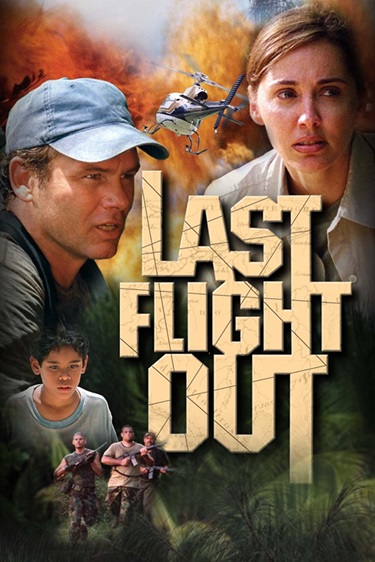
October Positivity: Last Flight Out (dir by Jerry Jameson)


The 2004 film, Last Flight Out, tells the story of Dan (Richard Tyson) and Anne (Bobbie Phillips).

Once upon a time, Dan and Anne were in love.  Perhaps they were attracted by the fact that their names rhymed.  “Dan and Anne” is just one of those phrases that just rolls off the tongue.  Unfortunately, it takes more than rhyming names to make a relationship work.  Dan was a cynic and Anne wanted to make the world a better place and, in the end, she decided she could do that better without him than with him.

Now, Anne is  missionary, working with Dr. Matteo Barrero (Adriano Gonzalez) at a village in a South American country that is, more or less, ruled by a drug cartel.  And Dan is a pilot, flying missions throughout the world and trying not to get emotionally connected with anyone.  Anne’s mentor, Tony Williams (Cliff de Young), approaches Dan with a job.  The village where Anne is working is currently under siege from a drug lord who demands that all the villagers come to work for him.  The payment that drug lord offers for their work is simple.  If they work for him, he will reward them by not killing them.  If they don’t work for him …. well, you get the idea.

Dan flies to the village, mostly to try to get Anne to safety.  But Anne explains that she won’t abandon the villagers to the drug lord.  Eventually, Anne is able to convince the village’s chief that the entire villages needs to be moved to safety.  That’ll mean putting all twenty of them on Dan’s plan and flying them away from the drug lord’s army.  Dan explains that, even if they take all the seats out of the plane, they’ll still be overweight and unable to take off.  Both Anne and Matteo tells Dan to have a little faith.

And, while the drug lord’s army fires at them from the ground, the plane does manage to take off!  But Matteo is left behind.  Back in civilization, everyone is convinced that Matteo is dead.  Dan, however, is determined to go back and, if possible rescue Matteo.  That, of course, will mean flying straight back into the gunfire and once again, risking his life for another person.  And, in this case, his name doesn’t even rhyme with Matteo’s!

Last Flight Out isn’t a bad little film.  Of course, those tempted to watch the film on Tubi should be aware that it is a faith-based production, so Matteo is very outspoken in his belief in God and the film does feature prayers while in flight.  Naturally, Dan is the atheist who changes his position after witnessing the bravery of the missionaries.  That said, the film is smart to emphasize action over preaching and Richard Tyson gives a likable performance as Dan.  In the end, one need not be filled with faith to know that slave labor is wrong.  Director Jerry Jameson, who directed a host of disaster films in the 70s and the 80s, keeps the action moving at a steady pace and, the end result, is a watchable action film.