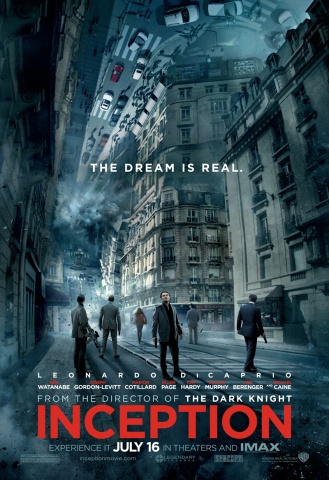
Inception: A Grant Morrison Level Mind Frack (spoiler free)


I don’t want to ruin the Inception experience for anyone so I will mention elements that were present in the trailer.

Reality vs Dream: The audience is presented with a scenarios where Oneiroinauts (like astronauts of the dream plane) are unable to differentiate between the waking world (reality) and dreams.  This caused me to recall Spike Spiegel’s samurai ideal (considering oneself as dead and the idea of death being an awakening from a dream) as well as Morrison’s discussion on reality, space and time) and its nature.

Viral Idea: Inception introduced the concept of infectious pathogen-like ideas that have the potential to enhance or corrupt the host.  This brought to mind a Grant Morrison creation: Weapon XII, a biological weapon with a viral consciousness that mentally degraded its victim and reshaped their minds into an extension of its own.

Limbo: Limbo is a netherworld spawned from the dreamer’s unconscious mind that an Onieroinaut could become trapped in. This was similar to the limbo featured in Final Crisis: Superman Beyond, a hell formed from the collective unconscious mind of comic book readers.

Grant Morrison speaking about reality, space/time and our perception of the three.

Images are courtesy of IGN.com and the videos are courtesy of Google Videos and YouTube.

Shamanism: A Recurring Theme in Warren Ellis Fiction


A shaman is defined as a person who acts as intermediary between the natural and supernatural worlds, using magic to cure illness, foretell the future, control spiritual forces, etc.Mr. Ellis created/redesigned characters that functioned as shaman in his books (like Nate Grey in the Counter X series, the Doctor from Stormwatch/Authority, and Century Babies in Planetary).
Nate Grey functioned as intermediary between the 616 reality and parallel as lower and upper realities, and maintained a multiversal balance. Upper realities were virtual utopias like the Deva Realm from the 6 desire realms in Buddhism. The lower realities were hellish planes like the Preta and Naraku realms.
The Doctor (all iterations) and the Century Babies functioned as mediums for humanity and Gaia (the Earth itself) and maintained harmonic balance.

He also introduced ideas like:

“Down there are people called ayahuasqueros. Tribal doctors, mystics, medicine men. They take this stuff called ayahuasca, this awful mush they brew up out of vines and stuff. It’s a psychedelic. They hallucinate all over the place — but it’s their belief that the visions are actually another dimension. When you ask them why they take it, they say it’s for working with the ancestors. They’re necronauts. They travel in the place of the dead. And what they bring back are messages from the afterlife.”
– Sam Wilson (in Ultimate Nightmare)


“You are aware through esoteric scientific research conducted by many people over the Twentieth Century. that souls do not die. Souls are some form of electromagnetic field that continue to inhabit the body after death. Bones, crackling with strange and imperceptible energetic activity. And we buried them. Are they still aware? Can the dead still perceive we don’t yet know. Is that happens? We lay in the dirt, still somehow aware of being in there? And gravity draws us into the earth. And plants grow. Ayahuasca. Peyote. Psylocibin. Stropharia Cubensis. The drugs. Yes, historically, we consider them shamanic drugs, and they were overlaid with ritual and religion and the other crap of archaic societies. But all societies had their speakers to the dead and their oracles who looked into other places. In legend, the Oracle at Delphi stood at a pool and inhaled its vapor, the pneuma, to oraculate. It was recently found that a vent beneath the pool expressed ethylene, a hydrocarbon gas that creates an euphoric derangement, into the water. Ethylene, the pneuma, is a plant hormone. The dead lay in the ground, their souls oiling out from their bones, into the earth, into roots… that effervesced into the clouds that the oracle inhaled to see new worlds. Into the plants that our speakers to the dead ingested to do their business.
– Melanctha (in Planetary)

“You’re a machine. I’m a machine. Our parts are made out of water and meat and minerals, but we’re walking pieces of engineering. Everything’s a machine. Plants, everything. When we eat a plant, we disassemble it, junk what we don’t want and plug the parts we need into our machine. What if these jungle drugs are machines we can ride?”
– Sam Wilson (in Ultimate Nightmare)

His ideas lead me to look at shamanism, the soul, death and planes of existence, from a different angle. I would love to read an Ellis book where he jumps head first into this theme and runs wild with it in a similar manner to his Crooked Little Vein novel.

Images courtesy of Ben Templesmith and Freak Angels.Warren Ellis’ images courtesy of Warren Ellis’ Official Livejournal.

The Walking Dead – Motion Comic (AMC)


With Comic-Con over the hype surrounding the tv adaptation of Robert Kirkman’s zombie apocalypse comic book series has reached stratosphere status. The 6-episode first season was already one of the most anticipated new shows of the upcoming fall season from just the fans and geek community talking about it nonstop in the internet, but with it’s unveiling at this year’s San Diego Comic-Con the mainstream press has latched itself onto the series. The common reaction to the series at the panel in Hall H seemed to be a unanimous positive one.

Character photos, Drew Struzan posters and new trailers have added to the hype. The comic book series has hit it’s milestone 75th issue. Sales of the comic and it’s collected softcover and hardback graphic novels have seen a spike in sales. AMC has added to the series’ website a taste of the the comics for people to get an idea of what to expect from the series. This motion comic of the first issue of The Walking Dead really captures the horror and hopelessness of the world Kirkman has created and Daabont plans to show up on the TV screen.

Source: The Walking Dead on AMC

Web Comic: The Zombie Hunters


The Zombie Hunters

I think everyone who has been visiting and reading this blog might have figured out that I am a huge fan of the zombie genre. If some haven’t come to that conclusion let me just get it out of the way and say that I do indeed love the zombie genre and everything associated with it. Sometimes the heart wants what the heart wants.

For the past couple months I have had the pleasure of reading one the best web comics still running on the web. I am talking about Jenny Romanchuk’s very own on-line zombie comic book series, The Zombie Hunters. The series began in around mid-November of 2006 and has gained quite the loyal fanbase as word-of-mouth about this particular zombie webcomic spread like the undead infection that is its subject.

I came across the webcomic while I was bored and going through the usual surfing of my favorite zombie-related websites. One site had a poll asking people which zombie webcomic was their favorite and listed all that met criteria. Ms. Romanchuk’s webcomic was one of them and being bored I clicked the link and to say I was impressed and instantly hooked would be quite the understatement. The storytelling is quite good with some scenes quite emotional and others knee-slapping funny. The artwork is very good with clean lines, not much clutter to distract the eyes and very good coloring done. Since The Zombie Hunters is about a zombie apocalypse the comic is also quite violent and gory as it should be.

With Apple’s iPad now being seen as the start of a new era in digital distribution of comics both in print and those just on-line I truly hope that Ms. Romanchuk finds a way to sell her series through that medium if just to expand her fanbase and really make some money off of an excellent comic book series. Sometimes the little guys need to be rewarded for a job well done and one that is still being done well.

Official Site: The Zombie Hunters

10 Favorite Comic Books of the Past Decade


The first decade of the new millenium found me in a weird place when it came to one of my big hobbies after high school. From 1989 all the way through the 90’s I was a major comic book reader and collector. I would say that I wouldn’t deny the charge that I might have helped the so-called “comic book speculator era” rise to the forefront of the hobby. Artists like Jim Lee, Whilce Portacio, Todd McFarlane were like rock stars in that era and their titles would fly off the shelves the moment they came out. I and others would buy multiple copies, carefully board and bagged them (but also read them) and wait for their price to go up.

Some titles did go up in price and were sold for a profit thus feeding the notion that I could make a lot of money off of these comic books. I was one of the early adopters of the independent titles which really fed the speculator market. First there was buying up all the early Evil Ernie issues before most of the public got wind of just how awesome (and limited their printing were) then doing the same for William Tucci’s Shi title which I must say really defined a speculator’s dream title. It had buzz to it due to the bad girl art, the story was not bad and had an exotic taste to it and, best of all, the printing on the title character’s first appearance was practically non-existent.

By the time the speculator’s market finally burst it’s bubble and dragged the comic book industry down with it I was pretty much burnt-out on comic books. I still read them and bought the titles whcih caught my eye, but the days of buying every issue of most every title from Marvel/DC/Image were done with. I even stopped buying and reading them in the beginning of the 2000’s. The industry was in a creative rut in the early years of the new decade. While superhero titles were floundering and publishers (small and medium ones) were declaring bankruptcy and selling off properties to the highest bidder a curious thing happened. I got back into comic books and it wasn’t the hero titles which drew me back in but the mature, independent titles from Vertigo, Dark Horse, Image and small-indie publishers.

This was a very good thing since I missed having the books in my hands. I wasn’t buying them now to collect but to read. I still handled them with kid gloves but I wasn’t worried about whether they would turn me a profit anymore. So, for most of the decade I was an indie-fool who pretty much avoided most the titles from Marvel/DC. While I still read some titles from the two main comic book houses it wasn’t on the same level pre-2000’s.

Below is the list of the 10 titles that were my favorite of the decade. Some were considered the best of the decade and some just my favorite because they spoke to me as a reader. This time they will be in order of importance unlike my previous Best/Fave lists.

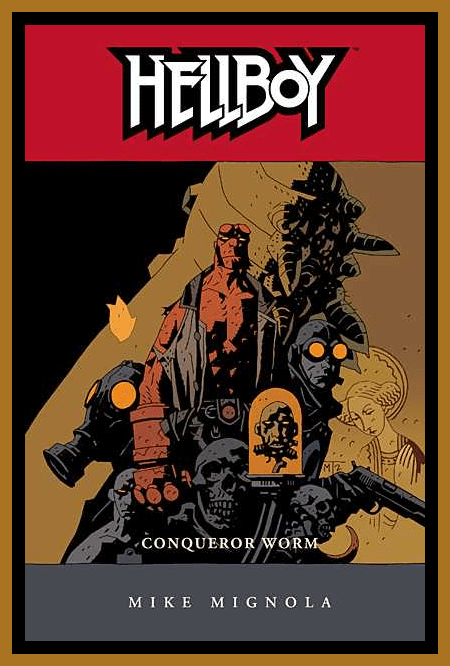
10. Hellboy by Mike Mignola (Dark Horse Comics)
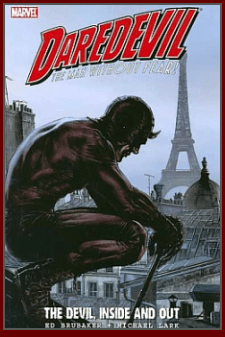
9. Daredevil by Brian Michael Bendis/Ed Brubaker (Marvel Comics)
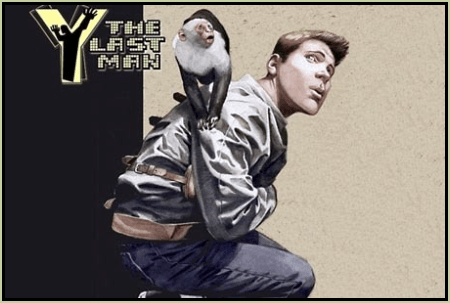
8. Y: The Last Man by Brian K. Vaughn (Vertigo)
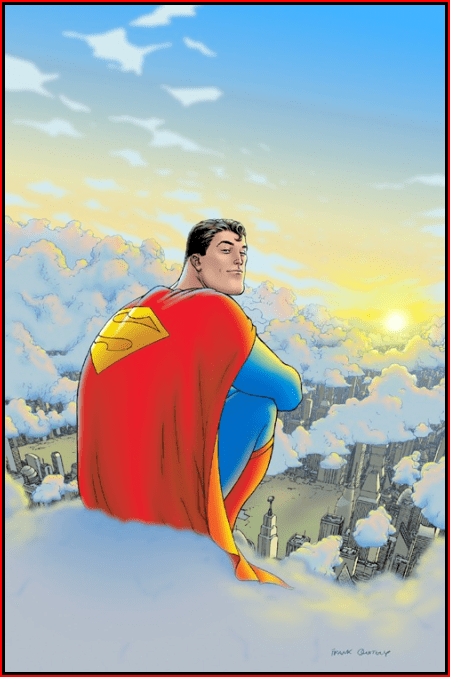
7. All-Star Superman by Grant Morrison (DC Comics)
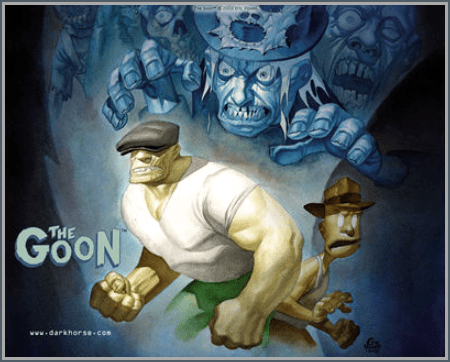
6. The Goon by Eric Powell (Dark Horse Comics)
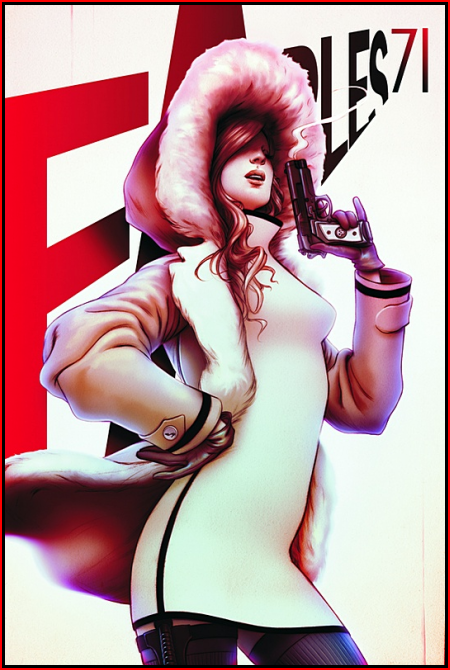
5. Fables by Bill Willingham (Vertigo)
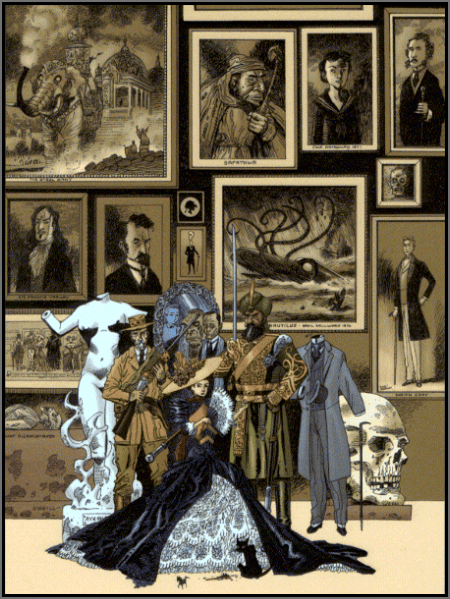
4. The League of Extraordinary Gentlemen by Alan Moore (America’s Best Comics)
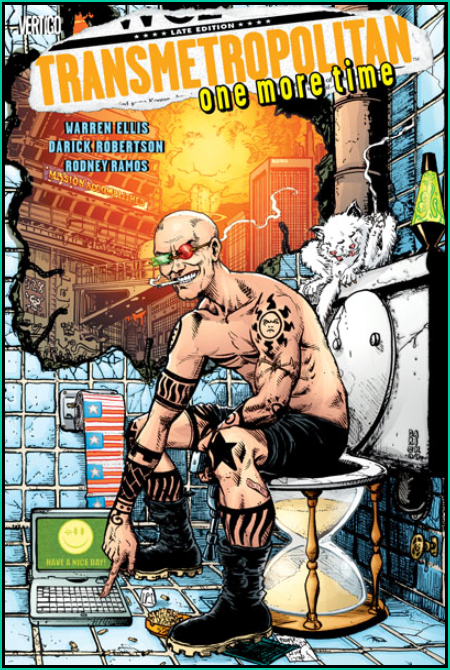
3. Transmetropolitan by Warren Ellis (Vertigo)
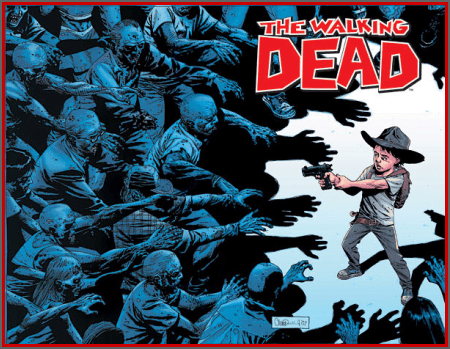
2. The Walking Dead by Robert Kirkman (Image Comics)
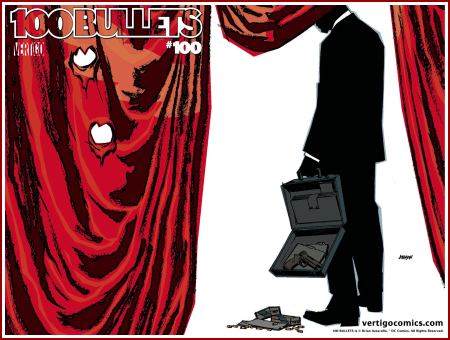
1. 100 Bullets by Brian Azzarello (Vertigo)