Nightmares and Dreamscapes: From the stories of Stephen King, Battleground, Review by Case Wright


bg4.jpg

Happy Horrorthon!!! I decided to do a bit of a hybrid review of one of my favorite stories:  “Battleground” by Stephen King.  This book is part of a short story anthology in Night Shift.  Battleground was written in 1972 by King.  This was back in the days when he wasn’t just hungry, he was starving.  He was working in laundries, substitute teaching, maybe even a paper route.  This particular work was published in Cavalier, which was a low-rent Playboy.  In those days, he would sell stories to Swank – a low-rent Penthouse as well.  Many of these stories were real gems or at least gems in the rough.  For example, Night Surf (Cavalier and Night Shift) evolved into his opus The Stand about a decade later.  Battleground was made into a 52 minute long episode of the above short-lived series (watch them on youtube before they are taken down!!!).

This episode starred William Hurt and like the short-story there is ZERO dialogue, giving the episode a silent movie feel that is very compelling.  Throughout the episode, you only hear ambient noise or grunts or yells, but no spoken dialogue.  In fact, even when a newscaster is announcing that a murder has taken place, it’s done with subtitles.  This is as close to genius television as it gets.  I was truly saddened that it was not renewed.

The episode depicts William Hurt as a nameless hitman who is taskered to kill a toymaker.  He does.  When Hurt goes back home to his San Francisco condo, he receives a package.  Inside the package is compilation of army men and “additional surprises”.  These aren’t your grandpa’s plastic army men; however, they are alive and they have cruel intentions for Mr. Hurt!

Within moments of opening the package, the army men attack William Hurt in very Army like fashion. They take a covered position under Hurt’s couch and open fire, forcing William to flee to the bathroom.  This solace is short-lived because they have mini-howitzers.  Yes, I was primed to like this one.  There are even mini-helicopters that attack Hurt and they send nasty notes to one another demanding and refusing surrender.

The battle to avenge the toy maker’s death continues even out to the ledge of the building, which is likely an Easter Egg to another King story “The Ledge”.  Hurt prevails against the army men, but there are two more “Additional Surprises” 1) a commando who very resourceful and 2) a mini thermonuclear device.  The mini thermonuclear device is the only dumb part of the story because there is no such thing as a tiny Thermonuclear reaction – these are atoms we’re fusing or splitting afterall.  If detonated (regardless of its “mini” nature) , it would’ve destroyed all of San Francisco, but let’s give King- a liberal arts major- a break on that one because it’s still a fun story.

I will review a few more of these stories that were in Night Shift or episodes from this show.

Happy Halloween!!!!

Star Trek: The Next Generation, Through The Mirror, Review by Case Wright


mu11.jpg

Happy Horrorthon!!! We are back in the eeeeeeeeevil Star Trek universe! Why is it evil? Obviously, it’s because they have beards and follow strict capitalist principles with a healthy dose of militarism.

Before I get into the story, I want to write that David and Scott Tipton do a good job of not having the mirror universe characters seeing themselves as villains.  This may seem obvious, but it’s actually very common – especially in comics.  For example, Stan Lee once had Magneto lead a group of mutants with the moniker of Brotherhood of Evil Mutants.  I get that the X-Men thought they were evil, but why would Magneto?

This volume: Through the Mirror brings our Mirror Universe to the Next Generation universe our youth for supplies and plunder.  Bearded Picard is faced with blockades from rival species in his universe and needs materiel and plunder to fuel his war machine in order to bring the Terran Empire back to its former glory before Emperor Spock made them go all drum-circle kumbaya…bleh.

My main complaint with the Volume Two is actually in the first installment.  It opens with Worf investigating the theft of precious minerals from a mining colony in the “good universe”.  He sees the thief and nearly catches him.  This is a recurring issue with volume 2; the story should be only from the perspective of the mirror universe characters.  There is simply too much of the “good universe”.  They also have the “Good Universe” find an Andorian Ship that has been attacked by Evil Picard after the fact.  WHY?  Show us the Evil Planning, Show us the Pirate Picard attack, Show us why they believe they are justified.  We bought the book; therefore, we are invested in these anti-heroes.   The story could be great if we just get to bathe in their villany.  Don’t judge them.  This is their code.  This is their society.  They don’t see themselves as evil and neither should we.  We can only judge them as evil if they violate their own code of morality not ours.  This isn’t our universe.  The good universe should be treated like MSG a little is … ok… too much and you vomit.

Back to the story, Pirate Picard lures the good enterprise into a trap, hoping to seize it.  They fail, but they failed too much.  It should’ve been more of a draw with a push to the evil universe. Scott and David – the evil guys are your heroes.  They need to win at least a bit.  You can have a close game, but don’t have them get their ass kicked because it makes it too much of a Good Next Gen story.  The other knock is that they left Evil Barclay behind, dragging us back unnecessarily into the good universe.  You are thwarting them waaaaay too much.

It’s time for Evil Picard to kick some ass, but it in a good way.  Is it just for wealth for Pirate Picard?  I don’t think so.  In this universe, the Terrans see themselves as Superior like the British or Roman Empire.  Therefore, when the Klingons and Cardassians took back a lot of the Empire they likely took many Human captives as slaves.  This must be disgustingly unacceptable to Pirate Picard or any Terran Empire member.  Have them liberate a planet, rescuing Human captives.  From their perspective, they are not only NOT EVIL, but good because they are reasserting rightful human dominance to their universe.   If you have to, make some propaganda posters with Pirate Picard.  Make it personal for Pirate Picard.  Maybe Picard’s brother joined the fleet and was captured?  Make it personal! Go for it!  Have Pirate Picard risk it all: mutiny, the ship, the Terran Empire to liberate and rescue his brother and nephew Robert.  It would be epic!!!!! You have an unending depth that you can give Pirate Picard.  Give him his version of humanity.

This volume was ok, but they are not fulfilling some great story potential here.   This could be a great way to reboot the series.  Just remember: They Don’t Consider Themselves Evil.


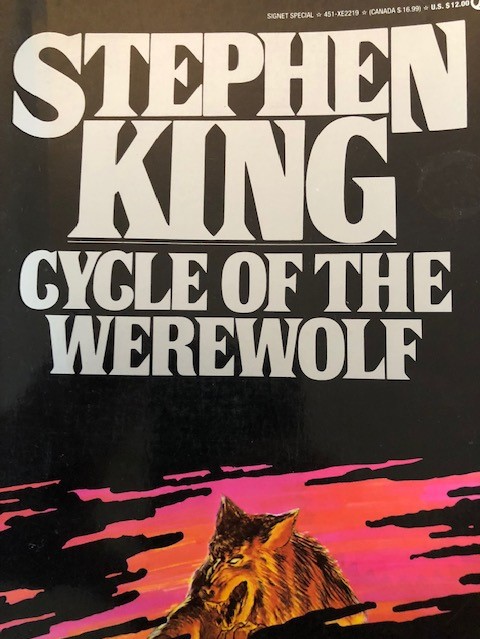
Cycle of the Werewolf, Book Review by Case Wright


cw1.jpg

Happy Horrorthon!!!! We are already in week 2 and we are makin’ it work!!!  Cycle of the Werewolf is very 1980s Stephen King.  It clocks in at 100+ pages and moves briskly.  In comparison, The Stand was 1000 pages and one chapter was actually from a Golden Retriever’s point of view….really.  If you ever watched old movies on Showtime, you’ll remember this story as “Silver bullet” starring Corey Haim.  The movie was actually fairly close to the book, except no Gary Busey.

The book takes place over the twelve months of the calendar year and I almost did this post as Twelve Days of Christmas song, but with werewolves….it could’ve worked!  The first six months follow the werewolf killing on every full moon in Maine.  As usual in Stephen King’s books the people of Maine are total dirt bags of all varietals: blowhard dirt bags, wife-beating dirt bags, racist dirt bags, and drunken dirt bags.  In short, the townsfolk could all use some killing.

The month of July comes and the story shifts to Marty, a handicapped child, who really loves the 4th of July.  As in the movie, Marty gets a bunch of fireworks from his Uncle and uses them to make the werewolf purblind.  We learn the werewolf is the town Baptist preacher.  As the months progress, Marty starts sending the preacher poison pen letters urging him to kill himself and signs his name to provoke a final confrontation.  The confrontation is a bit anticlimactic because Stephen never really fleshed out the story and the final battle is no different.  There is no close game or near run thing…nope…werewolf comes into the house, leaps at Marty, and Marty kills the werewolf dead. Boom.  That’s it.  It is fun to read these old Stephen King stories; he’s clearly still flexing his creative muscles and not totally sure of himself.

Have a spooky night.

Star Trek: The Next Generation, Mirror Broken- Review By Case Wright


eu1

Happy Horrorthon!!! This review is going to be a deep dive into eeeeeeevil nerdism.  I understand that not everyone reads this site is a techie nerd, BUUUUUUT I think we have a healthy plurality. Nothing is better than to merge an evil universe with my love of Star Trek.

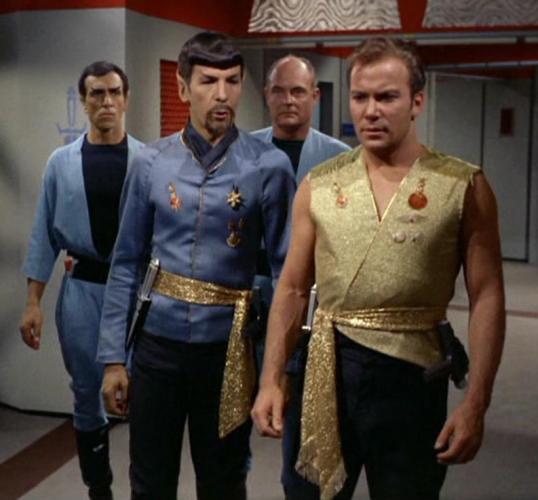
I’m going to give brief recap of the Star Trek Mirror Universe.  There’s a parallel universe in Star Trek that basically capitalist/imperialist.  In that timeline, humans are aggressive and conquered the Vulcans.  You can tell they are evil because they are avaricious and have beards- Think if Seattle/Portland went less drum circle and went more Roman.  It’s common to kill your superior to advance in the chain of command, it’s totally capitalist, and more fun in some ways because it’s a lot less model UN and much more Model Viking.

The evil universe never appeared in the Next Generation, but it did appear in Star Trek: The Original Series and then the second tier properties of Enterprise, Deep Space Nine and Voyager.  In those second tier properties, they set up a timeline that when the “Good Kirk” encouraged Spock to be reformist, it worked.  Too bad for Earth because the Empire got attacked by the other Alien Races we conquered and now Humans are pushed back to their solar system and will likely to be conquered.

Where there’s life, there’s hope.  In this comic, the writers Steven and David Tipton imagine if Jean Luc Picard was an uncompromising badass who is determined to bring the Terran Empire back to its former glory. How does he do this besides being really JACKED? Picard sets out to steal the Galaxy Class Enterprise.  This creates a great heist story, but it’s also super fun because it explores all of the old characters from the Next Generation and I mean ALL! There are character that were all but extras in Next Generation that are featured in the background of the book.  There are so many interesting takes on our old heroes.  Barclay is cunning, Data is experimenting with Borg-technology, and Geordie has his paramour from Next Gen, but she’s an alcoholic.  It’s so fun to go down this rabbit hole.

Back to the story, Picard assembles our familiar crew and seizes the Galaxy Class Enterprise for his own.  He could just take off and be rich, but he doesn’t.  Through some cool maneuvers, Picard decimates the Klingons and Cardassians …..nooooooo not the ones with large posteriors …. the ones with the krinkly heads.  Anyway, they go on war rampage and look like they might actually get to restore the Terran Empire!

TERRANS UNITE!

TEee

EV3

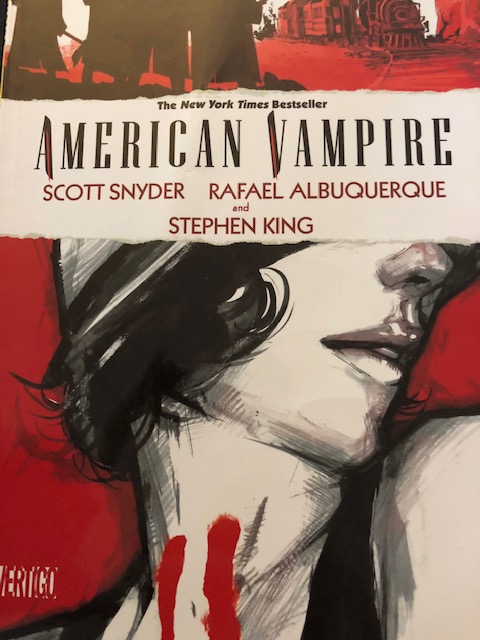
American Vampire – Review by Case Wright


av1

I got my computer back!!!! Happy October Horrorthon!!!

In every sport or endeavor, we can think of our stars: the paragons.  Stephen King is an unquestioned master of horror.  In comics, Scott Snyder looks down from that pyramid as well.  I’ve had the pleasure of meeting Scott Snyder a few times and you would never guess that he was the greatest comic book author in a generation.

I went up to Scott at the Emerald City Comic Con to have him sign my trade paperback.  He was surprised because my trade was not rare at all, but I wanted him to know that I loved his art so much that I wanted it signed, regardless of worth.  Because of that, he took out time to talk to me even though there was a line of autograph hounds.  Stephen King, on the other hand, I have no idea what’s he’s like in real life.  I have a hunch that he’s like most people I have known from Maine: DIY, tough, and fair.

American Vampire was a Supergroup: both King and Snyder wrote this book with the beautiful art of Rafael Albuquerque.  They took the genre of the Vampire and, much like the theme in the story, they made it evolve.  The result was a trio of interconnected revenge stories with wonderfully flawed heroes and anti-heroes.  The artists forced you to root even for Skinner Sweet – a man who thinks he’s not only above the law, but beyond it.  Skinner Sweet typifies the American Id: dangerous, violent, and oddly fair within his code.

The book opens with two struggling starlets in the 1920s Hollywood: Pearl and Hattie.  Pearl is all-in with the art; whereas, Hattie is more of the hack opportunist.  They are staying in a cheap apartment complex where a mysterious stranger hangs around.  Pearl is invited to Hollywood party where it turns out she is the main course for a host of hungry vampires.  Near death, the mysterious stranger finds her dying and he makes her like him: An American Vampire.  A vampire, unlike the relics of europe, he can walk in daylight and has few if any weaknesses.   When Pearl rises to her new undead life, she goes on a rampage of revenge to destroy those who stole her humanity.  Yes, I just got chills too!

The story flashes back to the old west where a lawman, Book, has captured Skinner Sweet, but not for long.  He busted out in an awesome train attack by his gang.  This is where we learn about the haughty European vampires and how they are arrogant, weak, and in our way.  Sweet tells Book that he sent poison to his wife, engendering Book’s revenge story against Sweet.  During the train attack, Sweet is turned into a Vampire and when he eventually rises Sweet and Book are sent on a collision course of revenge against the other.

There’s more revenge in this book than a Sicilian novel.  It must be burned into my Italian DNA to love these revenge stories, but there’s more to it that my accident of birth.  Revenge stories tap into the universal of what makes us human.  We’ve all been wronged and we have all wondered what it would be like to mete out own justice and live by our own law.  Skinner Sweet is not as much evil as he is part of civilization; he’s the American ID of our rugged individualism.  Pearl’s character is part of society, but must seek out her own revenge because as a vampire, she is unable to use society to bring her justice.  As the story unfolds, it’s clear that Pearl and Skinner Sweet are the most honest in their quest for revenge because at times Block uses his badge to hide behind his vendetta.  In all three stories, the vendettas are so satisfying and pure.  This book is rage distilled to its purest form.

Gerald’s Game- Book Review by Case Wright


ggame4

Hello Horrorthon Readers! It’s a great day to get scared and Retweet and Reblog my work! “Gerald’s Game” is a throwback for Stephen King.  It was published in 1992 and his readers were used to near or over 1000 page tomes.  This book clocks in at a meager 332 and is very pithy and often gross.  At this point in King’s life, he was in the middle of or just finished a relapse into drugs and alcohol.  Gerald’s Game mirrored his life in many ways; he was tormented by his past and incarcerated by his unresolved demons in his present.

The story depicts Jessie, a woman, who has become subservient to her husband.  Over the years of their unequal marriage, she has given up her career and identity at his request to be his quiet lawyer’s wife.  This manifests into Gerald’s last desire of pure possession.  He begins play a sex game with his spouse where she role plays a handcuffed woman and he plays a pirate rapist.  To get the full effect, Gerald uses an off season beach house to use for his game because there will be no one who could come to her aid.

When Gerald begins to perform is rape-game, Jessie decides that she has had enough.  She stands up to Gerald, but he decides to rape his handcuffed wife.  This causes Jessie to snap and kick Gerald right in the balls, giving him a fatal heart attack.  Jessie’s road to hell turns into the autobahn.  A dog comes by and eats her husband’s dead body, causing her psyche to kick into high gear hallucinations.  In order to save herself, she must deal with her past and how all of her decision led her to her current situation.

This book also deals with two horrific acts that recur often in King’s work – Incest and Rape.  The rape/incest scene in this book is purely vomit inducing.  We are forced to live through Jessie’s horrible present and past.  Her psyche appears often as a college friend and her younger self as a puritan who is being pilloried for sexual enticement.  The sexual enticement charge being her self-blame for her father raping her.  The book makes you live through each and every moment of her losing her sense of self and volition.

As in his other books, King likes the idea of a primitive sacrifice to conquer a monster or a demon.  We see that in It, The Stand, Misery, and his many other stories.  In this story, her psyche let’s her know how free herself after she deals with the ghosts of her past.  The solution: she must …… I’m not spoiling it that much.  You know me better than that by now.

I would recommend this book, but the creepy factor is extremely high.   I would recommend this book in audio or paper format.  It is perfect for a plane ride or if your weekend plans fall through.

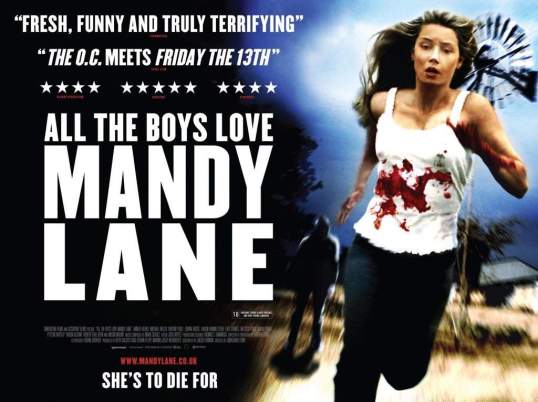
“All The Boys Love Mandy Lane” AKA All the Bland Love Blandy Lane, Review By Case Wright


ATHBLML6

IT’S OCTOBER!!!! WOOHOO!!!! The Most Wonderful Time of The Year!!!!

All The Boys Love Mandy Lane….for some reason.  Let’s begin by admitting Amber Heard is pretty, but …. love at first sight obsession?! Word?! Word?!  This film was written by Jacob Forman who went on to …. not much.  Jacob Forman does have a few recent credits as a special thanks over the last few years, which means he let someone sleep on his couch or something who was making a movie.  I wonder if the film deserved to make enough money to afford the futon that he used to get those special thanks.  But it’s on Netflix; so, if you’re on an elliptical and have already caught up on your YouTube subscriptions…. I guess this would be a choice that you could make … on purpose.

Jonathan Levine (director 50/50) directed this mess and he’s a very talented director for … Dramatic Comedy and Drama… Horror…not so much.  It was one of his first films (2006) and didn’t get a US release until 2013 … for good reason.  He’s very good at filming true to life couch conversations, which was certainly evident in 50/50, but in a Horror/Thriller the camera work/direction has to act as another character to pull us into suspense and punch us with payoffs.  This piece uses a lot of shaky cam in a 1980s style with artsy cuts that never allow us to feel worried about anyone on-screen.  The direction is like someone constantly spilling water on your charcoal as your trying to get the barbecue going.

The exploitation premise is simple enough: A bunch of boys try to corrupt a naive virginal archetype – Mandy Lane (Amber Heard).  Mandy is kind of bland and has a friend Emmet who everyone picks on and gets even by somehow convincing a guy to jump off his roof into a pool and he dies.  It’s weird.

After the pool incident, Emmet is a pariah. Mandy, on the other hand, is apparently the paragon of the feminine ideal because every man within 100 miles will give up his eternal soul for a tryst with her.  She agrees to go to a ranch in the middle of nowhere with a bunch of dudes and girls who are equally boring.  They arrive at the ranch and there’s a ranch hand on the property who is supposedly a Gulf War veteran even though he’s 27 and not in his later 40s.  Sigh.  Mandy Lane and all the other girls are obviously smitten with the ranch hand and why not….the ranch hand defies time and math itself!!!  As the song goes, every girl crazy for a …. man who defies the space-time-continuum! [Sung as ZZ Top]  The ranch hand is bored with the teens and returns to his home sweet shed.

Later, the teens start doing a ton of drugs and booze and Emmet or someone (dun dun dun) arrives and starts murdering everyone.  They are pretty gruesome deaths and it does border on torture porn at one point, which makes sense because it was written around 2004/2005 when Hostel was all the rage.  Even though people aren’t returning, all of the guys continue to try to make out with Mandy in the creepiest ways possible.  Mandy Lane has 20 lines of very bland dialogue total in the film and there is a slight twist at the end that fails to thrill.

What bugged me about this film is that horror is always treated as the Red-Headed Stepchild of film.  Everybody seems to think the genre is easy to write and do and this film is proof that both of those assumptions are false.  First, you need to at least have some sympathy for the people getting killed.  Second, you need to explain in someway at the halfway why they don’t just leave.  In this film, it’s not clear why the dudes want Mandy to stay at the halfway point of the film when it’s clear that she’s not interested in any of them.  Third, the camera work and direction to pull you into the house and into the story to ratchet up tension; otherwise, it’s just boring.

I’m glad that Jonathan Levine found his voice soon after this. Amber Heard did a fair enough performance for what she had to work with.  There was good performance by Melissa Price, but from IMDB, it appears that this film probably tanked her career.  In any case, I’m crazy excited that October is here!!!


Jack Ryan (Season 1) Review by Case Wright


jack-ryan-1035300-1280x0

There are two types of streaming television series: Get a sitter and watch in rapt silence with your SO and friends and Elliptical and/or Hangover Television.  Jack Ryan is in the latter category.  It’s a solid: NOT BAD.   Ok, it was a little weird seeing Jack Ryan (John Krasinski) put Osama Bin Laden’s AK-47 in a Jello Mold, but I thought it was a nice call back.  JK!

Jack Ryan has been a staple for nerds who like action for decades.  Jack Ryan is a data analyst badass who defeats terrorism and rogue commies, in other words, fictional.  He’s been in countless books, films, and video games.  The only other character that gets this much media has to use The Force.  In this iteration, Carlton Cuse of “Lost” fame takes a crack the characters.

Jack Ryan is a young Marine Vet turned CIA officer with PTSD.  He is teamed up with Greer who in the books and previous iterations was a tough talking Admiral with shitty dialogue; whereas, in this version, Greer’s a down and out muslim CIA officer whose career is in decline after killing a Pakistani asset.  They are on the hunt for the big bad: Sulieman.

Sulieman is the product of the American intervention in the Lebanese civil war in 1986, which…checks out.  He is hell bent on causing all kinds of mayhem in America and abroad.  They make a big show about how he was treated badly throughout his life-  Boo hoo.  I guess it was supposed to make him more human. I thought it made him really really whiny.  So what, you didn’t get your dream job that gives you the right to blow everybody up?!

The big question most of my readers have: Did John Krasinski – Jim- have a passable performance as a super spy?????  KINDA. He was pretty close at times, but was he held back by some purposely slowed down plot points.  I will get to the derpy derp moments later, but really the season should’ve been 6 episodes instead of 8 because there were too many contrivances, which inhibited John’s performance.  I have to write that he was in fact believable.   I did not know what to expect, but he delivered a good performance.

What they got right:

Sleepless nights with PTSD and drinking too much.  They portrayed that spot on.  I thought, I’ve had those late nights.  Ok, Pass!

The SEAL/Ranger team: I’ve known many Special Operators over the years and they are all real salt of the Earth types.  They played those matter of fact tough guys perfectly. Ok, Pass!

The inherent turpitude of civilian government officials: Very good, they’re all presumptive Dirtbaggus Americanus.  Ok, Pass!

The director building suspense? Yep, the direction was done quite well.  No complaints.

What was so very dumb?  NO F#@#!NG Way!!! NFW!!!! NFW!!!

1.  They portrayed Jack Ryan as dealing PTSD, giving him pause to shoot his weapon.  I get that, BUT he’s still a Marine.  There’s a scene where he makes the decision to shoot and misses by a mile just so they could have fight scene later.  This is just dumb.  Marines are ALL crackshots.  If you are in a Marine’s line of fire and he’s got a clear shot, you’re dust.  When you see it, you’ll roll your eyes.

2.  There’s a terrorist strike by Sulieman and he claims responsibility.  They show his face being plastered on all television networks. He’s on tv more than Anderson Cooper. Then, with no face disguise, he’s NEVER recognized.  We’re not talking just one time, but FIVE times at least.  His face would’ve been burned in everyone’s memory.  It was just dumb,  lazy, and contrived to keep the villain the in the action.

3.  A CIA Officer meets Sulieman’s wife and he just lets her walk away the same day as a major terror attack: NFW! Anyone who said that they knew an Osama equivalent would be sequestered and interrogated immediately, but it was obvious that they needed to pad the plot to squeeze three unnecessary episodes for story arc.

4.  There’s a duo who are drone pilots that are just sort of shoehorned into the story for no reason at all.  I couldn’t even figure out the message if drones were supposed to be good or bad.  I left thinking… Man, drones work really well.  Then, one of the drone pilots gets all guilty about a mistargeting incident and flies to Syria because ya know Active Duty Soldiers just get to go anywhere they like on leave…. NFW!!!!!!! Just think about it…we shouldn’t just get to go wherever we like.  It’s dangerous for us and could lead to a Soldier getting compromised.  NFW!

5.  There’s a plot point where a doctor becomes aware of a biological threat and just sends an email.  WHAAAA?!  She would be calling everyone and their brother to report that because she’s supposed to be smart.

Is it worth watching?

Yes, yes it is.  It’s got real problems in terms of story holes, but my hope is that Carlton Cuse learns from this.  He can DM me if he likes.  I’ll consult or script doctor for a very reasonable rate.  Jack Ryan is great for watching on the Elliptical at the gym or if you’re hungover or something.  It is NOT at this time get a babysitter and everyone be quiet television, but it is …. fun.
 

There’s A New Kid in Town: RETRO FAN Magazine


gary loggins's avatarcracked rear viewer


I frequent a place called Newsbreak, which has virtually every type of magazine you could ever ask for, from your tried-and-true legacy mags (TIME, PEOPLE, READER’S DIGEST) to the more esoteric (dedicated to things like raising chickens, bluegrass music, and mysticism). There are a few I pick up on a regular basis, mainly dealing with old movies: FILMS OF THE GOLDEN AGE, SHOCK CINEMA, and PHANTOM OF THE MOVIES’ VIDEOSCOPE, (along with my monthly fix of REASON, the magazine of libertarian thought). While browsing last week, I came across something new – the 1st issue of RETRO FAN, published by TwoMorrows, who are also responsible for publications like ALTER EGO (covering the Golden Age of Comics and edited by Roy Thomas), BACK ISSUE ( Bronze Age Comics), and JACK KIRBY COLLECTOR (’nuff said!).

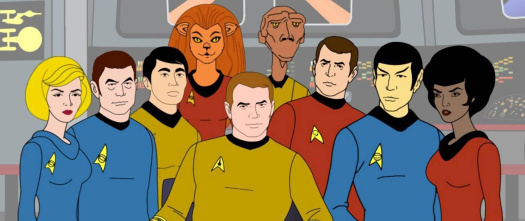
The animated crew of The Enterprise

RETRO FAN is for people interested in pop culture past, and…

View original post 223 more words

Book Review: The Spy Who Loved Me by Ian Fleming


First published in 1962, The Spy Who Loved Me is easily the most controversial of all of Ian Fleming’s Bond novels.

The Spy Who Loved Me was not the first of the Bond novels to keep James Bond off-stage for the majority of the story.  From Russia With Love, one of the best of Fleming’s novels, keeps 007 offstage until about halfway through the book.  The difference is that, even before he makes his first appearance, everyone else in From Russia With Love is obsessed with Bond.  As well, From Russia With Love dealt with a world that Fleming knew well, the world of international intelligence operations.

The Spy Who Loved Me, on the other hand, is mostly about a young Canadian woman named Vivienne Michel who spends most of the novel discussing her background until, eventually, she finds herself being held prisoner by two cartoonish American gangsters named — I kid you not — Sluggsy and Horror.  Fortunately, James Bond eventually shows up and rescues her.  Vivienne not only narrates the novel but Ian Fleming even gave her co-writing credit on the title page.

In the book’s prologue, Fleming explains:

I found what follows lying on my desk one morning. As you will see, it appears to be the first person story of a young woman, evidently beautiful and not unskilled in the arts of love. According to her story, she appears to have been involved, both perilously and romantically, with the same James Bond whose secret service exploits I myself have written from time to time. With the manuscript was a note signed ‘Vivienne Michel’ assuring me that what she had written was ‘purest truth and from the depths of her heart’. I was interested in this view of James Bond, through the wrong end of the telescope so to speak, and after obtaining clearance for certain minor infringements of the Official Secrets Act I have much pleasure in sponsoring its publication.

So, The Spy Who Loved Me is a bit of an experiment.  That Fleming often grew tired of Bond as a character is well-documented.  Not only did Fleming have to come up with a new adventure every year but Bond himself couldn’t change from being who he had been since the early 50s, a serious-minded civil servant who occasionally saved the world.  With this book, Fleming largely used Bond as a plot device, a deus ex machina.

Instead, the novel is dominated by Vivienne.  Oddly, for someone who wants to tell us all about James Bond, Vivienne spends a good deal of time focusing on her life before she ended up at that hotel.  We find out about her first boyfriend, an insincere British boy named Derek and also about her second boyfriend, an autocratic German named Karl.  The scenes with Derek and Karl almost feel like a parody of the coming-of-age genre.  That doesn’t mean that there aren’t compelling scenes to be found in The Spy Who Loved Me.  Fleming was too good of a storyteller for anything that he wrote not to have some sort of value.  But, at the same time, it’s still obvious that the story is being written by a British man in his 50s who is trying really, really hard to sound like a Canadian woman in her 20s.

And then — oh my God!  Sluggsy and Horror show up!  I’m sorry but there’s no way that you can take anyone named either Sluggsy or Horror seriously.  They are, without a doubt, the weakest villains since Diamonds are Forever gave us the Spang Brothers.

On the plus side, Horror did apparently inspire Jaws, the henchman played by Richard Kiel in the film versions of both this book and Moonraker.  And, even if the experiment didn’t quite work, it’s still interesting to see Bond through someone else’s eyes.

Fleming was so dissatisfied with this novel that, when he sold the film rights, he specifically required that the film not use any material from the book.  While The Spy Who Loved Me may not be Fleming’s strongest work, he would follow it up with the last great Bond novel, On Her Majesty’s Secret Service.

We’ll look at that one tomorrow.