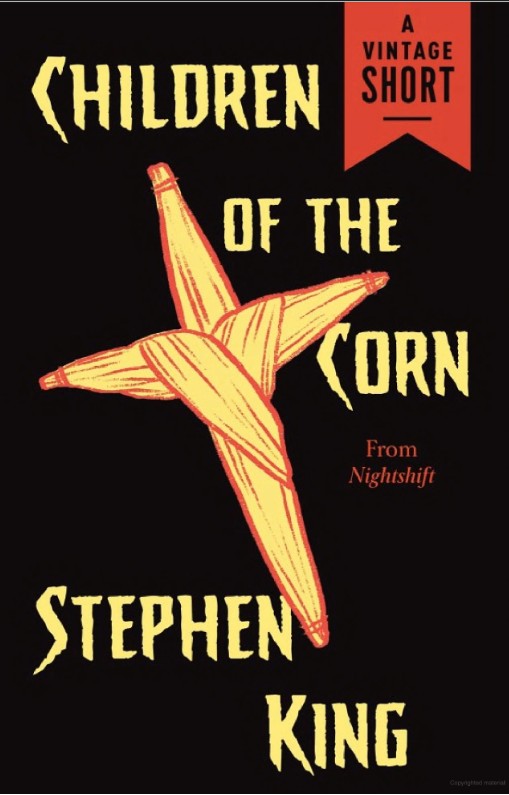
Horrorthon is in full swing; so, it’s time to review a classic: Children of the Corn from Night Shift. Night Shift is an anthology devoted to failure. It’s all about Men not measuring up and people getting hurt by their failings. Poor Stephen, he needs a hug. Children of the Corn was published in 1977 in Penthouse…the 60s and 70s were weird. I’m not anti-p0rn because I really don’t care, but why mix it with literature? Was it that the WWII and Boomer generations wanted a one-stop shop? If so, why not merge the p0rn, literature, fishing gear, and fire extinguishers?
If you’re reading an early King novel, be prepared to be depressed because it is always a gruesome and unhappy ending because a guy failed. Children of the Corn is no exception. I wonder if Night Shift wasn’t this clever anthology I always thought it was, but was actually Stephen King’s clumsy pitch meeting short story compilation? Many of the stories that were adapted to film were way better written. To be honest, the film versions of Stephen King’s short stories are usually significantly better than his books.
The plot is that Burt and his wife Vicky are trying to do a cross country trip to save their marriage. Once they arrive in Nebraska, they get trapped and sacrificed to a pagan corn god who likes to use children as his henchmen- a typical Nebraska custom. The Cornhuskers draw a big crowd, but in the off season, it’s always about the pagan corn god murders. During the Cornhusker season, the residents still do sacrifices, but the victims are deep fried with the other Fair Foods, which means that the victims are all A salted and Battered. *BOOM*
There are a few more details that I am leaving here like the He Who Walks Behind the Rows etc., but once you’ve seen one pagan corn god, you’ve seen them all.
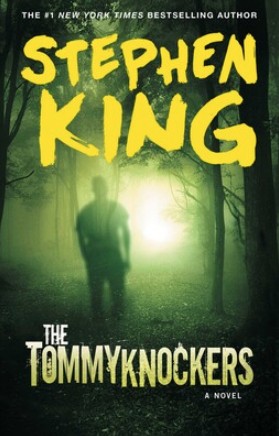
Stephen King has had addiction issues his entire adult life. He’s very open about it. In fact, there are at least three books he’s said that he doesn’t remember writing because he was using more blow than Julie on The Love Boat- the books are The Shining, Misery, and The Tommyknockers.
The plot is that a spaceship crashed long ago in Maine and it takes over the brains of the lifeforms who interact with it. The main characters are Roberta AKA Bobbi who literally stumbles on part of the ship, starting the plot because it starts infecting the town. Gard, a four alarm alcoholic/poet and Bobbi’s former lover, comes to help her and is immune to the ship’s affect because of a steel plate in his head.
As the story progresses, the ship changes the town folk both mentally and physically. The townies make all kinds of wacky and interesting inventions without knowing how they work, lose most of their teeth, and they develop pig-like faces. I told you that he did a lot of cocaine when he wrote this book.
The townies use Gard to help them dig out the ship and there are MANY chapters on the digging logistics. It’s fair to say that Gard spent most of his time in this book as an alcoholic day laborer (maybe he even did some work on my upstairs bathroom because that was done really shitty). I think that you could actually say they were entire chapters just devoted to his digging and things like that; man, Stephen really needs an editor with a spine.
A classic Stephen King plot device is that there are people who power up a haunted house and Tommyknockers uses that to an extreme! Even before I became an engineer, I wonder if Stephen understood how batteries worked? Can you imagine what he did to his kid’s Christmas toys?!
While his stories have recurring plot devices, the heroic journey for his characters changed with his personal change in fortune. The stories in Night Shift and the others from the early part of his career were all about failure: failing your loved ones and failing to maintain control over your life. In those years, the heroes could only succeed by sacrificing their life. The way to stop from harming everyone around them was through suicide because “blood calls to blood” i.e. the family curse. I think that it is clear that the Blood is alcoholism and drug abuse- it’s inherited. When he was failing in life, suicide was described as the only option because the hero was the doorway to misery and I can tell you from my childhood an alcoholic father is definitely the doorway to misery.
After 1979, his career took off and his bank account to pay for copious amounts of cocaine. However, the happy endings became the standard. Money can cure a lot problems, but blood calls to blood and the demons will always remain, but that is what made this book stand out because like his novels in the early part of his career- the hero dies. He can’t save Bobbi and this book was at a high point of addiction. It seems clear to me that it crossed his mind that he couldn’t live with his addiction and that death was the only exit.
Tommyknockers is a messy beach read that is mostly entertaining. If you’re like on a vacation with some real downtime and the Wi-Fi is broken or you’re really into aliens, give it a read.
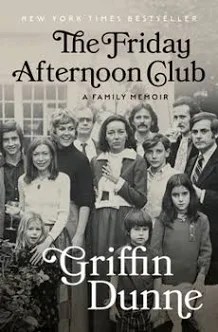
I want to start by recommendingThe Friday Afternoon Club, Griffin Dunne’s memoir of growing up amongst the rich and famous in Hollywood and Manhattan. The son of Dominick Dunne and the nephew of John Gregory Dunne, Griffin Dunne came of age in the 60s and the 70s. Reading his memoir, it’s easy to wonder if there’s anyone who he didn’t rub shoulders with at one time or another. Sean Connery saves him from drowning when he’s just eight. He attends one of Ken Kesey’s acid tests with John Gregory Dunne and Joan Didion. A pre-stardom Harrison Ford does carpentry work at the Dunne family home and shares his weed with the young Griffin. In New York, Griffin’s roommate and (for the most part) platonic best friend is a hyperactive young actress named Carrie Fisher. While Griffin tries to find himself in Hollywood and New York, his father Dominick drops in and out of the film business.
For it’s first half, The Friday Afternoon Club is, at times, a laugh-out-loud memoir. Griffin Dunne is a very funny storyteller and his command of language reveals a bright and insightful mind. However, the second half of the book takes a dark turn with the murder of his sister, Dominique. Dominique, who had just appeared in Poltergeist, was strangled by her abusive boyfriend, a chef named John Thomas Sweeney. Griffin Dunne writes unsparingly of the horror of watching as Sweeney’s lawyers tried to present Dominique as somehow being to blame for her own death. After the judge refused to allow the prosecution to introduce evidence showing that Sweeney had a history of abusing and choking women, the jury found Sweeney guilty of manslaughter. (The jury foreman later said that, if the jury had been allowed to hear the evidence of Sweeney’s past abusive behavior, they would have found Sweeney guilty of murder.) Sweeney was sentenced to six years in prison and was paroled after only 30 months. Griffin Dunne writes of the years that both he and his father spent obsessing on Sweeney’s whereabouts. (Sweeney, for those curious, continued to find work as a chef even after his prison sentence. He currently goes by the name of John Maura.)
It’s a powerful memoir. Griffin writes honestly about his dysfunctional family, describing even their conflicts with a good deal of love. Probably the most touching passages in the book are about his relationship with his brother Alex, the one member of the family to see through Sweeney from the start. Those looking for Hollywood gossip will find plenty, though Griffin is never malicious. Those looking for details about the filming of An American Werewolf in Londonand After Hours will find those as well.
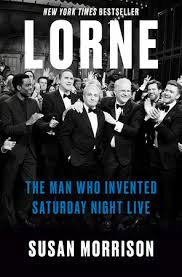
Published earlier this year, Susan Morrison’s Lorne is a biography of Lorne Michaels, the man behind Saturday Night Live. Lorne has actually produced quite a few other shows and movies but, as this book makes clear, his legacy will always be Saturday Night Live. The book follows Lorne from his beginnings in Canada to his time as a counter-culture tastemaker to his current position as a senior member of America’s cultural establishment. Lorne went from being a rebel to being a member of the club and, reading about the process, one comes to suspect that he was always more comfortable in the club than outside of it. It’s an interesting journey and the Lorne Michaels who emerges is occasionally idealistic, occasionally pragmatic, and — even after 595 pages — rather enigmatic. It’s a fascinating story, one that provides insight into American culture has changed and developed over the past 50 years. There’s certainly more insight to be found in this book than in Jason Reitman’s Saturday Night.
On a similar note, Todd S. Purdum’s Desi Arnaz: The Man Who Invented Television argues that Arnaz deserves far more credit for …. well, inventing television than he’s usually given. Often dismissively described as being Lucille Ball’s less talented husband, Purdom persuasively argues that Arnaz deserves far more credit for the success of I Love Lucy than he is commonly given. The book details how Arnaz’s family lost their fortune in one of Cuba’s many revolutions, how Arnaz came to America and built a career for himself, and how Arnaz revolutionized television as the producer of I Love Lucy. The book deals with both the good and the bad of Lucy and Desi’s marriage. Desi emerges as a complex and flawed character, one whose career never really recovered after his divorce from Lucille Ball.
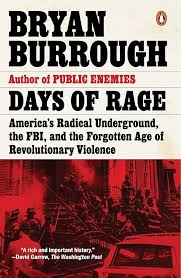
Finally, an old friend recommended that I read Bryan Burrough’s 2015 book, Days of Rage. Days of Rage takes a look at the the domestic terrorism of the 70s, the bombings, kidnappings, and even murders that were committed by members of such groups as the Weatherman, the BLA, the SLA (they kidnapped Patty Hearst), and the FALN. Along with taking a look at the motivations of the terrorists themselves, Burrough also writes about how the FBI reacted. In the end, it’s a book without any heroes. The FBI frequently violated the law in their pursuit of domestic enemies. Meanwhile, the radicals often come across as being a collection of hypocrites who were essentially more interested in playing revolution than actually accomplishing anything. The Weathermen, in particular, come across as being a bunch of smug and overly privileged LARPers. It’s an interesting book and one that feels very relevant in our current cultural moment.
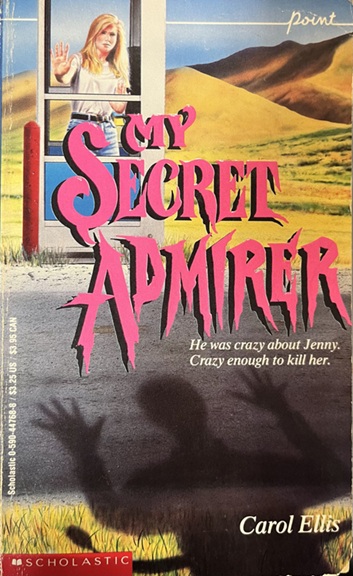
First published in 1989, My Secret Admirer tells the story of Jenny.
Jenny is a teenager who has lived in four different town over the past six years. Her dad’s job requires him to move from town to town and her mother doesn’t like the idea getting tied down anywhere. I have to admit that I could relate to Jenny because my family used to move all over the place. By the time I was 12 years old, I had lived in Texas, Oklahoma, Arkansas, New Mexico, Colorado, and Louisiana. Frequently moving meant that I had to continually get used to new towns, new schools, new teachers, and new friends. Years later, I realized that spending my childhood on the go left me with massive trust and abandonment issues. In other words, it really sucked. My heart went out to Jenny.
When the book opens, Jenny has only been in her new home for a few days. She’s still nervous about the house and the town. She’s scared of the hills that are near her home and the rocky bluffs that sit behind the hills. She worries about wild animals. She doesn’t know anyone in town and school doesn’t start for another few days.
So, of course, her parents decide to abandon her.
When they are informed that their old house has been sold, Jenny’s parents buy plane tickets so that they can fly back to their former home and collect the rest of their belongings. Jenny is left behind so that she can deal with the painters (who are scheduled to show up in three days). Parents in YA book — especially YA horror books — are usually not that great but I have to say that Jenny’s parents take selfish parenting to a whole other level.
Fortunately, Jenny meets her neighbor, the very talkative Sally. Sally ropes Jenny into taking part in a big scavenger hunt. During the hunt, Jenny meets Dave and his bitchy girlfriend, Diana. Diana and Dave are having a fight so Dave teams up with Jenny for the scavenger hunt and, within an hour or so, Jenny and Dave are in love. Unfortunately, the scavenger hunt does not go as well for Diana. A day after a sudden storm brings the hunt to a close, Diana is found at the bottom of the cliff. With Diana in a coma, Jenny wonders if it’s possible that Dave pushed her.
Meanwhile, Jenny seems to have a secret admirer, someone who calls the house and leaves messages on her answering machine. It’s all good and well until someone leaves a present on her porch. When Jenny opens the package, she discovers the head of a rattlesnake!
This novel was fairly ridiculous. Between Jenny’s parents basically abandoning her in a town and house that she barely knew to Jenny falling in love with Dave after spending 30 minutes with him, this book was all about people making bad decisions. Unfortunately, despite all of the silly plot developments, the book never quite becomes the sort of over-the-top, melodramatic spectacle that one might hope it would become. That said, I could relate to how Jenny felt about always being the new girl and it was a quick read. For that matter, I don’t like heights either.
In the end, the book’s message was one to which I could relate:
No, not that! Instead, if you believe in yourself, you can get a boyfriend and you can survive being stuck in a scary old house! That’s an important lesson to learn!
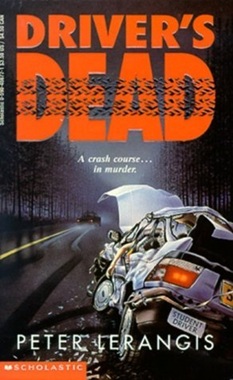
In the 1994 novel Driver’s Dead, teenage Kirsten is not only currently living in a house that she thinks might be haunted by the ghost of the son of the previous owners but she’s also somehow gotten a reputation for being a bad driver! (Ironically enough, the son of the previous owners was also killed in a car crash …. or was he?)
When it come to having one’s driving unfairly criticized, I could relate to Kirsten. I can still remember the pain of those days when I was “learning” how to drive. Learning is in quotes because, quite frankly, I already knew how to drive. I had seen enough TV shows and gone on enough road trips with my family to know which pedal to push and how to turn the steering wheel. And yet, every driving instructor that I had to deal with insisted on being like totally critical of me. One of the first times that I drove on the road, I got yelled at by the instructor because I didn’t look both ways before making a lane change.
“I looked in the rearview mirror!” I snapped.
Apparently, that was not the right answer because she kept yelling at me until I finally said, “How am I supposed to concentrate on driving with you talking all the time!?”
That also did not go over well. That particular instructor refused to ride with me anymore. I went home in tears so my mother went up to the school and yelled at all of the instructors for being rude to me. The next time I drove, it was with the owner of the school, who was much nicer to me. The owner of the school asked me if I had a lazy eye. “Not anymore,” I replied.
Anyway, you get my point. I somehow managed to get my license despite having to deal with some pretty clueless driving instructors.
Anyway, back to Driver’s Dead. Kirsten decides to deal with her driving struggles by getting some help from Rob. Rob shows her how to drive but it turns out that his father is a big-time racist and Rob is kind of a jerk as well. When Rob tries to grope her, Kirsten tells him to get lost. (Yay!) Then Rob turns up dead. Uh-oh.
Who murdered Rob and how is it connected to the blood that keeps seeping out from underneath the closet in Kirsten’s bedroom? And what to make of Mr. Busk, the alcoholic driver’s teacher who has apparently never gotten over his experiences in Vietnam?
Driver’sDead is a YA book from the mid-90s so it’s definitely a bit dated. Check out the reference to floppy disks and running DOS on a computer! Check out Kirsten’s crush on Jason Priestly! But I still found it to be entertaining because Kirsten was a likable character and the plot neatly mixed the supernatural with a standard YA mystery story.
Plus, who can’t relate to being a better driver than most people realize? Ghosts and murder aside, I shared Kirsten’s struggle.
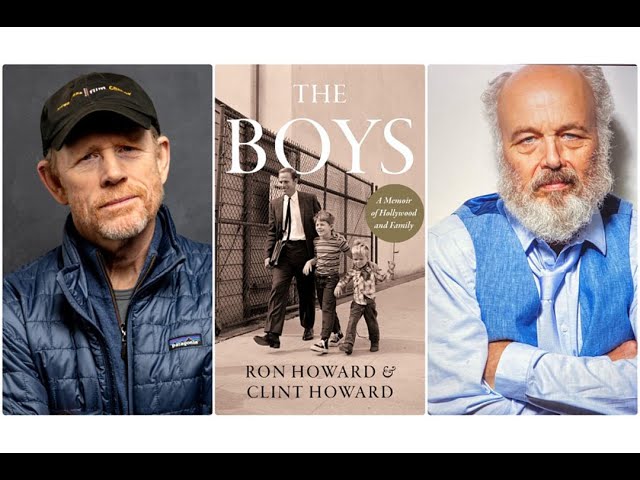
Every year during tax season, I get in the habit of playing movies and TV series on my third computer screen as I work. I don’t necessarily watch the shows, but they do provide a soothing background noise as I provide high quality tax preparation services for my clients. A few years back I played the entire series of “The Andy Griffith Show” all the way through a total of three times. I began to develop favorite episodes and would actually stop and watch certain parts as favorite scenes would play out. My very favorite moments would typically involve emotional scenes between Sheriff Andy Taylor and his son, Opie. Ron Howard began playing Opie when he was only six years old and there was never a cuter kid on a TV show. Needless to say, I was always bringing up the show in just about any conversation I was having during this time, whether it be with my wife, other family members or friends. Almost any situation that came up would remind me of something found on “The Andy Griffith Show.” Based on this newfound obsession, when Christmas rolled around that year, my wife purchased me a copy of the book THE BOYS by Ron Howard and Clint Howard. When we were preparing for our trip to Maui recently, I knew I had several plane flights and many beach hours ahead of me. While I don’t often read for pleasure, it did seem like the perfect time to dig in and find out what it was like to grow up as a kid actor on one of America’s most beloved TV shows.
THE BOYS has a pretty interesting setup as Ron Howard and Clint Howard share their various viewpoints on key moments and events in the evolution of the Howard family. It becomes clear very quickly that Ron and Clint are very different as we make our way through the first few chapters. They just see the world from wildly different perspectives. Ron emerges as kind of a rule following “square” while Clint proves to have quite the rebellious streak. But you can also tell how deeply they care about each other as brothers. The book takes its time to really focus in on their parents, Rance and Jean Howard, and how they instilled a “family comes first” philosophy in their heads from the very beginning. There were a few times where this philosophy was put to the test, but all in all the family unit retained its position as being more important than any roles in film and TV. Rance and Jean were both very present in their sons’ lives, and in a positive way. They took a very nominal management fee from their sons’ earnings, much less than the industry standards, and saved the rest for Ron and Clint. After all the stories of child actors, their stage parents, and their ultimate downfalls, the Howard’s situation couldn’t have been much more ideal thanks mostly to the consistency and character of Rance and Jean. While they don’t always shy away from their parents’ faults, these boys truly loved and appreciated their mom and dad, and that was refreshing to read.
As far as Ron’s and Clint’s acting careers, THE BOYS doesn’t necessarily dwell too much on their various shows and movies that they were in, outside of those that really had the biggest impacts on their family and futures. We hear quite a bit about “The Andy Griffith Show” and “Gentle Ben,” but when you consider how young the boys were when they starred in those shows, there is a limit to how much they can really remember. Once again, most of the memories they share of these shows seem to be based on their work with their dad to learn their lines and understand the plots. I can say from firsthand experience that Rance’s coaching is amazing based on Ron’s performances as Opie Taylor. I don’t remember Clint as well in those early years, except for his handful of appearances as the PB & Jelly smeared Leon, also on “The Andy Griffith Show.” We do get some nice info on actors like Griffith, Don Knotts and Dennis Weaver that only serves to help me appreciate them even more. If you want a deep dive into any of their shows or movies, this book is probably not the place to look for that kind of detailed information, but they do sprinkle in some fun nuggets along the way. I especially enjoyed Ron’s stories about George Lucas and Henry Winkler, as well as Clint’s memories of playing Balok on “Star Trek.” We get quite a few stories from Ron and Clint about how hard it could be to be a well known child actor in grade school and high school. It makes sense that there were quite a few kids that gave them a hard time and each of the boys had to develop their own way for dealing with these people.
The book ultimately reaches its crescendo with the boys sharing details about their transitions into adulthood, both personally and professionally. We learn about Ron’s own love story with his wife Cheryl who was basically his first real girlfriend. With the perfect life partner in tow, Ron was free to pursue his passion to direct films, and he had to make some risky decisions for that to happen. It was fun reading about the “deal” he made with the legendary Roger Corman that gave him his big directorial break with the B-movie GRAND THEFT AUTO (1977). We all know where his directorial career eventually would go, but it certainly was no foregone conclusion in the late 70’s. Clint’s journey was difficult in a much different way, as he was a full blown alcoholic and drug addict when he was trying to figure things out. Once again, his own personal integrity and the strong bonds of a loving family ultimately allowed him to get an upper hand on his problems and go on to the unique and interesting career he has had. One of my main takeaways from reading THE BOYS is that I just love their family. No matter what, they always valued integrity and would always stick together. Ultimately, I think that was the most important story that the boys wanted to tell.
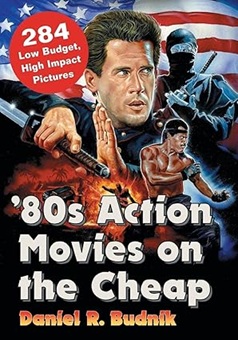
This book features 284 reviews of the 80s action films that tend to be ignored by those who now sing the praises of Stallone and Schwarzenegger. We’re talking about the films of Michael Dudikoff here. We’re talking about the directorial efforts of Cirio Santiago, Nico Mastorakis, Sam Firstenberg, and so many others. We’re talking Italian action cinema. In short, we’re talking about some of the most entertaining and unfairly overshadowed films of all time.
Yes, the AmericanNinja films are reviewed (or, at least, the ones that came out in the 80s are). Yes, there’s a review of The Last Hunter and Space Mutiny and the Deathstalker films. Much like me, Daniel Budnik appreciates Red Brown even if Reb’s habit of shouting during his action scenes does seem to be a bit weird. But what I truly love about this book is that it also features reviews of films that even I previously didn’t know about. I mean, honestly, there are hundreds of film guides out there. What sets the great film guides apart from the good ones is how many previous unknown titles you can discover by just randomly flipping through it. And when it comes to film reviews, the most important question is whether or not the review inspires you to try track down a film that you may not have seen or even heard about before. The best film reviews inspire you to watch so that you can judge for yourself. I’ve discovered a lot just by randomly opening this book. And I now have a long list of cheap 80s actions films that I want to watch and which I will be watching and hopefully reviewing myself.
With 80s Action Movies On The Cheap as my guide, I look forward to all sorts of new discoveries.
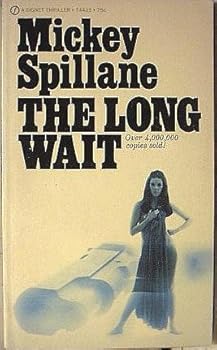
A man who has no memory arrives in the town of Lyncastle and immediately discovers that, whoever he may be, no one wants him around. One person tells him that his name is Johnny McBride and that the police are looking for him. Our stranger may not know who he is but he’s fairly sure that he’s not Johnny McBride. But yet everyone in town insists that he is. When the police try to check his fingerprints, they discover that he has no fingerprints! Apparently, he lost them at the same time that he lost his memory….
That’s the set up for Mickey Spillane’s 1951 novel, The Long Wait. I won’t spoil the rest of it because 1) this book is full of shocking twists, 2) none of them make much sense, but 3) they’re all so over-the-top and ludicrous that you can’t help but love them. Reading The Long Wait, one gets the feeling that Spillane made up the plot as he went along and it’s hard not to admire his dedication to sticking with the story, no matter how weird and, to be quite frank, ridiculous things got.
This is not one of Spillane’s Mike Hammer novels. Hammer is not in this book. If anything, our amnesiac hero is even more violent and brutal than Hammer because the hero of The Long Wait literally has nothing to live for. Hammer at least had an office and a life that he could return to after killing all the bad guys. The hero of The Long Wait may not know who he is but he still knows that’s he’s pretty angry with a lot of people.
Violent, melodramatic, and at times thoroughly gratuitous, The Long Wait is an entertainingly absurd book. I read it in a hotel room and I recommend you do the same.
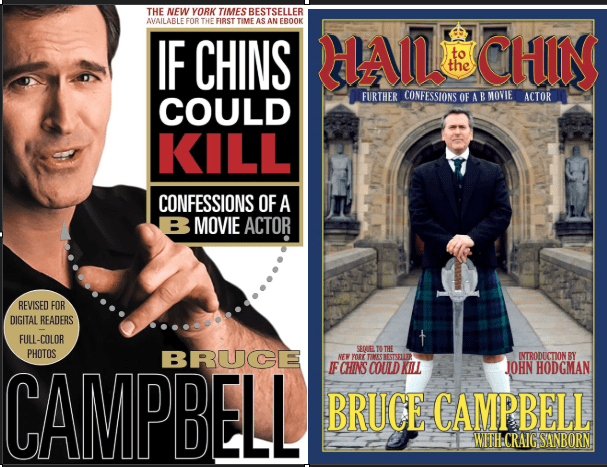
Bruce Campbell is the of Elvis of horror and independent film; in fact, he did play Elvis in “Bubba Ho-Tep”. If you’re into independent filmmaking, genre films, and artistic struggles both of these books “If chins could kill” and “Hail to the chin” are must reads and they are also fantastic audiobooks read by the man himself. Sidenote: I never thought his chin was weird- just manly. I enjoyed these books so much that I read them and then I listened to the audiobooks as well, which allowed me to re-experience the books like a favorite Uncle sharing his adventures with me. His entire life is laid bare in his own words: his successes, struggles, and failures. The second book picks up right after the end of the first one. NB: neither book is ghostwritten- a rarity. Sidenote 2: the audiobook really reveals Bruce’s skill at impersonations- he could do a career just doing that.
Bruce sat down and wrote both of these memoirs and if you’re an “Evil Dead” fan he discusses every single aspect of how the “Evil Dead” films were made. He goes into the same detail with every single show and film he has ever done. It’s not just how the sausage was made, it is the equivalent of discussing the history of the pig breed, how the pigs were raised, the tools they used for slaughtering, when they were made into sausage, the spices used, and the marketing to sell the sausage (Both books are available on Audible). The purpose of this article isn’t to grade these books because it’s just weird to grade a Man’s memories as long as the writing is half-way decent; instead of that very weird thing, I will discuss chronologically the moments that I’ve thought about for years in this uniquely American story.
His early years would be the central casting description of a midwestern “Theater Geek”. I never particularly liked that term, but it’s fairly apt because he lived for the dramatic arts, but NEVER complained or thought any job was beneath him- Refreshing. His entire focus in high school was theater and if he had graduated from college, he would’ve been a drama teacher. Luckily for us, Bruce became a college dropout after 6 months and began working on Evil Dead.
Evil Dead
Evil Dead was created by everyone that any connection to Bruce and his comrades, but there were also guilt feelings. Family members helped, parents helped, law firms helped, and probably even the Easter Bunny contributed to making “Evil Dead”. In the filming, everyone on the film was everywhere all the time and lived like they were quasi-homeless in the abandoned house that any horror fan would recognize. It was amazing to me how they had power to run their equipment. The way he describes it has all the intensity of a man remembering in perfect detail that he knew in his soul that this moment would be life-defining. He was right.
One thing that stood out to me was the guilt that Bruce had for asking his father, who was going through a divorce, for funds for the film. As a dad, I can tell that we want our children to be happy and that doesn’t end because you’re getting divorced, sickness, or even death- we always want our children to succeed. Can parental support get out of hand and make us annoyed? Yes, but this was well within the normal limits for a dad. If Bruce reads this article, I hope that he knows that his dad cherishes every dollar he contributed to his son’s dream. Unless of course, you had a dad like mine- in which case, how is it in the fire/police department, EMT, or Armed Forces these days?
Evil Dead 2 and 3
When he described Evil Dead 2 and 3, it was different because he had become a man. He was married and soon to be divorced. He described the work and the filmmaking the way a master carpenter describes his experience and steps making a $10,000 walnut table from a single piece of wood. Neither Bruce’s nor Sam Raimi’s careers had taken off yet and like many of us facing defeat – they went home. Home was of course with the old crew to make Evil Dead 2. Evil Dead over the years on a budget of $375,000 made $30 million….WHOA, but it was clear that Hollywood didn’t understand what they had- this was decades before Blair Witch and Paranormal Activity. It seems that Army of Darkness solidified Bruce as a name. One moment I remember about his memories of Army of Darkness was how he tried to mentor the extras about the importance of never complaining and hustling on the set. They didn’t listen. In fact, two of the extras defiled the set by having coitus in their costumes between takes…..ew. Maybe they were the first furries…. double ew. Or maybe the extras misunderstood the term “Hustling”?
The 90s
The 90s was Bruce Campbell’s decade. Hollywood finally realized with the success of the X-Files and Pulp Fiction that the audience for off kilter actors and stories was not just large- it had money to spend. Bruce found three things: steady work with Hercules and Xena, his soulmate- his second wife Ida Gearon, and his best friend – Lucy Lawless (Xena). He describes his friendship with Lucy like a brother describes the love and pride he has in a sister who made valedictorian. The Bruce/Lucy friendship spans decades and I hope they become neighbors one day. He describes it with such fondness and admiration; it proves that men and women can have platonic and beautiful friendships that last a lifetime. I’m not crying, you’re crying….leave me alone.
2000s through Burn Notice Bruce had come into his own and was getting cast in A LOT of genre films. He had become a bona fide working actor. I will note that he gets into thorough detail about every single film that he made during this time period. However, I think that many Gen-Z and Millennials discovered him through Burn Notice and if you’re thinking he spills the tea about any on set drama- HE DOES NOT. He talks about how he enjoys dive bars and the different bartender pours. He describes in detail his experience with the show. I enjoyed the second book a lot, but it got personal for me because he convinced his Co-Star Jeffrey Donavan to visit the troops in Iraq. I give them both a lot of credit for that out of all of the great moments in the second book that’s what I think about the most often.
I am a fan of Bruce Campbell’s obviously, but what stood out to me in this uniquely American story is that you really can be anything here if you work at it.
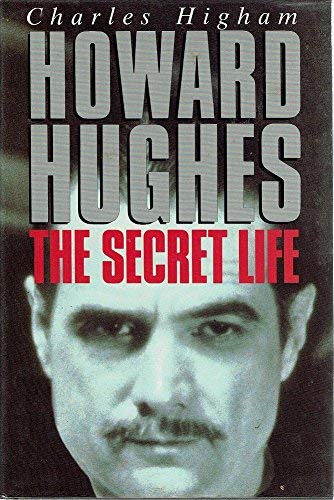
Wow, I thought as I read Howard Hughes: The Secret Life, was there anyone Howard Hughes didn’t have sex with?
Actually, I imagine there was. Charles Higham’s 1993 biography, which I found in a used bookstore in Pensacola, is full of all sorts of “scandalous” details about Howard Hughes’s life and the decadent Golden Age of Hollywood but it’s not always convincing. Hughes, who was the subject of Martin Scorsese’s TheAviator, was undoubtedly an eccentric and I have no doubt that he treated a lot people badly but the book itself tends put a lot of faith in gossip and rumors. As such, we get the established stories of Hughes bringing his control freak tendencies to Hollywood and having affairs with Katharine Hepburn and Ava Gardner mixed with stories about Hughes’s being involved with the Watergate break-in and also carrying on clandestine affairs with everyone from Errol Flynn to Tyrone Power, Jr. The book goes as far as to suggest Hughes died of AIDs, using an evidence the word of a doctor who didn’t examine Hughes but who did apparently read a list of symptoms that Hughes was rumored to have during his final days. That’s really the way that Higham approaches the majority of Hughes’s life. The established facts are mixed with rumor and speculation on the part of the author. It’s not always convincing but then again, since when does gossip have to be believable?
In short, the book is trashy but readable. It’s one of those books that one should probably read with a healthy sense of skepticism but, at the same time, one can appreciate the sheer number of personalities that Higham manages to weave into his narrative. Hughes goes from aviation to Hollywood to politics and he meets everyone who was anyone. It’s a history nerd’s dream.



 Through the Shattered Lens