Glorious Fantasy, Part One: Final Fantasy One


In the recent past, I decided that I was going to do some ‘series’ and write about my experiences. The first of these I devised was to finally make the commitment to read the ‘Wheel of Time’ series, which is unfortunately on hiatus after I couldn’t take it anymore. Later, I decided that one thing that I would almost certainly definitely have fun part of the time with… was playing every single title under the Final Fantasy brand that I could get my hands on. Like most gamers who enjoy RPGs, I was a consumer of the NA translations of these fine games when I was growing up. Unlike many people in my generation, I still enjoy even the most recent offerings in the series. So, something to write about, and a source of enjoyment for me? Sounds very win-win.

Most people have already played many/most/all of the games that I’m going to write about in this series (weirdly, as I compiled the list of games, I personally have not played a fair number of them). I don’t care. I’m going to look at all (most? I’m bad with structure, we’ll see how long this lasts) of the following things from these games:

– Some objective data. What version of the game did I play, and why did I select that one.
– Is the game any good?
– Is the answer to the first question, “It doesn’t hold up”? Why?
– How would I place this game in a historical context? I want to watch the series evolve and devolve and side-volve as I go.
– Did I enjoy this game? What were the emotions and insane facial expressions I went through while playing it?
– How many times I frantically Googled maps for enormous maze-like dungeons because I no longer have the patience to solve them on my own?
– Was it… challenging? Were these games ever hard? Does the challenge ebb and flow?
– No MMORPGs. Sorry FF14 fans, I don’t ‘do’ MMORPGs anymore. Plus, the plan here hopefully doesn’t involve spending a bunch of money acquiring games.

I think all of this is extremely important knowledge, and that the human race will be improved by my research.

That preamble having been dealt with, let us begin our odyssey at the very beginning. And with one of the core series games that I had never played before.

FF1

Version: Gameboy Advance, “Final Fantasy I & II, Dawn of Souls”

So, I already know, guys. I got jobbed. I knew it as soon as I fired up the GBA version of FF1 and found out that I had MP instead of spells per day. I made a terrible mistake! Unfortunately, while I do know a guy with an NES console in excellent working order, he does not have a working FF1 cartridge. Oh, and he probably doesn’t want me spending a week in his basement emitting 8-bit bloops and bleeps at him. I could have resorted to emulation (indeed, I may have to, for some of the more obscure titles on my list) but being totally ignorant of the gameplay changes going in, I already made a fatal mis-step.

Here’s the deal, for those who don’t know: In the original Final Fantasy release on the NES, your party was always poor and under-equipped, if you killed a monster and someone else was also targeting that monster, their turn was wasted with an ineffective hit, and your wizards gained spells per day, the system inspired by noted fantasy author Jack Vance, and also the inspiration for the system of magic used up through the 3.5 edition of “Dungeons & Dragons”. In “Dawn of Souls”, ineffective hits are gone, your casters now have the traditional Final Fantasy MP pool (and unbelievably cheap Ethers to boot), and the monster encounters are both more frequent and more lucrative. In short, the game is much easier on the GBA than in its original form.

And it is pretty easy, on the GBA. Even the content in the bonus dungeons included with the game did not pose much of a challenge for me in the game’s later stages, and while the final boss, Chaos, had a formidable quantity of HP…it really just delayed the inevitable. My party never seemed to run out of resources, and once I had reached a certain point, I achieved critical mass. I had too much gold, too many powerful items, and my entire party could cast useful spells to set up for boss encounters. Most of the regular mook encounters were just auto-battles by the end, which, really, can be seen one of two ways. I normally prefer the regular enemies to at least present the illusion of a challenge. It’s nice to have some enemy types who demand the use of a powerful spell to avoid some dangerous attack, and so forth. However, given the extremely high encounter rate present in Dawn of Souls, I didn’t mind the auto-battling too much.

The one aspect of the original game’s gameplay that very much remains intact in the Dawn of Souls remake is the fact that nobody tells you where to go next or what you have to do, aside from the basic instruction of ‘save the four crystals’. When I first conceived of this series, I had planned to have a ‘no frantically Googling answers’ policy. It has already eroded, as I’m honestly stunned that anyone had the patience to figure out how to beat this game when it first came out. I suppose that isn’t true: I remember spending a ton of time on equally murky NES and SNES games when I was a kid. We eventually managed to puzzle out countless secrets in ‘The Legend of Zelda’. Alas, it seems that my patience (or focus…?) just isn’t what it used to be. Several times, I sought basic instructions on what to do next, and I don’t even feel all that bad about it. It’s such an incredibly stark difference when compared to games even slightly later in the series, where the connective tissue of a story draws you from point to point, perhaps with a little wandering. Even a game like the classic “Chrono Trigger”, where several times the only way to proceed is to go to a time period and see if things have changed, you have a relatively small set of places to wander through before you’ll find your answer. Not so in FF1: once you’ve acquired even the simplest vehicle, a canoe, there’s a huge amount of space to explore, and if you pick the wrong direction, you’ll be in mortal danger.

I’m honestly not sure, on the other side, whether I really enjoyed the game or not. Certainly, it was diverting; it managed to hold my attention for twenty hours or so, despite possessing no story to speak of, and only a couple of characters worth mentioning (your entire party in FF1, for those coming very late to the party, consists of silent protagonists). It seems that I can’t really judge whether the game has held up properly because of the way in which it was remade for the GBA, which is a bummer. My first article, already smashing my expectations into dust! As a result, I’ve re-added FF1 to the master list, and next time, I’ll find some manner of replicating the experience of the original game. Humankind will be improved by my research.

TV Recap: Marvel’s Agents of S.H.I.E.L.D. Episode #6 “FZZT”


AgentsofSHIELDBack, and with 15% more snark! Yes, ladies and gentlemen, it’s time to talk about the latest offering from our friends at ABC. It’s time for Marvel’s Agents! Of! S.H.I.E.L.D.! My sunny disposition about this show from way back when has faded under a sea of kind-of-mediocre episodes, and the fact that I’m so used to seeing these comic book storylines adopted for the big screen instead… with plots that need to be condensed down to fit a two-hour window. There are things I like about this show, however. They seem to be making an effort to explore the characters a little, giving them nice moments in the show… and not just Coulson, but the ensemble cast. Actually, today, I spent a lot of time with Agent Fitz and Agent Simmons of Agents Fitz-Simmons. Let’s talk about it, shall we?

Cold open: boyscouts. The troupe leader is telling a spooooooky stooooory… the ending of which he completely whiffs, doing a rather weak ‘cry’ for his crying man. Shortly thereafter, he goes off to investigate a strange noise or something, though nobody else heard anything. The kids are a little more creeped out than they want to admit, so it’s time for some s’mores. Or, it would be, except now there’s a pan floating in midair, and arcing electricity. Also some horrible screams from the forest. Maybe we better get out of here? Everyone gets in the truck, the battery of which promptly explodes out from beneath the hood and lands on the ground not far away. Uh-oh. Actually, isn’t this how a lot of these episodes start? It reminds me of a cold open for an episode of ‘Supernatural’ blended with elements of ‘CSI’.

It’s time for Act I!

Agent Coulson is on the treadmill, apparently having a physical with Agent Simmons. Not a euphemism for anything, sadly, Coulson claims that his physical therapist overreacted to a remark he made, and demanded that he get a physical. Simmons explains that he’s in great shape for a man of his age, a comment which makes Coulson bristle. Scene change!

Agent Ward is not happy. His cool futuristic gun is an once off on weight. Fitz is uncomprehending, Skye is disdainful. Ward describes an improbable long range scenario. Fitz points out that there are rifles designed for such a scenario. Ward woodenly demands that Fitz find a way to lose the extra once. Fitz does an impression of Ward, which Skye gives about 700% more laughter than is really necessary. Fitz decides this is a signal for him to flirt with her. Skye is not happy, but it has nothing to do with Fitz. She is now wearing her house arrest wristband. She has been roundly chastised for her loyalties. Fitz does not care about any of this, but rather is interested in the fact that Skye is very pretty. Somehow, the two are sending each other an endless series of the exact wrong signals, and nothing is getting through. The conversation ends with Skye commenting that Fitz and Simmons are so close, they might as well be ca… oh wait, we already call them Fitzsimmons. Huh. Simmons arrives just then and does another Ward impression. How cute! They even have matching Ward impressions! Just then Ward arrives, it’s time to gear up. Mission time. Simmons gives him back his super future pistol, claiming that the ounce was just a dummy round left in the gun, and now it’s fixed.

On the ground, there’s this electrostatic discharge thing going on. Like lightning strikes. Except there wasn’t a storm with sufficient intensity within a thousand miles last night! Skye is shadowing Ward as he goes all “CSI detective character” up on this scene’s business. Or possibly its grill. Oh, also, there’s a guy hovering in midair in a clearing. He appears to be dead. Fitzsimmons, after a false start, admit that they have no idea how this could be possible. Ward suggests that it could be a weapon (of course he does). Skye’s theory is metahuman. Ming-Na Wen is careful to avoid using any inflection in her voice was she explains that there is no such metahuman. Well, says Coulson, not that we know about. Better follow up on that. Simmons gets close to the body, gets a little jolt of juice, and the corpse falls to the ground. Well, that was weird.

Back on the plane, Skye has already google searched our dead troupe leader, and has plenty of basic biographical information for Agents Coulson and Ward. She makes a Big Lebowski joke that falls flat, crushing my hopes and dreams. Ward this guy’s – coach, troupe leader, volunteer firefighter – entire enemies list. Skye says she already facebook’d him too! He doesn’t have any enemies. People with a vague dislike of him probably don’t have the power to do something completely unprecedented in human knowledge to him. Coulson thinks something must be missing and Skye rolls her eyes out of the scene. Coulson wants to know why Ward is being so hard on Skye. I mean, he always is. But this specific time? Coulson is curious. Ward is mad because Skye lied to them. She’s going to have to earn his trust again, damnit. Coulson points out that she’s good at googling people, and cleverly segways into our next scene!

Ming-Na Wen glares across a table at the, what, assistant troupe leader? Apparently it’s a hard line interrogation, because her expression is extra stoic.

Simmons is performing a full autopsy. Fitz doesn’t like the corpse stank, so he’s outside. Coulson wants to know what’s going on, but Simmons really hasn’t discovered much yet about this event that is completely unprecedented in the human experience. Ming-Na comes in to ask a question. Stoically. Suddenly it’s time for a scene change, get the action running again… Fitz is tracking another electrostatic signal! It’s going nuts! Then it suddenly pulses… and it’s gone. Better check it out.

In their actionmobile (it’s another totally inconspicuous black SUV with heavy tint) Agents Coulson, Ward and May arrive at a barn. It’s barred from the inside, but while Coulson and Ward pointlessly argue about how to enter the structure, Ming-Na just kicks the damn thing. Well, that’s one way. Unsurprisingly, there’s a hovering dead guy in the barn. But there’s no sign of vehicles in the area, so whoever did it… couldn’t have gone far. Skye’s got the satellites moving in for surveillance. Also, she’s on Google again. This second guy was a firefighter too! And he and our first unfortunate victim were first-responders to an alien crash in New York City (remember that little thing with the Chitauri?). Anyway, it’s super weird, but with the possibility of alien involvement, now we can’t rule out the possibility of an alien weapon being used to kill… firefighters? Coulson’s got the right idea: get to the station house before anybody else turns into an electrostatic bomb and dies.

Scene change!

At the stationhouse, the actionmobile disgorges our Agents again. Meanwhile (they keep slipping in these quick cuts!) back on the plane… Simmons says something weird is going on. I don’t know how else to describe some of these scenes with pseudo-science dialogue. They feel like padding. It’s kind of annoying. At the station, one of the firefighters isn’t feeling so hot. Coulson deduces this isn’t good. Back on the ship, Simmons has real information for us: she doesn’t think they were shot with some kind of a weapon, the wounds on their bodies are actually exit wounds. They were killed from within! Well, what does that mean? Coulson confronts our sick firefighter and draws a gun when he sees a hovering pan. It all comes together now. Agent May has spotted a Chitauri helmet in the station. Tony the firefighter says they cleaned the helmet, a souvenir they took from the alien crash site. Simmons has the answer: it wasn’t dirt or rust on the helmet, it didn’t need cleaning, and by stirring up those alien particles, the firefighters exposed themselves to an alien virus. Well, shit.

Coulson orders everyone else out of the station and sits down for a heart to heart with Tony. Our firefighter is terrified, and now appears to be staring down his own inevitable doom. Coulson wants to know if Tony wants to call anyone, notify anyone. If there’s anything he can do. Trying to empathize, Coulson tells a story about that time that he was killed by Loki. He really was dead; they said it was only for 8 seconds, but Coulson felt that it was much longer. He saw something beyond, he says, something beautiful. Ming-Na almost has a facial expression at this revelation. Though I’m not really sure how she can hear him. Tony starts to arc lightning, and suggests that Coulson make himself scarce. You know, before they all die. Outside, all the S.H.I.E.L.D. guys watch grimly as there’s a flash of light… and Tony’s gone.

Fitz comes down with a medical scanner and examines everyone from the ground team to make sure the virus hasn’t spread to them. The remaining firefighters are going into quarantine. The plane is going to be used to transport the alien artifact to “The Sandbox”, a place I imagine looks like this.

Aboard the plane, May is concerned about Coulson. Why did he get a routine physical? Does he want to talk about it? He’d talk to her if something was wrong, right? By the way, it wasn’t his fault that Tony died horribly.

Scene change!

In the lab, Simmons is really excited about what she’s discovering about the Chitauri pathogen. She’s examining the remaining brain cells of the deceased. Her discovery? Apparently this is a virus that does not spread through the air, or fluid transmission…but through electrostatic shock! Such a thing doesn’t exist on earth! She didn’t think it was possible. Also…something’s floating behind her. Coulson apologies, then puts Simmons into quarantine.

Shortly after, Fitz is sitting back up against the quarantine window. FitzSimmons collectively look miserable. Coulson explains that Simmons has only two hours to live, but the plane also has nowhere to land in range in time. If Simmons explodes, it will knock the plane out of the sky. Skye obviously feels helpless, and it’s angering her. Coulson has confidence in Simmons’ ability to figure out an antiserum before her time is up. With Fitz’s help, Simmons begins working on a cure, but their information is still limited. She’s trying out her experiments on laboratory rodents, but the results so far… aren’t so good.

Upstairs, Ward is watching the lab through the video monitor. Skye pokes her head in, asks why he doesn’t just go down there. Ward shrugs it off, “They don’t need an audience.” Skye stays, angry at her helpless feeling. Ward has it even worse. In a rare emotive moment, he opens up, his frustration actually fairly tangible in the moment. Good work, Ward! Then he really brings the temperature in the room down to freezing with our scene outro, Ward’s warning to be ready “For whatever we’re called on to do.” I think we all know what that means.

…But let’s have Coulson talking to headquarters, and get his order explicitly spelled out anyway: Simmons needs to be jettisoned from the plane so she doesn’t explode and kill everyone. Coulson bails on the transmission, then has a terse (and stoic) exchange with Ming-Na.

In what is really probably the strongest bit of the episode, Fitz and Simmons are working on borrowed time. They start arguing, pretty much about nothing, trying to make it about something, and it’s by far the most genuine moment we’ve gotten out of either character so far. They both grow a lot for me right here; I suddenly wonder why they’re being underused as comic relief when the characters have some range, some background, some chemistry! Down with the Ward and Skye fighting scenes! Up with FitzSimmons! …what it all boils down to, is that human antibodies just aren’t properly developed to fight alien disease. There’s no one to make a new antiserum from. Wait, what if there are some cells in that alien helmet? Fitz is off to take some scrapings. And he’s off at a sprint. Over Coulson’s shouted objection, Fitz bursts into quarantine, and FitzSimmons resolve to work together to fix this damn thing. Yay!

Despite his earlier comments, Ward joins literally the entire team as they stand in the cargo bay and watch FitzSimmons work. They do stuff. Feels like padding. Finally, they have a new antiserum! Fitz applies it to the last lab rat, who uh… begins hovering in the air. There’s a moment of stunned silence. Simmons approaches Coulson, and asks him to notify her father, first, and let him tell her mother. Then she asks them to clear the room. Fitz is still working furiously, but Simmons has lost hope. She clubs Fitz in the back of the head with a fire extinguisher.

Upstairs, headquarters is calling again. They probably want Coulson to go ahead and put a bullet into the back of Simmons’ head and dump her body. Coulson’s not into it. But apparently SImmons has opened the cargo ramp and jumped out of the plane. Tragically, just before Fitz awakens and discovers the rat still alive… it was only knocked unconscious by the pulse, which was much weakened by the antiserum. Fitz goes for a parachute, but is shoved aside by Ward, who takes both the cure and the ‘chute and jumps. After a long fall sequence where we get many shots of the ocean drawing ominously closer, Ward, of course, catches Simmons, cures her, and deploys the ‘chute. Yay!

On the plane, Coulson yells at Simmons, though it’s obvious he’s more relieved than angry. Ward plays it cool. Simmons for some reason goes for a callback on the pistol: it’s still an ounce off. Ward knew that. Then he does an impression of Simmons’ impression of him, which she critiques. It’s kind of a weird moment. But then Skye is there too, and practically breaks Simmons with a hug. Emotional plot resolved!

Ming-Na is in Coulson’s office. She wants to know about that physical again. Coulson explains that he ordered the tests on himself because he doesn’t feel fine, even though all the tests claim otherwise. After he got killed by Loki, he’s just never felt right again. Ming-Na seems to actually be acting harder to not assume a facial expression, which I’ll count as progress, as she forces Coulson to examine his scar from Loki’s staff. It’s pretty gruesome. Ming-Na points out that he could not possibly have had that experience and come away totally unchanged. He has scars other than just the physical one. She implies something like that happened to her.

Bonus scene change!

FitzSimmons are talking. He was going to come for her. He’s obviously a little embarrassed that Ward shoved him aside and did the death-defying resdcue bit. Simmons points out that Fitz gave her hope when she had none, that he helped create the antiserum, that he’s the real hero of the piece. Then she bounces. Fitz doesn’t look entirely convinced. Sad face.

And then in our final scene, Agent Blake comes aboard to take possession of the alien artifact. He’s concerned that Coulson disobeyed a direct order, and that S.H.I.E.L.D. is going to yank his team out from under him. Coulson is assertive. Blake delivers a really cheesy line I won’t reprint. Coulson’s character is having growth because this short scene showed him parroting the lessons he took from Ming-Na Wen! We’re moving forward!

Well… my takeaway from this episode is… I found it mostly to be lightly entertaining fluff, but with a nice sequence for the characters of Fitz and Simmons. When the show explores its stronger characters, it’s at its best (since we’re obviously not going to get a small-screen version of the Avengers). I still feel like something is missing. I don’t know that the show is achieving the goal of showing us what life is like for people in a world that has superheroes and aliens and blah blah blah. I hope Agents of S.H.I.E.L.D. finds its momentum, because while I was fairly entertained by this episode, it was in a more “this could be on in the background and I wouldn’t be mad” than a “I’m totally engaged in the story being told here”.

T.V. Review: Marvel’s Agents of S.H.I.E.L.D. – Season 1, Episode 3 (“The Asset”)


imgres

So! It’s here at last: Marvel’s Agents of S.H.I.E.L.D., one of those pieces of programming that both thrills and terrifies me. Obviously, like probably everyone else, I entered into this whole affair with a deep concern that this whole enterprise was going to be a failure and would diminish the fine work that has been done in recent Marvel films like, of course, The Avengers. Through three episodes, it doesn’t look like this is going to be a problem.

So, let’s talk about “The Asset”. The cold open has a semi trailer making its way down the highway as part of a convoy with two totally inconspicuous matching black SUVs with dark tinted windows. The driver communicates with his escort and says all is well. Of course, things immediately go awry, as the inconspicuous escorts begin to be inexplicably hurled into the air. The semi’s driver, an average trucker type, immediately reveals his allegiance by reporting in to a S.H.I.E.L.D. comptroller. Ah-hah! Not long after, the truck and trailer are both hurled skyward and come back to earth, the truck now in flames. Immediately, a large excavator emerges from the woods with a small detachment of armed men. The excavator rips open the trailer and the armed squad boards. Cutting their way through a security door in the trailer, S.H.I.E.L.D.’s mystery cargo proves to… a balding, glasses-wearing gentleman. “Are we there yet?” Joss Whedon this mysterious man asks. Opening title!

Skye is late to her workout with Ward. She is not enjoying the strength building regimen that is part of becoming a S.H.I.E.L.D. field agent. She’s working a bag in the plane’s cargo space under Ward’s supervision, wondering why she needs this kind of training in order to be a useful member of the team. Ward isn’t ready to budge on this, she needs to be able to pull herself up if she’s hanging off the side of a building, damnit! She needs to at least have a basic idea of how to defend herself, damnit! Skye argues that Fitz-Simmons don’t have to do any strength training, but Ward points out that they do brain-training instead, and she won’t like that any better. She has to either dedicate herself to being a S.H.I.E.L.D. agent, or she needs to go crawl back into a hole somewhere. That’s a choice she can make, but something tells me Ward doesn’t recommend it. Oh, and, in a nod to the pilot? S.H.I.E.L.D. doesn’t have a truth serum. You can even ask Coulson!

Briefing time. Coulson explains that Canadian Physicist Franklin Hall was being transported by S.H.I.E.L.D. when he was kidnapped by apparently invisible attackers. Fitz-Simmons are devastated at the news – Hall was their mentor. Skye is intrigued by the idea of invisible attackers. With this being a top priority, the team deploys immediately to the location of the attack, on I-76 near Sterling in eastern Colorado. On the way, Coulson explains that S.H.I.E.L.D. has been hiding key scientists and other “assets” from enemies who desperately want to get hold of them by moving them around between secure locations. On site, the truck driver has received some medical attention and reports on what happened to Coulson. He also speculates that there had to be a mole – the attack came at a vulnerable spot right on their route. Someone knew they were coming! Fitz-Simmons have the hi-tech gear out and use it to determine the device that made the attack possible – a tiny little metal device of unknown provenance. Time to get back to the lab everyone! This episode definitely keeps moving, these scenes have my typing fingers cramping up already.

On the plane, the team has analyzed the tread data of the excavator to identify its model and year, then researched all such equipment in private ownership in a 500 mile radius, then cross-referenced that to… anyway, Skye was going to do that, but they’ve already done it, they’ve found the guy. We gotta go talk to him. Better luck next time, Skye! She tells Coulson that she knows there’s no truth serum. He responds cryptically. I’m stunned. May takes a break from standing around in stoic silence to drop off the communication logs of every outbound transmission since Hall was taken into productive custody. Skye, you can go through these! We’ve got to find out if there’s a mole! Coulson and Ward need to talk to tractor guy. We’re off!

Coulson stops a generic cowboy type (you might actually find some out by Sterling, I suppose) who is riding his horse at sunset. Coulson explains that he’s from a powerful organization that is keeping our cowboy under constant surveillance. When our excavator salesman explains that he’s done nothing wrong, Coulson points out that while that’s true, he did sell his excavator to people who did something bad with it, he knows it, and he’s hiding out until it all blows over. So who paid him? Someone who doesn’t want him answering questions, damnit! Shotgun barrel in his face, Coulson remains cool, as Ward steps in from off-camera to take the situation into hand. The cowboy, gun barrel now in his direction, explains that he never saw a face, never heard a name. But it turns out that he was paid… in gold? “It feels like the old west!” Ward quips. Probably the episode’s worst line. Let’s move on, shall we?

The gold bars are unusual. They’re not refined bars of pure gold, but rather bars produced in the mine. Only 92% pure! Of course, these are the most traceable bars of all time, so Fitz-Simmons report that they’re from a mine in Tanzania. Does Coulson know who owns that mine? Oh yes. Oh yes, he does. He was on the cover of Forbes! His name is Ian Quinn, and he’s quite the CEO. As Coulson action-walks out of the room, we zip away again!

The Republic of Malta, in the world of Agents of S.H.I.E.L.D., apparently a haven for people who want beautiful beaches, pleasant tax laws, and to be outside of S.H.I.E.L.D.’s jurisdiction. Our man Ian Quinn (played by a saucy David Conrad) has, in fact, kidnapped Dr. Franklin Hall (Ian Hart)… but, what’s this? They’re not enemies! They’re old college buddies! Hall is concerned that Quinn has committed outright theft of his ideas, but Quinn counters that information wants to be free (yo). Hall is perplexed; hasn’t Quinn made eleventy billion dollars off these free ideas? Well, nevermind that, says Quinn. Yes, he was able to buy a supercomplex with underground research facilities – presumably at a tax auction. Oh that Quinn! – in Malta, but much more importantly, he’s actually found the theoretical element that Hall postulated back at Cambridge – Gravitonium!

On the plane, Fitz-Simmons give us the exposition on how all of this works. Gravitonium distorts gravity fields. On its own, it’s just a curiousity. But if you apply an electric current, you can use gravitonium to change how gravity behaves around it. Now imagine you’re operating a semi going 100 kph… Oh. Quinn has this stuff now! Skye argues that Quinn is a notorious philanthropist, donating billions to charity. Yes, but he’s an ecological menace! Anyway, he’s a jerk, trust us.

In Malta, Quinn and Hall are still chatting. Quinn had to search six continents, open a dozen mines, and invest all this time to find the gravitonium they need, but he’s managed it. Now, finally, the work they began so long ago can be made reality. They can build a giant and obviously benevolent machine that controls unfathomably powerful gravitational waves! Well, skip the ‘can build’ part. Replace it with ‘I already built this crazy machine and here’s the thing I totally did steal your idea and I don’t know how it works so please help me operate it ole buddy’. Quinn knows that Hall wants this thing done right, or not at all. You can thank him later.

On the plane, the team discusses the impossibility of assaulting Quinn’s compound. Malta will never allow S.H.I.E.L.D. to make a large scale assault under normal circumstances, let alone this weekend when Quinn’s shareholders conference will be taking place on his estate. What about a small infiltration team? Level 7 doesn’t even officially exist, it would be easy for S.H.I.E.L.D. to disavow them if they were caught. Forget it, guys. Quinn’s compound is defended by twenty foot high laser fences that will kill on contact. Fitz straightfacedly – to Simmons’ despair – suggests that they employ the services of a small monkey which could get through the laser fencing then disable it on the inside. Skye could go in, but nobody is listening to her. Ward wants them to drop him in the hills outside the city and let him go to ground, spend a few weeks developing a cover identity, establishing a backtrail… Coulson is worried that Hall doesn’t have that kind of time. Simmons adds that any Agent of S.H.I.E.L.D. caught on Maltese soil can be executed (what is it with Malta, anyway?) Skye says that won’t happen to her, she can go in. Ward dismisses her, saying this is a serious situation…but Coulson wants to hear her out. Skye points out that she is not, in fact, an Agent of S.H.I.E.L.D.. She can legally be in Malta without trouble. Early on, May said that they might be able to pull the rescue off with an inside man, right? Well, Skye says, Fitz-Simmons love Dr. Hall, and for all they know, he could be being tortured, right? Ward is skeptical – she doesn’t have any training, no background, no clearance (why does she need clearance to infiltrate this guy’s shareholder’s meeting? Your guess is as good as mine). No, Skye agrees, but she did manage to secure an invitation to the party on her phone while everyone was talking.

I get that Skye’s outsider status is A Thing, and that we can’t even be sure that she’s sure about her loyalties to S.H.I.E.L.D.. But this schtick is already wearing a little thin after the last episode, where, as TSL’s own Leonard Wilson pointed out Skye’s desire to help the team and being rebuffed was sort of already explored in detail. This is a minor point, especially since television, by its nature, feels comfortable making changes in characters and attitudes in a way that a film certainly can’t. It’s probably because I just happen to really like Skye as a character (my favourite, or perhaps tied with the delightful Agent Coulson so far) and I wanted to champion her. Anyway, there’s so many scene changes, we can’t waste time on my innermost thoughts!

Coulson is selecting new suits or something. He understands Ward’s concerns, but doesn’t see any other options. Ward was obviously impressed by Skye’s ability to wrangle an invite to an exclusive shareholder’s meeting in five minutes or less, but Skye is not ready for something like this. She violated protocols! That’s her job, Coulson points out, that’s why he brought her on in the first place. She can see things the others don’t, because she doesn’t think the way they do, damnit! Ward is concerned about her lack of commitment. She won’t dedicate herself to doing what she needs to do to become a real agent. He’s frustrated, and asks for Coulson’s advice. Coulson suggests that she might relate better to the person, Ward (does he have a first name? I think I missed it), than to Agent Ward Of S.H.I.E.L.D.

Ward is training Skye again. He takes Coulson’s advice, and tries to relate to Skye as a person. She actually seems to respond! This time, there’s no snarky one liner! He’s drilling her on how to get a gun away from someone who’s got one pulled on her. I believe this is a device called ‘Chekhov’s Gun’… but I could be mistaken about that. Nah, I must be. I’m sure this won’t come up later.

Now we’re nailing down the plan. It’s simple – unless the fence comes down, the rescue is hopeless. Luckily, Fitz-Simmons have put all the electronic gear needed into a compact. It has some lights on it. It will blink red until Fitz-Simmons work their remote magic and bring the field down. Then it goes green, and the team has a three second window. It will have to be enough. May is concerned about how much combat she’s already seen; she would rather hang out on the plane and be stoic than see more action. Luckily, Coulson explains, she’s not going: he is. May is concerned that Coulson is about as combat ready as a damp towel. When was the last time he shot someone? Well, not that long ago. He shot at Loki! May points out that it didn’t turn out too well, but Coulson’s not listening.

In Malta, the party is going on. Shareholders everywhere. Chloe Bennet is stunning in pink. Fitz-Simmons are in her ear supplying her with information on who she’s talking to, allowing her to socialize unimpeded. Surprisingly, she seems to be kind of a natural at this. She’s charming, flattering an important architect from Dubai, and introducing herself to Ian Quinn. Quinn is big into that whole information wants to be free deal (remember?). He knows Skye is a hacker, that she has no official business being at this shareholder’s meeting, but he’s not mad. Instead, he’s impressed by her skills, and he sympathizes to an extent with the Rising Tide. Oh, and he wants to offer her a job! He needs people that have both her skills and her ability to think creatively. He didn’t know she was a beautiful woman, but that IS a bonus. Quinn makes a big speech about de-regulation and progress, while Coulson and Ward make beachfall. So far, everything is falling in to place. Quinn is ready to announce his gravity control machine to the shareholders. Imagine being able to pull oil up from the ground, or move cargo with just the swipe of a hand? Well, soon, we can! It sounds magical.

After the speech, Skye is wandering unescorted around Quinn’s place, trying to gain access to his office. She’s talking to Fitz-Simmons when, abruptly, a question she asks her contacts back home is answered by a voice from behind. It’s Quinn! Annnnnnnd he wants to know what she’s doing there. She attempts to prevaricate, but he’s not buying. So Skye using some suggestive (not like that, people) terminology to imply to Quinn that S.H.I.E.L.D. has gotten to her. And sure enough, back on the plane, after a terse, stoic question from May, Skye’s connection goes dead. She explains to Quinn that S.H.I.E.L.D. picked her up in LA, forced her to help them out, and bunked her on their plane. Now, however, she managed to talk her way into this covert mission. Why would they trust her? Quinn demands to know. Well, because she’s not part of S.H.I.E.L.D., silly! Didn’t we establish that? Her being in Malta isn’t creating an incident. But now that this opportunity has presented itself, she likes to keep her options open. Quinn talks about how she’s an obvious candidate to be targeted by S.H.I.E.L.D. for recruitment: skills, competence, no family. Quinn is totally willing to make her a better deal but she has to tell him exactly what S.H.I.E.L.D. wants. Well, she says, flourishing her rigged compact. She was supposed to bat her eyelashes… annnnnd… fence is down!

Coulson and Ward demonstrate their cred by managing to traverse several feet of open ground in a three second window!

Quinn is pissed. Security has been breached! He draws a gun on Skye!

We’re in the lab! Coulson is here! He’s ready to rescue Dr. Hall! … But Dr. Hall doesn’t want to be rescued. Coulson is taken aback. This was the one answer he wasn’t ready for. But Hall is frightened of the technology that Quinn has created. Not only can Quinn not be trusted with it… no one can. He’s going to set the gravity generator to maximum and sink… well… the whole island. At least. May points out, helpfully, that Hall must have leaked his own location so that Quinn would kidnap him. Yes, I think we’re all arriving at that conclusion. Well, what do we do now? The gravity becomes erratic, and Coulson is thrown into the next commercial break!

Headquarters wants to know how big the gravity generator is. Fitz-Simmons are concerned that the whole island will sink. At least. Coulson wants a solution, but Hall says there’s nothing to be done now. He’s a Bond villain, so he gets the bottle of scotch and pours himself a glass as he explains both that the generator is about to reach exponential badnewsness, and his motivations for doing so. For the good of all mankind…

Quinn is stunned that Skye would side with S.H.I.E.L.D.. S.H.I.E.L.D. is jerks! Skye points out that they’re more on the benevolent side. He’s still got that gun out, and he wants to know S.H.I.E.L.D.’s plan. The gravity’s going a bit wonky, but they haven’t realized that’s the problem, yet. Just seems like explosions… or something. Anyway, as Quinn staggers, he gets too close, and Skye immediately uses the move Ward was drilling her on to disarm him! I am stunned! Quinn calls her bluff, asking if she’s got the resolve to pull the trigger. “Nope!” Skye confirms, hurling the gun and diving out the window into the pool. Quinn sends security in pursuit, but then, as he sees his pen acting … bizarrely… he realizes the true danger: Hall has engaged the gravity machine. He immediately orders evacuation.

Back in the lab, Coulson tries to talk Hall down. Hall’s not having any of it. S.H.I.E.L.D. is guilty of this same kind of nonsense; producing technologies without any regard for the consequences. Remember how they were researching an infinite power source? What happened then? Oh yeah. Alien invasion. Coulson can’t really come up with a counter. It simply doesn’t look like Dr. Hall can be reasoned with.

Skye is nearly captured by security. She hasn’t taken her self-defence training very seriously, so she stands no chance against Quinn’s goons. But Ward does! He knocks out four guys and saves her. She’s okay, but glad to see Ward. Time to find Coulson! He’s in the lab, of course, showing down with Hall. Fitz-Simmons chime in (in time, no less) that what he needs to do is provide a catalyst to create a reaction inside the gravity generator after disabling the power. Coulson slowly lowers his gun, telling Hall that he understands: He had to make a hard call. A lot of these lines are callbacks. You won’t miss any of them. Finally, Coulson shoots the window that, because of the wonkiness, Hall is now standing on, sending the good doctor tumbling down into the core of his machine. Phew, disaster averted!

Aboard the plane, Coulson orders Top Men to secure the gravitonium core someplace no one will ever be able to find it again. Ever. Or else. May feels like she may have been hasty in her judgment that she wants to stay on the plane and utter as few lines as possible. Instead, she’s going to be on combat duty. Also, Coulson is rusty. He shouldn’t have taken the risk. In the cargo bay, Skye is now furiously attending to the drills Ward tried to get her to commit to at the beginning. It’s all cyclical, you see? And Skye is transforming, slowly, as a character, and also gaining the respect of others around her. She tells Ward a little about her struggles as an orphan, and with foster families. She’s finally made her decision: She wants this.

On the whole, I really enjoyed this episode. I know I poked fun at a bunch of stuff in it (especially May, who is just wallpaper flat the entire time) but it was a great Skye episode. She’s a good character, and I want to continue along with her. Ward’s grown on me too. And we all knew that Coulson was going to be great. Here’s the thing I enjoyed most about this episode, however: It did not draw on the movie mythology for its story, and it didn’t rely on a big guest star to propel it. Not that I mind Ron Glass appearing in anything, mind you, and the show will be more credible if Samuel L. Jackson makes a couple small cameos here and there… but this episode (which actually draws on a comic book story for its script, though not one I’ve read) stands pretty well on its own. Our Level 7 team seems more competent here, working mostly as an integrated unit, with Skye finally beginning to find her place among the others. I think the stage is set to tell some pretty good stories from here on out. I’m looking forward to them!

Oh, and there’s a creepy hand trying to claw its way out of the gravitonium core. I’m sure that’s not a sign we’re all screwed.
Payday 2


Payday2_logo_white

A little while back, a little studio called Overkill put a game on Steam called Payday: The Heist. The release completely passed me by. In fact, I was totally ignorant even of the existence of the title until a group of my friends all bought it and decided to start robbing banks together. They were so taken with it that they demanded that I join them, and I couldn’t have been happier with the purchase. We passed many nights (and into the early mornings, sometimes!) trying to grind our way through harder difficulties, and try to learn more advanced ways to stealth through the various ‘heists’, which included stuff ranging from your standard-issue bank job through a Left 4 Dead inspired hospital mission called, fittingly, No Mercy, where a shadowy anonymous buy was willing to pay bank in exchange for a sample of infected blood.

The game was marked by a number of good ideas. It includes minor RPG elements in that your account ‘levels up’ as you play more heists, granting access to useful abilities. In the original game, most of these bonuses were tied directly to weapons and armor and your ability to last in combat against the inevitable waves of police and SWAT forces that would attempt to keep you from escaping with your ill-gotten gains. Being stealthy at the start of a heist by using silenced weapons and preventing any civilian hostages in the area from escaping to summon help could pay significant dividends as you waited for your large thermal drill to bore its way into this vault or that one. A variety of weapons and gadgets rounded out your heisting arsenal, modeled off of real-life weapons augmented by just a bit of fancy. The game included multiple difficulty levels for every heist which would affect the number and types of enemies that spawn, and add other random factors that could make heists substantially more challenging. Indeed, that random AI Director feature of the game also helped its replayability dramatically, as heists could play out very differently if things went right – or very much wrong.

Payday 2 improves noticeably upon almost all of this. The heists are now more elaborate, including multi-day criminal enterprises (such as a ‘Watchdog’ mission where you must first secure a shipment of cocaine against an FBI operation, then in ‘day 2’ load the coke onto a drug boat at the docks, all while under police assault), and a wider variety of possible objectives – your crew are no longer strictly robbers, but rather highly skilled specialists for higher, men of limited principles and significant hardware.

The skill trees (Mastermind, Enforcer, Technician and Ghost, respectively) now include a wider variety of abilities, many of which can be directly employed for greater speed or stealth in the missions. Now, being a high level player with access to the best gadgets can make the simpler heists significantly easier, allowing the players to focus on the greater challenges of high difficulty level multi-day jobs. I personally find it very rewarding to try and work through missions in a stealthy way. Not only can some rewards become greater when you don’t have to battle you way through police lines, but the heists can also (often) be done cleaner and more quickly with the application of stealth. Returning is the oft-failing thermal drill which is the centerpiece of a number of missions where you try to gain access to a safe or other place you shouldn’t be, but this can now be circumvented if your technician is skilled enough to deploy shaped charges to blow off hinges, or if your ghost has an ECM Jammer that can bypass electronic security. The Mastermind can talk down inquisitive guards on the other end of the phone, easily intimidate and control civilians, and provide a slew of buffs to the group, and the Enforcer can (among so many other things) bring a powerful rotary saw to slice open less-imposing lockboxes, ATM machines, and encroaching enemies who draw too close.

Also notable in Payday 2 is a more credible electronic opponent. In the original game, the challenge was typically increased by sending more powerful units earlier in the mission, legions of ‘special’ units, and an unending stream of SWAT goons and their guns. To an extent, this is still completely true. However, the enemy now employs lesser raw numbers in favour of better tactics, and more threatening enemy units. Of course, stealth your way through the missions, and you may never have to suffer their wrath…

Payday 2 is not by any means a perfect game, however. The mission select is now done through an interface called Crime.net, which is a black and white overhead map of a city on which missions appear as ‘pings’ (as if the job just became available, complete with a timer before the job eventually disappears). Because of this system, if your crew is in favour of running a particular heist, it quite literally might take as long as half an hour of ‘browsing’ Crime.net for it to appear (or perhaps even longer!). In the most recent update, Overkill added some very basic filters to the Crime.net interface, allowing you to opt out of missions below a certain difficulty level… but this seems woefully inadequate. Though the game contains 10 heists, they re-use a couple of maps between them, and some of them are completely basic – there’s almost nothing to them. These are offset by some very complex heists higher up in pay scale, but some of them start to feel less replayable after a couple of solid nights with the group. This happened in the first game too, of course, but it’s much more annoying now with the obstacle of Crime.net possibly throwing you copy after copy of an undesirable heist that you are totally burned out on… instead of something you’d really like to do. I frankly do not understand the creative choice behind not offering better filters for this system.

While it is true that the police do not attack in such great numbers as before, they do still leave a lot of artifacts around the map, with corpses, piles of ammo, and miscellaneous gear (such as riot shields) strewn about, and I have seen the game start to chug on systems that are powerful enough to run many other contemporary games without issue. By its nature, this is probably something that’s hard for this game to overcome, but it’s a frustrating problem to have when the key resource that you need to enjoy this game to its fullest is friends who can also play it with you.

Yes, Payday 2 has in-game voice chat, and yes, you can jump into public games with strangers anytime you want. Some people might really enjoy doing so, in fact, and I don’t really mind it…. but I would much rather gather a group of 3 friends to roll with and work in tandem to complete heists. The AI team-mate can be valuable in combat because of their accuracy (though sometimes the team AI seems bewildered in a way the police AI rarely is… failing to respond even in a dire emergency) but is also frustratingly useless as they cannot transport filthy lucre, or drugs, or whatever, cannot advance mission objectives, and will occasionally blunder into unwinnable firefights against a legion of police in the middle of the street… where they can’t even be reached for a quick revive. As a result, you really want a full party, regardless of how you have to get it.

One thing to admire entirely about Payday 2 is its price point. At $29.99 on Steam (it’s also available on Xbox 360 and Playstation 3, the physical media involved means your price point will be $39.99 instead), this game has real value, though I can’t necessarily recommend it if you don’t have at least one friend who would be willing to buy the game as well and commit to playing it with you. Your mileage may vary with teaming up with strangers (I’ve had a mixed bag of results, myself) but I wouldn’t have purchased the game without friends I knew for certain would play, so I certainly won’t tell you to do it!

What I Played Today: Tomb Raider (2013)


tomb-raider-2013-wallpaper1

I hate to call this a “review”… because the game came out months ago, and I just now finished it. By now, probably everyone who is interested already knows that this game exists, that it is awesome, and that it needs to be played. But we here at The Shattered Lens also exist to serve the conservative buyer, the type who wonders to themselves “Is any single player game worth $60 anymore? How much of that $60 is being taken up by a Tomb Raider multiplayer nobody asked for or wanted?” “Oh God, another Tomb Raider?” I imagine that last line being accompanied by an outward eye roll, but with a quiet inner voice whispering, God, I hope it does not suck.

Well, fortunately for that tiny segment of the population… I am here to help you. I finished Tomb Raider today, and I have plenty to say about it, some of which I’m going to truncate in acknowledgment of the fact that this take would be a lot fresher if I’d written it two days after the game came out. I pre-ordered it. Obviously, there is no excuse for my having dismissed the game for even an instant. Now, with all that preamble managed…

Let’s look at Tomb Raider.

Of olde, Tomb Raider was a PC (first) and Console (adaptations, later simultaneous releases) puzzle / platformer game that starred well-endowed protagonist Lara Croft as she went about exploring ruins of the ancient world. As with any good “archaeology” narrative, the lines between historical fact and myth are blurred, and Lara would go on to discover things like oh, I dunno, the lost continent of Atlantis. The games focused heavily on platforming with some puzzles, which had (unfortunately) been forced into a relationship with a perennially awkward and not-optimal combat “system” which allowed for varying degrees of athleticism and varying degrees of inaccurate bullet spraying.

Tomb Raider (2013) is built on a more stable foundation. The game here essentially plays like any third person shooter you know of – there are plenty of chest-high obstacles available to shield you from enemy fire, ammo can be found everywhere (I’d say there’s a real argument that the game offers way too much ammo to the player, in fact), and like any good shooter in the Call of Duty era, you have several weapons that can be aimed down their sights and fired accurately at a precisely determined target. Not bad, right? Actually, it improves from there, hybriding in several elements that fans of the wildly popular Batman Arkham: (whatever) franchise. Lara, like Batman, learns skills and acquires new equipment as she proceeds through the story. That stuff can be used to go back and open up previously inaccessible secret areas and retrieve formerly inaccessible historical relics (though, to be honest, very little serious backtracking is required even if you intend to complete 100% of the collectibles). Lara has a predictable array of athletic moves at her disposal, including running, jumping, and climbing (including climbing-with-an-axe-climbing [the axe doubles as debatably Lara’s most powerful weapon]) as well as being a 100 pound girl who also happens to be qualified to pass the Presidential Fitness Test (try to outlast Lara Croft doing pull-ups. I dare you.) The action reminds me of Batman or Assassin’s Creed in the big picture, but the devil is in the details, and those details really do a lot to differentiate Tomb Raider from the gameplay that definitely influenced it.

Tomb Raider (2013) takes place on a lush, temperate island in the Dragon’s Triangle (a real-life region of water which extends from the southeastern Japanese coast toward the Phillipines) that was home to the ancient Yamatai civilization. Things immediately go totally awry, of course, and the rest of the game chronicles Lara’s individual journey to survive her experiences on the island – something complicated by savage and seemingly malevolent storms, and the discovery of a whole nation of crazed cultists who call the island home. Your mileage will probably vary with the actual storyline, particularly the endgame where Lara discovers the truth behind the island’s various mysteries (no fear, Lost fans, it’s all spelled out in the end!), and with the supporting characters, who are pretty one-note. To be frank, the supporting characters just don’t have much to do with this story, which is all about Lara Croft.

Lara herself is characterized extremely well, both through the excellent voice acting of Camilla Luddington, as well as through her physicality. As the player acquires new skills for Lara, she becomes demonstrably more capable in the game… and also more brutal. I have heard it argued that the game is diminished by the extent to which Lara – who has a hard time with the first occasion on which she kills another human being to survive – indulges in increasingly brutal violence as the game goes on. I would argue the opposite. I thought the game was very effective in putting myself in Lara’s shoes, so to speak, from the way the camera hovers close to her to the way she talks to herself, trying to encourage herself in grim situations, and reflecting on the madness and horror in which she has become buried. Far from objecting to Lara’s thought progression – and “morality” progression, if you want to call it that – I found myself snapping earlier than she does, at one point cursing her enemies and resolving to destroy them. Perhaps all of that pales in comparison to what I think is the strongest, best, part of Lara Croft’s character, however: Lara is never a victim. During the game, she is captured more than once, and encounters a variety of terrible situations, some of which she needs a little (very little) help to escape. But time and again, Lara draws deep into her own reserves of resourcefulness and willpower and not only extracts herself from increasingly dangerous situations… but attempts to drag the other survivors of her wrecked ship, and their would-be rescuers, with her to safety.

Fans of the series who were primarily interested in the puzzle-solving action of previous Tomb Raider games are almost certainly going to find this game a bit of a disappointment. Certainly, there are puzzles around – particularly in the optional ‘Hidden Tombs’ which can be completed for a bounty of salvage parts and experience points to upgrade Lara – but they definitely aren’t the core focus of the game in the way that they have been in previous titles. Once you have learned what to look for in the environment, the method of advancing through each open-roam area should be fairly obvious – it’s simply up to you to make the necessary jumps, climbs, etc. to reach your goals. It’s worth restating that the combat is quite a bit smoother than it was in previous installments, with obvious influences from other modern shooters giving it a much more polished feel. You may occasionally find the combat difficult, however, depending on your personal ability at sneaking around the island and murdering guards noiselessly (or avoiding them entirely). I consider myself good at stealth mechanics, but that I often prefer a straightforward solution if it will save me a lot of time (this goes triple for games where I know I’m going to be running around searching for collectibles. Better to just wipe out the whole population of badguys so they can’t harass me later).

Oh, and as for those pesky collectibles? There are a lot of them, and some of them are super hard to see in the game environment, but don’t go rushing off to find a game guide just yet… The game contains plenty of ways to find them (try setting a waypoint on the object of your desire and using Lara’s “Survival Instincts” if you really get stuck!) between the treasure maps and some of the skills you can purchase for Lara.

For me, even as a fan of both puzzles and previous installments… I really loved Tomb Raider (2013). This is one of the best pure single-player experiences I’ve gone through in a while (and, it’s worth noting, the game is not short by any means, although obviously it could be completed much faster than I managed if you were avoiding collectibles and time-killing puzzles). I encourage any of the remaining fence sitters to check this one out.

Quick Review: Word Realms!


photo-main

Full disclosure: I was a Kickstarter backer and beta tester for this game.

So recently, Asymmetric’s “Word Realms” was released to the public as a semi-finished product. I say semi-finished because, by their own admission, there are many changes still to go. If the studio name sounds vaguely familiar, it’s probably because you’ve happened across the popular browser-based game “The Kingdom of Loathing” in the past. As a long, long, long time fan of the browser based game, I simply couldn’t resist when the opportunity came to support their new endeavour – an animated game effort with (presumably) the same kind of sarcastic humour and potential, and one based even more promisingly in the realm of words.

So here’s the skinny. Word Realms challenges you to play a lot of “Scrabble”. The combat involves forming words out of randomly generated banks of letters. Each letter has a score value, and the higher the score, the more damage that you do. It’s really that simple. So if you’ve been dominating your friends at “Words With Friends” for the last five years, then you should find yourself quite at home here, but with a catch: the combat timer is somewhat swift, and you’ll need to think quickly about your word, rather than spending days on it. Generating valuable words quickly is as important a skill as knowing how to dump off the random “Z” letters that come into your life. Frankly, I found the experience quite immersive, but your own mileage may vary based on just how much you enjoy the word games in your life.

The problem with Word Realms is that, even explored to its utmost, there just isn’t that much girth to be explored. While the game definitely has the potential to absorb an entire afternoon away from you, I’m not sure it has much more than that. There’s a small amount of replayability, I suppose, and the game does have some fun mini-games (found through the story mode in the form of dream sequences; you’ll see) and a fairly deep crafting system. I still maintain that the core game-play is probably just not substantative enough for most single player gamers who are, frankly, looking for something to suck up their free hours. That said, the $11 price tag guarantees five or six totally engrossed hours. I’m not sure how much better most modern single player experiences do in terms of bang for your buck.

For what its worth, I enjoyed Word Realms. I backed it for substantially more than $11 and I certainly don’t regret that choice. If you’re looking for something to do it would be hard to go wrong with this title. Oh, and as for the acerbic wit of Kingdom of Loathing? If you enjoy the browser game the humour will translate easily to you.

Shepard’s Last Dance


Mara_Brooks

Well, it’s been quite a journey, hasn’t it? We’ve followed Commander Shepard across the years, and across the galaxy, battling against nothing less than our complete annihilation. But there’s one last shot in the chamber, it seems, as a sinister conspiracy seems aimed at killing off the legendary Commander Shepard. Such is the plot of the new Mass Effect 3 “Citadel” DLC, now available for 1200 MS Points.

Note that this review openly discusses details from the original Mass EFfect 3 game. So if you somehow still haven’t played it and still want to, come back and read us later. It’s alright, I won’t be offended.

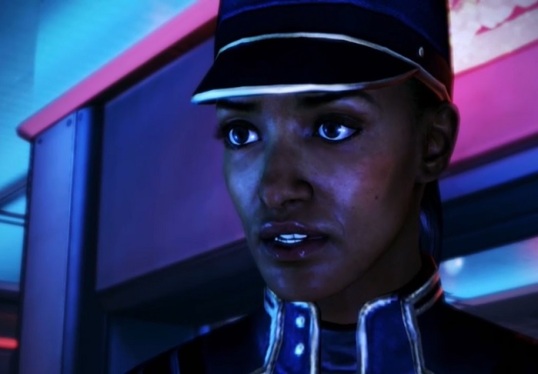
I know that people have mixed feelings about content DLCs for Mass Effect 3, the ending of which is very definitive. Even with the “best” ending and the added fluff of the “Extended Cut” DLC released last summer, there isn’t anywhere else for Shepard’s story to go after the credits roll. While the “best” ending leaves Shepard’s ultimate fate ambiguous, Bioware has told us that Shepard’s story is over. So what is there to add to the gameplay of Mass Effect 3? I actually think Bioware has done a decent job of addressing this; I enjoyed the “Leviathan” DLC if only for its interesting story reveal. “Return to Omega” is cutting room floor stuff; the conclusion of Aria’s plot arc belonged in the original game, but at least its spot in the Mass Effect story makes sense. But “Citadel”… “Citadel” is one fine DLC. I would have said that the gold standard for Bioware’s DLC before this one was probably “Lair of the Shadow Broker”, which added substantially to my Mass Effect 2 experience, had an interesting plot, and some interesting combats interwoven with some great moments for Liara and Shepard.

“Citadel” is better, and it is better because it honours what has been Mass Effect’s biggest strength all along: the characters. The party interaction. The dialogue. The combat system in Mass Effect 3 is very polished, and it functions very well for what it needs to do, but I would not play Mass Effect 3’s campaign for just the combat sequences. Instead of just fighting through waves of mooks, Shepard finds himself blending into a gala at a casino, blending in at the roulette table and socializing with the who’s who of the Citadel… in between casually shutting down cameras and bypassing security while a companion distracts nettlesome guards. Meanwhile, another companion is sneaking through the ventilation system, all so you can get one single crack at someone who may or may not have answers Shepard wants. It is probably worth noting that this DLC is simply not self-serious in the way that the rest of Mass Effect 3 is. If you feel a shift in tone is dramatically inappropriate, this DLC could rub you the wrong way I suppose.

Things open with orders to put the Normandy in to the Citadel for refits and repairs, where our old friend Admiral Anderson has given over his (ridiculously) swanky Citadel apartment for your use. Anderson does not anticipate ever leaving Earth again; even if he survives the final confrontation with the Reapers, the effort to rebuild Earth is something he knows he can’t walk away from. Once there, you end up meeting Joker for sushi in a highly exclusive restaurant on the Citadel. Things go south soon after, and Shepard is forced to deal with yet another problem dragging him away from the master situation of the Reapers. Things culminate in what could possibly be the most difficult combat in the game (about which I will reveal nothing at all; better that way). I found that I didn’t mind.

The thing about “Citadel” is that it’s genuinely lighthearted and funny, with razor-sharp writing. It’s a remarkably refreshing detour from the otherwise dour tone of Mass Effect 3. The game’s tone is, largely, completely warranted… but this DLC provides a break from the agonizing struggle of the war that the original game really, for the most part, lacked. Combat sequences breezed by in a frenzy of faced-paced action and constant party banter, making me think fondly on the constant party interactions from Dragon Age II. The respites between the action sequences are more of the same. Granted, just shoving characters into the setting of Shepard’s ultra-unbelievably-luxurious-swanky Citadel apartment doesn’t feel as organic as another scenario might… but gathering party members on the Normandy is a bit of a contrivance as well, isn’t it? Let’s give Bioware a pass here. They try hard to get your old squad members involved. Tons of characters return from the previous games, offering them more screen time than they otherwise received in Mass Effect 3… including the opportunity to once again use fan-favourite Wrex as a squad member (really, what’s a squad without a Krogan?)

If you’re still angry about Mass Effect 3’s ending, after all of the time, discussion, and the “Extended Cut” DLC (and, if you are, I certainly don’t blame you – it was a travesty) then you may not find the send-off this DLC gives to the characters and the scenario any more satisfying… but, on the other hand, you might. I thought it was a nice fan-service sort of addition to the Mass Effect canon, and a fun adventure besides. Incidentally, this DLC occupied me for at least three hours so far, and I haven’t gone through everything it offers. You should make your own decisions on whether it is priced fairly based on this.

Arcade Review: Skulls of the Shogun


titlescreen

I went diving through the XBox Live Arcade’s new releases the other day. And you all know what that means! Yes, I’ve played Skulls of the Shogun, a new release by new developer 17-BIT (their only release to date, as far as I’ve determined), and available for 1200 Microsoft Points which (I think) is something like $15. The game draws inspiration from the classic GBA title “Advance Wars” in its game play, while its visual style reminds me of the classic XBox Live Arcade release “Castle Crashers”.

In its single player mode, the game follows the story of the tactically brilliant General Akamoto… after his death. He arrives in the afterlife prepared to claim all of the glory that his countless victories in life earned him, and is instead consigned to a bleak shore outside of the afterlife proper with only a few skeletons to keep him company. Obviously unsatisfied, Akamoto (you, the player!) begins gathering undead soldiers for an assault on the gates of the afterlife, to claim what is rightfully his. You soon learn the truth; Akamoto was stabbed in the back in life by his right hand man, Kurokawa, a noted coward. Immediately after stabbing you, Kurokawa fell on a spear, and was able to arrive in the afterlife first. There, he assumed your identity (and one of your daisho swords) and generally left everyone pretty torqued off in his wake.

Each mission (or multiplayer level) begins with each side commanding units drawn from a small pool. At first, you have access to only the slow-moving but defensively powerful Infantry and the faster but more vulnerable Cavalry. Soon after, you gain access to Archers, who are vulnerable in close combat, but very powerful at range. Archers are lethal to Infantry, whom they can outrun, but are outpaced by Cavalry and can’t fire when the enemy has closed in, while Cavalry can’t win a stand-up fight with Infantry, you see? Of course, your units can power-up in battle by consuming the skulls of the fallen. Each skull increases the maximum hitpoints of the unit, heals it somewhat, and if you eat three skulls you enter a Demon form, which gains a second action on each of your turns. The game also adds another twist in the form of Monks, spellcasting allies that you gain through capturing their shrines on the battlefield. Monks gain new spells from eating skulls, and can turn the course of a battle.

Your other main unit of concern is the General, a powerful unit (with an Infantry’s defense, the highest attack of all, and reasonable speed), however, the loss of the General means the loss of the mission. For this reason, it’s often wise to simply let the General hang around (in fact, each turn you go without ‘activating’ your General to give him orders, he heals a hitpoint and gains a maximum hitpoint, this is called ‘Meditating’, and is unique to the General) behind his men and direct the battle. Your units can also group together in tight formation to prevent the enemy from speeding past – an invaluable tactic that can help to protect your Archers, Monks, and General.

Although the unit list is limited and the game’s rules are not difficult to learn, there’s definitely some strategic depth to the game. In addition, the dialogue of the game is tight and fairly humourous, and the game itself is fun to play. You can’t ask for much more than that.

The Case for Dredd 3-D


558551d83bc53bcdec27e79335a5e8bd

I don’t know that many people who, in the thrall of a weak September, dished out the $5, $10, $12, to see Dredd 3-D. This is curious, because I saw it the day that it came out, and I sang its praises til… wait, when am I writing this? I suppose the singing goes on. If you’ve seen Dredd 3-D, you probably had the same initial reaction I did – that this movie is much, much, much better than you ever thought it would be. But, having seen it three times in theaters, and roughly one billion times since the DVD release… there’s more to this movie. This is a truly great film. And since we’re in the season of handing out awards, and because movies like Dredd 3-D know from the moment of their inception that they will never sniff a nomination, it seems like a fine time to extol the virtues of what might be the best action movie made since the calendar flipped over from 1989.

If you’ve seen the film, I can probably spare you most of this song of praise. Of the few people that I know who have seen the film (most of them forced to see it by me), I have heard very few complaints. Of course, I have targeted the film’s audience amongst my own friends, and I’m not trying to win it the support of the Academy. But for a film to be so universally heralded amongst fans of a certain genre is actually fairly impressive in 2013, let alone for that very same film – a gritty B action film, by all accounts – to command a startling 77% fresh rating at Rotten Tomatoes, is nothing short of incredible.

For the uninitiated, let’s start at the beginning. What is Dredd 3-D?

Well, it’s an exploration of a dystopian future that is the primary subject of the long-running Judge Dredd comic strip, an American hero who has been published almost exclusively in the United Kingdom. Dredd is a living metaphor, he is blind justice, the implacable and unrelenting arm of the law. He is fearless, he is formidable… he is the law. In a desolate future, North America is a nuclear wasteland. Outside of the boundaries of the incredible Megacity One, all is irradiated desolation. The Megacity runs from Boston to Washington DC, and contains twice as many people as lived in all of North America in 2012. Within the city limits, only one organization is still fighting to maintain order… the Judges of the Hall of Justice. They are judges, they are juries, and if necessary, they are executioners.

In Dredd 3-D, this is effectively all of the exposition we need. Judge Dredd (Karl Urban) is the merciless reality of a law that is actively losing its struggle to serve and protect. Megacity One is falling apart day by day. But if Dredd himself is dismayed, he does not show it. Our opening sequence is a bloodbath of a high-speed chase through the streets of Megacity One that is given all the feel of a totally average day on the job. Innocent people die, vehicles are destroyed, drugs are consumed, and assault weapons are in abundance. So routine does the film make the bust feel, that it drew me into the world of Judge Dredd. Once I was there, and once the action started, the film never released its talons.

From there, Judge Dredd hauls rookie Judge-Candidate Anderson (Olivia Thirlby) out into the real world. As befits an assessment, Anderson takes the lead, committing herself and Dredd to respond to a multiple homicide at Peach Trees, one of the massive megastructures of Megacity One, a single tenement that houses over 75,000 people. Upon arrival, the Judges determine that the corpses – skinned and thrown off the balcony of Peach Trees’ level 200 – were executions, intended to send a message. From there, we’re off. The Judges fight their way up the megastructure and toward survival, battling against the savage druglord Ma-Ma (Lena Headley) and her minions. Most of the effects are practical, most of the dialogue is minimal, and while the story does have its emotional aspect, the action is the centerpiece of this film.

So, given that, why would I prop this film up as one of 2012’s best? Why would I, had I an Academy vote, have nominated Dredd 3-D for Best Picture (and probably Best Direction and Best Score, but probably nothing else). Because Dredd 3-D understands its genre, and its audience, and it attempts to be a perfect film within that framework. There is no pretension here. There are no regal accents, timeless proclamations of love, or elaborate Victorian costumes. That probably disqualifies Dredd from an award this year, but it shouldn’t. Because Dredd is a better film than Les Miserables (which, earnestly, has been done better more than once before). It is a better film than Lincoln (no one has ever claimed that they felt Dredd 3-D’s length)… because Dredd 3-D is a perfect action movie. If we do not ascribe any deeper motivations or requirements to a film than it be relentlessly entertaining and that it fill the basic requirements of its genre, there are few films ever made that will fill this criteria better.

Dredd 3-D sets up its scenario expertly, in a handful of scenes, and without much in the way of dialogue. Karl Urban has proved time and again that he is both versatile and talented (and criminally underrated, but that’s neither here nor there) but he is not asked to do much here. Dredd delivers his lines in the same tone of voice regardless of the situation. Where Dredd’s catch-phrases seemed campy and over-wrought in the 1995 adaptation starring Sylvester Stallone, Urban seems to have the better measure of his character. He is mercilessly deadpan, transforming one-liners into either tiny morsels of dry humour or vaguely ominous threats. Because Dredd’s persona is so unvarying, it never seems like he’s delivering a line. He is simply stating facts, as he observes them, and we are reacting in turn. Throughout the film, Dredd delivers roughly three facial expressions – a default look of grim severity, a look of significant disappointment (when a particular misfortune befalls rookie Judge Anderson) and one that I would not describe otherwise than grim fury (when a particularly more unfortunate misfortune befalls rookie Judge Anderson).

Dredd 3-D doesn’t demand much from its audience, but it outputs entertainment at an almost unvarying rate. The action scenes and set-pieces are actually remarkably varied (such as they can be) despite the confined nature of the film’s locations. As we watch, Dredd’s relentless implacability, and the sense that he literally cannot be stopped, actually become a fun part of the story. There is literally nothing to recommend the villains of the piece to us, despite a fairly layered performance by Lena Headley, who manages to be savage, determined, exhausted, and regretful basically all at once. This is one circumstance in which we very much want “the law” to prevail… and if what you hunger for is watching the law burn gang-bangers to death with incendiary ammunition, this film will grant you your fondest wish.

So, while Dredd 3-D may not have been nominated for any prestigious awards this season, please do it the favour of checking it out. It is a nearly-perfect action movie, and it is that way in spite of, not because of, its source material. Show it some love, and hope that the who’s-who of Hollywood realizes why this film is worth our time – and that they make many more films just like it.

I Saw The Hobbit


The_Hobbit-_An_Unexpected_Journey_74

Full disclosure (this paragraph is something of an insane rant and has nothing to do with the Hobbit, so feel free to skip it): I am in the incredibly tiny minority who was not overly impressed with the Lord of the Rings films. While I thought that they did an exemplary job of capturing the setting, sights and sounds of Middle Earth, and even the grand scope of Tolkien’s masterwork, I found some of the inexplicable changes to the core story that started appearing in The Two Towers (why is Faramir a dick? The whole point of his character is that he is unlike Boromir in aspect. He is something greater. Like Aragorn. He’s a reason to hope. Why does Faramir take Frodo and Sam to Osgiliath? So we can see it under siege? Probably. Sam then somehow fends off a Nazgul on winged steed by tackling Frodo and crying out. Hmmmmm…swiss cheese. If Aragorn’s army of ghosts can simply sweep across the field and massacre Sauron’s entire army without apparent effort or effect… and Aragorn knows Sauron has another, bigger army… why doesn’t he just go ahead and spend the ten minutes to kill that army too? I’m sure the spirits of the dead would be willing to stay off their eternal rest for ten minutes. Especially because they’re under you control, Aragorn. King of the Dummies.) In addition, Return of the King in particular is much too long. Since the Hobbit has now been split into a stunning three films (!) … in retrospect it seems like Return of the King could definitely have occupied two. Particularly since some of the action elements from The Two Towers were woven into it and… okay.

Moving on.

I saw The Hobbit! Against my wishes, and against my better judgment, I went on a double date sort of affair in the bitter cold to take in this pre-coronated motion picture just days after its release. Fearing the worst, I brought along a large flask filled to the brim with Kraken spiced rum and decided I wouldn’t be shy about pulling off of it. I didn’t really end up needing to, much to my surprise… because here’s the thing about The Hobbit: I liked it. Sort of. Mostly. Oh, more full disclosure: I saw the film in two dimensions at the standard twenty-four frames per second. We didn’t feel like driving to a fancy theater.

As I’d come to expect from Jackson’s Lord of the Rings films, the production here is outstanding. From the very instant The Hobbit begins, we’re drawn back into the realm of Middle Earth. Dwarves, Elves, and now… a dragon. Of course, one of the major reveals that Jackson is keeping for his second film is Smaug, so we don’t see more than the ophoid slit of his eye in what really amounts to an extended intro that describes the history of Erebor, its fall, and the escape of a few dwarves, including Thorin Oakenshield (Richard Armitage). Once we’re all caught up, we return to Hobbiton, and meet Bilbo Baggins (Martin Freeman). Freeman is excellent as the earnest, earthy Bilbo, who is friendly and considerate, but really doesn’t feel like he wants to be involved in an adventure at all … at first. It’s in this first section at Bilbo’s hobbit hole that, in my estimation, the film shines most. The dwarves of Thorin’s company arrive in a steady stream, along with the wizard Gandalf (Ian McKellen), and treat Bilbo to a night of drinking and feasting… and reminiscing about their lost home, the twilight of the dwarven people, and their enmity with the goblins of the mountains. The music, the mood, the performances, are superb, and by morning… I was as ready as Bilbo was to follow Thorin on his damn fool idealistic crusdade.

The film’s tone throughout mostly remains what I feel to be appropriate to the story being told. The Hobbit is a much more lighthearted affair than the ponderous material of The Lord of the Rings. Instead of twisted Uruks made by the unholy marriage of man and goblin, we have goblins that do a lot of singing and arguing among themselves, and who ultimately don’t seem particularly organized or threatening. Perhaps without the all-possessing will of Sauron behind them, goblins are an essentially pathetic people. There are stupid trolls, dumb goblins, and running axe and sword fights to spare, including some invented and extended action sequences which are a necessity in any three hour long fantasy film epic. The problems that the Hobbit suffers, and they are relatively few but fairly damning, universally occur when it drifts away from this lighthearted tone and fast pacing.

Without going into too much detail, let me just say that Jackson crams the final meeting of the White Council (if you don’t know what that is, believe me, there is not time for a lengthy explanation, but check the footnote at the bottom for the cliff notes version) as a scene in the middle of the film that, frankly, goes on forever. Christopher Lee and Cate Blanchette reprise their roles (Saruman and Lady Galadriel, respectively) from the Lord of the Rings films and join Elrond (Hugo Weaving) and Gandalf in some lengthy pontificating about the threat posed by The Necromancer, the evil force which is corrupting Mirkwood from within. Because this film doesn’t ever reach Mirkwood, we haven’t seen enough of Mirkwood yet to really understand its corruption, and while the White Council’s final meeting does happen concurrently with the events of the Hobbit, it has essentially nothing to do with that story, this scene is dead weight. It absolutely kills the momentum of the film. Worse yet? It’s book-ended by two long sequences where Bilbo Baggins has, essentially, no lines at all and spends huge periods of time off the screen. Now, I may not be a famous movie director, but I have watched a lot of movies in my life… and I can tell you that there’s a problem if your character driven fantasy story about a single unlikely hero and his friends excludes that unlikely hero from a third of its run time. It’s triply aggravating because Freeman is so magnetic as Bilbo when he’s on-screen.

Because of this real problem in the mid-point of the film, the Hobbit very much loses its way for a while, even if you happen to have read the novel and already know how the story is going to play out. This was a real disappointment for me, as I actually thought one of the few genuinely great bits of the script and directing in the Lords of the Rings trilogies was editing action and plot points smartly to keep the films moving. That doesn’t happen here. The setting and music eventually drug me back in (also, the riddle-telling sequence with Gollum (a returning Andy Serkis) is delightful. It has a lot to do with Martin Freeman. I might have a little man crush.) and I was with the movie again by the finale, but I really did feel disappointed when I walked out of the theater, and that sucked after such a promising start.

Anyway, if you’re looking for a recommendation, see The Hobbit! I can’t speak as to the technology additives I’m afraid, but the film itself is enjoyable enough. Just don’t expect a masterpiece, because this film, while good… falls well short of great.

Tolkien Nerd Footnote: The White Council – This is a group comprised of the wizards (Saruman, Gandalf, Radagast the Brown, and two Blue Wizards who are MIA) and the leaders of the Elves (Elrond, Galadriel, and Ciridan), though as Gandalf bears Ciridan’s ring and he spends all his time building escape ships, he doesn’t show up for this dance. Basically, the White Council was the body of good powers in the world that kept things peaceful and friendly during Sauron’s long slumber. They’re mentioned only in passing except during The Fellowship of the Ring when Gandalf tells the story that is recounted for us live in this film. Their last act was to put the Necromancer out of Mirkwood, after Gandalf discovered that the Necromancer was, in all likelihood, Sauron garbed in a lesser form to pull the proverbial wool over the council’s eyes.