Decade of last.fm scrobbling countdown:
46. Agalloch (653 plays)
Top track (147 plays): Odal (Demo), from The End Records Sampler: At the End of Infinity [Echoes & Thoughts of Wonder] (2002)
Featured track: Limbs, from Ashes Against the Grain (2006)
Throughout the first decade of this century, Agalloch stood at the forefront of some of the most progressive movements in metal. They were the product of a new generation of musicians exceptionally well informed on musical trends happening outside of their own genre. Citing such diverse influences as Katatonia, Ulver, and Godspeed You! Black Emperor, they endowed their first major release, Pale Folklore in 1999, with an entirely unique sound. Bleak neofolk guitar and piano merged with black metal as the two most dominant styles to paint a beautiful and desolate snowy landscape that demands the listener’s full attention from start to finish. The folk felt, to me at least, just as influenced by neofolk artists far beyond the metal spectrum like Current 93 and Death in June as by Ulver’s Kveldssanger.
The Mantle in 2002 took this diversity a step further, incorporating post-rock proper as a central structural theme for most of the album. But it was Ashes Against the Grain, in 2006, that really solidified their place as one of the most significant metal bands of the era. It got back to the heavier influences that The Mantle had left behind, offering a seamless fusion of folk, post-rock, and metal that would inspire dozens of bands in the years to follow. As a band first born of black metal, their developed sound helped pave the way for a new era in experimental bm that broke the restraints of the 1990s. These restraints, of course, had long been shattered by Ulver, with Enslaved and ex-Emperor frontman Ihsahn following close behind, but these artists’ credentials as legendary musicians were well established while formulaic black metal was still the norm. Agalloch, alongside Alcest, appeared to me as the next generation, born into a much broader gene pool of music and taking full advantage of their situations. As the seven years since Ashes Against the Grain have shown, progressive and post-black metal was the new wave–and perhaps one of the most outstanding waves in the history of metal in general. I can’t tell you whether Agalloch directly influenced the bands that followed them or not, but their open-minded ability to appreciate black metal for its unique sensory qualities without giving in to the corpse-paint drenched exclusiveness of its accompanying culture drastically expanded the genre’s exposure.
I would say today that Pale Folklore is my favorite Agalloch album, though Ashes struck me the most when I first heard it. The version of the song I’ve played the most in Agalloch’s library though does not appear on any of their albums. It was the first track I ever heard by the band–an edited pre-release version of Odal from The Mantle that The End Records had featured on a free sampler cd. The song is not appreciably different from its studio album variant, but it cuts out sizable chunks of the intro and outro to create a much more repeatable track. Odal immediately struck me as deliciously similar in atmosphere to Matt Uelmen’s Tristram from the Diablo series, and I am often inclined to put the two on repeat together. I’ll leave you with a video of the finalized cd version of the song:
Decade of last.fm scrobbling countdown:
47. Explosions in the Sky (647 plays)
Top track (93 plays): Memorial, from The Earth is Not a Cold Dead Place (2003)
Featured track: Your Hand in Mine, from The Earth is Not a Cold Dead Place (2003)
f#a#oo and Ágætis Byrjun might constitute my first introductions into the diverse world of sound we generalize as post-rock, but Godspeed You! Black Emperor and Sigur Rós both forged unique paths that few if any bands have successfully replicated. When I think of the quintessential sound I associate with the genre, it’s Explosions in the Sky and Mono that first come to mind. (And Isis, for the genre’s metal variant.) I don’t know that any band has so successfully perfected the build-up to explosion formula without ever delving into metal as these guys. (The featured track here accomplishes this in a particularly subtle manner.)
While Memorial is my most played track, I don’t consider it my favorite. That title more rightly belongs to Your Hand in Mine. Their level of quality is so consistent though that nearly any track could have incidentally topped my play chart. Another thing I’ve always found so compelling about these guys is their knack for appropriate titles. This extends beyond a band name that perfectly captures their sound and the most pleasantly optimistic album title I have ever encountered. (The Earth is Not a Cold Dead Place) Their track titles casually reach for the stars, predicting an overload of emotion and imagery that the songs themselves never fail to deliver. It’s amazing how much “A Poor Man’s Memory” and “First Breath After Coma” are enhanced by four simple words. “The Birth and Death of Day” practically names itself. More than any band I have encountered save perhaps Krallice, Explosions in the Sky have mastered the art of employing language as a descriptive subtitle to the thoughts and experiences they directly express through sound. The absurdity of this for Explosions is that they achieve it while remaining an exclusively instrumental band.
Decade of last.fm scrobbling countdown:
48. Opeth (640 plays)
Top track (26 plays): The Devil’s Orchard, from Heritage (2011)
When I saw Opeth was coming up next, I got pretty excited about what the top track would be. Would my really oldschool Opeth credentials shine with a song like The Twilight is My Robe or Advent topping the charts, or could nothing hope to match Demon of the Fall? A Heritage track was the last thing I ever expected. It’s easy to forget, in the onslaught of relatively poor reviews, how much I actually enjoyed that album when it came out. Oh, it wasn’t love at first listen, but for me it was a breath of fresh air after years of diminishing faith in Akerfeldt’s song-writing ability. Opeth was one of the first metal bands I ever listened to, and, nostalgia aside, I really do think their first three albums were by far their best. A void, beginning subtly with Still Life and expanding more drastically after Blackwater Park, had grown between my personal tastes and the direction Akerfeldt was steering the band. This coupled with what I perceived as an overinflated ego to completely erode my interest in the band for a long time. Ghost Reveries and Watershed only managed four and three listens respectively before I yawned and moved on.
I am not much of a progressive rock fan, but with Heritage I did start to feel like Akerfeldt was coming back to earth and keeping it real again. I don’t know about his whole “I’m done with metal” mentality; it seems to me like he’s exactly where he needs to be to start composing the sort of metal I can enjoy again. But even if prog rock is all that’s going to appear under the Opeth moniker for a long time to come, his decision to tone things down has successfully resurrected my interest. The Devil’s Orchard is my most played Opeth song because these charts do not begin until 2003; a few years earlier and the statistics would reflect something quite different. But suffice to say I do think this is the best Opeth album since Blackwater Park.
I’ll leave you with a classic Opeth track of the sort that made these guys, for a pre-last.fm period of four years or so, my favorite band in the world:
Decade of last.fm scrobbling countdown:
49. Matt Uelmen (623 plays)
Top track (597 plays): Tristram, from Diablo (1996)
(This sample is the extended–and improved–version appearing in Diablo II.)
The Diablo series managed to evade me in its first two installments, and not for lack of effort on my part. A combination of a panophobic mother in the first instance and an outdated PC in the second restrained my computer gaming experience to Starcraft and Age of Empires. But that didn’t stop me from acquiring the soundtrack. I might have downloaded Tristram in mp3 format as early as 1997, when MIDI replicas were still a viable alternative. (The first mp3 I ever downloaded was Harvey Danger’s Flagpole Sitta. I actually remember this!) At any rate, it is my indisputable favorite song ever. Sorry …And Then There Was Silence. You’ll have to settle for indisputable second. I probably listened to Tristram thousands of times as a teenager before last.fm existed, and even in the past ten years it has drastically exceeded all other songs on my charts. (Compared to 597, my third most listened song is at a measly 255.)
I am not a huge Matt Uelmen fan overall. The numbers attest to that. But this song reaches a level of ambient perfection that has never been achieved before or since. I don’t have much to say about it, save that if you don’t like it I question your humanity. This is the only artist that has climbed his way into my top 50 based on a small selection of songs, let alone based on one single track.
Decade of last.fm scrobbling countdown:
50. Orchid (601 plays)
Top track (91 plays): Le Desordre C’est Moi, from Chaos Is Me (1999)
I always thought the first two tracks to Orchid’s debut album would make amazing final boss battle music for a video game. Maybe that’s a bit of a stretch, but I did first take an interest in screamo and related genres on a defunct video game forum that had awkwardly evolved into an informal music-sharing site. (The same one I met Arleigh and and pantsukudasai56 on.) A friend of mine there who would go on to become the vocalist for Mesa Verde was really getting into the genre around the same time that I was first exploring black metal, and we traded a lot of recommendations. It’s made the recent surge of screamo-black metal cross-over bands like Liturgy and Deafheaven peculiarly nostalgic for me.
Orchid was a short-lived but especially influential band in the scene, lasting from 1998 until 2002. Most of its members went on to form the really solid and entirely out of character rock band Panthers afterwards. I will be eternally amused that Jayson Green noticed my Orchid shirt at one of their gigs.
On May 16th, 2003, I entered an email address and password into a little known site called Audioscrobbler and clicked join. Having always derived an enormous kick from statistics, the novelty of being able to track everything I listen to seemed like the best idea on the entire internet. Ten years and approximately 180,000 songs later, that opinion hasn’t much changed. Most of you are probably familiar with what is now Last.fm, but I doubt as many have diligently kept up with it over the years. From my car cd player to everything I listen to at home, I’m willing to wager that a good 90% of the music I’ve enjoyed over the past decade has been accurately logged. This creates some pretty interesting possibilities. I’ll never know what I listened to most as a kid. Wishful thinking tells me Pearl Jam, Tool, Nirvana, and the Smashing Pumpkins would have topped that list. (Honesty admits with some embarrassment that Korn ranked just as high.) But I do know what I have listened to the most as an adult. It’s not biased speculation; it’s a fact.
Most of my entries here on Shattered Lens have dealt with either reviews of new albums or ramblings and investigations isolated to the fairly particular subgenres of folk, metal, and video game music that excite me most. While my last.fm charts reflect this, they are substantially more diverse. What I would like to do over the following two months is introduce some of you to a range of stellar bands and songs by allowing the numbers to speak for themselves. I intend to count down the top 50 bands I have listened to in the past decade and feature my most played track from each. I’ll start with the highest five bands that didn’t quite make the cut:
55. The Microphones (551 plays)
Top track (60 plays): The Moon, from The Glow, Pt. 2 (2001)
54. Amorphis (561 plays)
Top track (45 plays): Divinity, from Tuonela (1999)
53. In Flames (562 plays)
Top track (39 plays): Embody the Invisible, from Colony (1999)
52. Converge (585 plays)
Top track (87 plays): Concubine, from Jane Doe (2001)
51. Iron Maiden (600 plays)
Top track (52 plays): The Trooper, from Piece of Mind (1983)
And the winner is… Well, we all know the score. Congratulations to Baltimore, and I hope to see San Francisco back in the championship in 2014. But that’s not what I’m posting about. Normally my entertainment niche is music, but I had to voice my opinion for a change on the best Super Bowl commercials of XLVII. Super Bowl commercials today might be pathetic compared to years gone by, but one company in particular had me awkwardly laughing my ass off twice tonight. Who’d have thought it would be a company I typically associate with some of the most annoying, stupid commercials on television? My pick for the best Super Bowl commercials of 2013 goes to Go Daddy. Enjoy.
I have to give a runner up shoutout to the Willem Dafoe Mercedes-Benz commercial. Maybe you’ll be hearing more about that one later.
I made a peculiar purchase today. I am not typically one to dive in for impulse buying, but I have had a bug in me ever since I played Bethesda’s Elder Scrolls V: Skyrim about a year ago. I must admit that by the end of the first decade of this dark century of ours I had completely lost faith in video games. In Blizzard I trust, but the dynamics of an MMORPG are enormously time-consuming as a rule, and in the realm of the single-player there simply weren’t many good options for a long, long time. Suikoden V in 2006 was a breath of fresh air, but as Konami put the nix to the series shortly thereafter I abandoned gaming beyond the Blizzard monolith entirely. It took six years for another game to catch my eye. What I realized while playing Skyrim, aside from the fact that really awesome RPG/adventure games with compelling plots and memorable soundtracks do still exist, is that I am entirely out of touch with gaming in general as it exists today.
I really don’t know what is popular now. I am completely clueless. But I have a sneaking suspicion that what I purchased today is not among your common, mass-marketed fair.
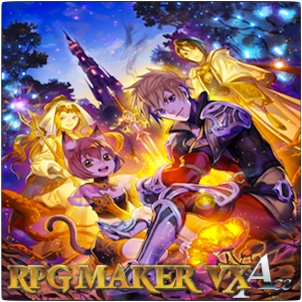
I bought RPG Maker VX Ace. I didn’t plan to. I just stumbled upon it, was shocked that it still exists, and clicked buy. I had last used RPG Maker software at some point back in the 90s, when ASCII was still making it and the best you could do was a fan-translated hack. (Enterbrain makes it now, and I rather doubt companies would still view freely distributed fan hacks as innocent endeavors.) The Dragon Quest JRPG-inspired format of VX Ace, just released in March 2012, might be considered retro at this point, but I have to wonder whether there might not be a serious market demand for that. Wouldn’t it be nice to see some games which, necessarily limited in graphics and sound, had to rely on a compelling plot to the degree of a Final Fantasy VI or a Chrono Trigger? I certainly think so. Not that I possess the capacity to make any myself, but I am beginning to see a vision for my 2013 hobby unfolding: Last year I investigated the history of video game music up until about 1994. If VX Ace holds my interest at least long enough for me to get my $70 worth out of it, I might spend this year looking into the world of indie gaming. If nothing else, I’ll at least make a post or two in the near future showing off my new toy.
This is embarrassing. Here it is 2013, and my 2012 collection consists of only 38 albums, the majority of which I’ve listened to twice at best. I never heard the new Neurosis. I never heard the new High On Fire. Hell, forget metal, I didn’t even listen to the new Shins and Godspeed albums. I can’t offer an experienced, informed opinion now the way I could at the end of 2011. But I’ve been posting up some sort of album of the year list somewhere for over a decade now, and I’ll be damned if I let the fact that I didn’t really listen to any albums in 2012 stand in my way.
Or something like that. Here we go.
10. Dawnbringer – Into the Lair of the Sun God (track: IV)
It’s not often I get into a standard heavy metal album, but Dawnbringer did everything right in 2012. The songs rock along with a bit of an Iron Maiden drive to them, the power and black metal tendencies are tastefully incorporated to enhance the drive without altering the vibe, and the vocals know their limit. If it sounds a bit generic, don’t let that fool you. Not too many bands can pull this off without giving into the temptation to be more “epic” or “extreme” than they really are. Dawnbringer pull it off without the flare–without ever going over the top–and their accessibility places Into the Lair of the Sun God among the best of the year.
9. Korpiklaani – Manala
I wouldn’t say Hittavainen was the heart and soul of Korpiklaani, but he was an essential component. The band would be at a total loss without Jonne Järvelä, and their consistent line-up over the years has contributed enormously to their success, but Juho Kauppinen’s accordion aside, the folk instrumentation was almost all a product of Hittavainen. When he left due to health issues after Ukon Wacka in 2011, I feared it was the end of an era. Korpiklaani never missed a beat recovering from the loss in 2012. In addition to picking up the highly qualified Tuomas Rounakari as their new violinist, Jonne Järvelä stepped up to fill in the void by recording the mandolin, flute, and whistle tracks. I think I can hear some nuance differences between his and Hittavainen’s playing style, but it might just as well be in my head; Manala sounds like a Korpiklaani album through and through. I don’t like it as much as Karkelo and Ukon Wacka–it’s a bit heavier, too much so for my taste in folk metal–but in the greater sphere of Korpiklaani’s discography it is certainly composed and performed to par.
8. Ensiferum – Unsung Heroes
Ensiferum took a lot of slack for this album. I think a lot of people wanted to hear the over-the-top bombast that worked so effectively on Victory Songs, but in my opinion that was already growing stale on From Afar. Unsung Heroes is down to earth in a way they haven’t been since the 2001 self-titled debut, and I love it. They’re heading in exactly the direction I’d hoped for, and with the exception of the ugly mistake that is the album’s 17 minute closing track, Power Proof Passion, Unsung Heroes does not sound at all like a band past their prime. If they continue to push in the direction of tracks like Pohjola, they’re in position to trump Victory Songs and follow up Unsung Heroes with their best album to date.
7. Wodensthrone – Curse
I wish I’d taken the time to review this album earlier in the year, because I haven’t listened to it since the summer, and their flavor of epic black metal isn’t the sort of thing you can fully absorb in a quick last-minute listen. This is an album that can move nowhere but up in my charts over the months to follow, but for the time being I am content to place it somewhere in the middle. While busting out black metal that’s just as grim and unforgiving as the 1990s greats, Wodensthrone manage to infuse a tremendous amount of emotion that speaks of something beautiful hidden beneath the chaos. It’s buried a bit deeper than say, Femundsmarka by Waldgeflüster last year, but the feeling is similar.
6. Vattnet Viskar – Vattnet Viskar EP (song: Weakness)
If someone were to ask me what black metal sounded like in 2012, I might hand them this EP. It’s kind of cool getting to say that, because one of their members is a regular at the music forum where I get most of my recommendations. I wouldn’t have guessed back in March that they would be signed to Century Media by the end of the year, but I’m stoked to hear it. The whole notion of post-black metal has taken on a number of different flavors in these formative years, and Vattnet Viskar expand the genre by incorporating a lot of the all-encompassing guitar tones I associate with post-rock acts like Mono and This Will Destroy You. Top-notch stuff that’s really at the forefront of an emergent genre I’ve been anticipating for years.
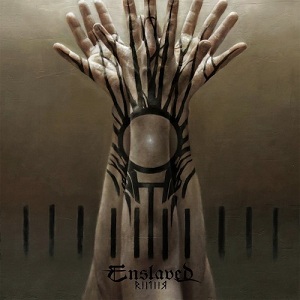
5. Enslaved – RIITIIR
How Enslaved have aged so well is beyond me, but their last three albums have been their best three albums, and 22 years after the formation of this band they remain at the forefront of metal. Their viking-infused progressive black sound of late has done as much to shape the future of the genre as any new-found participant in the current popular trend towards black metal that has been taking shape over the past four years. RIITIIR is another outstanding output by the one classic early 90s black metal band that has managed to weather the ages unscathed.
4. Blut aus Nord – 777: Cosmosophy
The review I wrote of 777: Cosmosophy last month was one of the most thorough I’ve done all year, and there is nothing I care to say about the album that I haven’t said already. It is outstanding in its own right, but it does not feel like an entirely complete finale to their already classic 777 series. The first and third tracks, breathtaking though they may be, don’t seem to sufficiently progress from where the second album in the trilogy, The Desanctification, left off. The second track moreover, Epitome XV, is the weakest link on all three albums. The last two tracks compensate greatly by concluding in proper form, and I certainly think Cosmosophy is excellent. It can only be said to have “shortcomings” in so far as I expected it to be the best album of 2012. Fourth place isn’t too bad.
3. Torche – Harmonicraft (song: Reverse Inverted)
Calling Torche metal at this point is really pushing the limits of the definition. Since their early days writing crushing stoner anthems, they have evolved into a bizarre amalgamation equal parts metal and pop. But it’s not just the uniqueness of the happy, smiley-face hammers Harmonicraft beats you down with that makes it so appealing. Torche have become by all rights the heirs of the 1990s. These guys have more in common with the Smashing Pumpkins than they do with any of their stoner metal contemporaries. This is the sort of thing that 15 years ago we could have just labeled “alternative rock” and gone on enjoying without any need for classifications. While forging an entirely unique, original sound of their own, Torche have managed to capture a song-writing ethos that has been dead for a generation, and Harmonicraft is the cleanest breath of fresh air I’ve inhaled in years.
2. Krallice – Years Past Matter (song: Track 2)
Krallice is my favorite band making music today, and I dare say last year’s Diotoma might be my favorite album by any band ever. Seldom if ever has a band followed up such a masterpiece with something of equal worth, and I was shocked that Krallice had the energy left to release anything at all this year. Years Past Matter is an outstanding post-black metal outing in the vein of Dimensional Bleedthrough. The tracks took longer than usual to grow on me, and usual for Krallice entails dozens of listens, but the payout is always worth the time, and the slow process of appreciation is enjoyable in its own right. Mick Barr and Colin Marston’s dual tremolo is the grand ultimate ear-candy, and so long as they never compromise their commitment to that they will probably remain my favorite band. (Track 3 is my favorite song on Years Past Matter so far, but it was not available on youtube. Track 2 is a worthy substitute.)
1. Panopticon – Kentucky (song: Killing the Giants as They Sleep)
The fact that I didn’t review this album is almost embarrassing, because much like Aesthethica by Liturgy last year, it is an album that absolutely demands a thorough investigation to properly appreciate. I can’t easily tell you why I placed it this high, because frankly I don’t know yet myself. When I first read that a Louisville, Kentucky-based band called Panopticon had released a bluegrass black metal album, all sorts of thoughts ran through my head. Kentucky sounds like none of them. Do ignore the cliche “blackgrass” labels; while Austin Lunn listened to plenty of bluegrass in the process of recording this, he does not actually incorporate the genre as we might think of it. Instead he interweaves traditional Appalachian folk–not bluegrass particularly–as distinct tracks separated from the black metal. What folk does emerge in the bm is more akin to Waylander, and certainly far from “bluegrass”. That’s not a bad thing, just an–I think–important distinction to be made, because otherwise we might be left searching for genre stereotypes which simply aren’t present here. What Kentucky really accomplishes is a merging of a musical themes which perfectly juxtapose a beautiful landscape and a totally destitute human condition. The first half of “Killing the Giants as They Sleep” for instance generates landscape imagery with a degree of effectiveness similar to Femundsmarka by Waldgeflüster. (Have I referenced that album twice now? I think it’s time I paid it another visit.). You take a look around, take a deep breath, and really appreciate the natural beauty that surrounds you. About half way through the dialogue begins, and the explosion around 9:15 serves to draw you fully into the atrocities taking place here, both in the exploitation of workers and the desecration of the environment.
I don’t think Austin Lunn intended to make any sort of political statement here, but in succeeding so comprehensively to depict elements of Appalachia and its outskirts, he effectively did so. At a time when the working class of America is inexplicably becoming staunch supporters of big capital, this album hits a bulls-eye on all of the thoughts that have been forefront on my mind of late. His bleak renditions of union anthems like “Which Side Are You On?”, recently covered with such optimism by the likes of Dropkick Murphys, strike me as a painfully realistic reminder that the entire notion of equality as an American ideal is becoming antiquated.
But that might be seen as secondary. Wherever our ideas may lead us, Kentucky is the sort of album that inclines us to form them. It’s an album that makes me think. Like Aesthethica by Liturgy and Diotima by Krallice last year, it forces me to set aside my mundane daily routines and really engage the human experience. That alone, all other considerations aside, suffices to render it my favorite album of 2012.
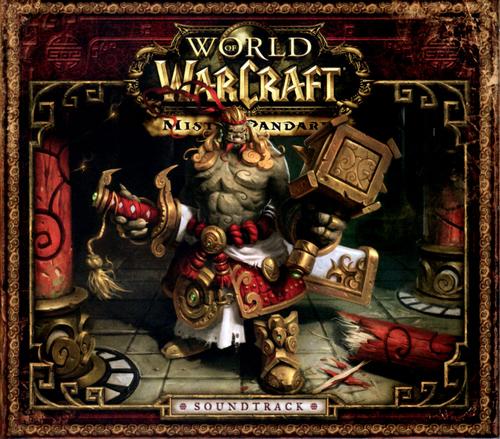
I had pretty mixed expectations for the soundtrack to Mists of Pandaria. One the one hand, Blizzard’s scores embarked on a downward spiral starting in 2010. Cataclysm was a poorly planned expansion, and its lack of a clear focus and theme had a serious impact on the music. Russell Brower, Derek Duke, and Glenn Stafford did an outstanding job on Wrath of the Lich King in 2008, but the Cataclysm sound team faced a weak, haphazard plot and (I would imagine) a great deal of frustration as Blizzard scrapped some of their major plans for the expansion mid-stride. Diablo 3 was equally disappointing, with the inexcusable failure to bring back Matt Uelmen taking its toll. I was beginning to think Blizzard had abandoned any serious commitment to ensuring high quality music in their games.
On the other hand, there was no doubt as to what Mists of Pandaria would be about. Just as Wrath of the Lich King had a clearly Nordic vibe from start to finish, Pandaria was thoroughly immersed in Eastern culture and tradition, with a wealth of pre-existing musical themes upon which to build a score. It also brought video game music legend Jeremy Soule into the mix; but considering Cataclysm fell flat in spite of involving David Arkenstone, I wasn’t going to get too excited about this one until I heard it.
As it turns out, Mists of Pandaria might be Blizzard’s best soundtrack to date. Russell Brower, Neal Acree, Sam Cardon, Edo Guidotti, and Jeremy Soule clearly did their research, and the expansion presents a delicious mix of authentic Chinese folk and big-ticket film/game scoring. I am ill-equipped to compare it to similar contemporary soundtracks–I don’t watch movies, and I really haven’t kept up with game soundtracks for the better part of a decade now–but as an avid World of Warcraft fan who plays with the sound on, I can safely say that the music this go around is a fundamental, essential element of the gameplay. This really hasn’t been the case since Wrath of the Lich King. Hour of Twilight (Dragon Soul) had one of the most unconvincing scores in Blizzard’s catalog, for a patch that felt rushed and entirely uninspired. It was a force-fed collection of dramatic stereotypes, and it’s hard to imagine what else it really could have been in the context of the raid. Mists of Pandaria, in contrast, is packed with lively anthems that bring the action to life on a level to par with the mechanical and visual appeal.
My favorite track so far is the music to the Shado-Pan Monastery dungeon. It’s a dungeon that, I think, would hedge on the side of tedious were it not for the score. The Master Snowdrift boss battle begins with a semi-choreographed fight against Pandarian monks who take turns jumping into a ring to engage you. I don’t know if the music is intentionally timed to cue with the fight or if it has just happened that way the two or three times I’ve played through it, but the heavy drumming that starts about 2 minutes into this clip seems to sync up with the start of combat. Playing the game in silence, you might find yourself impatiently waiting for the new challengers to engage you, yawning and tapping your foot to press through and collect 80 valor points. With the music on, it’s one of the most engaging experiences of the expansion: the sweeping anthem gives the fight a cinematic feel, and it’s easy to forget that you’re actively playing a game, not watching a movie. It was on my first play through Shado-Pan Monastery that what Russell Brower and co accomplished in this expansion really hit home. In Wrath of the Lich King, it was the slower-paced themes like Grizzly Hills and Dalaran that moved me the most, capturing the timeless, snow-covered landscapes and subduing the combat experience. In Mists of Pandaria they certainly still achieve top quality questing zone ambiance, but for the first time in a Blizzard game I am also hearing songs that suitably enhance the action.
That, at least, stands for the casual encounters. I have yet to really pay attention to the music while raiding. In a sense, the raids demand the best tunes Blizzard’s sound team have to offer, but they are also the part of gameplay in which you are most focused on what you’re doing and least inclined to sit back and take in the audiovisual experience. What I can certainly say is that for the first time in a while I feel inspired to at least make an effort to pay attention to that experience. For now, I’d like to call further attention to the more ambient, questing zone tracks. The degree to which they managed to incorporate traditional Chinese instrumentation into the score is admirable, and to the best of my knowledge none of the musicians accredited with the Mists of Pandaria soundtrack specialize in Chinese traditional music. The score is certainly of a western film style at heart, and you would never mistake their Eastern fusion for authentic Chinese folk, but such inclusions as a pipa at the outset of “The River” are delicious indulgences that enhance the gameplay experience far beyond what was necessary for the composers to earn their paychecks. Mists of Pandaria is just packed with little Easter eggs that show how much fun Blizzard must have had making this game. (I love how two early, relatively insignificant NPCs you encounter in Jade Forest are named Ren and Lina Whitepaw, as in Ren and Li–Humaneness and Ritual–two of the principles of Confucianism.) Mist of Pandaria’s music offers the same tip of the hat to those of us casually informed on Chinese tradition, and I get a constant thrill in recognizing moments that resemble my beloved eight-volume Chinese Ancient Music Series collection.
Bravo to Blizzard for doing this one right through and through. It’s no masterpiece independent of the video game for which it was composed–I wouldn’t sit around listening to it while not playing the game as I would for say, a Nobuo Uematsu score–but it is an essential component of Mists of Pandaria in a way that the music of Cataclysm never was. Mists of Pandaria is one of the most visually stunning games Blizzard has yet produced, and it’s got a soundtrack to match. I wouldn’t necessarily say I like it more than Wrath of the Lich King, but it achieves the same level of quality while set to a drastically different theme and landscape.



 Through the Shattered Lens